

PFS Digital Mortise and Tenon Furniture Store by Partyfriendship
Digitally fabricated timber store using mortise and tenon joints, promoting sustainable, nail-free construction and community participation in Wuhan, China.


A Modern Revival of Traditional Craftsmanship
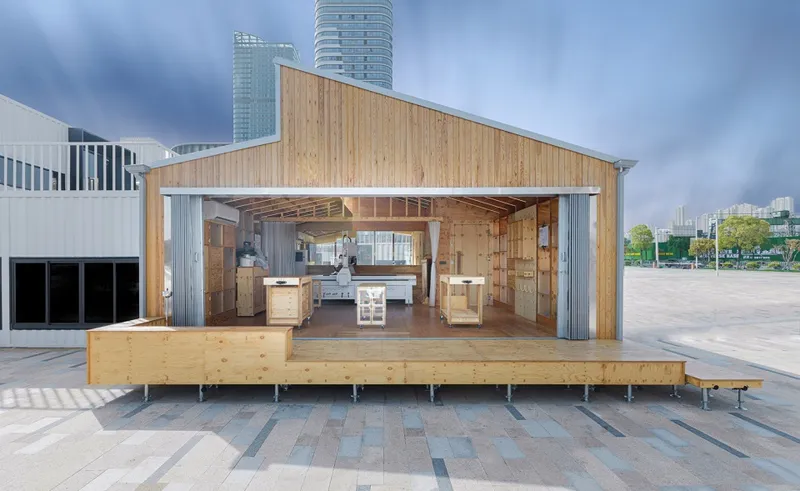
The PFS Digital Mortise and Tenon Furniture Store in Wuhan is a bold reimagining of traditional Chinese joinery techniques, infused with modern technology and community engagement. Designed by Partyfriendship, the 84-square-meter wooden structure challenges conventional construction by eliminating the use of nails, screws, or adhesives. Instead, it relies entirely on digitally fabricated mortise and tenon joints, drawing on a centuries-old technique reinterpreted through contemporary design thinking.

Community-Driven, Tool-Free Construction
At the heart of the concept lies a belief in accessibility and collective creation. The building is constructed using high-precision CNC-milled components, allowing for dry assembly that requires no specialized labor or technical training. Residents, neighborhood committees, and local public service institutions were invited to participate in the actual building process—transforming the act of construction into a shared civic experience.
The space is intentionally open and modular, designed to foster public participation and democratic design processes, making it more than a furniture store—it becomes a community landmark.


Modular Design for Maximum Efficiency
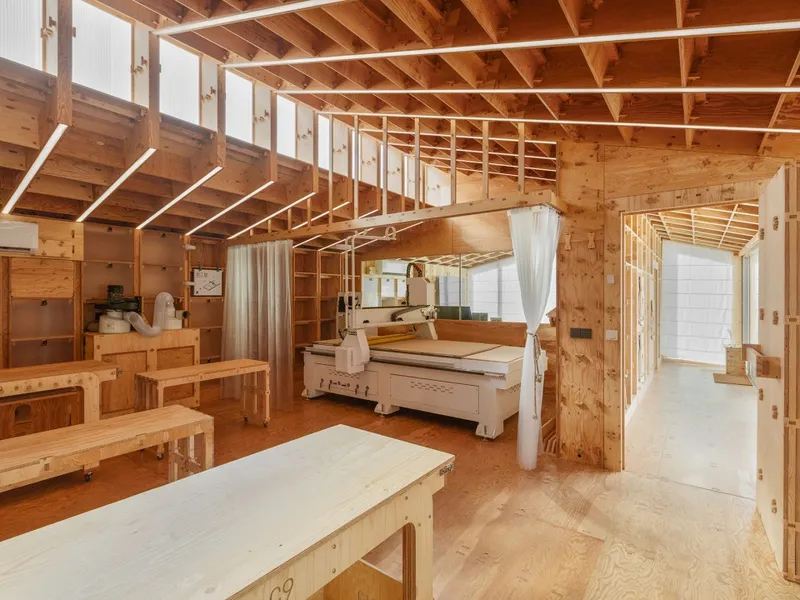
The building is composed of 20 modular units made from 386 EU-certified pine plywood panels, which were designed with a focus on material efficiency, structural clarity, and ease of assembly. Each module shares common components, enabling fast construction and seamless scalability.
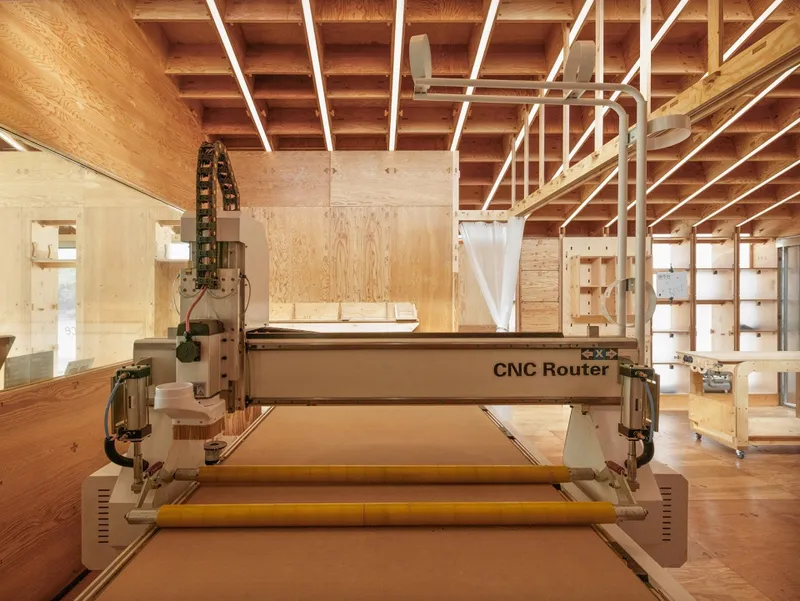
To ensure accuracy, the design team created a full-scale 1:10 prototype, testing everything from component interlocks to spatial ergonomics. The final digital models were fed into a CNC router, which minimized waste by optimizing every cut in advance. Even sawdust and offcuts generated during the process are recycled as biomass fuel by a local business in Hanyang—reinforcing the project’s sustainable ethos.
Sustainable, Scalable, and Culturally Grounded
The PFS Digital Joints project is not just about constructing a building; it's about reviving cultural heritage through innovation. By combining traditional Chinese wood joinery with digital fabrication and open-source community engagement, Partyfriendship crafts a new architectural language—one that is low-carbon, recyclable, and deeply rooted in local identity.




Popular Articles
Popular articles from the community

EW PARK: Sustainable Architecture Reimagines the Future of Urban Parking
EW PARK reimagines city parking as a modular wooden tower combining automation, solar energy, electric mobility, and adaptable urban design.

Conexión: Biophilic Design Reimagines High-Rise Living in Hong Kong
Conexión reimagines high-rise living in Hong Kong through biophilic design, green facades, shared spaces, daylight, water and nature within.

The Earth Pod: 3D Printed Homes for Resilient Refugee Communities
The Earth Pod reimagines refugee housing through 3D printed homes made from clay, combining resilience, self-sufficiency, and rapid shelter.

Hill & Cross Opera: Sculptural Opera House Architecture Shaped by Tallinn’s Landscape and Identity
Hill & Cross Opera reimagines opera house architecture in Tallinn through its sculptural hill, civic plaza, glass wave and a luminous cross.


Similar Reads
You might also enjoy these articles


Hodi-Mandai Geram
Project Function: Preservation and revitalization of the Intangible heritage and socio-spatial identity of the Hodi by Housing, Cultural Memory Center, Sacred Grove, landscape, local tourism economy


Olio Towers: A Mid-Rise for Performers That Fuses Housing, Rehearsal, and Stage
Located blocks from Houston's Theater District, this modular tower stacks living units around a central performance atrium.

Oasis: Modular Green Housing Carved into Dhaka's Urban Fabric
A shortlisted Plugin Housing entry reclaims unauthorized settlements in Dhaka with stepped concrete volumes, green roofs, and ventilation-driven design.

Black Hole: A Floating Megastructure for the Post-Physical Era
Emiliano Mazzarotto envisions a spherical, self-scaling arena where e-sports, digital hotels, and holographic stadiums replace traditional public space.


Explore Wood Construction Competitions
Discover active competitions in this discipline


Challenge to design luxury tourism on rails


Challenge to reimagine the Iron Throne


Photograph architecture without architects


VR headsets Storefront design competition
Comments (0)
Please login or sign up to add comments
No comments yet. Be the first to comment!