

Phum Sambo Café & Eatery by Khoan + Partners: A Living Frame of Renewal in Phnom Penh
Phum Sambo Café transforms an unfinished concrete frame into a warm, nature-integrated retreat through adaptive reuse, timber detailing, and sustainable tropical design.


Reviving an Unfinished Structure with Respect and Purpose
In the heart of Phnom Penh, Cambodia, Phum Sambo Café & Eatery by Khoan + Partners transforms an unfinished concrete shell into a vibrant, climate-responsive retreat. The 680-square-meter renovation project reimagines a once cold, utilitarian frame into a warm, tactile, and nature-integrated space that bridges the gap between structure and landscape.
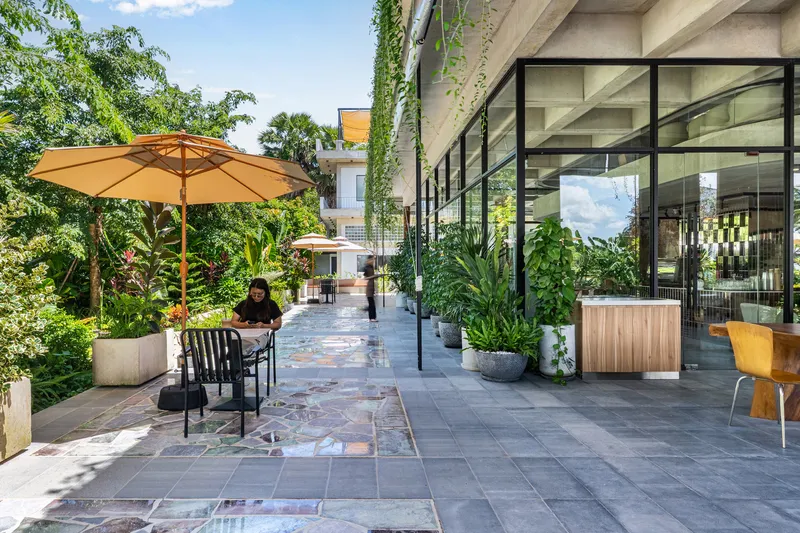
When architect Pengly Khoan first encountered the building, it stood as an exposed concrete grid—strong in geometry yet disconnected from life. Rather than erase its history, the design team chose renovation with reverence, preserving the raw structure and layering it with warmth, adaptability, and ecological sensitivity. This approach celebrates what already exists while redefining its relationship with nature and human experience.
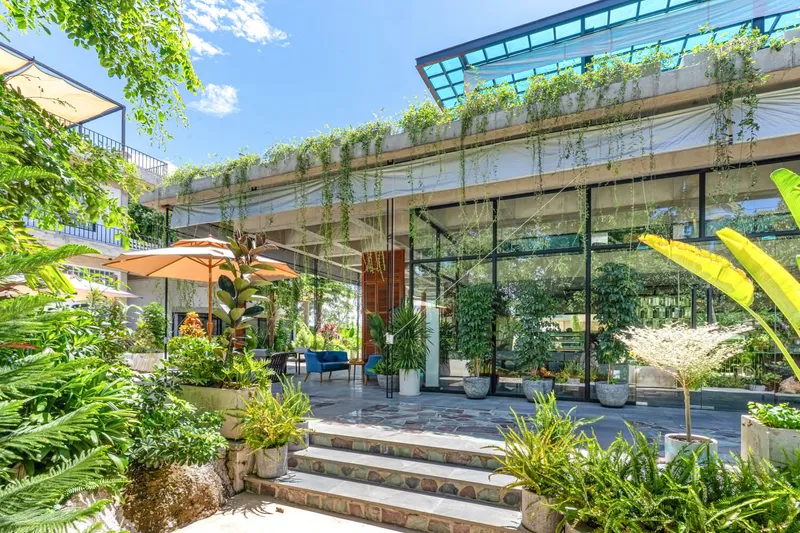
Honoring the Existing Frame
The original framework—slabs, beams, and columns—remained untouched, serving as a foundation for renewal rather than demolition. Khoan + Partners approached the project as an act of adaptive reuse, turning the rigid concrete skeleton into a flexible architectural pavilion.

New timber elements were thoughtfully introduced to complement the concrete, establishing a dialogue between hard and soft, heavy and light. Wooden louvers, railings, soffits, and cladding lend texture and rhythm to the building while performing a crucial climatic role. These operable wooden systems diffuse harsh tropical sunlight, regulate airflow, and create ever-changing patterns of shade throughout the day.
Through this careful layering, the design achieves both aesthetic harmony and functional sustainability, transforming the once sterile structure into an inviting public space for gathering and reflection.
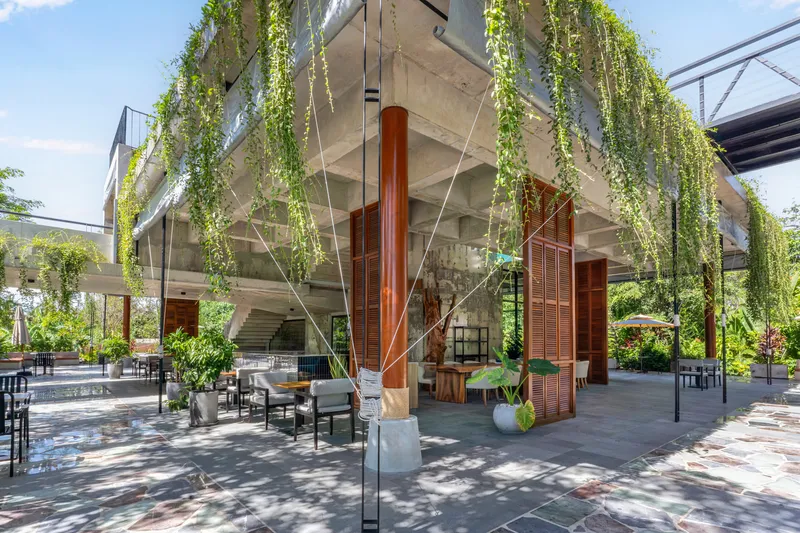

Integrating Nature as a Design Material
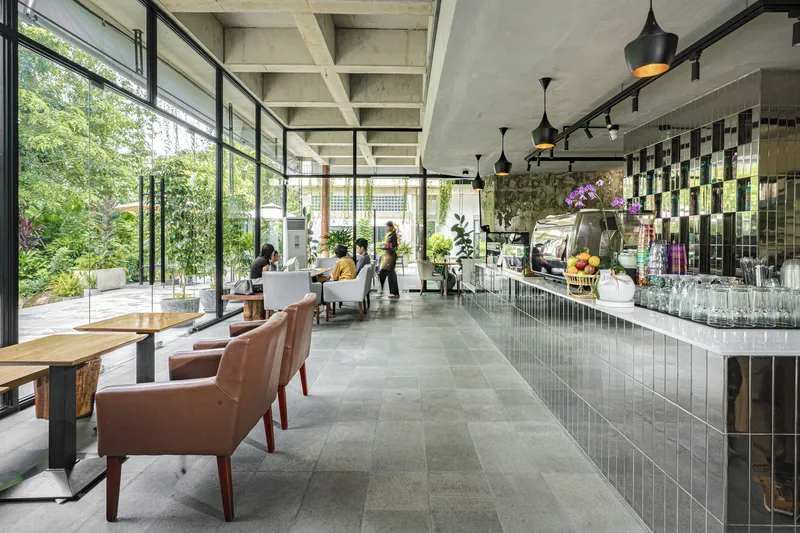
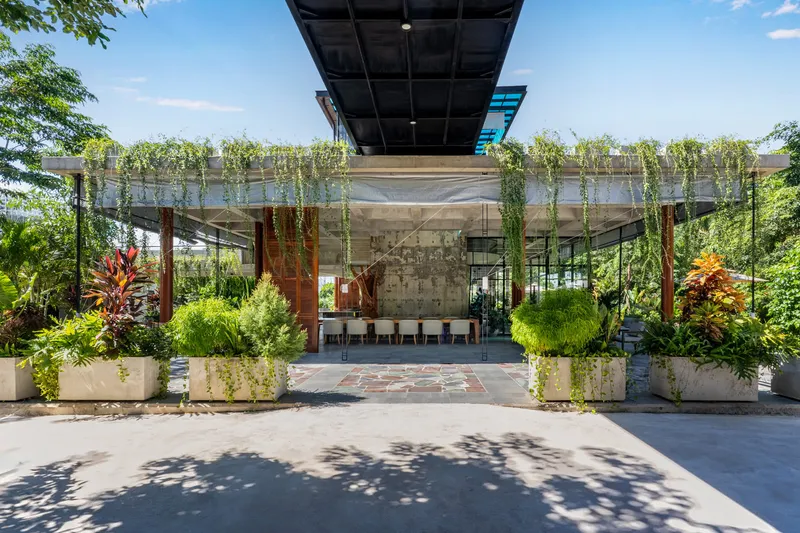
Phum Sambo Café & Eatery stands as a living frame, where architecture becomes a vessel for greenery. Cascading vines and climbing plants trace the contours of the concrete, softening its edges and connecting it seamlessly to the landscape.
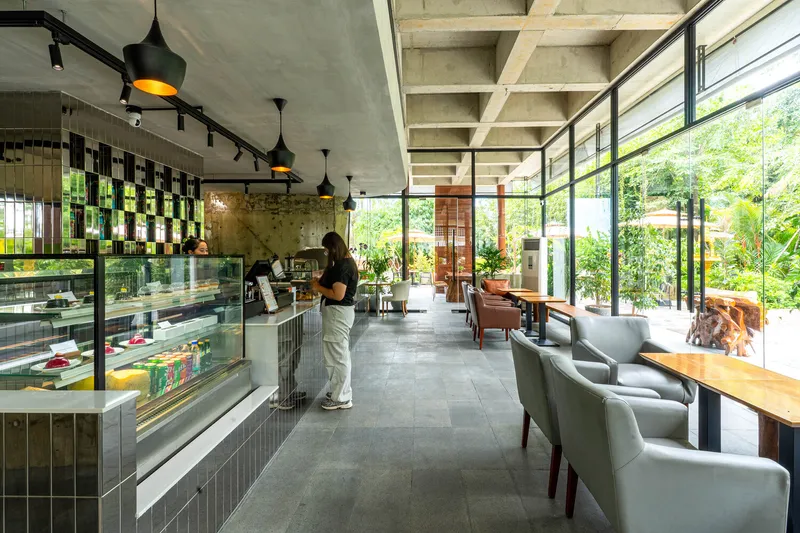
The lush vegetation performs more than an ornamental function—it acts as a natural cooling system, filtering air, providing shade, and creating microclimates that enhance comfort in Cambodia’s tropical heat. The result is a building that blurs the line between indoors and outdoors, built and grown, static and evolving.
By positioning plants as architectural components, Khoan + Partners embrace the philosophy of biophilic design, crafting a sensory experience rooted in climate, ecology, and human well-being.

Spatial Openness and Environmental Sensitivity
The café’s spatial configuration reflects the architects’ commitment to sustainability and comfort through passive design. The ground floor is a shaded, open-air environment that dissolves the boundary between interior and landscape. This layout encourages cross-ventilation, reducing the need for mechanical cooling and creating a naturally comfortable environment for diners.
The upper floor utilizes green roof insulation and filtered daylight, achieving thermal balance and visual comfort throughout the day. Each floor contributes to a holistic environmental strategy—where every structural and material choice enhances energy efficiency while maintaining aesthetic simplicity.


A Model of Sustainable Renovation
Phum Sambo Café & Eatery exemplifies how thoughtful renovation can breathe new life into forgotten structures. Instead of erasure, the project embraces continuity and transformation, showing that architecture can grow from what already exists.
This sensitive intervention turns an abandoned building into a serene café that reflects the rhythms of Cambodian life—open, welcoming, and attuned to its climate. It’s an architecture that listens before it speaks, embodying the idea that true sustainability lies not in newness, but in renewal.

All photographs are works of Serey Soursdey



Popular Articles
Popular articles from the community


Riyadh For All: Intergenerational Urban Design for Active Aging in Rabat
Riyadh For All reimagines urban design in Rabat with intergenerational co-living, adaptive courtyards, and Moroccan cultural exchange today.

Co-life: Sustainable Architecture for Age-Friendly Community Living
Co-life reimagines sustainable architecture for seniors through courtyards, rammed earth, shared gardens, and spaces designed for belonging.

Hill & Cross Opera: Sculptural Opera House Architecture Shaped by Tallinn’s Landscape and Identity
Hill & Cross Opera reimagines opera house architecture in Tallinn through its sculptural hill, civic plaza, glass wave and a luminous cross.

The Ocean Hive: Sustainable Architecture for a Self-Sufficient Civilization at Sea
The Ocean Hive imagines sustainable architecture at sea, where modular habitats, algae, wave power and ocean waste sustain a growing colony.

Similar Reads
You might also enjoy these articles


Hodi-Mandai Geram
Project Function: Preservation and revitalization of the Intangible heritage and socio-spatial identity of the Hodi by Housing, Cultural Memory Center, Sacred Grove, landscape, local tourism economy


Olio Towers: A Mid-Rise for Performers That Fuses Housing, Rehearsal, and Stage
Located blocks from Houston's Theater District, this modular tower stacks living units around a central performance atrium.

Oasis: Modular Green Housing Carved into Dhaka's Urban Fabric
A shortlisted Plugin Housing entry reclaims unauthorized settlements in Dhaka with stepped concrete volumes, green roofs, and ventilation-driven design.

Black Hole: A Floating Megastructure for the Post-Physical Era
Emiliano Mazzarotto envisions a spherical, self-scaling arena where e-sports, digital hotels, and holographic stadiums replace traditional public space.

Explore Sustainable Design Competitions
Discover active competitions in this discipline



Challenge to reimagine the Iron Throne


Photograph architecture without architects


Illustrate the lost glory of Angkor Wat - Render Challenge


Design challenge to reuse E-waste
Comments (0)
Please login or sign up to add comments
No comments yet. Be the first to comment!