

PI House by ArquitectosRT – Modern Urban Residence in Porto, Portugal
PI House by ArquitectosRT in Porto blends modern design with urban context, featuring open interiors, natural light, and seamless indoor-outdoor connections.


PI House, designed by ArquitectosRT, is a contemporary single-family residence located in the heart of Porto, Portugal. Completed in 2022 and spanning 172 m², the home seamlessly balances modern architectural interventions with the surrounding urban context. Strategically positioned at the end of a row of terraced houses, the design transforms a corner plot into a striking architectural statement while respecting the scale and character of its neighborhood.

The residence is thoughtfully organized across two distinct volumes, reflecting the building’s historical evolution and the client’s requirements. The east façade preserves minimal interventions, limited to a refined color update, while the west façade introduces a bolder architectural language with larger, dynamic openings. This approach strengthens the dialogue between the house and neighboring multi-family buildings, reinforcing its presence as both a private sanctuary and a visually engaging urban element.

A highlight of the design is the strong interior-exterior connection. The ground floor opens entirely to the exterior, creating fluid transitions between social spaces and outdoor areas. The north elevation acts as a transitional interface, harmonizing the old and new volumes. Here, a ventilated phenolic façade on the upper floor and the continuation of the existing wall on the ground level establish formal cohesion. Thoughtfully positioned doors and perforated panels enhance natural light, ventilation, and visual privacy throughout the home.

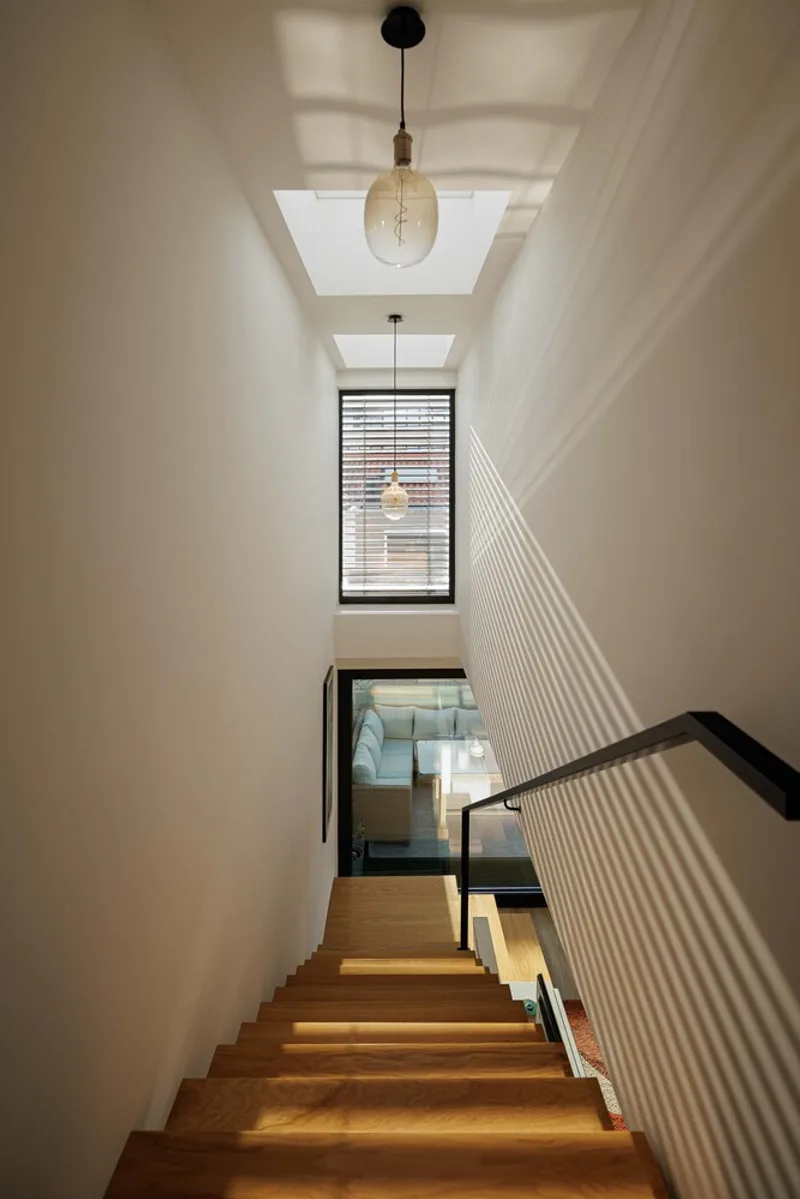
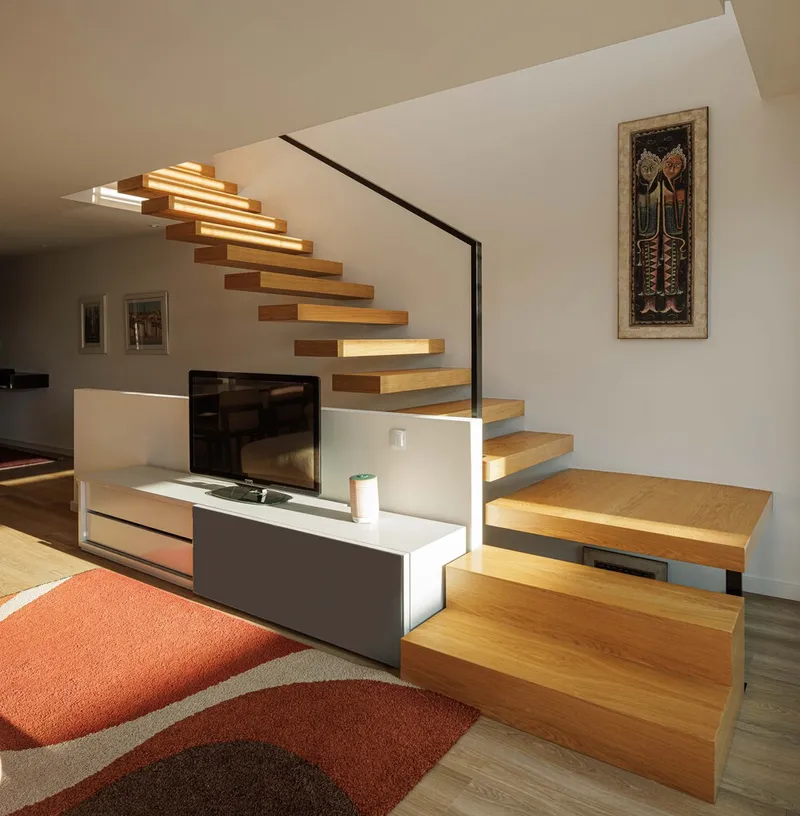
Inside, PI House is organized along a longitudinal axis, defined by a central staircase, skylight, and stained glass window. The entrance hall flows into the living, dining, and kitchen areas, fostering a functional yet elegant spatial hierarchy. The upper floor accommodates two bedrooms, a study, and a shared bathroom, while the basement includes a laundry area and garage. The staircase, positioned along the southern wall, ensures optimal daylight penetration, complementing the home’s limited solar orientation.
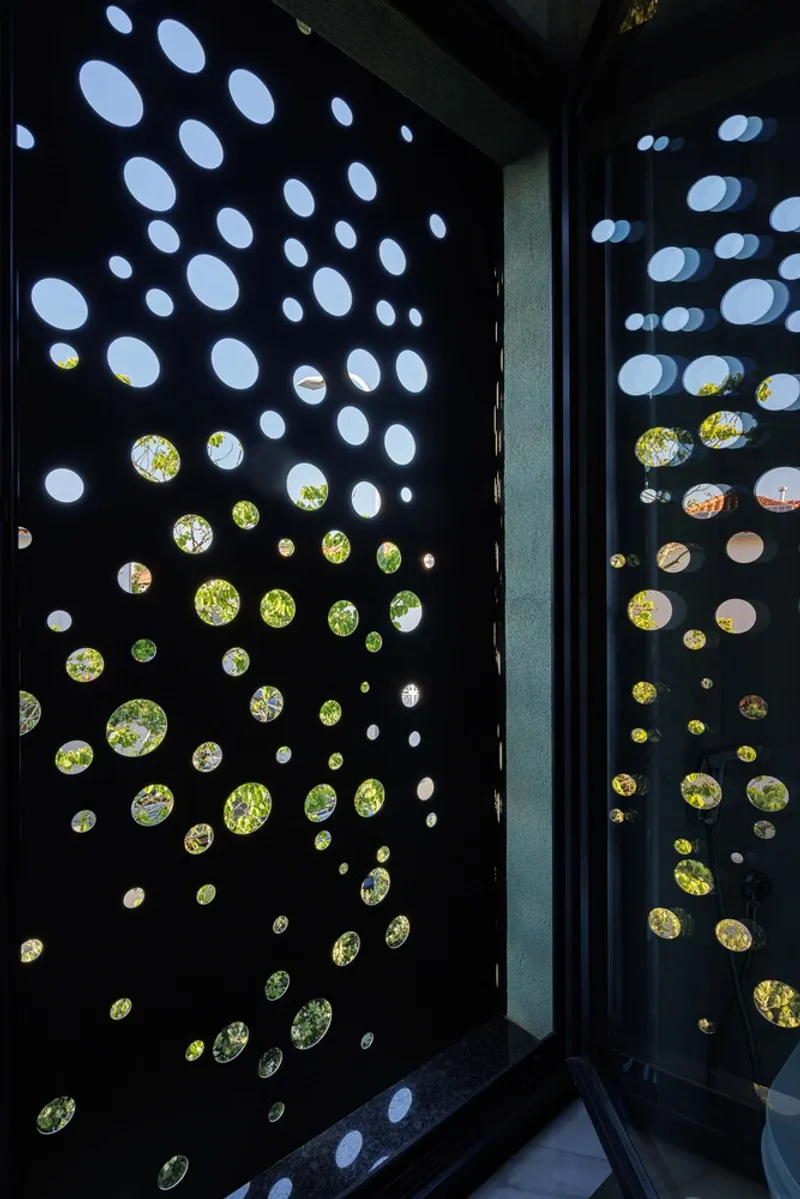
Construction materials and techniques emphasize thermal comfort, acoustic efficiency, and sustainability. The new extension mirrors the existing building’s characteristics, featuring insulated walls, plasterboard finishes, and ETICS systems for below-grade exterior walls. The flat-roof extension contrasts the retained ceramic tile roof, while the perforated north panel allows light and air flow without compromising privacy. The garage, integrated into the boundary wall, ensures smooth access from Rua Santo Tirso while benefiting from natural ventilation and daylight.


PI House exemplifies modern residential design in an urban setting, where careful integration of old and new, functional planning, and thoughtful material selection come together to create a home that is both practical and architecturally refined. It stands as a benchmark for contemporary urban residences in Porto, illustrating how modern design can enhance the existing urban fabric while meeting client needs.
All Photographs are works of Ivo Tavares Studio


Popular Articles
Popular articles from the community


The Amber Palace Opera: A Geological Fiction Surfaces on Tallinn's Baltic Waterfront
Pierre Brillard reimagines a Baltic legend as a public landscape, opera house, and waterfront promenade rooted in Tallinn's coastal identity.

Singing Woman: An Opera House That Performs Before the Curtain Rises
Ovidiu Cristian Pavel's conceptual opera house translates Estonia's choral identity into a sculpted waterfront landmark facing the Baltic Sea.

Manzana Morphosis: Stretching Barcelona's Grid into a Living Landscape for 2050
A radical reworking of the Eixample manzana turns density into a tool for generous public space, vertical ecology, and environmental performance.

Opera on the Sea: Driftwood Logic Shapes a Timber Opera House on Estonia's Coast
Trevor Orgill's opera house translates the entangled drift of floating timber into a civic building where wood, water, and music converge.

Similar Reads
You might also enjoy these articles


Hodi-Mandai Geram
Project Function: Preservation and revitalization of the Intangible heritage and socio-spatial identity of the Hodi by Housing, Cultural Memory Center, Sacred Grove, landscape, local tourism economy


Olio Towers: A Mid-Rise for Performers That Fuses Housing, Rehearsal, and Stage
Located blocks from Houston's Theater District, this modular tower stacks living units around a central performance atrium.

Oasis: Modular Green Housing Carved into Dhaka's Urban Fabric
A shortlisted Plugin Housing entry reclaims unauthorized settlements in Dhaka with stepped concrete volumes, green roofs, and ventilation-driven design.

Black Hole: A Floating Megastructure for the Post-Physical Era
Emiliano Mazzarotto envisions a spherical, self-scaling arena where e-sports, digital hotels, and holographic stadiums replace traditional public space.

Explore Porto Local Tiles Competitions
Discover active competitions in this discipline

Challenge to reimagine the Iron Throne

Photograph architecture without architects

Illustrate the lost glory of Angkor Wat - Render Challenge

Design challenge to reuse E-waste
Comments (0)
Please login or sign up to add comments
No comments yet. Be the first to comment!