

Piazza Cortevecchia: A Climate-Responsive Urban Square by INOUT Architettura
Climate-responsive public square in Ferrara transforming historic urban space through trees, permeable paving, accessibility, and sustainable water management strategies.


Piazza Cortevecchia, designed by INOUT architettura, represents a contemporary reinterpretation of the traditional Italian square, redefining public space through sustainability, accessibility, and climate-responsive urban design. Located in the historic center of Ferrara, Italy, the project transforms a highly trafficked urban void into a flexible, green civic landscape that reconnects people, nature, and the city’s historic fabric.
The redevelopment is the result of a public design competition promoted by the Municipality of Ferrara within the national Experimental Program of Interventions for Adaptation to Climate Change in the Urban Environment, funded by the Italian Ministry of Environment. A defining feature of the process was the direct involvement of citizens, who participated in selecting the proposal most representative of community values and urban identity.

An Urban Gateway in the Historic Center
Situated near Piazza Municipale, adjacent to Ferrara’s primary city squares and close to a multi-storey car park on Via Borgoricco, Piazza Cortevecchia acts as a gateway to the historic center. The surrounding context: dense pedestrian flows, commercial activities, cafés, and restaurants: demanded a space capable of absorbing movement while encouraging pause, encounter, and spontaneous use.
INOUT architettura approached the site as a true urban square in its most classical sense: an open, permeable void that can be crossed freely, occupied informally, and adapted to multiple scenarios. The design supports markets, cultural events, performances, and everyday social life, reinforcing the square’s role as an inclusive civic platform.
The ground plane is conceived as a continuous, barrier-free surface, free of steps, ramps, or abrupt level changes, ensuring full accessibility for all users. Material continuity with surrounding historic squares strengthens visual coherence and urban legibility, allowing the intervention to blend seamlessly into Ferrara’s architectural identity.
A Tree-Lined Square as Urban Infrastructure
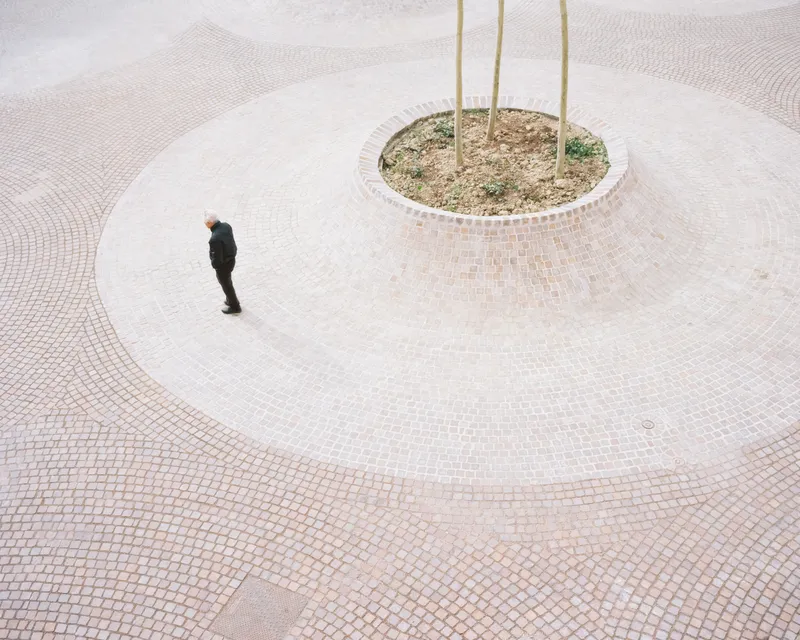
At the heart of the project lies a strong ecological vision: transforming Piazza Cortevecchia into a green urban oasis capable of delivering measurable environmental benefits. The design identifies trees as the most effective and economical tool for improving urban microclimate, mitigating heat island effects, reducing air pollution, and managing stormwater runoff.
The square is structured as a tree-lined landscape, where vegetation becomes the primary architectural element. Shade, seasonal variation, and spatial rhythm generated by trees redefine the perception of the space, creating comfort and enhancing biodiversity within the dense historic center.
Plane Trees as Climatic Agents
The project selects the Plane tree (Platanus Platanor® ‘Vallis Clausa’) as the key botanical species. Chosen for its adaptability, fast growth, and environmental performance, the Plane tree thrives in full sunlight, tolerates heat and drought, and delivers exceptional ecological benefits. Over 30 years, a single tree can absorb more than 2,000 kg of CO₂, capture particulate matter (PM10), and reduce concentrations of gaseous pollutants such as NO₂, SO₂, and O₃.
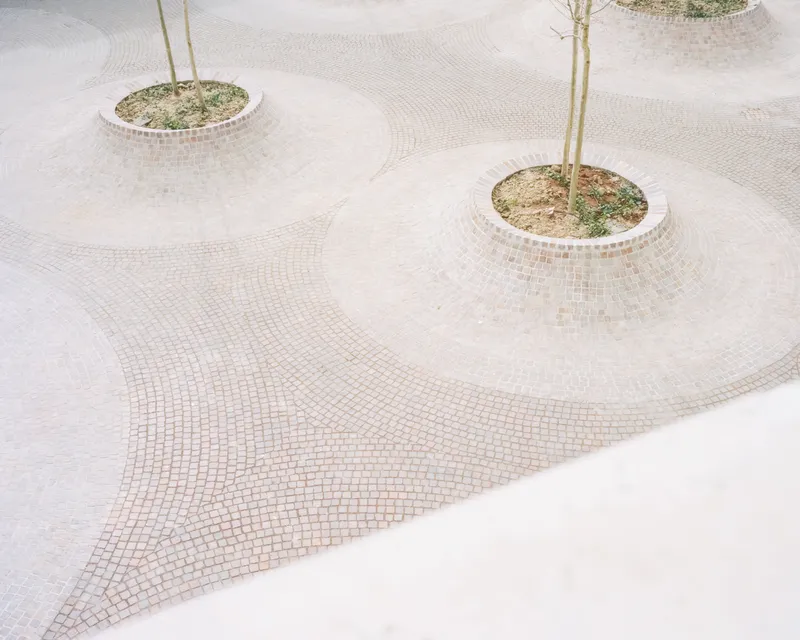
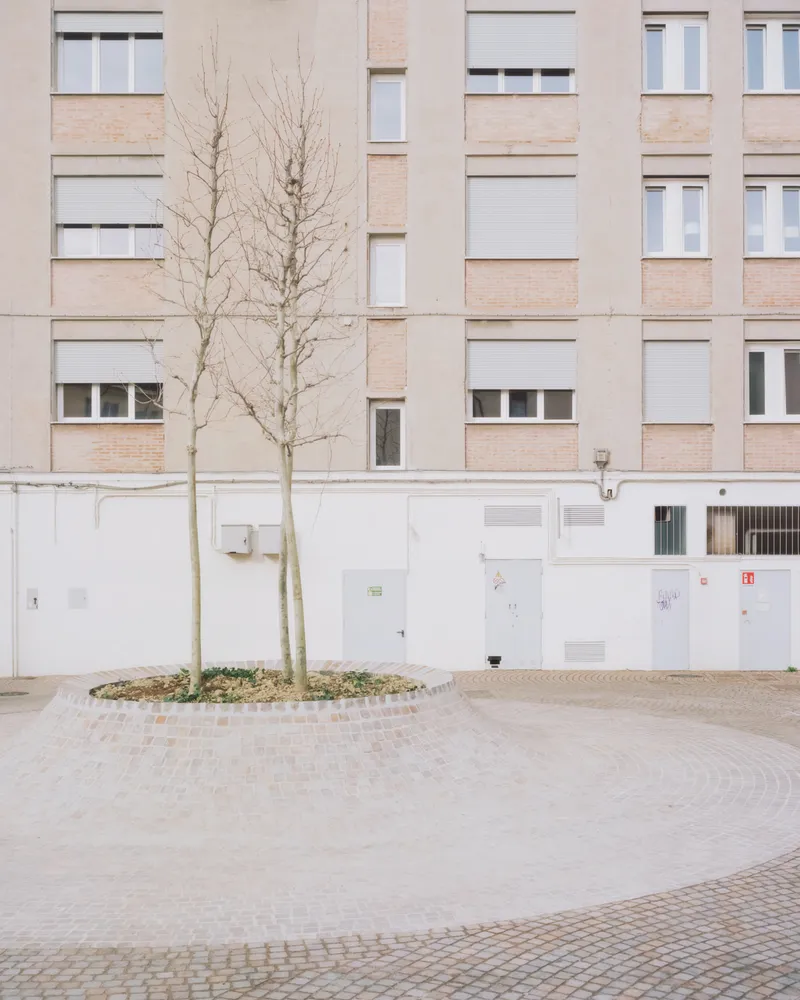
Trees are arranged in densely planted green islands, forming clusters that visually merge into a “single crown” effect. This strategy ensures evenly distributed shade across the square while reinforcing the perception of a continuous green canopy.
Sculpted Ground and Green Islands
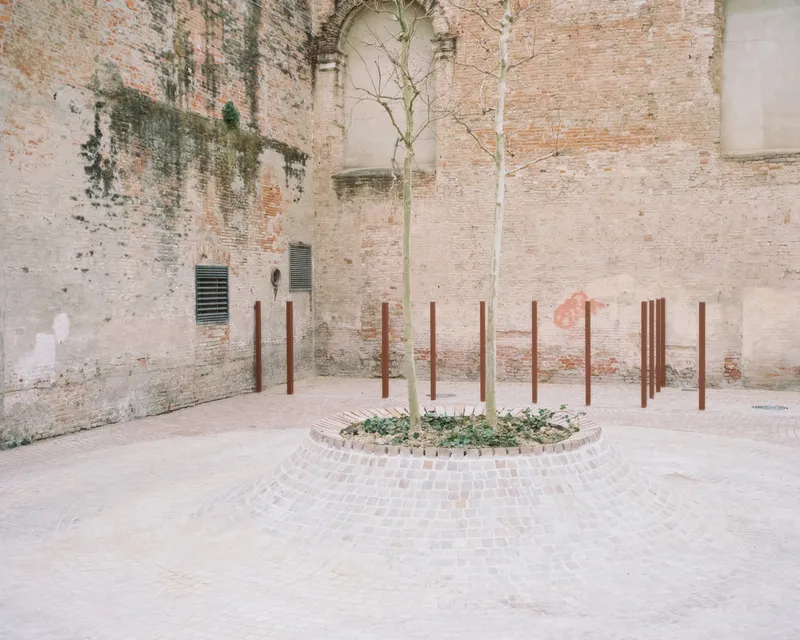
Subsurface constraints: including underground utilities, archaeological remains, and historic foundations, required an innovative approach to tree planting. To minimize excavation depth, trees are planted above the existing walking surface. This necessity becomes a defining design feature, shaping the square’s distinctive topography.
The stone paving subtly rises to form three-dimensional green atolls, emerging as truncated cones that gently connect with the surrounding ground plane. These landscaped islands accommodate root systems while offering informal seating and spatial variety. Rising up to one meter above the square, they introduce a soft relief into the otherwise continuous surface, enhancing both function and visual richness.
Permeable Paving and Water Management
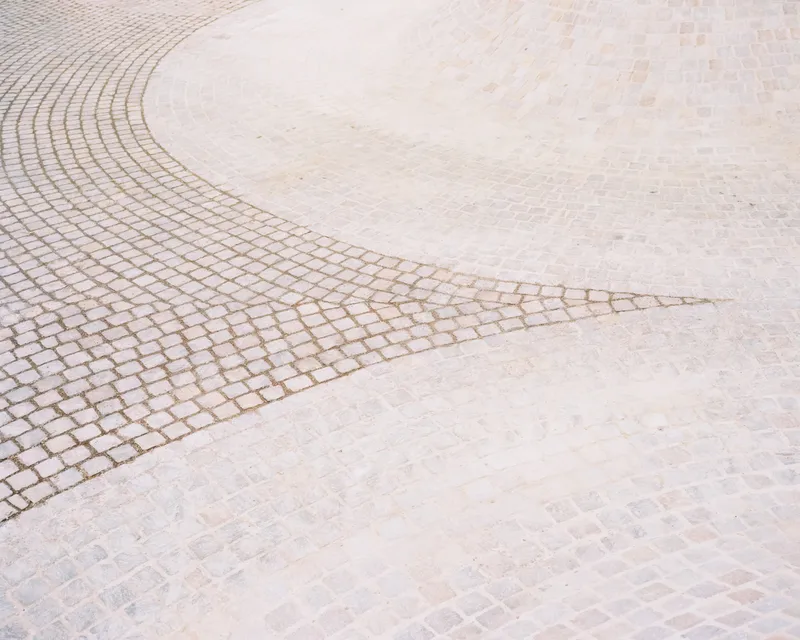
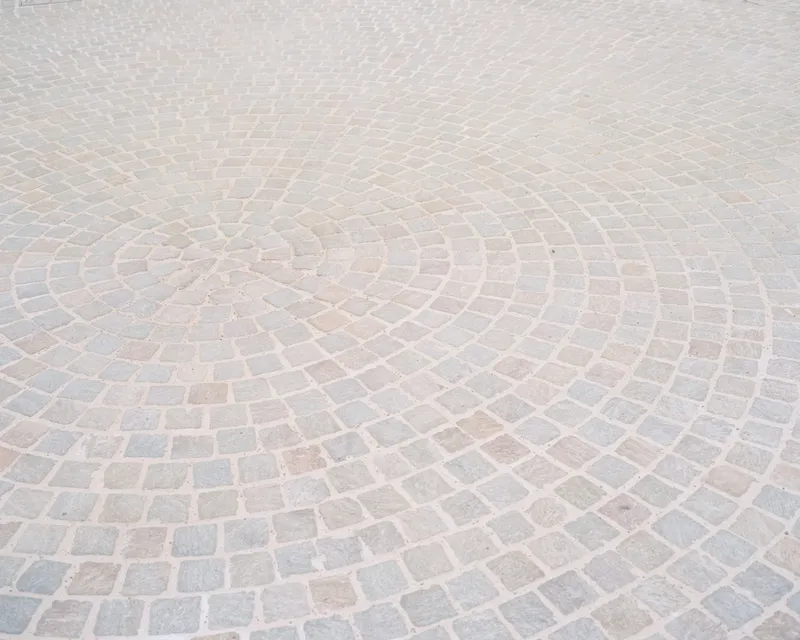
The paving design follows the sculpted topography through a geometric pattern of concentric circles, executed in porphyry cubes. The choice of porphyry reinforces material continuity with Ferrara’s historic public spaces while enabling drainable joints, allowing rainwater to infiltrate rather than run off.
Beneath the surface, the project introduces an innovative “underground square” dedicated to water management. Using the Permavoid system, rainwater is collected and stored within a subsurface layer that functions like a sponge. Through passive capillary irrigation, water is gradually released back into the soil, nourishing tree roots without pumps, energy consumption, or mechanical devices.
This system reduces pressure on the city’s sewer network during heavy rainfall while ensuring water availability during prolonged droughts, transforming rainwater from a potential risk into a valuable ecological resource.
A Contemporary Model for Climate-Adaptive Public Space
Piazza Cortevecchia demonstrates how historic urban centers can be reimagined through climate-adaptive design without compromising identity or heritage. By merging landscape architecture, sustainable infrastructure, and civic space design, INOUT architettura delivers a resilient public square that responds to environmental challenges while enhancing everyday urban life.

All photographs are works of Simone Bossi


Popular Articles
Popular articles from the community


David Ortega Stacks a Two-Story Mexico City Penthouse Around a Steel Stair and a Pergola-Shaded Roof Terrace
In Colonia Roma, a 300 m² penthouse uses oak joinery, a planted steel stair and a slatted roof pergola to make a new-build apartment feel like a house.

ETEH Reworks the Shared Spaces of São Domingos School in Brazil Around Timber, Color and Hanging Plants
At São Domingos School in Brazil, 436 m² of hall, refectory and library are recast with timber joinery, a yellow and blue code and trailing greenery.


Opera on the Sea: Driftwood Logic Shapes a Timber Opera House on Estonia's Coast
Trevor Orgill's opera house translates the entangled drift of floating timber into a civic building where wood, water, and music converge.

graciastudio Turns a Viewless Tijuana Lot Inward Around a Courtyard of Concrete, Timber and Trees
In Tijuana, Jorge Gracia's GA2 House stacks a timber-clad private floor over exposed concrete and replaces a missing view with a planted interior patio.

Similar Reads
You might also enjoy these articles


Hodi-Mandai Geram
Project Function: Preservation and revitalization of the Intangible heritage and socio-spatial identity of the Hodi by Housing, Cultural Memory Center, Sacred Grove, landscape, local tourism economy


Olio Towers: A Mid-Rise for Performers That Fuses Housing, Rehearsal, and Stage
Located blocks from Houston's Theater District, this modular tower stacks living units around a central performance atrium.

Oasis: Modular Green Housing Carved into Dhaka's Urban Fabric
A shortlisted Plugin Housing entry reclaims unauthorized settlements in Dhaka with stepped concrete volumes, green roofs, and ventilation-driven design.

Black Hole: A Floating Megastructure for the Post-Physical Era
Emiliano Mazzarotto envisions a spherical, self-scaling arena where e-sports, digital hotels, and holographic stadiums replace traditional public space.

Explore Public Square Competitions
Discover active competitions in this discipline

Challenge to reimagine the Iron Throne

Photograph architecture without architects

Illustrate the lost glory of Angkor Wat - Render Challenge

Design challenge to reuse E-waste
Comments (0)
Please login or sign up to add comments
No comments yet. Be the first to comment!