

PIN8 House by PMMT Arquitectura: A Flexible, Bioclimatic Home Inspired by Heritage and Nature
PIN8 House blends bioclimatic design, flexible living, and local materials to create a sustainable, light-filled home in Girona.


Set in the picturesque region of Baix Empordà, Girona, Spain, the PIN8 House, designed by PMMT Arquitectura, is a compelling example of how contemporary residential architecture can harmoniously blend with local heritage, climate, and topography. With a focus on sustainability, flexibility, and natural integration, this 292 m² home exemplifies passive design strategies, material honesty, and spatial adaptability — all within a simple, elegant architectural form.
Contextual Design Meets Local Heritage
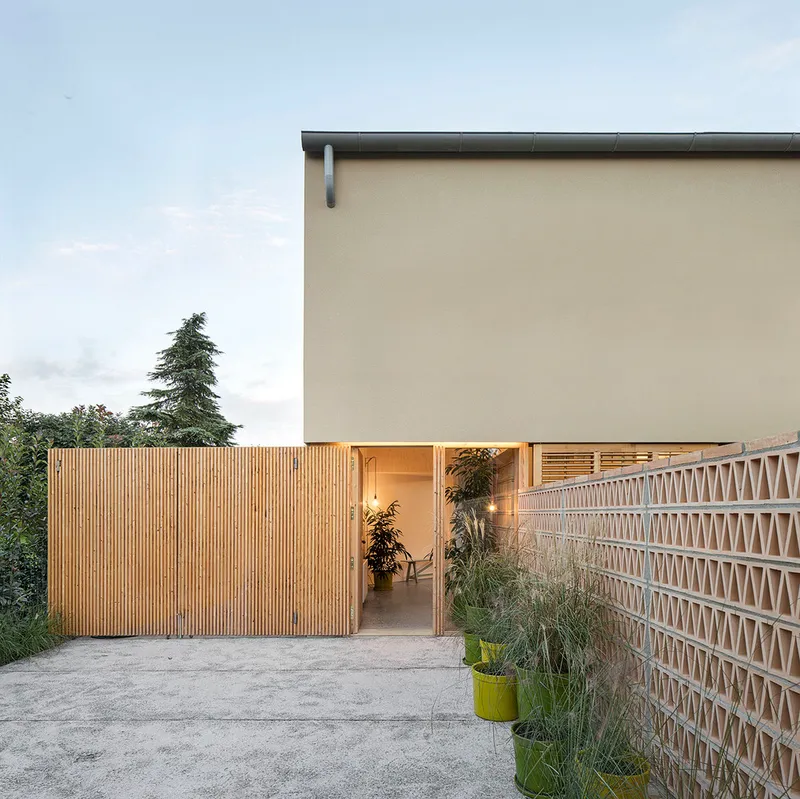
The design of PIN8 House is deeply rooted in local urban planning regulations and cultural values. The architectural response balances tradition and modernity, respecting the town’s aesthetic codes while introducing innovative spatial and environmental strategies.
The house, organized over two levels with a rectangular floor plan, draws from the vernacular language of Mediterranean architecture — using natural materials, patio-centered planning, and structural expression — but interprets them through a contemporary lens.
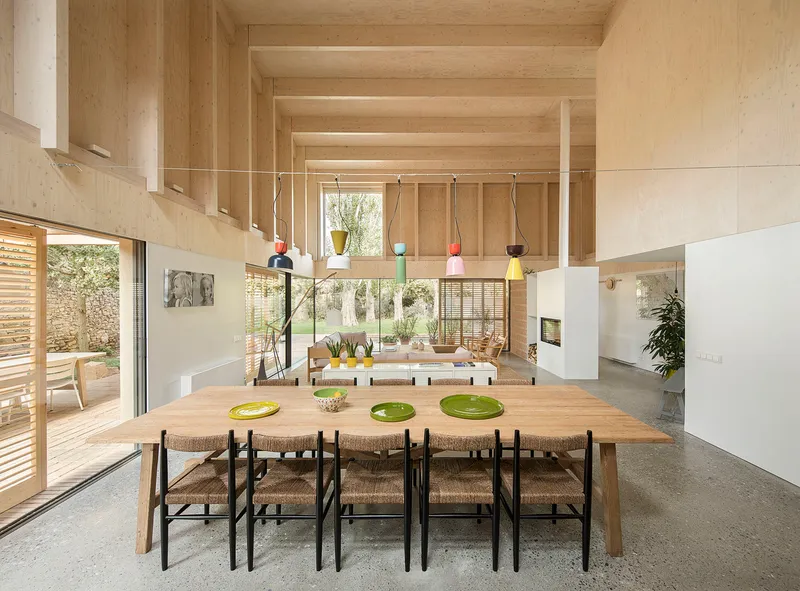
Openness, Light, and Spatial Dialogue
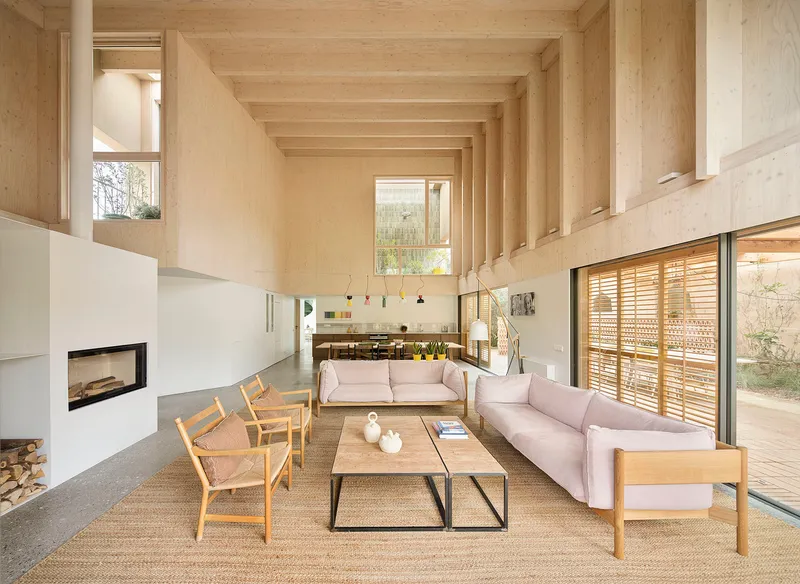
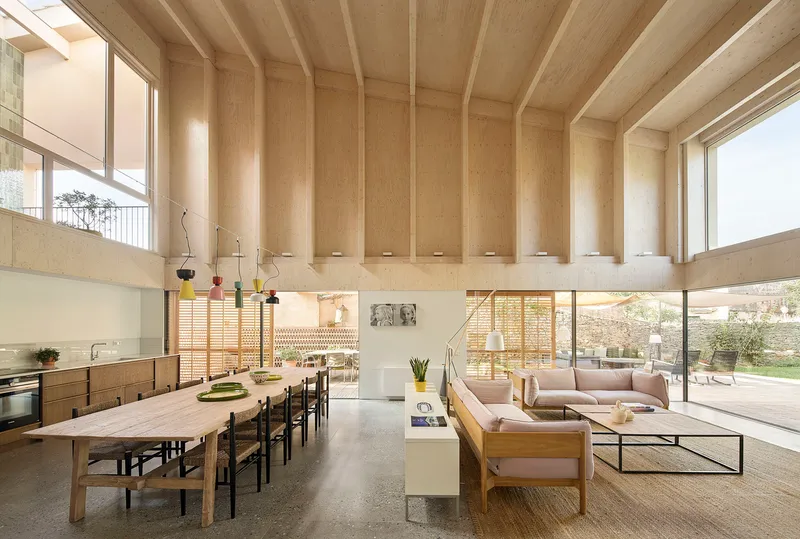
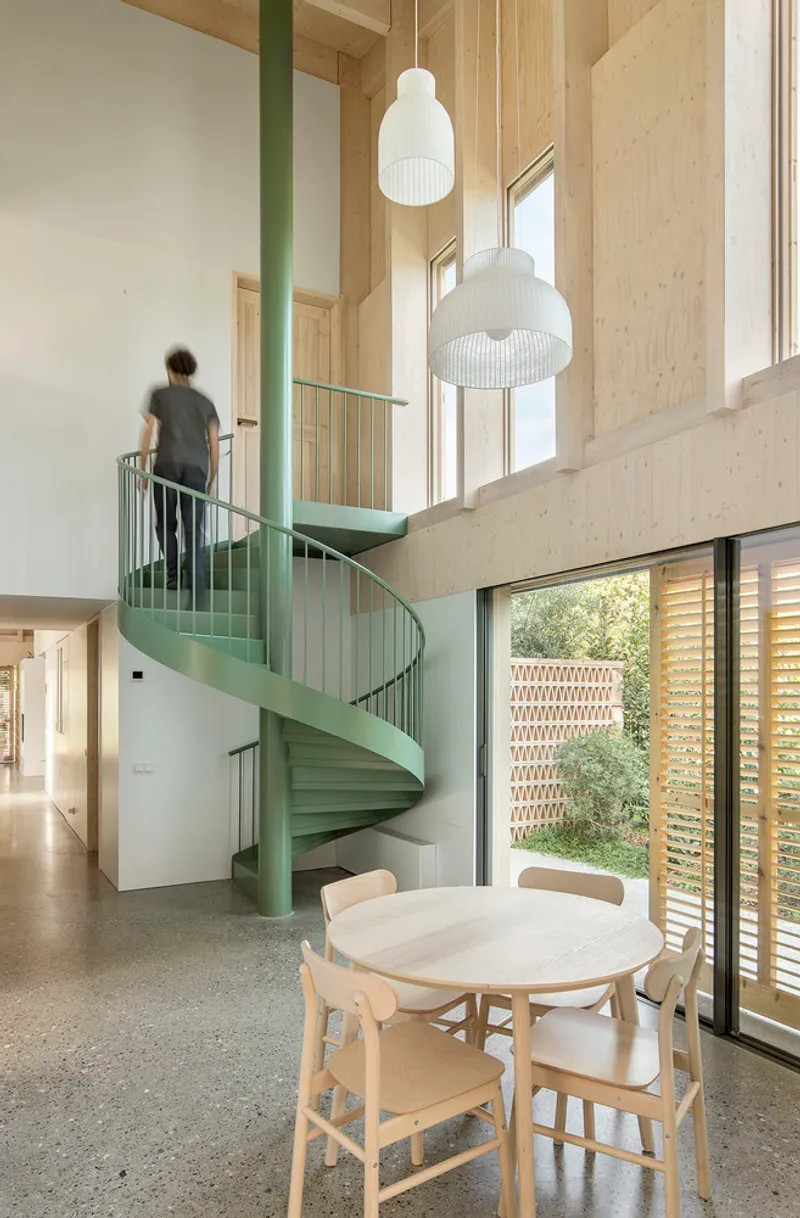
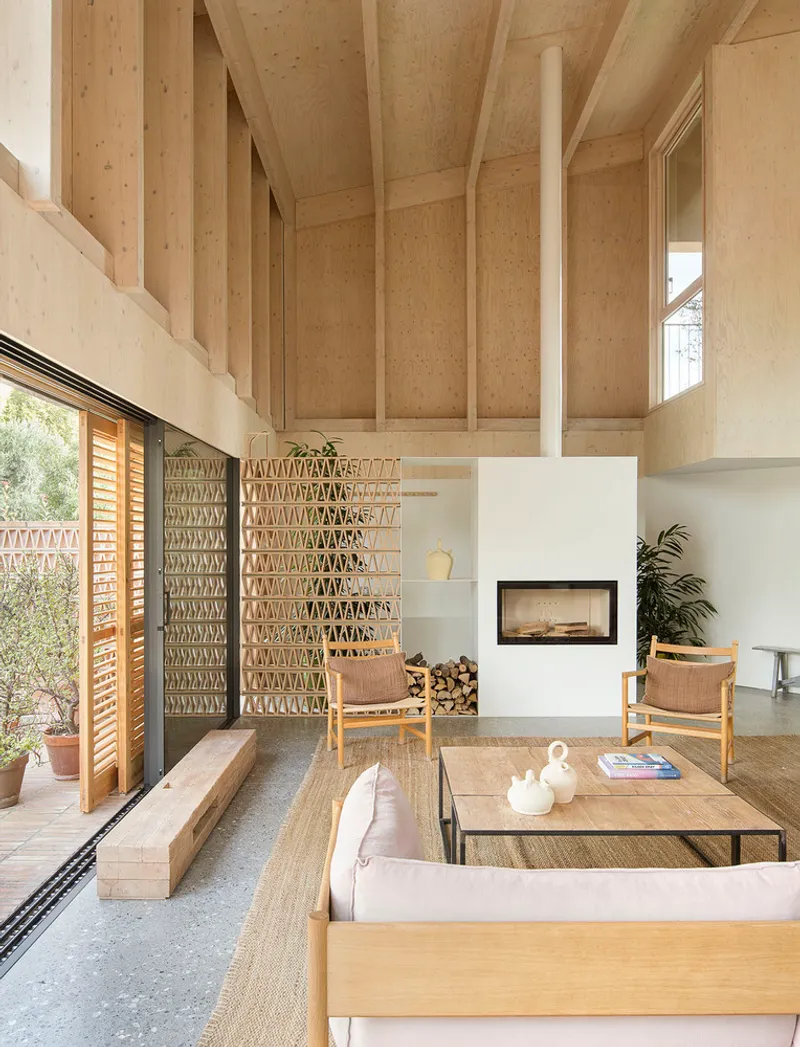
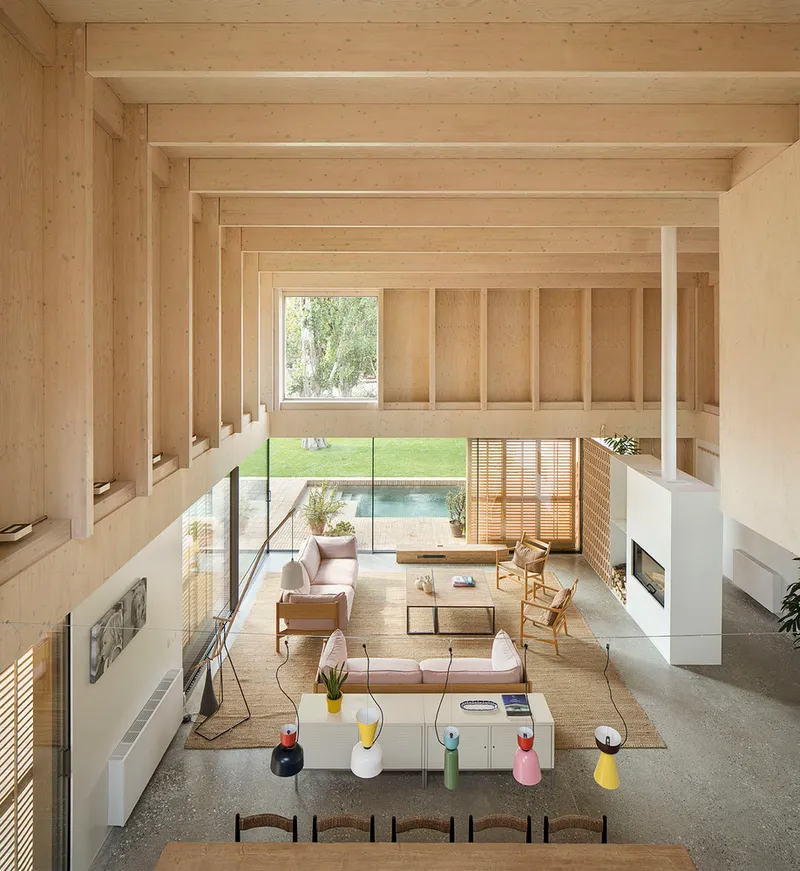
At the heart of the project lies the desire for maximum permeability. The ground floor is highly transparent, featuring large sliding glass openings that dissolve the boundary between interior and garden. These seamless transitions allow daylight, air, and views to flow freely, creating an immersive living experience. The double-height volumes, visible structural beams, and mezzanines establish dynamic vertical connections, bringing in the sky as part of the architectural composition.
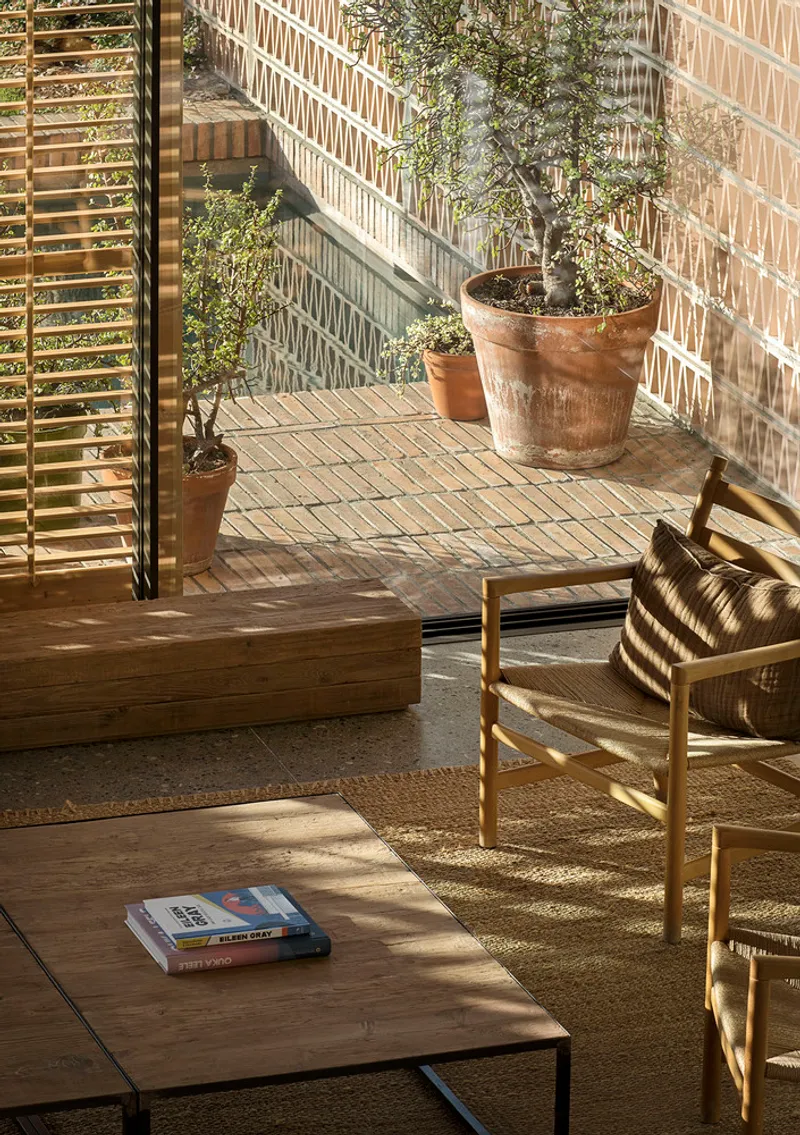
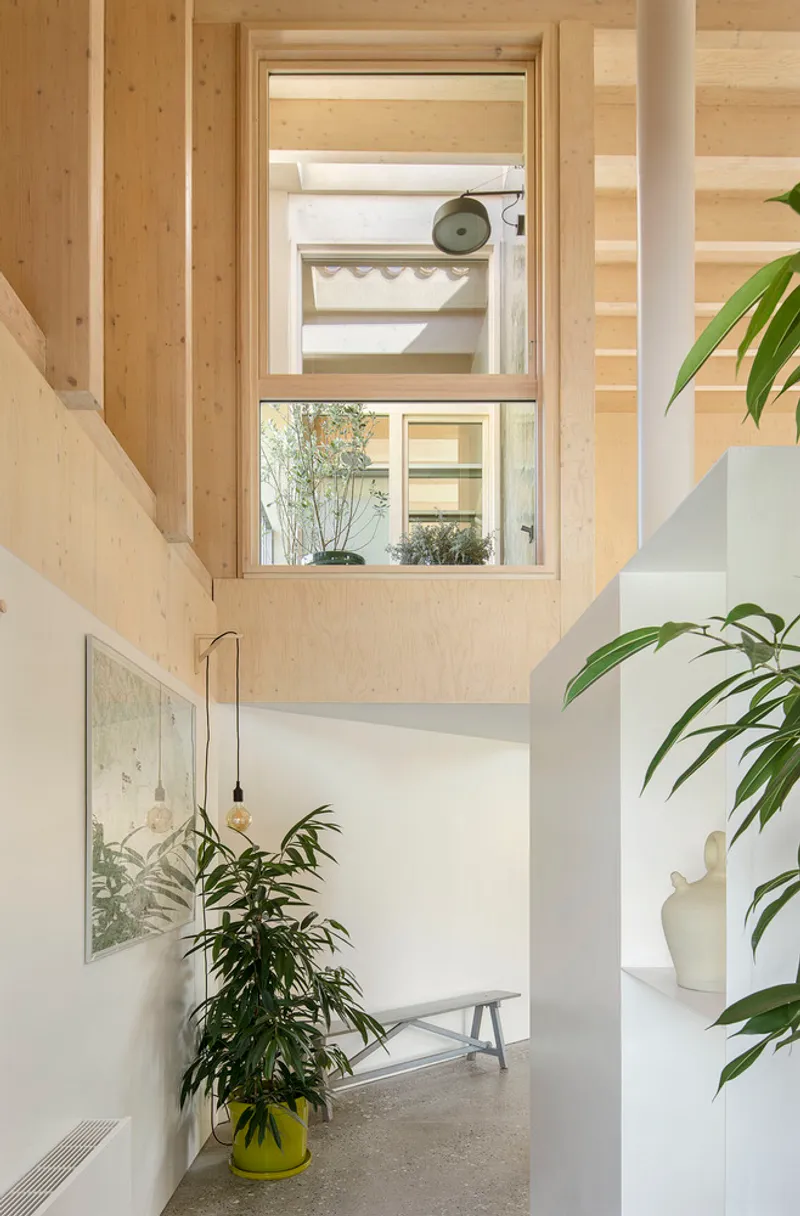
The upper floor is more opaque and private but carefully punctuated with three landscaped patios that serve both aesthetic and bioclimatic functions — delivering natural ventilation, daylight, and a direct dialogue with vegetation.
Bioclimatic Performance and Passive Comfort
PIN8 House is an excellent example of bioclimatic design. The home’s orientation, envelope strategy, and internal spatial organization have all been crafted to reduce energy demand and improve indoor comfort year-round. Key strategies include:
- Solar orientation and controlled exposure through mobile wooden shutters
- Cross ventilation enabled by the chimney effect between levels
- Thermal mass and insulation via timber CLT structure and well-sealed facades
- Natural cooling and heating through passive air flows and sun gain
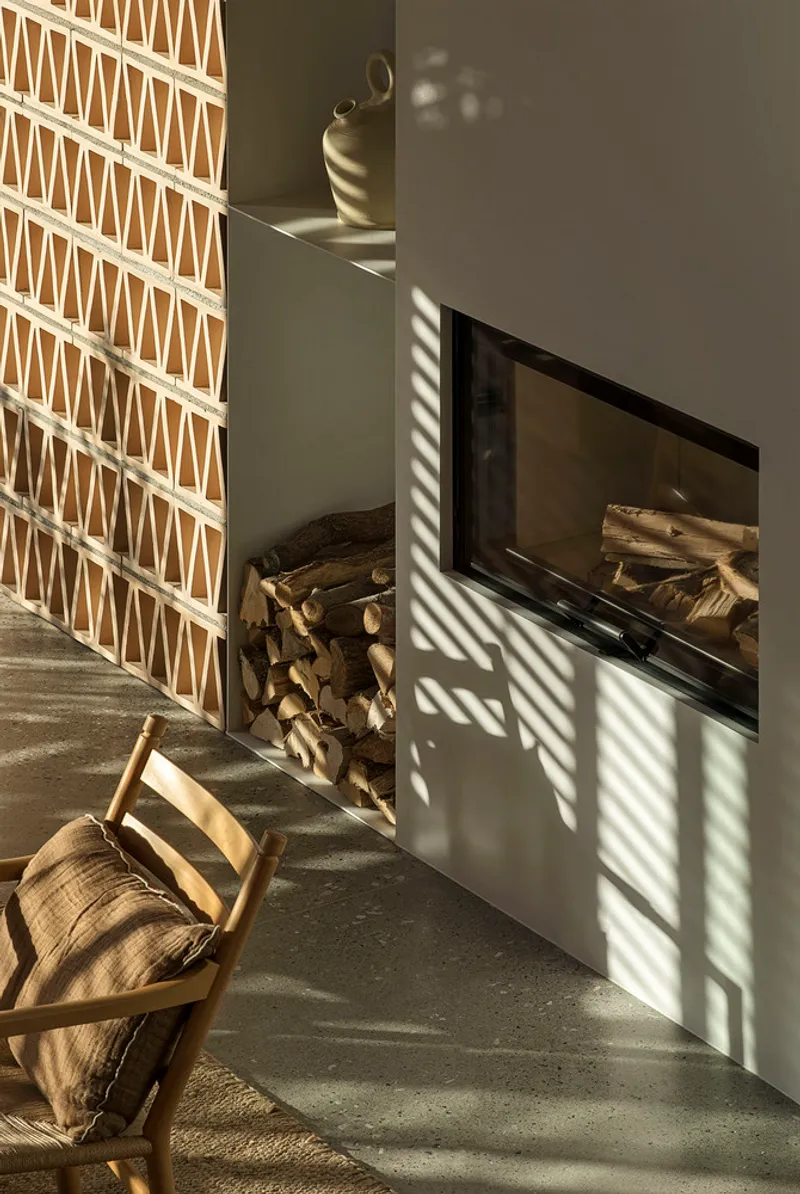
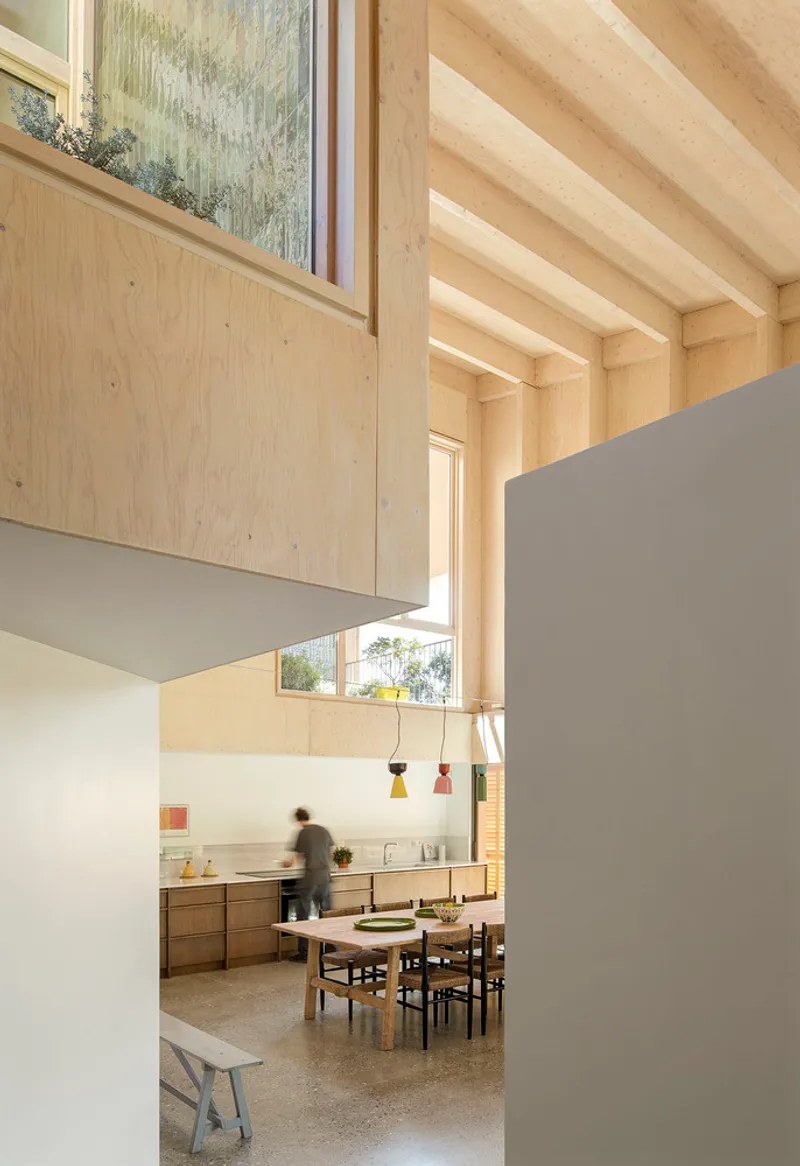
These elements work in harmony to minimize energy use while enhancing the sensory experience of the home’s occupants.
Living in Layers: Functionality and Future Flexibility
The main living spaces — kitchen, dining, living room, bedrooms, and services — are located on the ground floor. These areas converge into a double-height open-plan core, encouraging communal interaction while staying visually and spatially connected to the outdoor areas and upper patios.
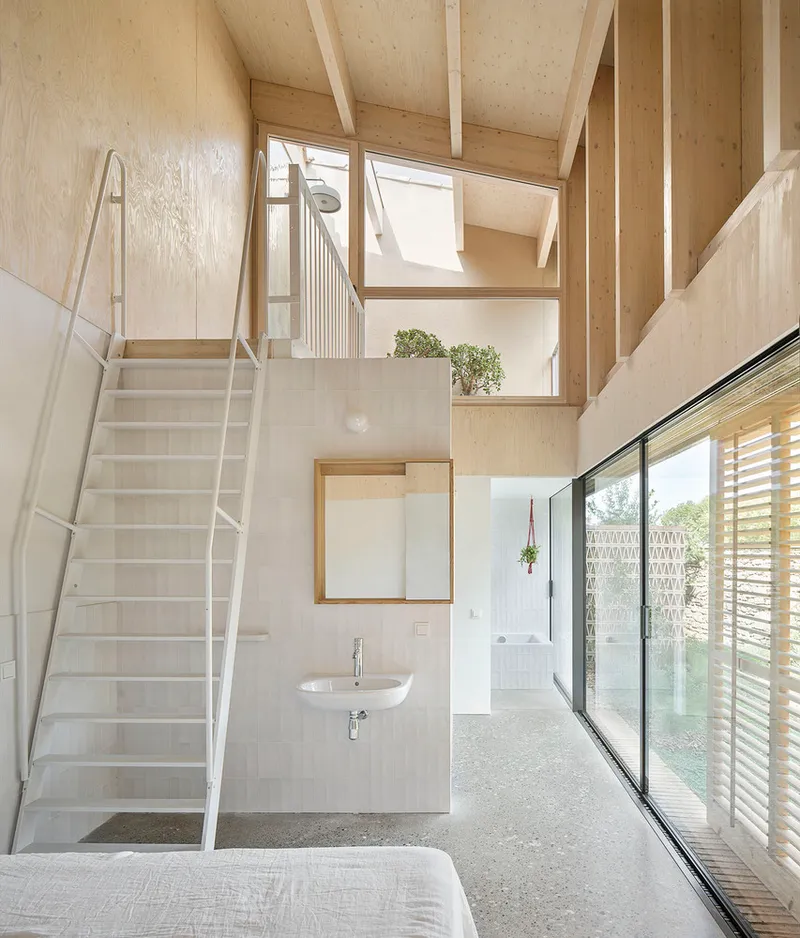
The upper level houses a guest suite with bathroom, surrounded by patios and mezzanine walkways that offer both privacy and panoramic views of the interior and exterior.
One of the home’s strongest assets is its programmatic flexibility. The arrangement of stairs, mezzanines, and circulation spaces allows the home to adapt to future changes, such as family expansion, additional workspaces, or hybrid uses. It is a home designed to evolve over time.
Structure as Narrative: A Home Named After Pinocchio
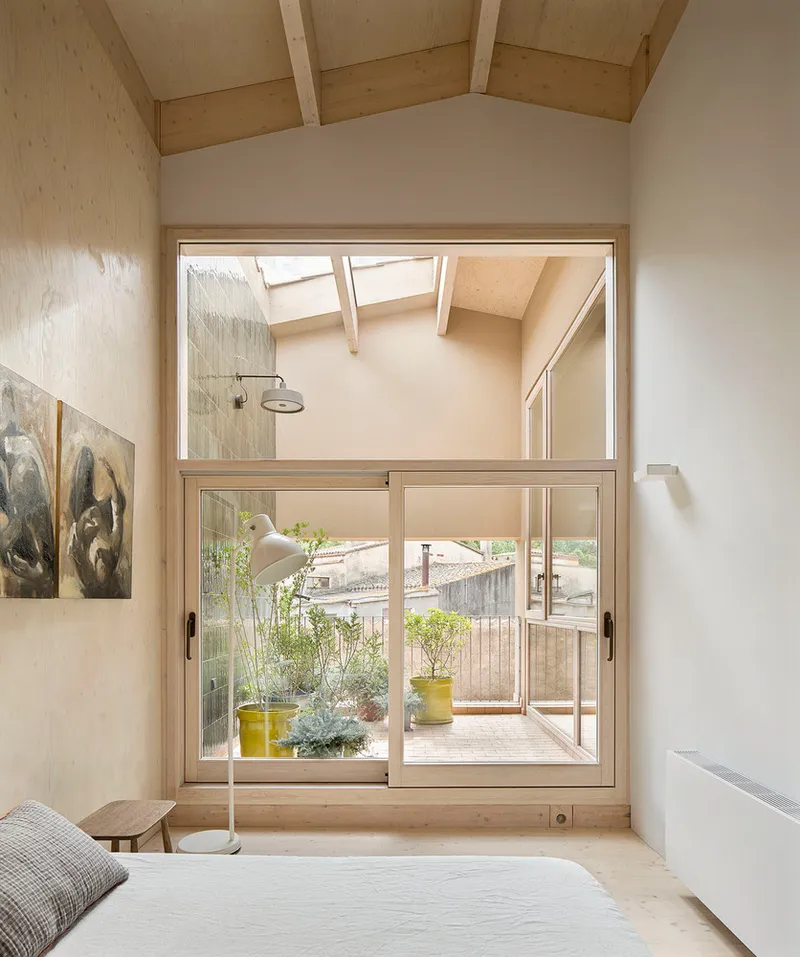
The construction employs a hybrid system of metal framing and CLT (cross-laminated timber). This exposed wooden structure defines the interior aesthetic — warm, tactile, and honest. The curved profile of the wooden beams evokes the inverted hull of a ship, or as the architects poetically describe, the ribcage of the whale in the Pinocchio tale — a whimsical nod that gives the house its name: PIN8.
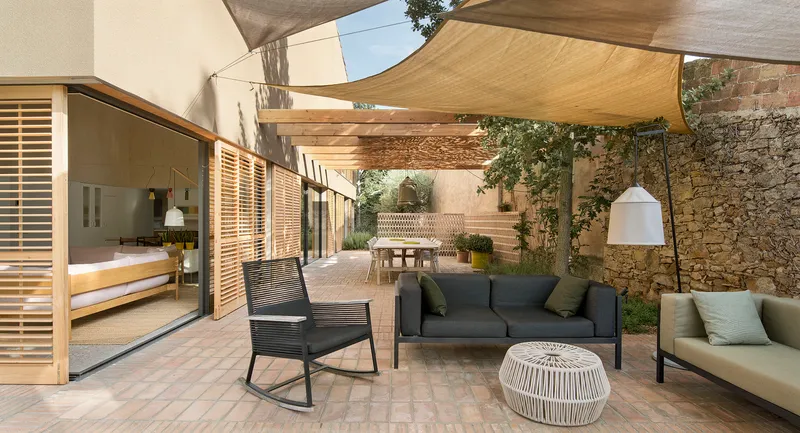
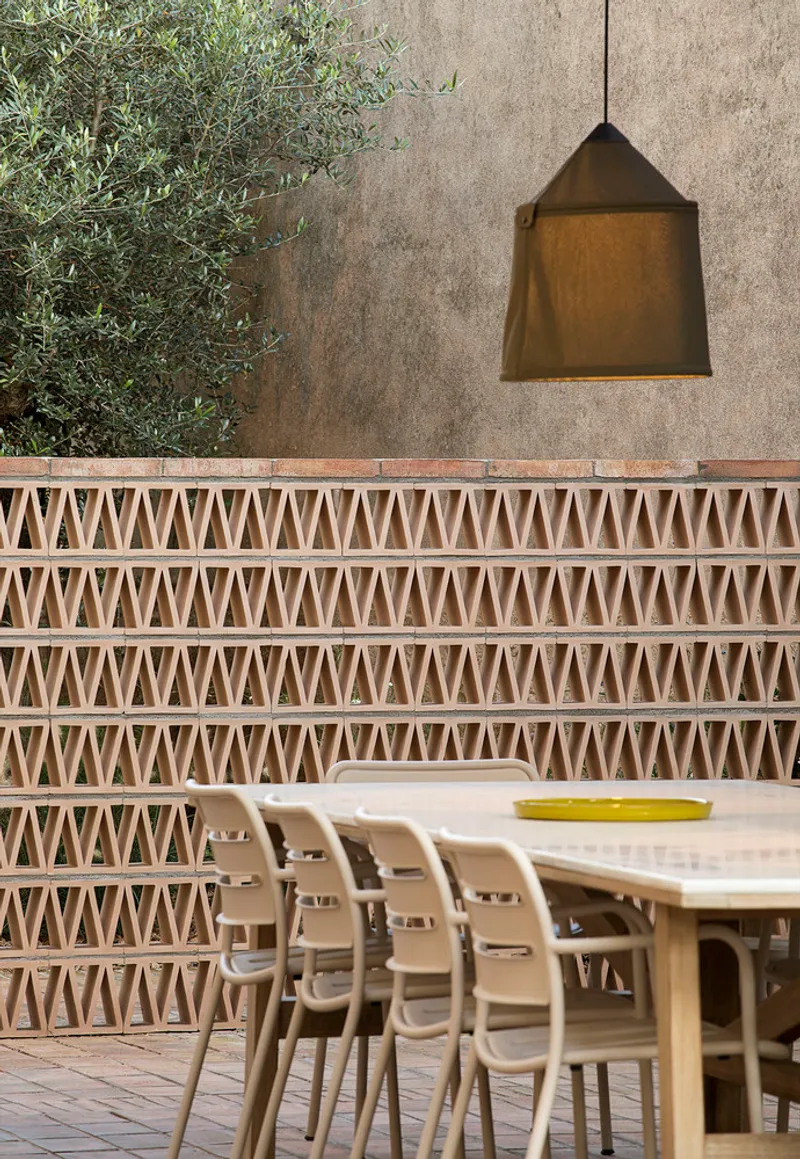
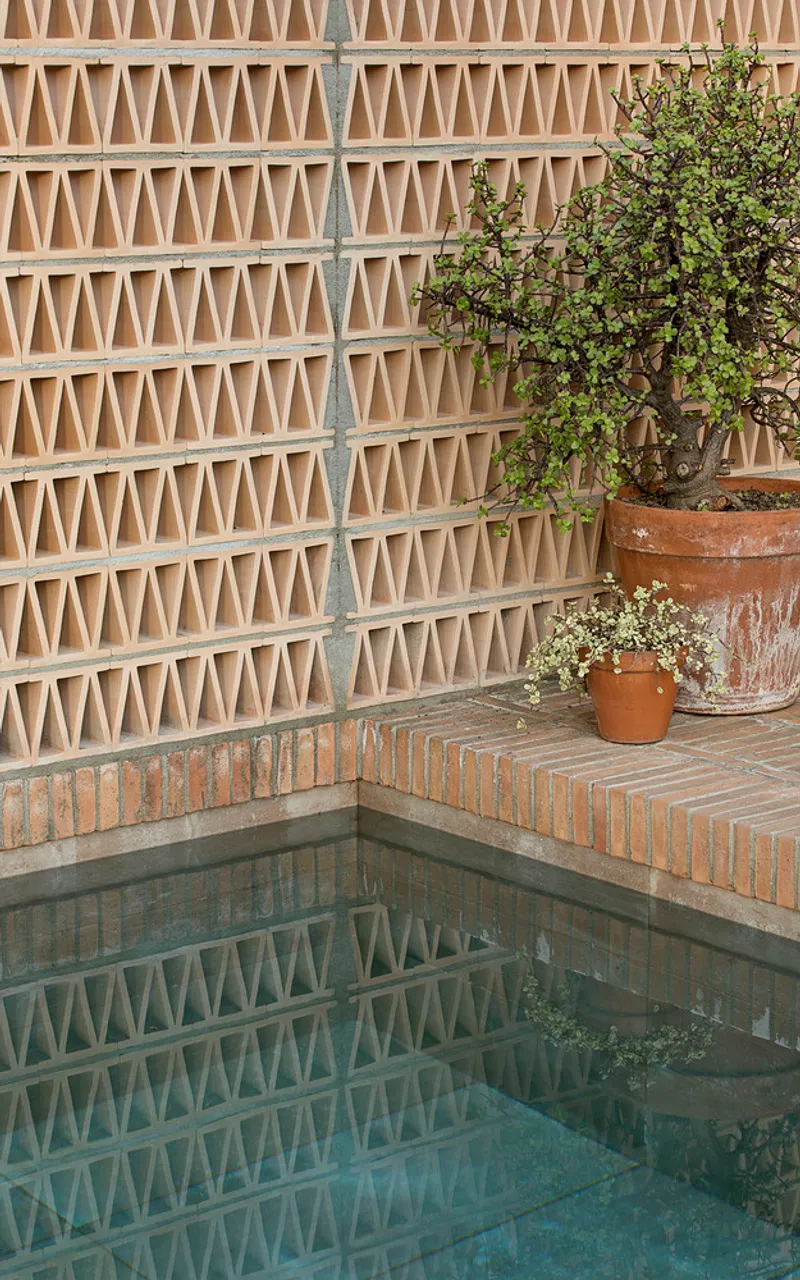
The home was built using 0Km materials and collaborations with local artisans and workshops, further supporting the commitment to sustainability, circularity, and regional identity.


Popular Articles
Popular articles from the community


LT2A and OPEN Architectes Thread a Brick and Glass High School Through a Wooded Belgian Campus
In Braine-l'Alleud, a 3,000 m² wing for Collège Cardinal Mercier pairs pale brick with a glazed colonnade, deferring to a small chapel and a dense wood.

Jaramillo Van Sluys Arquitectura and Urbanismo Turn a Demolished Registry Lot in Quito into an Orchard Plaza
In Quito's Centro Histórico, a 2,800 m² plaza exposes the San Agustín convent wall and redraws its lost Augustinian orchard in volcanic stone.

Architekt Andreas Gruber Scatters 23 Dark Timber Chalets Across a South Tyrolean Forest Edge
In Molini di Tures, Amonti Chalets breaks a resort into a hamlet of gabled timber houses, with parking, storage and services pushed into the slope.

Cube Design Draws an Ecological Corridor Between Two Shenzhen Hills with the Nankai Building
Beside Shenzhen's container docks, the Nankai Building pairs stacked balconies with a climbing green screen to connect two hillsides across its height.

Similar Reads
You might also enjoy these articles


Hodi-Mandai Geram
Project Function: Preservation and revitalization of the Intangible heritage and socio-spatial identity of the Hodi by Housing, Cultural Memory Center, Sacred Grove, landscape, local tourism economy


Olio Towers: A Mid-Rise for Performers That Fuses Housing, Rehearsal, and Stage
Located blocks from Houston's Theater District, this modular tower stacks living units around a central performance atrium.

Oasis: Modular Green Housing Carved into Dhaka's Urban Fabric
A shortlisted Plugin Housing entry reclaims unauthorized settlements in Dhaka with stepped concrete volumes, green roofs, and ventilation-driven design.

Black Hole: A Floating Megastructure for the Post-Physical Era
Emiliano Mazzarotto envisions a spherical, self-scaling arena where e-sports, digital hotels, and holographic stadiums replace traditional public space.

Explore Architecture Competitions
Discover active competitions in this discipline

Challenge to reimagine the Iron Throne

Photograph architecture without architects

Illustrate the lost glory of Angkor Wat - Render Challenge

Design challenge to reuse E-waste
Comments (0)
Please login or sign up to add comments
No comments yet. Be the first to comment!