
Pirouette House in Islington: A Playful Timber Transformation by Artefact Studio
Timber courtyard house in Islington featuring rotating spaces, triangular column, skylights, sustainable materials, and playful colorful interiors enhancing light and ventilation.


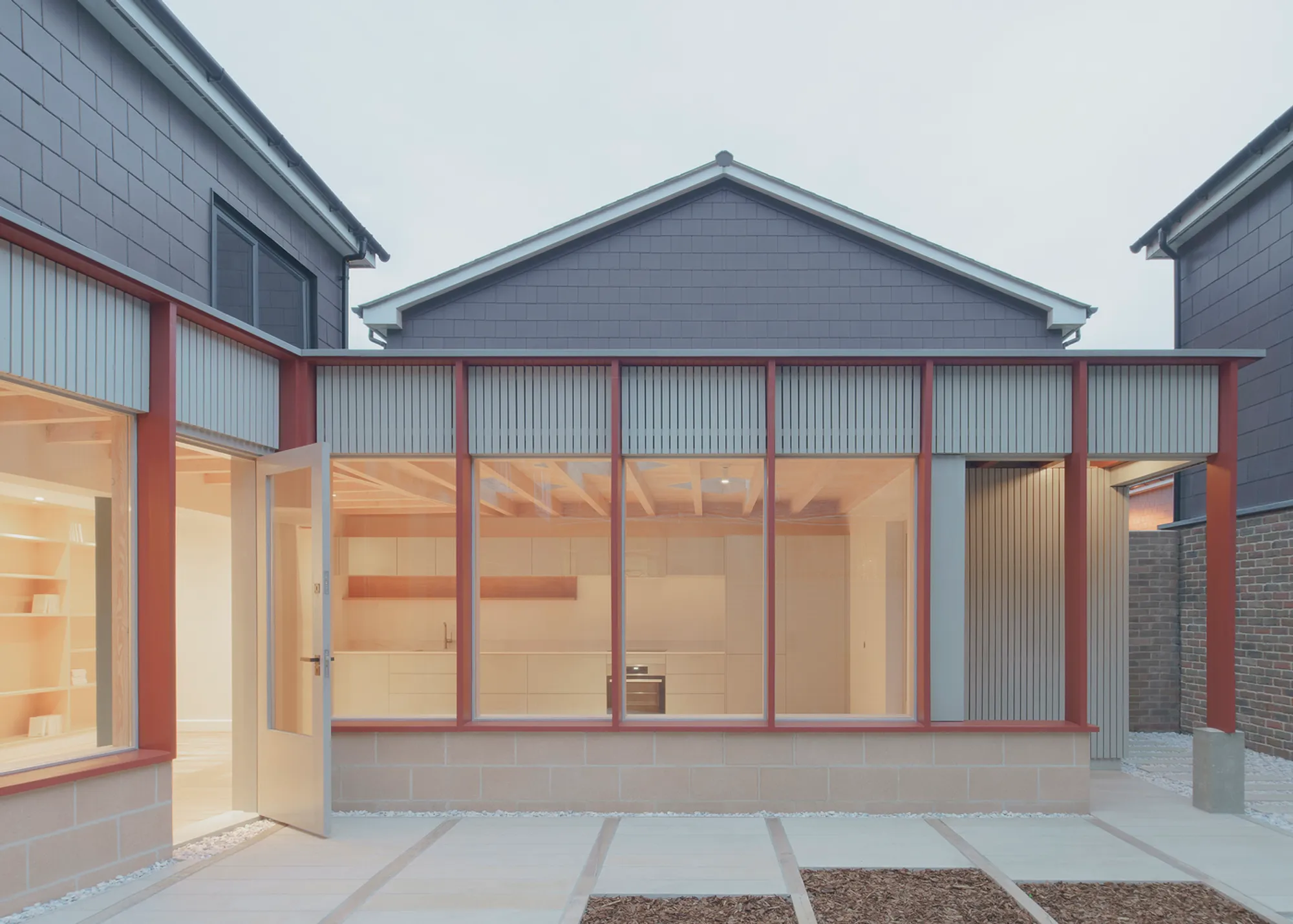
Located in the dense residential fabric of Islington, Pirouette House is a striking example of how thoughtful architectural intervention can transform an ordinary home into an expressive, light-filled living environment. Designed byArtefact Studio, this renovation project redefines a former local authority house built in the 1980s, introducing spatial dynamism, sustainable materials, and a strong architectural identity.
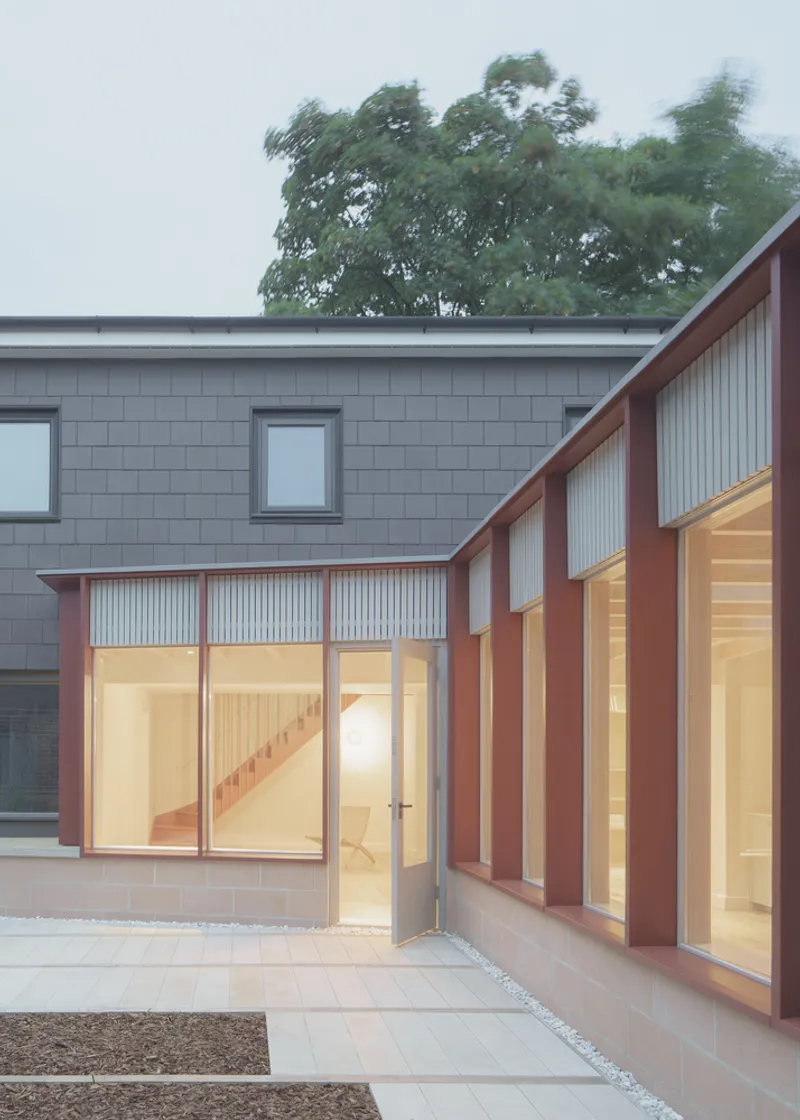
Set within the Grove Estate, an area characterized by repetitive housing blocks and narrow passageways, the project stands out as a bold yet sensitive response to its context. Despite its modest scale, Pirouette House demonstrates how contemporary residential architecture can enhance both spatial quality and environmental performance.
Architectural Concept: Movement, Geometry, and Spatial Flow
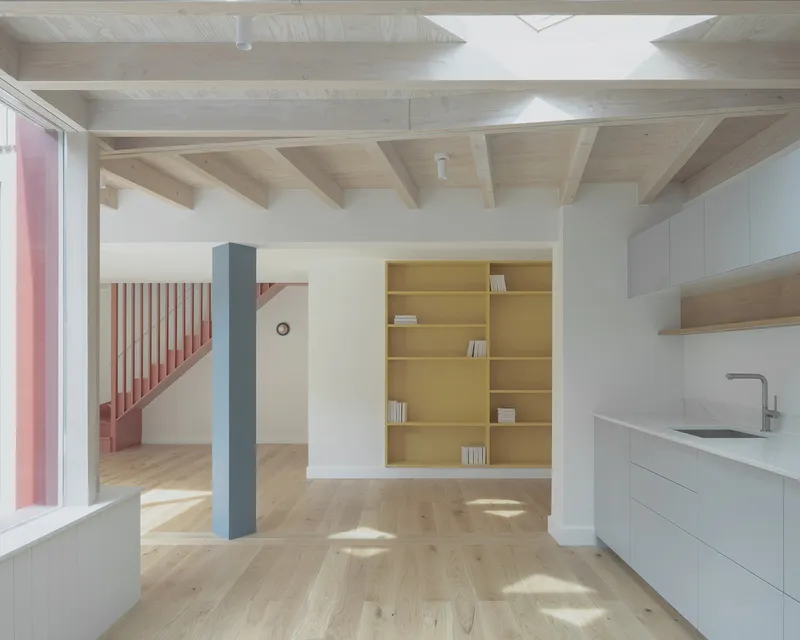
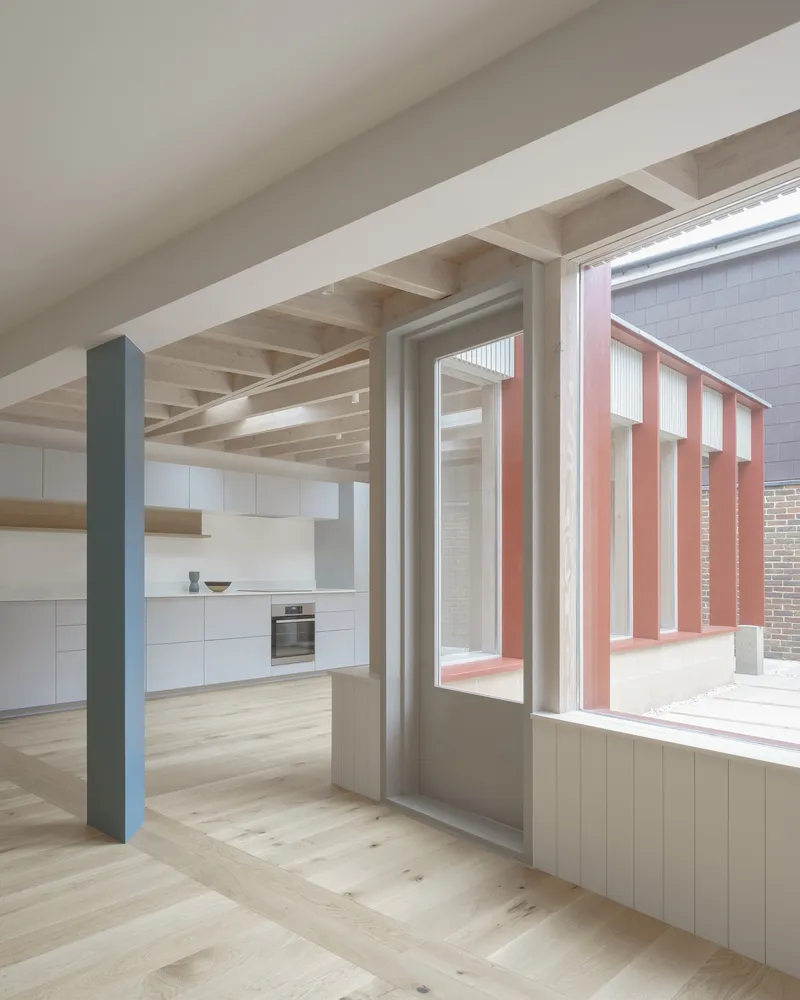
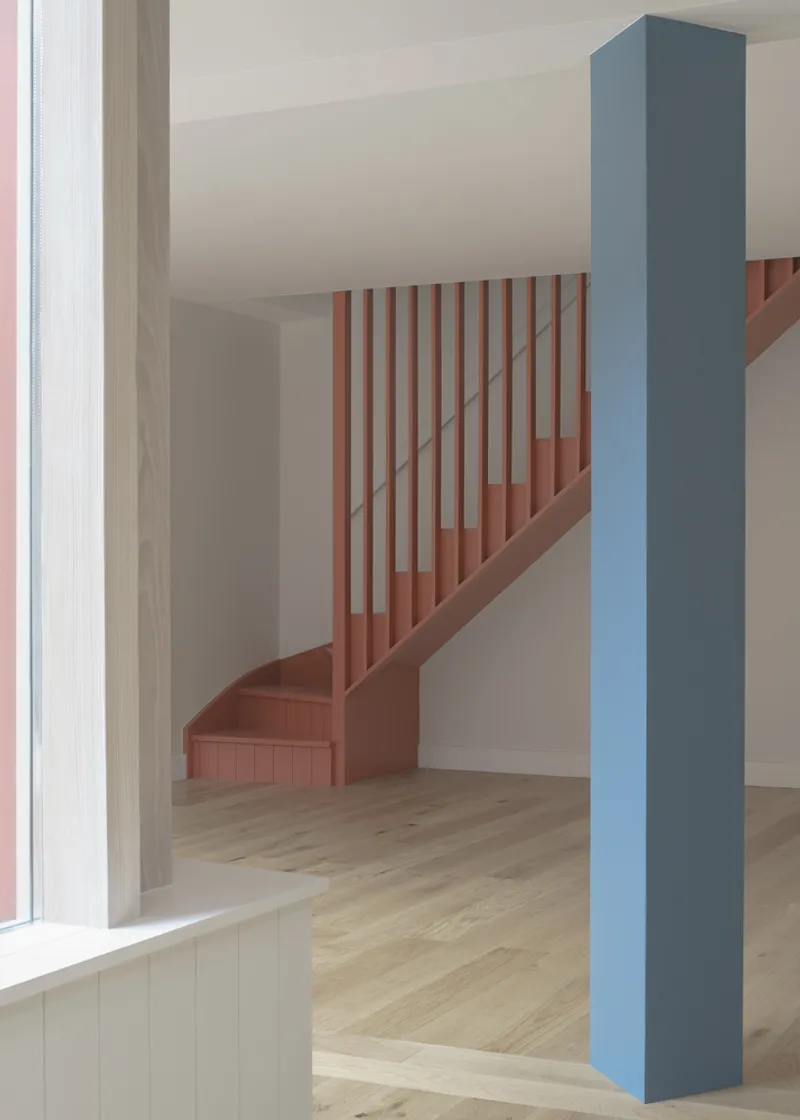
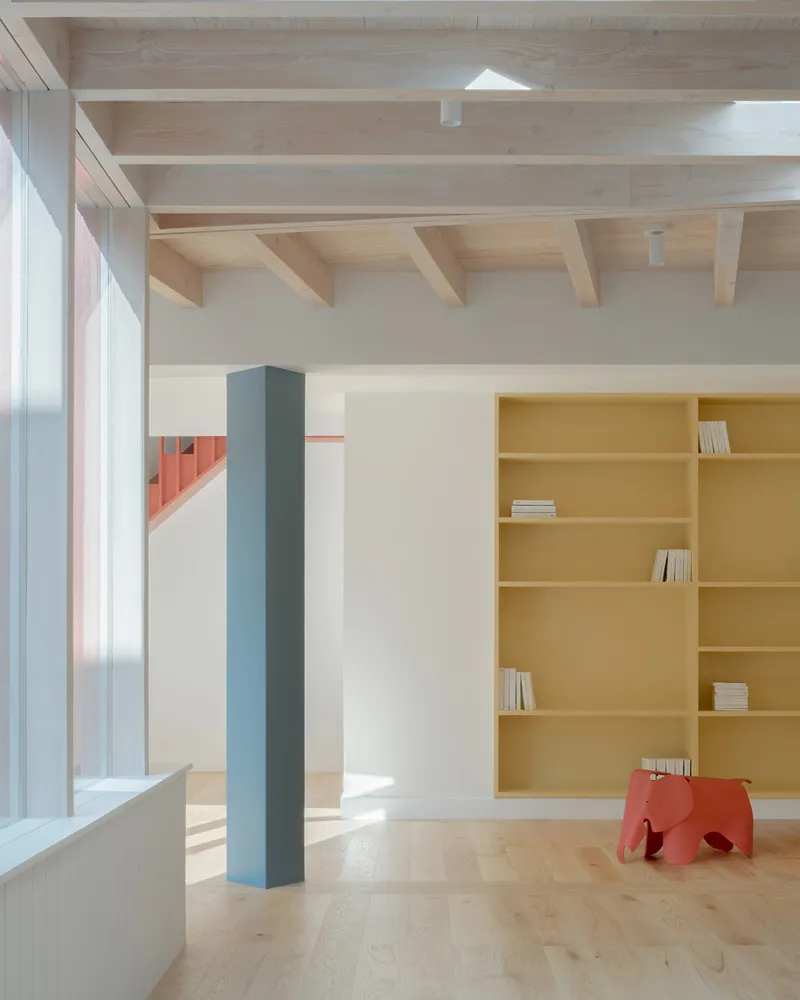
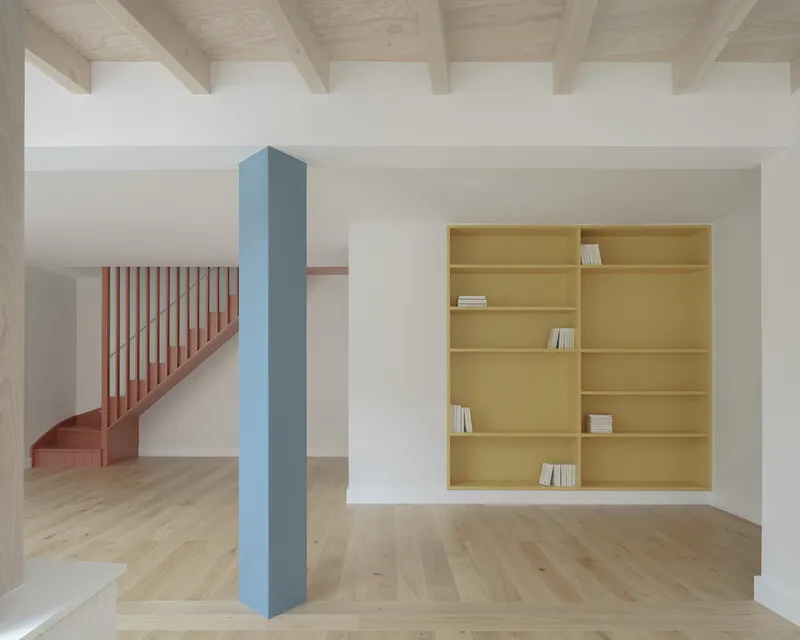
The design concept revolves around movement and rotation, hence the name “Pirouette House.” At the heart of the project is a triangular blue column, which acts as both a structural anchor and a spatial pivot. Around this central element, the interior spaces: kitchen, dining, and living, seem to rotate fluidly, creating a dynamic and engaging layout.
This choreography of space introduces a sense of surprise and discovery, contrasting sharply with the rigid and introverted nature of the original structure. The design encourages circulation and visual connectivity, allowing each space to unfold naturally into the next.
Hidden Courtyard and Timber Cloister
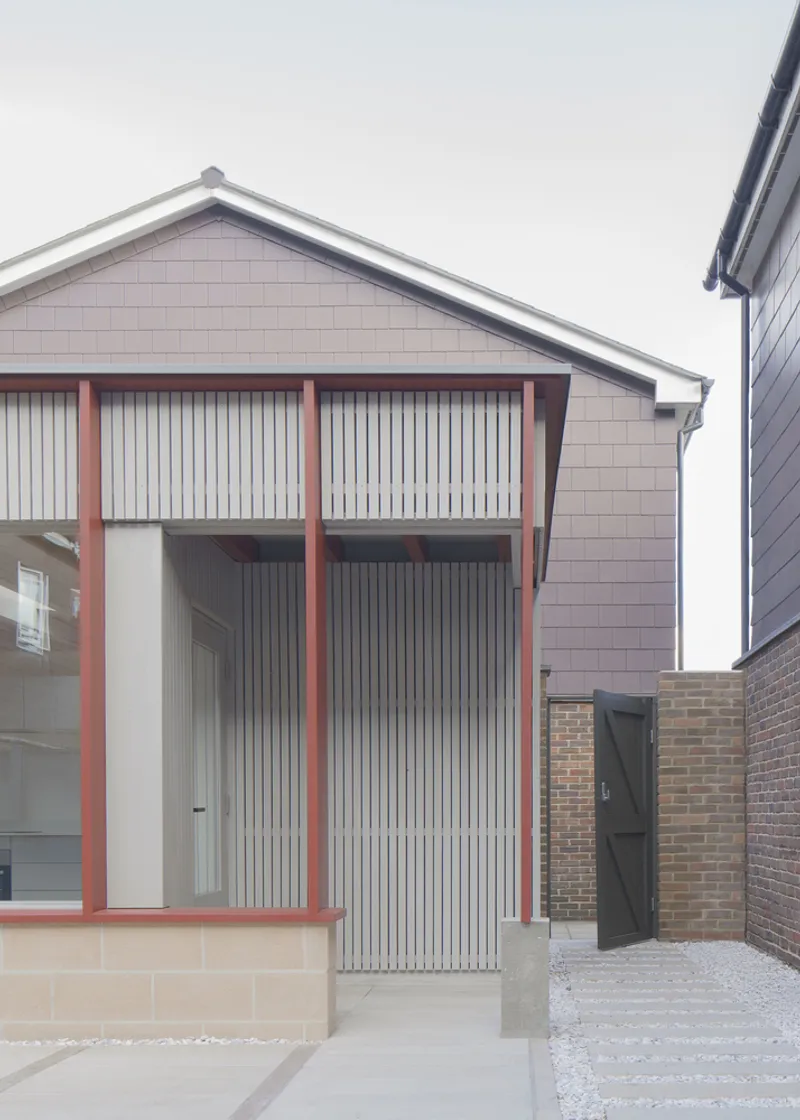
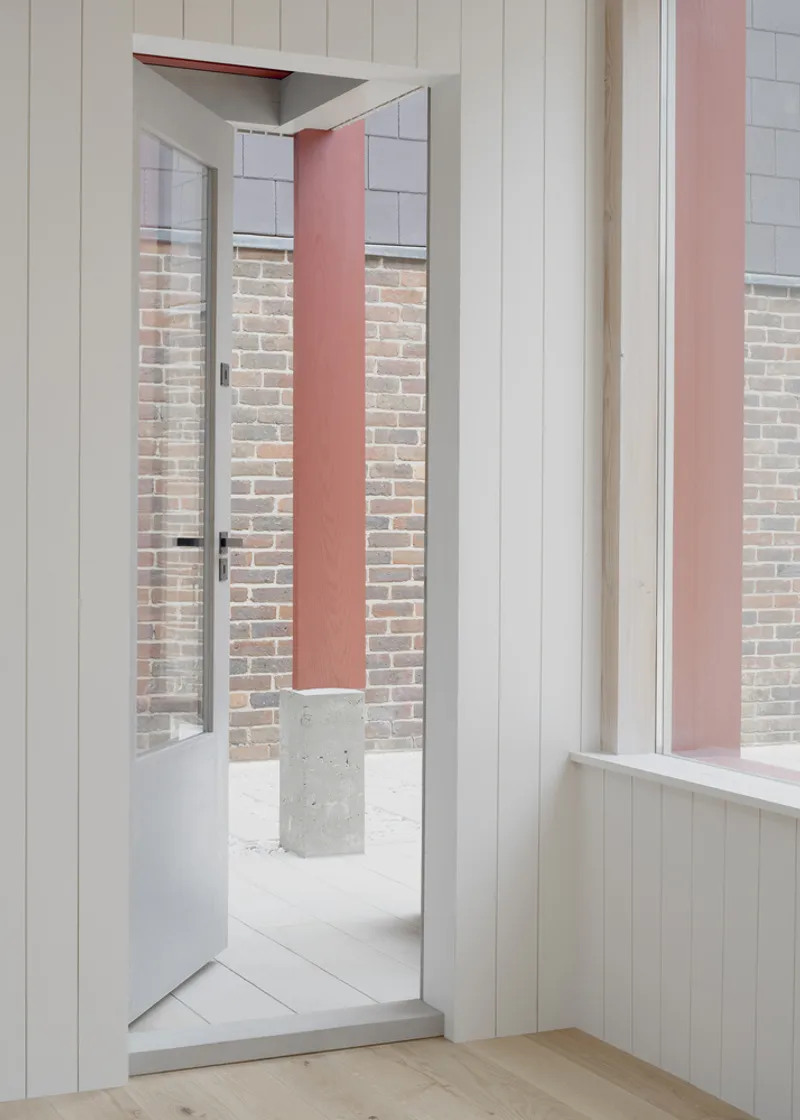
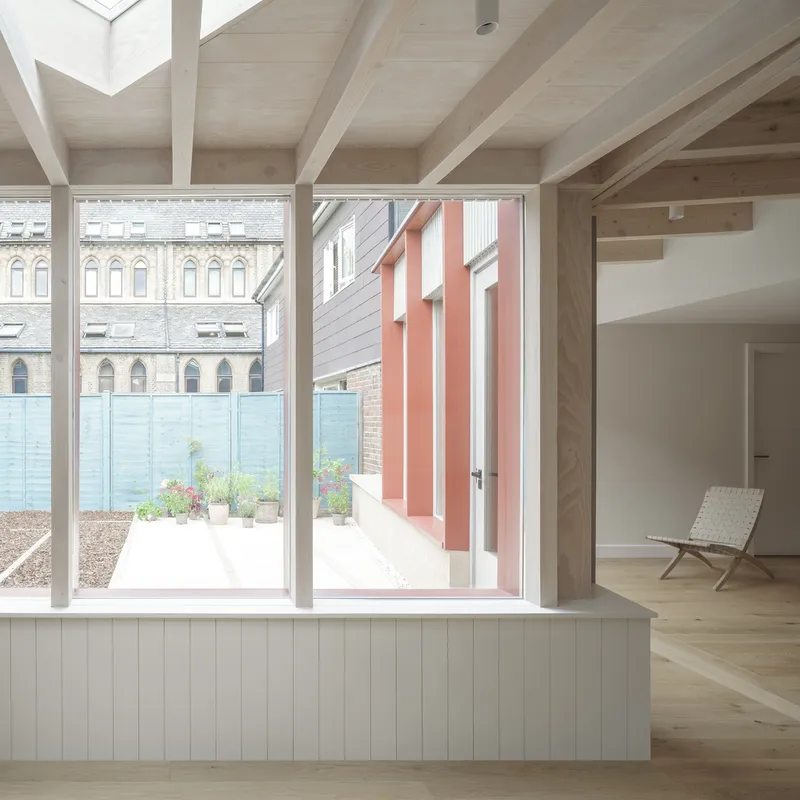
One of the most defining features of the house is its concealed courtyard garden. Invisible from the surrounding pathways, this outdoor space functions as a private sanctuary at the center of the home.
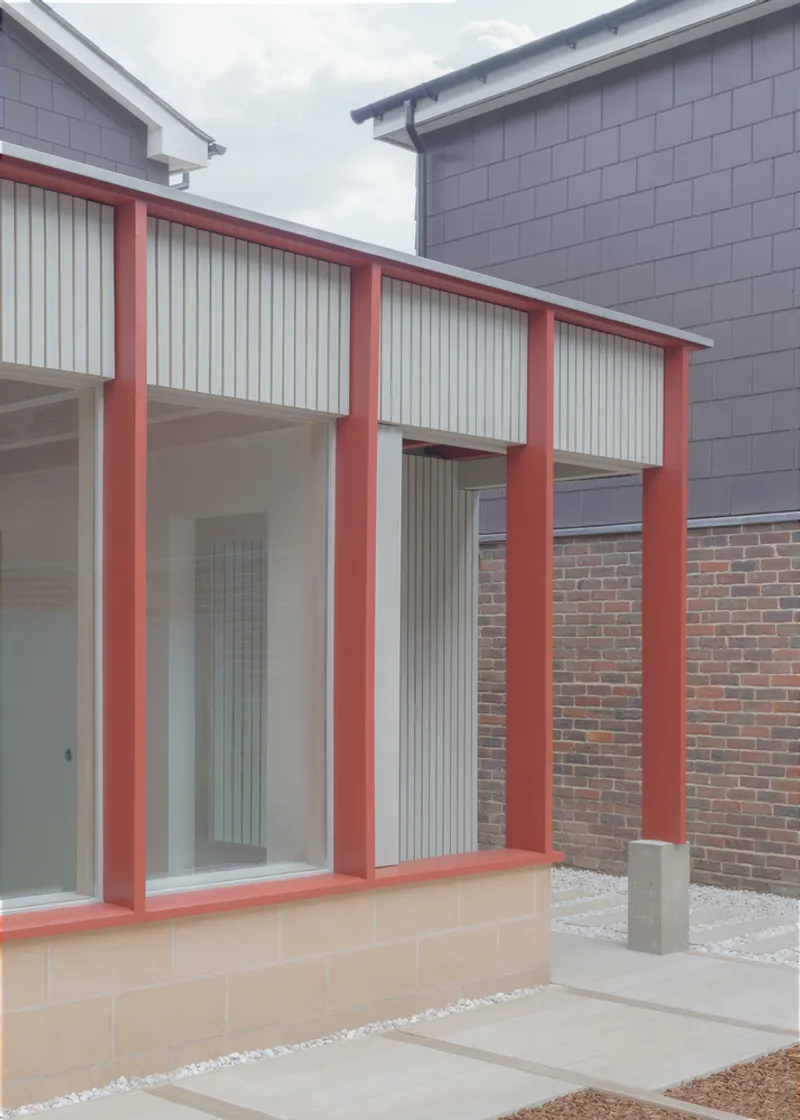
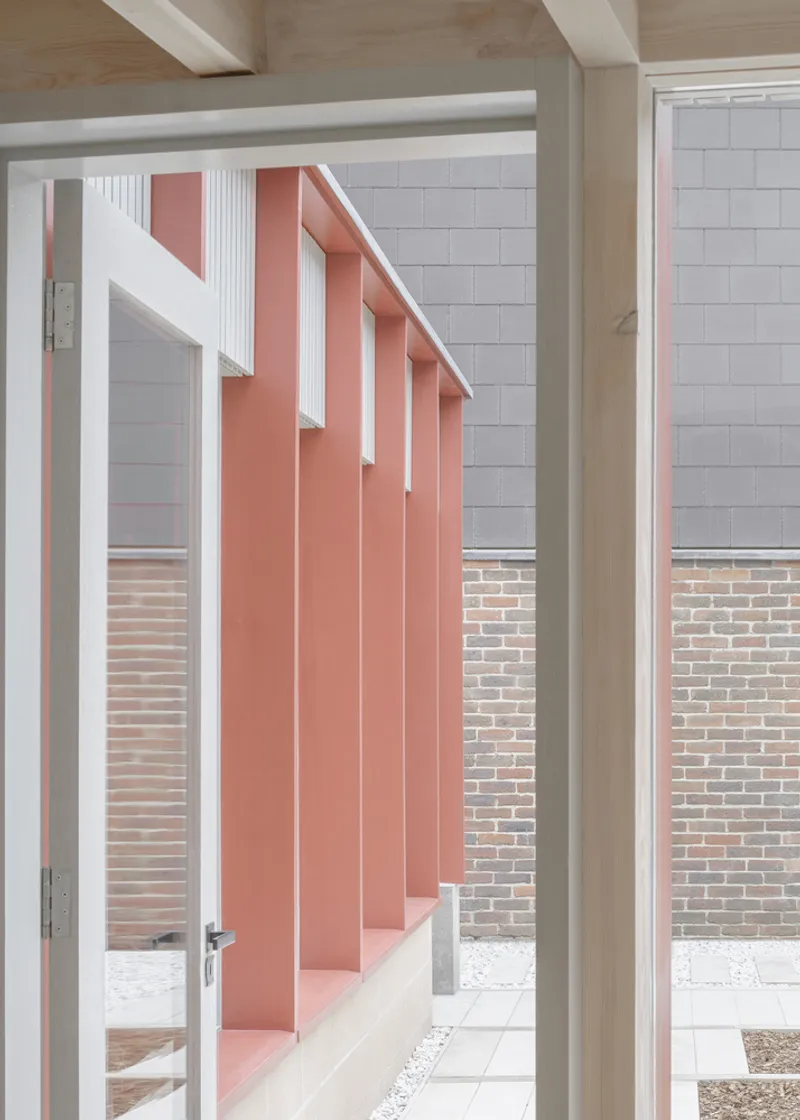
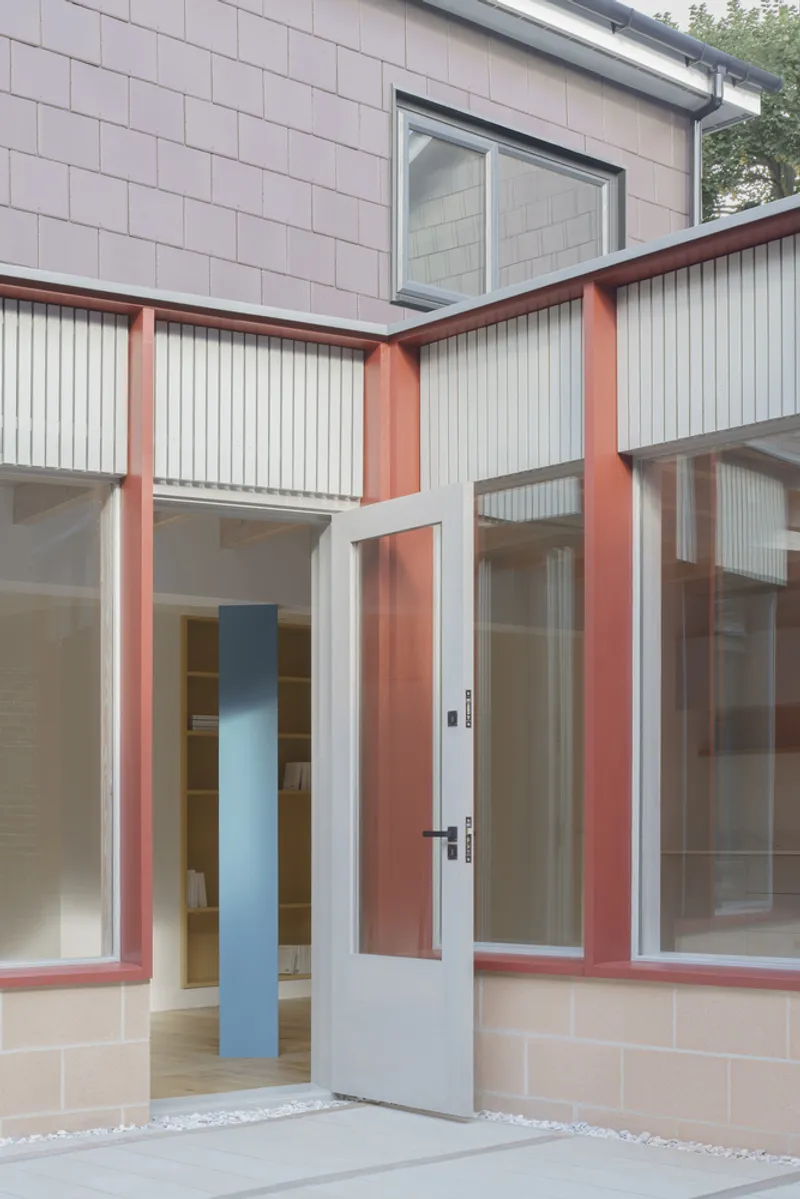
Encircling the courtyard is a beautifully crafted timber cloister that extends in two directions, blurring the boundary between interior and exterior. This architectural gesture not only enhances spatial continuity but also introduces natural light and ventilation deep into the plan.
The courtyard is conceived as an “outdoor room,” echoing the rhythm and structure of the interior spaces while offering a tranquil retreat from the urban surroundings.
Material Palette: Timber as a Character-Defining Element
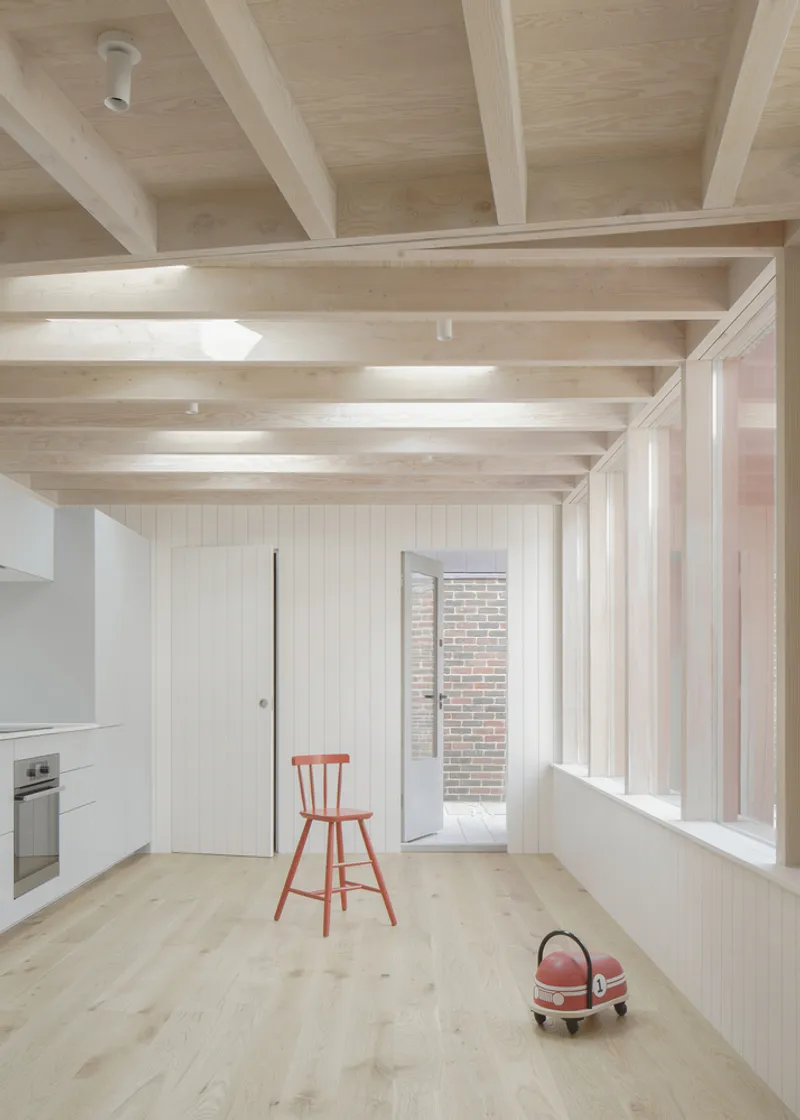
The project serves as an experimental platform for timber construction, showcasing its versatility and environmental benefits. The architects employed a carefully curated palette of materials to create contrast, warmth, and texture.
Externally, deep red timber fins sit atop pigmented blockwork, establishing a bold visual identity. These elements are juxtaposed with silver-grey larch cladding, creating a refined yet expressive façade.
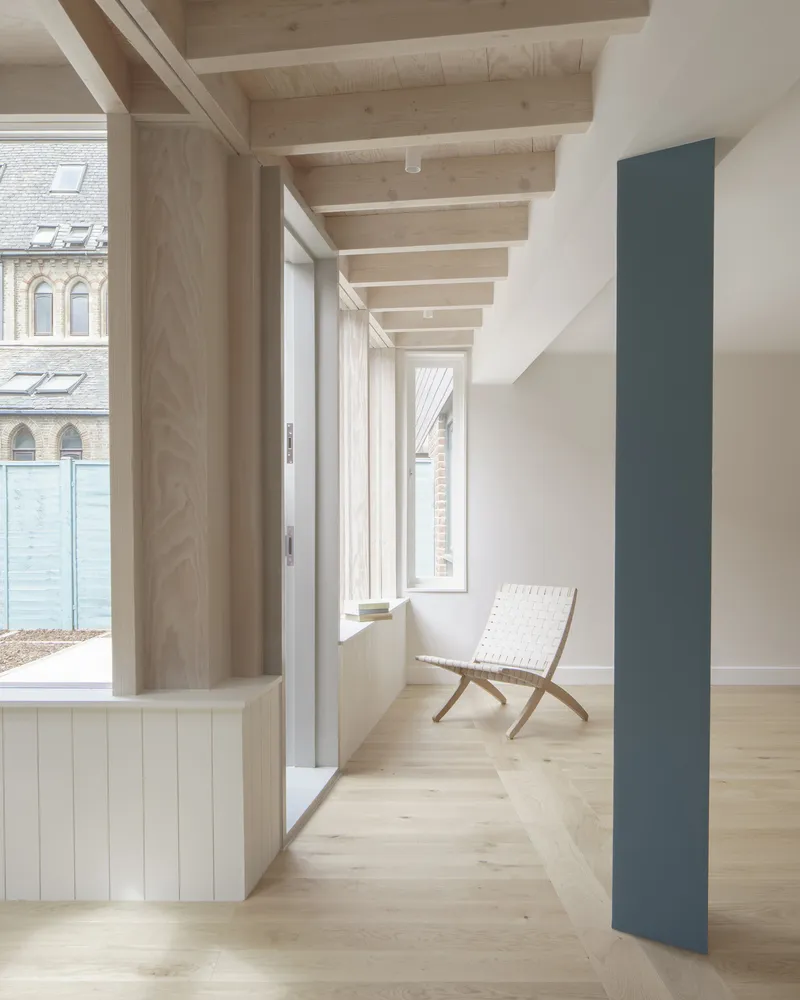
Internally, the use of Douglas fir beams and boards introduces warmth and tactility. The timber structure is complemented by diamond-shaped skylights, which cast ever-changing patterns of light into the living spaces, enhancing the sensory experience of the home.
Color and Interior Expression
Color plays a crucial role in defining the interior character of Pirouette House. Primary hues are strategically applied to key architectural elements, transforming functional components into visual highlights.
The blue triangular column anchors the space, while a bright yellow bookshelf and a terracotta-red staircase inject vibrancy and personality. This playful use of color reinforces the concept of movement and interaction, making the interior both engaging and memorable.
Sustainability and Low-Carbon Design Strategy
Sustainability was a core consideration throughout the project. The renovation prioritizes low-carbon construction methods and cost-effective materials, ensuring both environmental responsibility and economic feasibility.
By extending the lifespan of the existing structure, the project reduces the need for demolition and new construction. Improved insulation enhances thermal performance, while the introduction of cross ventilation and increased daylight, particularly on the north elevation, reduces reliance on artificial lighting and mechanical systems.
The use of readily available materials further minimizes the project’s environmental footprint, demonstrating how sustainable architecture can be achieved without compromising design quality.
Enhancing Urban Living Through Design
Pirouette House challenges the limitations of its original context by introducing openness, light, and spatial richness. The extension transforms a previously inward-looking dwelling into a vibrant and connected home that engages with both its interior and exterior environments.
The timber frame extends beyond the façade to form a նստ bench that captures midday sunlight, creating a subtle yet effective connection to the outdoors. This gesture reflects the project’s emphasis on livability and everyday comfort.
Conclusion: A Practical Yet Playful Architectural Intervention
Pirouette House is a compelling example of how small-scale residential architecture can achieve significant impact through thoughtful design. By combining innovative spatial strategies, sustainable materials, and expressive detailing, Artefact Studio has created a home that is both practical and imaginative.
The project not only revitalizes an aging structure but also sets a benchmark for contemporary urban housing renovations. It demonstrates that even within constrained conditions, architecture can inspire, surprise, and elevate daily living experiences.
All photographs are works of
Nick Dearden




Popular Articles
Popular articles from the community


Riyadh For All: Intergenerational Urban Design for Active Aging in Rabat
Riyadh For All reimagines urban design in Rabat with intergenerational co-living, adaptive courtyards, and Moroccan cultural exchange today.

The Earth Pod: 3D Printed Homes for Resilient Refugee Communities
The Earth Pod reimagines refugee housing through 3D printed homes made from clay, combining resilience, self-sufficiency, and rapid shelter.

Co-life: Sustainable Architecture for Age-Friendly Community Living
Co-life reimagines sustainable architecture for seniors through courtyards, rammed earth, shared gardens, and spaces designed for belonging.

AL-JANNAH: Sustainable Architecture and Permaculture for Afghan Widows
AL-JANNAH uses sustainable architecture and permaculture to create resilient oasis of housing, learning, work and renewal for Afghan widows.


Similar Reads
You might also enjoy these articles

Bamboo Housing Challenge 2026: Design Affordable, Sustainable Homes Using Bamboo
An international design competition by Bamboo U and IBUKU inviting architects and designers to reimagine affordable housing using bamboo — with the winning design built full-scale in Bali.

Computational Design & Education: Beegraphy Design Awards Introduces 7th Category (Featuring Jiyun's Innovative Approach)
Dive into Beegraphy’s 7th Design Awards category, where computational design meets education to create immersive, interactive learning tools, inspired by Jiyun’s work.

From Parametric Lighting to Urban Furniture: Join the 2nd Workshop in Beegraphy’s Computational Design Series
Dive into Cutting-Edge Design Techniques and Practical Applications with Industry Experts

Last Call: Unleash Your Architectural Genius in SHAK's Kindergarten Design Competition
Urgent call for architects to join SHAK's kindergarten design competition before the looming deadline
Explore Architecture Competitions
Discover active competitions in this discipline



Challenge to reimagine the Iron Throne


Photograph architecture without architects


Illustrate the lost glory of Angkor Wat - Render Challenge


Design challenge to reuse E-waste
Comments (0)
Please login or sign up to add comments
No comments yet. Be the first to comment!