
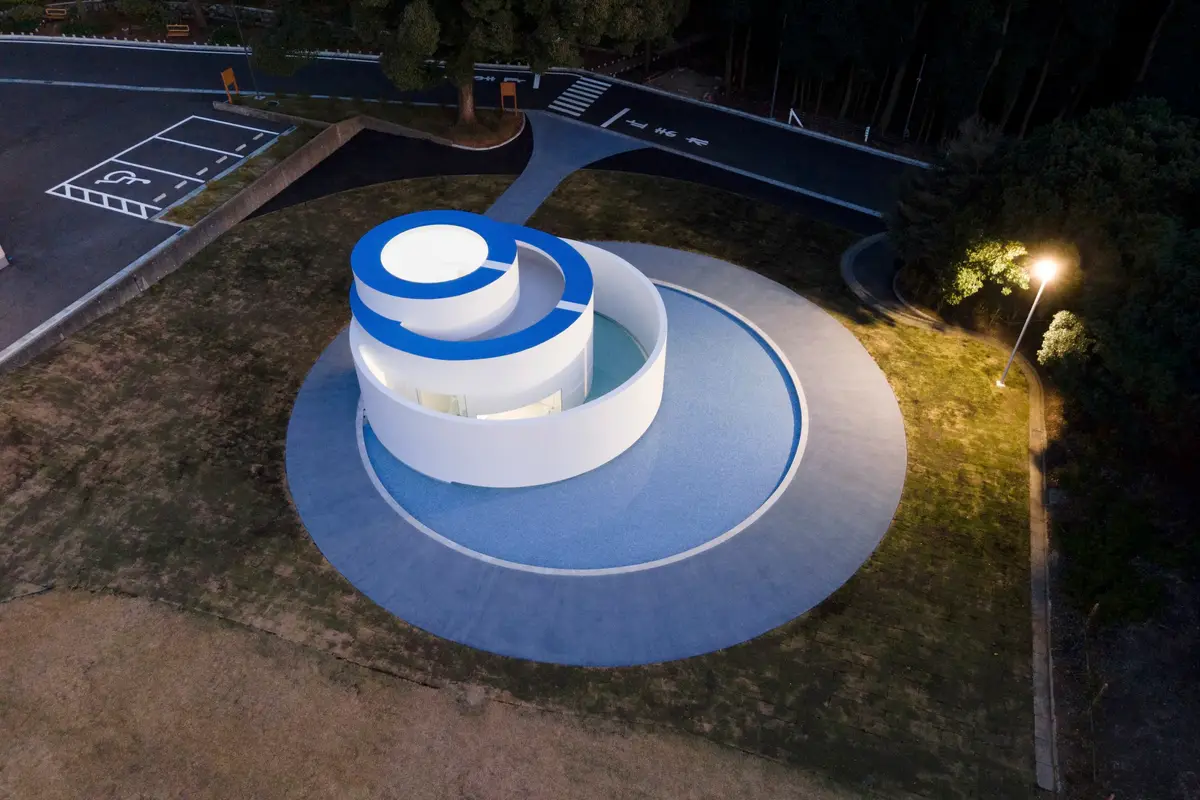
Plaza Circle by T2P Architects Office: Redefining Public Space Through Architecture, Water, and Community
Plaza Circle by T2P Architects transforms a former parking lot into a vibrant water garden plaza, blending community, sustainability, and pipe-inspired design.


Introduction
Plaza Circle, designed by T2P Architects Office, is a visionary example of public architecture in Japan that transforms an ordinary parking lot into a vibrant community plaza. Located at the Atsugi Forest Environmental Research Center in Kanagawa Prefecture, this project demonstrates how architectural design can merge functionality, sustainability, and symbolism.
The plaza is more than just a space for visitors—it is a social hub, a water garden, and a symbolic structure that reflects the values of Kansei Kogyo, a company specializing in sewer pipe management and cleaning.
From Parking Lot to Public Plaza
The client originally owned a training facility surrounded by infrastructure, but the entrance lacked a welcoming presence. T2P Architects proposed converting the existing parking area into a centripetal plaza—a focal point where visitors gather, interact, and connect with the site.
Rather than hiding public amenities like toilets, washbasins, and disaster prevention wells in a remote corner, the architects boldly integrated them into the heart of the plaza. By doing so, these everyday elements were transformed into a celebrated architectural feature, merging necessity with artistry.
The Water Garden Concept
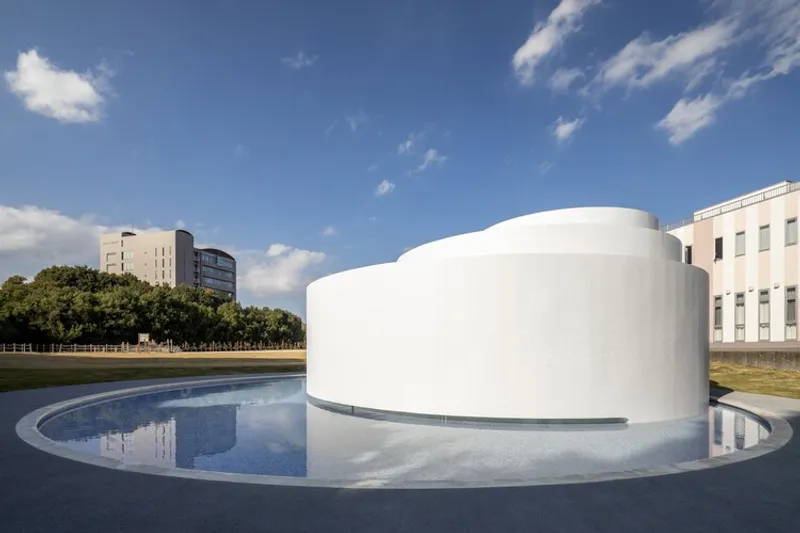
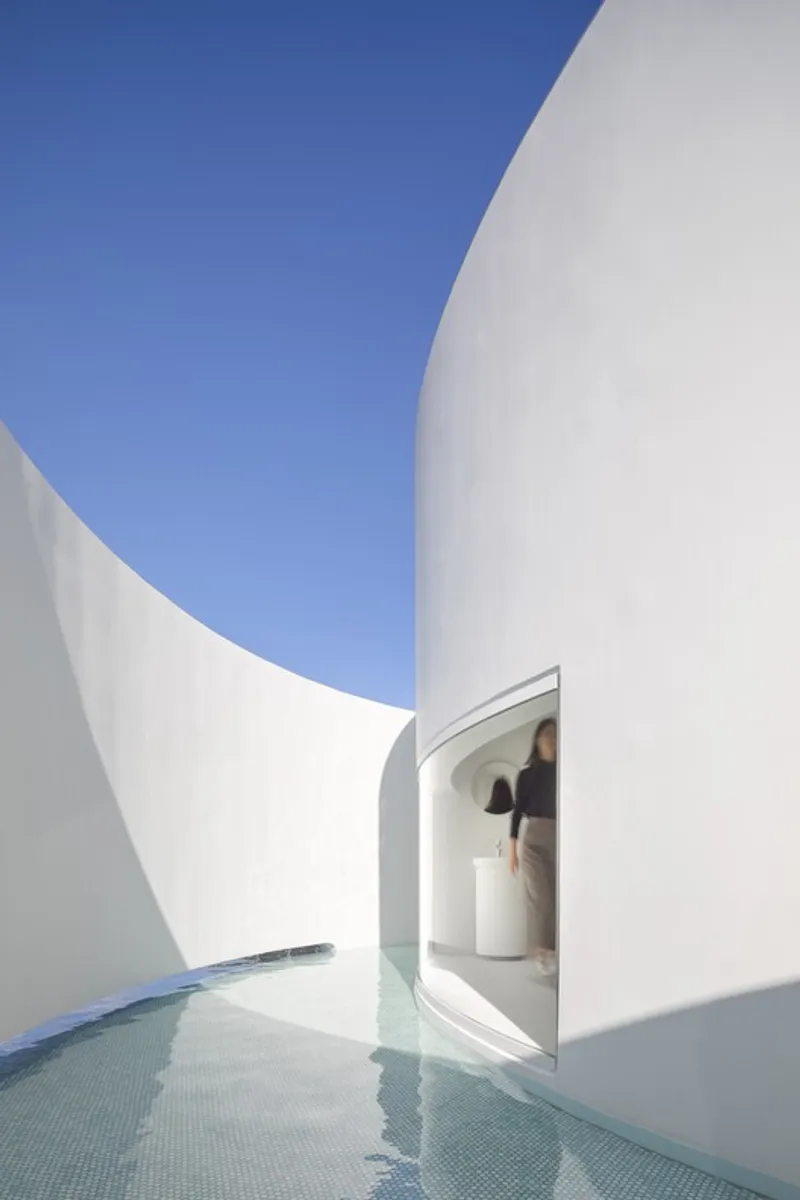
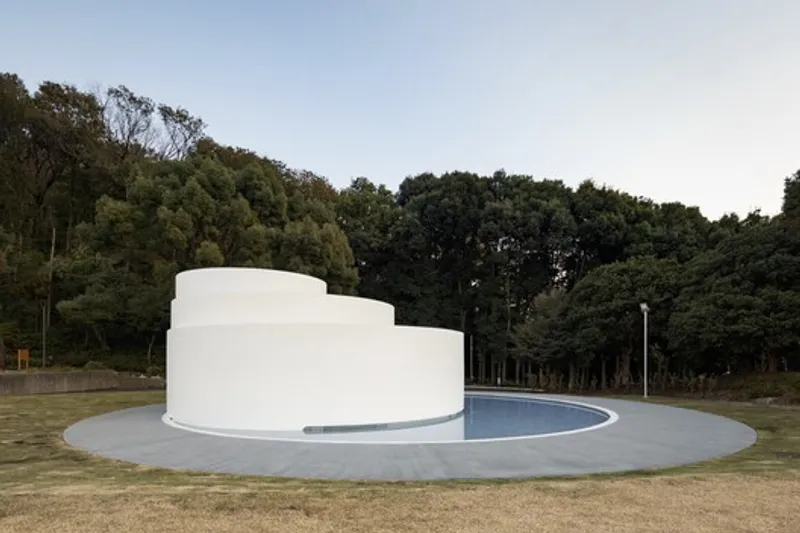
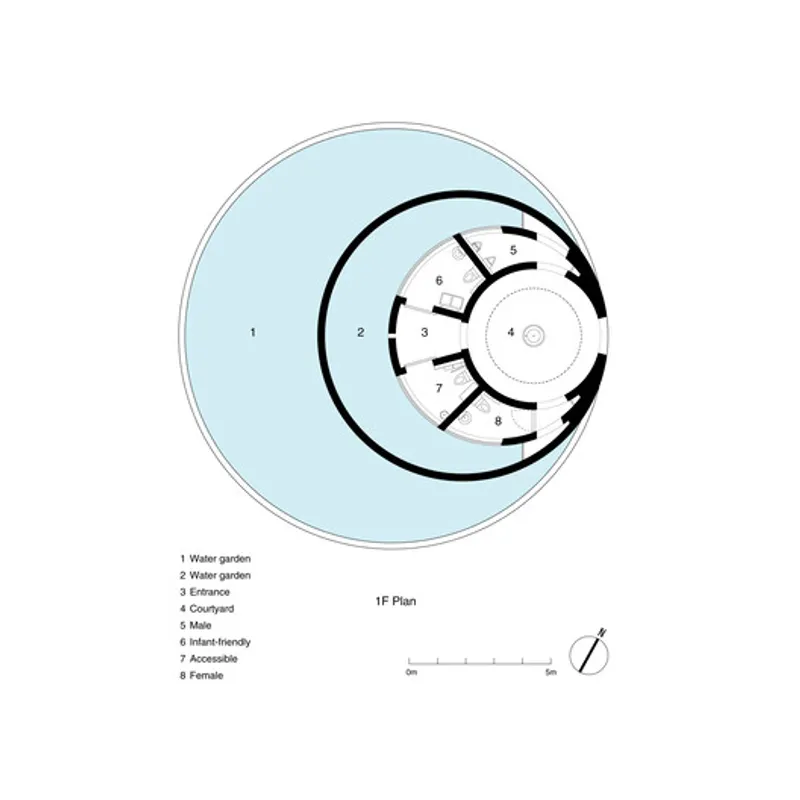
At the center of Plaza Circle lies a circular water garden, seamlessly connected to the surrounding green landscape. This feature sets the tone for the entire design, reinforcing a strong sense of purity, calmness, and reflection.
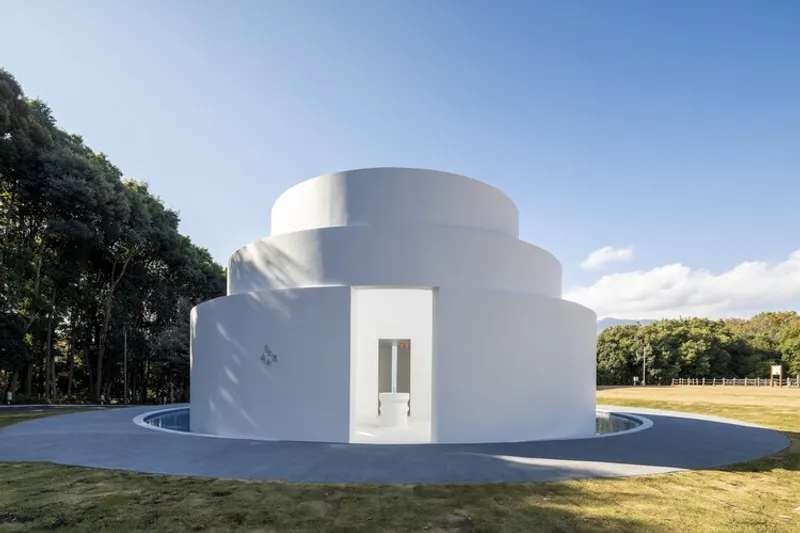
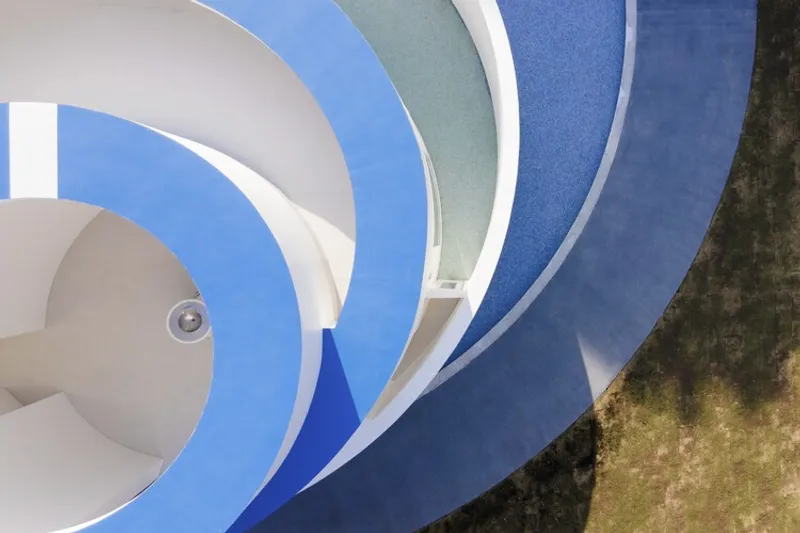
The circular design consists of three layers:
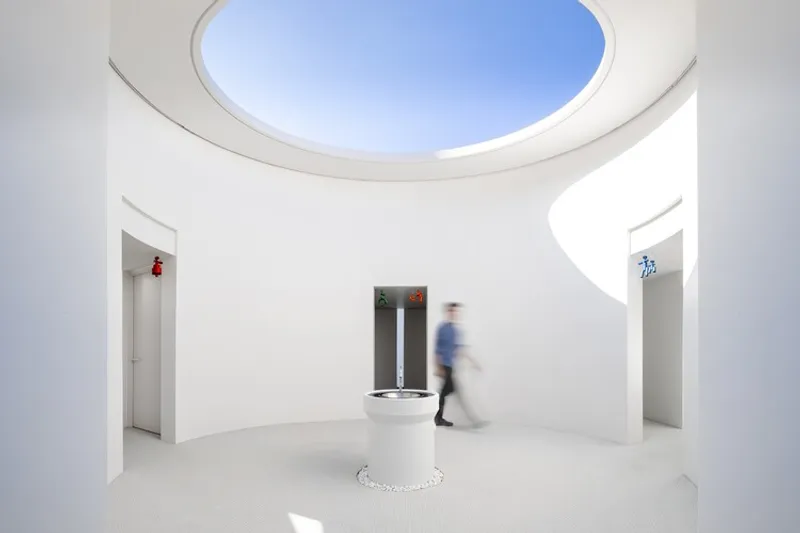
- Central Courtyard – an outdoor washbasin where visitors experience the sound and flow of water, creating a meditative environment.
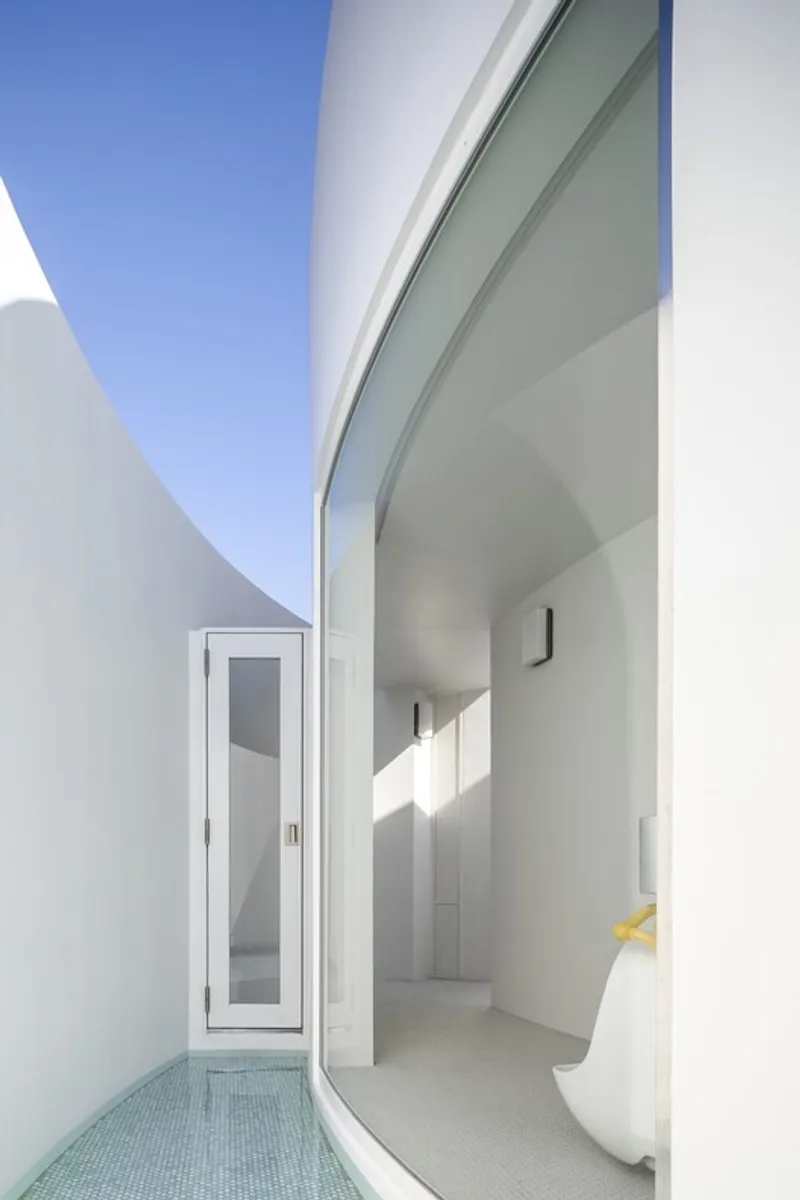
- Restrooms with Views – four restrooms are strategically positioned around the courtyard, each offering views of the tranquil water garden, providing privacy yet maintaining openness.
- Active Water Zone – outside the floating wall, an interactive area was designed for children to play with water, encouraging activity and community engagement.
This multi-layered design transforms a simple plaza into a living environment that balances stillness and playfulness.
Pipe-Inspired Architecture
Since Kansei Kogyo specializes in sewer infrastructure, the design naturally reflects the theme of pipes. T2P Architects integrated this identity into every detail:
- Three cylindrical volumes inspired by sewer pipes form the main architectural structure.
- Hand wash basins were designed from hume pipes, connecting utility with symbolism.
- Restroom signage uses VP drainage pipes as three-dimensional pictographic signs, reinforcing the concept of infrastructure made visible.
This approach not only pays homage to the company’s work but also subtly educates visitors about the hidden systems that sustain modern cities.
Symbolism and Community Impact
The abstract white space of Plaza Circle amplifies the presence of water, embodying the company’s philosophy of purity and sustainability. By making infrastructure visible and beautiful, the project sparks conversations about the importance of sewage systems—an often overlooked yet vital urban element.
More than an architectural installation, Plaza Circle serves as:
- A gateway plaza for visitors.
- A functional rest stop with restrooms and washbasins.
- A learning space that reflects infrastructure and design.
- A community hub where children, families, and visitors interact with water and nature.
Plaza Circle by T2P Architects Office redefines what public infrastructure can be. By integrating restrooms, washbasins, and water features into the center of a plaza, the project creates a space that is both functional and symbolic. Inspired by pipes and water systems, the architecture not only serves the community but also educates visitors about the hidden infrastructure shaping our cities.
This project is a perfect example of how public architecture in Japan combines design innovation, cultural symbolism, and community engagement, transforming the ordinary into something extraordinary.
All the photographs are works of Vincent Hecht


Popular Articles
Popular articles from the community


Extended Shell: Retrofitting Kolkata's Balconies as Living Urban Thresholds
A modular retrofit system recovers the social and environmental intelligence of Kolkata's historic verandas for contemporary Park Street residents.
Faces of the Soviet Avant-Garde: Turning Moscow's Street Names into an Open-Air Museum
A network of sculptural installations across a Moscow residential district transforms forgotten architect names into spatial encounters with cultural memor
Temporary Home for Dogs: A Reversed Zoo Rethinks Animal Shelter Architecture
In Bucharest, a sinuous corridor and freed landscape flip the logic of containment, designing a shelter that works to make itself unnecessary.

Tsunami Convergenics: Turning Catastrophic Ocean Forces into Underwater Housing Infrastructure
A speculative underwater settlement off the coast of Onagawa, Japan, treats tsunamis and typhoons as energy sources rather than threats.

Similar Reads
You might also enjoy these articles


Hodi-Mandai Geram
Project Function: Preservation and revitalization of the Intangible heritage and socio-spatial identity of the Hodi by Housing, Cultural Memory Center, Sacred Grove, landscape, local tourism economy


Olio Towers: A Mid-Rise for Performers That Fuses Housing, Rehearsal, and Stage
Located blocks from Houston's Theater District, this modular tower stacks living units around a central performance atrium.

Oasis: Modular Green Housing Carved into Dhaka's Urban Fabric
A shortlisted Plugin Housing entry reclaims unauthorized settlements in Dhaka with stepped concrete volumes, green roofs, and ventilation-driven design.

Black Hole: A Floating Megastructure for the Post-Physical Era
Emiliano Mazzarotto envisions a spherical, self-scaling arena where e-sports, digital hotels, and holographic stadiums replace traditional public space.

Explore Public Plaza Competitions
Discover active competitions in this discipline

Challenge to design a portable theatre

Challenge to design a portable music platform

Challenge to design an open learning module for the elderly

Challenge to reimagine the Iron Throne
Comments (0)
Please login or sign up to add comments
No comments yet. Be the first to comment!