
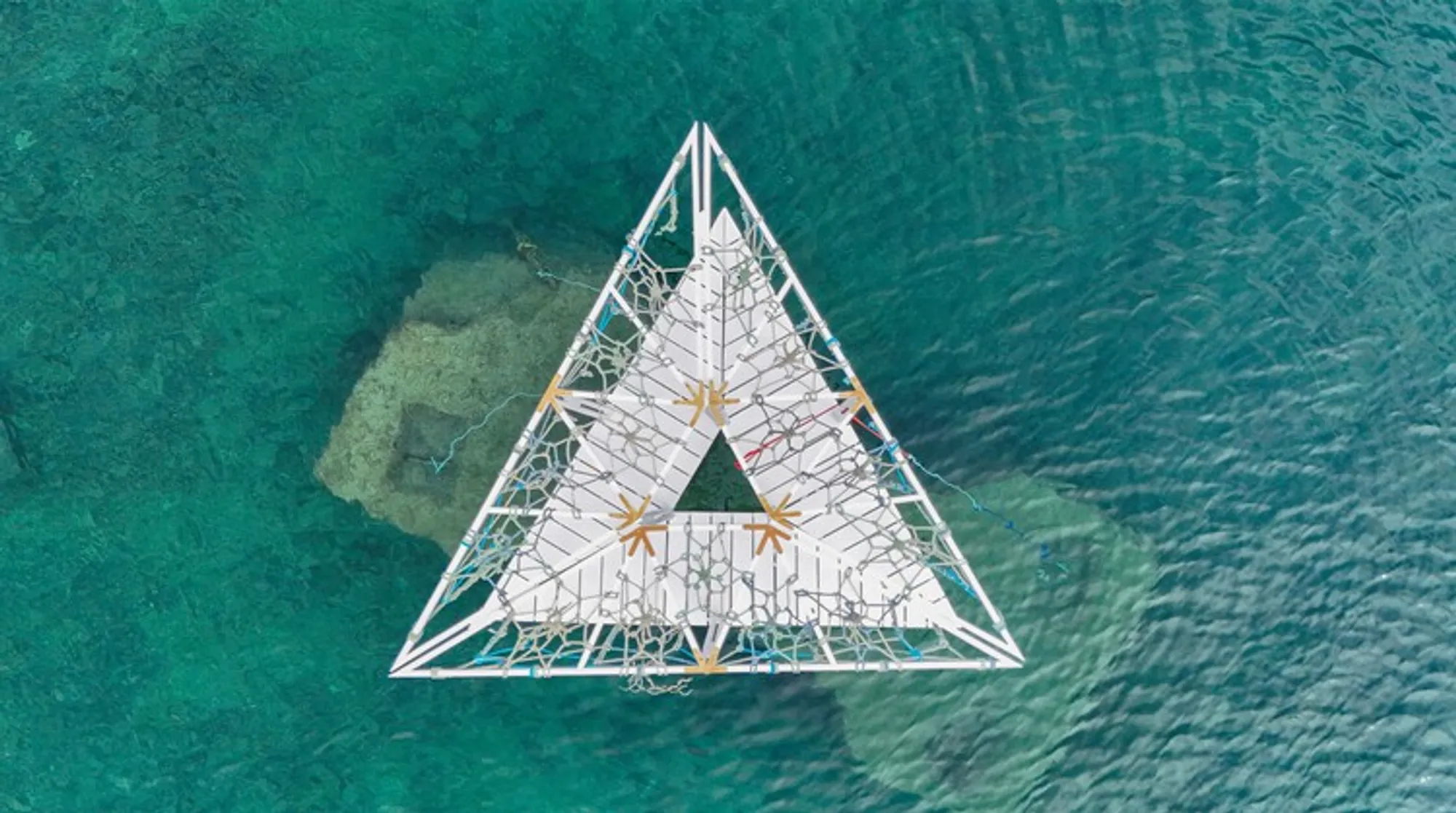
Plivatri Pavilion By MEDS + Ahmad El Zu'bi + Leda Demetriadou + Stefanie Zins
A floating triangular pavilion in Rijeka, built with reused materials, creating a serene communal space connecting sea, city, and visitors.


Floating gently in the Adriatic Sea off the coast of Rijeka, Croatia, Plivatri Pavilion is a poetic piece of public architecture that blurs the boundary between land, water, and human experience. Conceived and built during MEDS Workshop Hrvatska 2025, the pavilion is a collaborative effort led by architects Ahmad El Zu'bi, Leda Demetriadou, and Stefanie Zins, together with an international group of design students. More than a temporary structure, Plivatri acts as a contemplative “temple on water,” inviting reflection, interaction, and a renewed connection to the coastal landscape.


The pavilion takes the form of an equilateral triangle, a deliberate geometric contrast to the organic, ever-shifting lines of the sea. From Brajdica Beach, the triangular geometry symbolically points toward three key elements of Rijeka’s identity: the shoreline, the open sea, and the industrial port. This clear geometry establishes a strong visual presence while grounding the pavilion in its specific urban and maritime context.
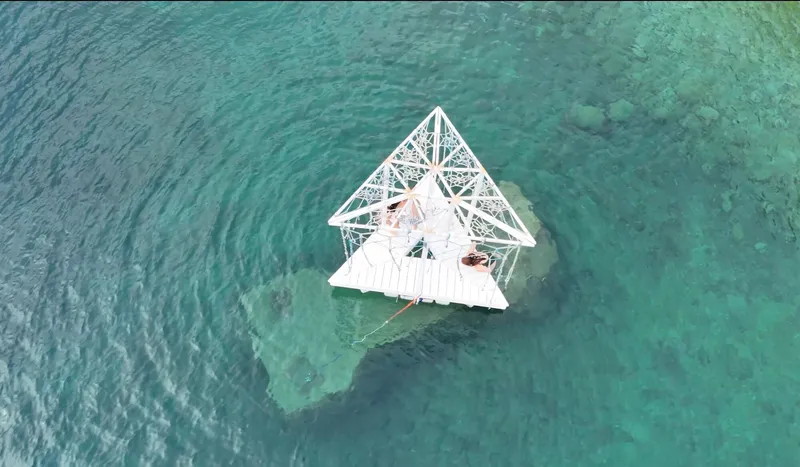

Wrapped around the outer edge of the triangle is a narrow peripheral walkway, offering visitors a sequence of spatial experiences. Along this path, one can pause to sit, dive into the sea, or simply observe the changing horizon. At the center of the structure lies an open void, a communal space defined not by enclosure, but by openness. This contrast between inside and outside, solid and void, creates a calm yet dynamic atmosphere that transforms the pavilion into a place of collective pause and sensory awareness.

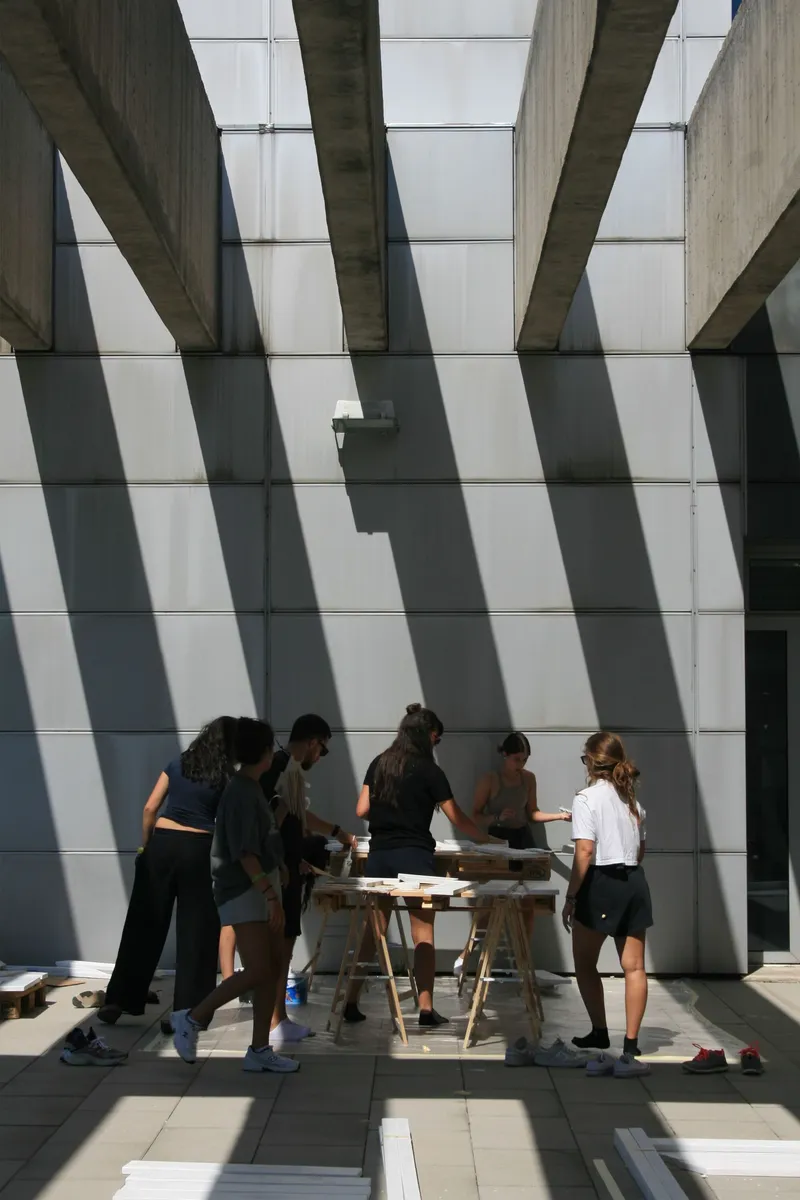
Construction embraces lightness, reuse, and environmental responsibility. A simple wooden frame forms the structural core, while repurposed ropes sourced from the nearby port act as both enclosure and ornament. These ropes reference traditional fishing nets and local craft techniques, embedding regional identity directly into the architectural language. As wind and water interact with the ropes, shifting patterns of light and shadow animate the structure, making natural forces an active participant in the design.
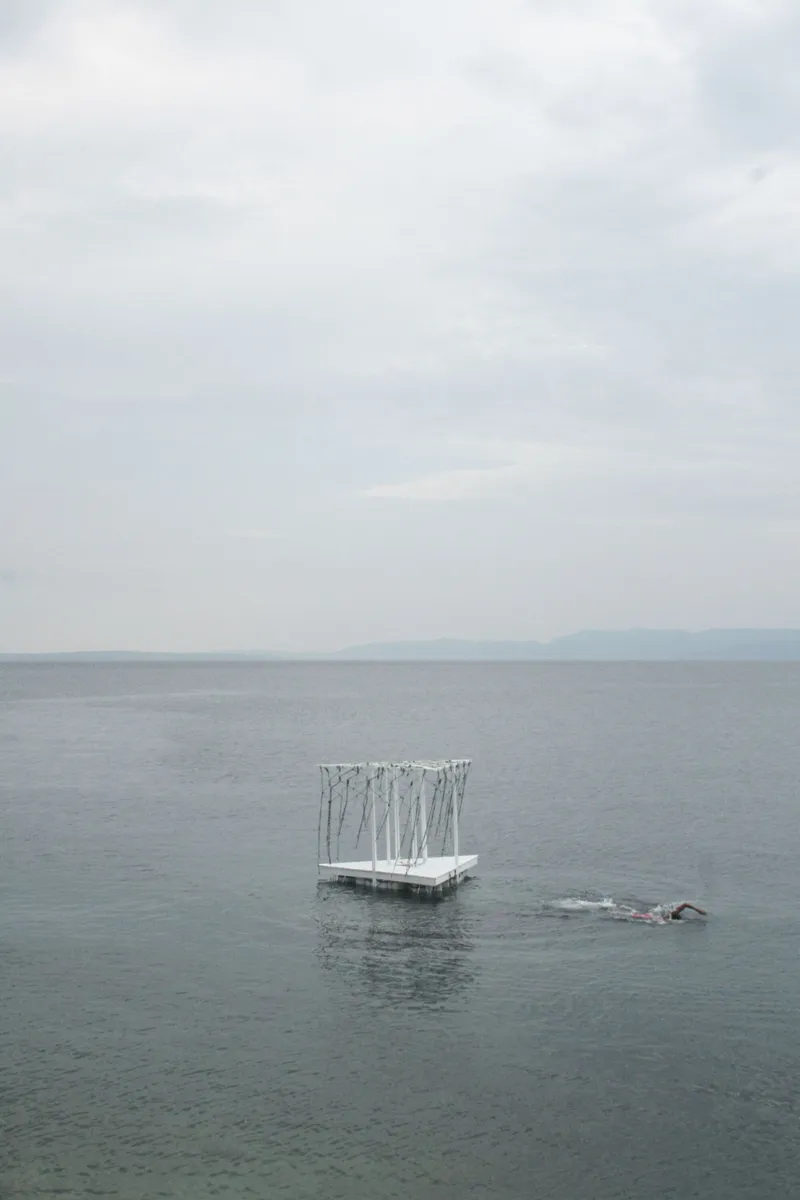
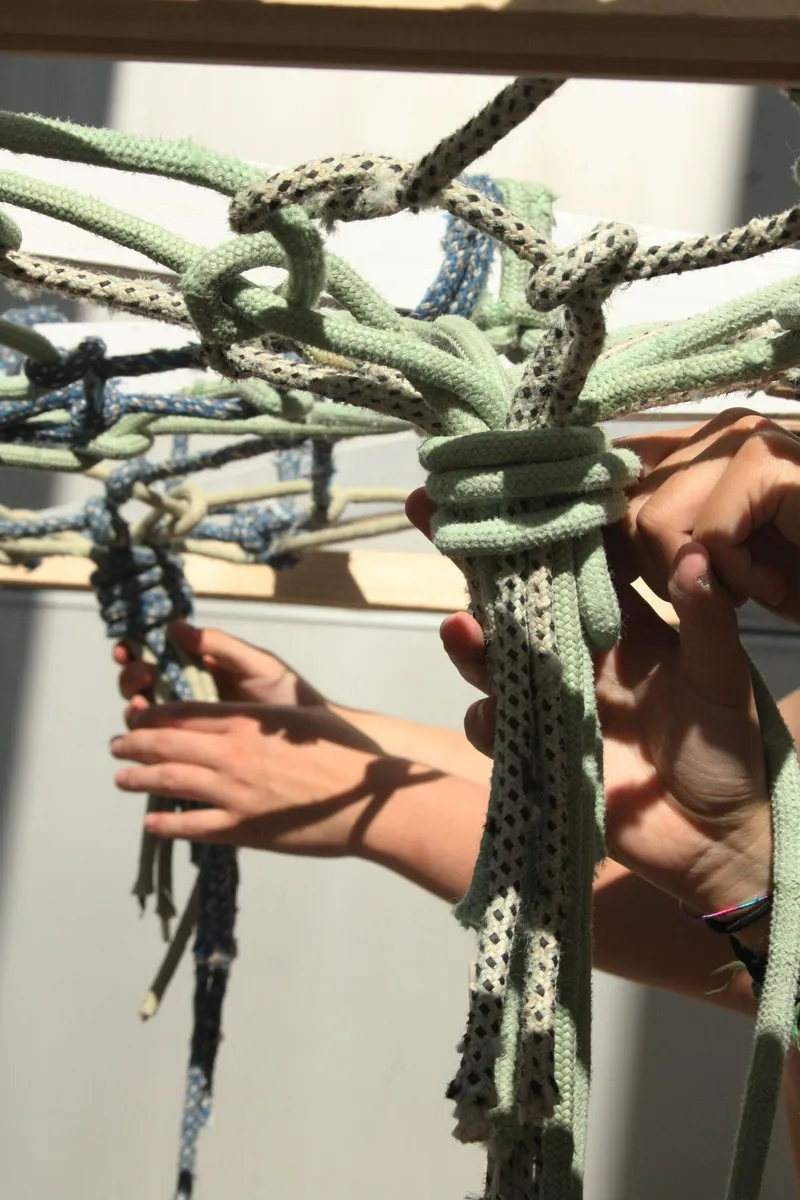
Buoyancy is achieved through reused plastic barrels, concealed beneath the pavilion. This pragmatic solution ensures stability while reinforcing the project’s commitment to sustainability and material reuse. Together, wood, rope, and recycled components form a low-impact construction that resonates with Rijeka’s maritime and industrial heritage without relying on heavy or permanent interventions.


Light plays a central role in shaping the pavilion’s atmosphere. Throughout the day, reflections from the sea alter the pavilion’s appearance, from bright and inviting under midday sun to soft and meditative during golden hour. As evening approaches, subtle lighting highlights the triangular form, allowing the pavilion to shift character without losing its essential simplicity. The architecture does not dominate its surroundings; instead, it responds quietly to time, weather, and movement.

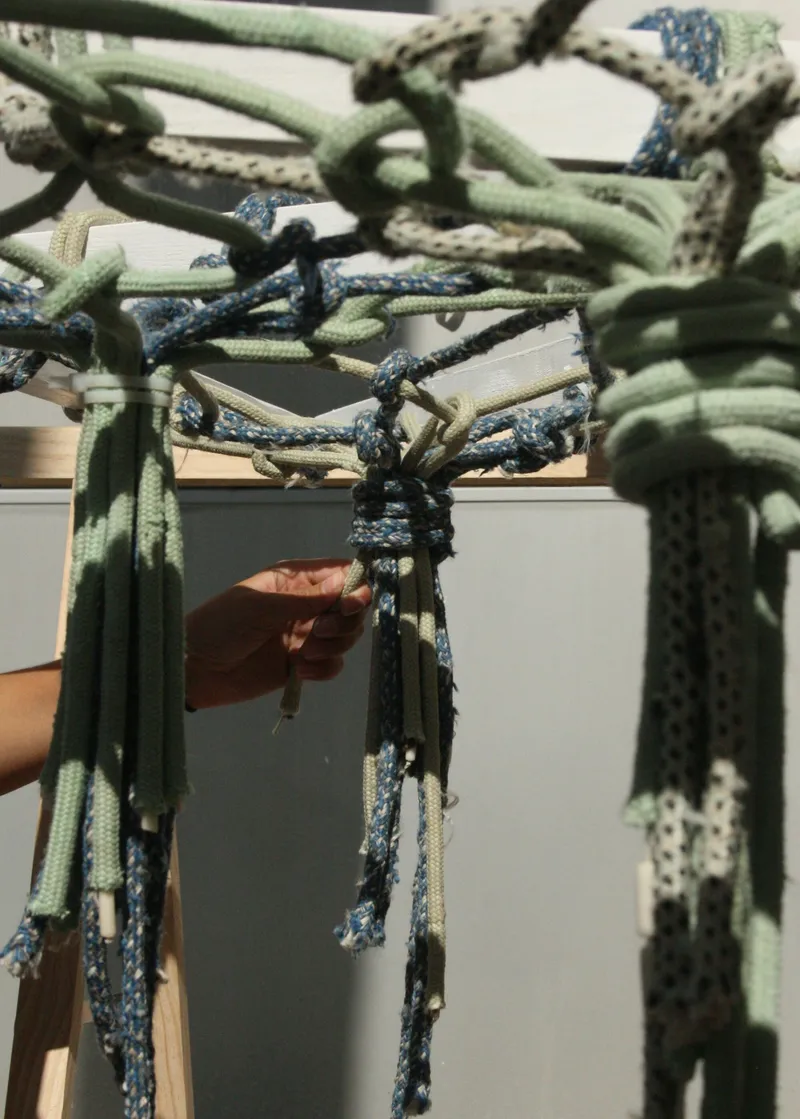
Ultimately, Plivatri Pavilion acts as a stage for everyday rituals: swimming, resting, observing, and gathering. It offers visitors a new way to experience the coastline, encouraging moments of stillness within an active urban beach environment. Through clarity of form, careful craftsmanship, and deep respect for place, the pavilion leaves a lasting impression as a small yet powerful example of experimental public architecture rooted in collaboration, sustainability, and calm.


All the photographs are works of Pegi Pika Lešnik, Tea Stipanovic



Popular Articles
Popular articles from the community

AL-JANNAH: Sustainable Architecture and Permaculture for Afghan Widows
AL-JANNAH uses sustainable architecture and permaculture to create resilient oasis of housing, learning, work and renewal for Afghan widows.

The Musturak Paradise: Senior Living Architecture for a Connected Future in Temara, Morocco
The Musturak Paradise reimagines senior living architecture in Temara via private homes, social spaces, culture, community, and shared care.

EW PARK: Sustainable Architecture Reimagines the Future of Urban Parking
EW PARK reimagines city parking as a modular wooden tower combining automation, solar energy, electric mobility, and adaptable urban design.

Co-life: Sustainable Architecture for Age-Friendly Community Living
Co-life reimagines sustainable architecture for seniors through courtyards, rammed earth, shared gardens, and spaces designed for belonging.


Similar Reads
You might also enjoy these articles


Hodi-Mandai Geram
Project Function: Preservation and revitalization of the Intangible heritage and socio-spatial identity of the Hodi by Housing, Cultural Memory Center, Sacred Grove, landscape, local tourism economy


Olio Towers: A Mid-Rise for Performers That Fuses Housing, Rehearsal, and Stage
Located blocks from Houston's Theater District, this modular tower stacks living units around a central performance atrium.

Oasis: Modular Green Housing Carved into Dhaka's Urban Fabric
A shortlisted Plugin Housing entry reclaims unauthorized settlements in Dhaka with stepped concrete volumes, green roofs, and ventilation-driven design.

Black Hole: A Floating Megastructure for the Post-Physical Era
Emiliano Mazzarotto envisions a spherical, self-scaling arena where e-sports, digital hotels, and holographic stadiums replace traditional public space.

Explore Public Building Competitions
Discover active competitions in this discipline



Challenge to design locus for the upliftment of human rights


Challenge to reimagine the Iron Throne


Photograph architecture without architects


Illustrate the lost glory of Angkor Wat - Render Challenge
Comments (0)
Please login or sign up to add comments
No comments yet. Be the first to comment!