
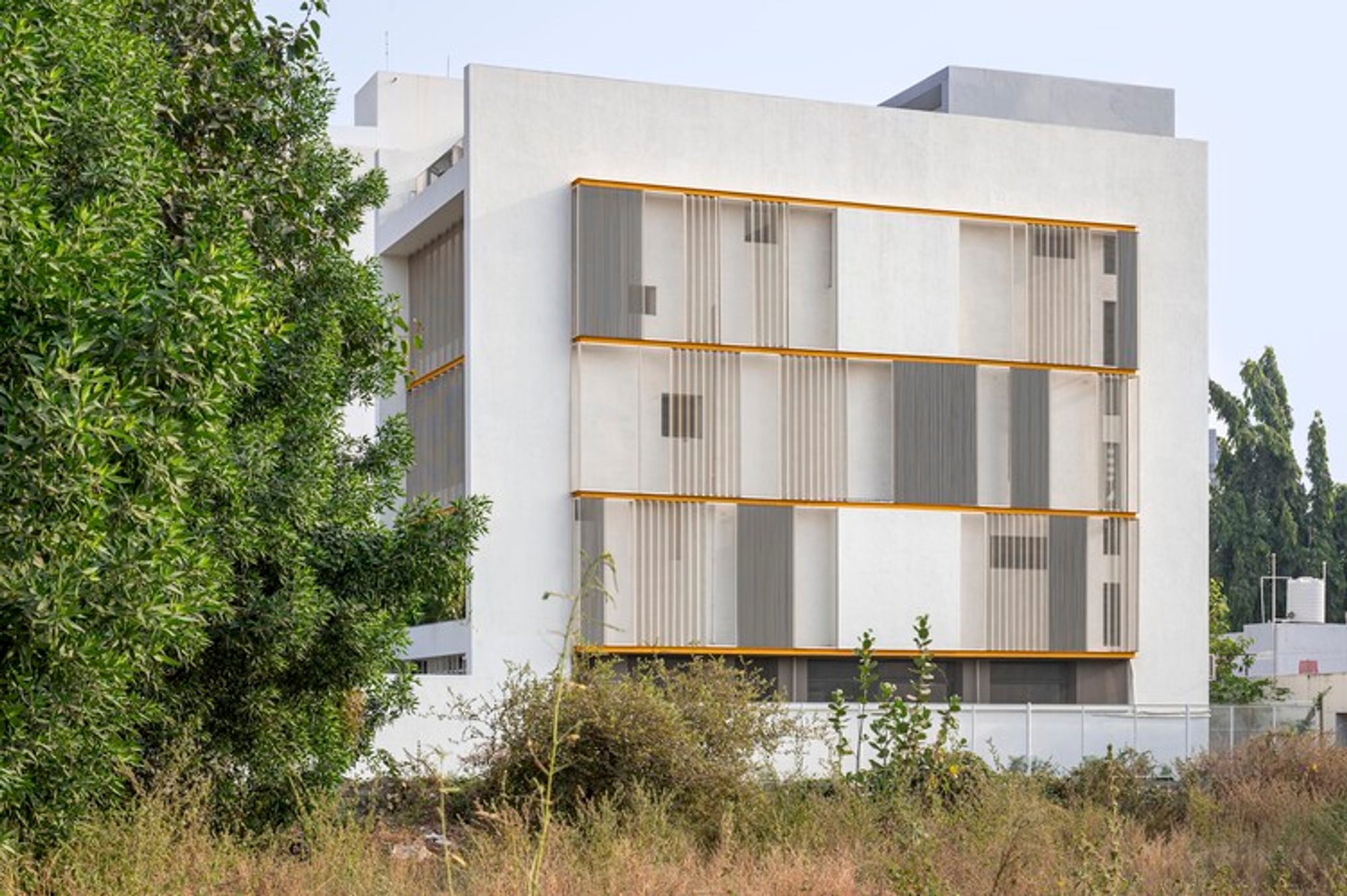
Plot 33 by playball studio: A Climate-Responsive Live–Work Residence in Rajkot
A climate-responsive live–work home in Rajkot, Plot 33 balances openness and privacy with cascading terraces, a breathing metal façade, and adaptive interiors.

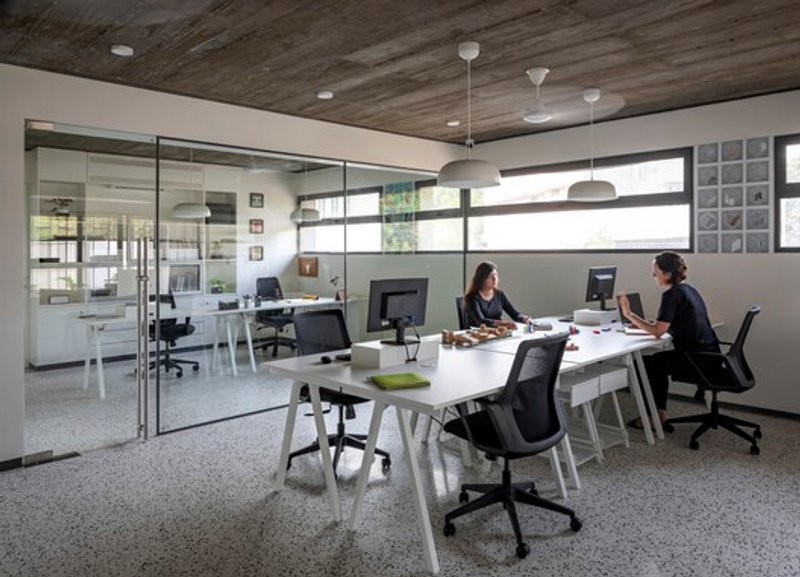
Located in a dense residential neighborhood near the university campus in Rajkot, India, Plot 33 by playball studio reimagines the possibilities of a compact urban site. The 402 m² mixed-use building is an exploration of balance—between work and home, privacy and openness, climate response and contemporary living, reused and new materials.
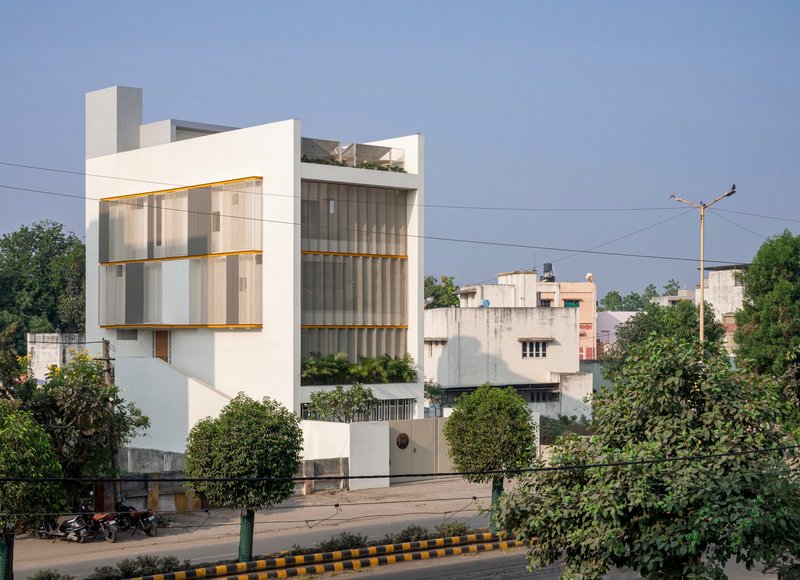
Designed by architects Ronak Gangdev and Celia Fernandez Duque, whose backgrounds span South Asia and Southern Europe, the project synthesizes two cultural sensibilities into a unified architectural expression. The narrow 10 × 24 meter plot, facing a park to the north, becomes the foundation for a thoughtful experiment in climate-first design and vertical programming.
Climate as the Starting Point
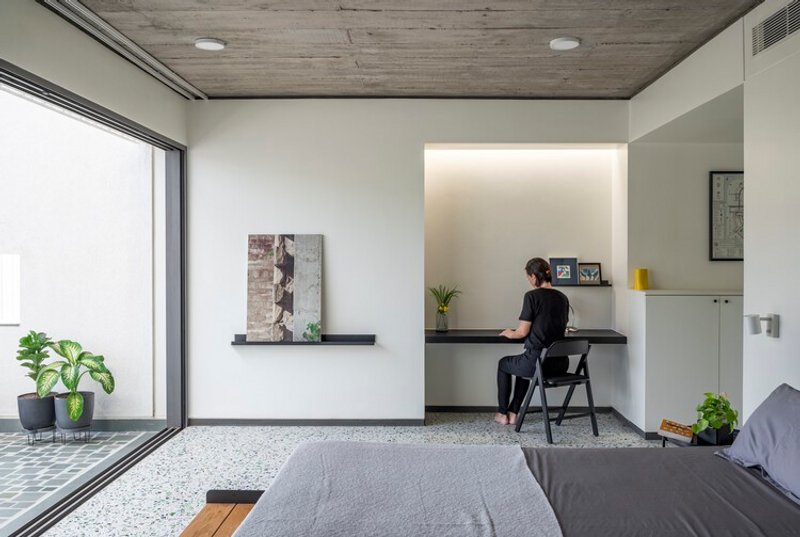
Before addressing programmatic needs, the architects began with the climate. Northern light, park views, and prevailing breezes shaped the building’s orientation.
Key moves include:
- Opening the building toward the north, capturing soft daylight and framing views of large park trees.
- Cavity walls on the east and west to buffer heat.
- Circulation core placed strategically on the south, reducing heat gain and creating efficient vertical movement.
These decisions laid the foundation for a responsive building that protects itself where necessary and opens generously where beneficial.
Section-Driven Organization: A Vertical Live–Work Diagram
After establishing the climatic strategy, Plot 33 was resolved sectionally—stacking programs vertically in a clean, diagrammatic logic:
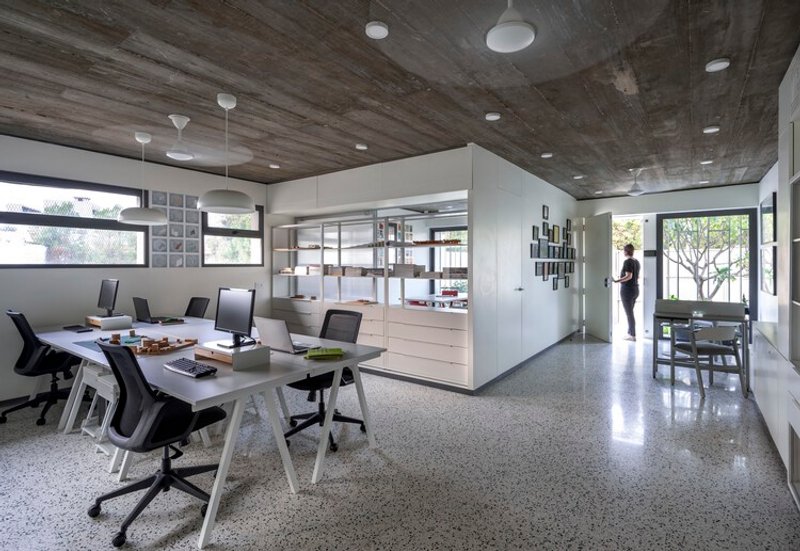
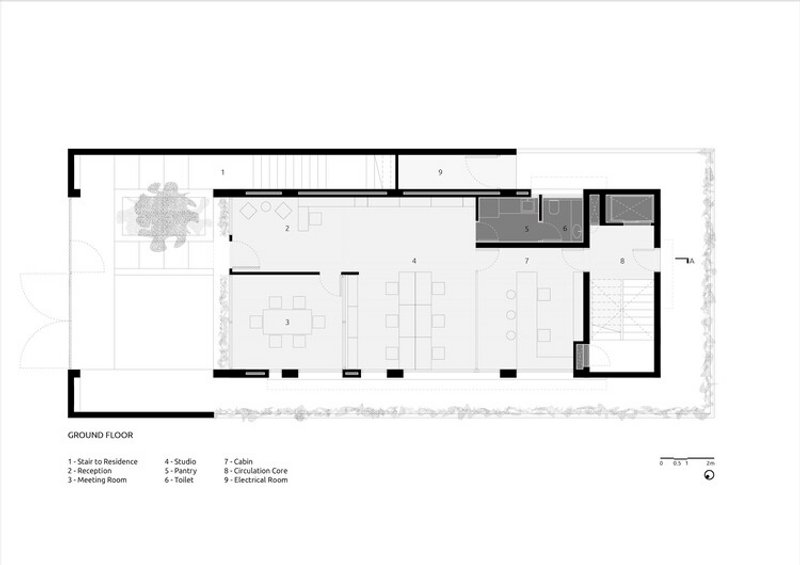
- Ground Floor – StudioDirect street access for work, clients, and independent functioning.
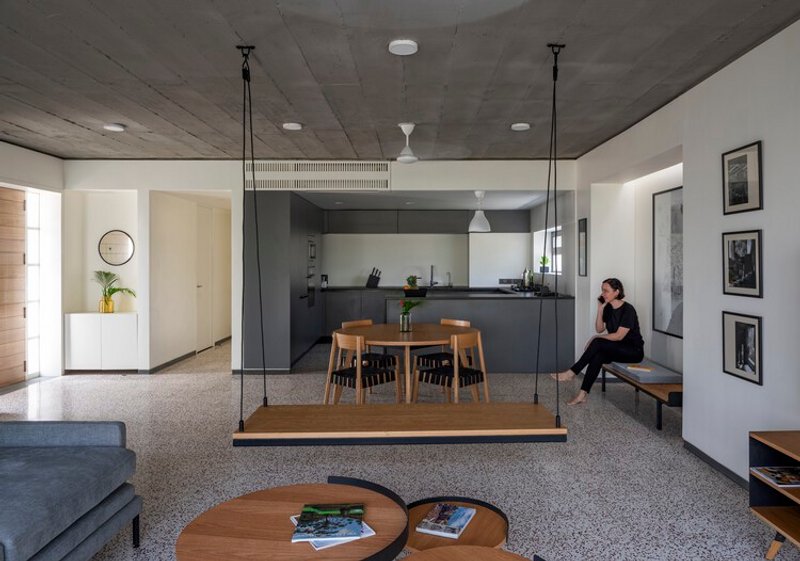
- First Floor – Living AreaOpen public spaces—living, dining, kitchen—facing the park through a stepped north courtyard.
- Second Floor – Private AreaBedrooms and more intimate spaces protected from street activity.
- Third Floor – Multipurpose LevelFlexible rooms that accommodate guests, hobbies, or future program changes.
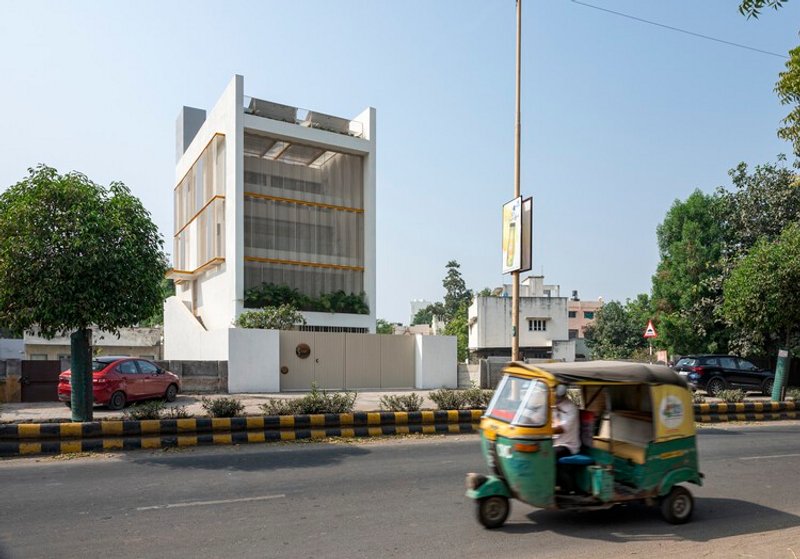
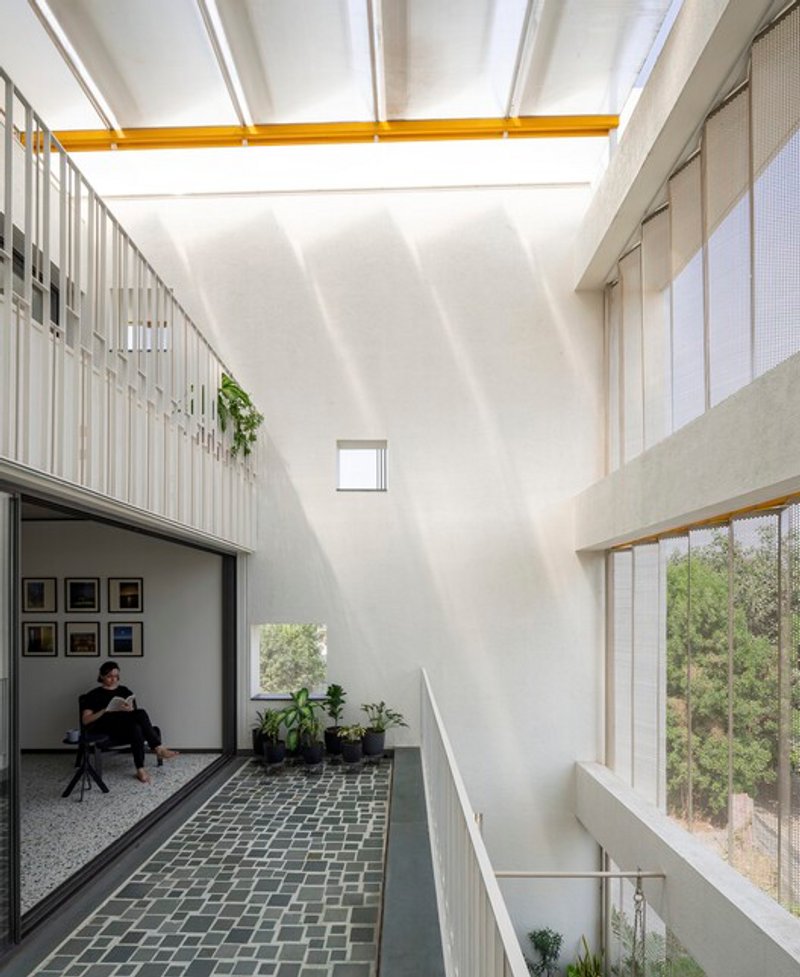
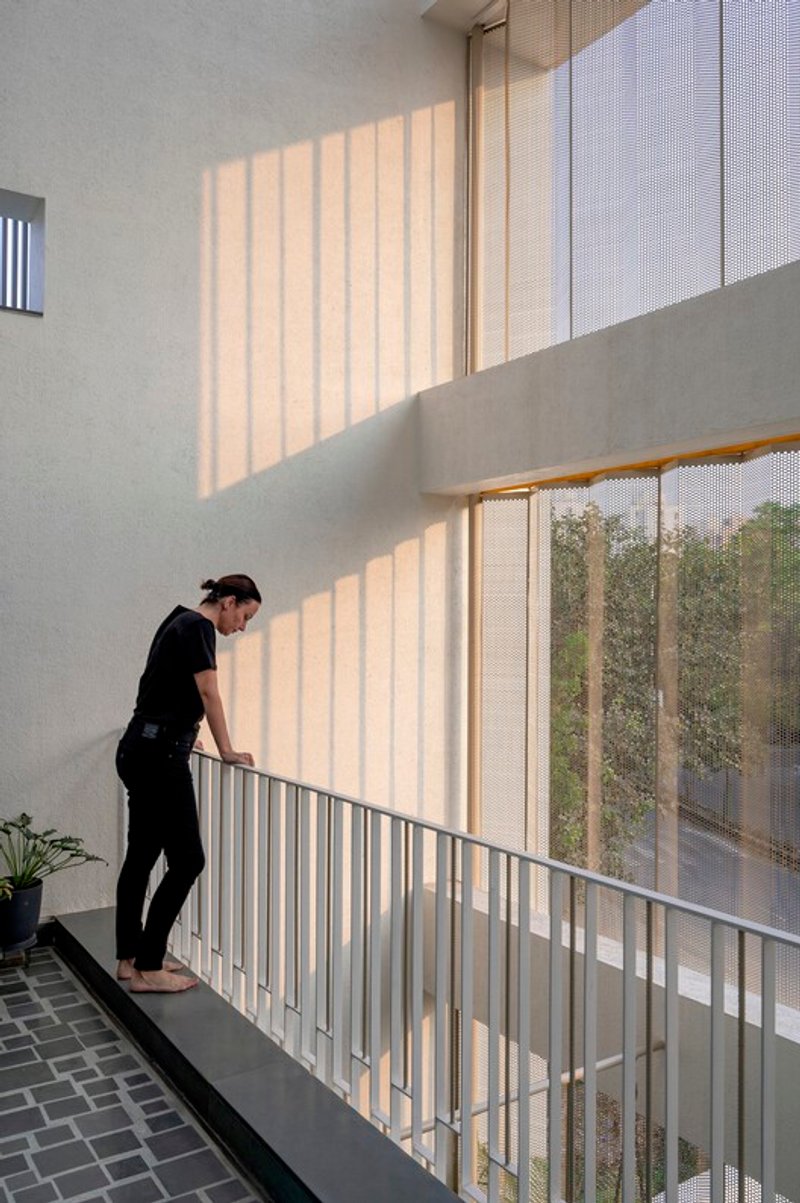
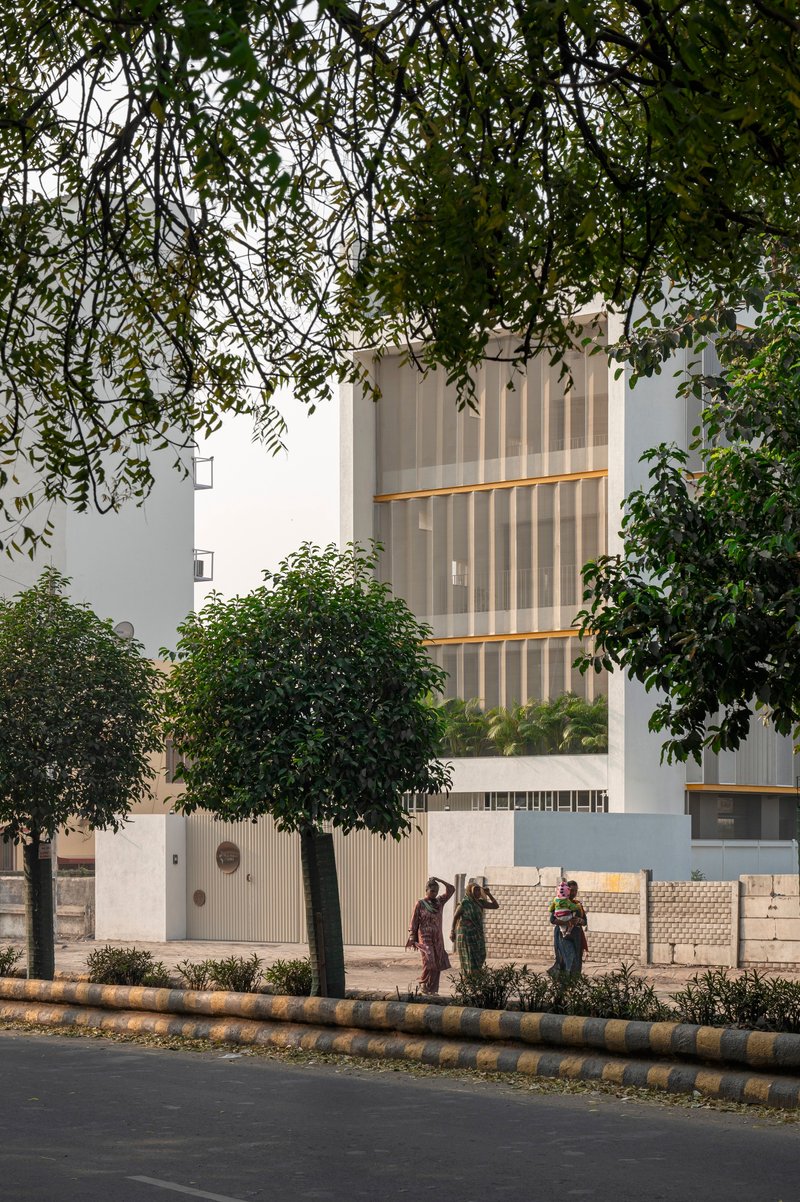
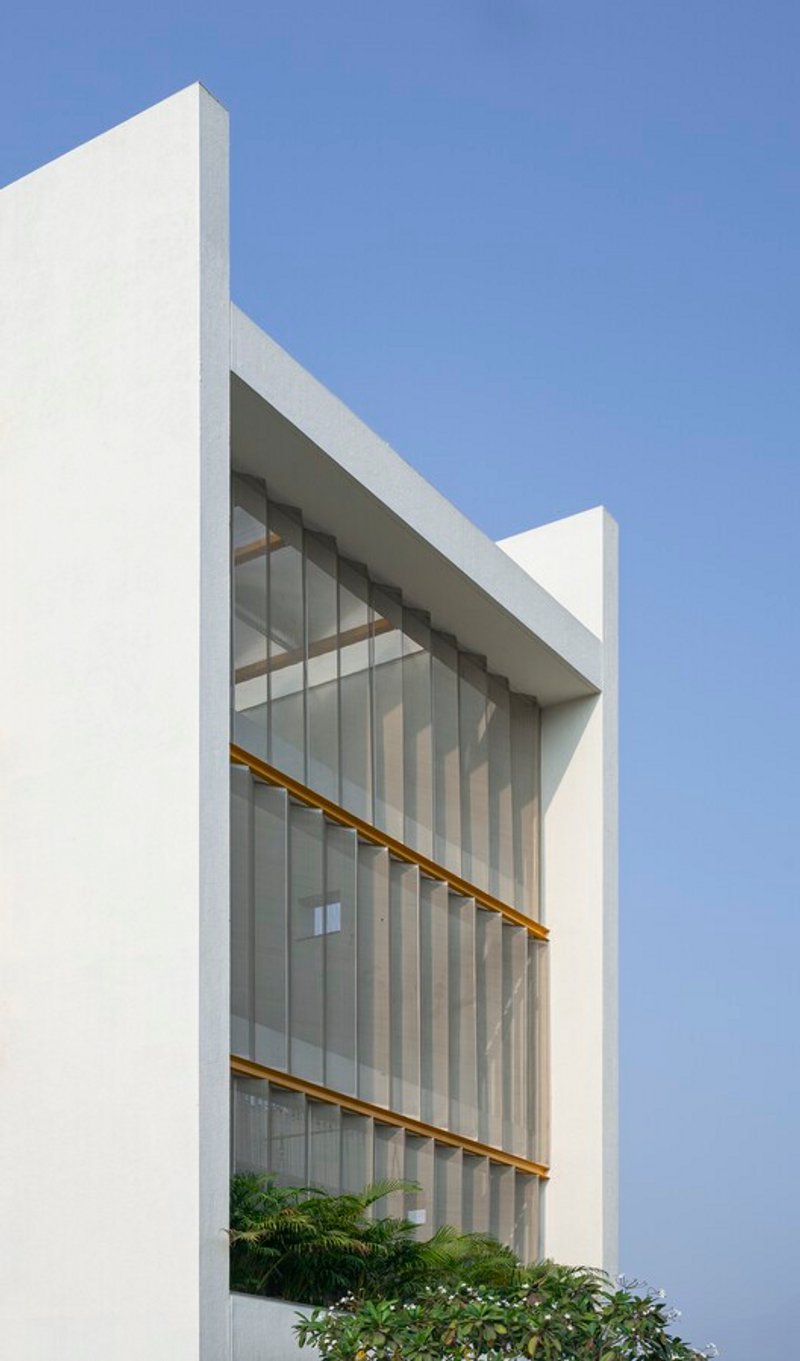
As the plates move upward, they cascade back, shaping a tiered courtyard volume on the north. This results in a sequence of green terraces that visually connect all floors while balancing openness with privacy.
A Breathing Metal Skin and Solar-Integrated Roof
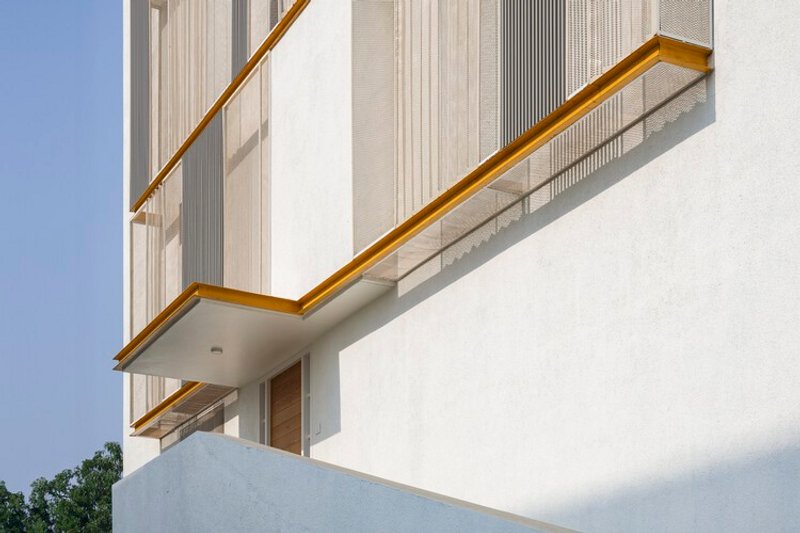
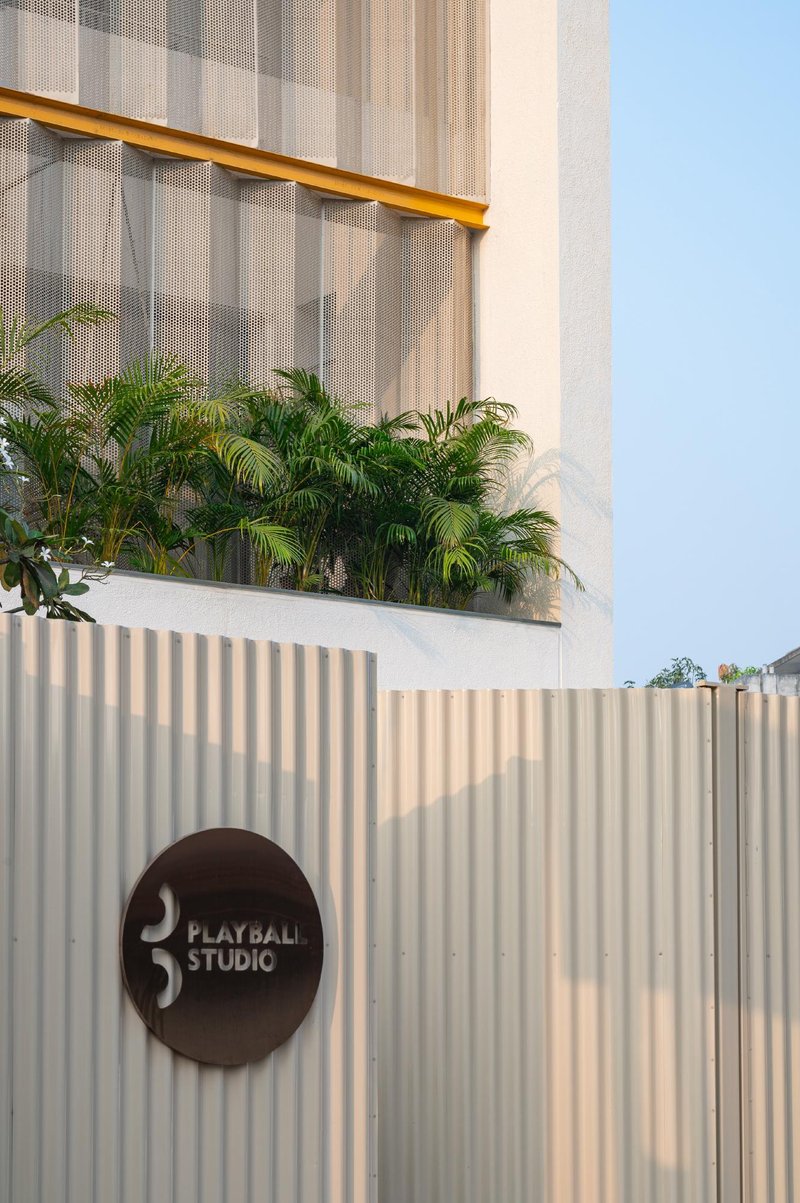
The entire stepped courtyard is wrapped in a perforated metal façade, designed for:
- Zero material wastage
- Climate control
- Security
- Visual permeability
Above, solar panels are installed so their substructure shades the courtyard from intense sun, creating a cooler microclimate for daily use.Two planters articulate the facade: one softening views from the living floor, the other concealing solar infrastructure while blending with the skyline.
A champa tree marks the ground-level entry, dividing access to the studio and the independent stair to the residence.
Structure That Disappears Into the Architecture
The building’s structure is intentionally concealed to preserve the clarity of volumes:
- Columns are embedded within cavity walls on the east and west.
- All plumbing-heavy “wet areas” sit adjacent to the circulation core for efficiency.
- Beams and sunk slabs are absorbed into bathroom ceilings, allowing the rest of the slabs to remain uninterrupted.
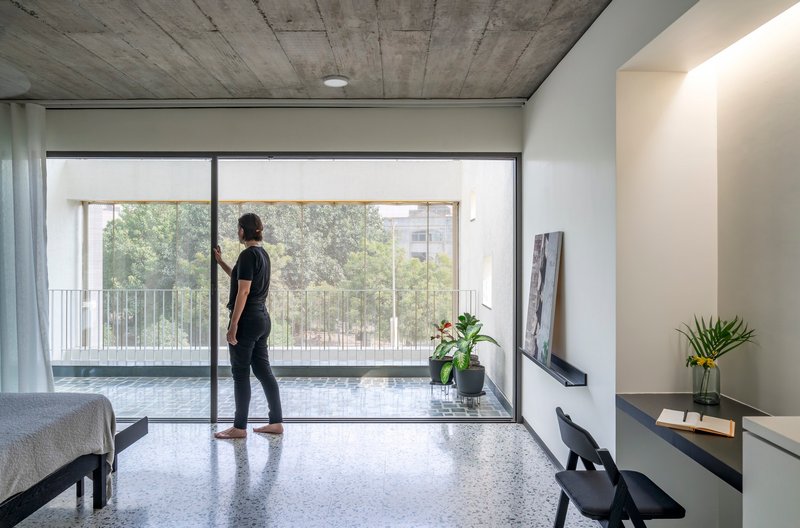
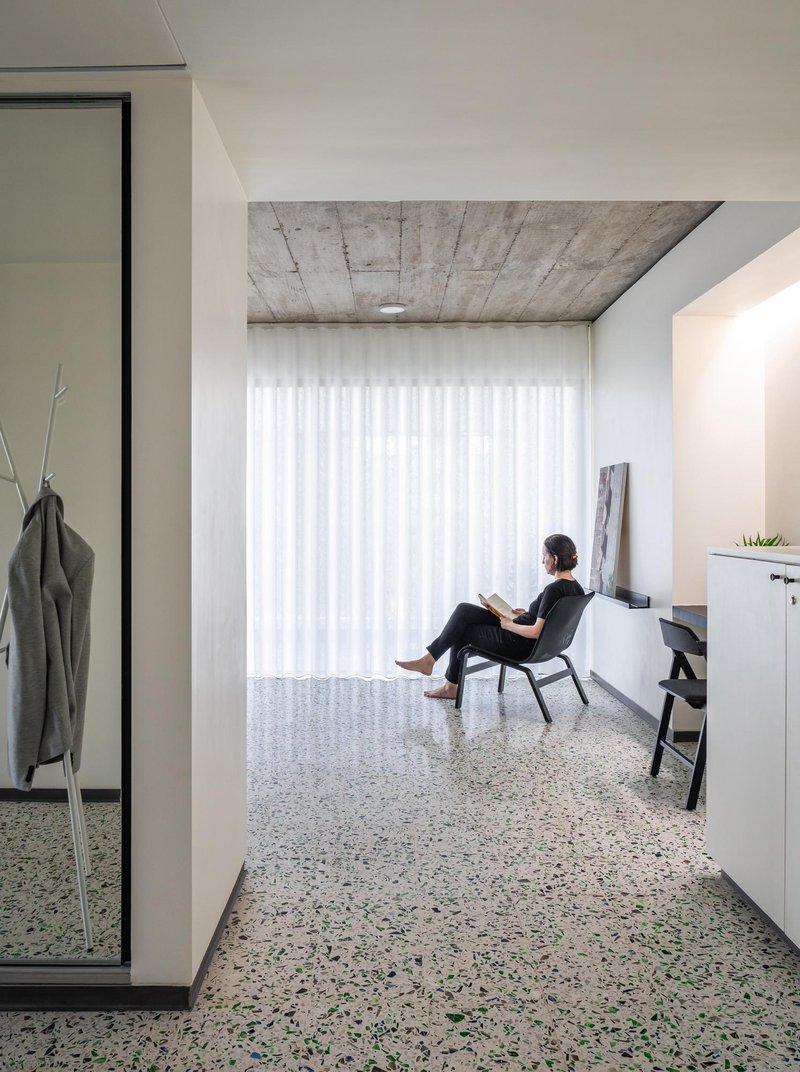
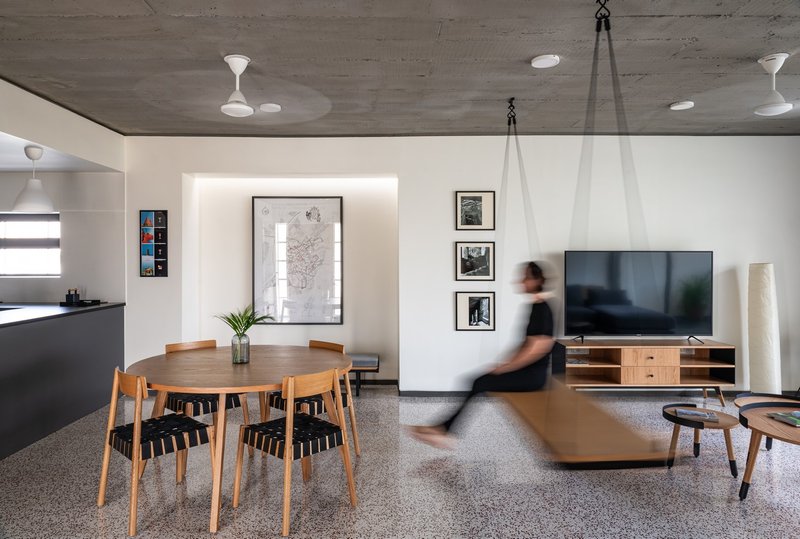
Exposed soffits reveal the texture of 300 × 3000 mm reclaimed wood shuttering, turning structural elements into subtle, tactile design features.
Light, Air, and Flexibility Through Open Plans
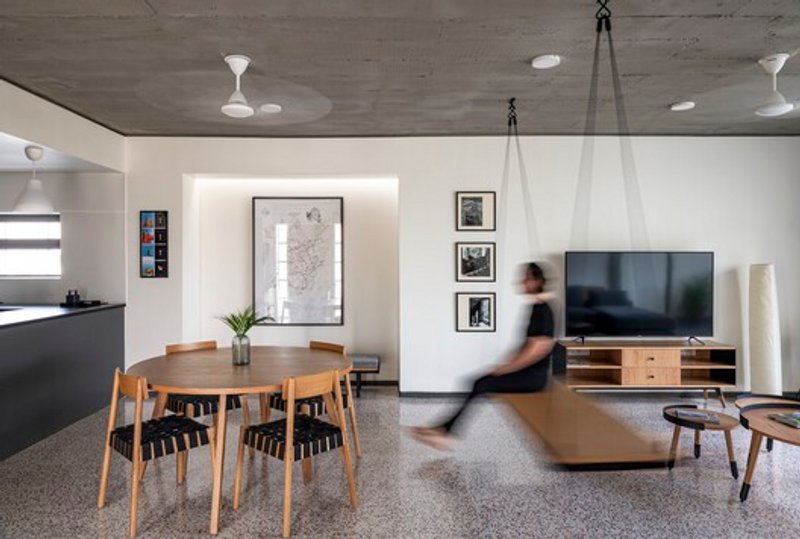
With no internal walls except those required for bathrooms, all floors follow an open-plan configuration, where furniture defines space. This ensures long-term adaptability for changing family or professional needs.
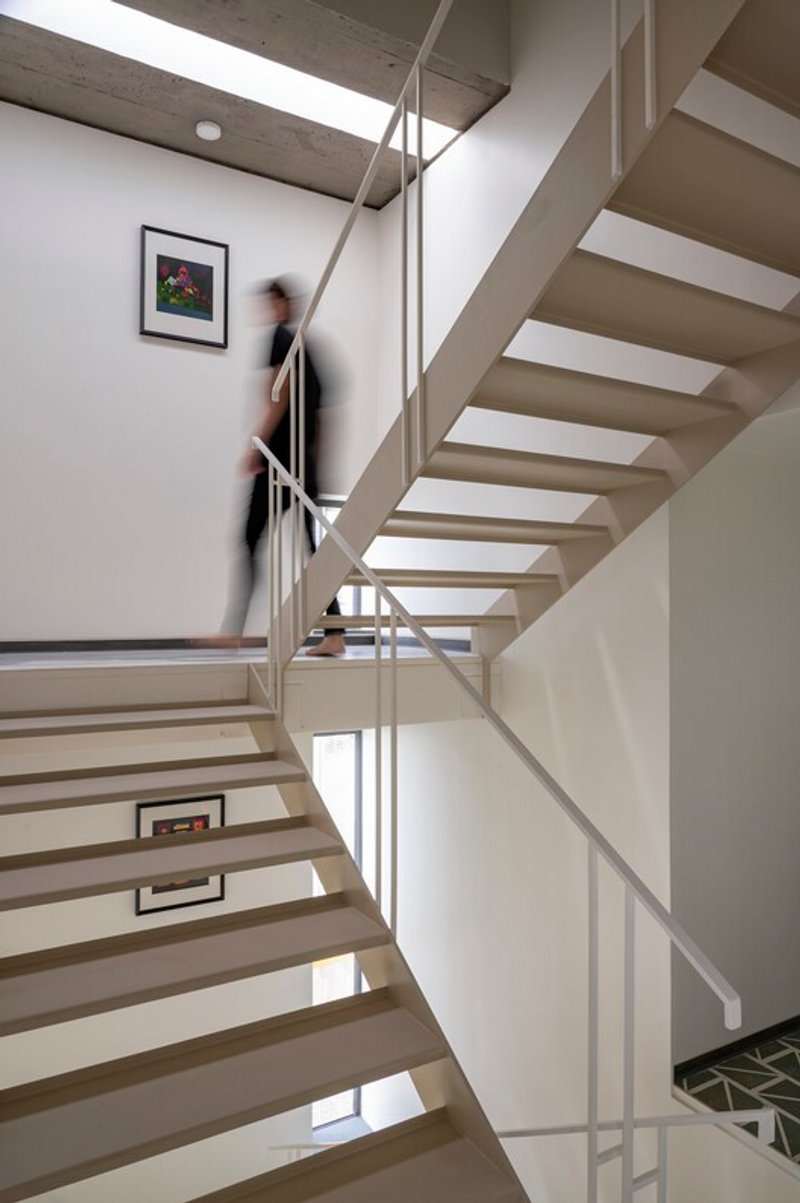
Openings and skylights on the east and west maintain cross-ventilation and allow daylight to penetrate deep into the interior—ensuring privacy even if neighboring plots are developed in the future.
A lightweight metal staircase in the circulation core pulls air and light upward, binding all levels together.
Material Reuse and Craft: A Sustainable Urban Practice
Sustainability and craft play a central role:
- Floors are finished with handmade terrazzo tiles (300 × 300 mm) using marble chips and recycled glass.
- Terraces use in-situ flooring made of waste kota stone pieces arranged in organic patterns.
- The metal skin is designed for zero waste optimization.
These materials reinforce the architectural values of honesty, reuse, and low environmental impact.
A Building in Dialogue With Climate, Context, and Future Use
Plot 33 successfully merges urban density, climatic intelligence, and cultural duality. Every floor maintains a visual connection to the park and sky, fulfilling the project’s original aim: to create a building that consistently negotiates inside/outside, work/life, and openness/privacy.
It is an architecture that is adaptable, breathable, and deeply rooted in context, offering a model for sustainable live–work urban living in contemporary India.
All the Photographs are works of Atik Bheda




Popular Articles
Popular articles from the community

KCAP and DCA Architects Build a Stepped Urban Village on Singapore's King's Dock Waterfront
A 26,000 square meter residential development in Singapore trades tower isolation for terraced courtyards and a planted promenade along the harbor.
Not All Architecture Grounds a Timber Retreat in Victoria's Coastal Bushland
Ironbark House stretches low beneath eucalyptus canopy, threading a quiet domestic life between courtyard, deck, and landscape.
Art 1 Office Strips Athens Back to Its Bones
Neiheiser Argyros transforms a 40-year-old Athens office building into a vivid, materially rich workplace anchored by red steel, exposed concrete, and roof
Guangzhou's Twin Towers Interiors Move Like Water
DuShe Architectural Design shapes the lobbies of a massive Guangzhou transit hub with undulating ceilings and deep geological materiality.


Similar Reads
You might also enjoy these articles

Filtering Space: A Gradual Spatial Experience
From urban intensity to spatial calm.


The Ken Roberts Memorial Delineation Competition (Krob)
As the most senior architectural drawing competition currently in operation anywhere in the world, it draws hundreds of entries each year, awarding the very best submissions in a series of medium-based categories.


Waterfront Redevelopment and Urban Revitalization in Mumbai: Forging a New Dawn for Darukhana
A transformative waterfront redevelopment project reimagining Darukhana’s shipbreaking heritage into an inclusive urban future.

OUT-OF-MAP: A Call for Postcards on Feminist Narratives of Public Space
Rhizoma Design and Research Lab invites artists, designers, architects, researchers, and students to reflect on how feminist perspectives can reshape public space. Selected works will be exhibited in Barcelona, October 2026. Submissions open until 15 April 2026.


Explore Office Building Competitions
Discover active competitions in this discipline




The International Standard for Design Portfolios


The Global Benchmark for Architecture Dissertation Awards


The Global Benchmark for Graduation Excellence


Challenge to reimagine the Iron Throne
Comments (0)
Please login or sign up to add comments
No comments yet. Be the first to comment!