
Ply Architecture Wraps a Heritage Bungalow Addition Around a Central Courtyard in Adelaide
NTH / Neutral Tactile Habitat extends a Californian bungalow in Colonel Light Gardens with black timber cladding and concrete floors.


Colonel Light Gardens, south of Adelaide, is one of those suburbs where the streets practically narrate their own heritage. Rows of Californian bungalows sit under mature canopies, their red brick facades and timber detailing forming a consistent visual rhythm. When Ply Architecture, led by Benjamin Edwards and Christopher Jeffery, was asked to extend one of these homes, the challenge was clear: add 150 square meters of livable space for a growing family without breaking the streetscape's quiet authority.
What makes NTH (Neutral Tactile Habitat) genuinely interesting is how it resolves that tension. Rather than hiding behind the existing house or mimicking it outright, Ply Architecture extruded the bungalow's gabled silhouette into a new form clad in black rough-sawn Weathertex timber, set atop a plinth of white-painted tumbled brick. The materials link to the original while clearly marking the addition as contemporary. And instead of simply extending outward, the plan wraps around a central courtyard, giving every room in the new wing access to light, greenery, and cross-ventilation. It is a strategy that turns the constraints of a tight suburban lot into spatial generosity.
Reading the Street
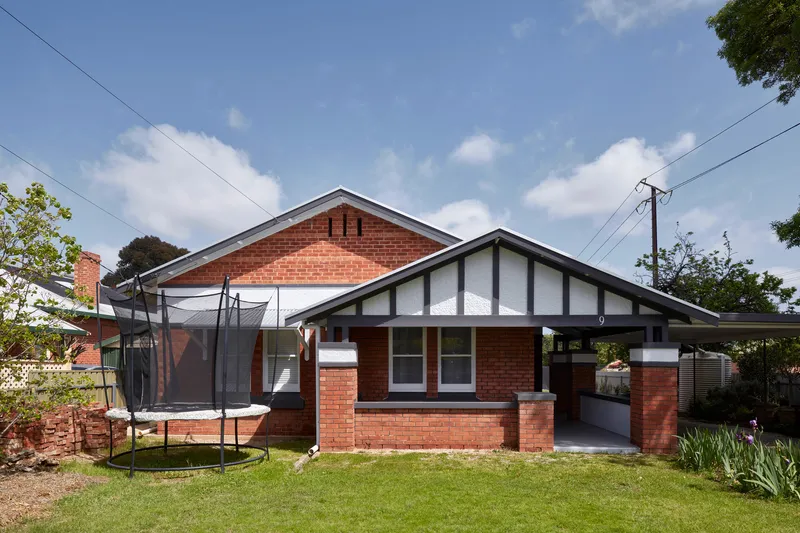
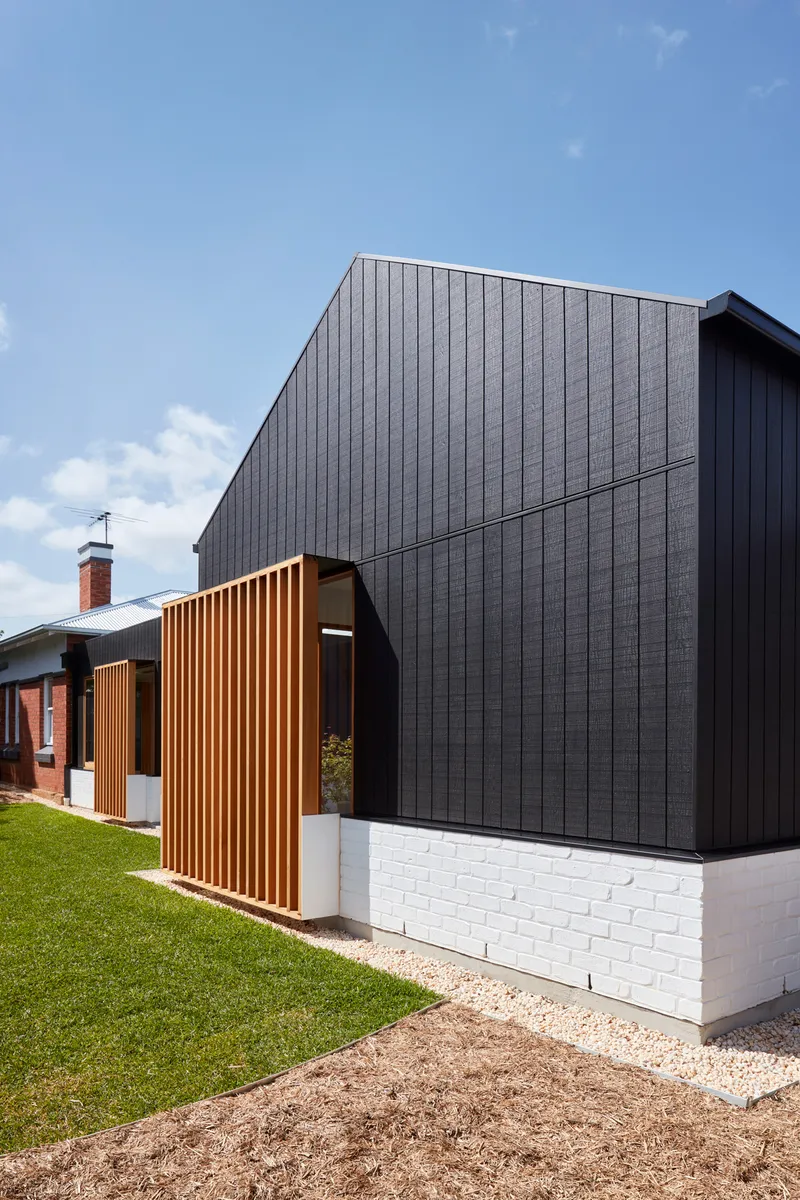
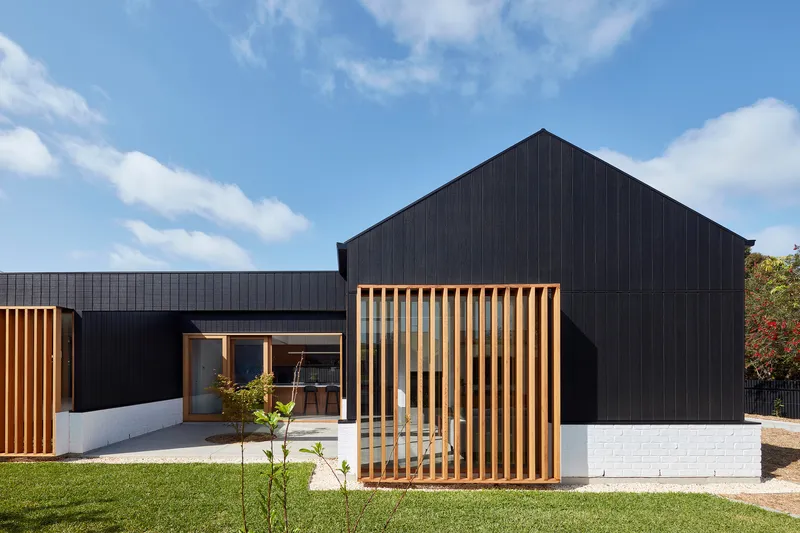
From the street, the original red brick bungalow remains the primary character. The addition sits behind it, its dark gabled volume visible but deferential. Ply Architecture matched the pitch of the new gable to the existing one, creating a silhouette that reads as a natural extension rather than an imposition. The black Weathertex cladding is a deliberate nod to the timber detailing found on the original bungalows lining these streets, but its dark tone and rough-sawn texture establish a clear material break.
The white-painted tumbled brick base wraps around the addition's lower portion, grounding the darker volume above and providing a visual bridge to the original masonry. It is a simple compositional move, but it anchors the new form effectively. The result is an addition that reads as related to its context without pretending to be heritage.
Timber Screens and Material Honesty
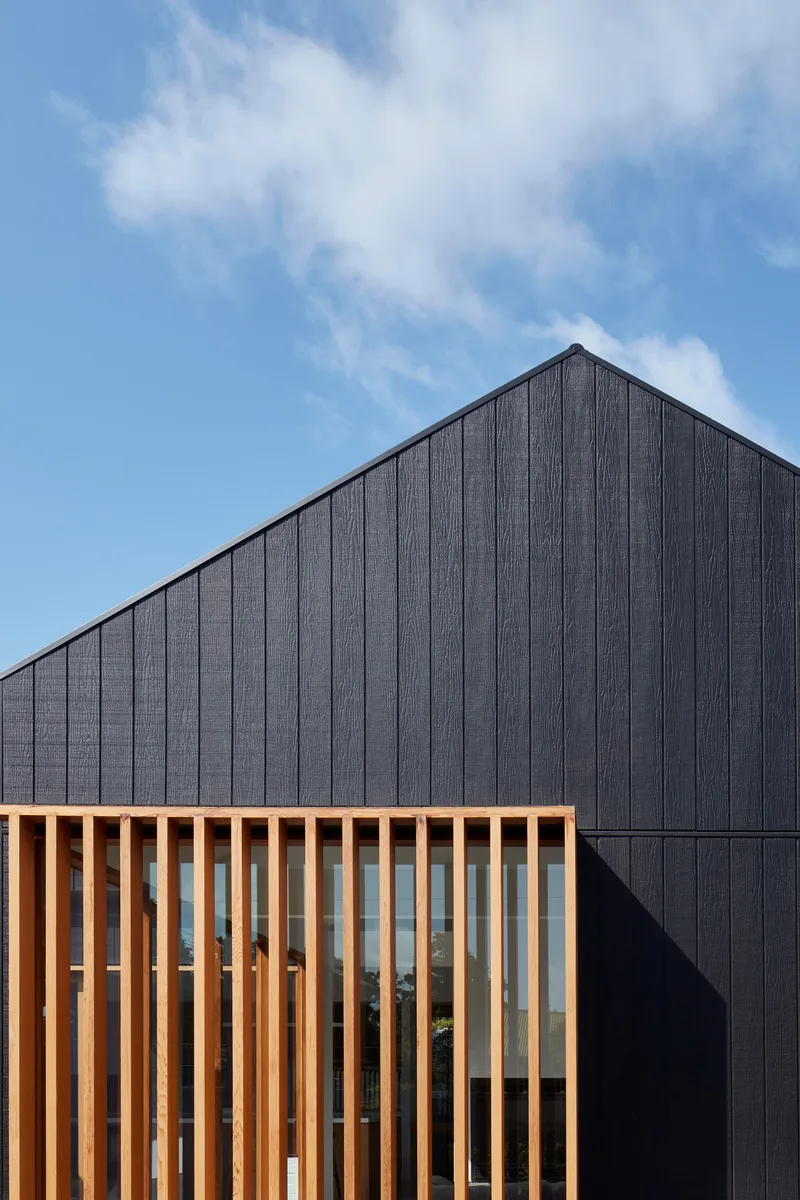
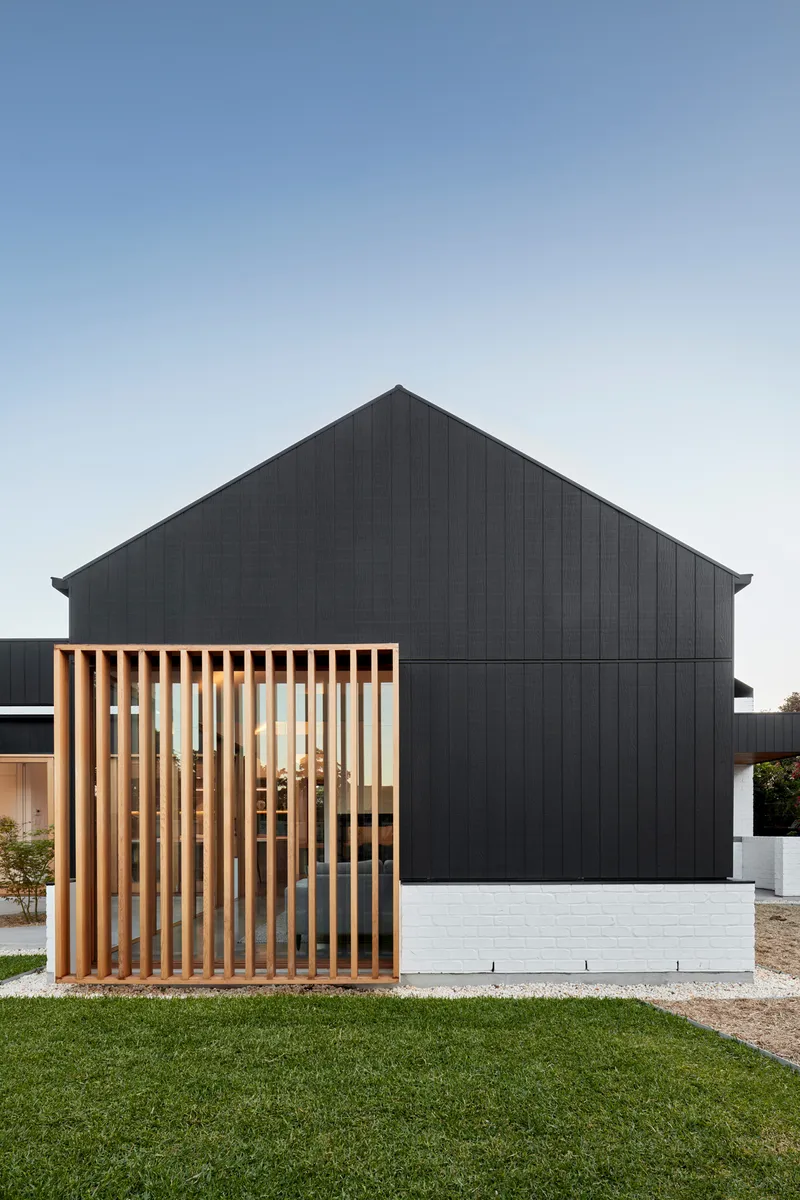
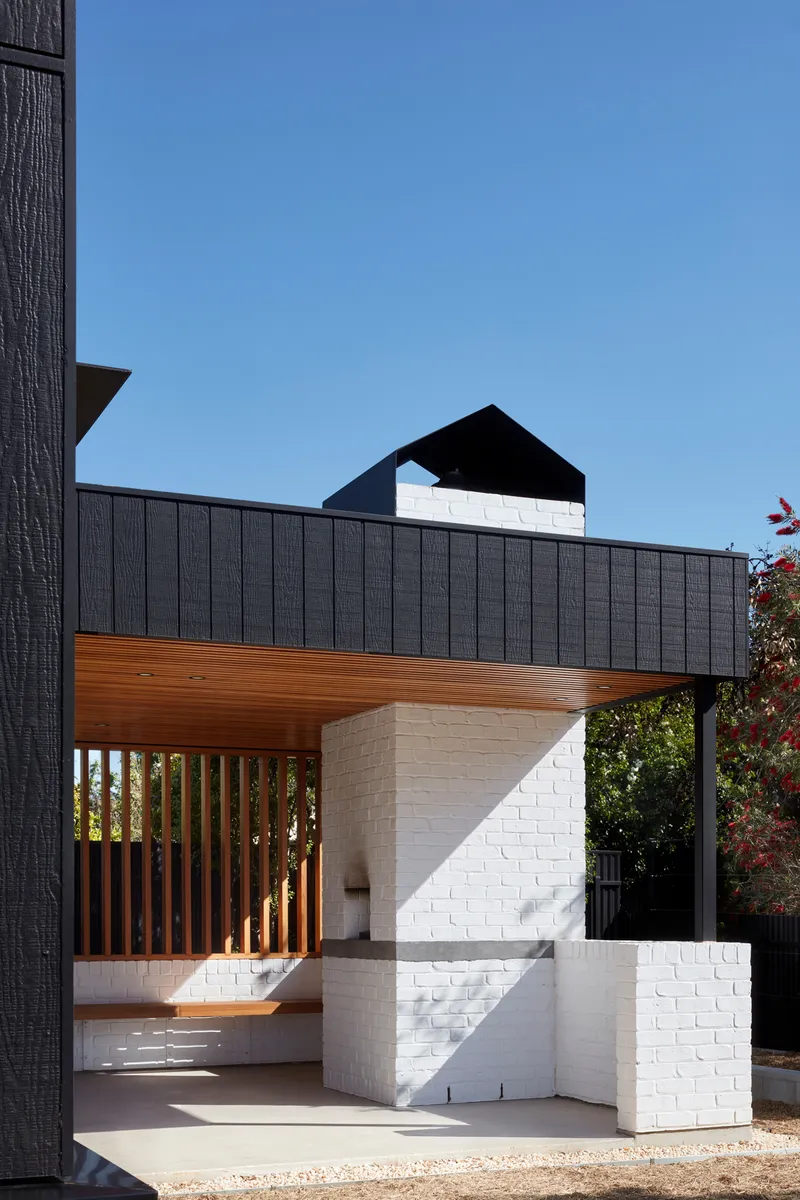
Vertical timber screens appear repeatedly across the addition's facade, filtering light and providing privacy without sealing the interior off from the street. Against the matte black cladding, the natural hardwood reads warm and tactile, reinforcing the project's name. These screens do real work: they modulate solar gain, allow air to pass through, and give the otherwise solid gabled form a layered, permeable quality.
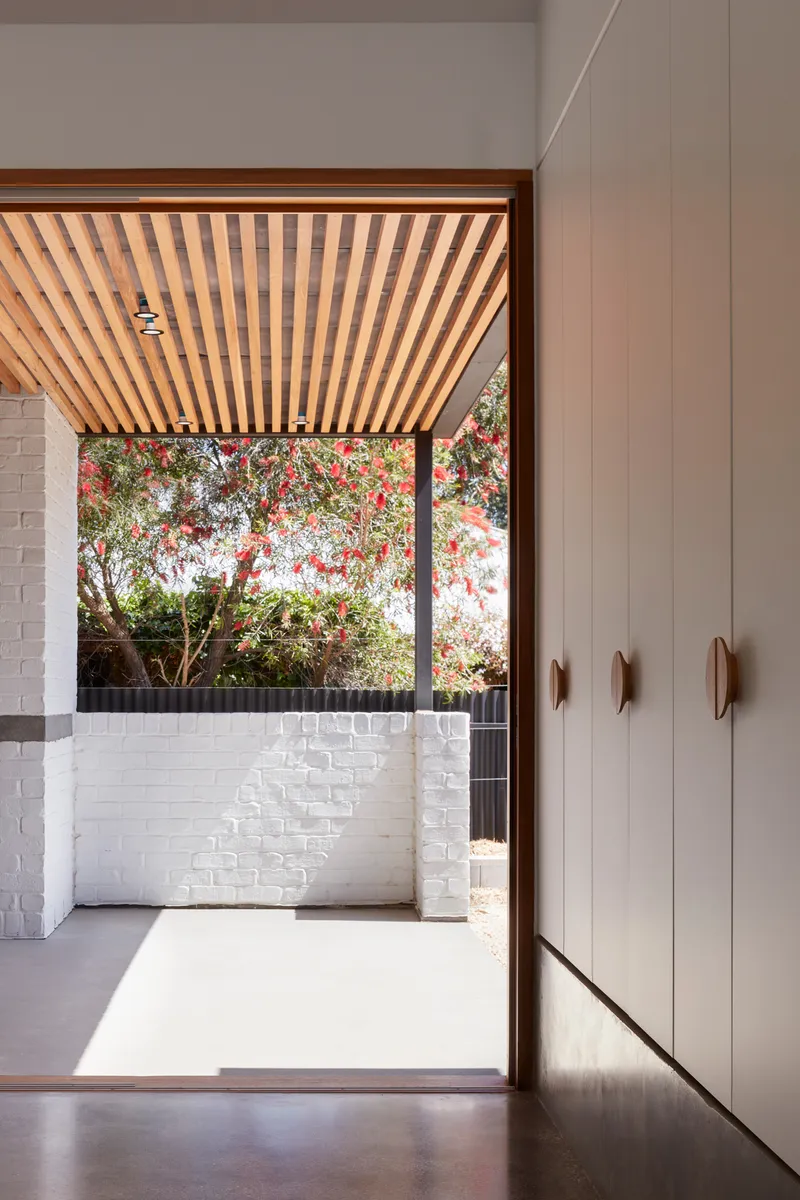
The covered entry porch, with its timber soffit and white brick stair, offers a clear threshold between old and new. The material palette here, rough timber overhead and smooth painted brick underfoot, sets up the interior's approach: honest surfaces, limited fuss, and a preference for texture over polish.
The Courtyard as Organizing Device
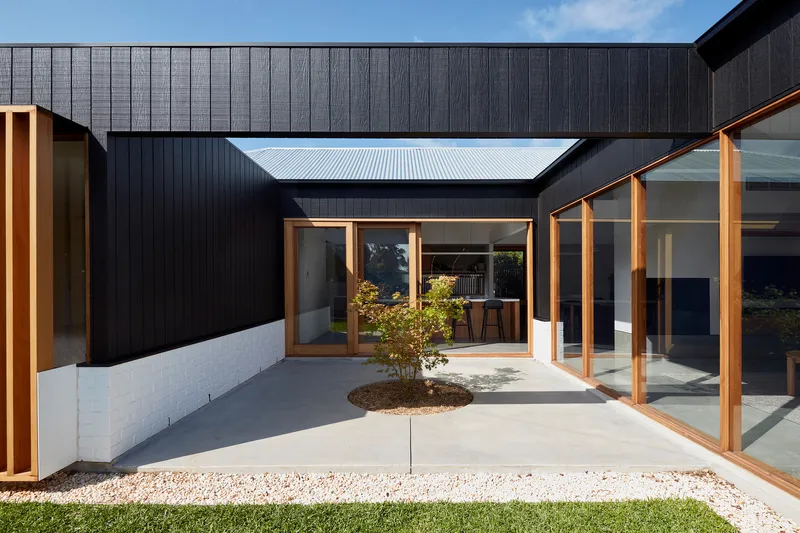
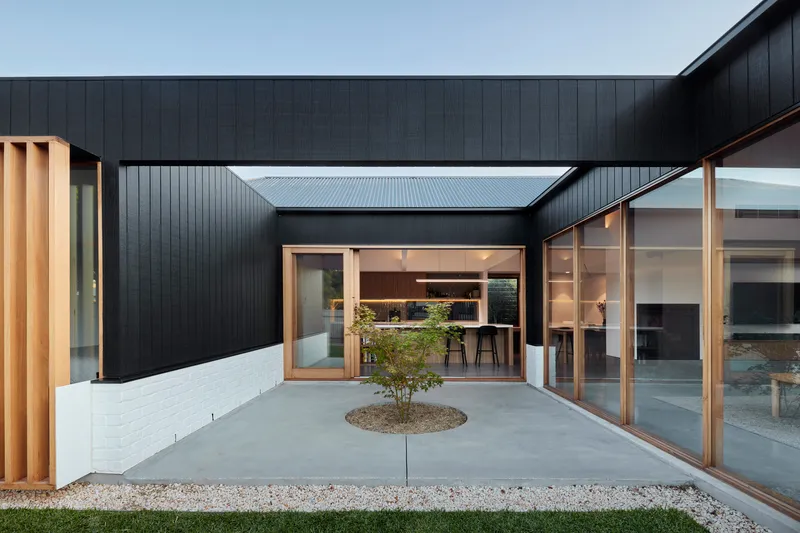
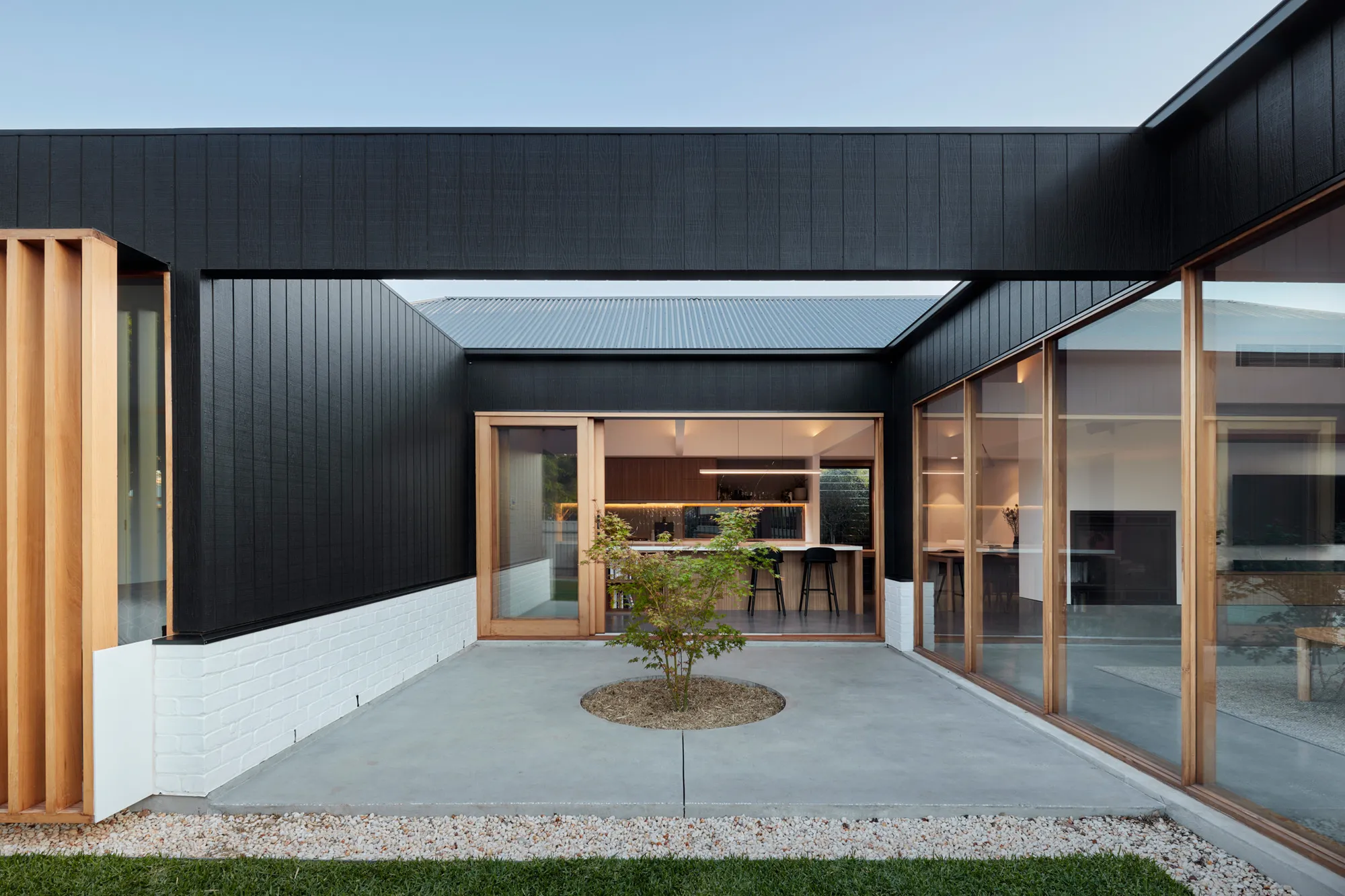
The central courtyard is the project's most consequential decision. By scooping out the middle of the addition's footprint, Ply Architecture created a shared outdoor room that every space in the new wing addresses. Concrete paving forms the ground plane, a planted circle with a young tree occupies the center, and timber-framed openings in the black cladding surround the space on all sides. It is compact but effective, bringing deep daylight into rooms that would otherwise rely on the building's perimeter.
More than a light well, the courtyard functions as a mediating space between the social and private zones of the house. You can be in the kitchen, in the master bedroom, or in the living room and still have a visual and physical connection to this shared garden. For a single-storey addition on a suburban lot, this kind of spatial richness is hard to achieve any other way.
Open Living and the North Aspect
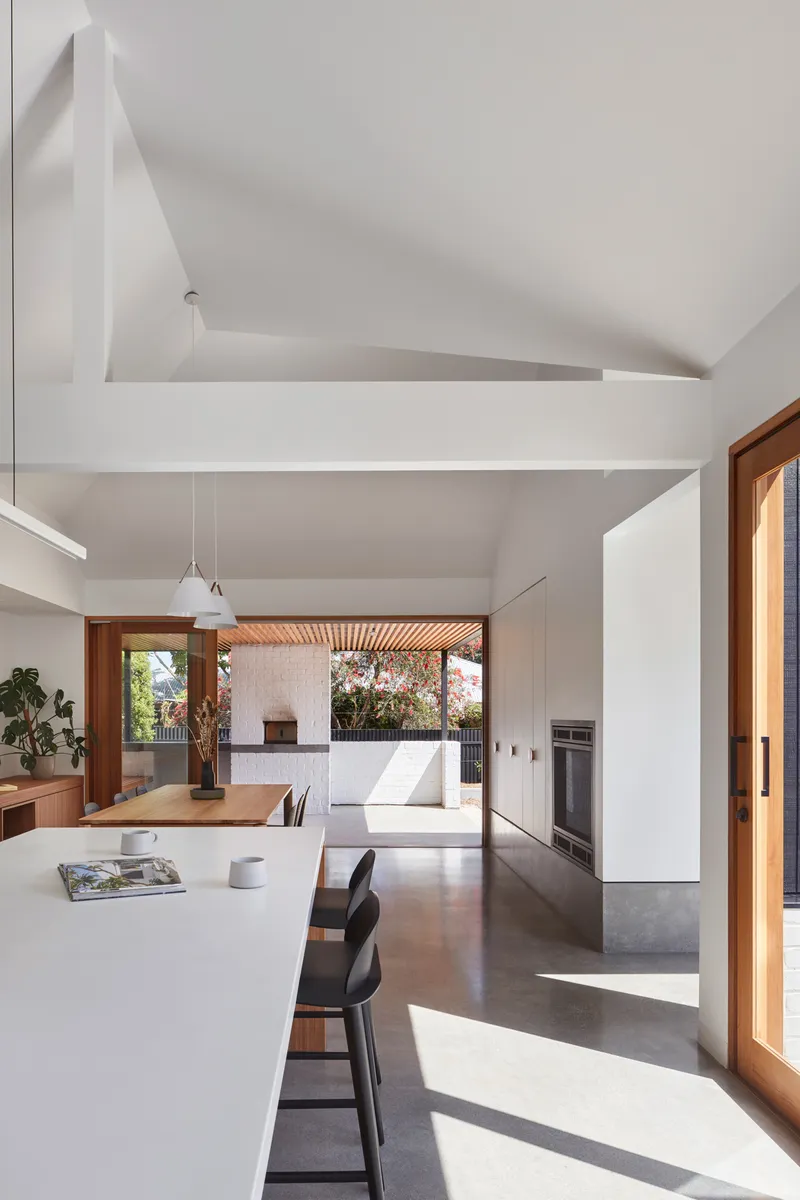
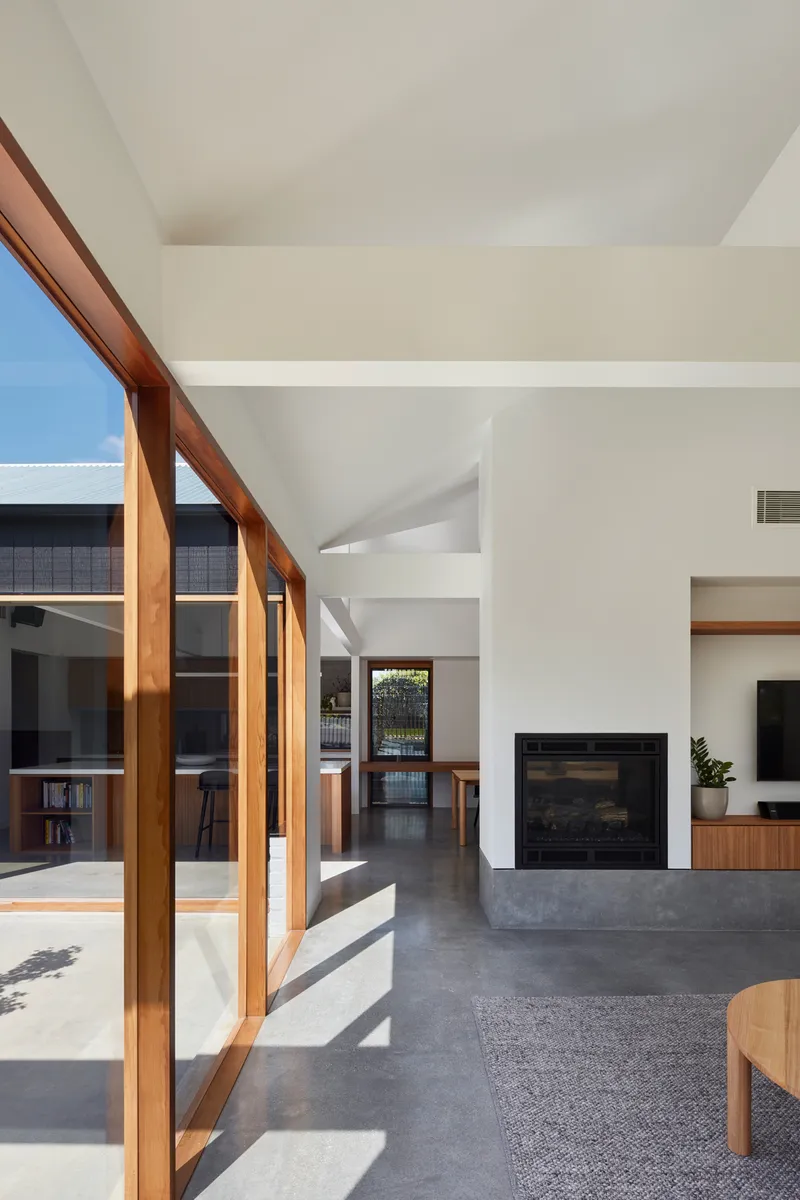
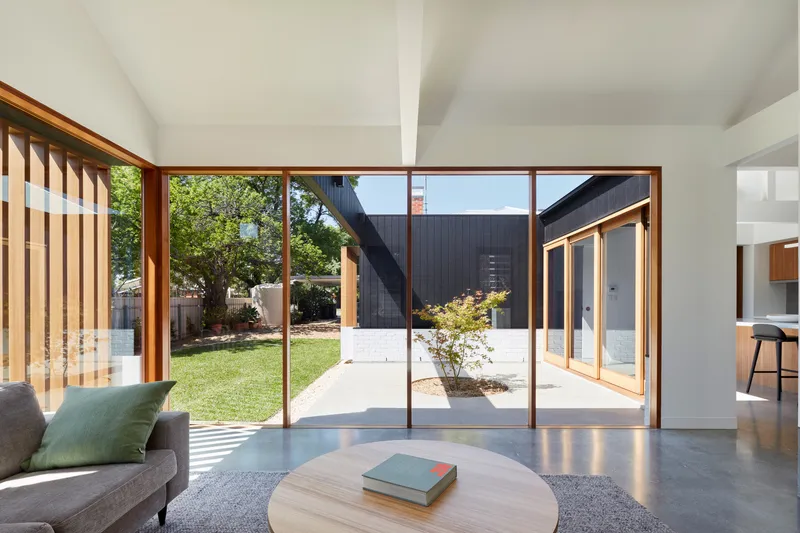
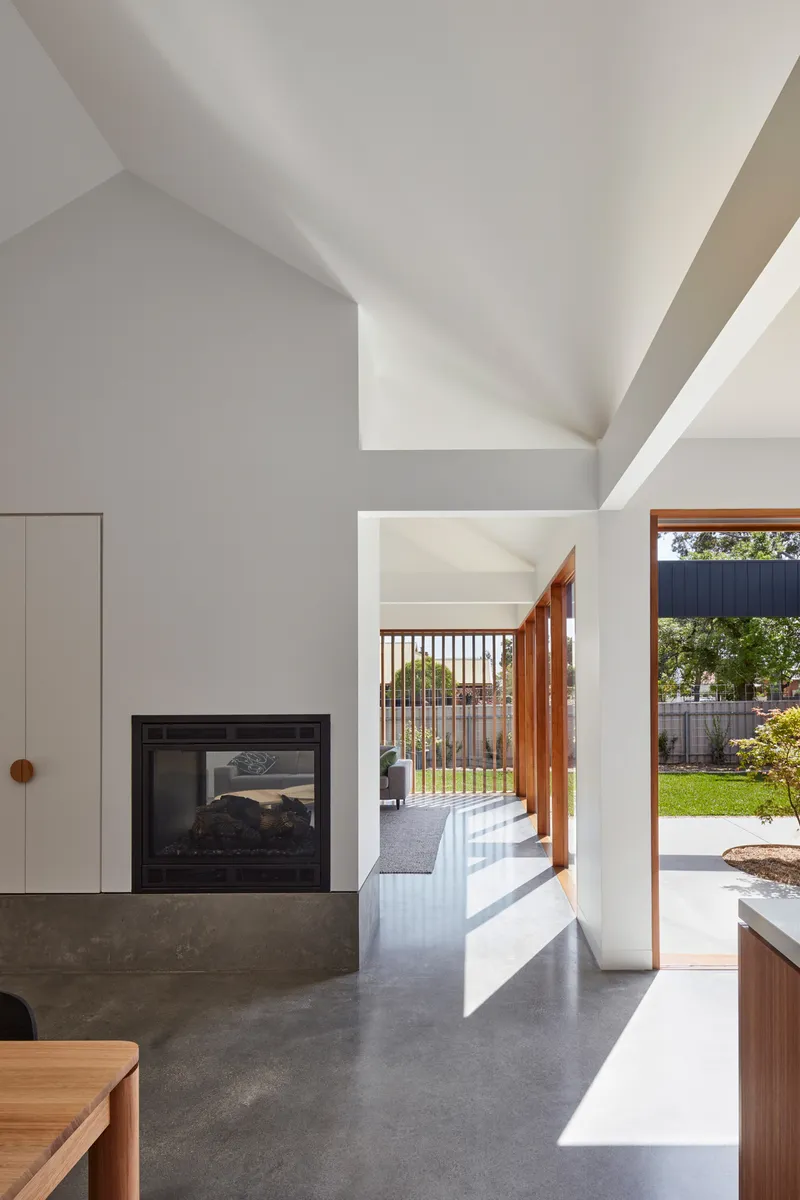
The open-plan living, dining, and kitchen zone occupies the rear of the extension, oriented to capture the northern sun. Full-height timber-framed glazing slides open to erase the boundary between interior and garden, while polished concrete floors absorb and release solar heat across the seasons. In summer, the thermal mass keeps the interior cool; in winter, it stores warmth. It is passive design executed through material choice rather than mechanical intervention.
Cathedral ceilings amplify the sense of volume in these rooms. Sunlight streams through clerestory openings and reflects off the white-painted structure above, filling the space with diffused light even on overcast days. The elongated plan groups defined zones, kitchen, dining, and living, in sequence, each visually connected to the next but spatially distinct enough to feel like separate rooms within one continuous volume.
Kitchen and Structure Overhead
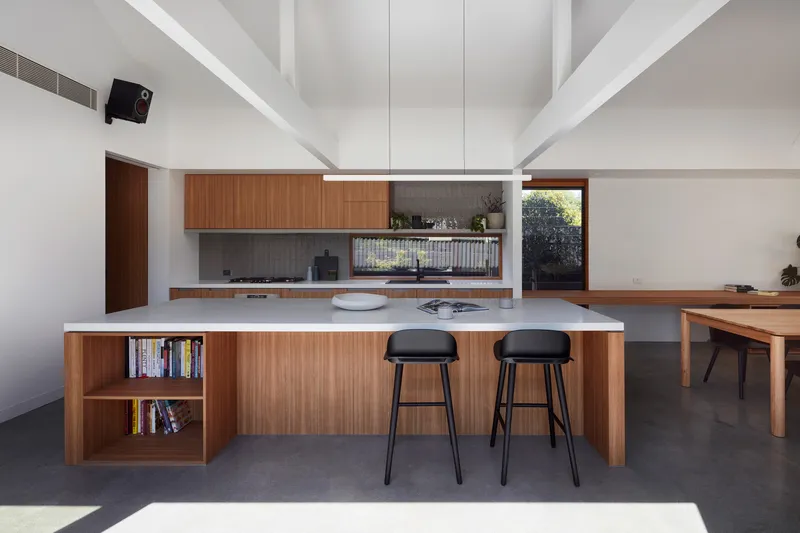
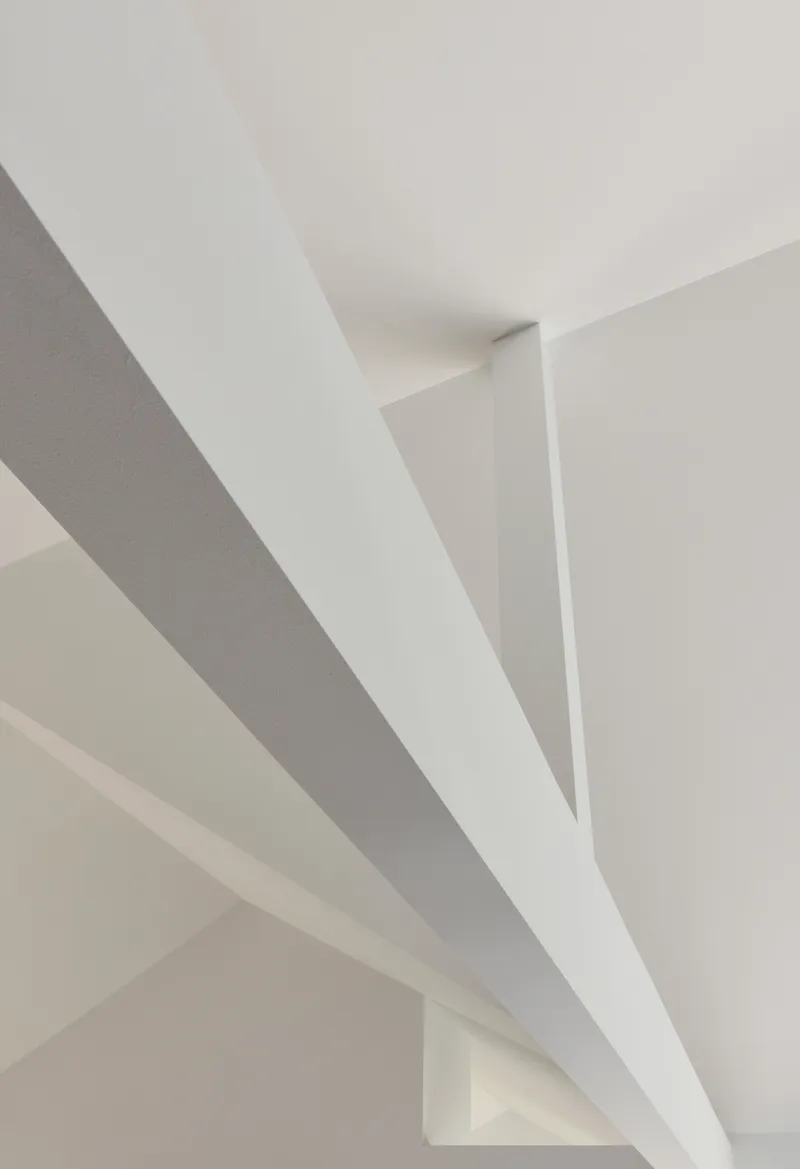
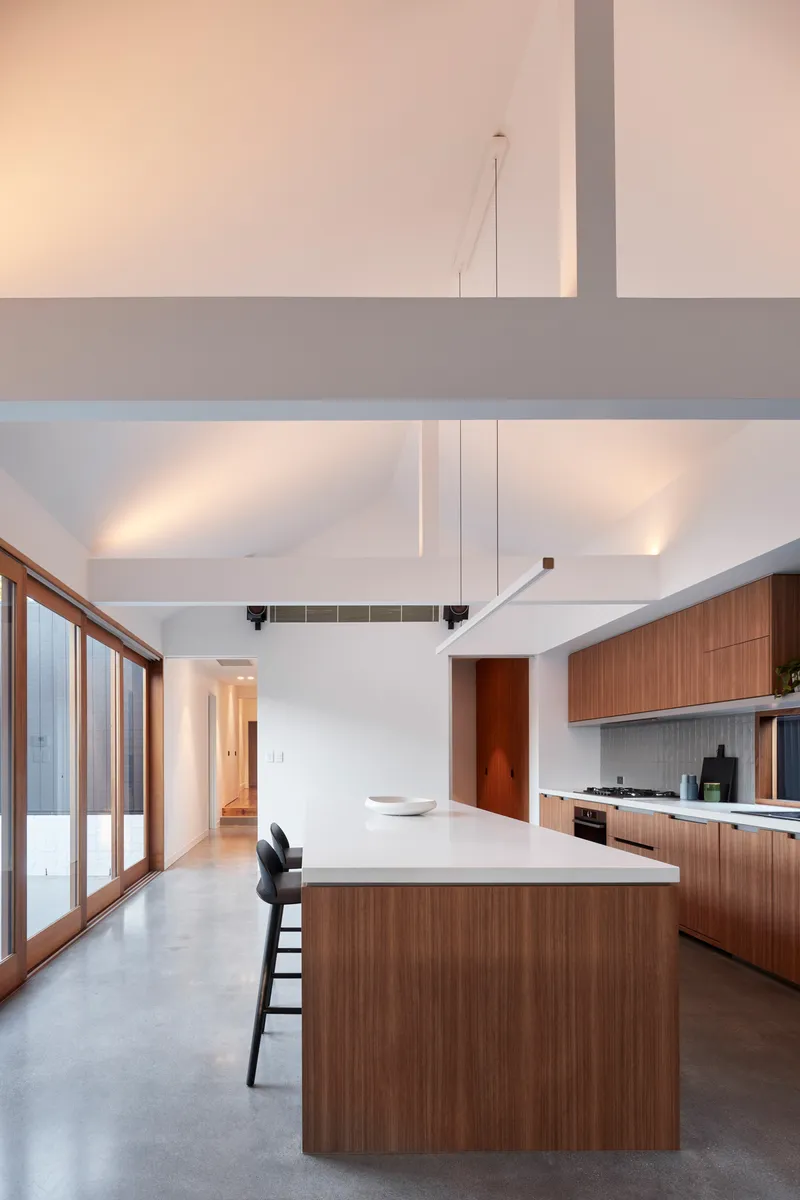
The kitchen island anchors the plan's social center. A timber base supports a white stone countertop, keeping the palette consistent with the project's broader material logic. Above, exposed white-painted steel beams and timber trusses cross at angles, breaking the ceiling's volume and defining spatial zones without walls. These structural members are left visible deliberately. They give scale to the high ceilings and reinforce the project's commitment to legible construction.
At dusk, the interior glows through the glazing, and the mezzanine level above the kitchen becomes visible. The interplay between the gabled roof's cathedral height and the flat, minimalist forms of the joinery below creates a satisfying contrast: open volume overhead, tactile solidity at hand height.
Outdoor Rooms and Year-Round Use
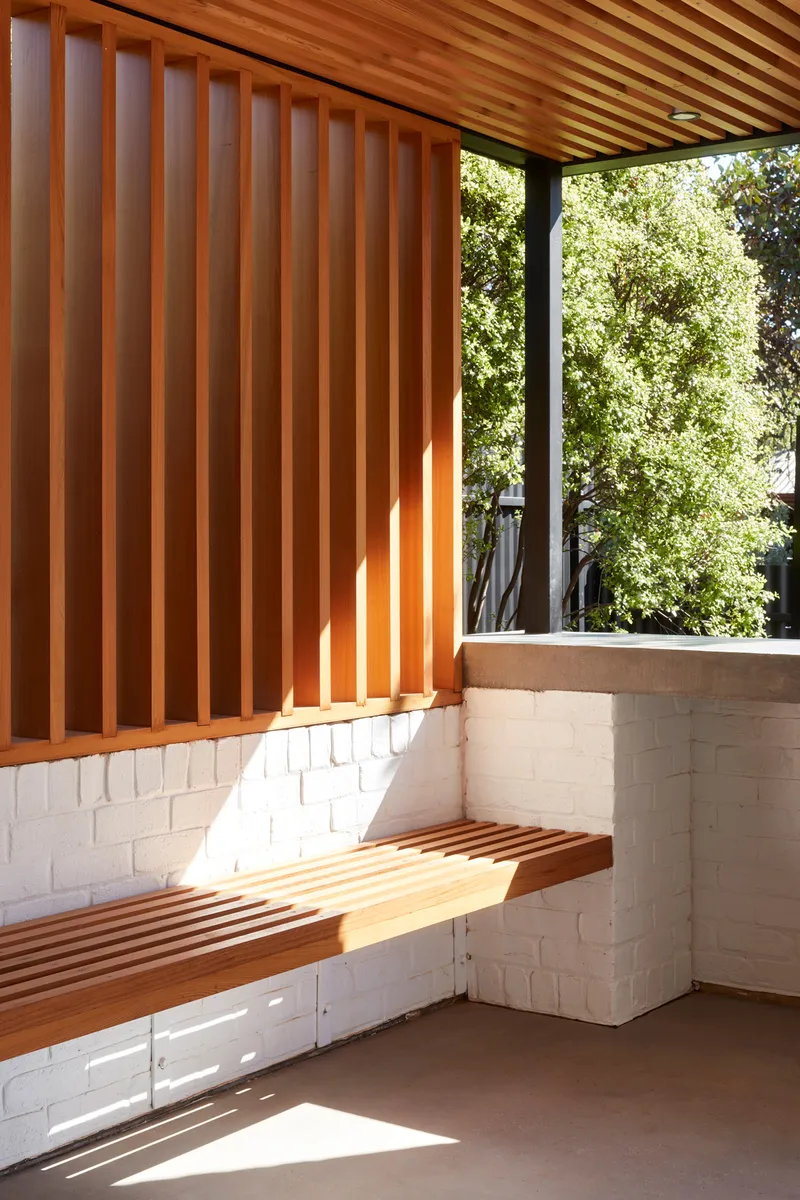
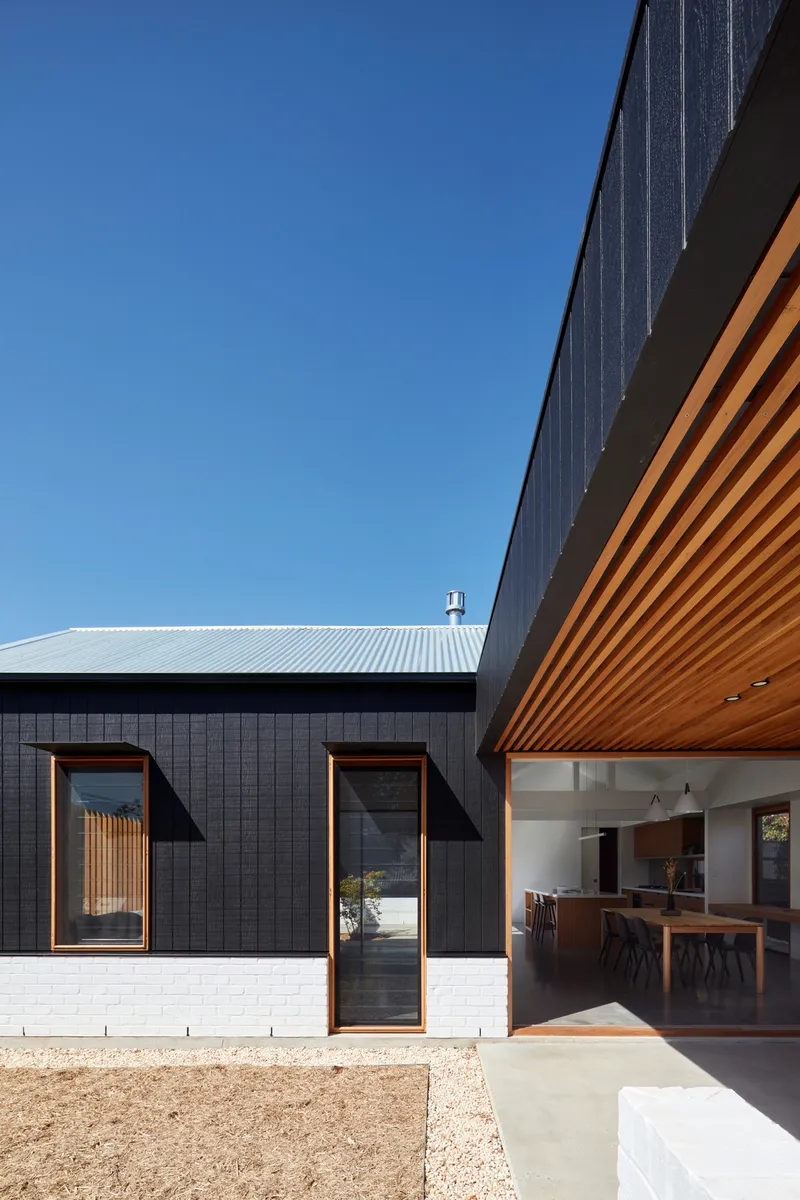
Ply Architecture designed the outdoor spaces as genuine rooms, not leftover garden. The covered terrace features a fireplace, making it viable through Adelaide's cooler months. Vertical timber battens and a slatted bench furnish the space with the same material language as the interior, while the white brick base and charcoal cladding maintain continuity with the addition's exterior expression.
Inside, a concrete fireplace base in the living room offers a visual anchor that draws the eye through to the garden courtyard beyond. The transition from interior to covered outdoor space to open garden is handled as a gradient rather than a hard boundary. Each zone offers a different degree of shelter and filtered ventilation, encouraging occupation year-round.
Breezeway and Connective Tissue
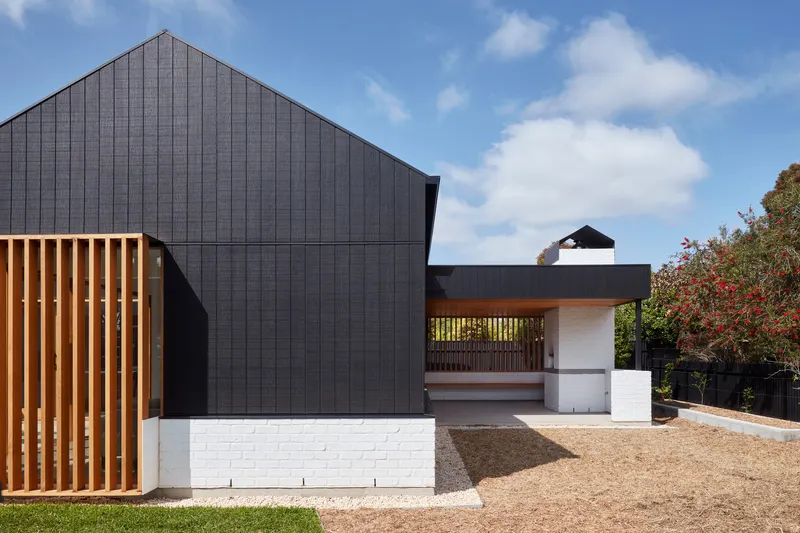
The connecting breezeway between the original bungalow and the new gabled volume deserves attention. Rather than grafting the addition directly onto the existing structure, a linking element mediates between the two. This gap acknowledges the temporal and material difference between old and new, allowing each to breathe. It also creates opportunities for cross-ventilation and light penetration at the junction, a detail that pays dividends in Adelaide's warm climate.
Plans and Drawings
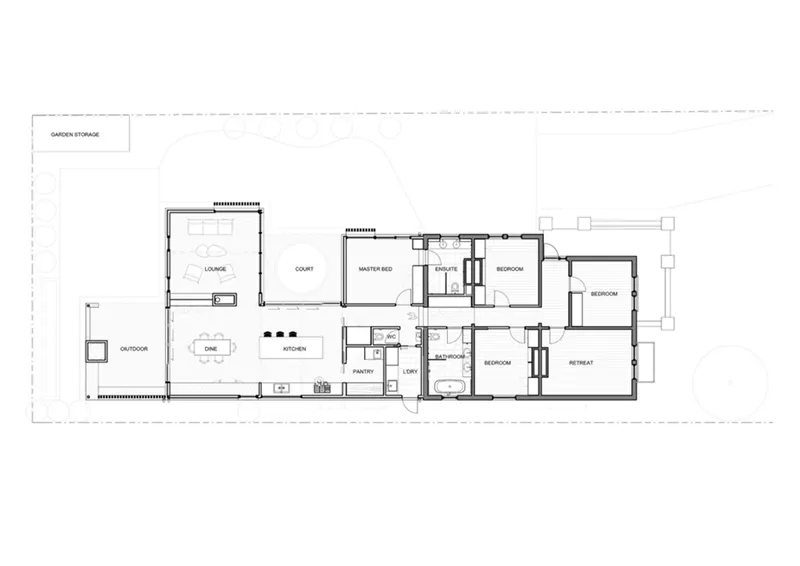
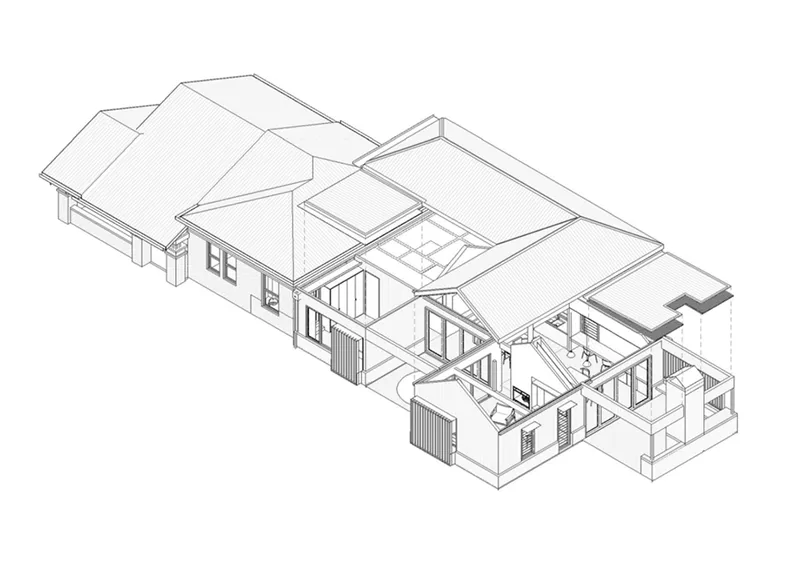
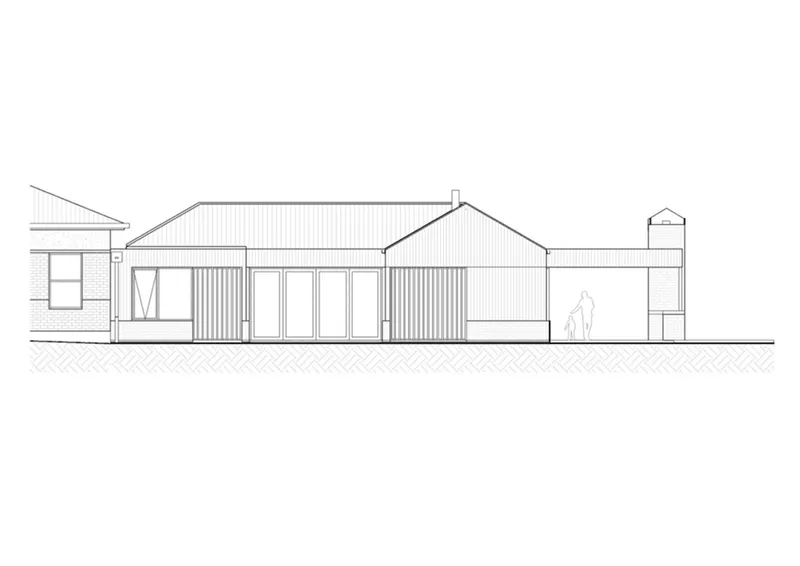
The floor plan reveals the linear arrangement of rooms wrapping around the central courtyard, with garden storage tucked to one side. The axonometric cutaway makes the relationship between the gabled roof volumes legible, showing how the addition cascades in a low, sprawling form into the backyard. The elevation drawing confirms the restrained profile: the new gable matches the existing one in pitch, and a standing figure at the base underscores just how modestly scaled the addition remains despite its spatial ambition.
Why This Project Matters
NTH is a persuasive demonstration that heritage suburbs do not require pastiche additions. By extruding the silhouette of the existing bungalow into a new material language, Ply Architecture found a way to be respectful and contemporary at the same time. The courtyard strategy, the passive climate response, and the honest material palette all work together to deliver a house that performs well and ages gracefully. Nothing here is flashy. Everything is resolved.
For architects working in similar contexts, where character overlays and heritage guidelines constrain formal invention, this project offers a useful precedent. The lesson is not about what cladding to choose or how to proportion a gable. It is about treating the constraints of context as generative, and about understanding that the best additions are the ones that make both the new and the old better for being in each other's company.
NTH / Neutral Tactile Habitat by Ply Architecture (Benjamin Edwards, Christopher Jeffery). Colonel Light Gardens, Australia. 150 m². Completed 2024. Photography by Sam Noonan.
About the Studio
Share Your Own Work on uni.xyz
If projects like this are the kind of work you want to make, uni.xyz is a place to publish your own, find collaborators, and enter design competitions.



Popular Articles
Popular articles from the community


Lunar Spiral: Space Architecture Shaped by the Mathematics of the Universe
Lunar Spiral reimagines space architecture through Fibonacci geometry, lunar regolith, levitating habitats, and self-sustaining Moon living.

Conexión: Biophilic Design Reimagines High-Rise Living in Hong Kong
Conexión reimagines high-rise living in Hong Kong through biophilic design, green facades, shared spaces, daylight, water and nature within.

Co-life: Sustainable Architecture for Age-Friendly Community Living
Co-life reimagines sustainable architecture for seniors through courtyards, rammed earth, shared gardens, and spaces designed for belonging.

Co-Life: Senior Housing Design That Reconnects Older Adults With the City
Co-Life reimagines senior housing design through healing gardens, shared streets, workshops, and a sustainable community across generations.


Similar Reads
You might also enjoy these articles

Bao Huynh Watercolor Atelier: A Serene Art Retreat in Hội An
Bao Huynh Watercolor Atelier in Hội An blends multifunctional art spaces, sustainable design, local materials, and family-friendly living in a serene environment.

Atelier Macri Concept Store Interior Design by CASE-REAL
Atelier Macri store features a "ko" counter, walnut wood details, cork displays, blending retail, gallery, and seamless customer experiences.

Manuel Vargas Izquierdo Stadium and High-Performance Sports Center: Architectural Excellence in Jalpa de Méndez
The Manuel Vargas Izquierdo Stadium blends sustainable design, inclusive sports facilities, and cultural-inspired architecture, revitalizing Jalpa de Méndez’s public spaces.

KAKR Buluh Awar Hall: Revitalizing Community and Ecology Through Bamboo Architecture
Community built bamboo hall revitalizes Buluh Awar village, empowering youth, restoring ecology, celebrating vernacular craftsmanship through sustainable architecture and culture.




Comments (0)
Please login or sign up to add comments
No comments yet. Be the first to comment!