
PO House by Dall’Ovo Magalhães Arquitetura: A Contemporary Reinvention of Coastal Living
Contemporary beach house in Ilhabela featuring open-plan living, skylit bathrooms, sustainable wood finishes, and a lightweight steel structure.


A Sensitive Renovation with a Bold Reset
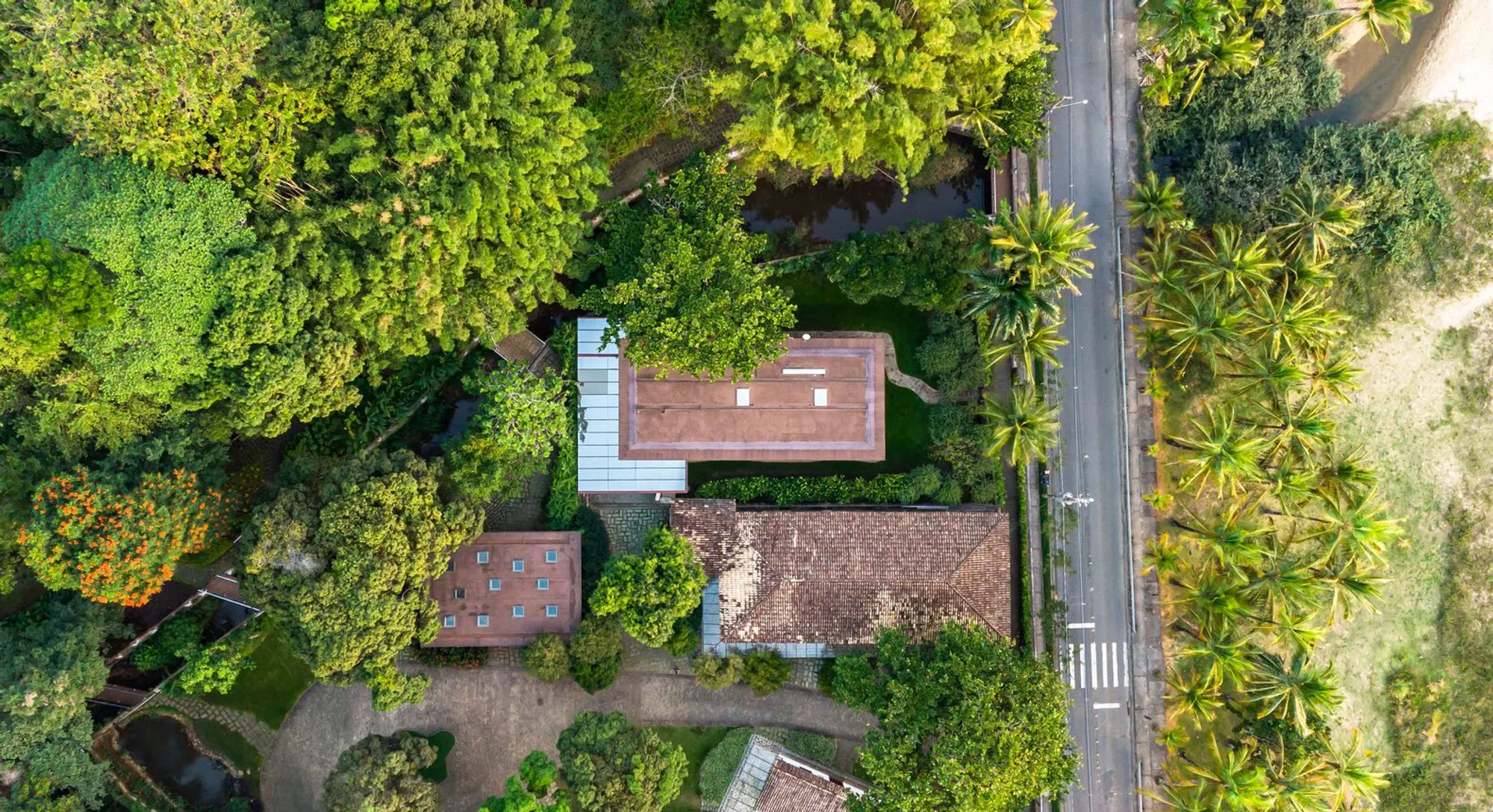
Located on the northern coast of Ilhabela, Brazil, PO House is a striking example of architectural renewal that harmonizes with its beachfront setting. Originally intended as a renovation, the project's scope expanded following an in-depth evaluation of the aging structure. While preserving the original footprint, the design team and client decided to completely demolish the interior, embracing the opportunity to redesign the home from the ground up.
Lightweight Structure Meets Coastal Context
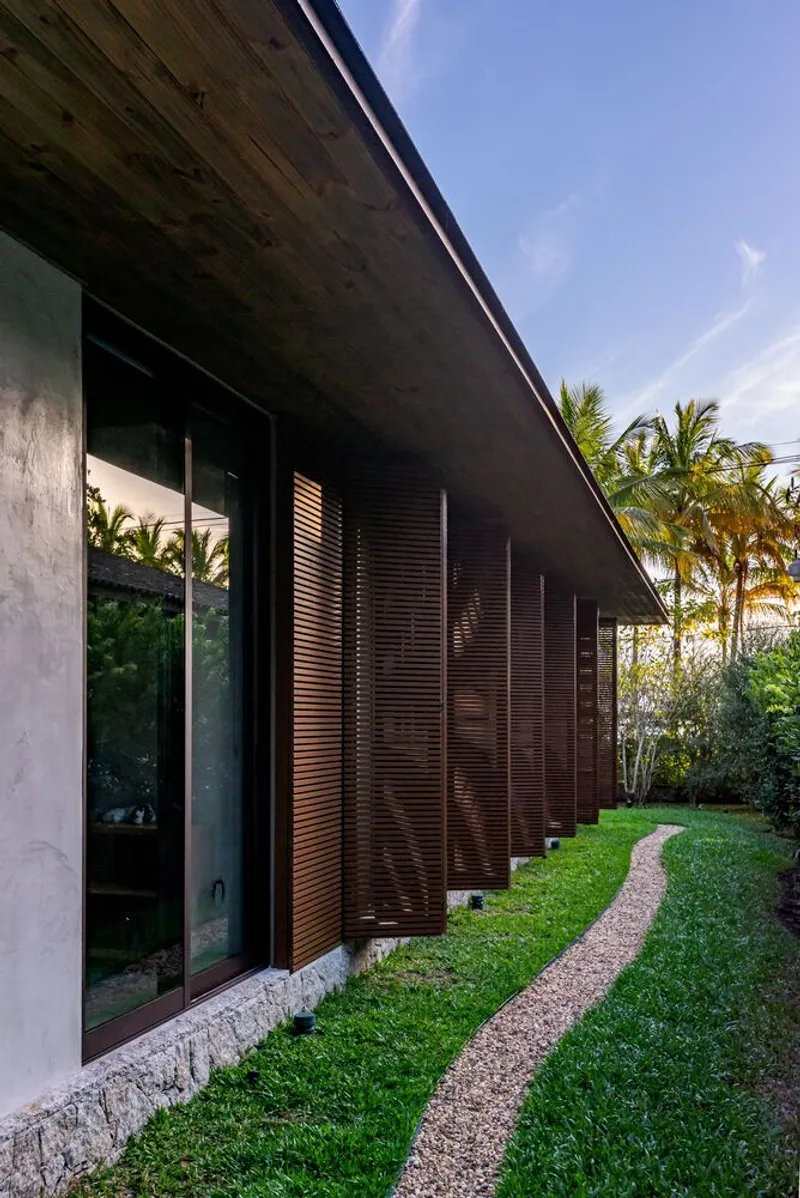
Freed from the constraints of the existing interior, the architects introduced a new contemporary design defined by a lightweight metallic structure, flat roofline, and expressive material palette. The house features plywood paneling and a PVC membrane roof, ensuring a delicate balance between durability and subtlety in a tropical climate.
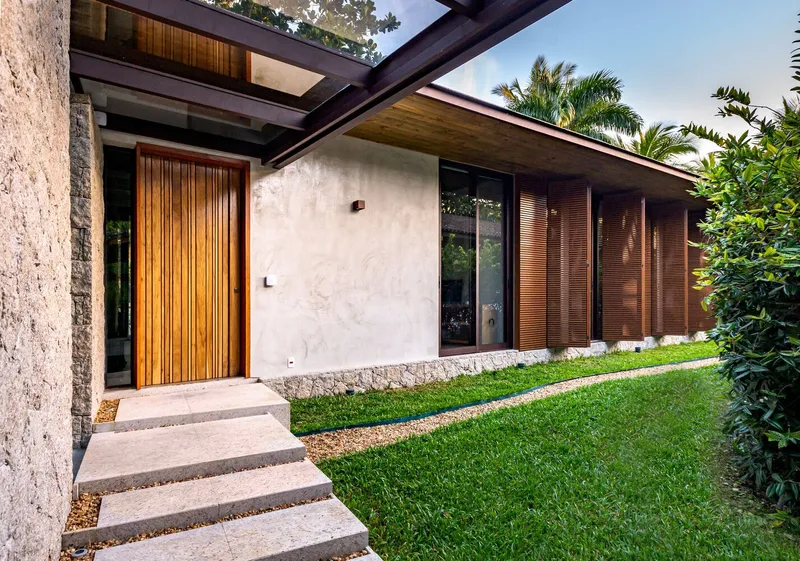
The new volume sits horizontally over a stone base, seamlessly integrated into the terrain. A diagonal stone wall connects the garage to the main house, drawing visitors toward the primary entrance with sculptural intent.
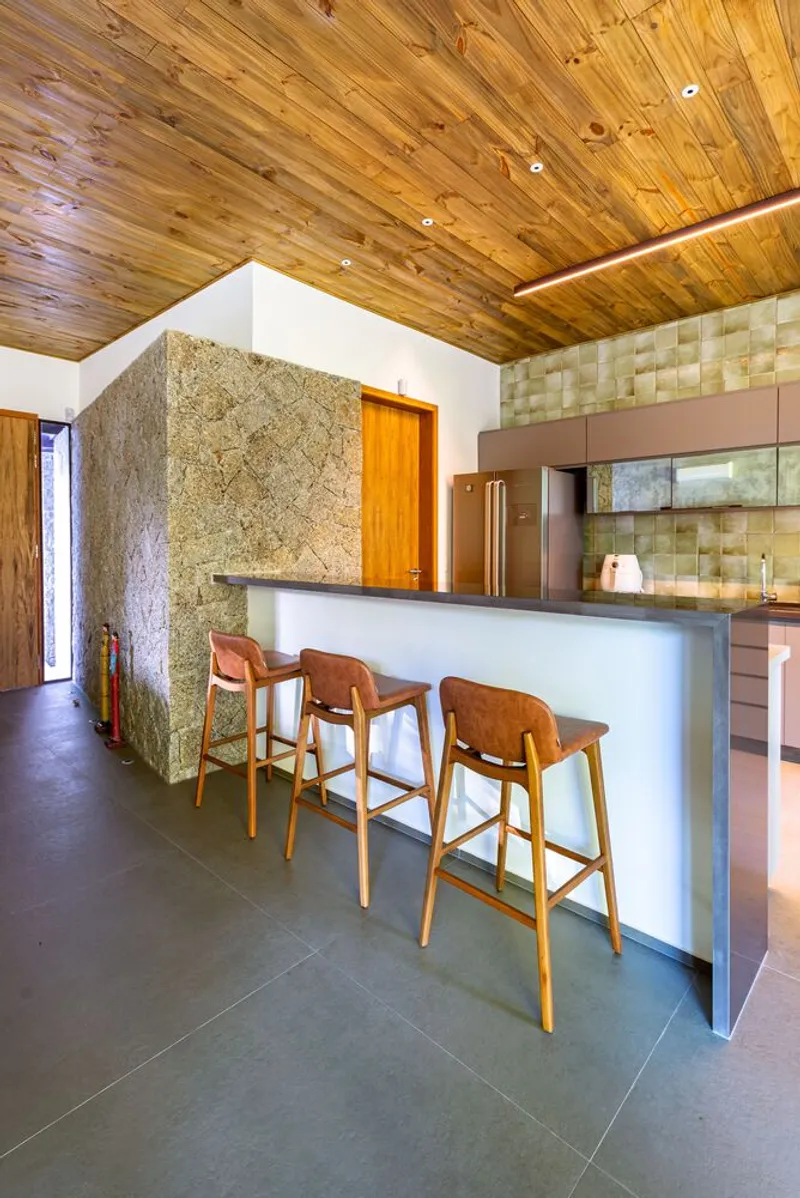
Open Social Spaces and Natural Illumination
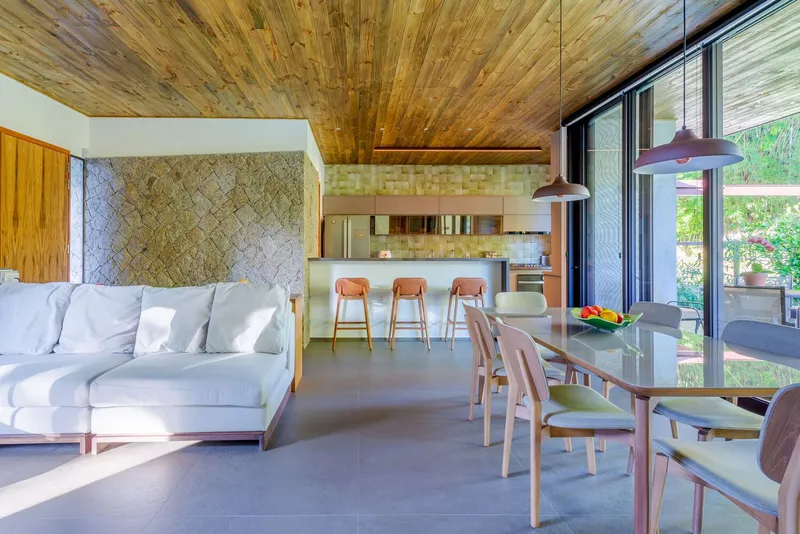
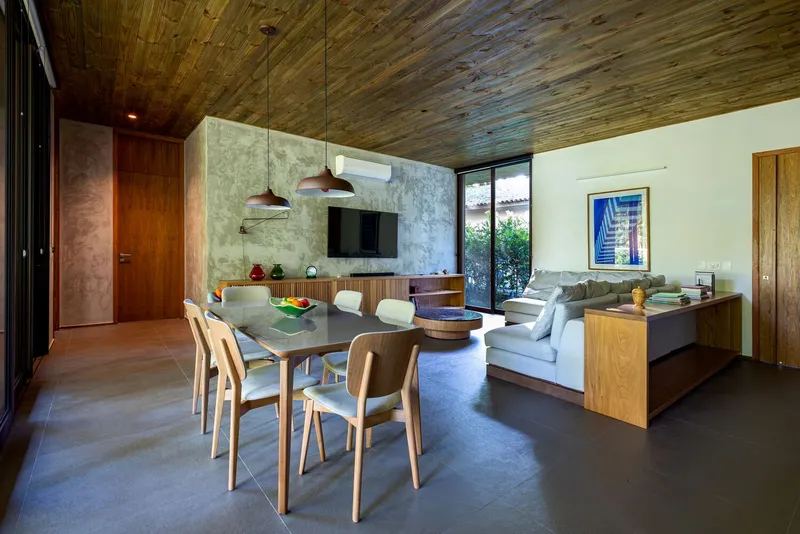
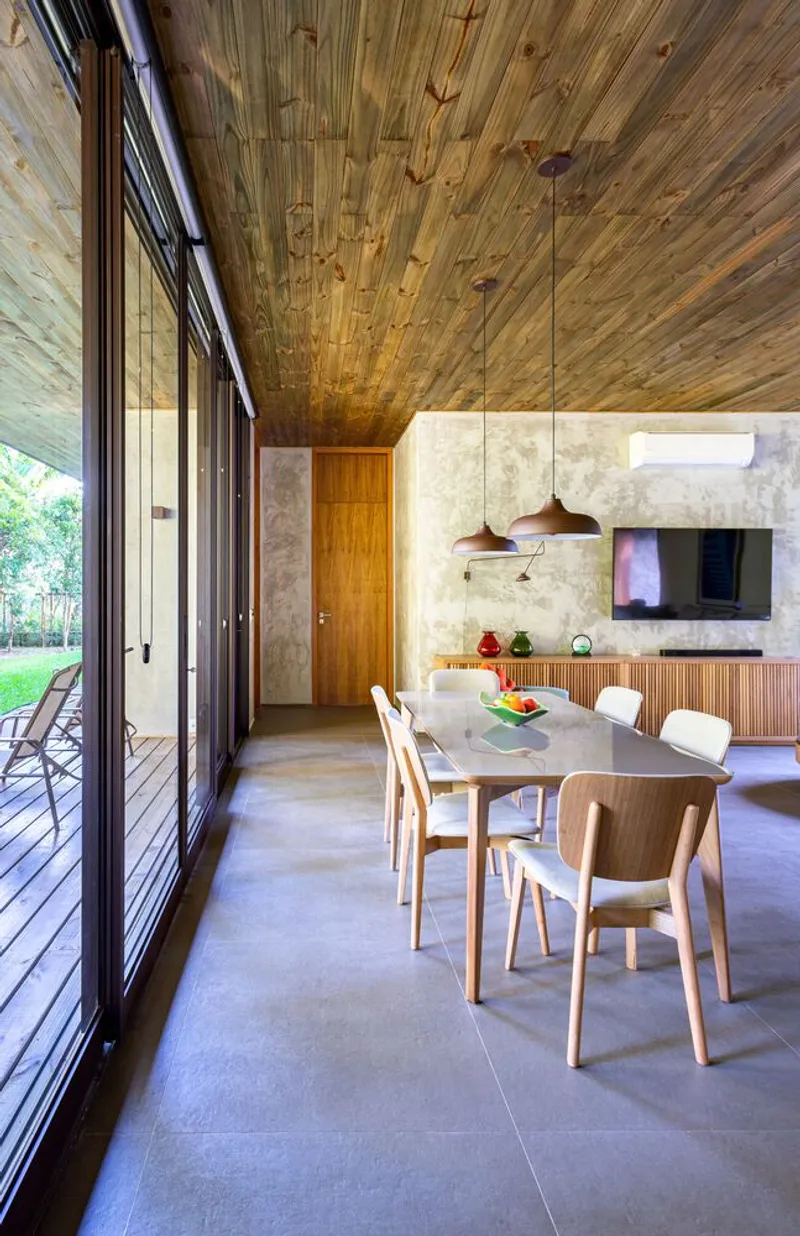
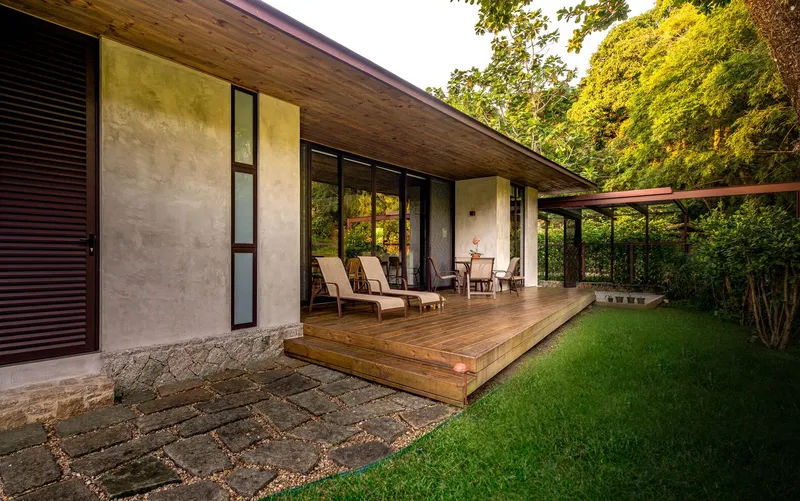
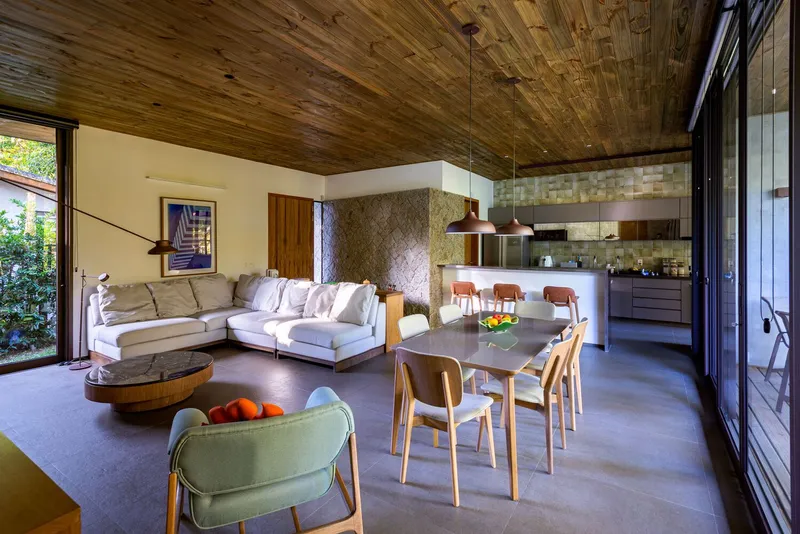
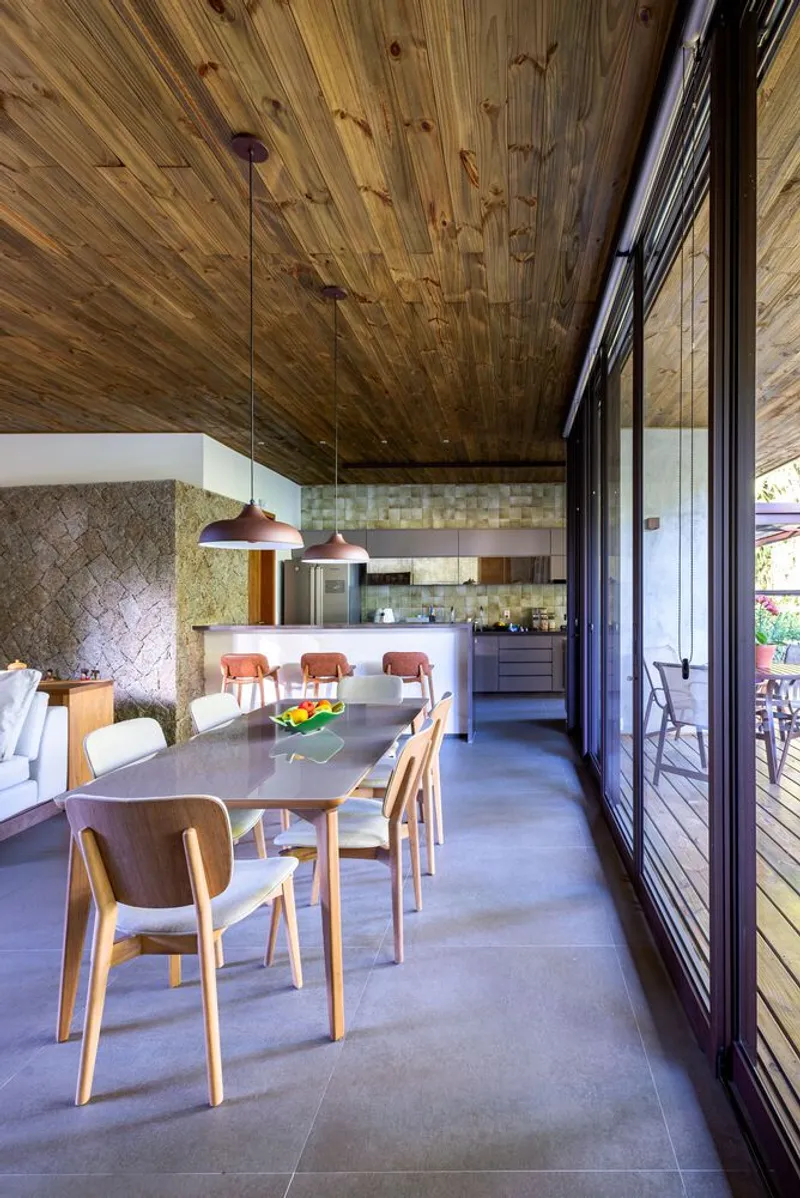
The spatial layout prioritizes thermal comfort, natural lighting, and social connectivity. The living and dining rooms are open-concept, connected directly to an integrated kitchen and oriented toward the northeast to maximize morning sunlight. Floor-to-ceiling aluminum-framed openings provide uninterrupted views and access to a wooden deck, a tranquil extension ideal for lounging during the golden hours.
Durable, Sustainable Finishes Inside and Out
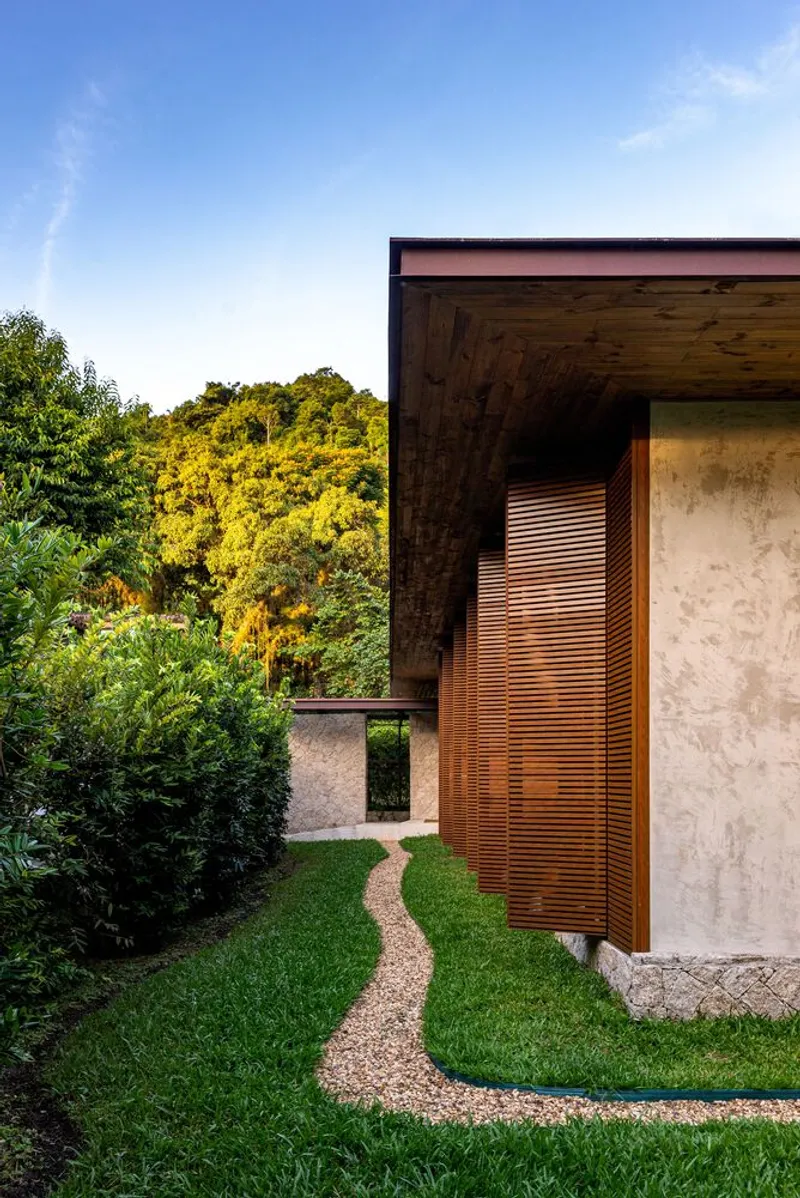
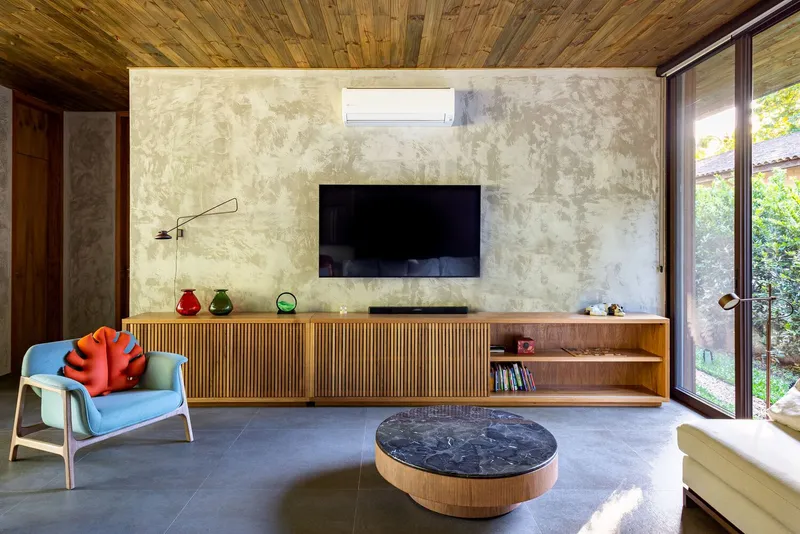
Wide eaves, lined with certified autoclaved pine, extend outward, offering passive shading and architectural rhythm. This same warm-toned wood continues inside the house, reinforcing a continuous material dialogue across interior and exterior spaces. All doors reach the full height of 3 meters, creating a visually expansive atmosphere complemented by the generous ceiling height.
Skylit Bathrooms and Reflective Garage Pavilion
Even utilitarian spaces receive careful attention: the children’s bathroom suites include skylights that deliver soft overhead light, creating an immersive bathing experience with ceramic tile accents.
Meanwhile, the garage is conceptualized as a light-filtering pavilion, with a metallic pergola and UV-protected laminated glass roof, offering thermal comfort and filtered daylight. The permeable interlocking concrete floor enhances the home’s environmental responsiveness, allowing rainwater drainage and accommodating three vehicles. This area also houses a technical zone and a dedicated carpentry bench, designed around the client's personal hobby.
All Photographs are works of Bicubico




Popular Articles
Popular articles from the community


Co-Life: Senior Housing Design That Reconnects Older Adults With the City
Co-Life reimagines senior housing design through healing gardens, shared streets, workshops, and a sustainable community across generations.

Hill & Cross Opera: Sculptural Opera House Architecture Shaped by Tallinn’s Landscape and Identity
Hill & Cross Opera reimagines opera house architecture in Tallinn through its sculptural hill, civic plaza, glass wave and a luminous cross.

The Ocean Hive: Sustainable Architecture for a Self-Sufficient Civilization at Sea
The Ocean Hive imagines sustainable architecture at sea, where modular habitats, algae, wave power and ocean waste sustain a growing colony.

Lunar Spiral: Space Architecture Shaped by the Mathematics of the Universe
Lunar Spiral reimagines space architecture through Fibonacci geometry, lunar regolith, levitating habitats, and self-sustaining Moon living.


Similar Reads
You might also enjoy these articles


Hodi-Mandai Geram
Project Function: Preservation and revitalization of the Intangible heritage and socio-spatial identity of the Hodi by Housing, Cultural Memory Center, Sacred Grove, landscape, local tourism economy


Olio Towers: A Mid-Rise for Performers That Fuses Housing, Rehearsal, and Stage
Located blocks from Houston's Theater District, this modular tower stacks living units around a central performance atrium.

Oasis: Modular Green Housing Carved into Dhaka's Urban Fabric
A shortlisted Plugin Housing entry reclaims unauthorized settlements in Dhaka with stepped concrete volumes, green roofs, and ventilation-driven design.

Black Hole: A Floating Megastructure for the Post-Physical Era
Emiliano Mazzarotto envisions a spherical, self-scaling arena where e-sports, digital hotels, and holographic stadiums replace traditional public space.


Explore Seaside Architecture Competitions
Discover active competitions in this discipline



Challenge to reimagine the Iron Throne


Photograph architecture without architects


Illustrate the lost glory of Angkor Wat - Render Challenge


Design challenge to reuse E-waste
Comments (0)
Please login or sign up to add comments
No comments yet. Be the first to comment!