

Poland Pavilion Expo 2025 Osaka by interplay architects
Poland Pavilion Expo 2025 Osaka by interplay architects features spiral wooden walls, immersive exhibition flow, Baltic-inspired concert hall, and modular Japanese craftsmanship.


A Spiral of Innovation
The Poland Pavilion at Expo 2025 Osaka, designed by interplay architects, is a striking example of cultural architecture that fuses national identity with innovative spatial design. The project draws inspiration from the geometry of the spiral, a timeless form appearing in nature—from the microscopic structure of protein molecules to the vast expanse of galaxies. This design metaphor encapsulates Poland’s spirit of innovation and the fluid exchange of ideas across borders.
Expressing Polishness Through Geometry
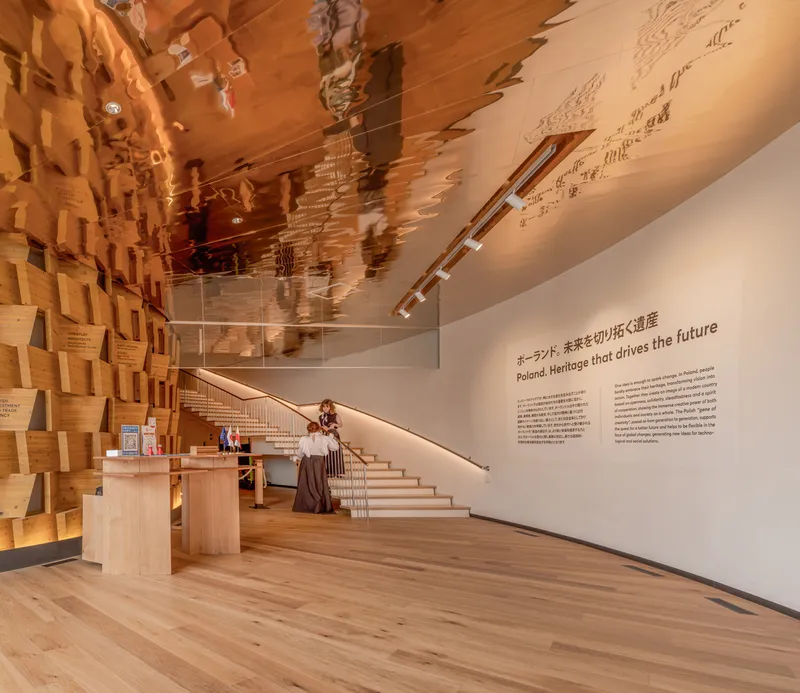
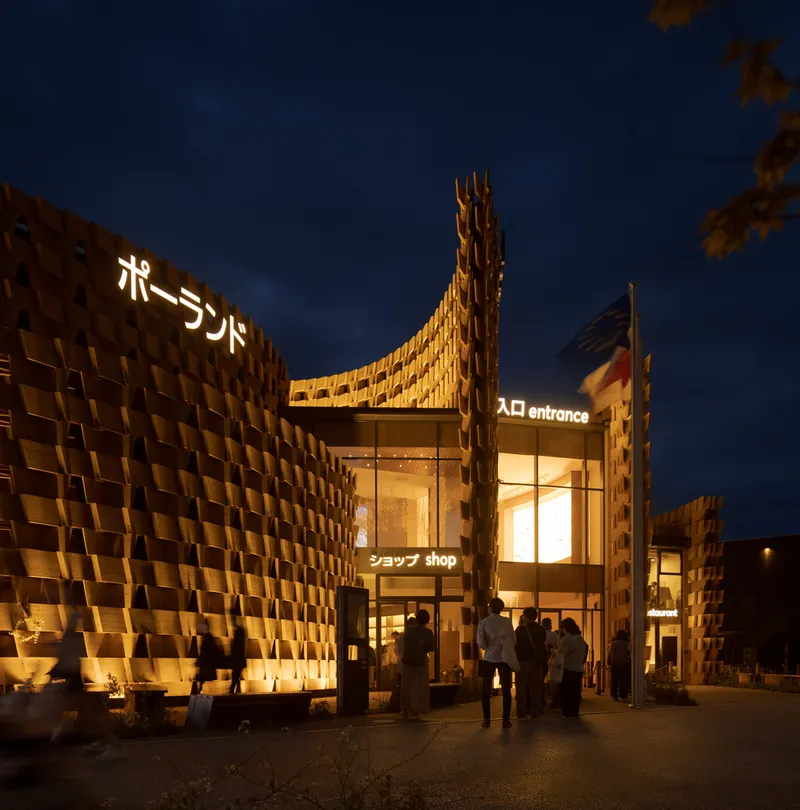
The pavilion’s spiral geometry is not merely aesthetic—it embodies Poland’s ethos of connectivity and knowledge exchange. Just as ideas transcend borders, the spiral walls create a dynamic, fluid layout guiding visitors naturally through the exhibition sequence. At the heart of the pavilion lies a concert hall, representing the gravitational center of the nation's cultural identity.
- Spiral walls: Symbolize dynamic growth and exploration
- Concert hall at the core: The emotional and spatial nucleus
- Exterior visibility: Recognizable from multiple angles, inviting visitors to explore
Design: Interplay of Form and Space
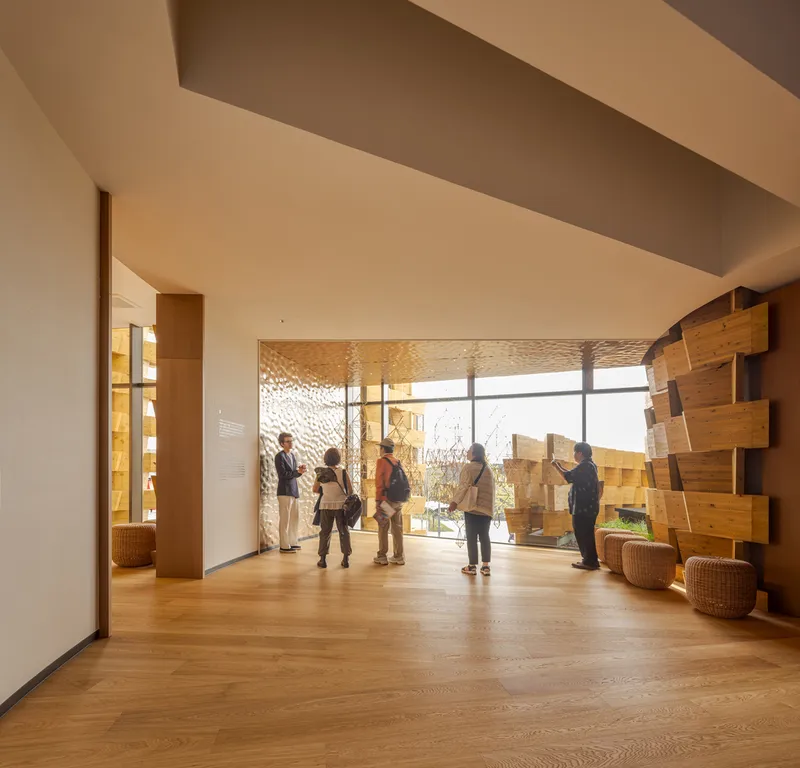
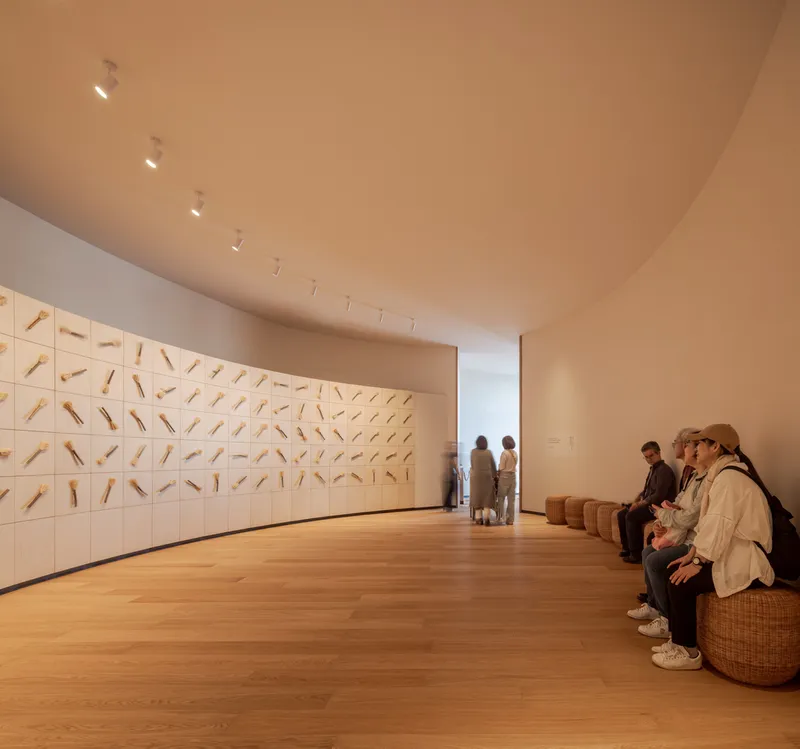
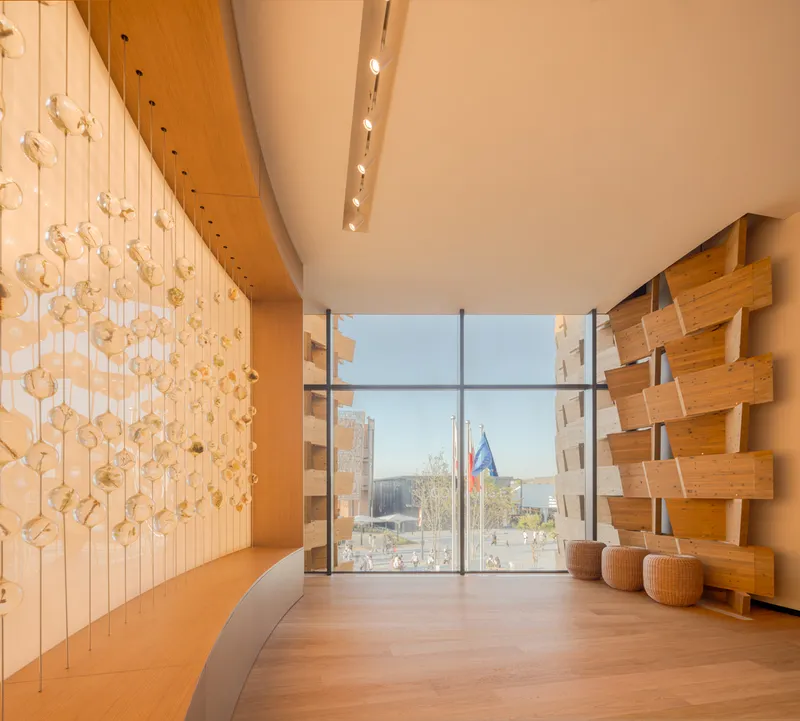
Situated on a prominent corner plot, the pavilion employs overlapping curved walls of varying heights, creating an open and inviting spiral form. Windows throughout the journey maintain visual contact with the exterior, while projections toward the surroundings engage visitors before entry.
- Exhibition sequence: A progressive, immersive experience
- Open circulation: Seamless visitor movement without disorientation
- Visual connectivity: Interior spaces bathed in natural light
Materials and Craftsmanship
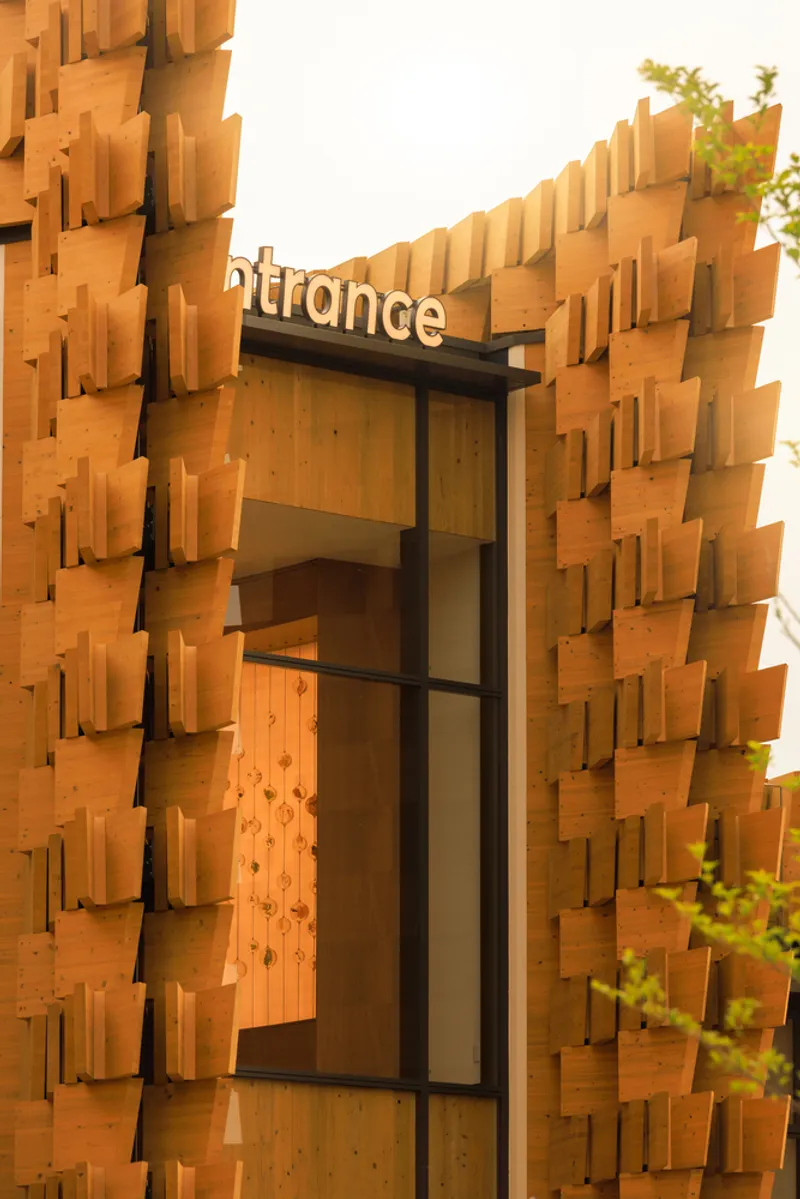
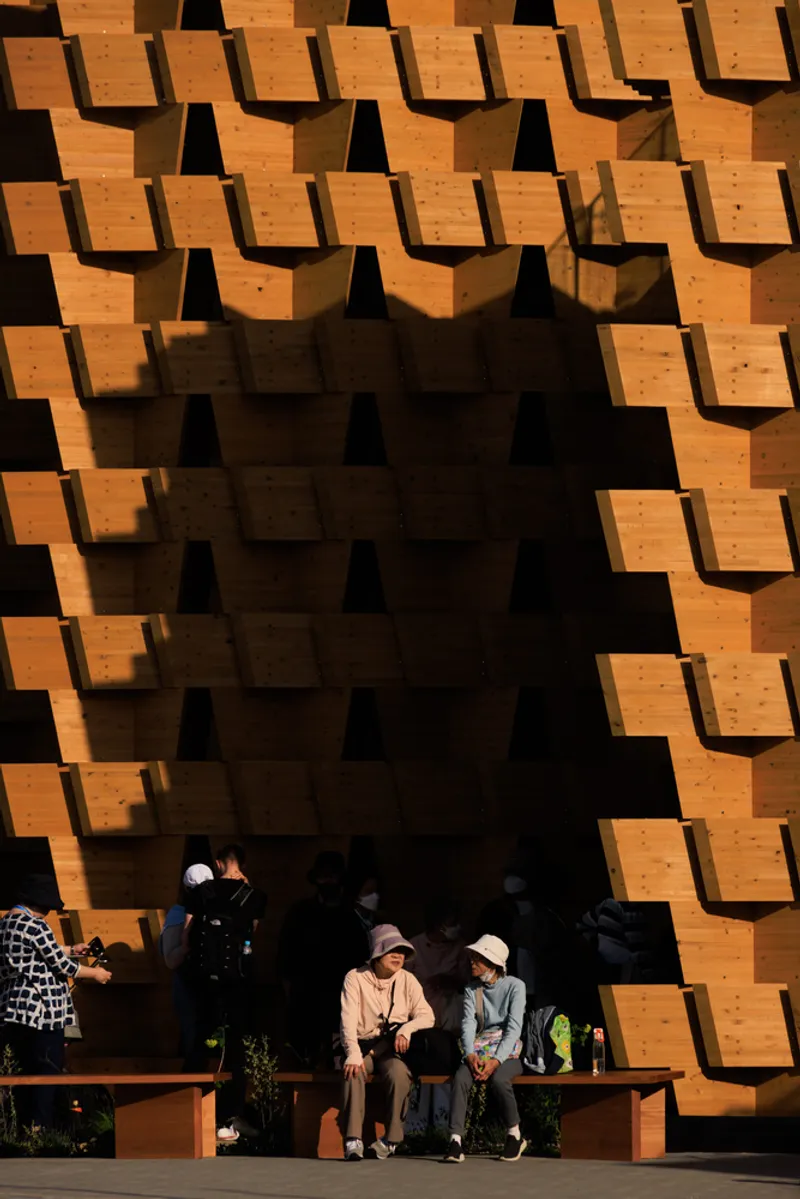
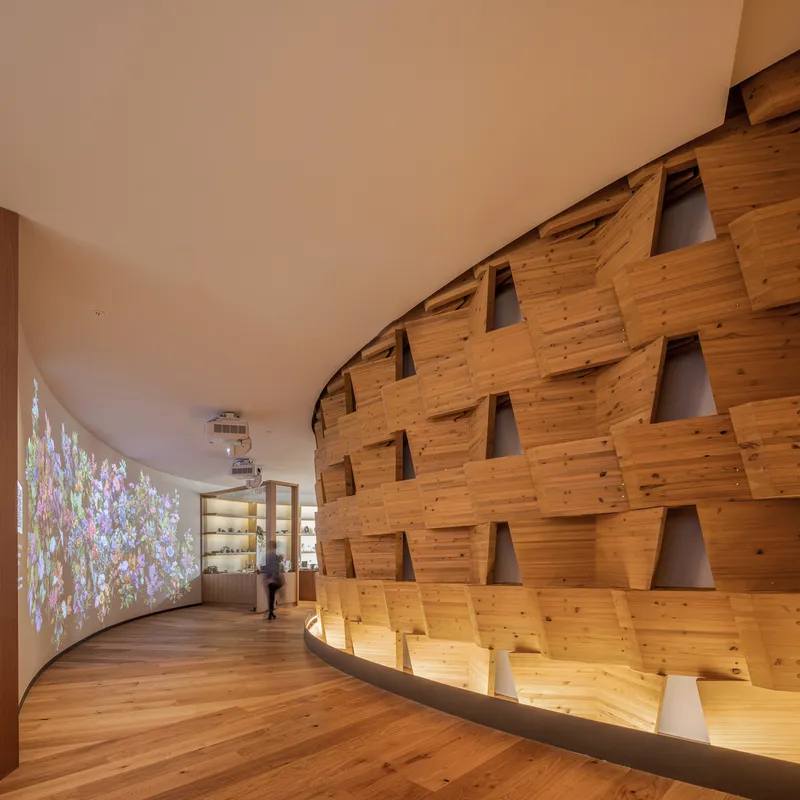
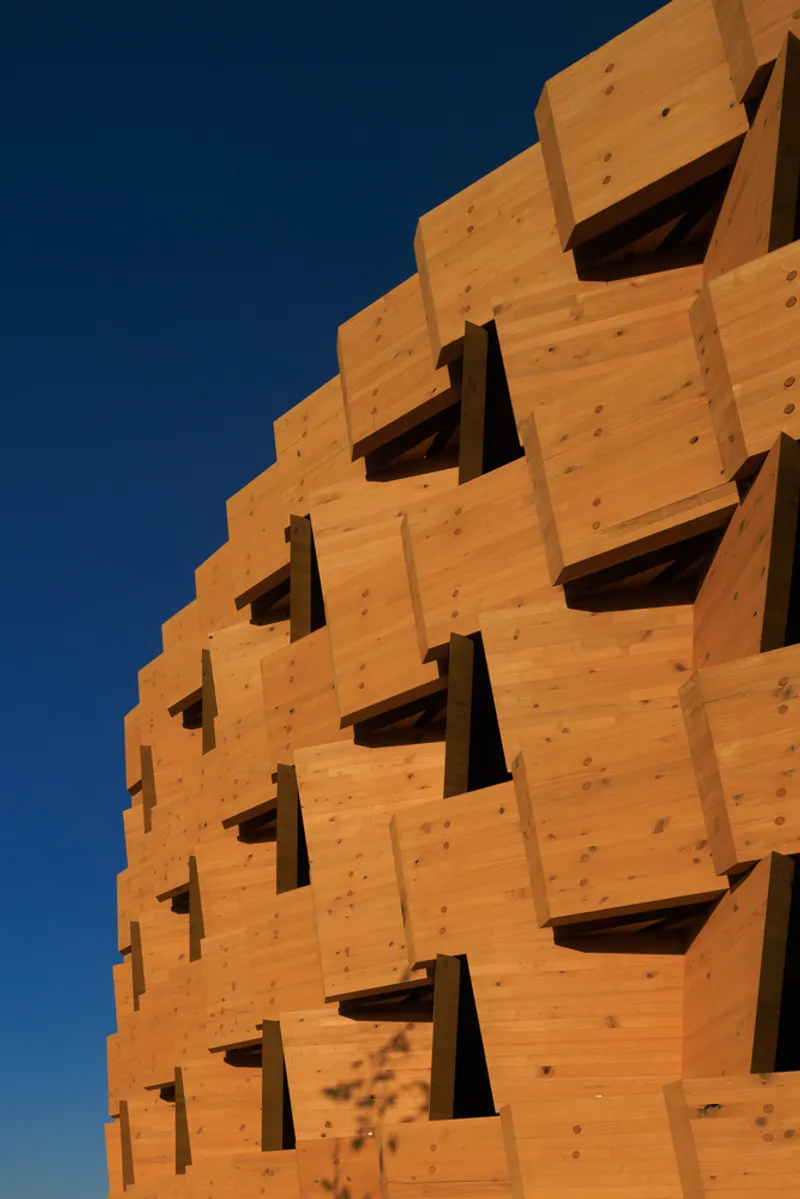
The pavilion is constructed entirely from locally sourced Japanese pine wood, showcasing the expertise of Japanese carpenters. Traditional joinery techniques are reinterpreted using contemporary methods, producing a vibrant façade that shifts in appearance throughout the day. Inside, the timber provides warmth, sensory comfort, and subtle aromatic qualities.
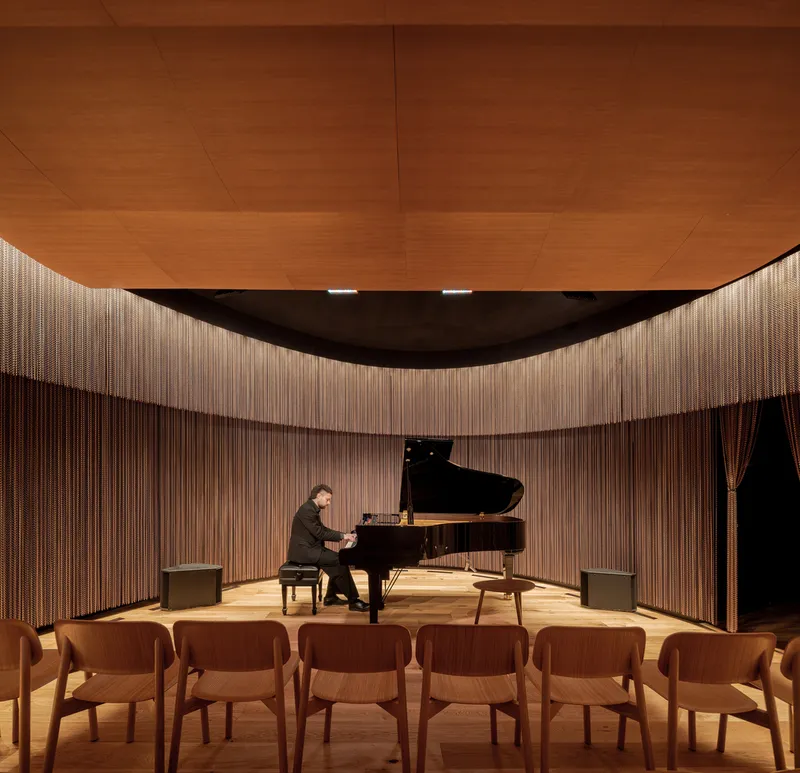
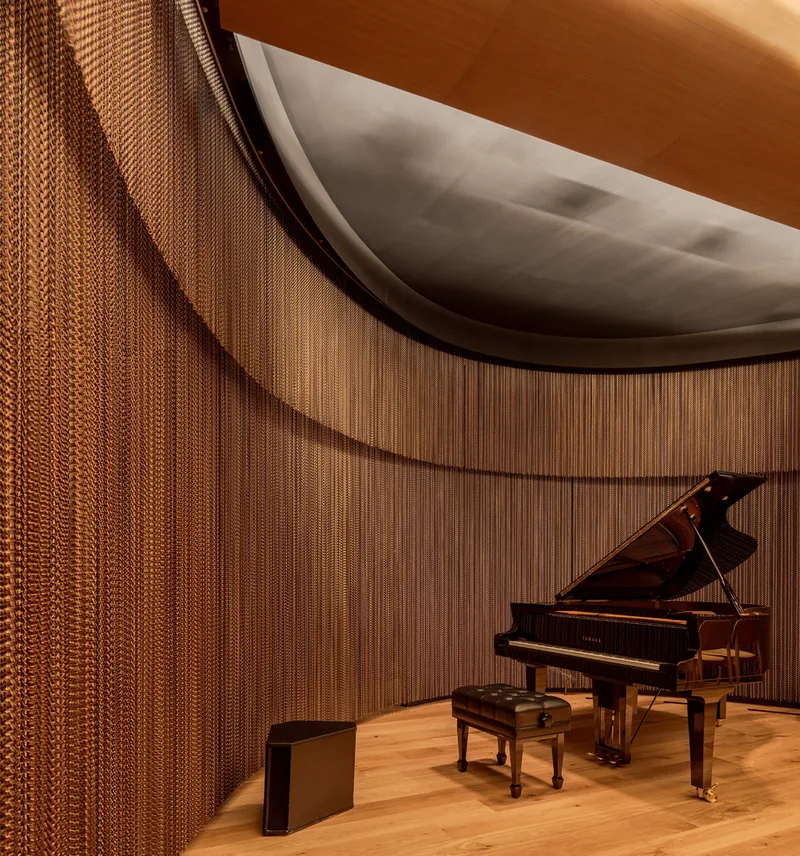
- Concert hall inspiration: Baltic amber, symbolic of Poland
- Golden chain curtains: Evoke willow branches, referencing Chopin-inspired landscapes
- Interior atmosphere: Intimate, contemplative, and visually unified
Modular Construction and Sustainability
To meet tight deadlines, the pavilion’s structure relies on a modular logic with only two types of wooden modules. This approach ensures construction flexibility, structural precision, and adaptability to the complex spiral geometry.
- Modular system: Efficient, flexible, sustainable
- Rigorous standards: Quality and safety maintained under time constraints
- Heritage meets innovation: A dialogue between tradition and contemporary techniques
Theme: Heritage Driving the Future
Under the slogan “Heritage that drives the future,” the Poland Pavilion celebrates the intersection of national identity, craftsmanship, and forward-looking architecture. The design balances cultural symbolism with modern innovation, offering a pavilion that is both memorable and deeply rooted in Polish heritage.
All Photographs are works of Fernando Guerra | FG+SG


Popular Articles
Popular articles from the community


Jaramillo Van Sluys Arquitectura and Urbanismo Turn a Demolished Registry Lot in Quito into an Orchard Plaza
In Quito's Centro Histórico, a 2,800 m² plaza exposes the San Agustín convent wall and redraws its lost Augustinian orchard in volcanic stone.

David Ortega Stacks a Two-Story Mexico City Penthouse Around a Steel Stair and a Pergola-Shaded Roof Terrace
In Colonia Roma, a 300 m² penthouse uses oak joinery, a planted steel stair and a slatted roof pergola to make a new-build apartment feel like a house.

LT2A and OPEN Architectes Thread a Brick and Glass High School Through a Wooded Belgian Campus
In Braine-l'Alleud, a 3,000 m² wing for Collège Cardinal Mercier pairs pale brick with a glazed colonnade, deferring to a small chapel and a dense wood.

Cube Design Draws an Ecological Corridor Between Two Shenzhen Hills with the Nankai Building
Beside Shenzhen's container docks, the Nankai Building pairs stacked balconies with a climbing green screen to connect two hillsides across its height.

Similar Reads
You might also enjoy these articles


Hodi-Mandai Geram
Project Function: Preservation and revitalization of the Intangible heritage and socio-spatial identity of the Hodi by Housing, Cultural Memory Center, Sacred Grove, landscape, local tourism economy


Olio Towers: A Mid-Rise for Performers That Fuses Housing, Rehearsal, and Stage
Located blocks from Houston's Theater District, this modular tower stacks living units around a central performance atrium.

Oasis: Modular Green Housing Carved into Dhaka's Urban Fabric
A shortlisted Plugin Housing entry reclaims unauthorized settlements in Dhaka with stepped concrete volumes, green roofs, and ventilation-driven design.

Black Hole: A Floating Megastructure for the Post-Physical Era
Emiliano Mazzarotto envisions a spherical, self-scaling arena where e-sports, digital hotels, and holographic stadiums replace traditional public space.

Explore Cultural Architecture Competitions
Discover active competitions in this discipline

Challenge to reimagine the Iron Throne

Photograph architecture without architects

Illustrate the lost glory of Angkor Wat - Render Challenge

Bring back Drive In's
Comments (0)
Please login or sign up to add comments
No comments yet. Be the first to comment!