

A modern winery design in Kayamandi
Pour - Result Story


Wine is deeply and historically rooted in our society. It represents a symbol of tradition, connection, craft, and high spirits. The art of winemaking and viticulture has evolved as a part of life, culture, and diet since ancient times. Nevertheless, in this long historical path, one thing remains unchanged and has never been neglected; the association of wine with gastronomy, history, origin, local quality products, and dignified social settings.
It has been referred to as a beautiful factory for its sustainable and less polluting features when compared with other industries.
But can a winery or a vineyard be more than just wine?
The challenge here was to design a modern-day winery that not only provides a complete consumer experience but also contributes towards the socio-economic development of the community around it.
The jury for the competition consisted of esteemed designers, professionals, and academicians from around the world. The Lead Jurors for the competitions were as follows:
Anouk Legendre, Architect co-founder, XTU architects, France
Nicola Isetta, Founding Partner, REISARCHITETTURA, Italy
Alejandro García Pedrón, Co-founder, CRUX Arquitectos, Spain
 Some of the Best of competition projects as follows:
Winning Project: Overstory
By: Zhicheng Xu & Danny Griffin
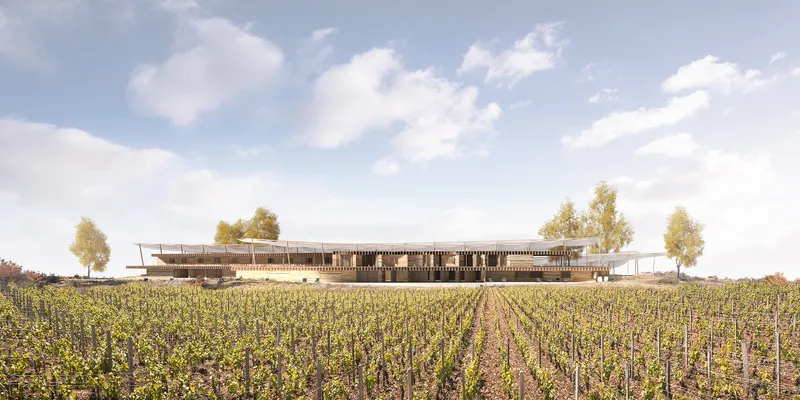
Description: To build in Kayamandi - in a biosphere reserve with limited water resources - a winery of the future must foreground sensibility toward both nature and culture. “Overstory” investigates how the architecture of a roof canopy shared by building and nature can play an active role in mediating – and perhaps remediating – the native ecologies of this landscape.
-----------------------
Runner - Up: Pour Winery: A Study in Black and White
By: Mark Donohue

Description: The buildings that form Pour Winery in Kayamandi near the town of Stellenbosch in the winegrowing region of South Africa deal with the history of race relations in the country rather than avoid it. The careful interplay of black and white elements of the winery architecture signify and acknowledge the complex race relationship of the country.
----------------------
People’s Choice: Wine Temple
By: Julia Paco
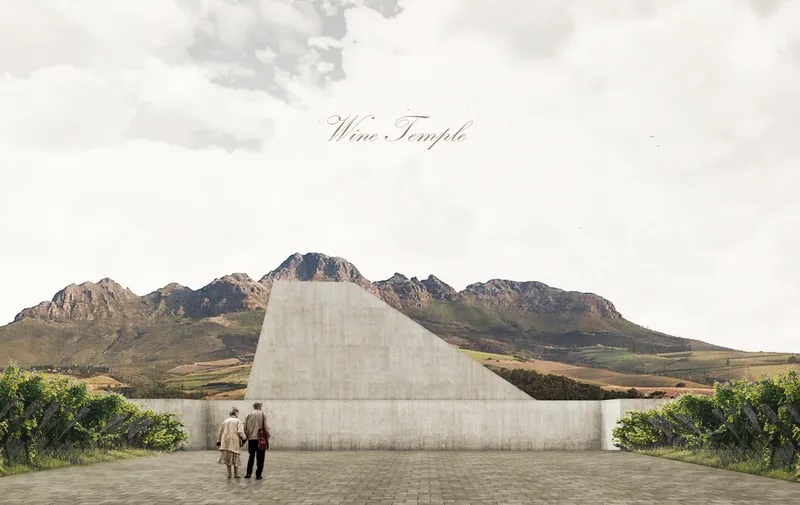
Description: It is sometimes by looking at everything that we see nothing. Surrounded by the vineyards, an emergence rises from the ground. A socle gradually detaching itself from the slope allows us to observe what surrounds us thanks to framed views. The experience consists of the sacralization of the wine, towards the architecture, the material, space, and the light.
-----------------------
Editorial Choice: Green Path Village
By: Stanisław Czujkowski & Kinga Gawlik
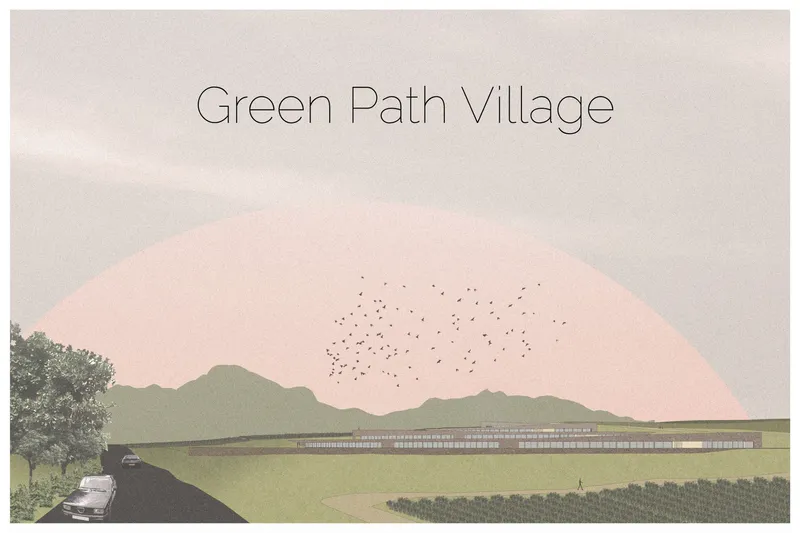
Description: Green Path Village is a building complex which contains a winery, rooms for visitors, and all the necessary infrastructure, spread between 5 floors with green terraces above all of them and a path between them allowing visitors to have romantic walks or use them to relax, have picnic, dinner, drink wine or even sleep beneath the stars.
-----------------------
Editorial Choice: CRACK
By: 表 陳
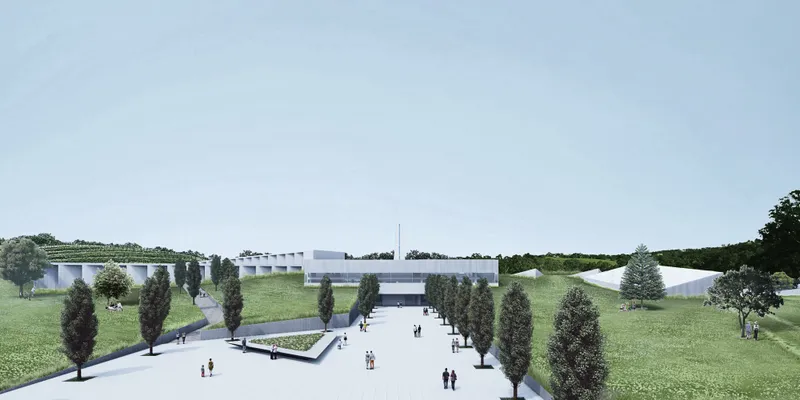
Description: A building used to carry the oldest and most modern human activities; A building that blurs the boundaries between industry, nature and culture.
--------------------
Editorial Choice: THE CENTER OF UNITY
By: Szymon Łydkowski, Jakub Kruk & Adam Okuniewski

Description: Unity is the key to our plan form, landscape and society. The concept blurs barriers between people, connects them regardless of differences. Center of Unity is the place where everyone can spend time in the acompaniament of beautiful vineyards of Kayamandi.
--------------------
Editorial Choice: Pour: "The Journey" Winery
By: Josselyn Moreira
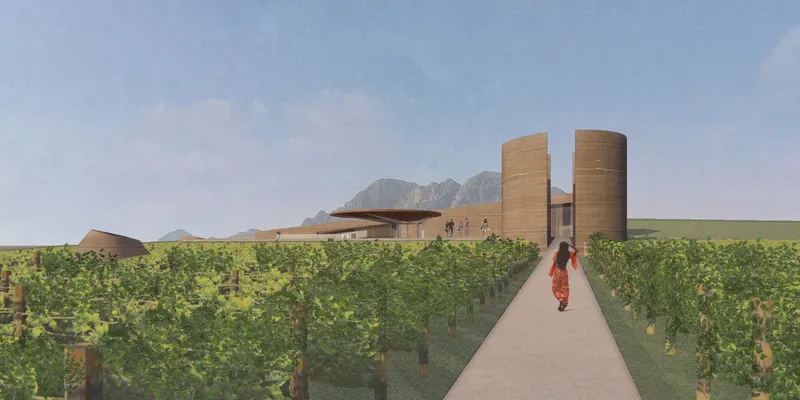
Description: Understood as a spatial and visual journey through the wine experience in Kayamandi, the project aims to integrate the community, dialogue with the landscape and reinterpret the essential elements found in the vernacular African architecture. Through the cautious exploration of scale and materiality, a sensible atmosphere is achieved through this journey.
--------------------
Editorial Choice: POUR
By: Mayak Architects
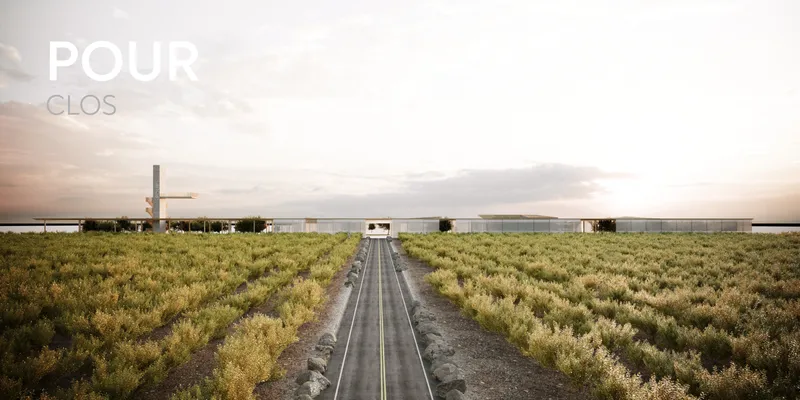
Description: The concept of the wine-making polis (city) is based on «Hortus conclusus» as the idea of a magnificent garden behind the snow-white wall.
Discover the design brief here: https://uni.xyz/competitions/pour/info/about
Discover the full results here: https://uni.xyz/competitions/pour/entries
Follow us on social media: Facebook | Instagram | LinkedIn | Twitter | Youtube
Discover other design competitions to participate here: https://uni.xyz/competitions



Popular Articles
Popular articles from the community


Co-Life: Senior Housing Design That Reconnects Older Adults With the City
Co-Life reimagines senior housing design through healing gardens, shared streets, workshops, and a sustainable community across generations.

The Musturak Paradise: Senior Living Architecture for a Connected Future in Temara, Morocco
The Musturak Paradise reimagines senior living architecture in Temara via private homes, social spaces, culture, community, and shared care.

Co-life: Sustainable Architecture for Age-Friendly Community Living
Co-life reimagines sustainable architecture for seniors through courtyards, rammed earth, shared gardens, and spaces designed for belonging.

Hill & Cross Opera: Sculptural Opera House Architecture Shaped by Tallinn’s Landscape and Identity
Hill & Cross Opera reimagines opera house architecture in Tallinn through its sculptural hill, civic plaza, glass wave and a luminous cross.

Similar Reads
You might also enjoy these articles
The Musturak Paradise: Senior Living Architecture for a Connected Future in Temara, Morocco
The Musturak Paradise reimagines senior living architecture in Temara via private homes, social spaces, culture, community, and shared care.

The Leaf Center: Cultural Center Architecture for Social Integration in Amsterdam
Cultural center architecture becomes a bridge at The Leaf Center, connecting international students with Amsterdam through art and exchange.

Conexión: Biophilic Design Reimagines High-Rise Living in Hong Kong
Conexión reimagines high-rise living in Hong Kong through biophilic design, green facades, shared spaces, daylight, water and nature within.

Wander to Wonder: Modular Playground Design for Children in Kutupalong Refugee Camp
Wander to Wonder uses modular playground design to create flexible, imaginative play spaces for children in Kutupalong refugee camp.

Comments (0)
Please login or sign up to add comments
No comments yet. Be the first to comment!