
Powerhouse Castle Hill by Lahznimmo Architects: A Purpose-Built Museum Storage and Research Campus in Sydney
Powerhouse Castle Hill is a state-of-the-art museum complex with storage, conservation labs, exhibition spaces, and public programs, showcasing industrial materiality and cultural preservation.


Preserving Australia’s Cultural Heritage Through Innovative Museum Architecture
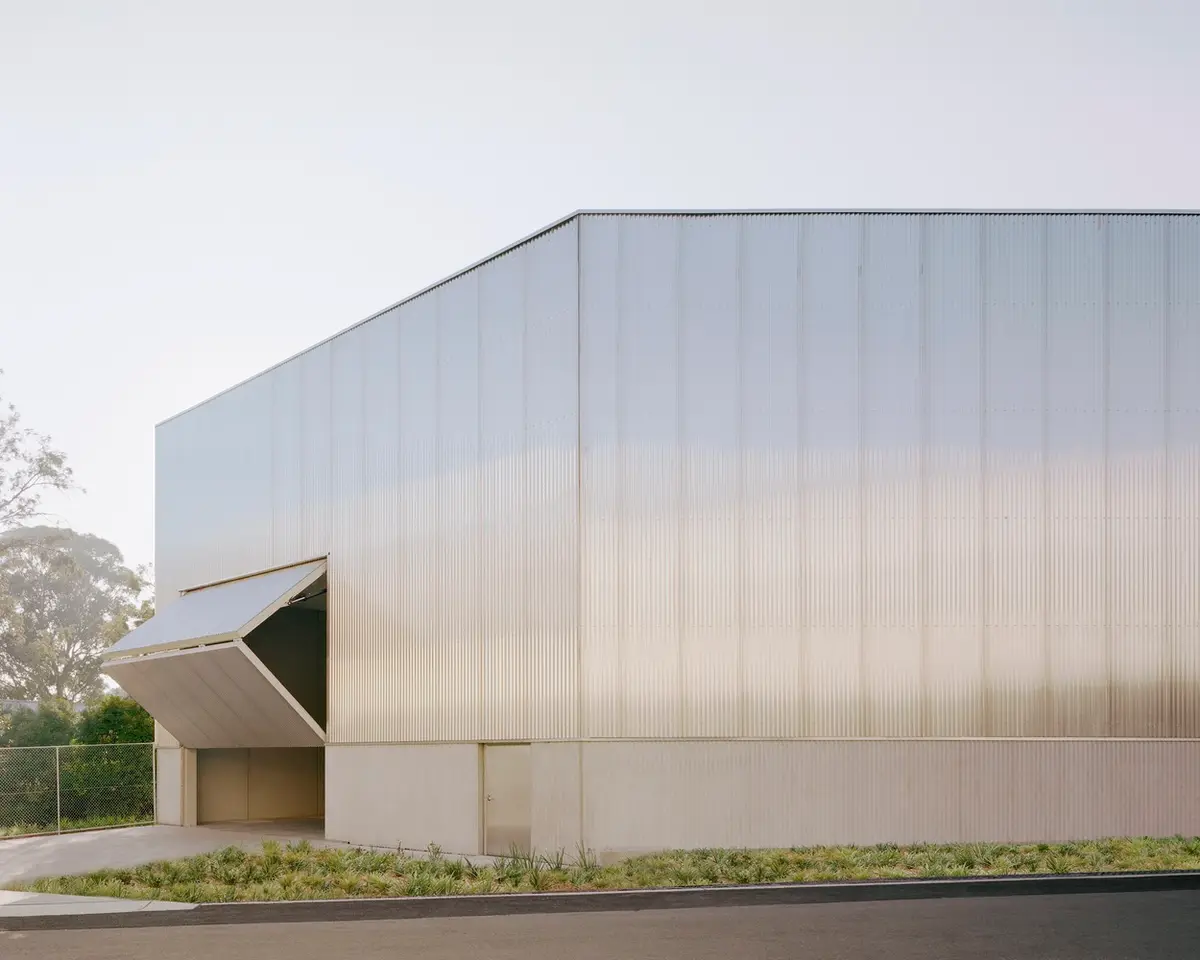
Powerhouse Castle Hill, designed by Lahznimmo Architects, stands as one of Australia’s most advanced museum storage, conservation, and research facilities. Located in Castle Hill, Sydney, this expansive institution supports the iconic Powerhouse Collection, housing nearly 95% of its artifacts and cultural treasures on-site. As part of the broader Museum Discovery Centre in collaboration with the Australian Museum and Museums of History New South Wales, the project redefines the future of cultural storage, exhibition, and public engagement.
With the upcoming development of Powerhouse Parramatta prompting a major collection shift, this facility becomes a critical anchor for object preservation, research expansion, and public learning in New South Wales.
Project Overview
Location: Castle Hill, Australia Architects: Lahznimmo Architects Year Completed: 2023 Area: 8,100 m² Photography: Rory Gardiner Landscape Architects: Aspect Studios Town Planners: Milestone Town Planning Arborist: MacKay Tree Management
Expanding Museum Capacity With a Future-Focused Design
In 2018, CreateNSW commissioned Lahznimmo Architects to design a new 9,000 m² facility — referred to as Building J — that enhances storage, education, and public engagement capabilities. The brief required a flexible, multi-programmed facility accommodating:
- Archival and object storage for the Powerhouse Collection
- Conservation laboratories and research workspaces
- Digitization and photographic studios
- Workshops for object preparation and quarantine
- Flexible exhibition and public event spaces
- Education rooms, lecture spaces, and community areas
- Workspace for up to 50 staff and visiting researchers
The resulting design strengthens the museum’s operational capacity while welcoming public interaction, skill-building programs, and community activities.
A Linear Campus Strategy for Functional Clarity
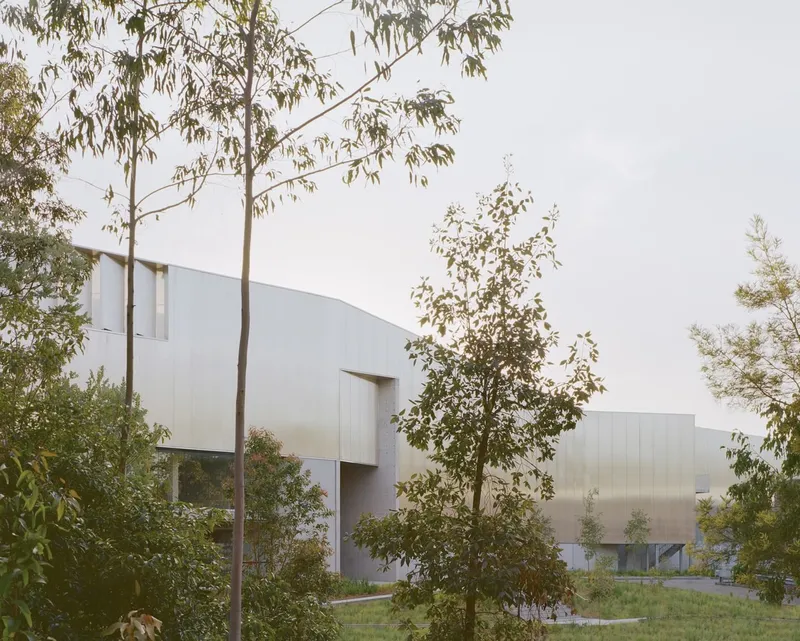
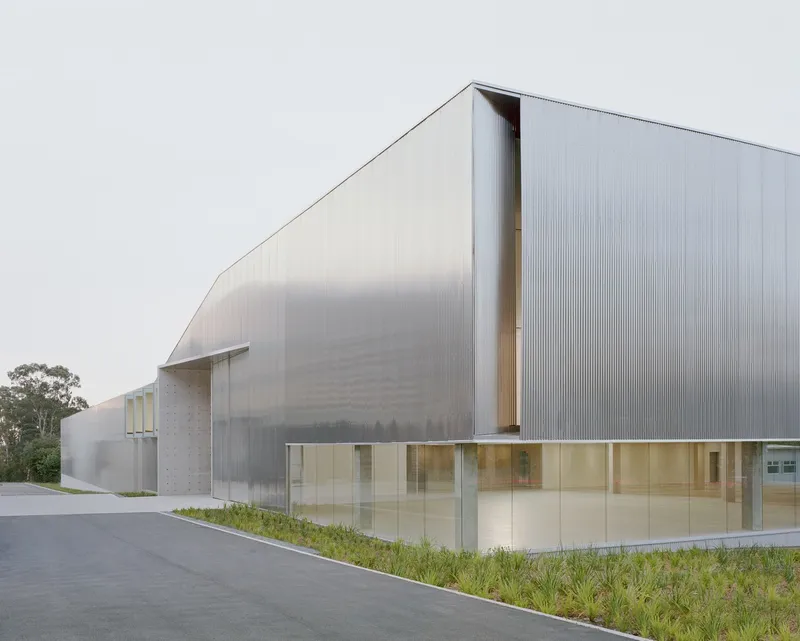
The 130-meter-long building runs north–south along Showground Road, forming an active public frontage and blending seamlessly with the surrounding campus, including the adjacent TAFE. An east-west circulation spine divides the building into two key zones — high-security storage and public/exhibition areas — improving visitor navigation and enabling cross-site pedestrian connectivity.
This spatial arrangement ensures both curatorial efficiency and public accessibility, embedding museum research within a civic environment.
Transparency and Interpretation of the Collection
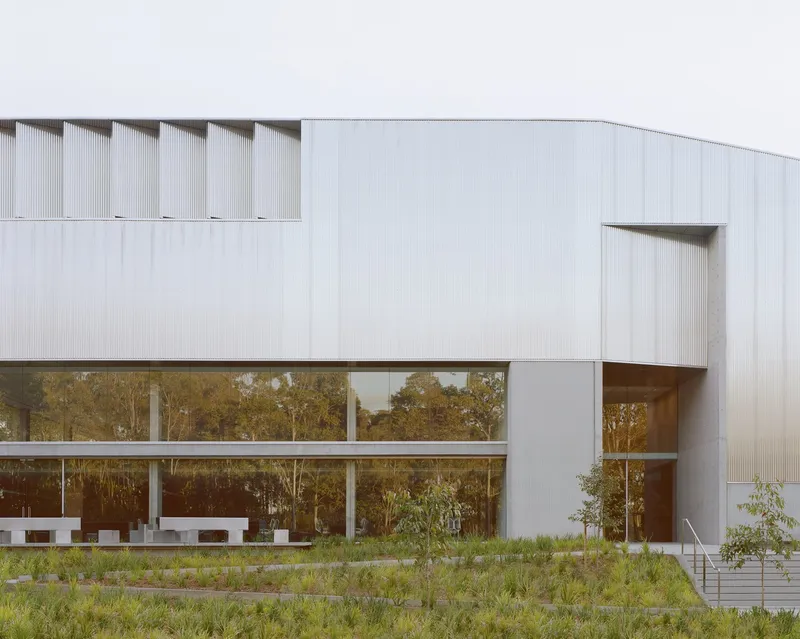
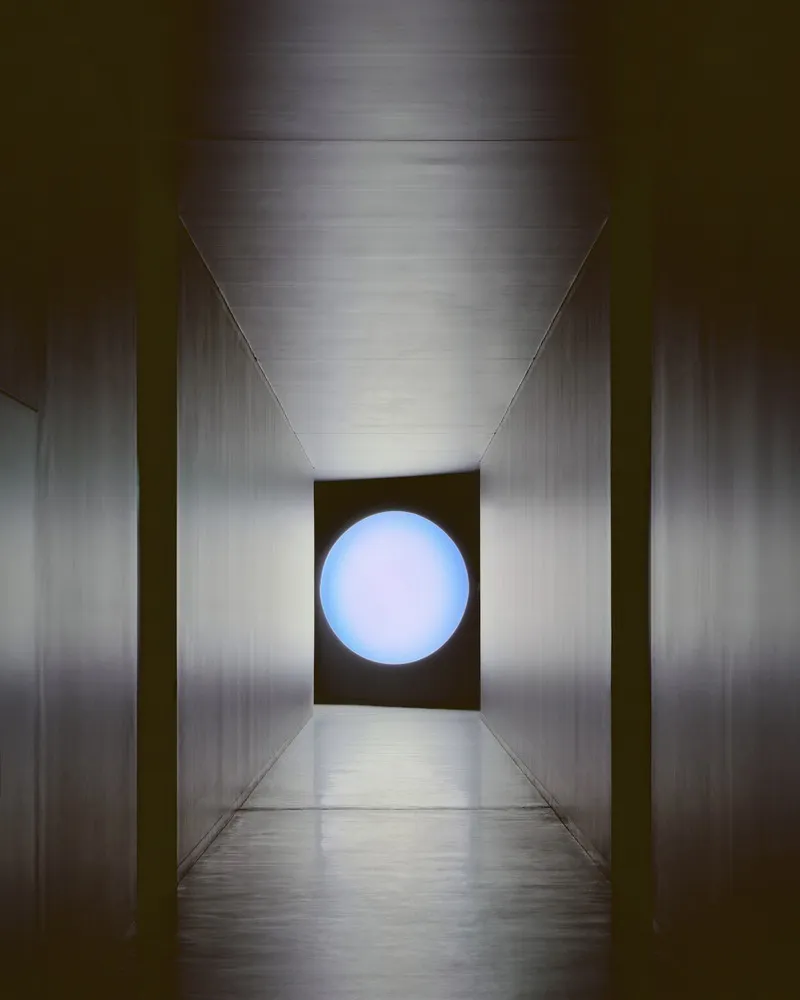
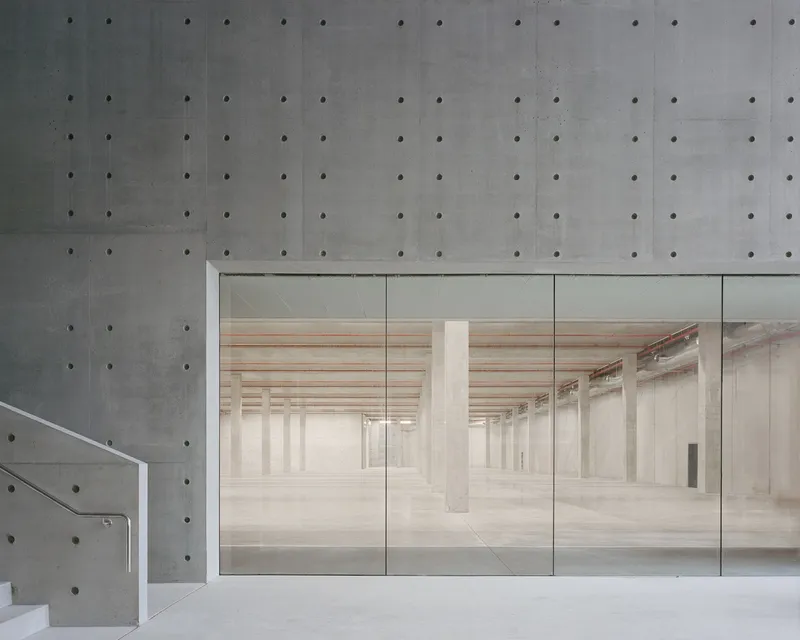
The design emphasizes visibility and learning, revealing what is often hidden in museum back-of-house spaces. At the main entry, a dramatic 3.5-meter-high by 9-meter-long frameless glass window offers direct views into the 3,000 m² Very Large Object (VLO) storage hall — home to large-scale industrial artifacts including aircraft, locomotives, and automobiles. This interpretive strategy transforms storage into spectacle, encouraging curiosity and deepening public connection to cultural heritage.
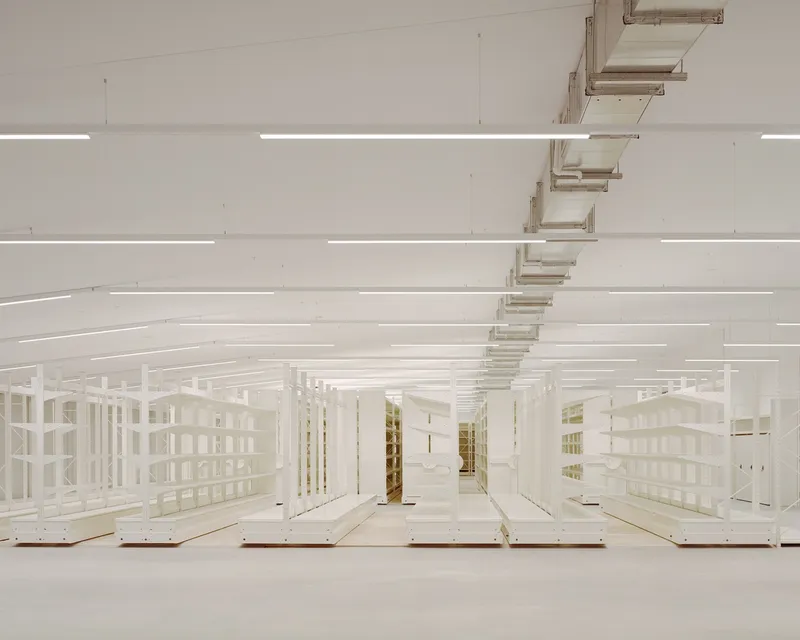
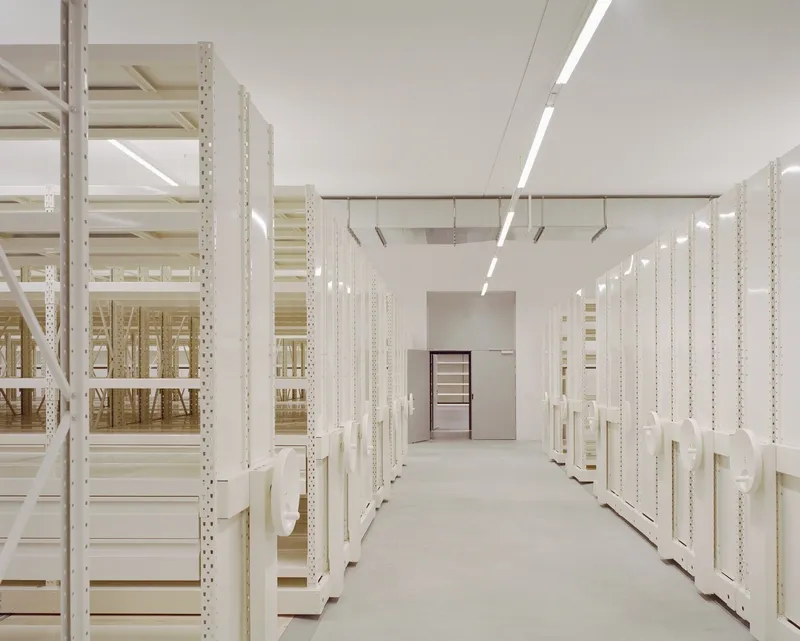
Architecture and Materiality: Industrial Precision and Environmental Control
A High-Performance “Museum Vault”
To protect sensitive artifacts, the building maintains tightly controlled climate conditions:
- Temperature: 20°C ± 2°C
- Relative Humidity: 50% ± 5%
The storage environment functions like a highly insulated “giant esky,” featuring:
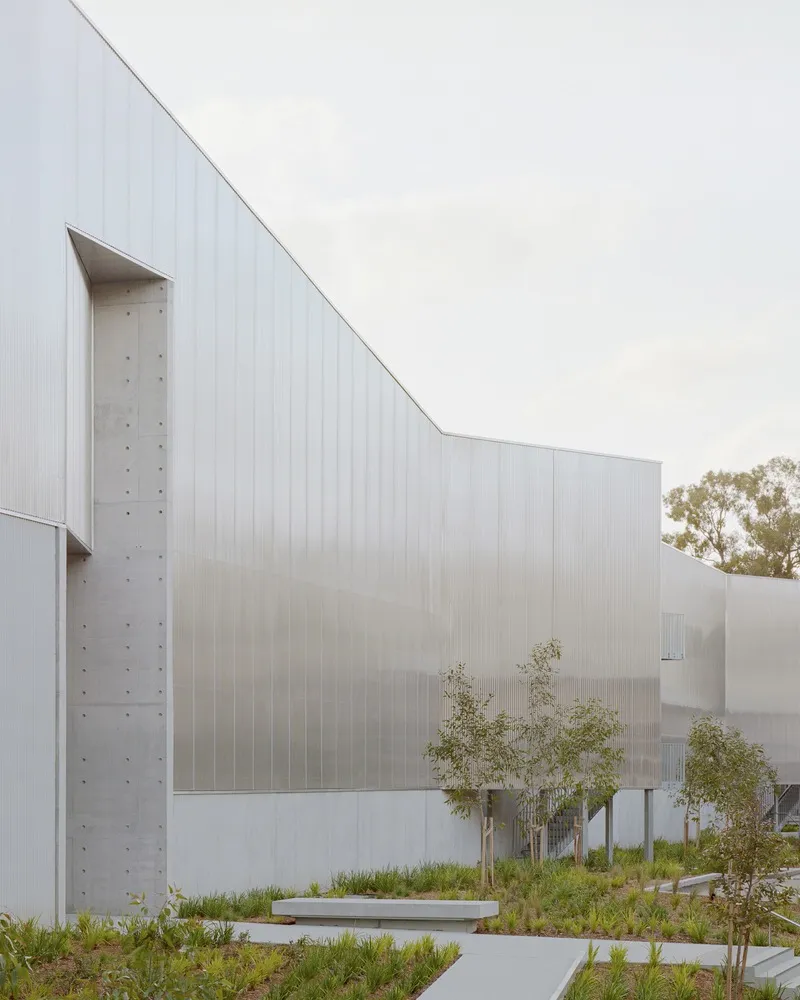
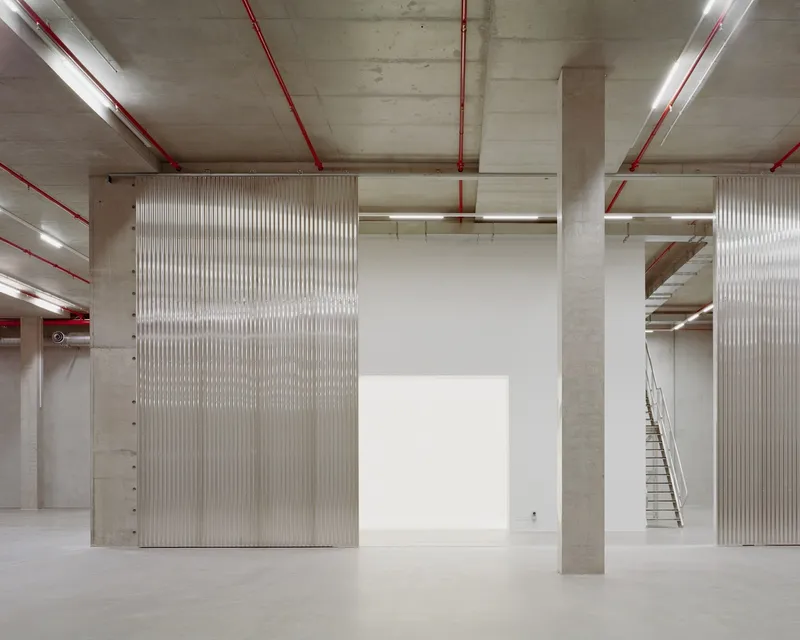
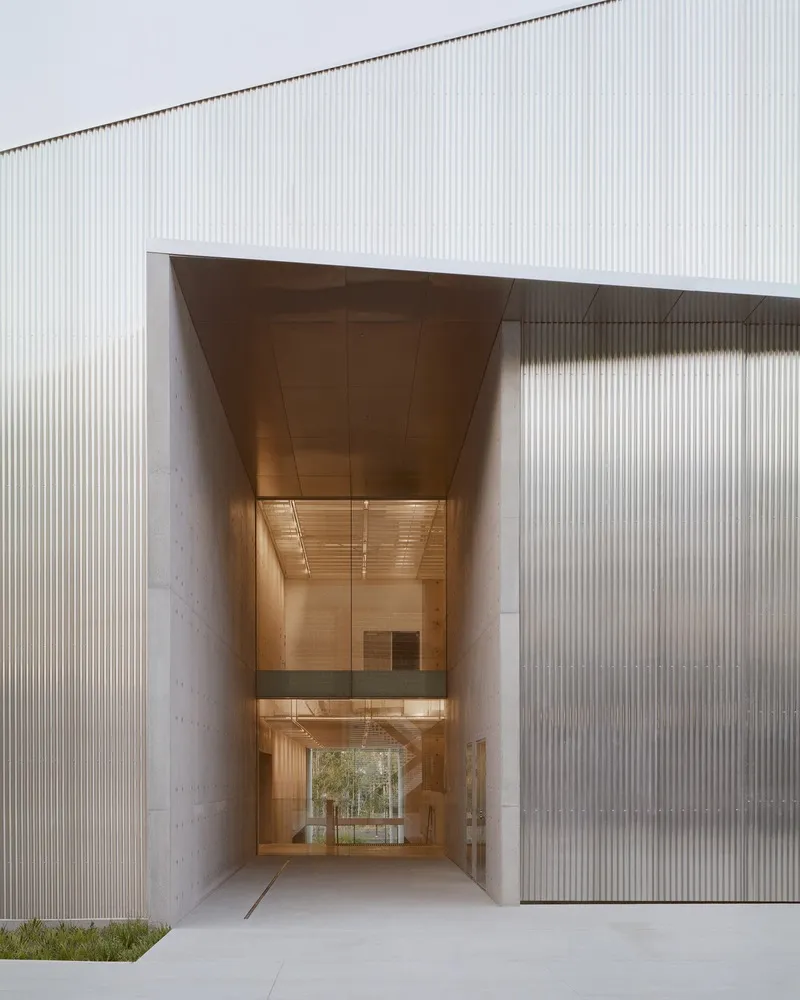
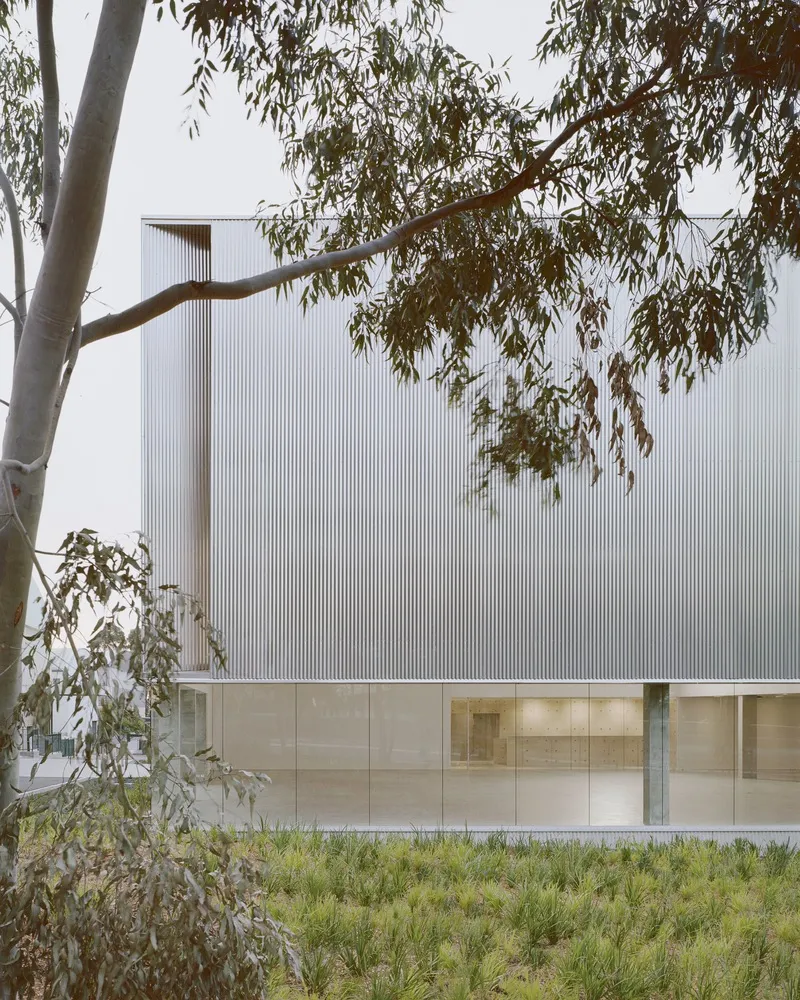
- Reflective mill-finish aluminum cladding
- Deep thermal insulation
- Precast concrete internal walls for thermal mass
Raw, Minimal Material Palette
The architectural language is deliberately restrained and robust, celebrating material honesty. Key materials include:
- Mill-finish corrugated aluminum
- Corrugated precast concrete base
- Off-form concrete walls
- Polished concrete floors
- Cool tonal grey-white-black finishes
This industrial aesthetic reinforces the building’s purpose while creating a timeless, maintenance-efficient environment.
Environmental Strategy and Sustainability
Aligned with contemporary museum sustainability standards, Powerhouse Castle Hill integrates strategic energy-efficient measures including:
- 100 kW rooftop photovoltaic array to offset electrical demands
- Rainwater harvesting system for greywater and toilet flushing
- Highly insulated thermal envelope to reduce mechanical load
These features support long-term climate stability, preservation performance, and operational cost efficiency.
Delivering a Cultural and Community Asset for Sydney’s Northwest
Powerhouse Castle Hill expands the museum’s public role, offering adaptable exhibition halls, education spaces, and research facilities that activate community learning. As Sydney’s northwest continues to grow, this project provides a critical cultural anchor — ensuring world-class access to science, design, technology, and heritage resources.
All photographs are works of Rory Gardiner


Popular Articles
Popular articles from the community


Architekt Andreas Gruber Scatters 23 Dark Timber Chalets Across a South Tyrolean Forest Edge
In Molini di Tures, Amonti Chalets breaks a resort into a hamlet of gabled timber houses, with parking, storage and services pushed into the slope.

GROUP A Strips a 1969 Rotterdam Harbor Headquarters to Its Frame and Wraps It in Timber Louvers
In Rotterdam's M4H harbor district, Ferro Offices reuses a 1969 frame, adds one timber storey and reaches BREEAM-NL Outstanding.

Juan García Correa, John González and Claudia Rueda Sink a Circular Amphitheater into a Manizales Engineering Building
On the La Nubia campus in Manizales, Colombia, the S1 Building folds labs and offices into a hillside of ramped lawns that double as a campus route.

David Ortega Stacks a Two-Story Mexico City Penthouse Around a Steel Stair and a Pergola-Shaded Roof Terrace
In Colonia Roma, a 300 m² penthouse uses oak joinery, a planted steel stair and a slatted roof pergola to make a new-build apartment feel like a house.

Similar Reads
You might also enjoy these articles


Hodi-Mandai Geram
Project Function: Preservation and revitalization of the Intangible heritage and socio-spatial identity of the Hodi by Housing, Cultural Memory Center, Sacred Grove, landscape, local tourism economy


Olio Towers: A Mid-Rise for Performers That Fuses Housing, Rehearsal, and Stage
Located blocks from Houston's Theater District, this modular tower stacks living units around a central performance atrium.

Oasis: Modular Green Housing Carved into Dhaka's Urban Fabric
A shortlisted Plugin Housing entry reclaims unauthorized settlements in Dhaka with stepped concrete volumes, green roofs, and ventilation-driven design.

Black Hole: A Floating Megastructure for the Post-Physical Era
Emiliano Mazzarotto envisions a spherical, self-scaling arena where e-sports, digital hotels, and holographic stadiums replace traditional public space.

Explore Office Building Competitions
Discover active competitions in this discipline

Challenge to reimagine the Iron Throne

Photograph architecture without architects

Illustrate the lost glory of Angkor Wat - Render Challenge

Design challenge to reuse E-waste
Comments (0)
Please login or sign up to add comments
No comments yet. Be the first to comment!