
P·P·Bakery: A Studio Tama Adaptive Reuse in Seoul
Studio Tama converted a two-storey Seoul building into a 140 m² bakery and cafe that keeps the original walls visible under a new white layer.


Seoul has been quietly producing some of the most interesting small adaptive reuse projects in Asia. The city has a deep stock of mid-century houses, small commercial buildings, and back-alley structures that no longer match the demands of the contemporary market but are too good to demolish. P·P·Bakery, a 140 square metre conversion completed in 2025 by Studio Tama, is one of the cleaner recent examples of how this is done.
The brief was to turn an existing two-storey building into a bakery and small cafe. The architects, led by Sangjun Cho, decided not to erase the building's history. Old buildings always carry traces of time, and rather than scrubbing them away, P·P·Bakery accepts those traces as the project's premise. The new layer is restrained enough that you can read the old building underneath it.
The Building, Kept
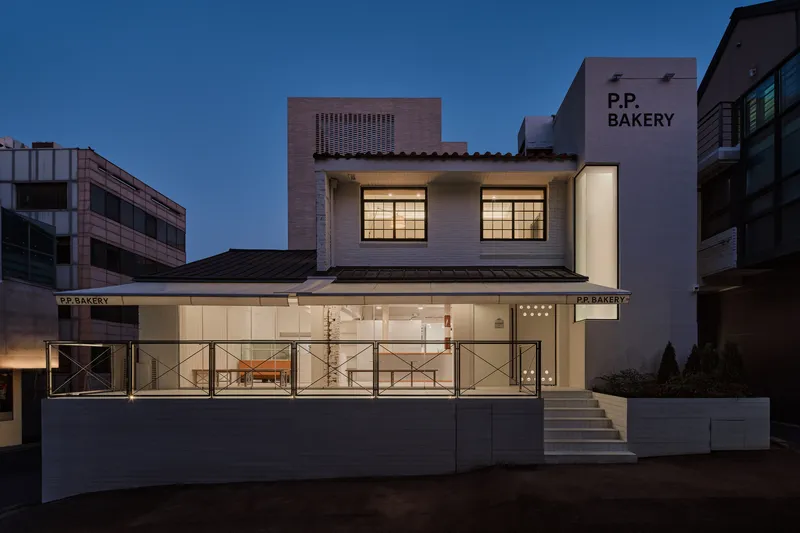

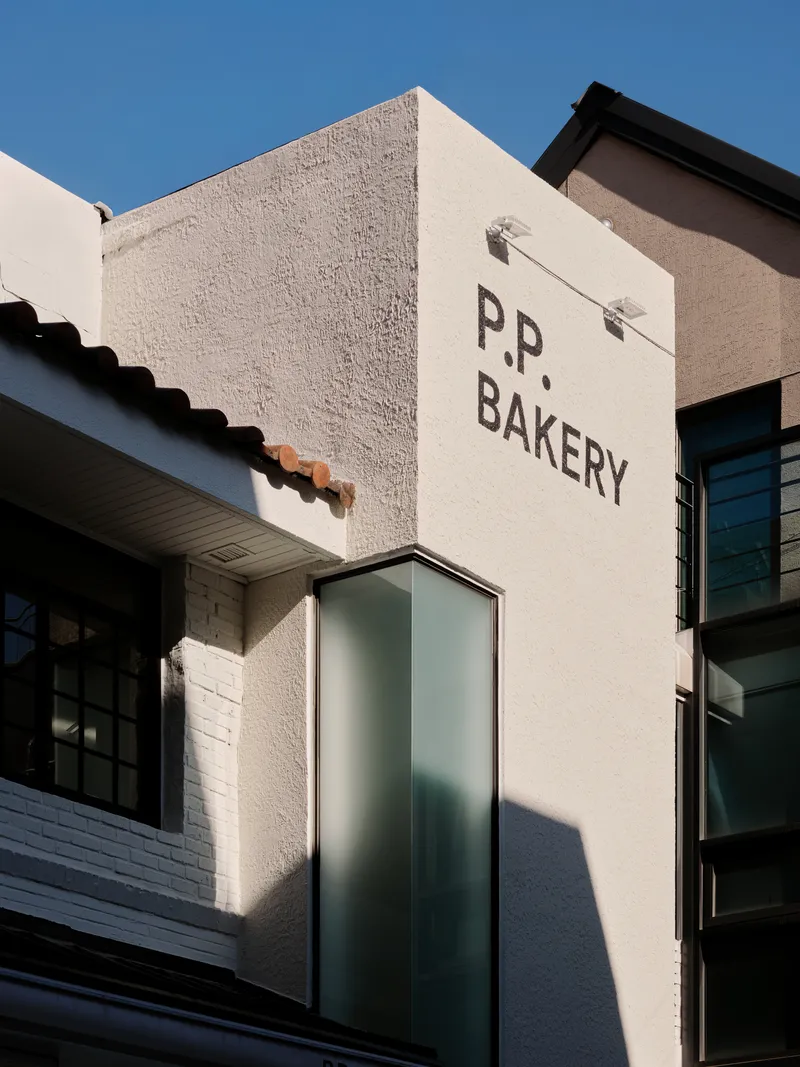
From the street, the project still reads as a small two-storey house. The original tiled roof, the stucco walls, and the basic massing are intact. The new signage is added with restraint: a logo painted directly onto the side wall, a pair of cloth banners on the gable, a small sign at the entrance terrace. There is no replacement facade, no oversized branding, no attempt to make the bakery look like a flagship store.
This is the project's first quiet decision and probably its most important one. A bakery in Seoul could easily lean into Instagram-friendly excess. P·P·Bakery does the opposite. It trusts that a good building, gently updated, is more memorable than a loud one.
Entrance and Threshold

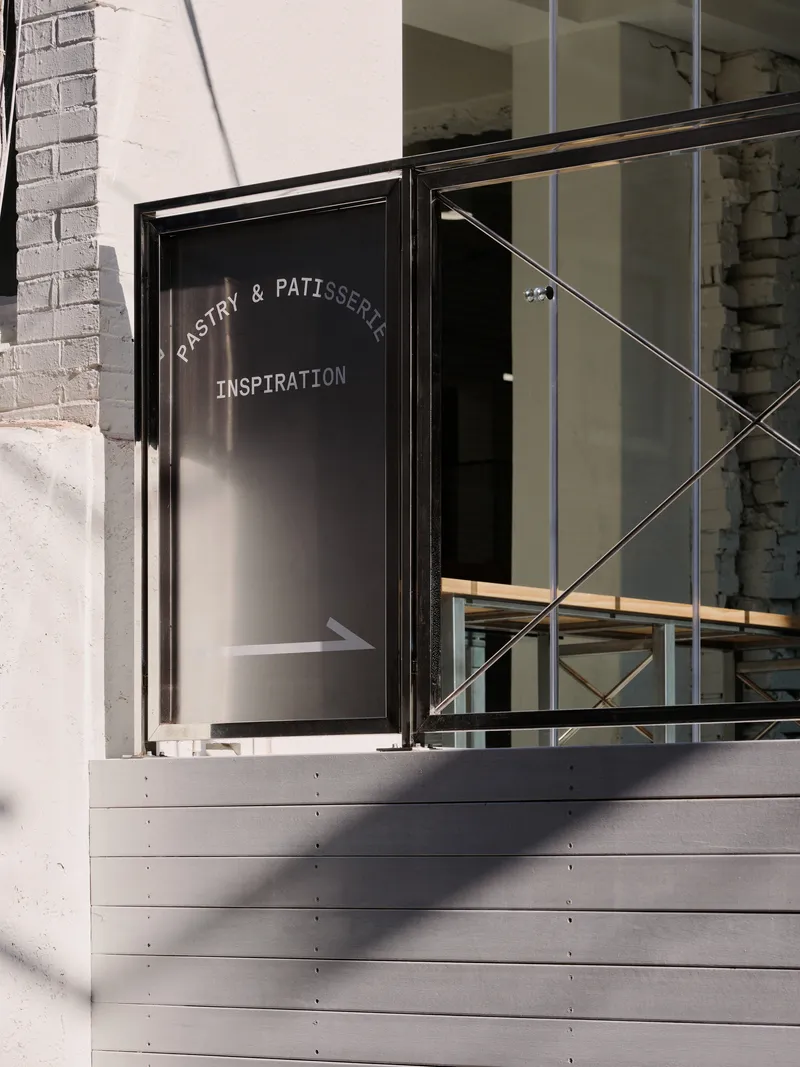
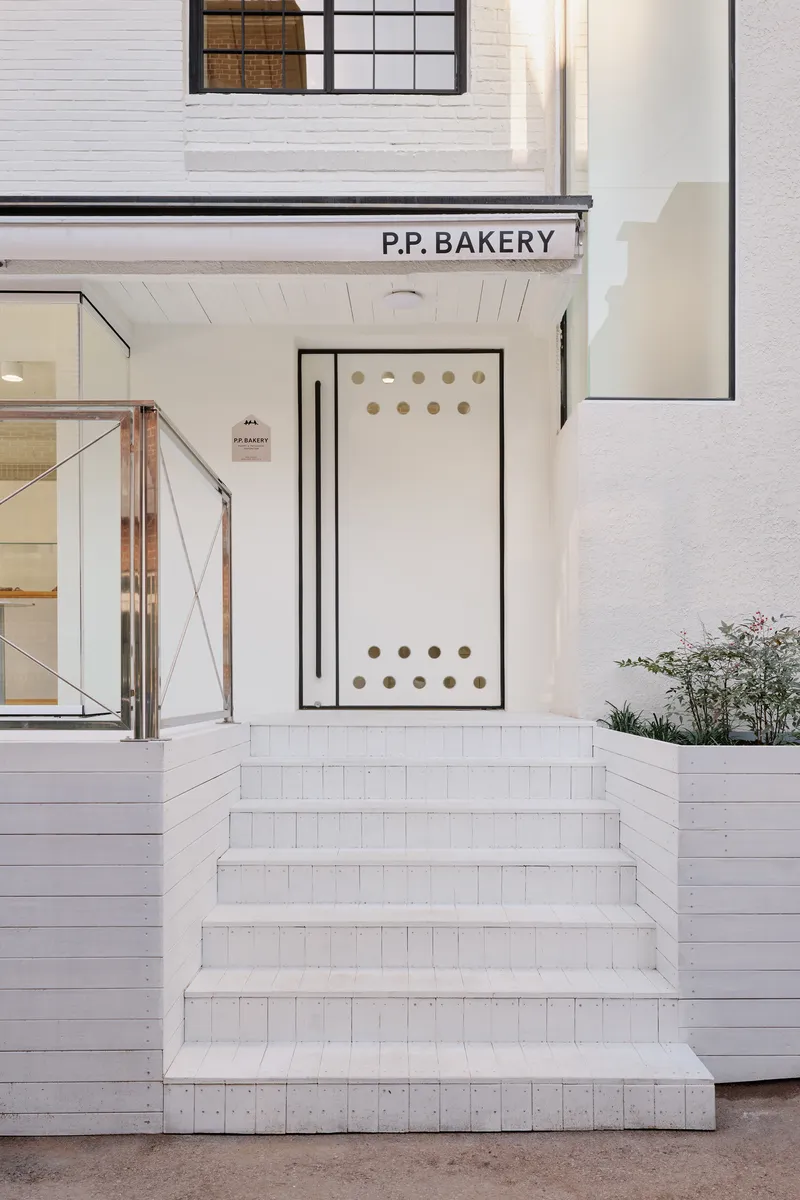
The entrance sequence is a series of small, precise moves. Cloth banners hang on the gable, a Pastry & Patisserie Inspiration sign marks the terrace, and the door itself is a black panel with a pattern of round perforations. White tile steps lead up to it. None of these elements is loud, but together they tell you exactly what kind of place you are walking into.
The Ground Floor: Bakery as Workshop

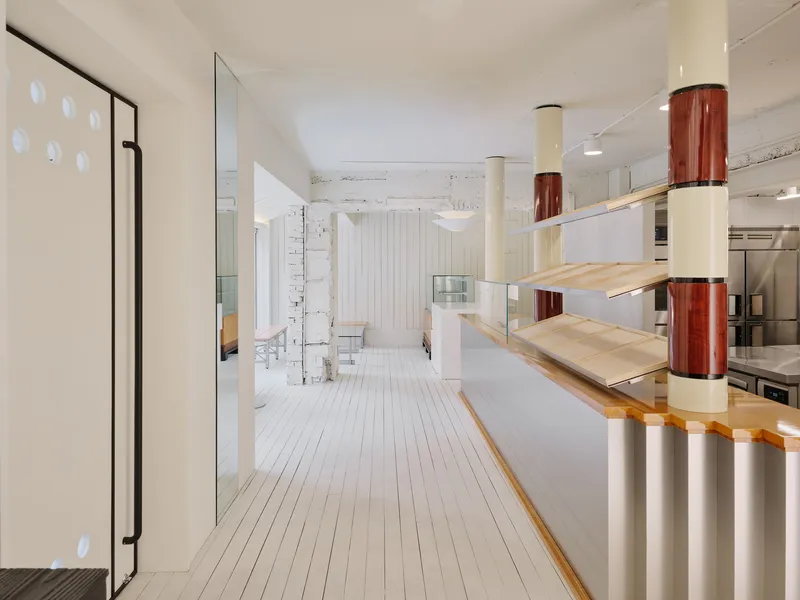
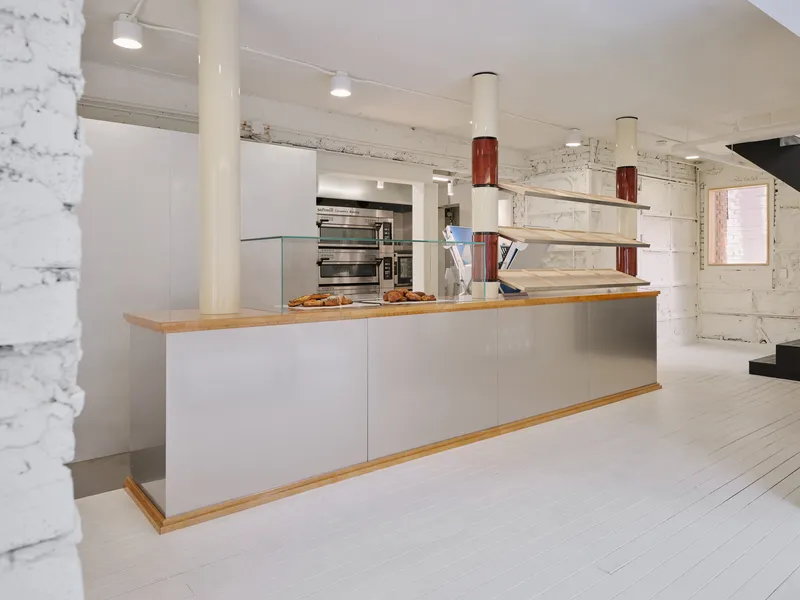
Inside, the ground floor is the bakery proper. The counter runs along the full length of the room. Timber shelves carry trays of bread and pastry. The oven and the back of house are visible from the customer side, which signals that the food is made here, not delivered from somewhere else. Steel columns are wrapped in maroon-painted sleeves, the project's most distinctive material gesture.
The walls are the most surprising thing in the room. They are the original brick and plaster of the old building, painted white and otherwise left alone. The texture is rough, uneven, and obviously not new. Walking past them you can read the building's age in the surface. Most architects would have skim-coated this wall and lost everything. Studio Tama left it visible.
White Counters and Stepped Volumes
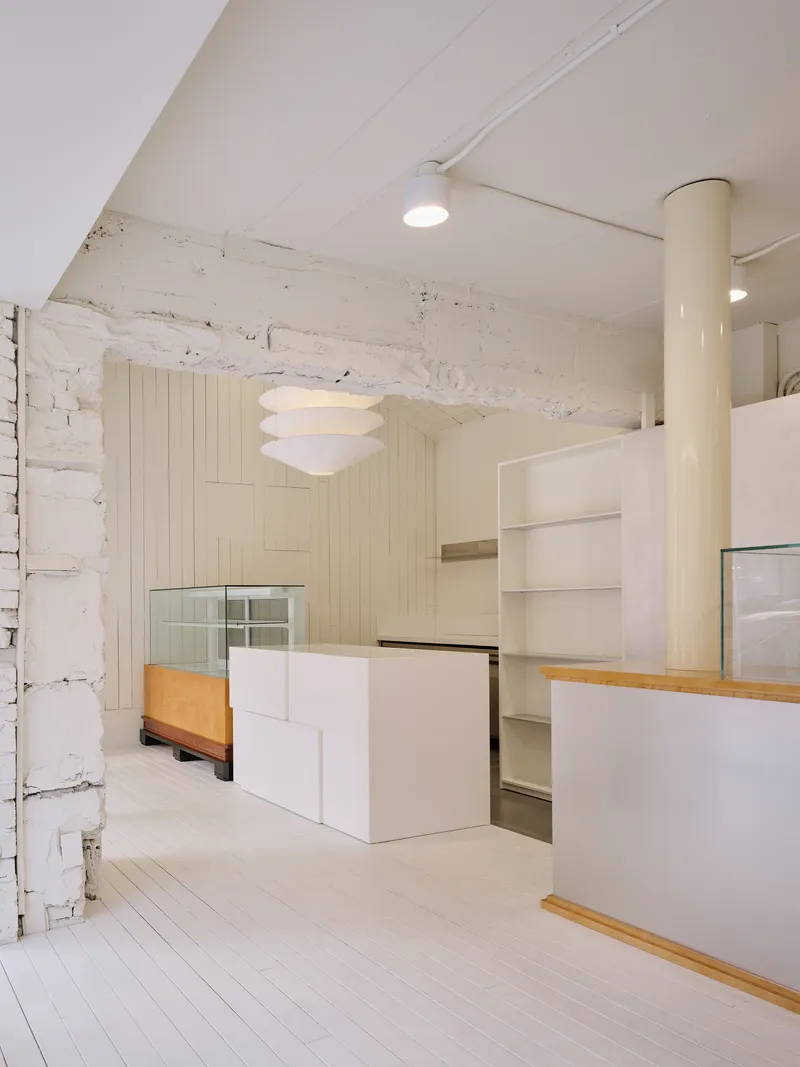
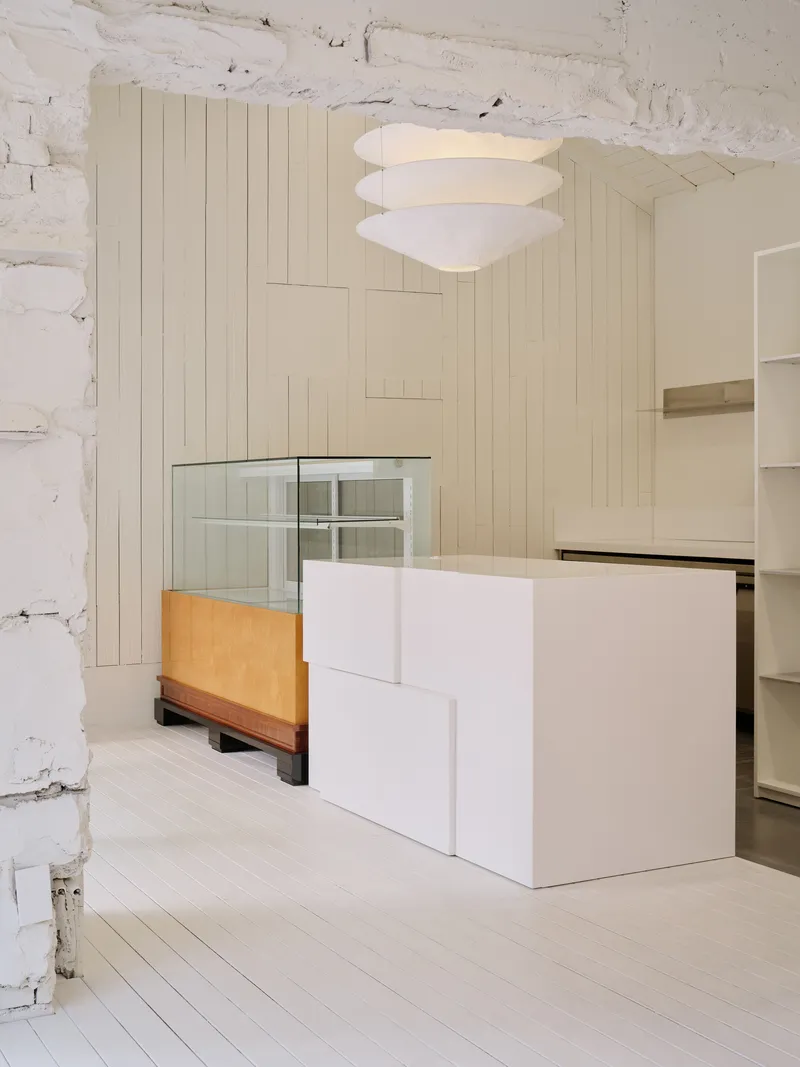
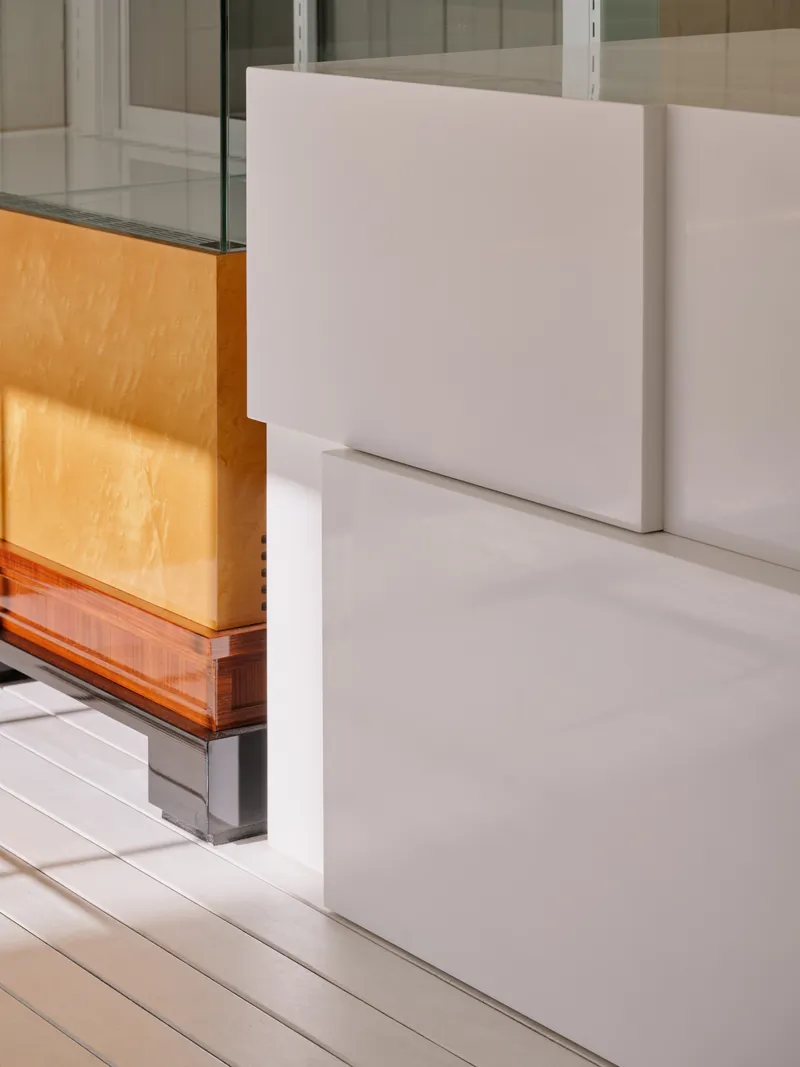
The new furniture, mostly counters and display cases, is treated as a separate layer from the old building. The volumes are clean white objects with stepped profiles and integrated wood and glass display cabinets. They sit in front of the rough walls without pretending to be part of them.
This is the right approach for adaptive reuse. The new is clearly new. The old is clearly old. The two materials are not blended into a single style. Instead they are placed next to each other and allowed to read separately. The result is a room you can read like a section drawing: original wall, new counter, original column, new shelf.
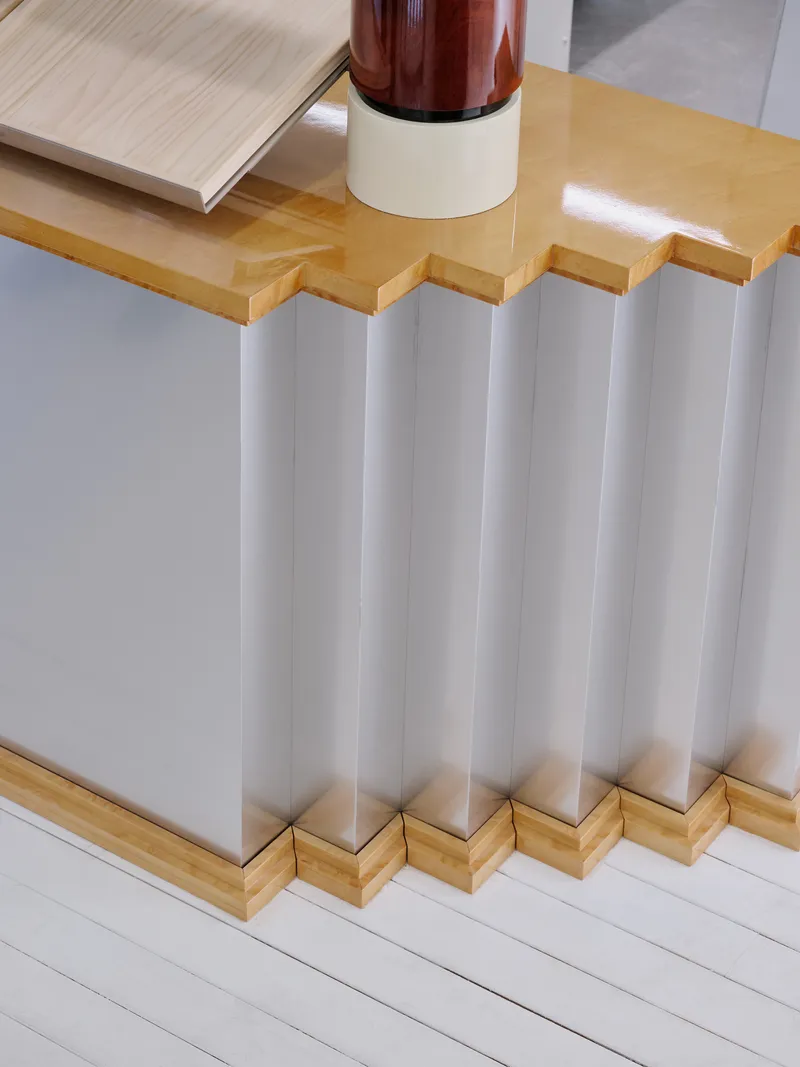
Material Detail at Close Range

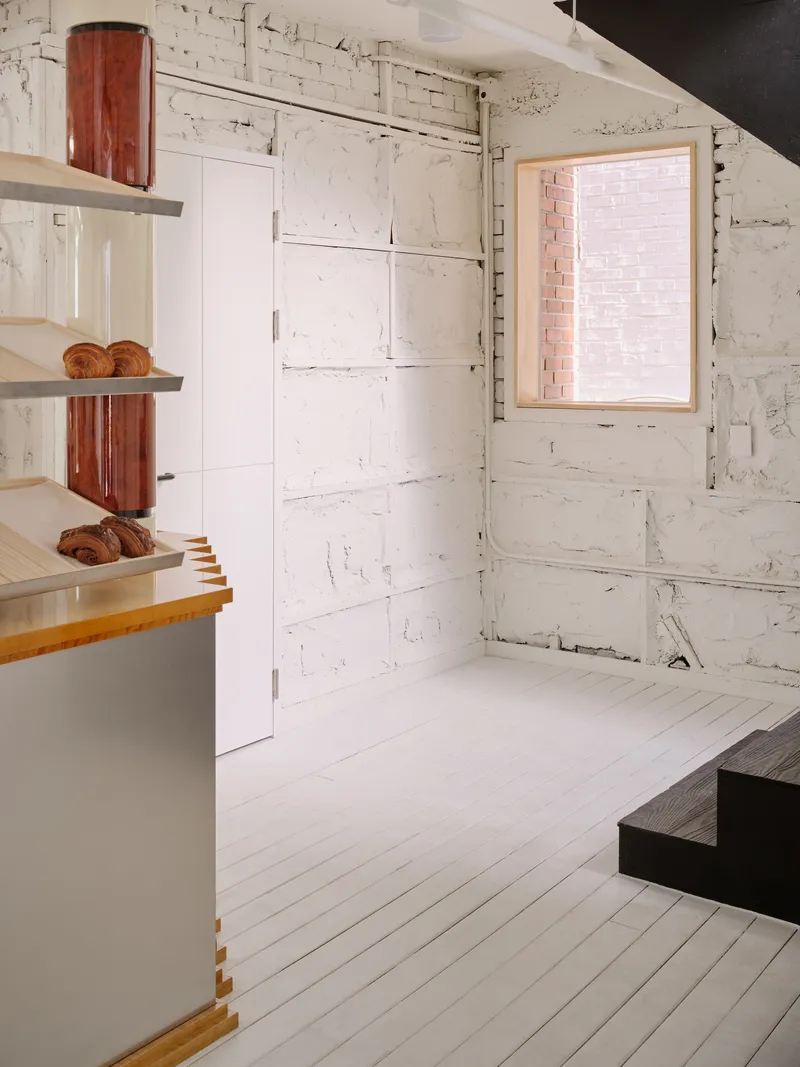

Up close, the project rewards inspection. The corrugated metal counter base meets a timber top with a clean reveal. The original brick column with its irregular plaster patches is left as a structural and visual anchor. The black steel stair, painted in a single matt finish, sits against the same rough wall and reads as a sharp piece of new geometry against an older background.
This kind of layering is the hardest thing to get right in a small interior. Most projects either over-restore the original surfaces or hide them entirely behind drywall. Holding the line in the middle, leaving the rough wall but adding crisp new objects, is what makes P·P·Bakery worth studying.
Up the Stair
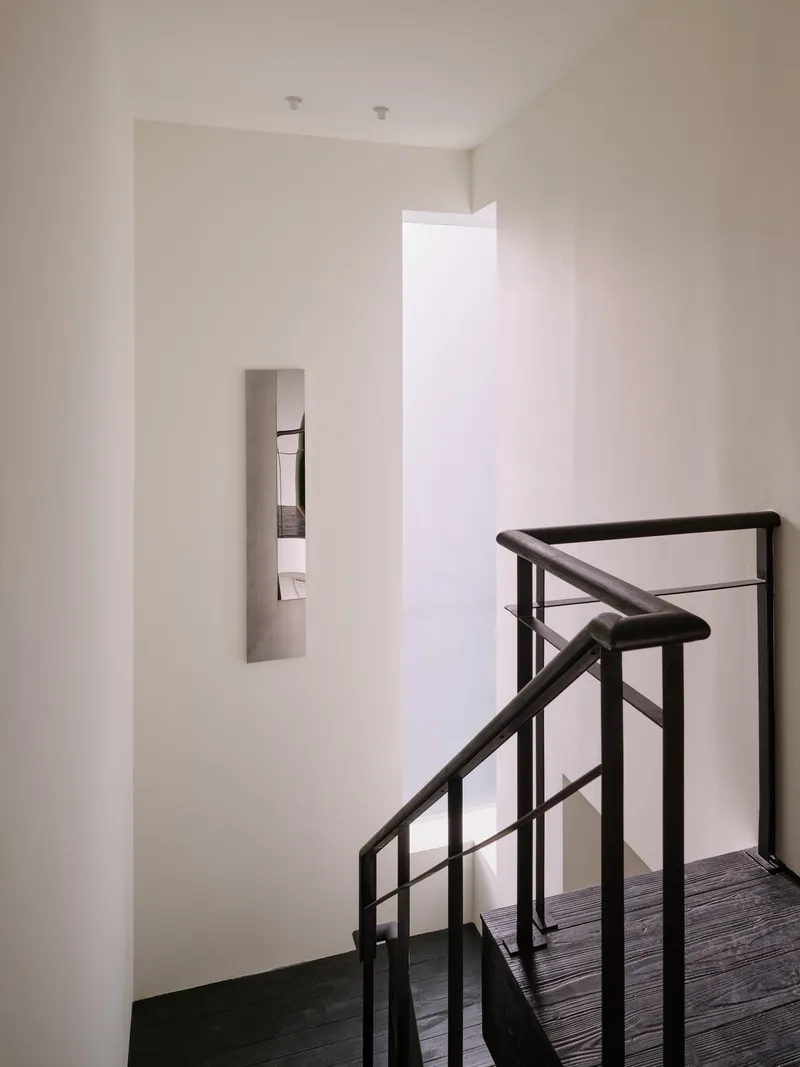
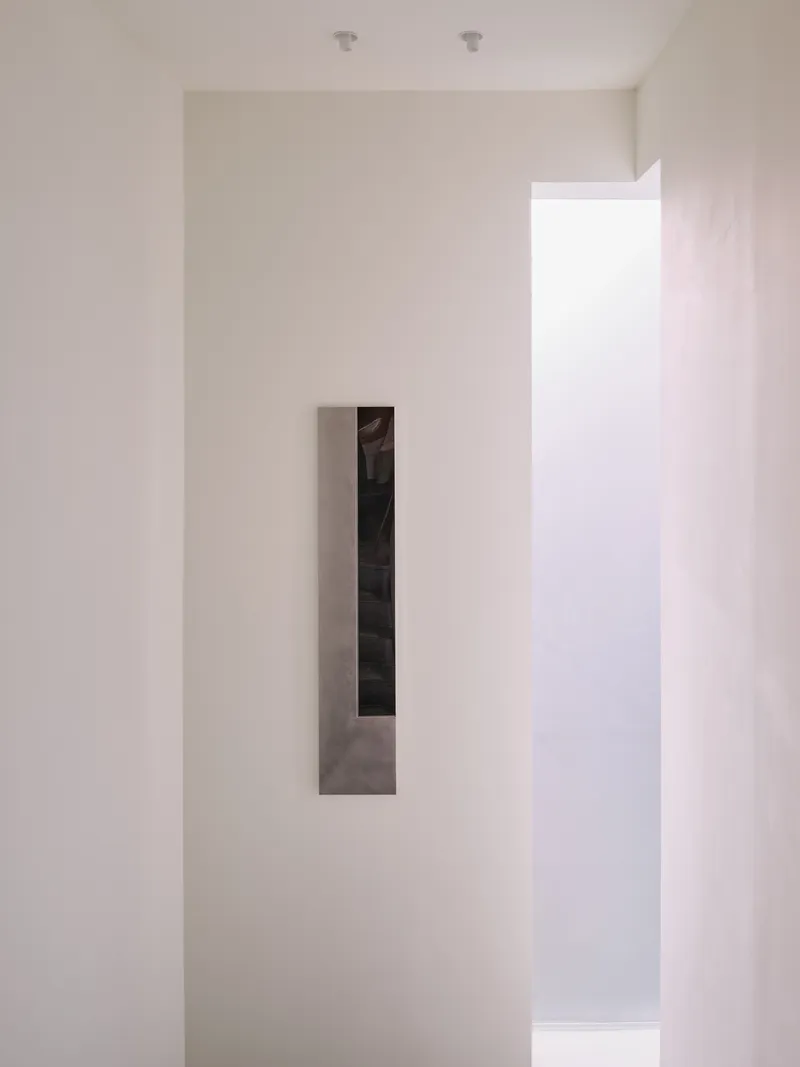
The stair to the upper floor is treated as a quiet transition. White walls, a small mirrored panel as the only ornament, a black handrail. There is nothing here to distract from the act of moving from one room to another. This is exactly what a stair should do in a small project: connect, then disappear.
The Upper Floor: Cafe Under a Tiled Vault


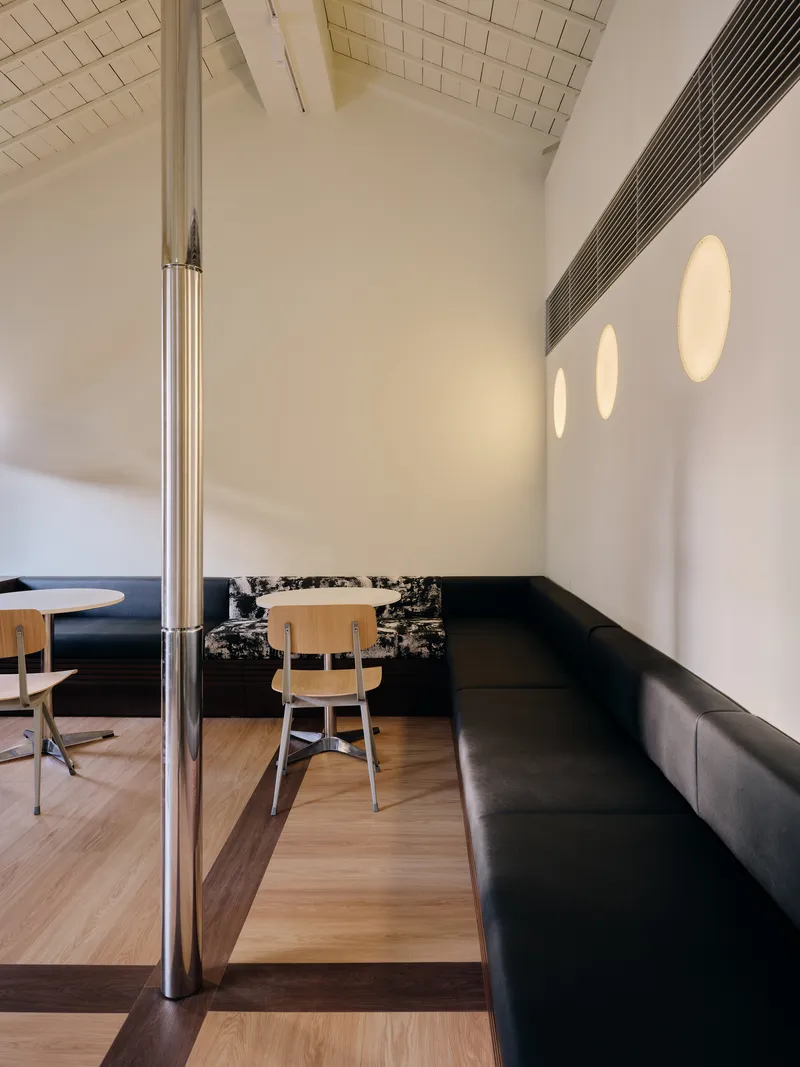
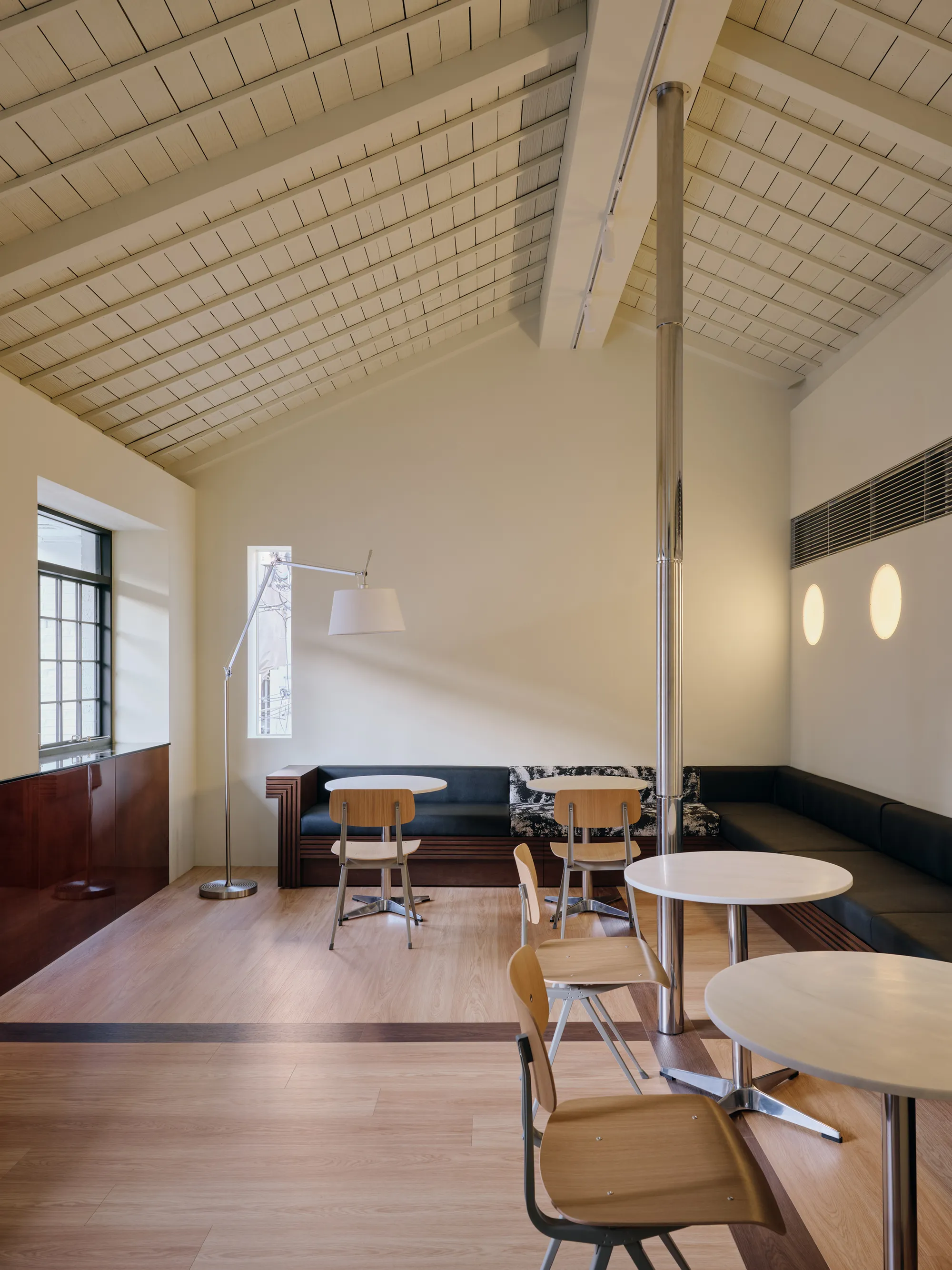
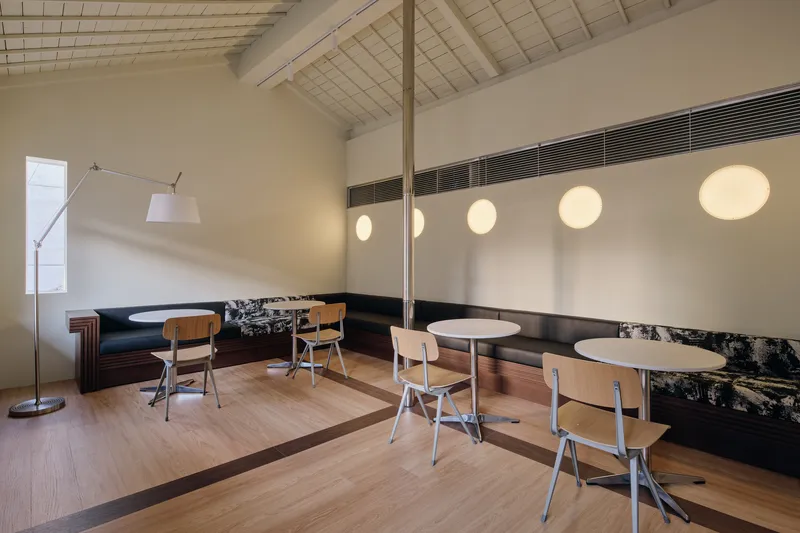
The upper floor is the cafe. The most striking thing about the room is the original ceiling. The architects exposed the underside of the existing tiled roof, with its grid of small dark squares between thin white battens, and made it the dominant element of the space. The pitched geometry gives the room a generous height that the ground floor does not have.
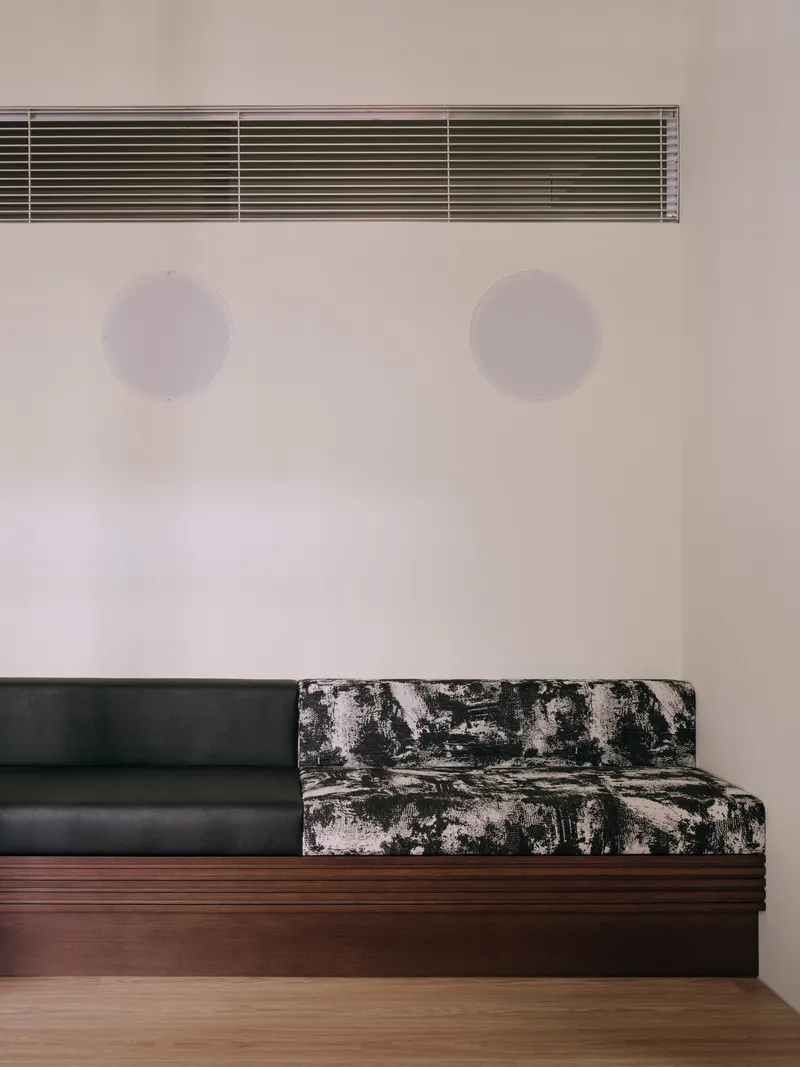
The seating is arranged around the perimeter: long banquettes in dark leather and printed fabric along two walls, with small round tables and slim wooden chairs in the middle. The lighting is a row of circular sconces that read like full moons against the white plaster.
The Maroon Detail
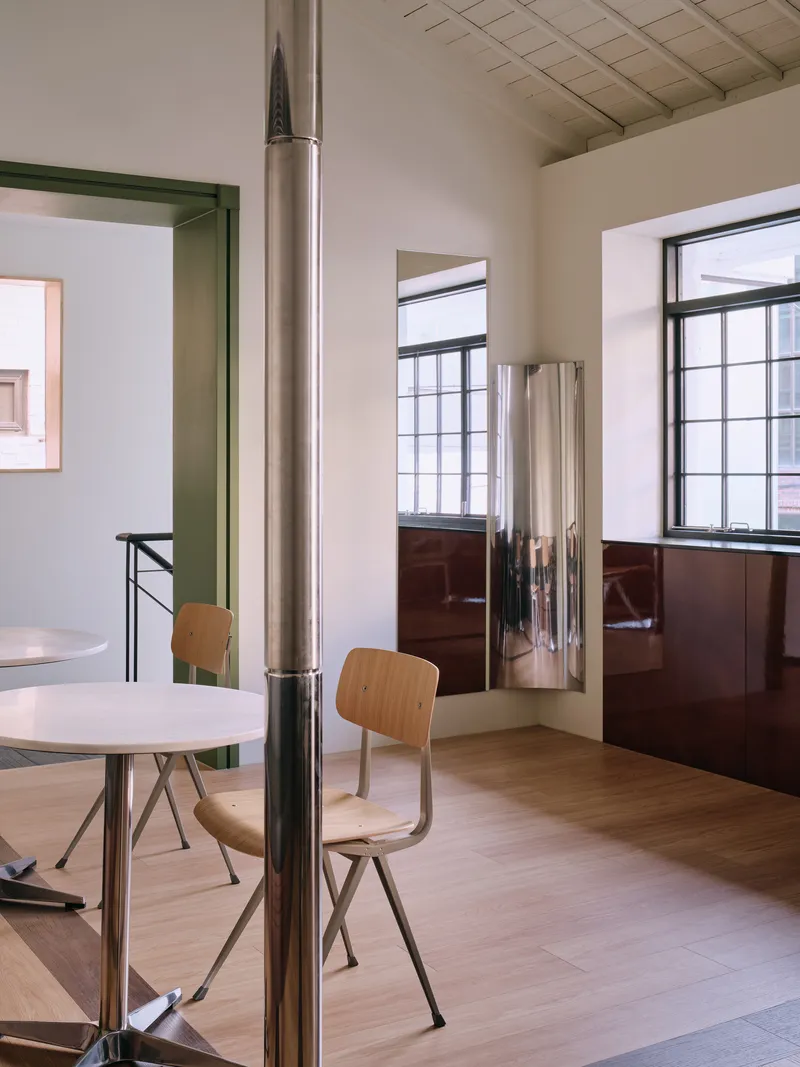
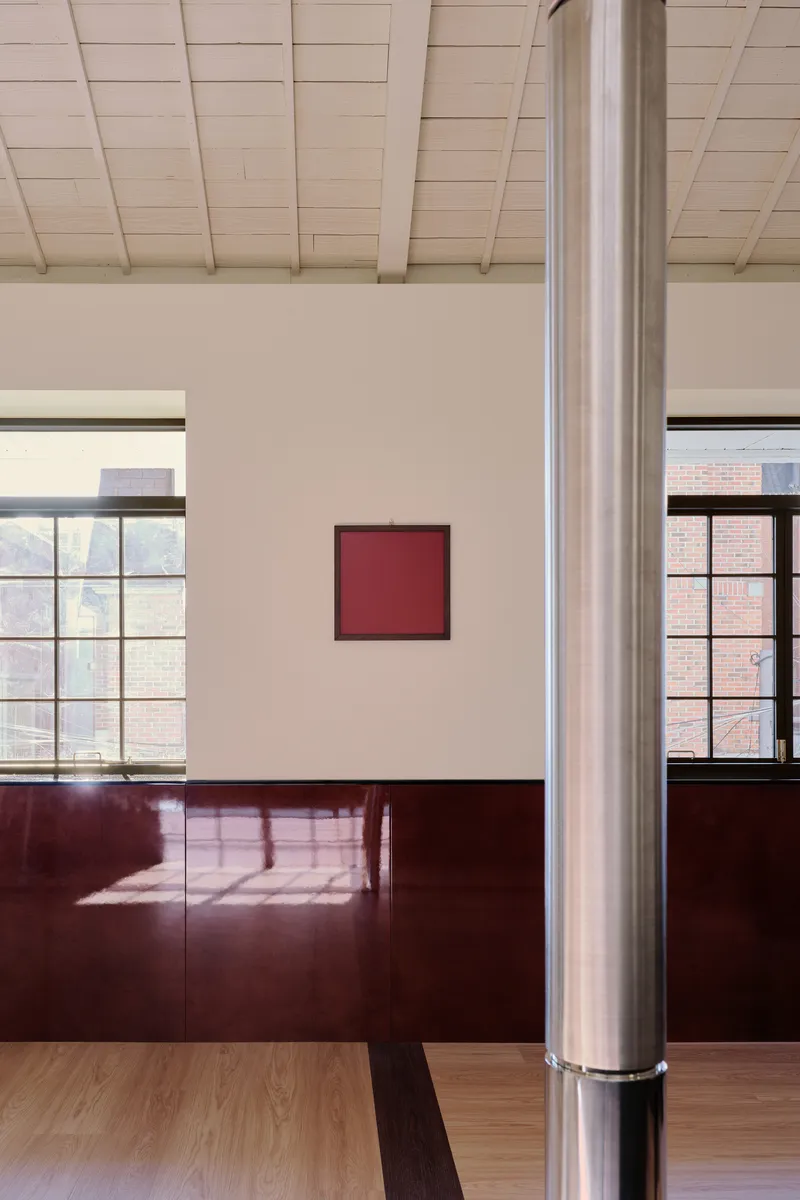
A glossy maroon dado runs along part of the upper-floor wall, paired with the same maroon paint on the steel column sleeves below. This is the project's signature colour. It appears in just a few places, always as a deliberate accent against the otherwise neutral palette of white plaster, timber, and steel. The colour does for the project what the cloth banners do for the facade: it gives the place an identity without raising its voice.
Picking a single accent colour and using it sparingly is one of the oldest moves in interior design and one of the easiest to overdo. P·P·Bakery shows the discipline. The maroon appears, then it stops. There is no maroon door, no maroon stair, no maroon ceiling. The colour earns its presence by being rare.
Quiet Corners

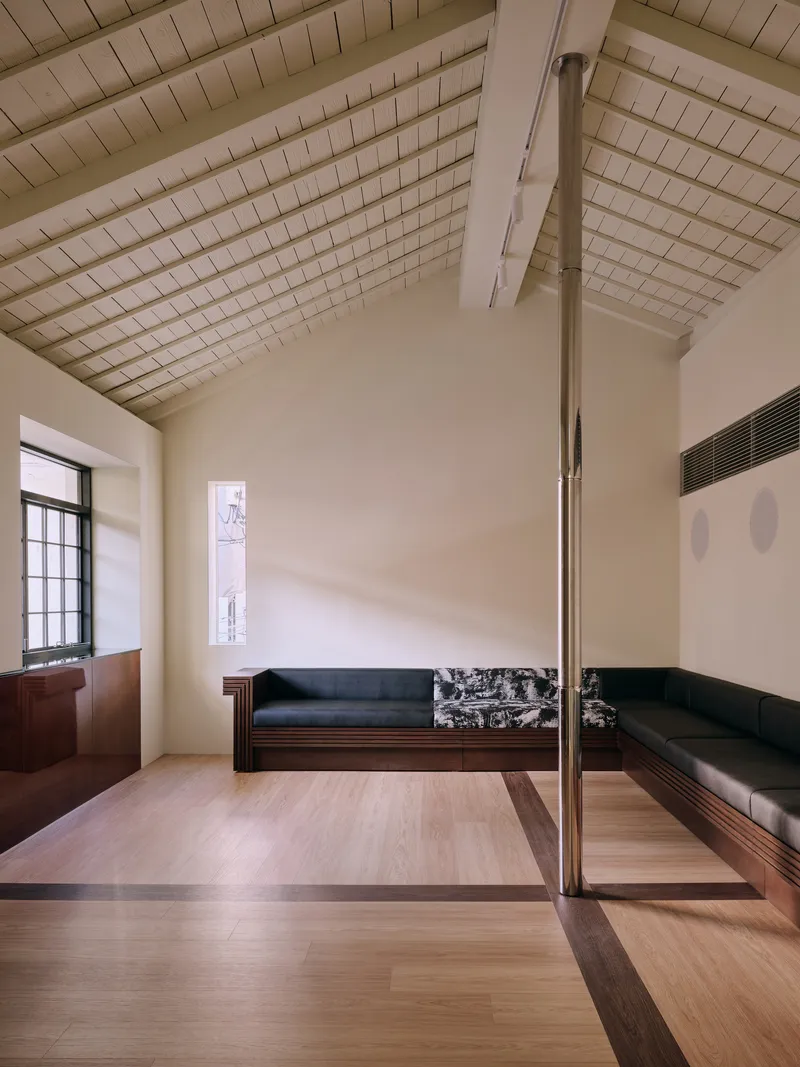
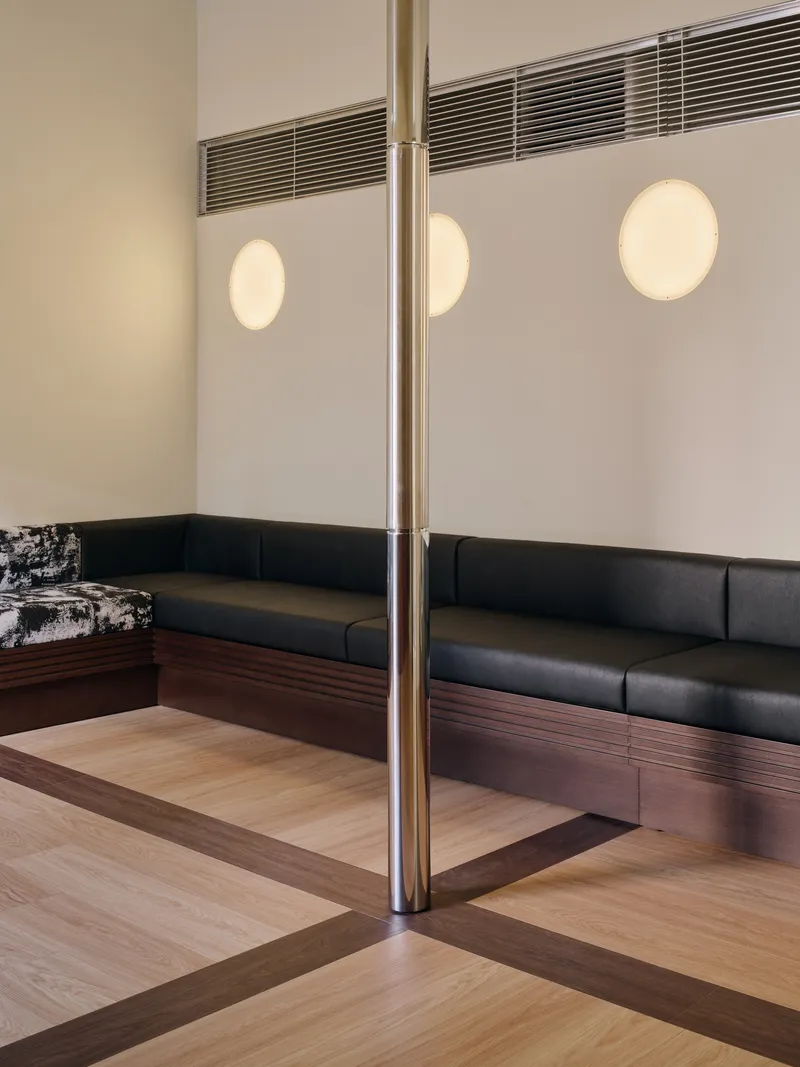
The upper floor has several quiet corners that are worth noticing. A small banquette with three round wall lights and a single printed cushion. An empty corner with a steeply pitched ceiling and benches along two walls. A pair of windows framing the building next door. These are the rooms within the room. They give the cafe variety without breaking the spatial logic.

Why This Project Matters
Adaptive reuse is the most important conversation in contemporary architecture, and most cities have far more old commercial buildings than they can afford to replace. P·P·Bakery is a small but useful demonstration of how to handle one. The lessons are direct: keep the original facade, leave the rough walls visible inside, add new furniture that is clearly contemporary, use one accent colour sparingly, and design the entrance sequence with restraint.
Studio Tama has produced a project that is easier to learn from than a much larger one would be, because every move is legible. Anyone working on a small commercial conversion in a dense city should look at this carefully.
About the Studio
Share Your Own Work on uni.xyz
If you are working on adaptive reuse, small commercial, or interior projects, uni.xyz is a place to publish your work, find collaborators, and enter design competitions.
Project credits: P·P·Bakery by Studio Tama. Seoul, South Korea. 140 m². Completed 2025. Lead architect: Sangjun Cho. Design team: Jaehee Chung.



Popular Articles
Popular articles from the community


Co-Life: Senior Housing Design That Reconnects Older Adults With the City
Co-Life reimagines senior housing design through healing gardens, shared streets, workshops, and a sustainable community across generations.

EW PARK: Sustainable Architecture Reimagines the Future of Urban Parking
EW PARK reimagines city parking as a modular wooden tower combining automation, solar energy, electric mobility, and adaptable urban design.

The Earth Pod: 3D Printed Homes for Resilient Refugee Communities
The Earth Pod reimagines refugee housing through 3D printed homes made from clay, combining resilience, self-sufficiency, and rapid shelter.

Riyadh For All: Intergenerational Urban Design for Active Aging in Rabat
Riyadh For All reimagines urban design in Rabat with intergenerational co-living, adaptive courtyards, and Moroccan cultural exchange today.
Similar Reads
You might also enjoy these articles

Bao Huynh Watercolor Atelier: A Serene Art Retreat in Hội An
Bao Huynh Watercolor Atelier in Hội An blends multifunctional art spaces, sustainable design, local materials, and family-friendly living in a serene environment.

Atelier Macri Concept Store Interior Design by CASE-REAL
Atelier Macri store features a "ko" counter, walnut wood details, cork displays, blending retail, gallery, and seamless customer experiences.

Manuel Vargas Izquierdo Stadium and High-Performance Sports Center: Architectural Excellence in Jalpa de Méndez
The Manuel Vargas Izquierdo Stadium blends sustainable design, inclusive sports facilities, and cultural-inspired architecture, revitalizing Jalpa de Méndez’s public spaces.

KAKR Buluh Awar Hall: Revitalizing Community and Ecology Through Bamboo Architecture
Community built bamboo hall revitalizes Buluh Awar village, empowering youth, restoring ecology, celebrating vernacular craftsmanship through sustainable architecture and culture.

Comments (0)
Please login or sign up to add comments
No comments yet. Be the first to comment!