
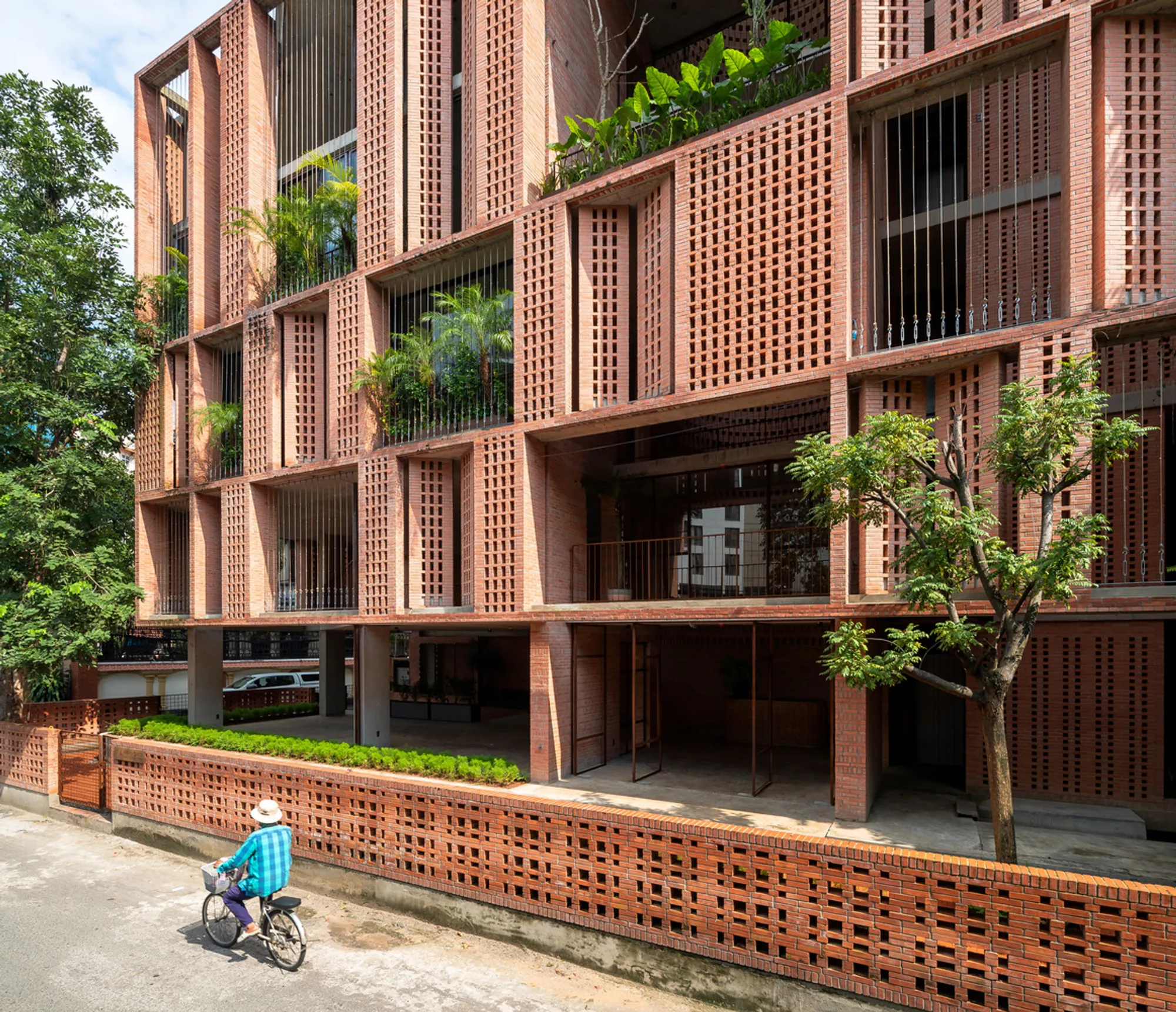
Premier Office by Tropical Space: A Passive Brick Office Oasis in Ho Chi Minh City
Premier Office by Tropical Space features a perforated brick façade, central void, and passive ventilation for sustainable, light-filled workspaces.


Designed by Vietnamese architecture studio Tropical Space, Premier Office is a 300 m² rental office building that reimagines workspace design through the lens of passive climate control, natural materials, and spatial openness. Completed in 2022, the project is located on a quiet street in Ho Chi Minh City, blending seamlessly with its urban surroundings while prioritizing sustainability and comfort.
Site Context and Project Vision
In a neighborhood populated by other rental office buildings, the architects aimed to differentiate Premier Office by designing a structure that maximizes natural lighting and ventilation while minimizing solar heat gain. The result is a building that is both energy-efficient and visually engaging, where architecture becomes a tool for environmental harmony.
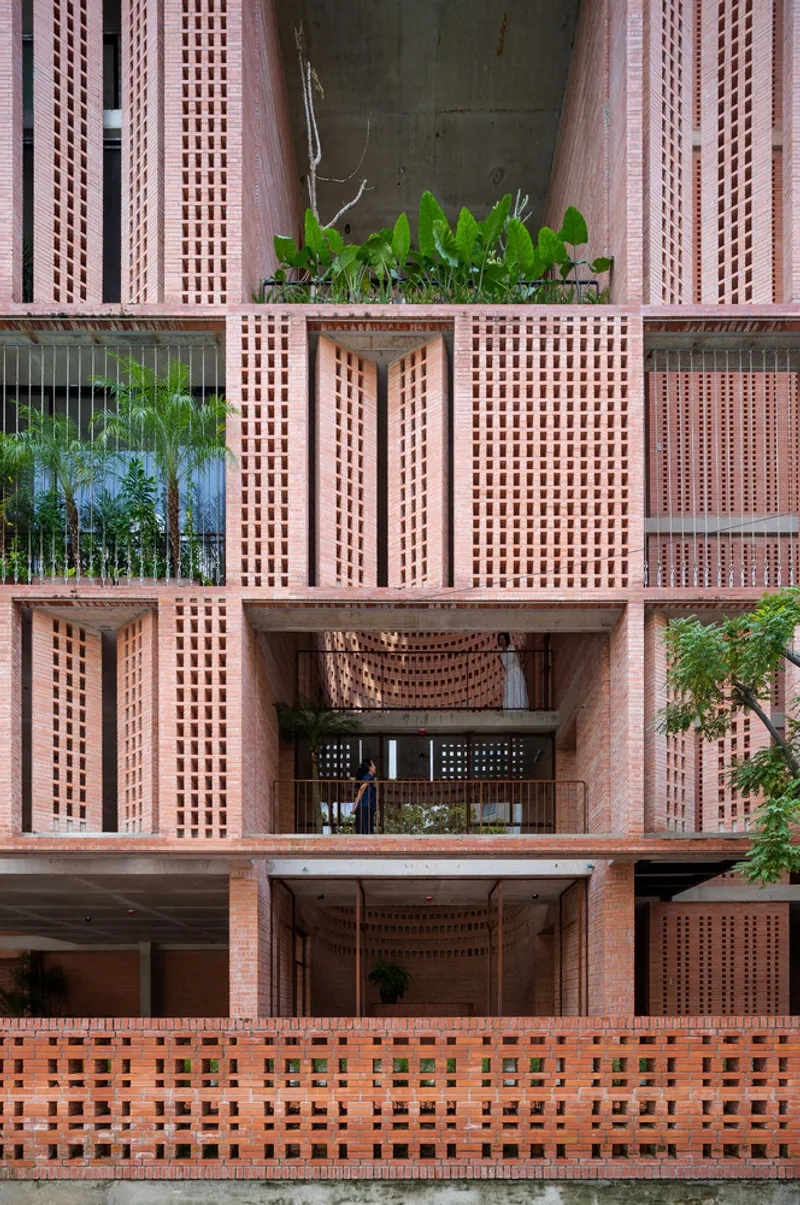
Material Expression: A Brick Curtain Façade
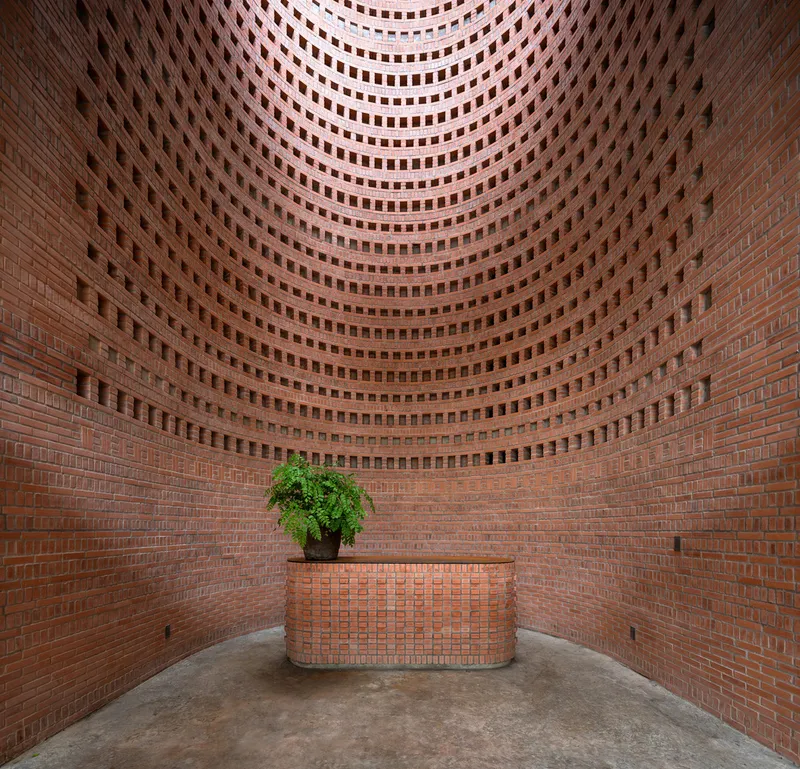
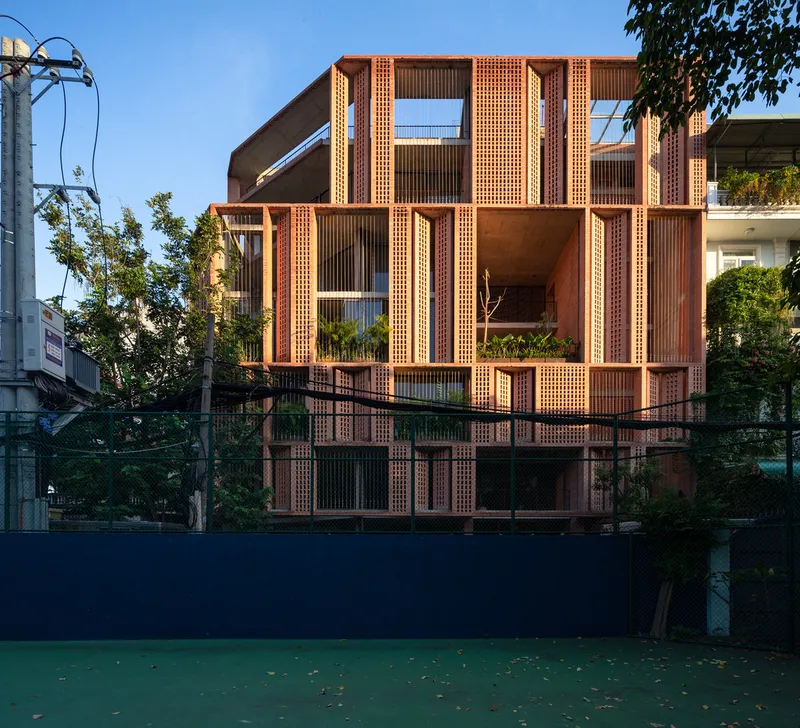
The building’s defining element is its rotated perforated brick wall, which acts as a buffer layer between the harsh tropical climate and the interior environment. Rotated at a 45-degree angle, this “brick curtain” reduces direct sunlight, allows for filtered daylight, and produces dynamic shadows throughout the day.
The brick façade not only contributes to thermal insulation, but also weaves local craftsmanship and tradition into a contemporary design language, giving the building a tactile, breathable presence.
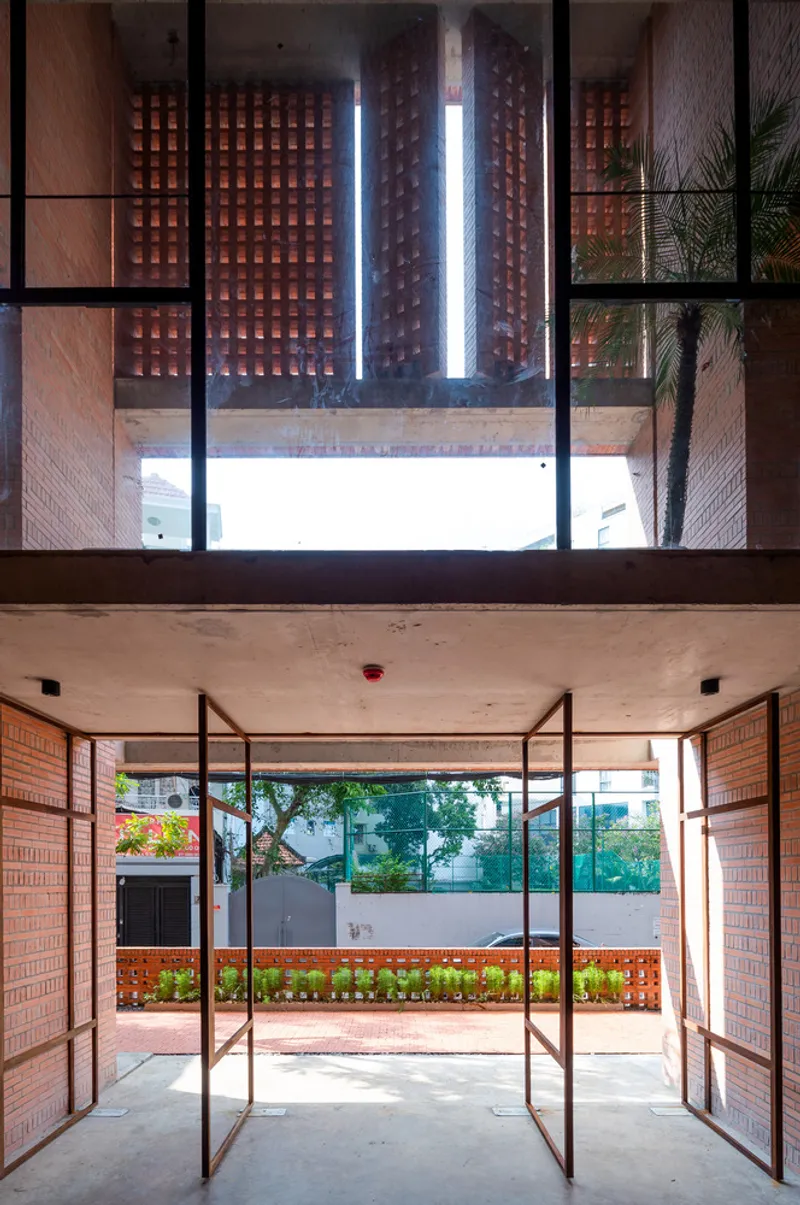
Spatial Layout and Natural Ventilation
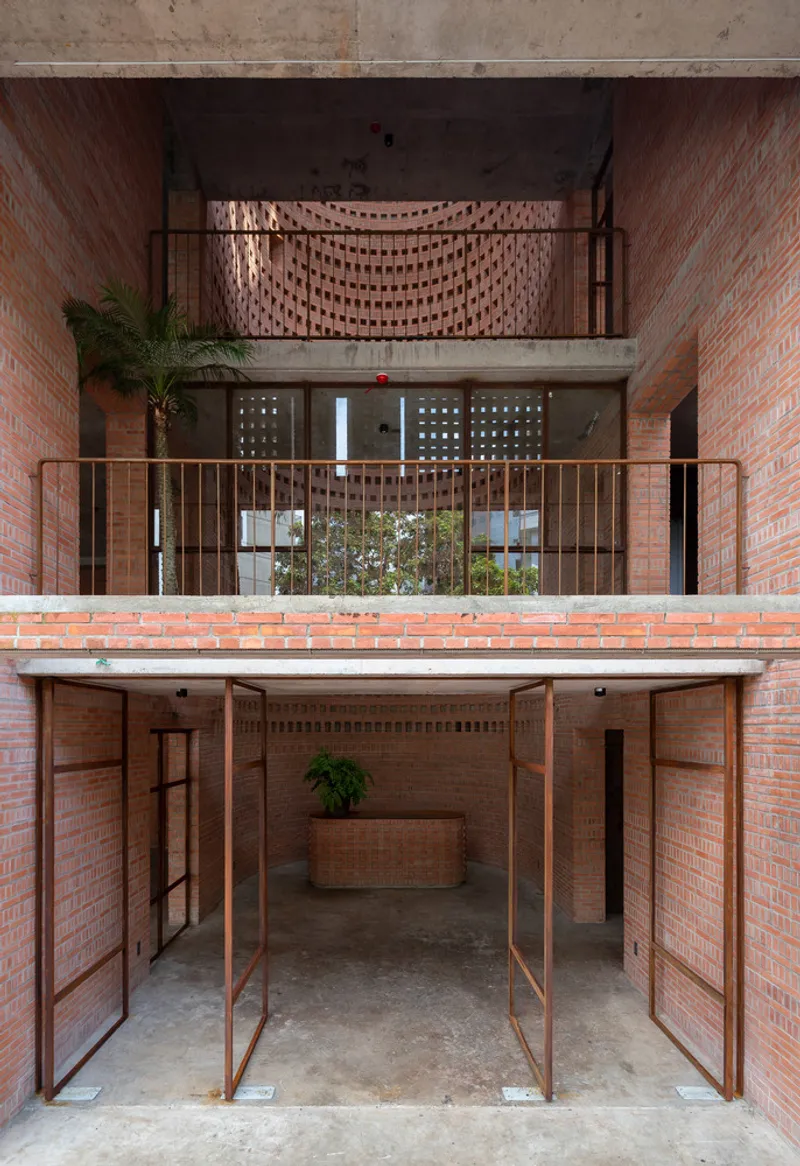
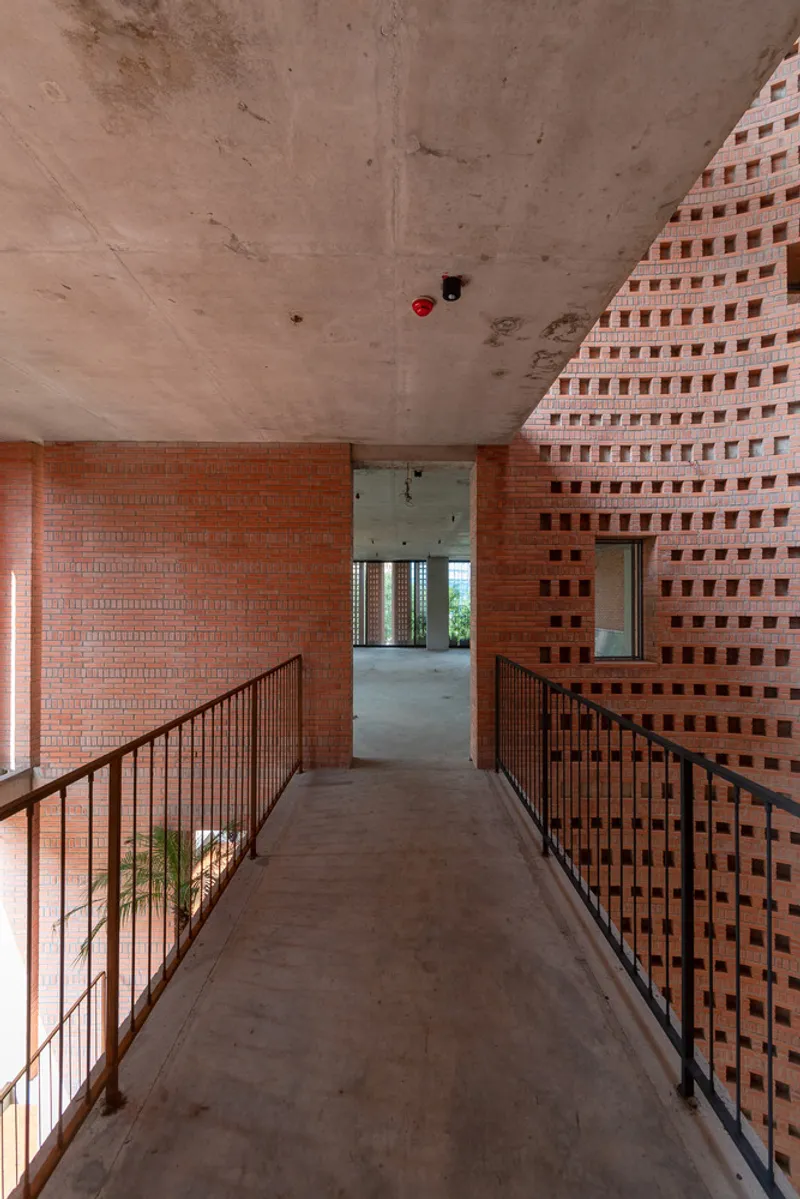
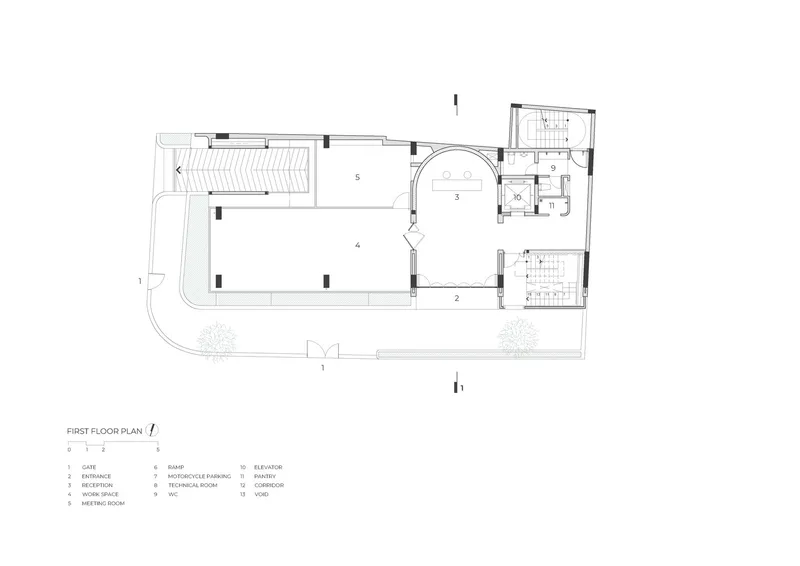
At the heart of the design is a vertical central void that organizes the building’s internal spaces while promoting cross-ventilation and daylight circulation. On one side of the void lies the open-plan office space with two operable facades that welcome breezes and light. On the other side are the building’s functional elements: stairs, elevator, restrooms, and storage.
Corridors that span across the void connect the two sides, reinforcing spatial transparency and creating visual continuity from floor to floor.
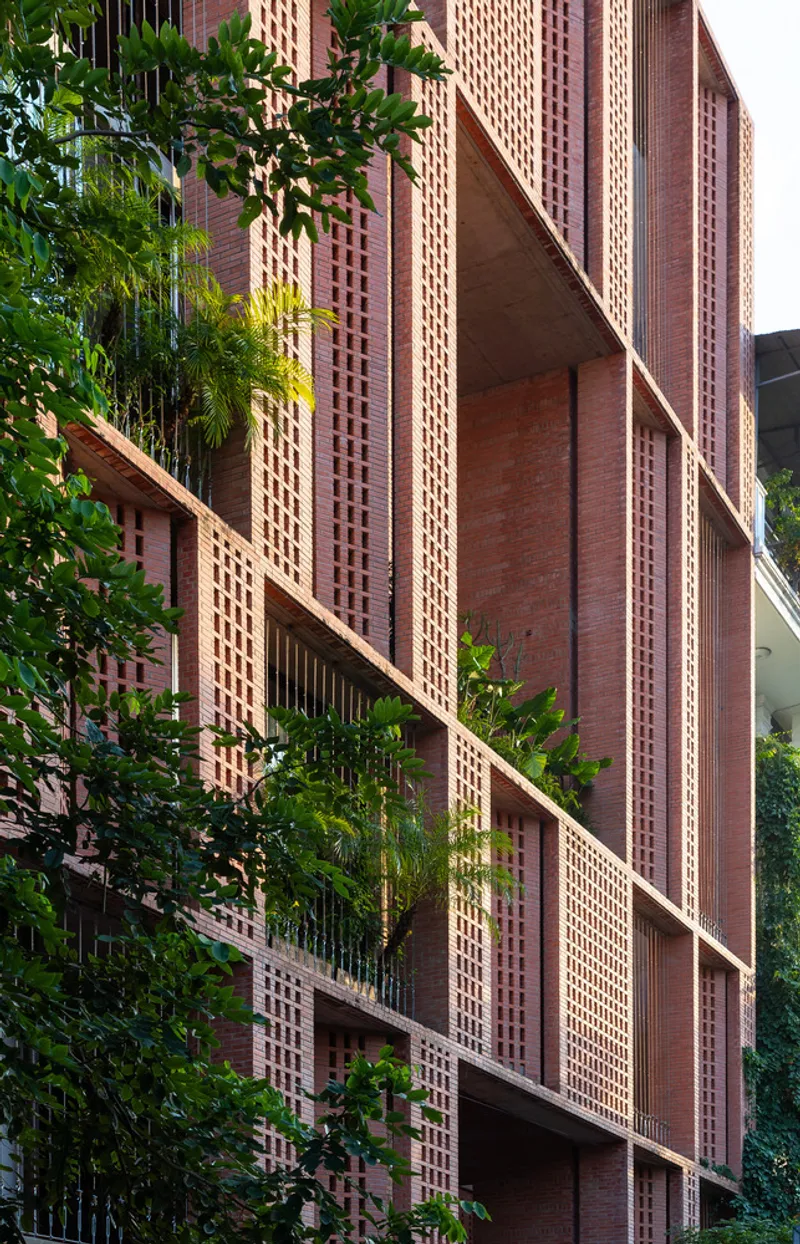
Layered Envelope and Flexible Interaction with Nature
The building employs a double-skin system composed of an outer brick façade and inner sliding aluminum-glass doors, allowing occupants to interact with the external environment when the weather is favorable. This layered system increases thermal performance while enabling flexibility, openness, and comfort.
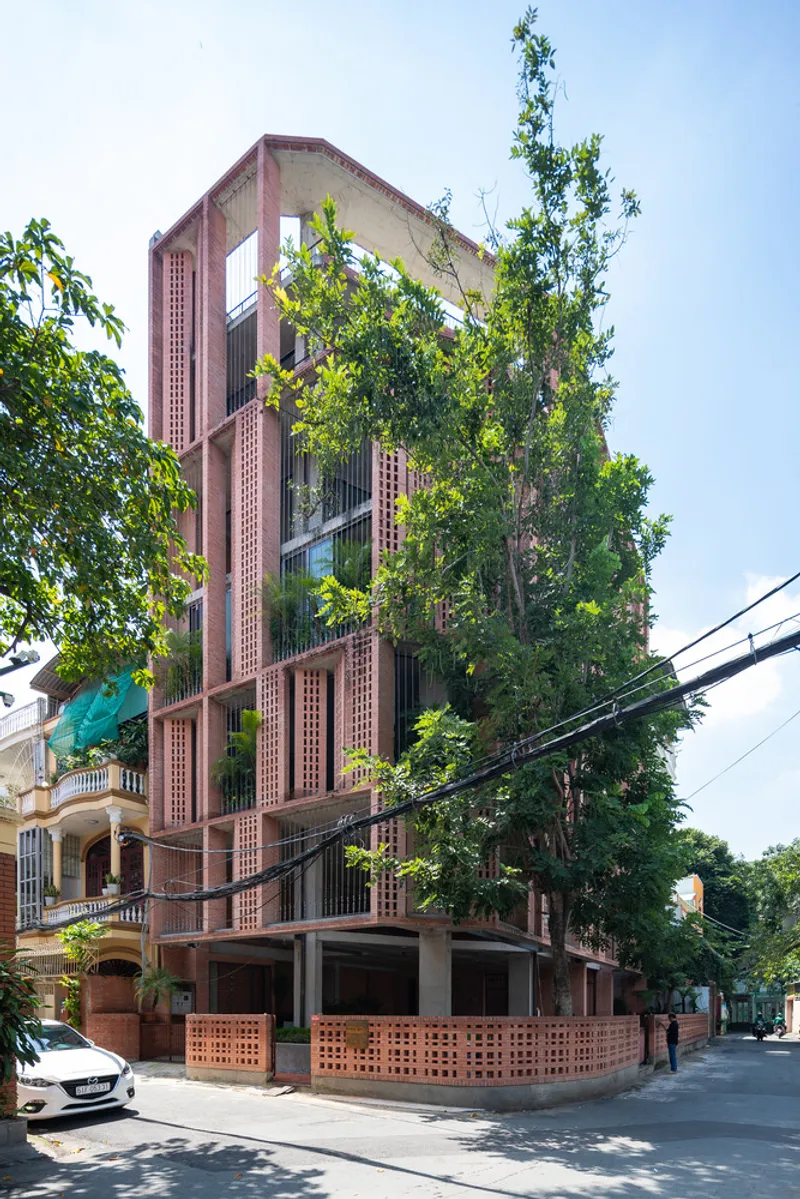
Biophilic Elements and Energy Efficiency
Trees and greenery are subtly integrated within the buffer spaces between the brick skin and the building mass, enhancing air quality and contributing to the biophilic experience of the workspace. Along with natural lighting, passive cooling, and rainwater interaction, these elements reduce the need for artificial climate control, aligning with low-energy building principles.
A Workspace that Feels Like Home
Understanding that people spend much of their day at work, the architects designed Premier Office to feel like a second home—a place that nurtures creativity and well-being. With its blend of warm materiality, spatial openness, and sustainable strategies, the project fosters a productive and inspiring environment for its users.
All Photographs are works of Trieu Chien



Popular Articles
Popular articles from the community


The Musturak Paradise: Senior Living Architecture for a Connected Future in Temara, Morocco
The Musturak Paradise reimagines senior living architecture in Temara via private homes, social spaces, culture, community, and shared care.

Conexión: Biophilic Design Reimagines High-Rise Living in Hong Kong
Conexión reimagines high-rise living in Hong Kong through biophilic design, green facades, shared spaces, daylight, water and nature within.

The Ocean Hive: Sustainable Architecture for a Self-Sufficient Civilization at Sea
The Ocean Hive imagines sustainable architecture at sea, where modular habitats, algae, wave power and ocean waste sustain a growing colony.
EW PARK: Sustainable Architecture Reimagines the Future of Urban Parking
EW PARK reimagines city parking as a modular wooden tower combining automation, solar energy, electric mobility, and adaptable urban design.

Similar Reads
You might also enjoy these articles


Hodi-Mandai Geram
Project Function: Preservation and revitalization of the Intangible heritage and socio-spatial identity of the Hodi by Housing, Cultural Memory Center, Sacred Grove, landscape, local tourism economy


Olio Towers: A Mid-Rise for Performers That Fuses Housing, Rehearsal, and Stage
Located blocks from Houston's Theater District, this modular tower stacks living units around a central performance atrium.

Oasis: Modular Green Housing Carved into Dhaka's Urban Fabric
A shortlisted Plugin Housing entry reclaims unauthorized settlements in Dhaka with stepped concrete volumes, green roofs, and ventilation-driven design.

Black Hole: A Floating Megastructure for the Post-Physical Era
Emiliano Mazzarotto envisions a spherical, self-scaling arena where e-sports, digital hotels, and holographic stadiums replace traditional public space.

Explore Office Building Competitions
Discover active competitions in this discipline



Challenge to reimagine the Iron Throne


Photograph architecture without architects


Illustrate the lost glory of Angkor Wat - Render Challenge


Design challenge to reuse E-waste
Comments (0)
Please login or sign up to add comments
No comments yet. Be the first to comment!