
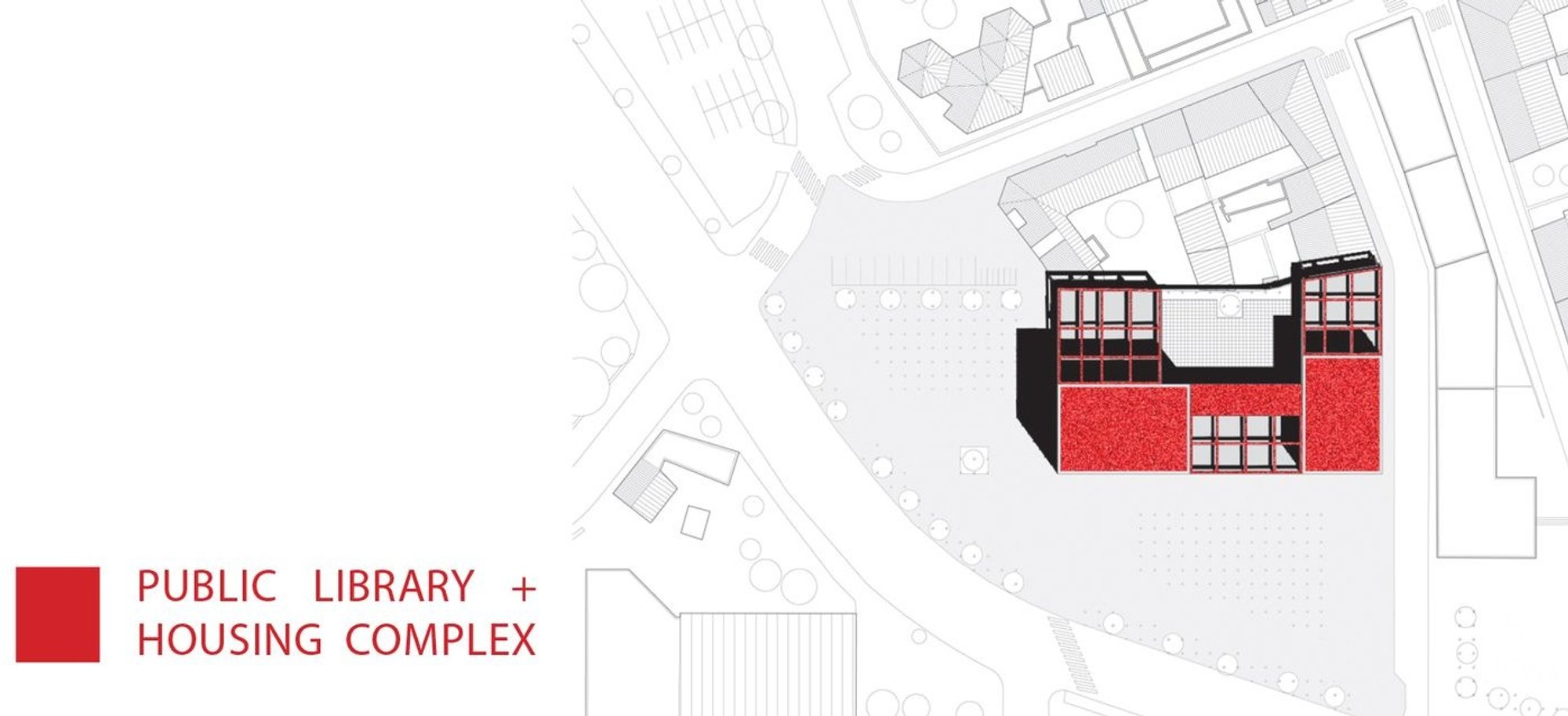
Public Library and Housing Complex, Saint-Étienne, France
Mixed-use architecture as a catalyst for social diversity across urban and domestic scales

Situated in Saint-Étienne, a former industrial city near Lyon, this Public Library and Housing Complex by Chloé Misery is an exploration of mixed-use architecture as a tool for social cohesion and urban regeneration. Positioned at the edge of the city and shaped by surrounding infrastructure, the project responds to fragmented urban flows by introducing a civic anchor that merges public culture with collective and mixed-generation housing.
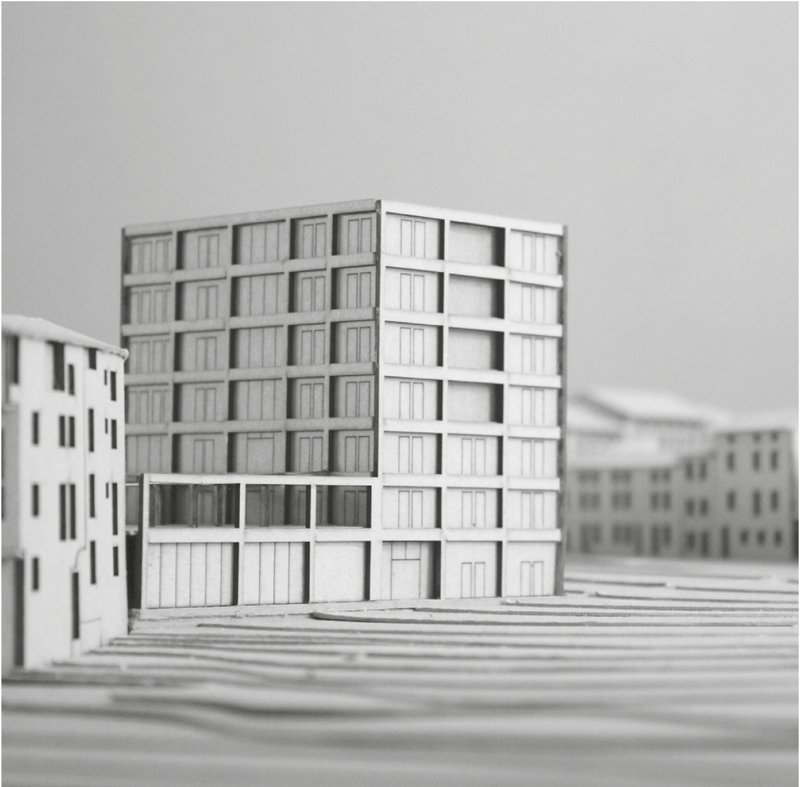
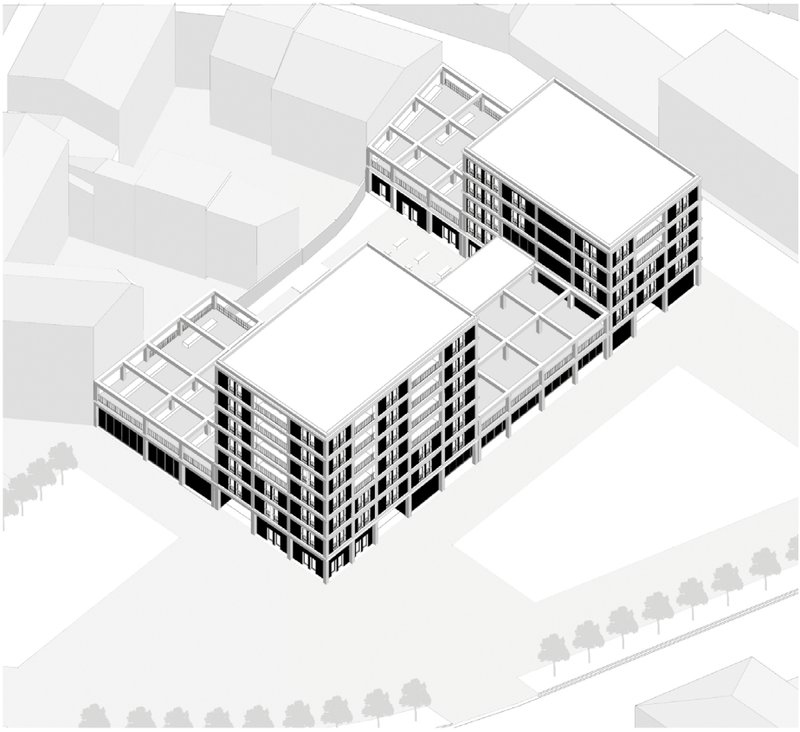
Rather than separating programs horizontally across the city, the proposal stacks them vertically allowing public, semi-public, and private functions to coexist within a single architectural framework. This strategy reinforces interaction between diverse user groups while redefining the role of architecture in post-industrial urban contexts.
Urban Context: Reconnecting a Fragmented City
Saint-Étienne’s urban fabric reflects its industrial past, marked by infrastructural barriers and mono-functional zones. The project site sits at a critical threshold—surrounded by highways and transitional urban conditions—making it both isolated and highly visible.
Through mixed-use architecture, the building becomes a pivot point within the city, reconnecting flows of movement and activity. Its massing responds to surrounding volumes while establishing a new landmark that signals civic presence. The architecture does not compete with its context; instead, it mediates between infrastructure, neighborhood scale, and public life.
Public Ground Floor: The Library as Urban Extension
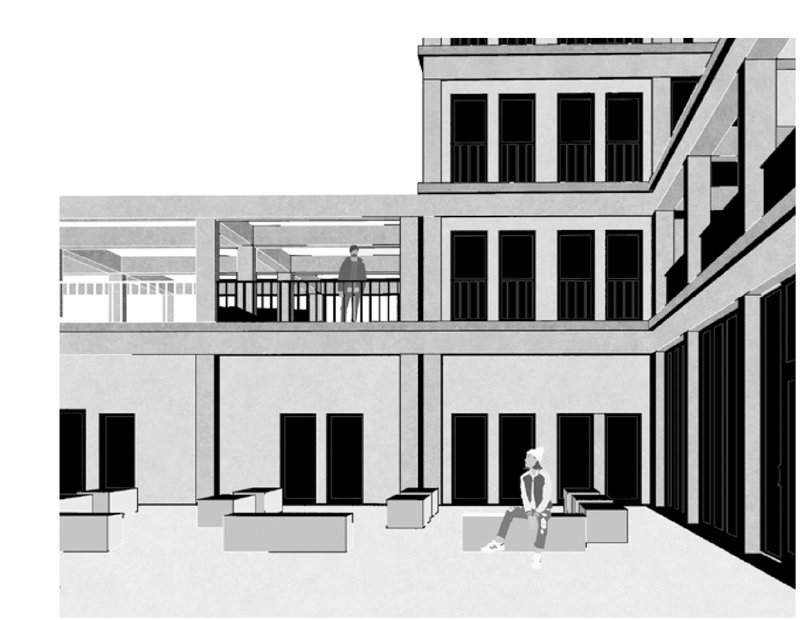
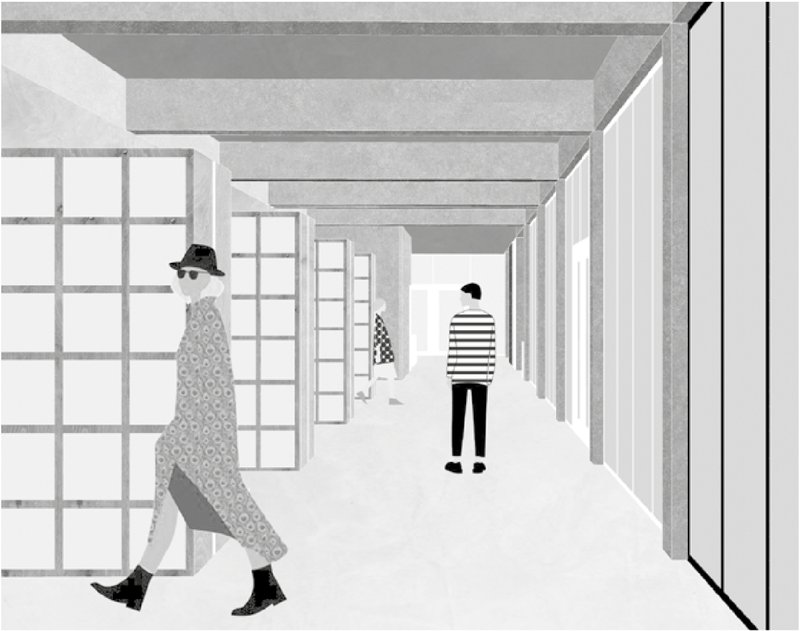
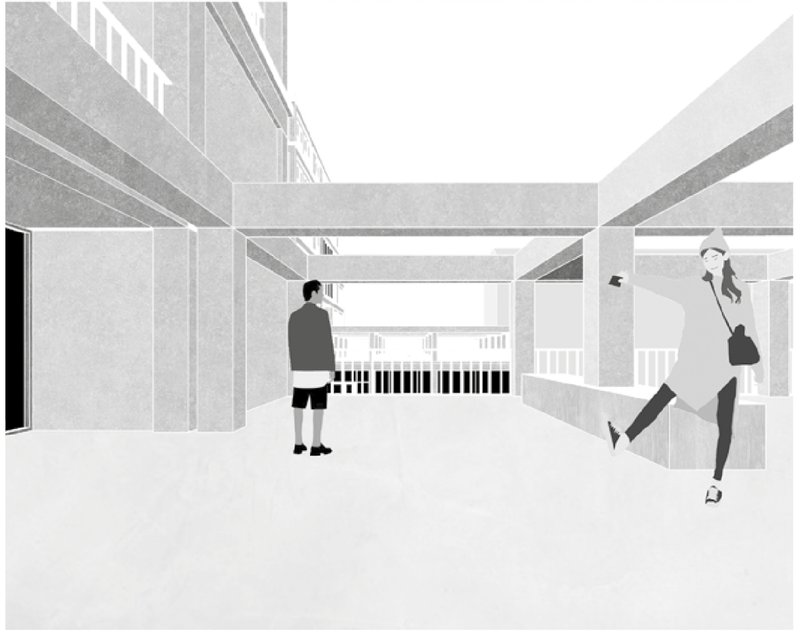
At ground level, the public library anchors the project. Conceived as an extension of the public realm, the library opens directly onto a patio that blurs the boundary between inside and outside. This space functions as an urban living room—inviting passersby, residents, and readers alike.
The transparency and accessibility of the library reinforce its civic role. More than a repository of books, it operates as a social condenser, supporting informal meetings, learning, and everyday interaction. In this way, mixed-use architecture is not merely programmatic layering but an experiential overlap of uses.
Vertical Integration: Housing Above the City
Above the public library, residential programs unfold vertically. The building accommodates both mixed-generation housing and collective housing, encouraging coexistence between different age groups and household types.
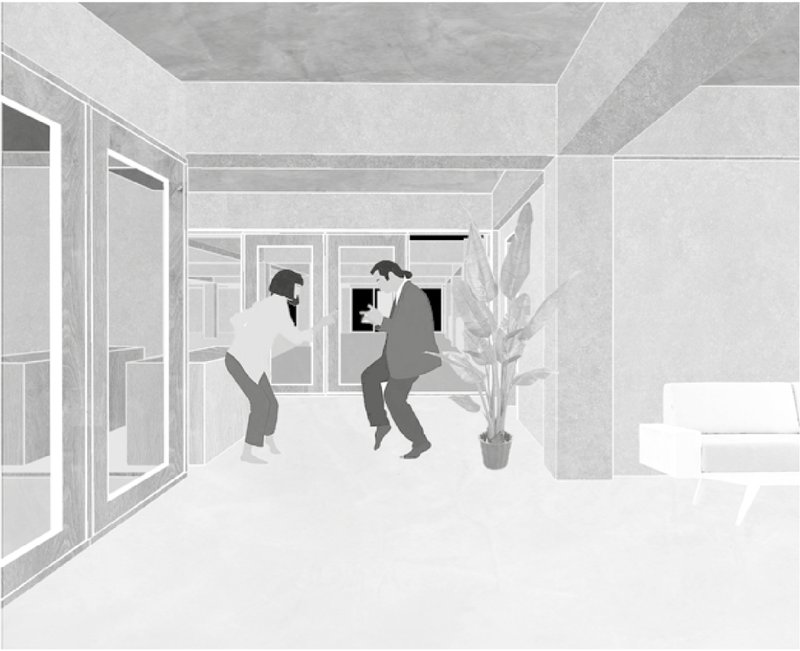
Common gardens and shared outdoor spaces act as connectors between housing clusters, fostering everyday encounters among residents. These intermediate spaces are essential to the project’s social ambition—offering moments of collectivity without compromising privacy.
The housing layouts prioritize flexibility, daylight, and clear circulation. From shared distribution spaces to individual apartments, the architecture transitions gradually from collective to domestic, reinforcing a sense of belonging at every scale.
From Urban Scale to Domestic Scale
One of the project’s defining qualities is its careful attention to scale. At the urban level, the building reads as a coherent mixed-use volume that structures public space. At the architectural level, it articulates distinct programs through subtle shifts in façade rhythm and section. At the domestic level, apartments are designed for comfort, adaptability, and everyday life.
Sections and elevations reveal how public, semi-public, and private layers interlock vertically. This sectional strategy is central to the project’s interpretation of mixed-use architecture—not as stacked isolation, but as spatial continuity.
Social Diversity Through Architecture
The core ambition of the project is to generate social diversity at both the urban and building scale. By combining a public library with mixed-generation and collective housing, the architecture creates conditions for interaction between different social groups who might not otherwise share space.
This diversity is not forced through form, but enabled through spatial organization, shared amenities, and everyday proximity. Architecture becomes a quiet framework for social exchange—supporting inclusion without spectacle.



Popular Articles
Popular articles from the community

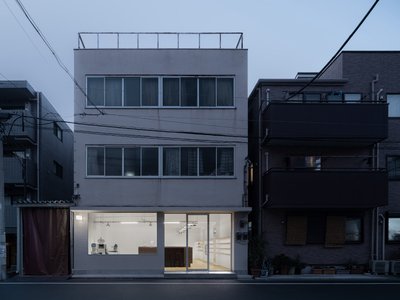
Atelier Macri Concept Store Interior Design by CASE-REAL
Atelier Macri store features a "ko" counter, walnut wood details, cork displays, blending retail, gallery, and seamless customer experiences.

Solar Steam: A Climate-Responsive Architecture That Redefines the Monument
A climate-responsive memorial architecture that transforms heat, decay, and time into a living system reflecting humanity’s ecological impact.
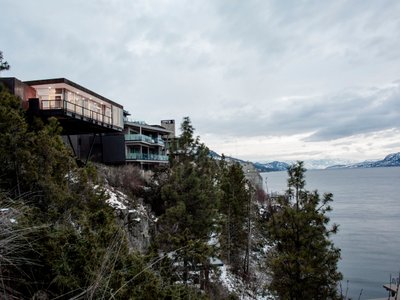
Alton Cliff House: A Harmonious Retreat by f2a Architecture in Lake Country, Canada
Alton Cliff House blends corten steel, prefabrication, and sustainable design, creating a luxurious, energy-efficient retreat perched on Canadian cliffs.


The Ken Roberts Memorial Delineation Competition (Krob)
As the most senior architectural drawing competition currently in operation anywhere in the world, it draws hundreds of entries each year, awarding the very best submissions in a series of medium-based categories.

Similar Reads
You might also enjoy these articles

Digital Façade Design for our cities’ urban fronts
Prima Facie - Result Story
Protecting avian biodiversity: Bird observatories to help spread awareness & save rare bird species.
Results for ‘Fly’ - Landscape design competition out now
Connecting with nature: Forest interpretation center in Australia's Wollemi National Park
‘Asatti’ - Landscape design competition - Result story
Explore Interior Design Competitions
Discover active competitions in this discipline




The Global Benchmark for Architecture Dissertation Awards


Challenge to design luxury tourism on rails

VR headsets Storefront design competition

Designing a staircase for a client
Comments (0)
Please login or sign up to add comments
No comments yet. Be the first to comment!