

Punangairi Visitor Centre by Sheppard & Rout Architects: A Cultural and Ecological Landmark on New Zealand’s West Coast
A sustainable visitor centre blending Māori culture and ecology, seamlessly integrating timber architecture with Punakaiki’s coastal landscape and indigenous storytelling.


The Punakaiki project by Sheppard & Rout Architects, completed in 2024, spans 1,350 m² and reflects a sensitive integration of architecture with its coastal New Zealand setting. Collaborating with Ngāti Waewae, the design emphasizes cultural context, sustainable practices, and harmonious engagement with the surrounding landscape, captured beautifully by Jason Mann.
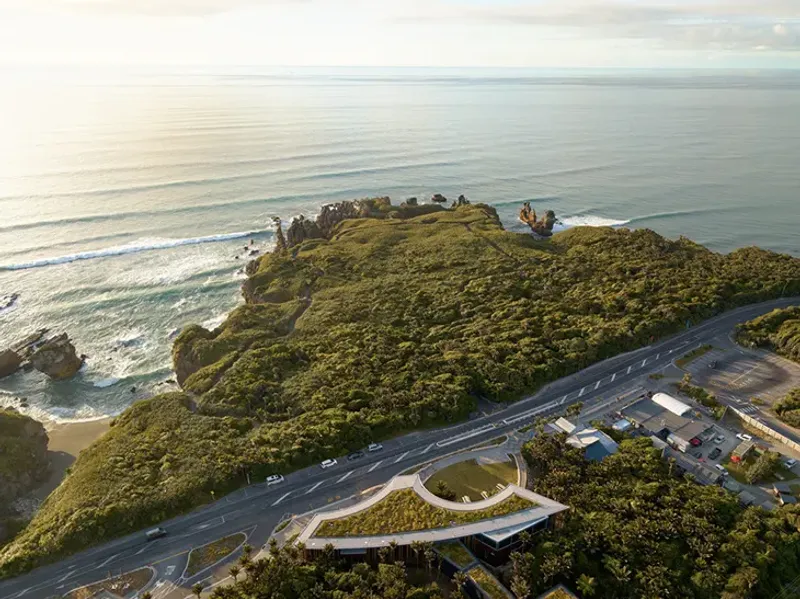
A New Kind of Visitor Experience: Where Architecture Meets Ecology and Culture
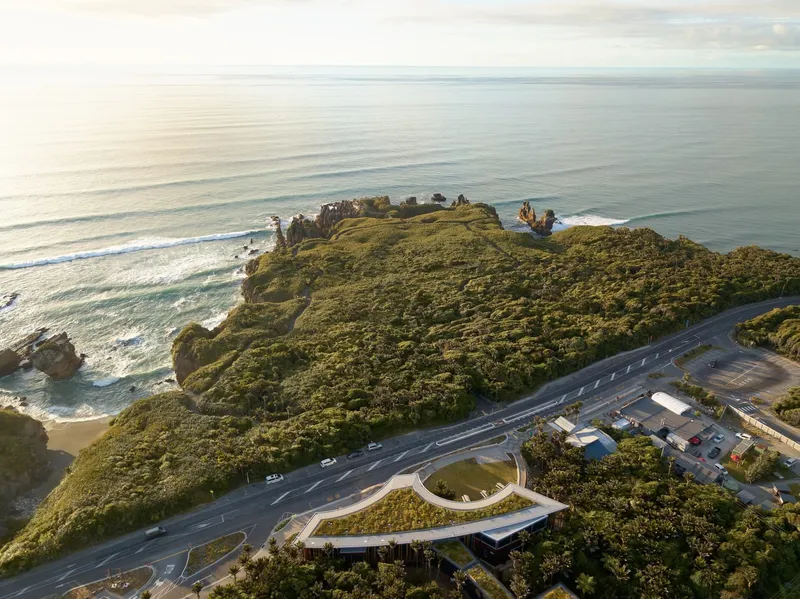
Nestled between the dramatic limestone cliffs and lush coastal forest of Punakaiki, the Punangairi Visitor Centre reimagines the role of a visitor facility as both a cultural and ecological restoration project. Designed by Sheppard & Rout Architects in close collaboration with Ngāti Waewae, the mana whenua (people of the land), the centre is not simply a gateway to the landscape—it is an integral part of it.
This award-worthy design transcends traditional tourism infrastructure, creating a place that embodies manaakitanga (hospitality) and kaitiakitanga (guardianship), two foundational values of Māori culture. The result is a living, breathing structure that welcomes visitors into a dialogue with both the natural environment and indigenous heritage.
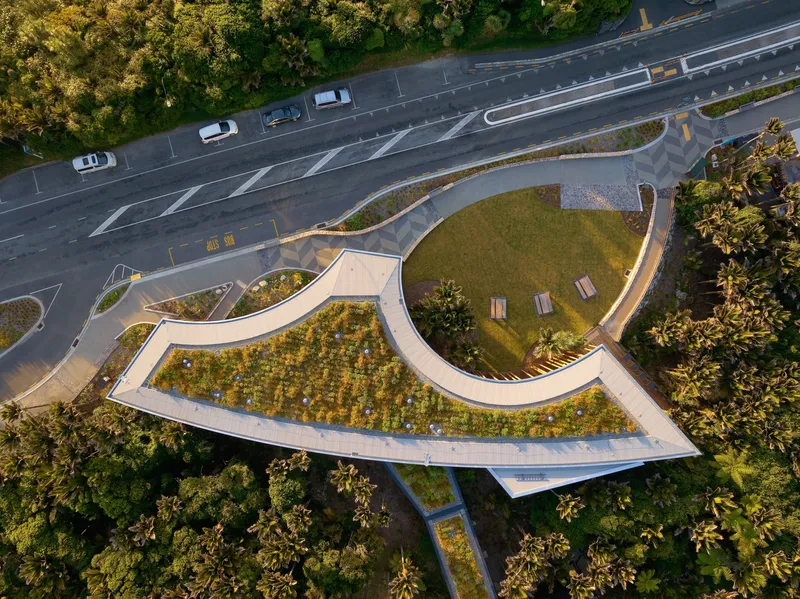
Architecture Rooted in Landscape
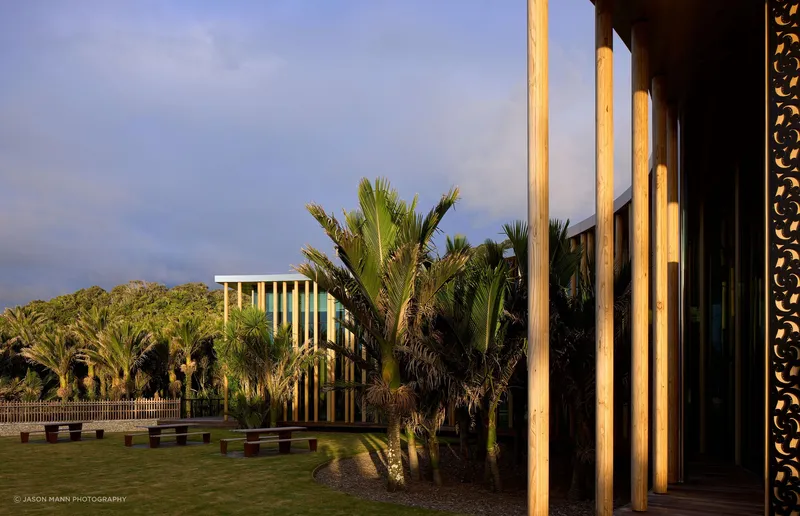
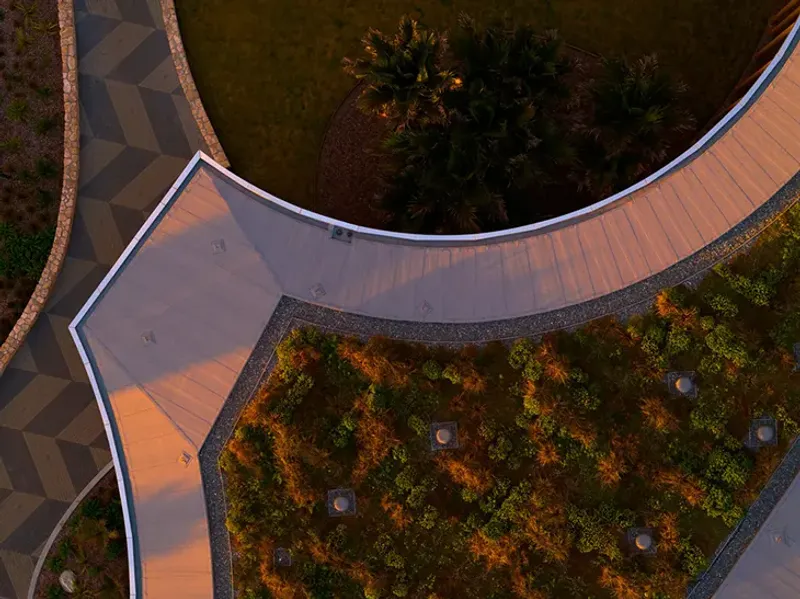
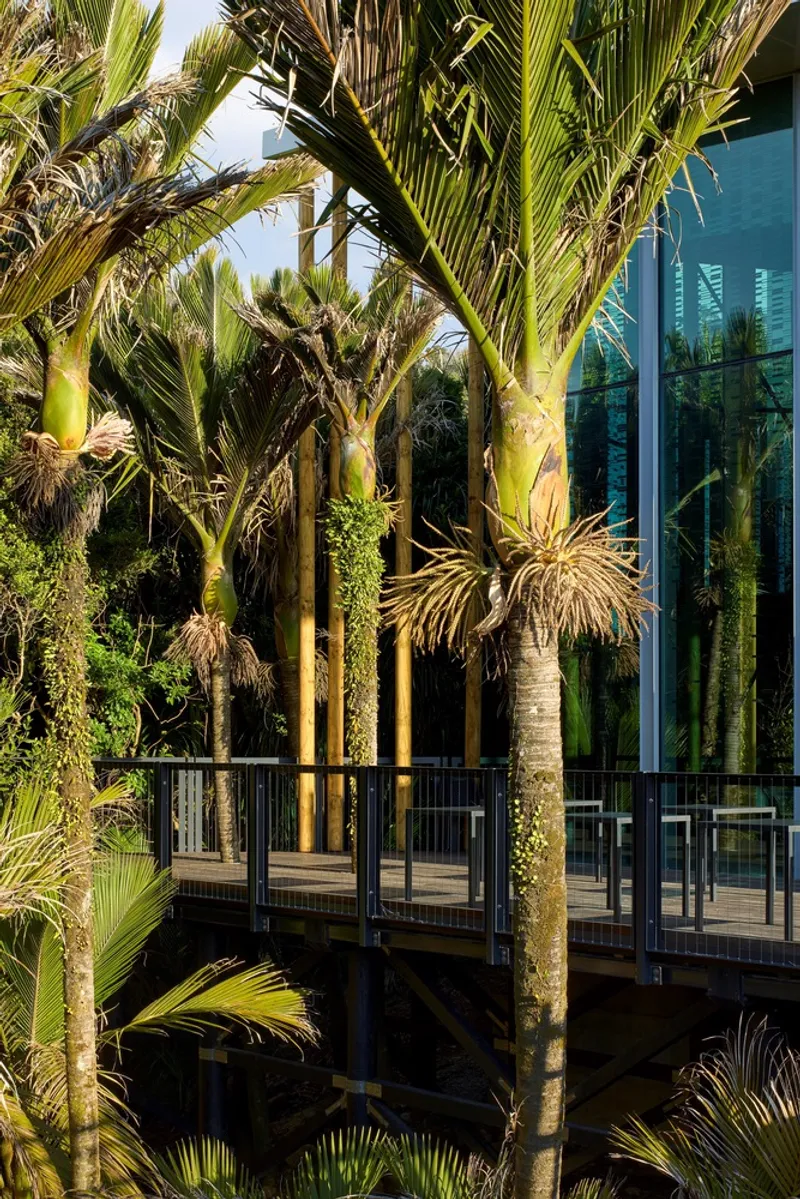
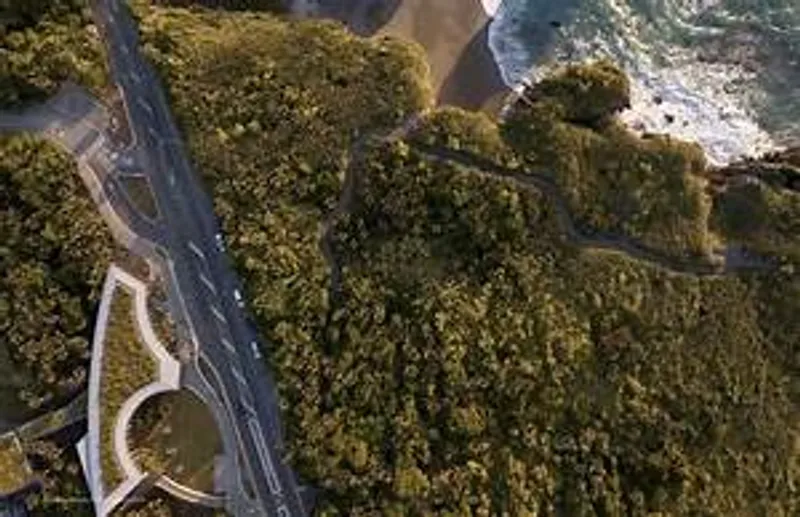
The Punangairi Visitor Centre is conceived as a building that emerges naturally from the land rather than standing apart from it. The low, timber-clad form gently weaves between existing nīkau palms and the regenerated canopy above, while its green roof continues the surrounding vegetation seamlessly across the architecture.
Responding to the site’s fragile ecology and complex topography, the architects minimized earthworks and environmental disturbance, ensuring that every design move contributes to the preservation of biodiversity. The structure sits lightly on the ground, with materials and forms chosen to harmonize with the rhythms of the West Coast environment.
Each decision—from material selection to orientation—was developed through deep consultation with local iwi, ensuring that cultural narratives were embedded in the architecture, not superficially applied. The result is an architecture of listening, one that honors the land and the people who have cared for it for generations.
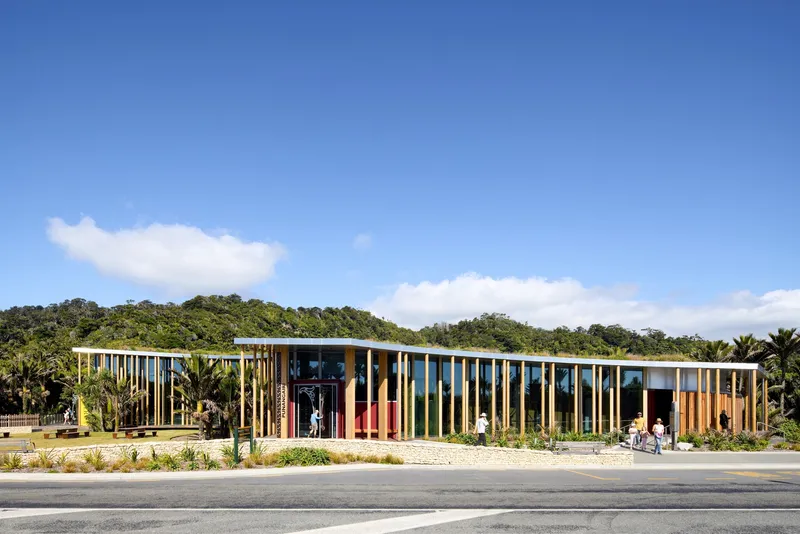

Material Honesty and Tactile Experience
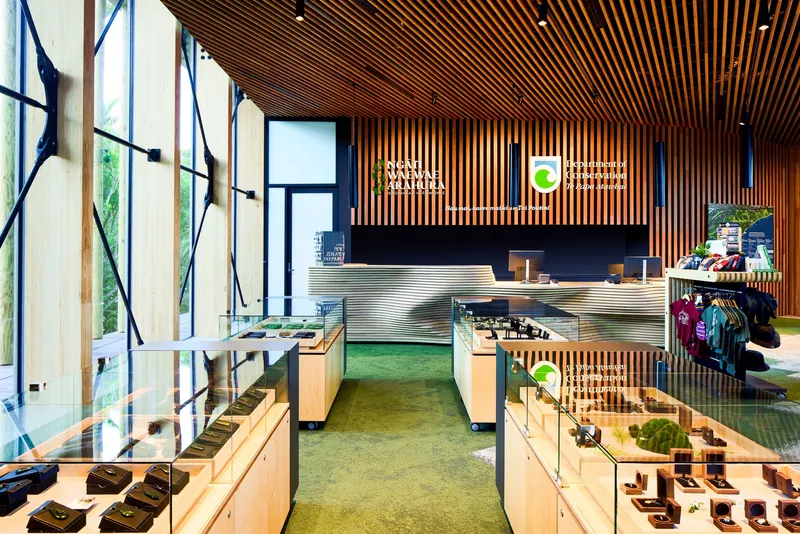
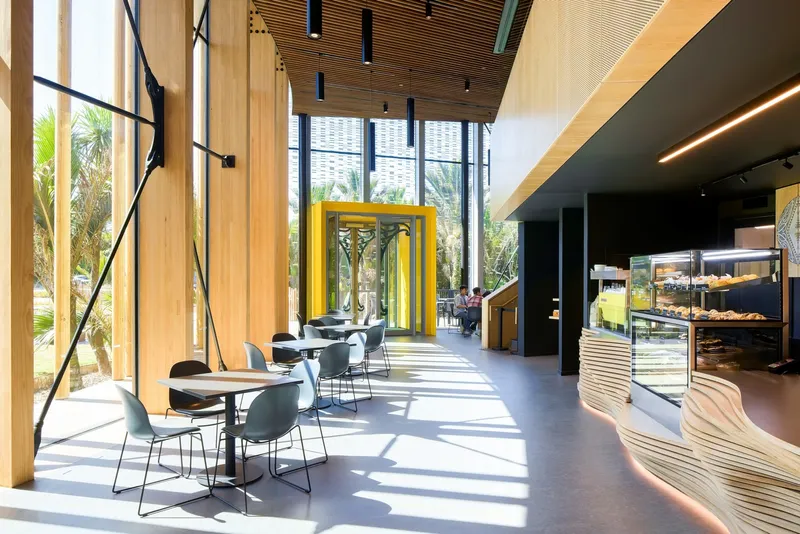
Inside, the visitor journey unfolds through a sequence of warm, natural spaces illuminated by filtered daylight that echoes the dappled forest canopy. The interiors use locally sourced timber and stone, celebrating the region’s geology, craftsmanship, and sustainable resources.
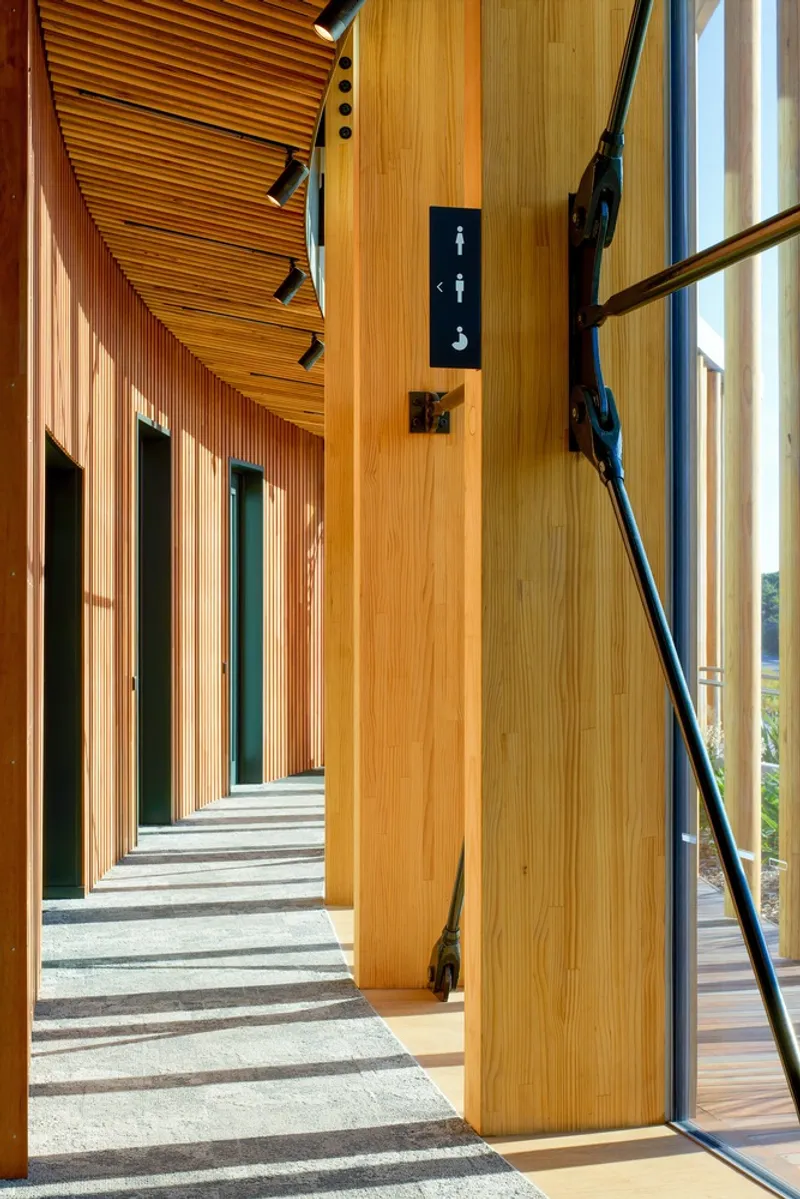
The architectural palette reinforces a sense of continuity between inside and outside, blurring boundaries through texture and light. Layered timber screens and open sightlines guide visitors through spaces of welcome, learning, and reflection. Each transition—from the entrance to the exhibition areas and viewing terraces—is designed to foster a sense of connection rather than consumption, offering visitors an experience rooted in storytelling and encounter.
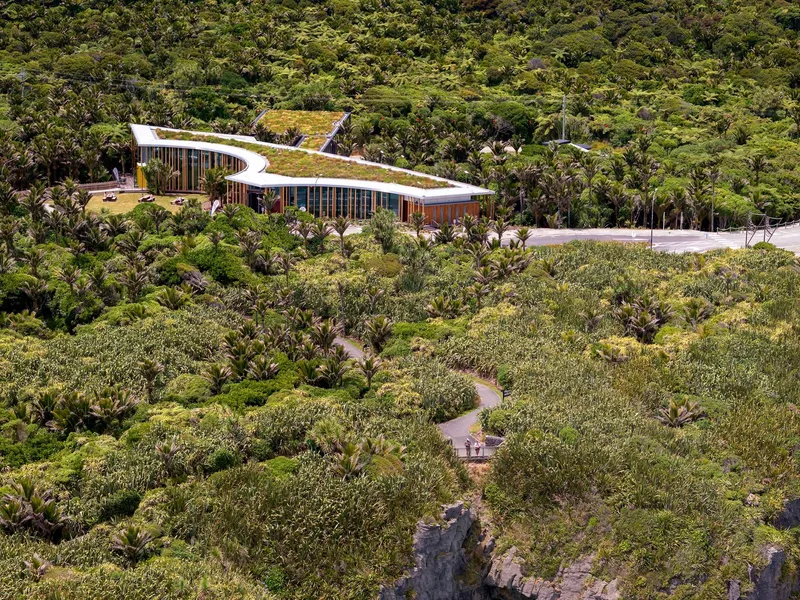
Cultural Collaboration and Indigenous Design Leadership
At the heart of Punangairi lies a rethinking of authorship. Ngāti Waewae led the project’s conceptual direction, ensuring that indigenous knowledge systems informed every stage of design and construction. This collaboration reflects a growing architectural movement in Aotearoa (New Zealand) that places Māori design principles at the centre of sustainable development.
The project embodies manaakitanga, welcoming all who arrive, while also practicing kaitiakitanga, protecting the land and sea for future generations. Through this lens, the building becomes a living narrative—one that speaks to resilience, care, and respect for the interconnectedness of people and place.
A Regenerative and Sustainable Approach
Though modest in scale, the Punangairi Visitor Centre represents a large-scale ecological and cultural ambition. Every aspect of the project reflects a regenerative design philosophy, where architecture acts as a restorative force.
Key sustainable strategies include:
- Minimizing embodied carbon through the use of renewable, local materials.
- Passive design principles that optimize natural ventilation and daylighting.
- Rainwater harvesting and low-impact drainage systems that support site hydrology.
- A green roof and native planting strategy that extends the forest ecosystem and enhances biodiversity.
Through these measures, the centre stands as a model for environmentally conscious public architecture, demonstrating how small-scale interventions can yield deep and lasting environmental benefits.
A Threshold Between Land, Sea, and Culture
Punangairi is more than a building—it is a threshold between land and sea, past and future, culture and community. It welcomes visitors not just to observe, but to participate in an ongoing story of renewal.
In doing so, the project challenges architects worldwide to think beyond sustainability toward regeneration and reciprocity—to design not for spectacle, but for belonging. The Punangairi Visitor Centre thus becomes a testament to architecture’s potential to heal, to connect, and to listen.
Project Details
- Project Name: Punangairi Visitor Centre
- Architects: Sheppard & Rout Architects
- Collaborators: Ngāti Waewae
- Location: Punakaiki, New Zealand
- Year: 2024
- Area: 1,350 m²
- Photography: © Jason Mann
All photographs are works of Jason Mann


Popular Articles
Popular articles from the community


Cube Design Draws an Ecological Corridor Between Two Shenzhen Hills with the Nankai Building
Beside Shenzhen's container docks, the Nankai Building pairs stacked balconies with a climbing green screen to connect two hillsides across its height.

Jaramillo Van Sluys Arquitectura and Urbanismo Turn a Demolished Registry Lot in Quito into an Orchard Plaza
In Quito's Centro Histórico, a 2,800 m² plaza exposes the San Agustín convent wall and redraws its lost Augustinian orchard in volcanic stone.

Juan García Correa, John González and Claudia Rueda Sink a Circular Amphitheater into a Manizales Engineering Building
On the La Nubia campus in Manizales, Colombia, the S1 Building folds labs and offices into a hillside of ramped lawns that double as a campus route.

David Ortega Stacks a Two-Story Mexico City Penthouse Around a Steel Stair and a Pergola-Shaded Roof Terrace
In Colonia Roma, a 300 m² penthouse uses oak joinery, a planted steel stair and a slatted roof pergola to make a new-build apartment feel like a house.

Similar Reads
You might also enjoy these articles


Hodi-Mandai Geram
Project Function: Preservation and revitalization of the Intangible heritage and socio-spatial identity of the Hodi by Housing, Cultural Memory Center, Sacred Grove, landscape, local tourism economy


Olio Towers: A Mid-Rise for Performers That Fuses Housing, Rehearsal, and Stage
Located blocks from Houston's Theater District, this modular tower stacks living units around a central performance atrium.

Oasis: Modular Green Housing Carved into Dhaka's Urban Fabric
A shortlisted Plugin Housing entry reclaims unauthorized settlements in Dhaka with stepped concrete volumes, green roofs, and ventilation-driven design.

Black Hole: A Floating Megastructure for the Post-Physical Era
Emiliano Mazzarotto envisions a spherical, self-scaling arena where e-sports, digital hotels, and holographic stadiums replace traditional public space.

Explore Architecture Competitions
Discover active competitions in this discipline

Challenge to reimagine the Iron Throne

Photograph architecture without architects

Illustrate the lost glory of Angkor Wat - Render Challenge

Design challenge to reuse E-waste
Comments (0)
Please login or sign up to add comments
No comments yet. Be the first to comment!