
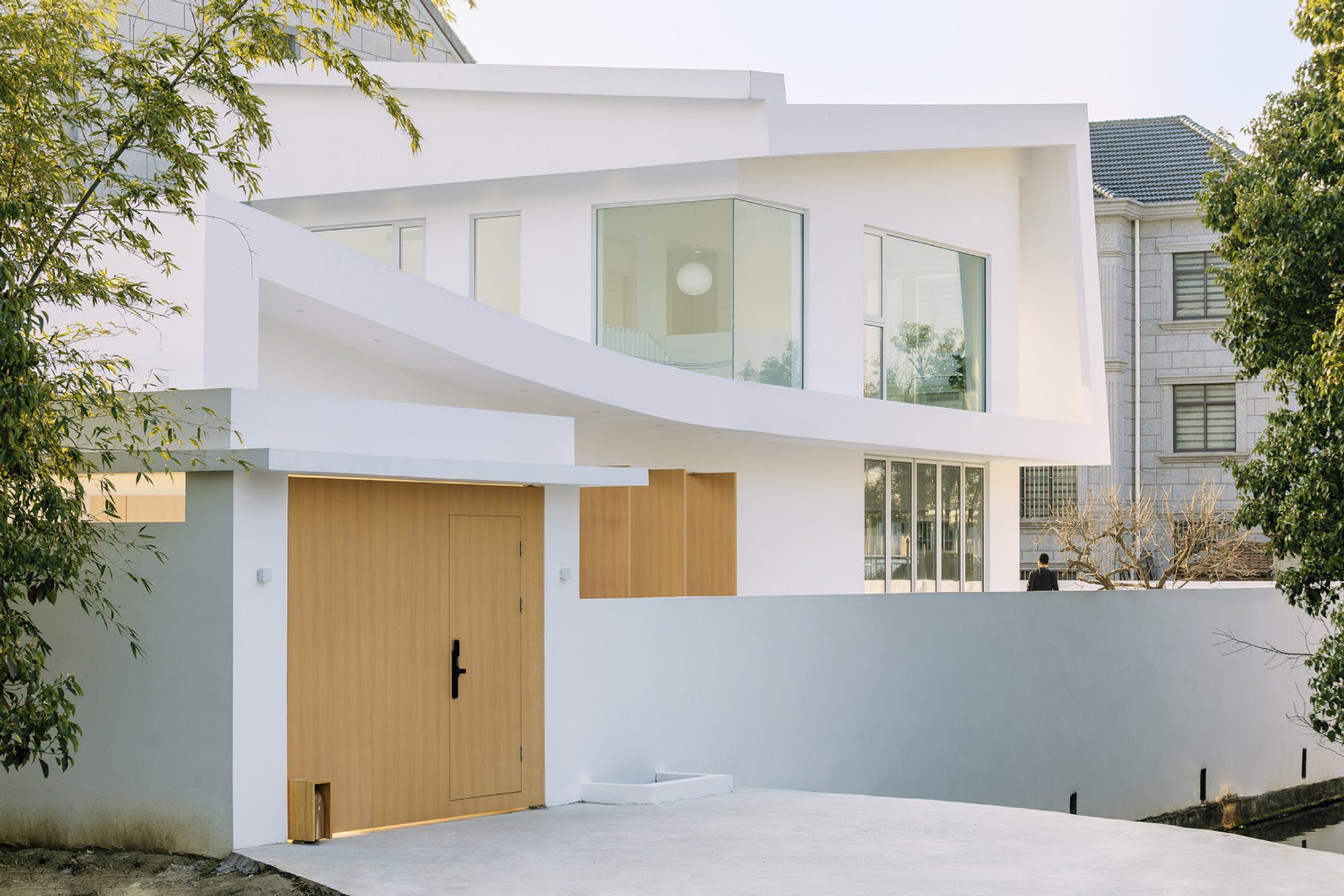
Qhouse by Yuanxiuwan Architect & Associates: A Contemporary Courtyard House in Shanghai’s Rural-Urban Threshold
Qhouse reimagines the courtyard house in Shanghai’s rural-urban fringe through folded forms, spatial layering, and poetic landscape integration.

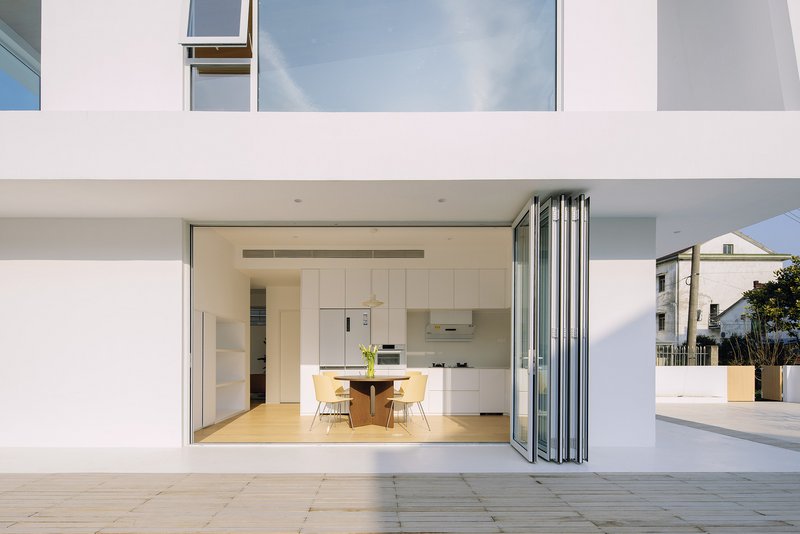
Located in a quiet village near Hangtoudong Metro Station in Pudong, Qhouse by Yuanxiuwan Architect & Associates redefines the rural dwelling through the lens of contemporary courtyard architecture. Designed for a multi-generational family, the 180 m² residence carefully blends the rhythms of city life with the tranquility of nature, offering a weekend retreat that embraces memory, landscape, and architectural experimentation.
Site Context: At the Edge of Shanghai’s Transit Zone
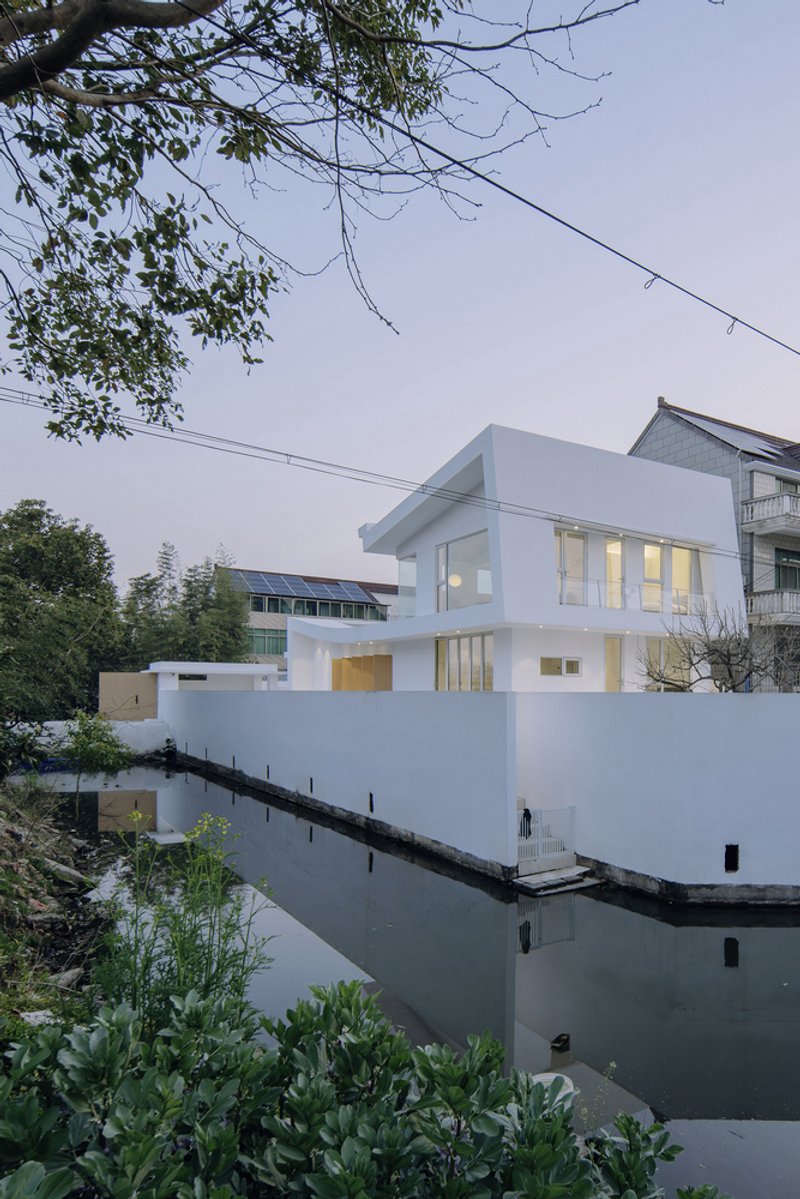
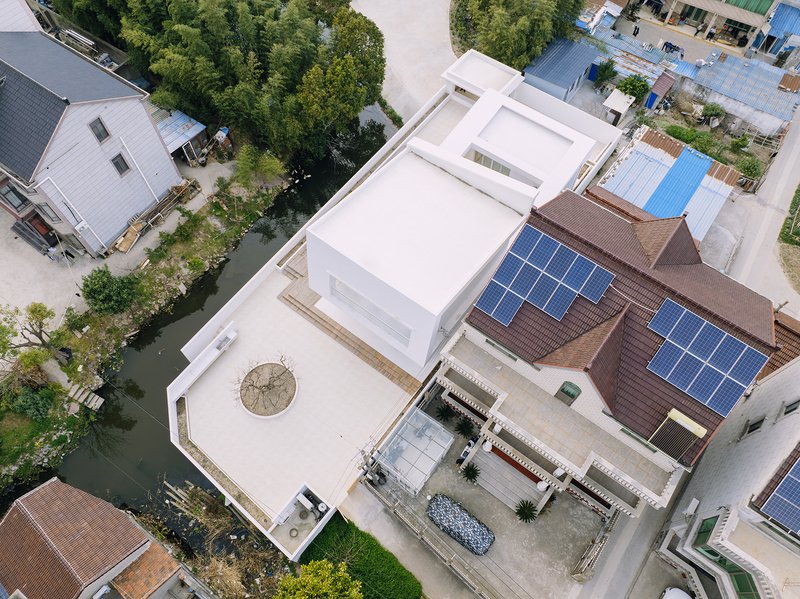
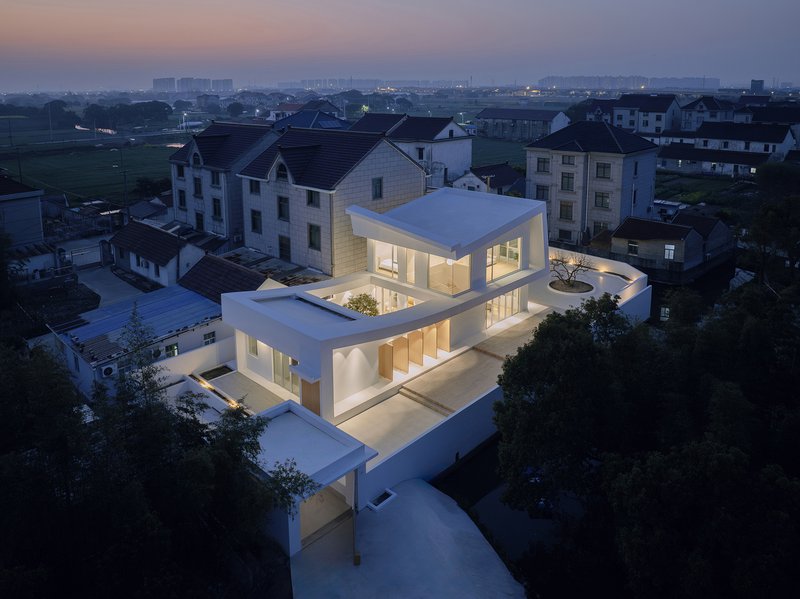
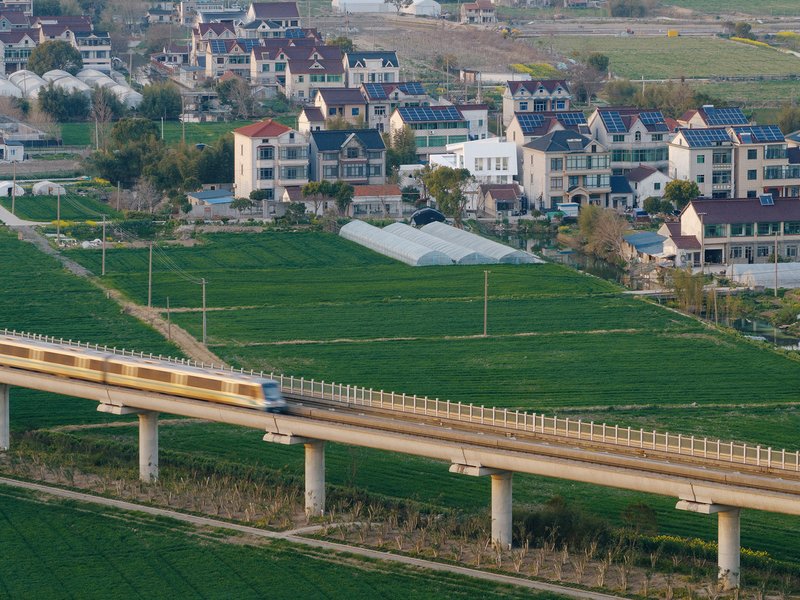
The project site lies at a transitional boundary between the urban and the pastoral. To the west, a calm river and a forested peninsula form a natural buffer. To the east, urban infrastructure rises—most notably the elevated metro line, whose surreal appearance at the edge of farmland inspired the architect’s narrative approach. The site’s original 1980s house was in disrepair, prompting the client to rebuild a comfortable, adaptable residence for their aging parents and themselves.
Program & Constraints: Designing Within Tight Parameters
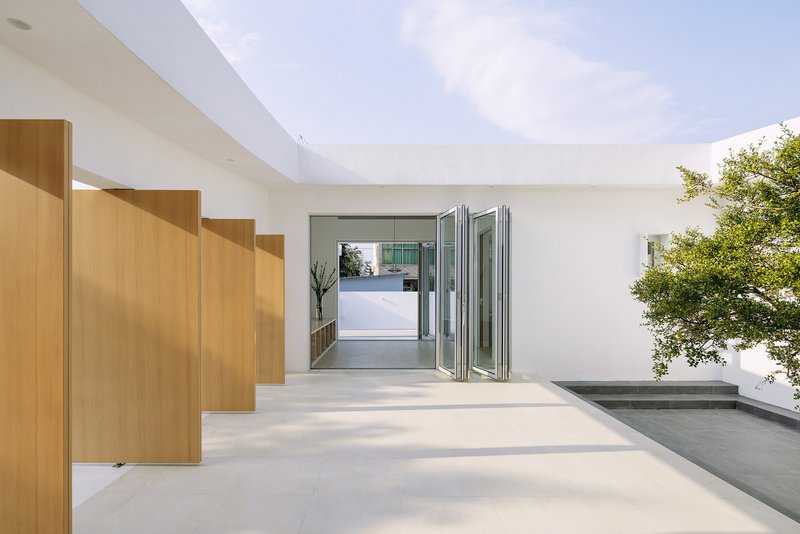
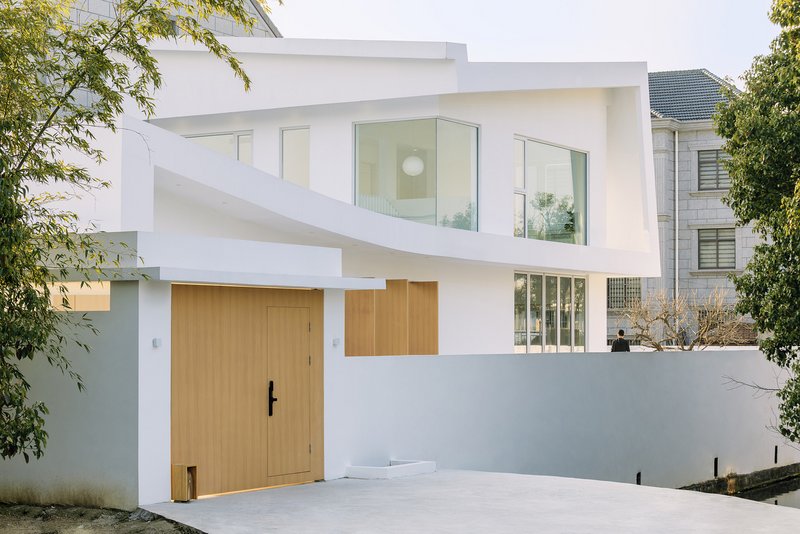
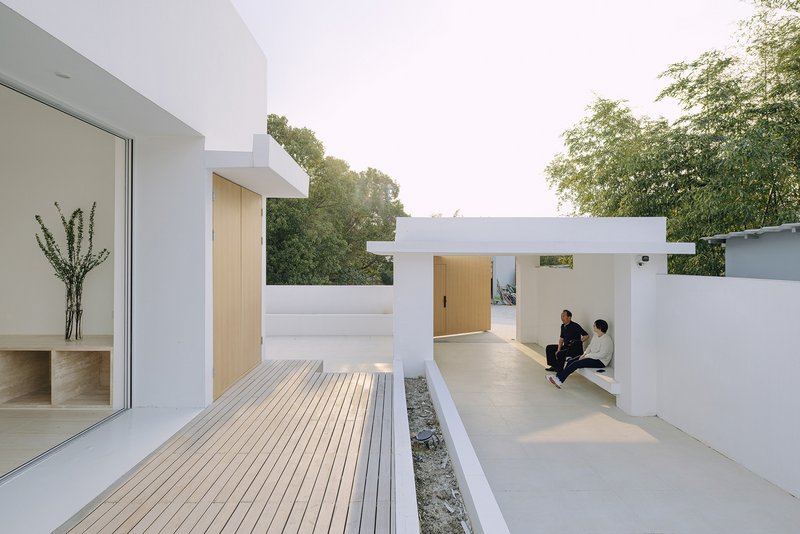
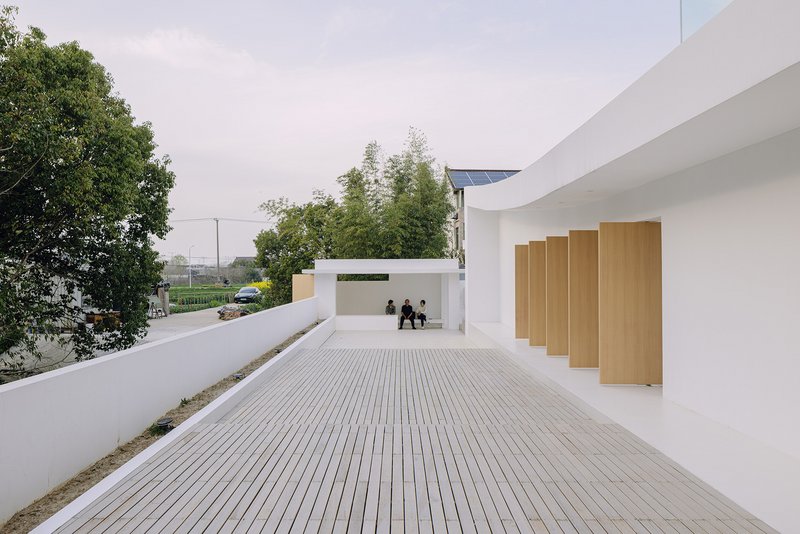
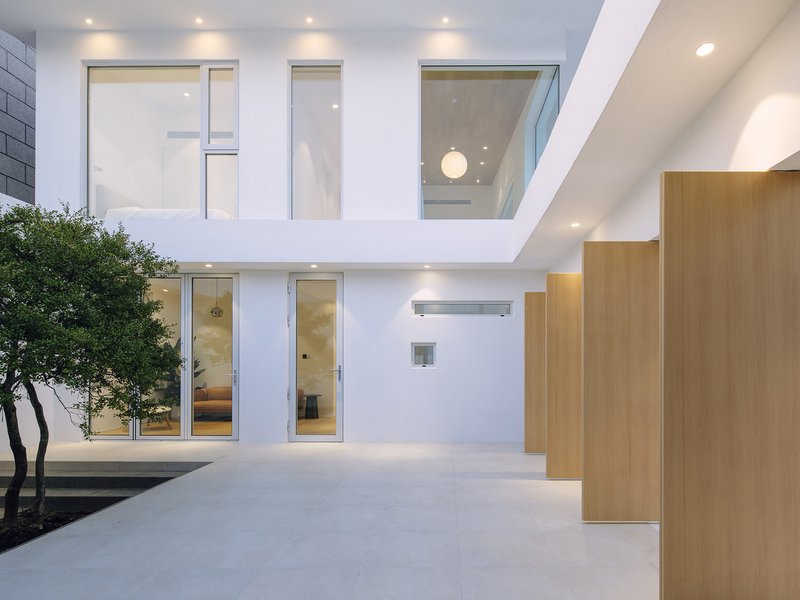
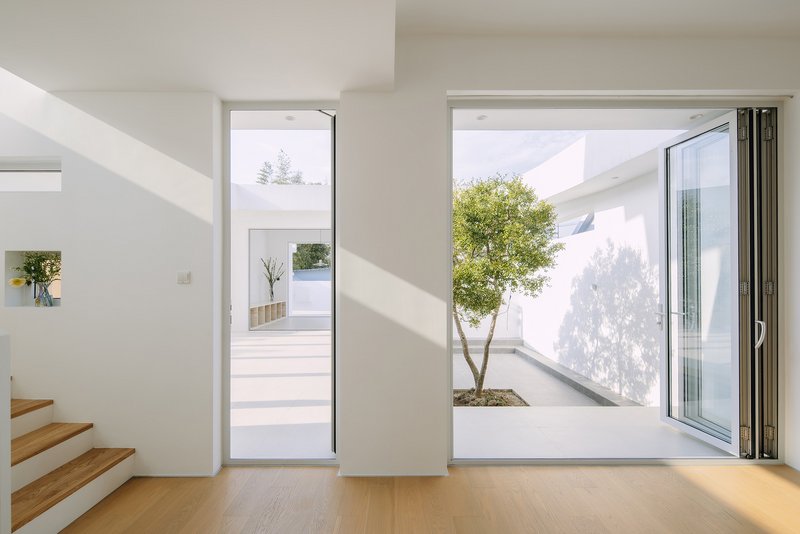
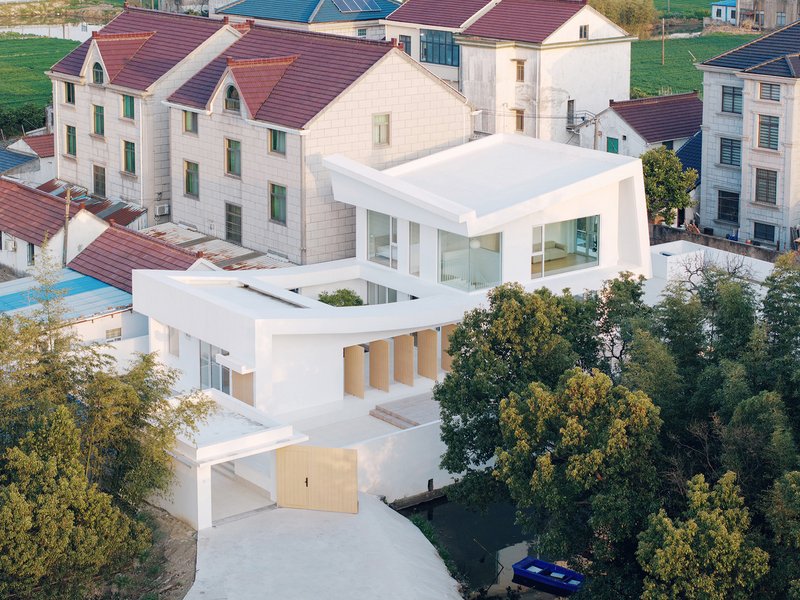
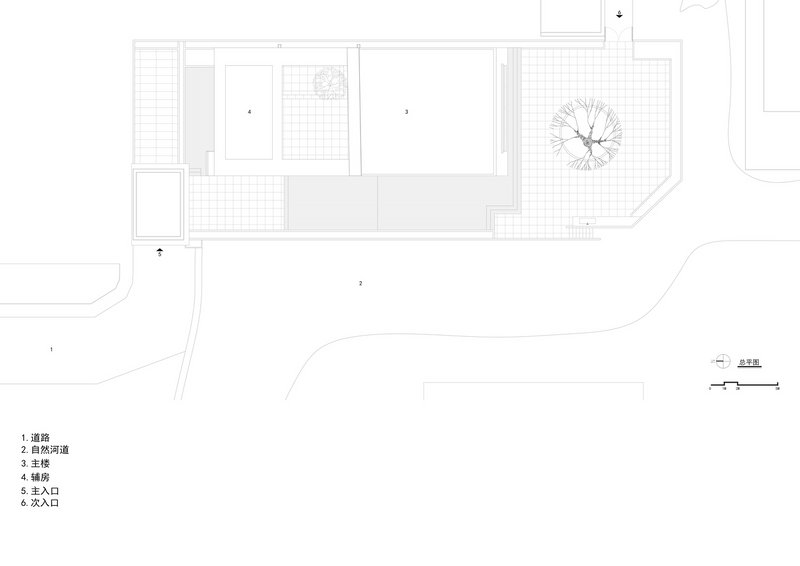
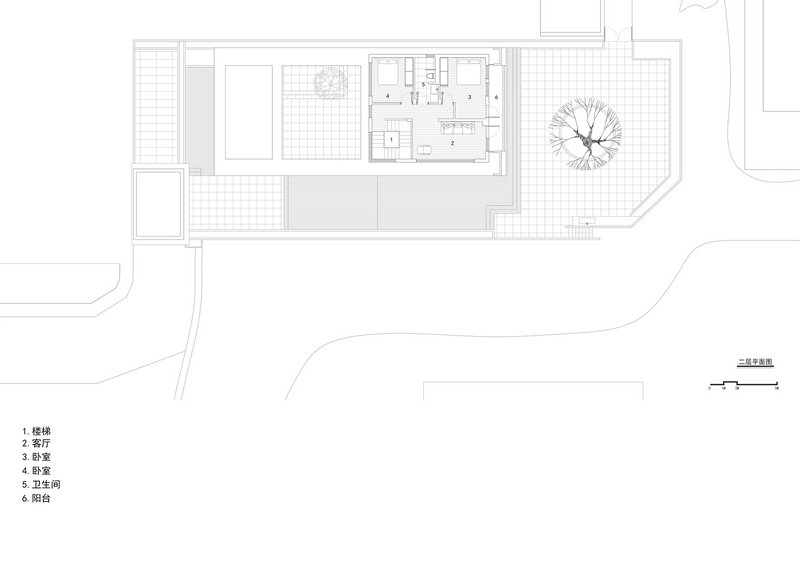
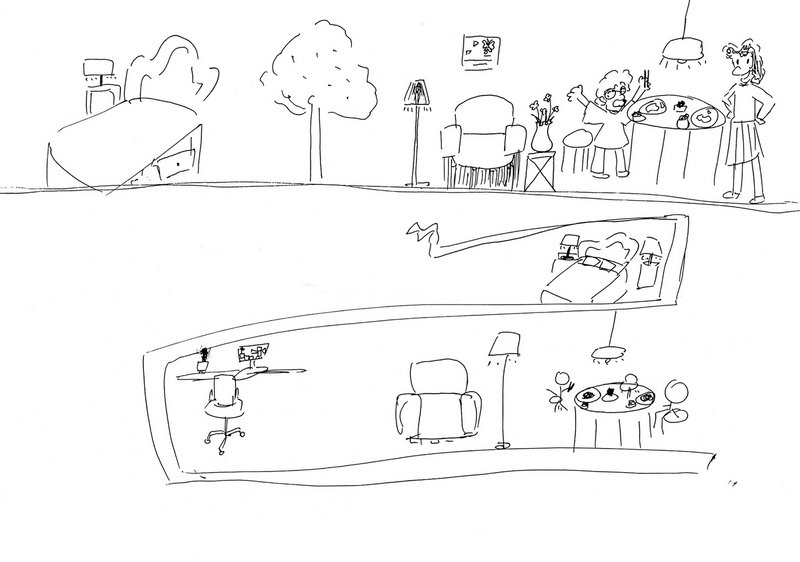
Shanghai’s planning regulations limited the main house footprint to 72.9 m² and the auxiliary structure to 30 m². The design responds with a layered spatial strategy, organizing the north-south site into six zones through careful positioning of the main building, auxiliary wing, and entrance hall. The resulting courtyards and transitions generate a village-like microcosm, anchored by two trees: a preserved persimmon to the south and a twin-trunked boxwood at the center.
Architectural Form: Folding Rooflines and Spatial Tension
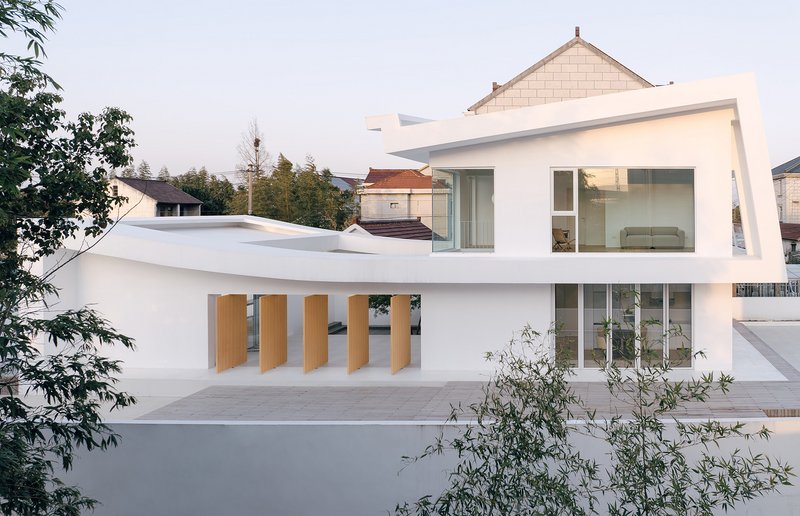
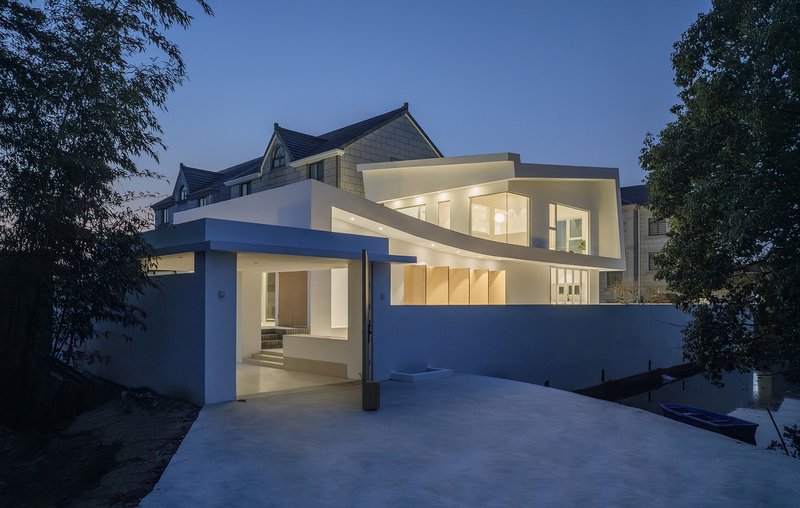
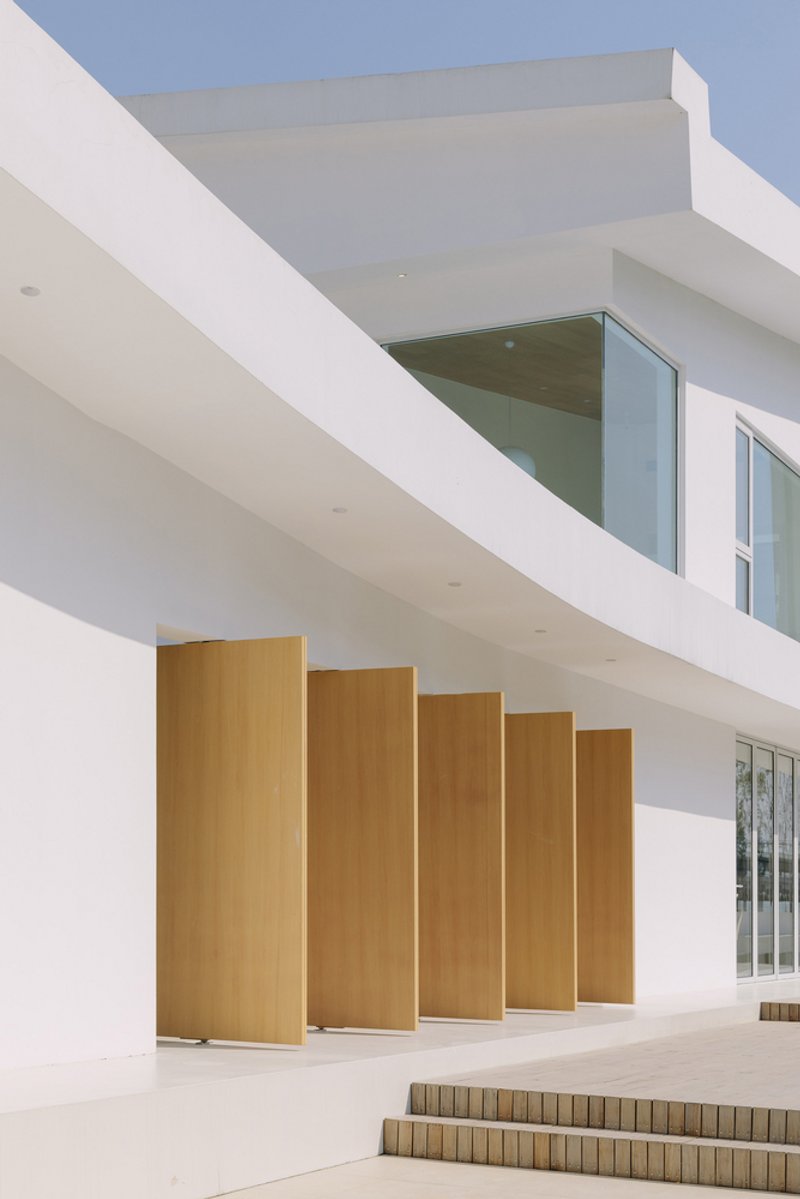
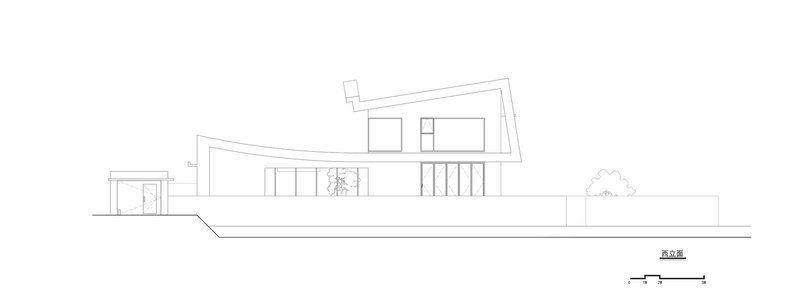
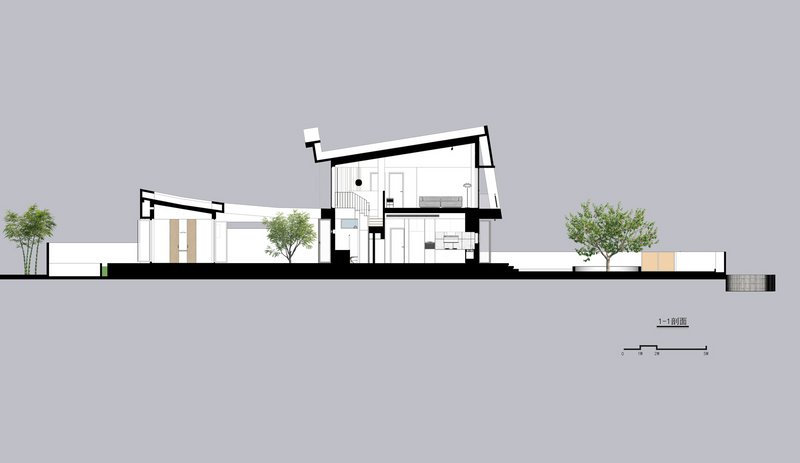
One of Qhouse’s most striking features is its folding roof language, which articulates a dynamic relationship between the primary and auxiliary structures. The roof of the auxiliary space curves and tilts toward the inner courtyard, collecting water and light. It folds again into the slab of the second-floor balcony before merging with the main building. This sculptural flow creates architectural tension—between up and down, inside and out, solid and void—while responding practically to Shanghai’s heavy seasonal rainfall.
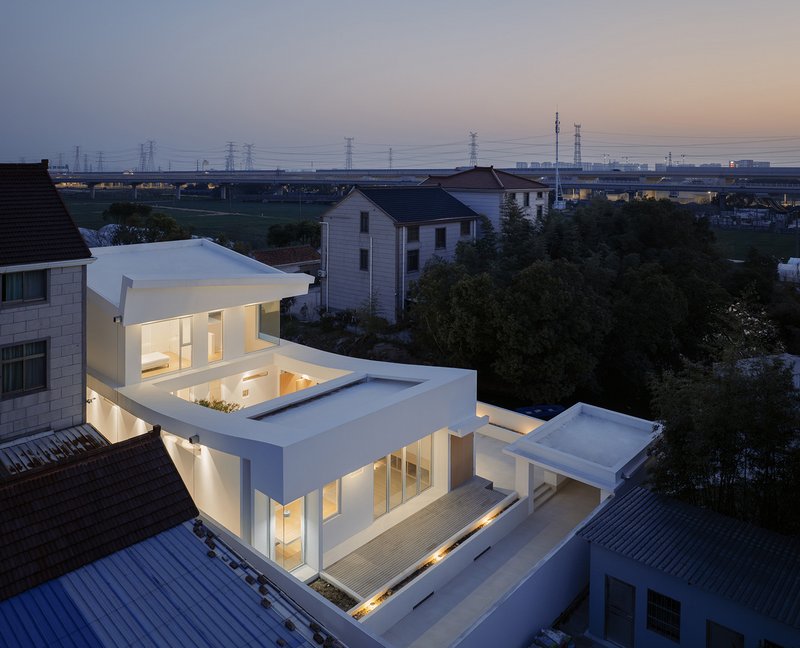
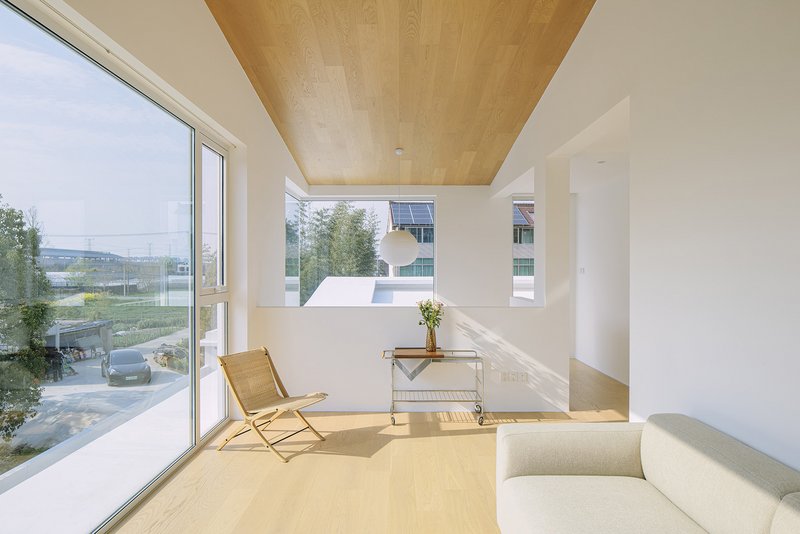
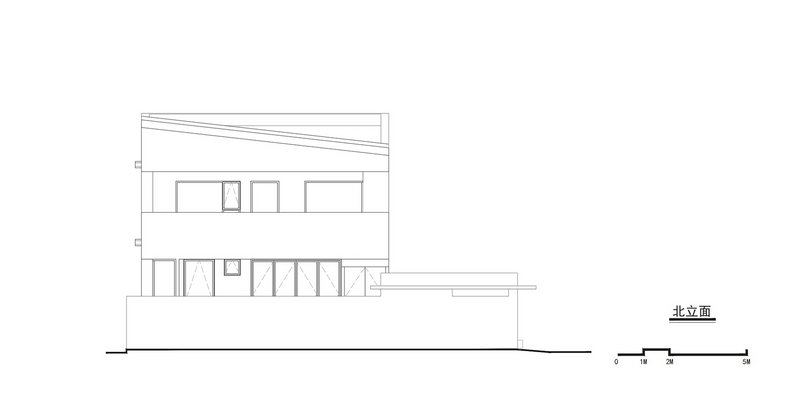
The second floor of the main house, with its single-sloped roof, tilts inward for daylight optimization and visual dialogue with the neighbor’s eaves. The layered folds produce a rhythmic dialogue between materials, spaces, and the daily routines of its inhabitants.
Interior Spatial Narrative: A Home That Guides and Welcomes
The home’s spatial narrative begins at the sunken entrance courtyard, doubling as a temporary parking area. A narrow window above the entrance hall channels wind and light, while a simple bench invites pause. Inside, the layout splits clearly: private functions such as bedrooms and study are placed on the quiet east side, while public areas—including the dining room and upstairs living room—face west toward the river and forest.
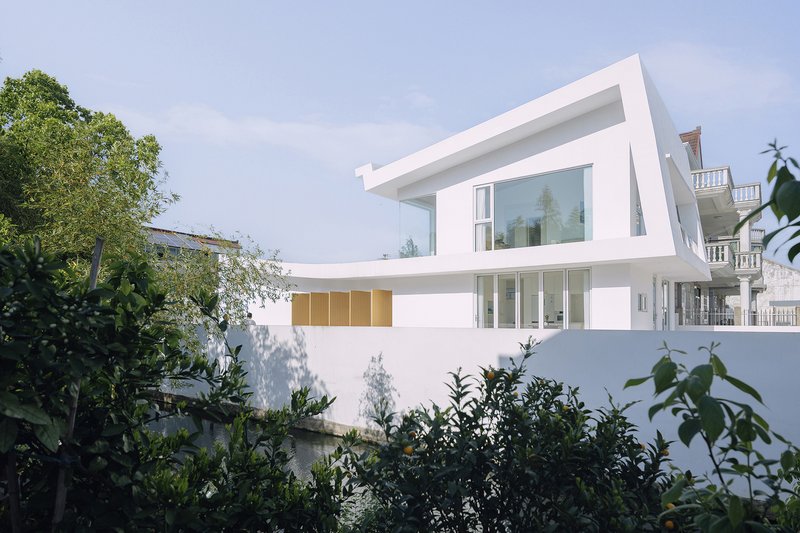
Five wide glass doors open onto the water, welcoming light, air, and the occasional glimpse of a passing train—a poetic nod to the homeowner’s life straddling city and countryside. A framed view through the entrance hall reveals a snapshot of urban motion, contrasting with the stillness of the internal courtyards.
Materiality & Light: Modest Means, Refined Execution
Concrete, wood, and glass are used in balanced proportions. The robust materials respond to the rural context with humility, while the subtle tectonics—light-infused courtyards, cantilevered balconies, and soft transitions—create a refined living environment. Each fold and edge is precisely calculated to direct light, define movement, and generate atmospheric layering.
A Poetic Dialogue Between Tradition, Modernity, and Nature
Qhouse is not merely a reconstructed family home; it is a reimagined typology—a contemporary courtyard house in Shanghai that resonates with memory, adapts to urban-rural hybridity, and speaks the architectural language of folding, light, and rhythm. Through restrained forms and carefully calibrated spaces, it becomes a living narrative—a house that changes with the weather, the seasons, and the lives it shelters.




Popular Articles
Popular articles from the community

IKC de Geluksvogel: Sustainable School Architecture Designed for Free Movement and Digital Learning
IKC de Geluksvogel turns sustainable school architecture into a flexible Maastricht campus for digital learning, nature, and free movement.

Inside a Timeless Mumbai Residence by Aether Studio
Aether Studio's 2,250 sq ft apartment in Malad, Mumbai uses marble, brass, boucle, and disciplined restraint to build a quiet retreat from the city.
Stanton Architects Sculpts a Curving Family Home into Sydney's Inner West Fabric
Five Dock House uses cantilevers, curved concrete, and layered courtyards to carve out privacy on a tight suburban lot in Sydney.
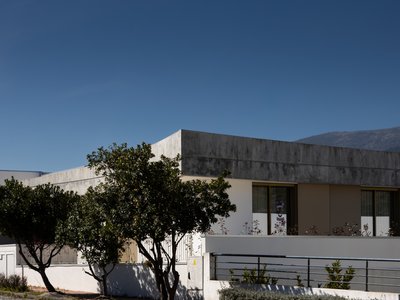
PLATAFORMArq Folds a Concrete Roof Over the Portuguese Mountains in House #474
A 220-square-meter residence in Teixoso, Portugal, wraps board-formed concrete into an angular canopy that frames the Serra da Estrela foothills.


Similar Reads
You might also enjoy these articles


Bamboo Housing Challenge 2026: Design Affordable, Sustainable Homes Using Bamboo
An international design competition by Bamboo U and IBUKU inviting architects and designers to reimagine affordable housing using bamboo — with the winning design built full-scale in Bali.

Computational Design & Education: Beegraphy Design Awards Introduces 7th Category (Featuring Jiyun's Innovative Approach)
Dive into Beegraphy’s 7th Design Awards category, where computational design meets education to create immersive, interactive learning tools, inspired by Jiyun’s work.

From Parametric Lighting to Urban Furniture: Join the 2nd Workshop in Beegraphy’s Computational Design Series
Dive into Cutting-Edge Design Techniques and Practical Applications with Industry Experts

Introducing Sphere by UNI: Pioneering a New Era in AEC Industry
Unlocking Global Potential with BIM and Agile Management


Explore Architecture Competitions
Discover active competitions in this discipline




The International Standard for Design Portfolios


The Global Benchmark for Architecture Dissertation Awards


The Global Benchmark for Graduation Excellence


Challenge to reimagine the Iron Throne
Comments (0)
Please login or sign up to add comments
No comments yet. Be the first to comment!