
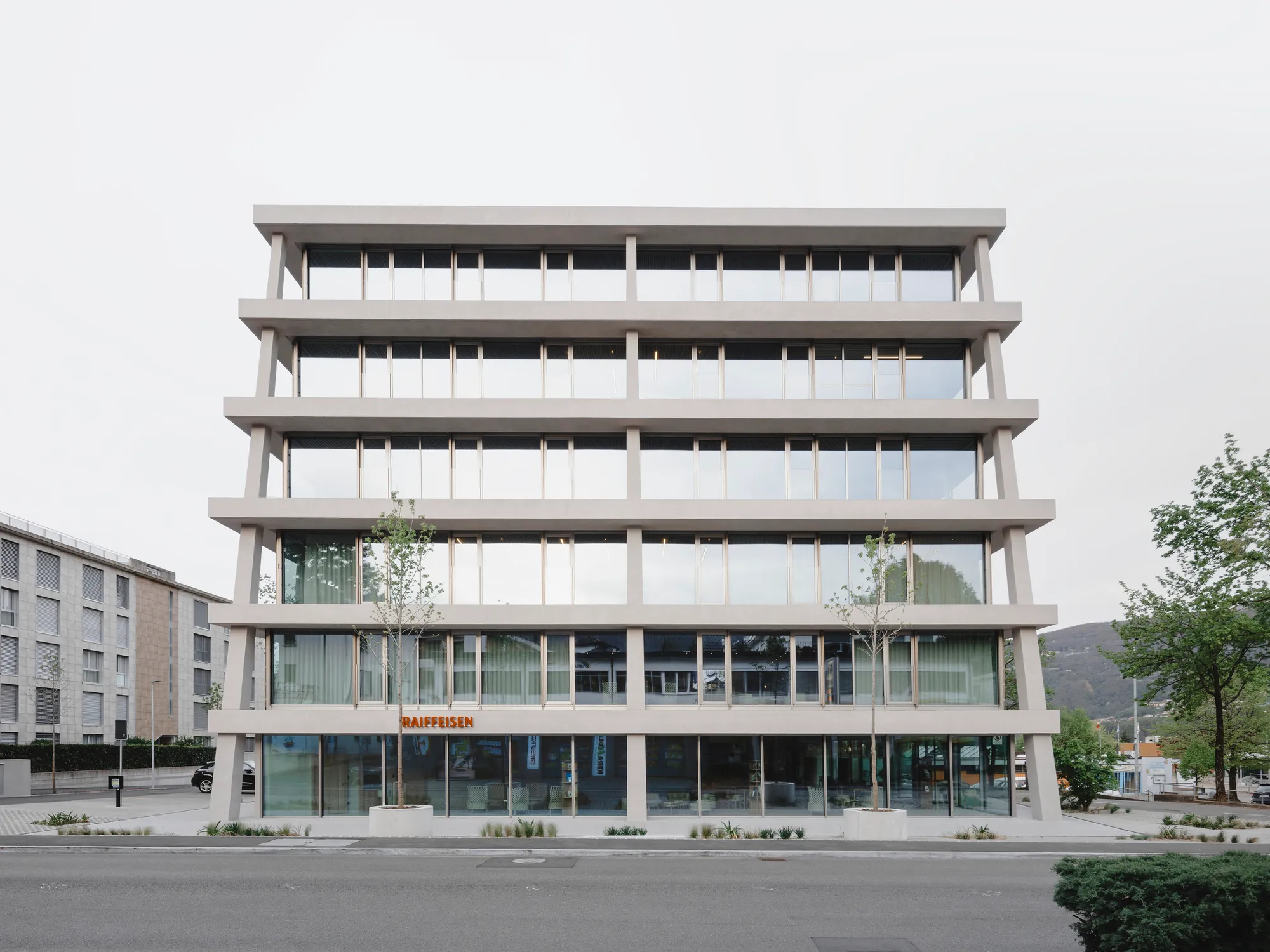
Raiffeisen Bank Colline del Ceresio By celoria Architects
A sustainable Swiss bank redefining civic architecture through recycled concrete, urban regeneration, flexible workplaces, and SNBS Gold-certified environmental performance.


The Raiffeisen Bank Colline del Ceresio, designed by celoria Architects, represents a landmark in sustainable office architecture in Switzerland. Located in Savosa, Ticino, the 6,000 m² administrative building redefines the role of a bank within its urban and social context: transforming it from an introverted institution into an open, civic-oriented, and environmentally responsible public building.
Achieving the highest ecological standards, the project is the first administrative building in Ticino to receive SNBS Gold certification and has also been awarded Minergie P-ECO certification, positioning it at the forefront of sustainable architecture in Europe. Its innovative approach has been recognised internationally, winning the “Best Architects 26” award and being selected as one of eight finalists for the Insubrica Region’s Atlas of Sustainable Architecture 2024.
Recycled Concrete: From Waste to Resource
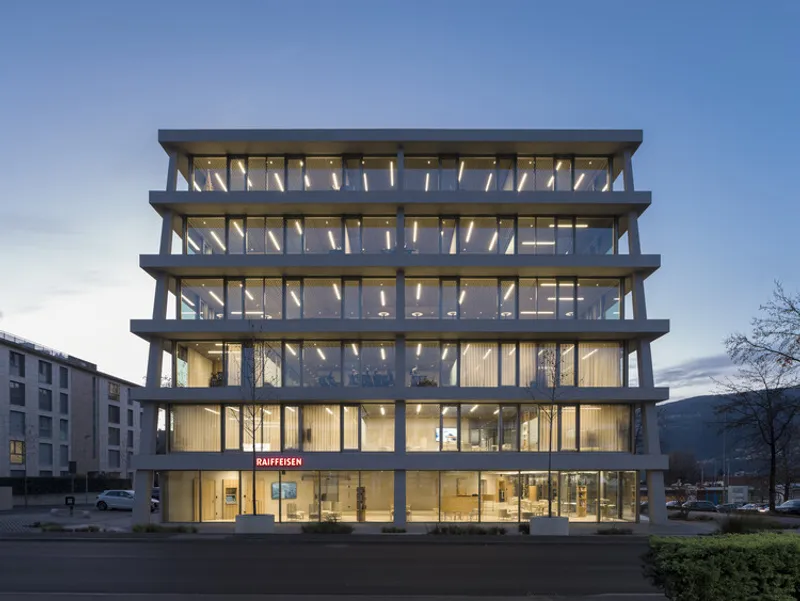
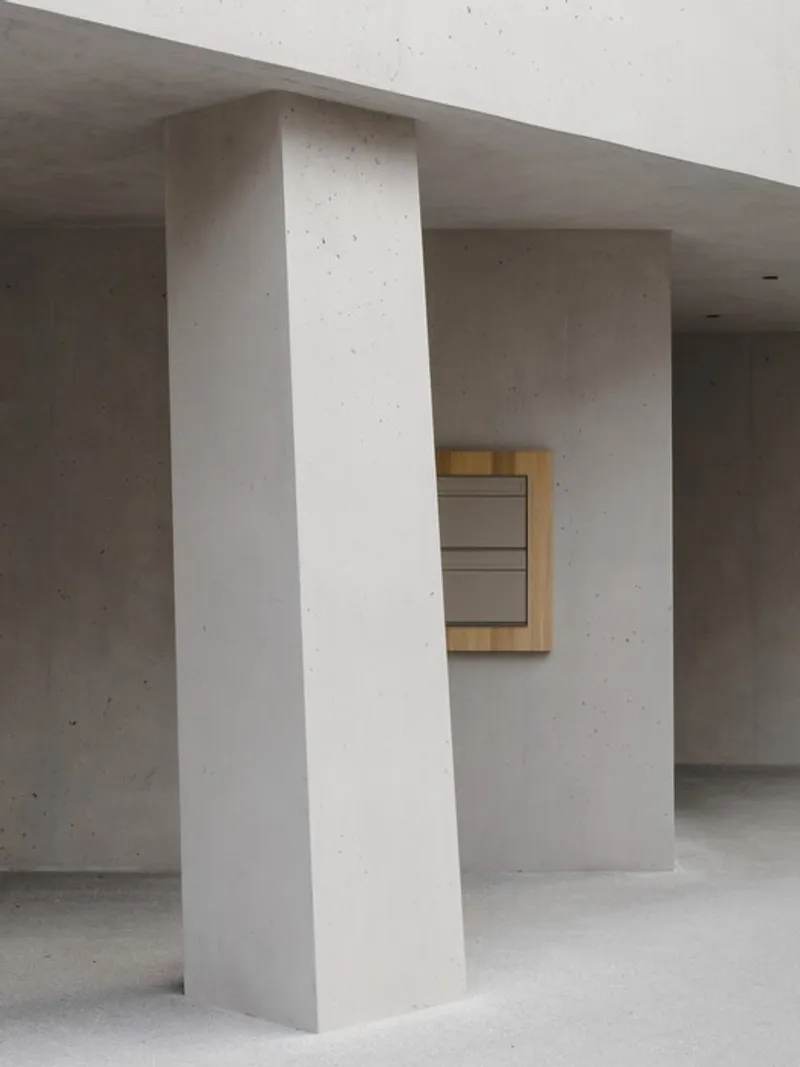
At the heart of the project lies a radical material choice: the building is constructed primarily from recycled concrete, a “reborn” material recovered from demolition waste and transformed into a high-performance structural resource. This approach embodies a circular design philosophy, where what was once waste becomes value, and the past is reimagined as the foundation for a sustainable future.
The sparing and intelligent use of recycled concrete, combined with an advanced structural system, significantly reduces grey energy and environmental impact, contributing to the project’s exceptional sustainability credentials.
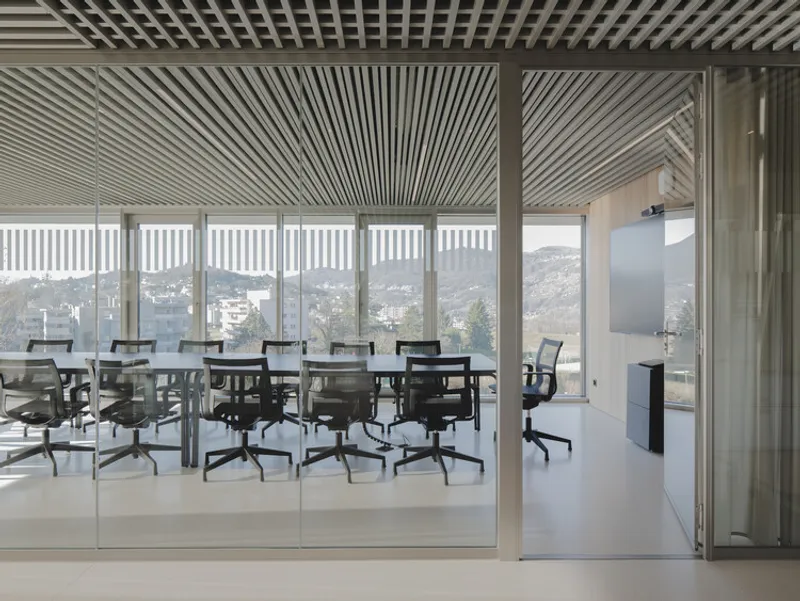
Urban Catalyst and New Civic Space
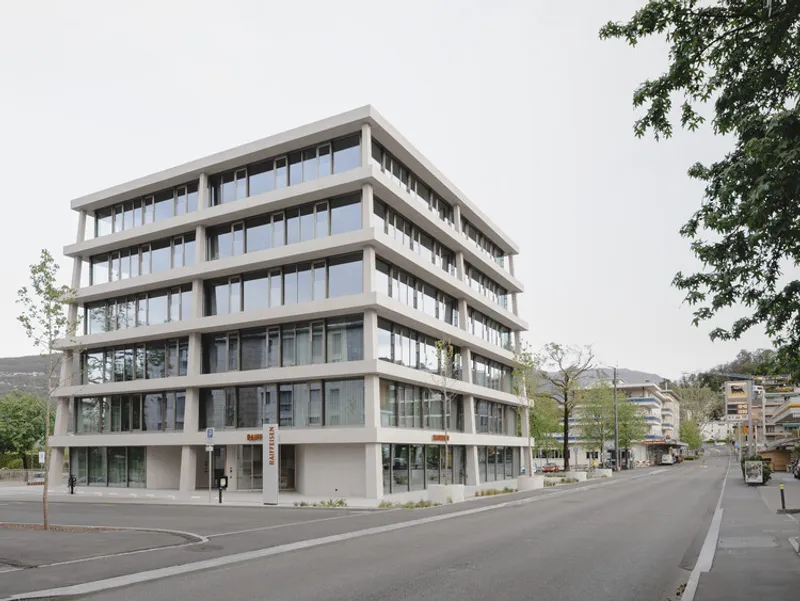
Beyond its architectural presence, the Raiffeisen Bank acts as a catalyst for urban regeneration. From an urban planning perspective, the project reconfigures the surrounding road network, freeing the northern area from traffic and restoring safety and accessibility for pedestrians.
The elevated platform on which the building stands is conceived as the first phase of a larger urban vision. In the future, it will extend to form a new town square, linking the urban fabric of Savosa with the surrounding landscape. This civic space is intended to function as a mediating element, balancing built form and nature while reinforcing their mutual relationship.
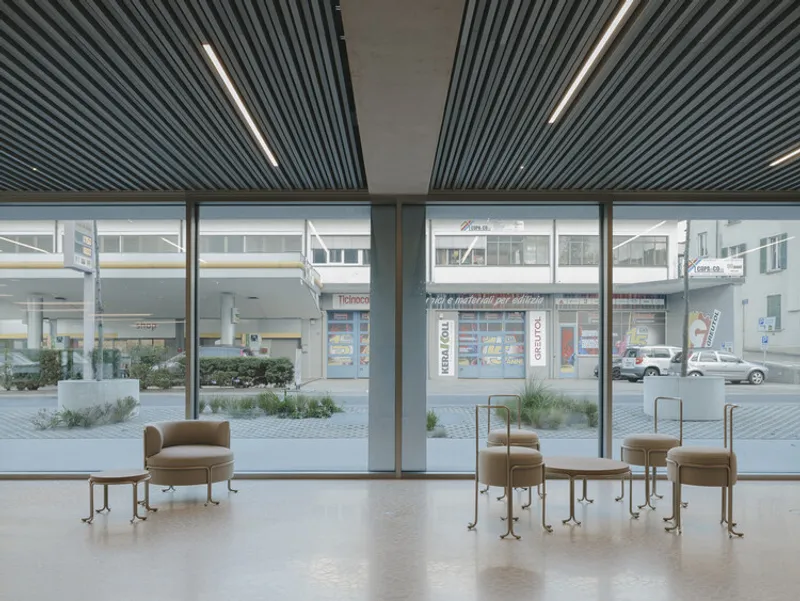
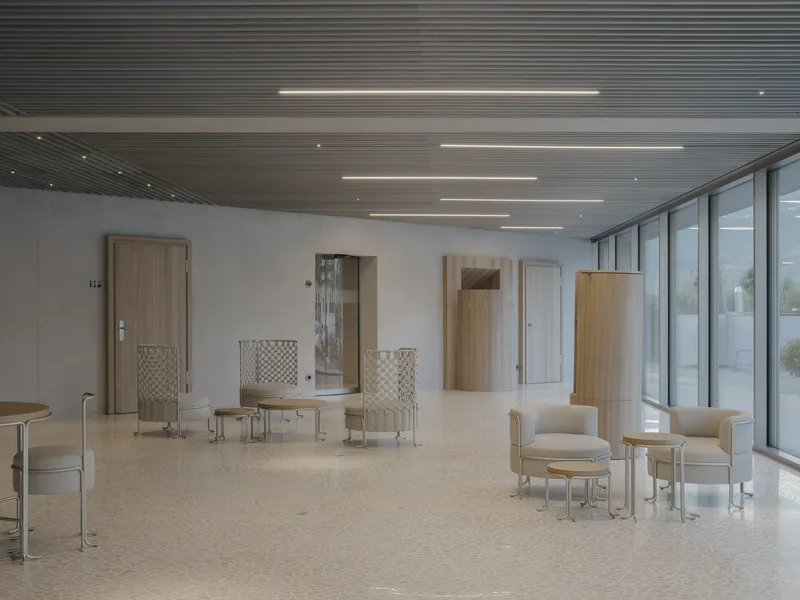
Architecture That Opens to the Community
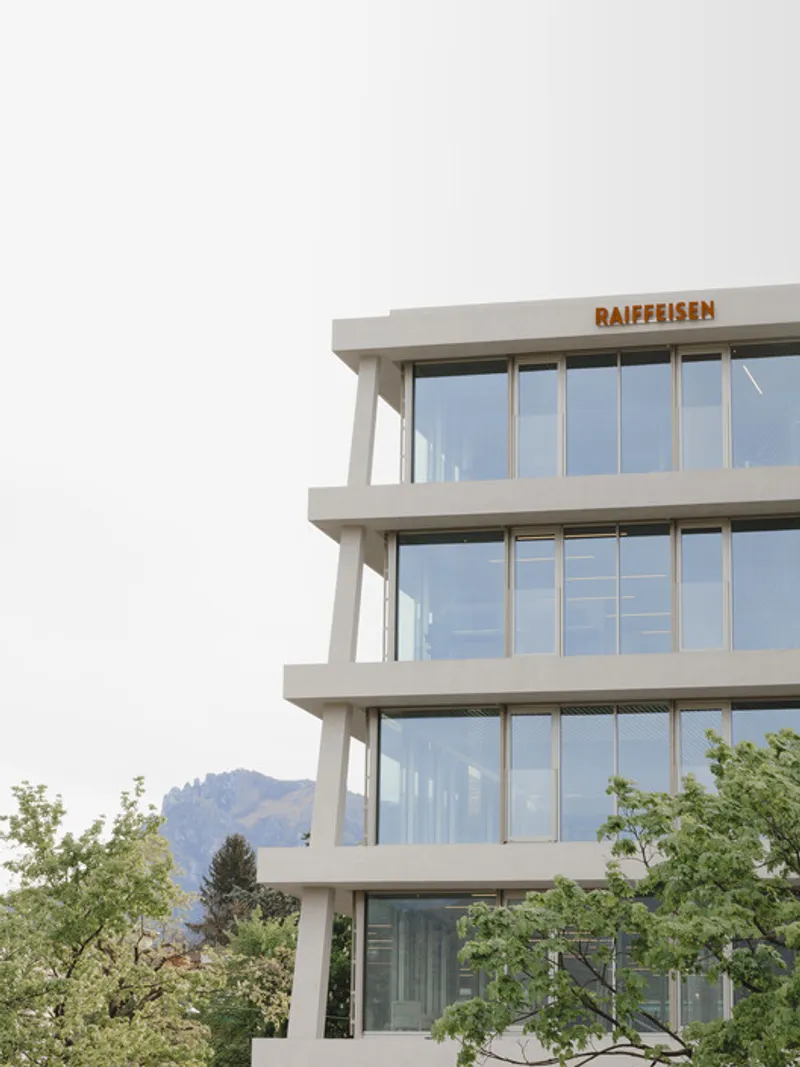
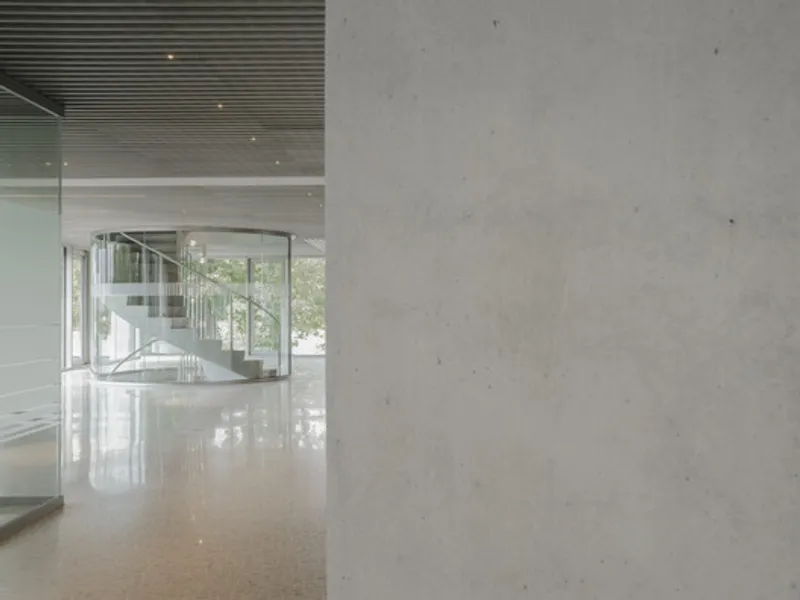
Celoria Architects deliberately overturn the traditional image of the bank as a closed, defensive structure. Instead, the building is conceived as permeable, transparent, and luminous, fostering a continuous dialogue between interior spaces, the town, and the landscape.
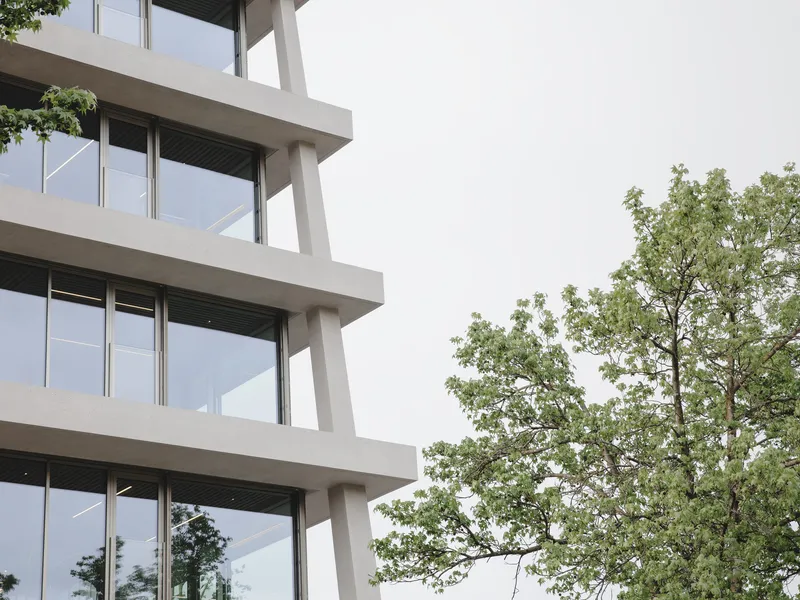
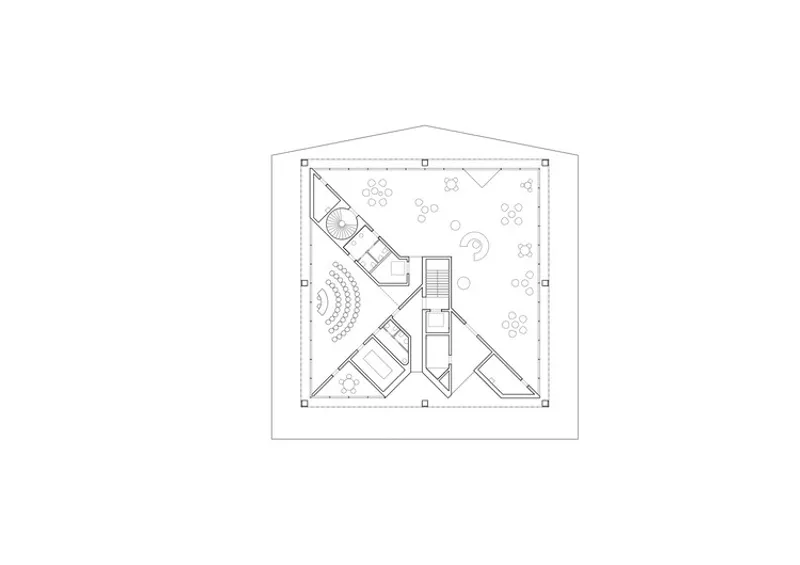
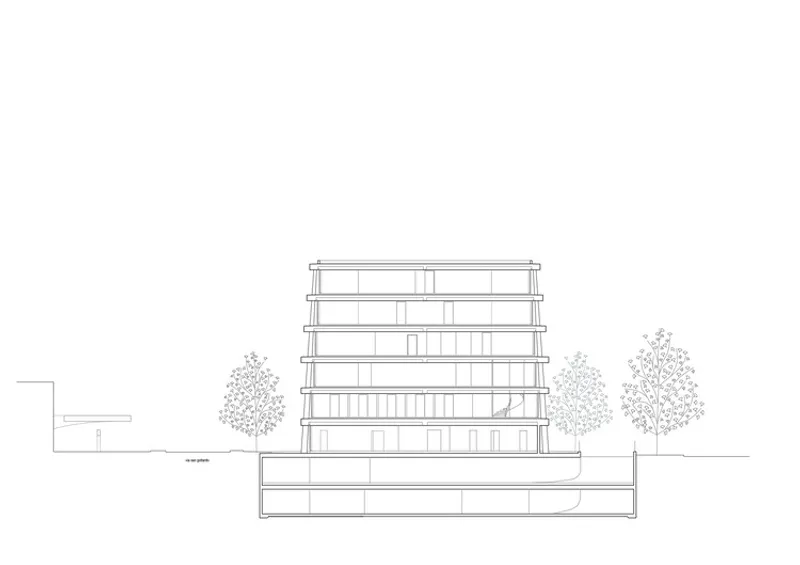
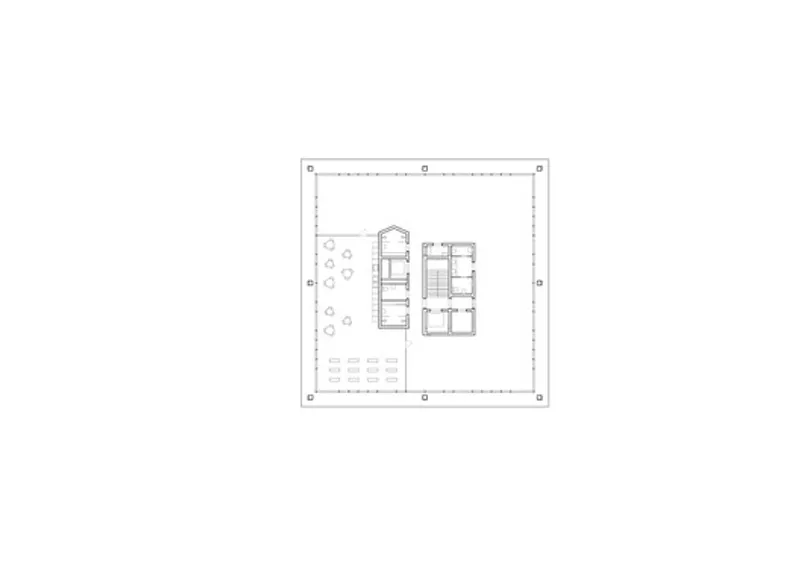
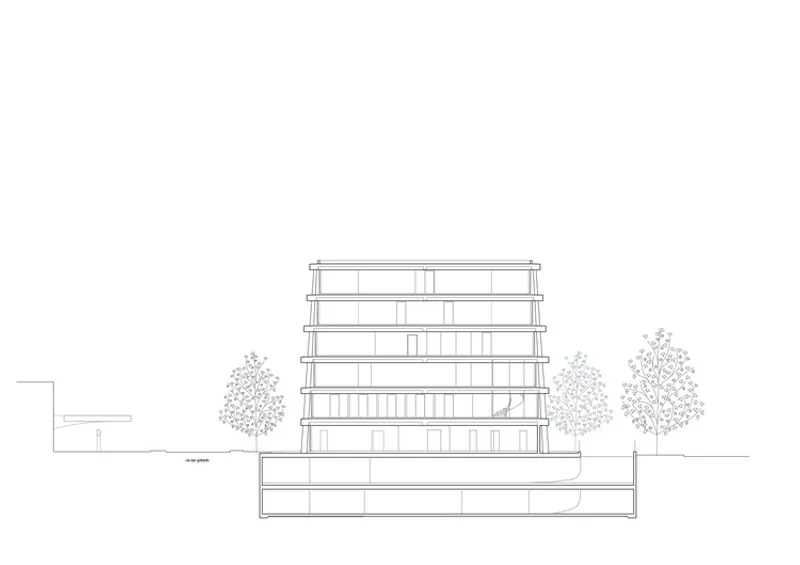
The square floor plan establishes a 360-degree relationship with its surroundings, while the building rests on eight oblique perimeter pillars that taper upward, lending the structure both lightness and dynamism. As the building rises, the floor plates gradually shrink, reinforcing its vertical aspiration and symbolic reach toward the sky.
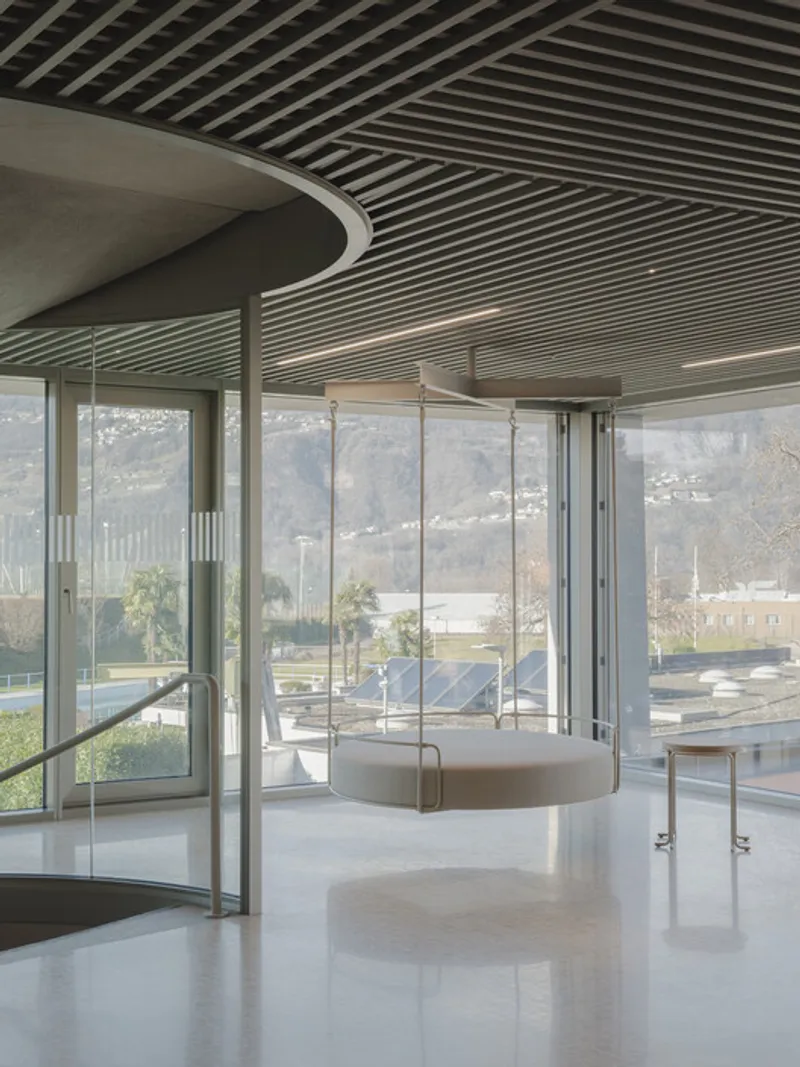
Structural Independence and Spatial Flexibility
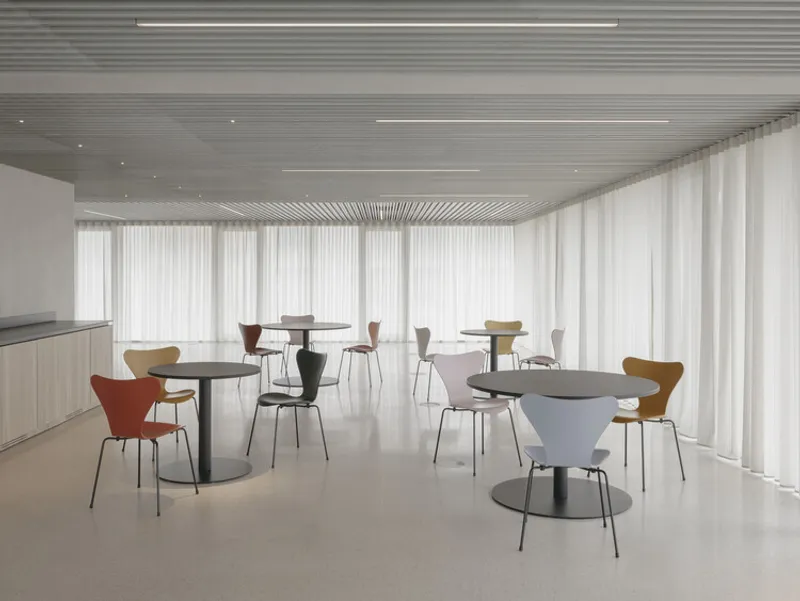
A defining feature of the project is the independence of the structural skeleton from the interior spaces. This strategic decision enables maximum flexibility, allowing the building to adapt over time to changing workplace needs, an essential quality for long-term sustainability.
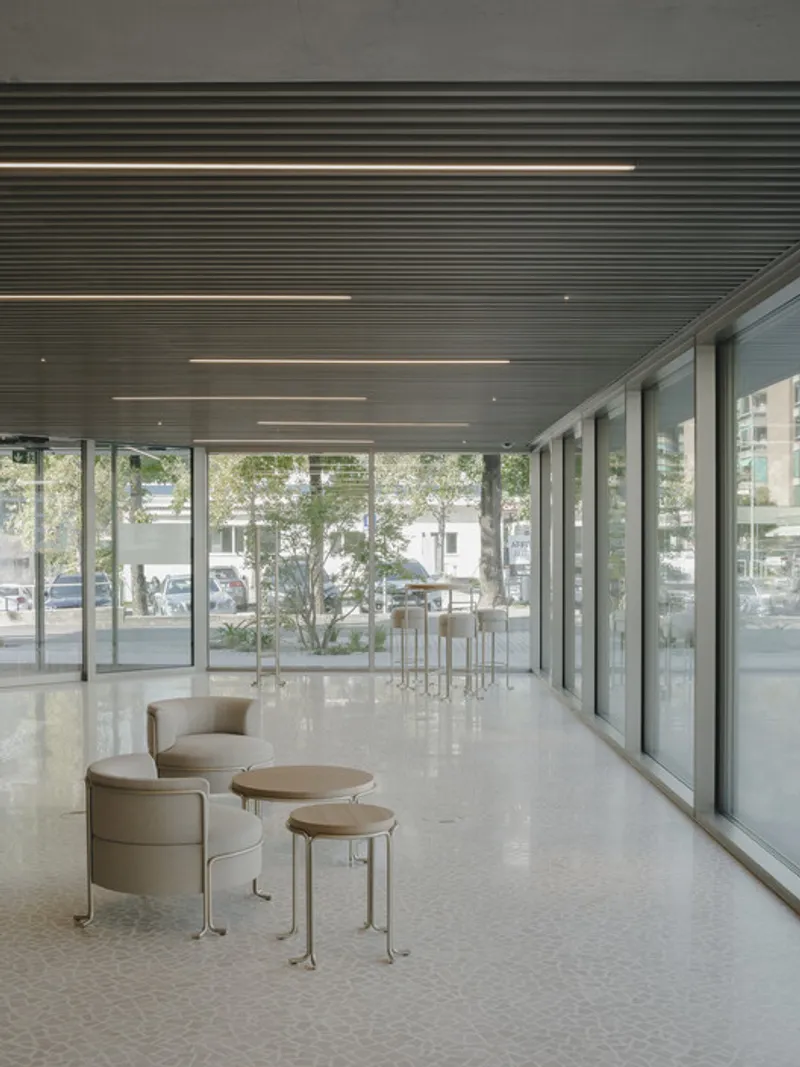
The ground floor is treated as a special condition, directly engaging with the public realm. Here, the boundary between inside and outside dissolves, creating a fluid and reciprocal relationship that reinforces the bank’s civic role.
Well-Being as a Core Design Principle
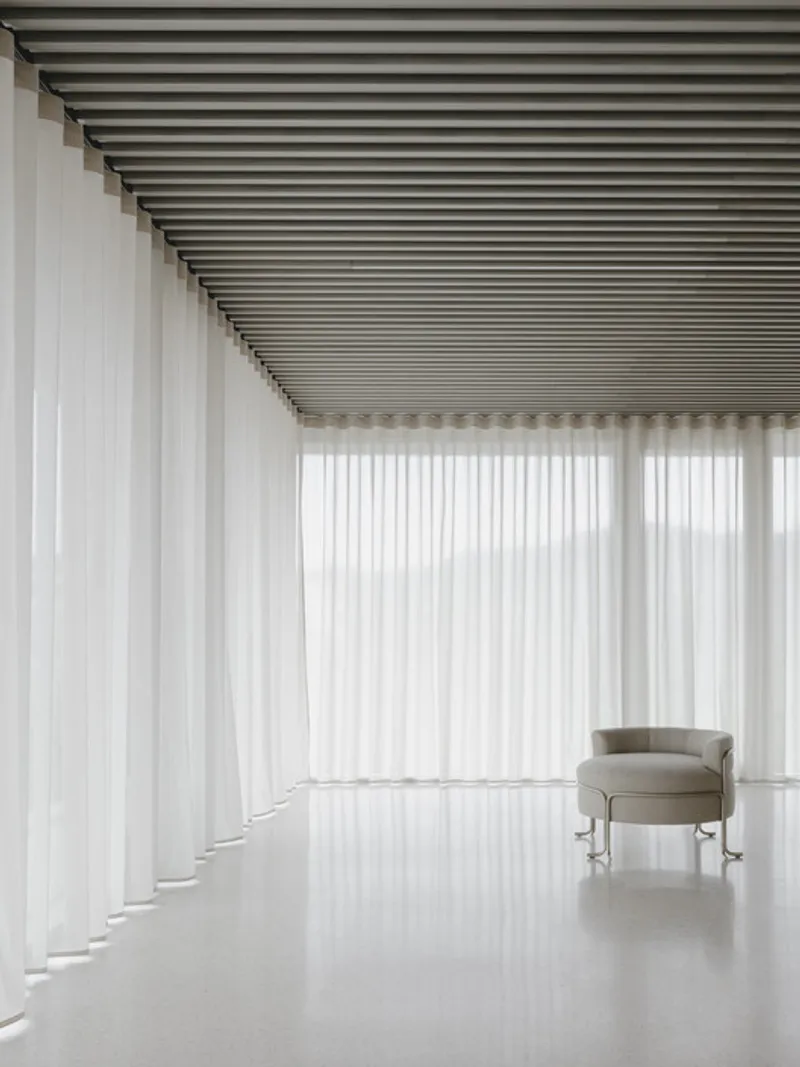
In Switzerland, the SNBS (Standard Nachhaltiges Bauen Schweiz) certification is the most comprehensive sustainability benchmark, addressing environmental, social, and economic dimensions. The Raiffeisen Bank exemplifies this holistic approach, offering a working environment that prioritises thermal comfort, acoustic quality, daylighting, and perceptual well-being.
The Minergie P-ECO certification further confirms the building’s energy efficiency and respect for the ecosystem. Every material, from structure to finishes, has been selected to minimise pollutant emissions and reduce embodied energy, ensuring long-term health and comfort for occupants.
A New Paradigm for Sustainable Office Architecture
The Raiffeisen Bank Colline del Ceresio is more than a workplace; it is a symbol of architectural responsibility, where sustainability, flexibility, and civic engagement converge. Through recycled materials, innovative engineering, and urban foresight, celoria Architects deliver a building that actively contributes to its environment: socially, ecologically, and spatially.
The project sets a powerful precedent for future administrative buildings, proving that sustainable architecture can be both visionary and deeply rooted in place.
All the photographs are works of Giorgio Marafioti Photography, René Lamb Fotodesign



Popular Articles
Popular articles from the community


Conexión: Biophilic Design Reimagines High-Rise Living in Hong Kong
Conexión reimagines high-rise living in Hong Kong through biophilic design, green facades, shared spaces, daylight, water and nature within.

Co-Life: Senior Housing Design That Reconnects Older Adults With the City
Co-Life reimagines senior housing design through healing gardens, shared streets, workshops, and a sustainable community across generations.

Play: Fragments of Their World
Familiar architecture becomes modular playground design, creating safe spaces where displaced children can learn, connect, imagine and play.

Lunar Spiral: Space Architecture Shaped by the Mathematics of the Universe
Lunar Spiral reimagines space architecture through Fibonacci geometry, lunar regolith, levitating habitats, and self-sustaining Moon living.


Similar Reads
You might also enjoy these articles


Hodi-Mandai Geram
Project Function: Preservation and revitalization of the Intangible heritage and socio-spatial identity of the Hodi by Housing, Cultural Memory Center, Sacred Grove, landscape, local tourism economy


Olio Towers: A Mid-Rise for Performers That Fuses Housing, Rehearsal, and Stage
Located blocks from Houston's Theater District, this modular tower stacks living units around a central performance atrium.

Oasis: Modular Green Housing Carved into Dhaka's Urban Fabric
A shortlisted Plugin Housing entry reclaims unauthorized settlements in Dhaka with stepped concrete volumes, green roofs, and ventilation-driven design.

Black Hole: A Floating Megastructure for the Post-Physical Era
Emiliano Mazzarotto envisions a spherical, self-scaling arena where e-sports, digital hotels, and holographic stadiums replace traditional public space.


Explore Office Building Competitions
Discover active competitions in this discipline



Challenge to reimagine the Iron Throne


Photograph architecture without architects


Illustrate the lost glory of Angkor Wat - Render Challenge


Design challenge to reuse E-waste
Comments (0)
Please login or sign up to add comments
No comments yet. Be the first to comment!