

Raw House by Order Matter – A Minimalist Mixed-Use Retreat in Seoul Embracing Material Honesty and Urban Calm
Raw House is a minimalist mixed-use retreat in Seoul, using raw materials, precise detailing, and natural light to create calm, grounded living spaces.


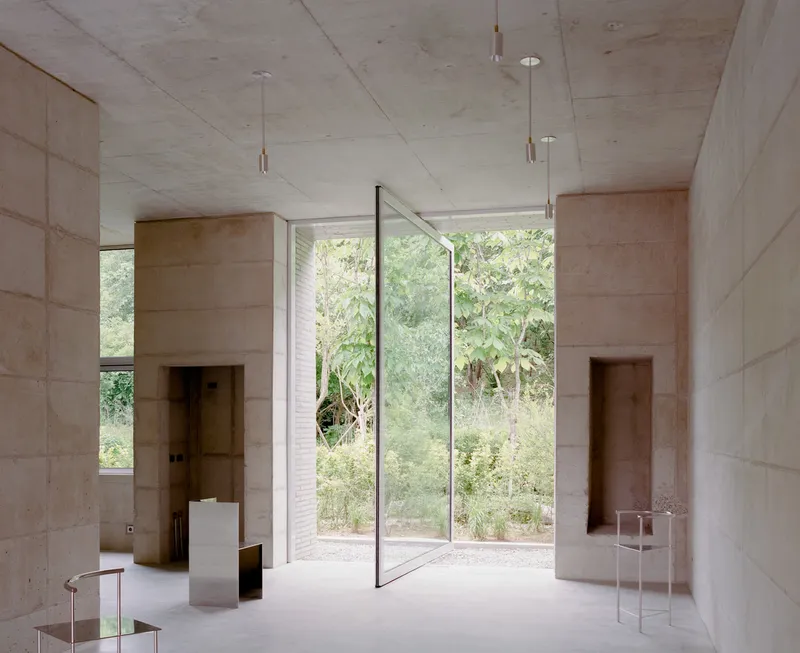
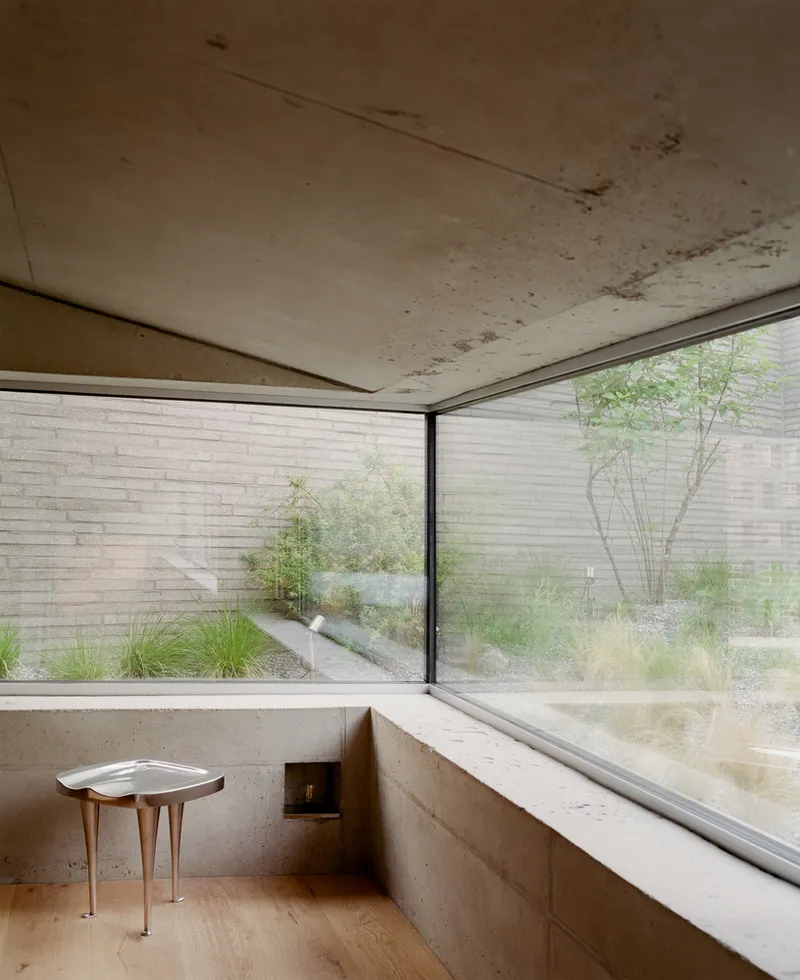
Raw House by Order Matter is an 800 m² mixed-use development in Gangdong-gu, Seoul, designed as a quiet counterbalance to the overstimulation of contemporary urban life. Combining a café, residential units, and a penthouse office, the project embraces raw materials, precise detailing, and a restrained architectural vocabulary to create a grounded and deeply human environment. Photographed by Simone Bossi, the project expresses a clarity of space and material that prioritizes lived experience over decorative excess.
Architectural Concept: A Place to Feel Real
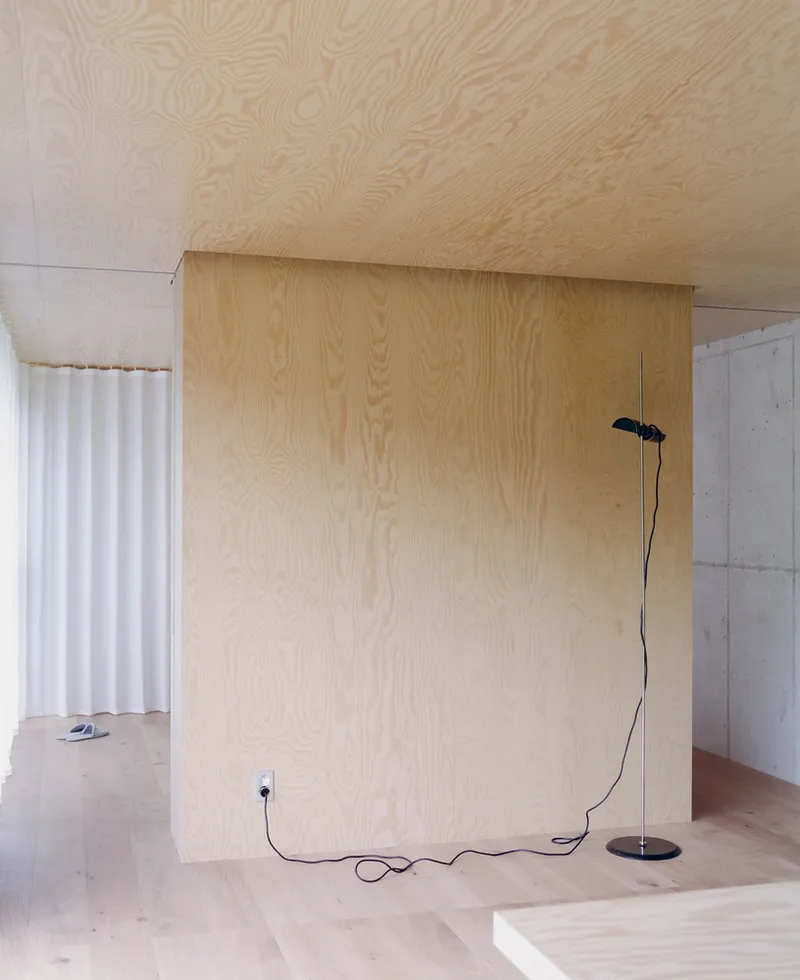
In a city defined by speed and density, Raw House proposes an architecture of honesty. Concrete, stone, and timber remain exposed and unaltered—selected not for spectacle but for their inherent presence and tactile authenticity. Nothing is concealed or overly refined; instead, each material contributes to a serene, unpretentious atmosphere. The architects describe the home as a place where residents can “feel real,” stepping away from performative spaces into one that supports rest, presence, and mental clarity.

A Dual-Facing Façade Strategy
Raw House uses orientation and context to shape its architectural identity.
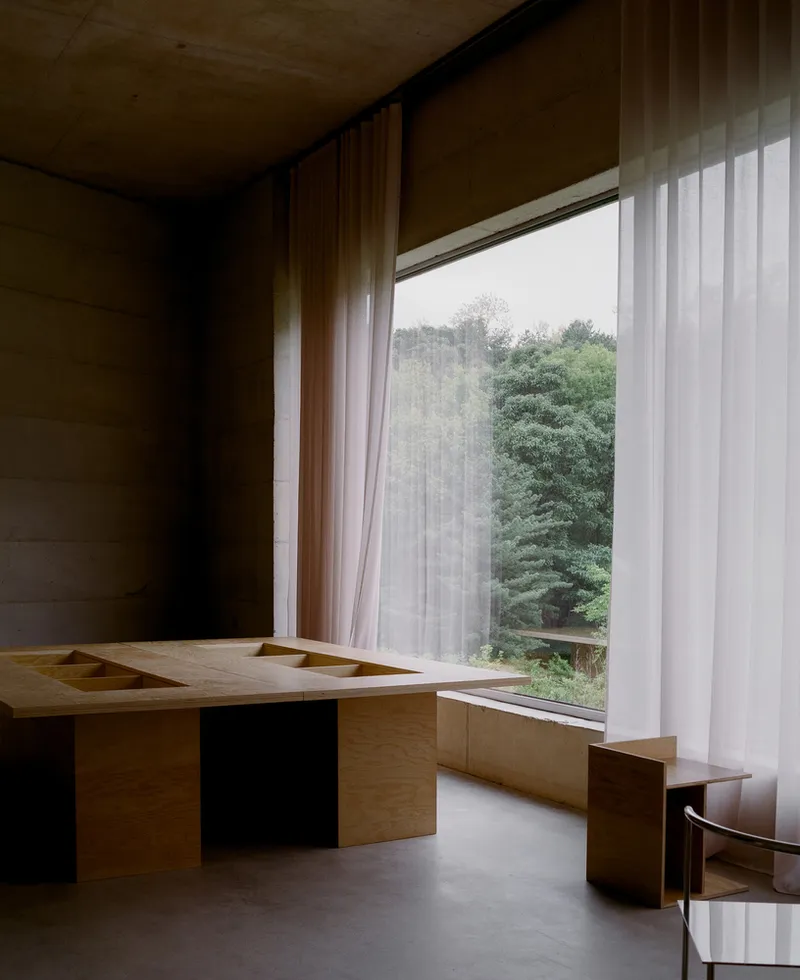
- South façade: Opens generously toward lush greenery, framing expansive views and bringing nature into the living spaces.
- North façade: More closed and controlled, forming a visual and acoustic buffer from the street.
This contrast emphasizes the project’s tectonic strength, balancing openness and privacy while underscoring the integrity of its raw material palette.


Precision and Craft: The Universal Grid
A defining feature of the design is the universal grid established across floors and ceilings. Every element—from plywood seams to concrete Euroform lines—was meticulously planned. Walls, slabs, and furniture read as independent objects placed within a coherent spatial field. Where possible, joints are minimized, allowing stone and timber to appear as continuous surfaces, giving the interior a sense of unity and quiet visual order.
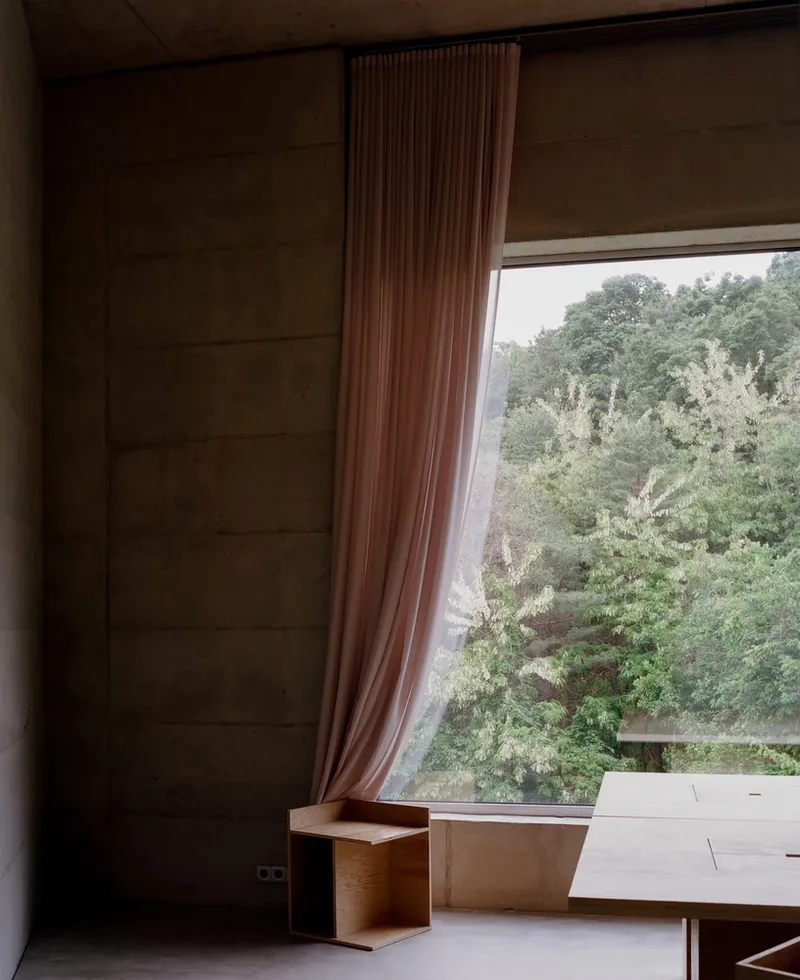
Spatial Calm Through Light and Orientation
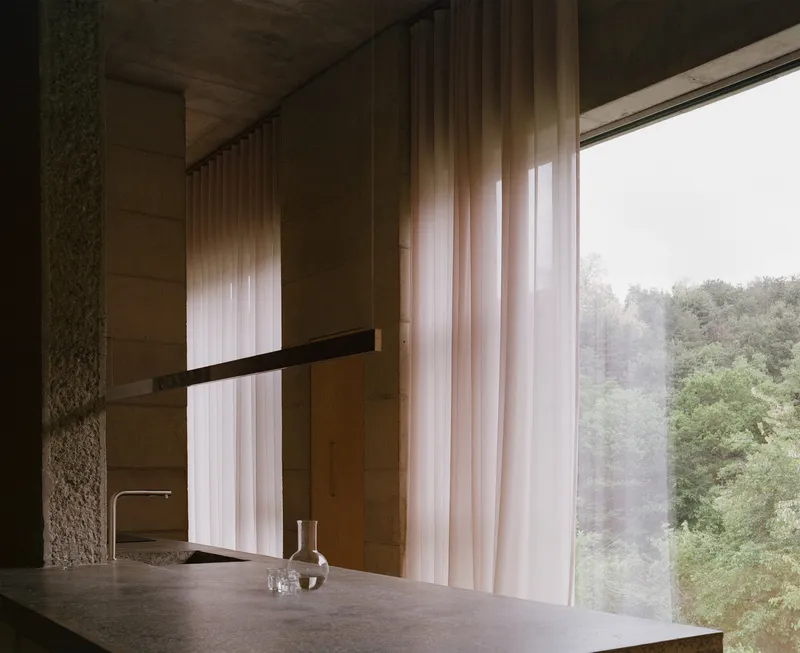
Raw House rejects the clutter of conventional lighting strategies.
- No direct ceiling fixtures
- Soft indirect lighting washes walls gently from ceiling edges
- Warm ambient tones support relaxation and cognitive ease
This lighting approach not only enhances spatial calm but also allows residents to personalize the interiors with their own furnishings and luminaires.


Thoughtful Spatial Moves: The Semicircular Stair
One of the project’s subtle innovations is the semicircular stair landing, which:
- Reduces unused corner space
- Acts as a sculptural moment visible from the street
- Brings softened northern light inside without compromising privacy
Such gestures reflect the architects' commitment to spatial clarity and purposeful design.
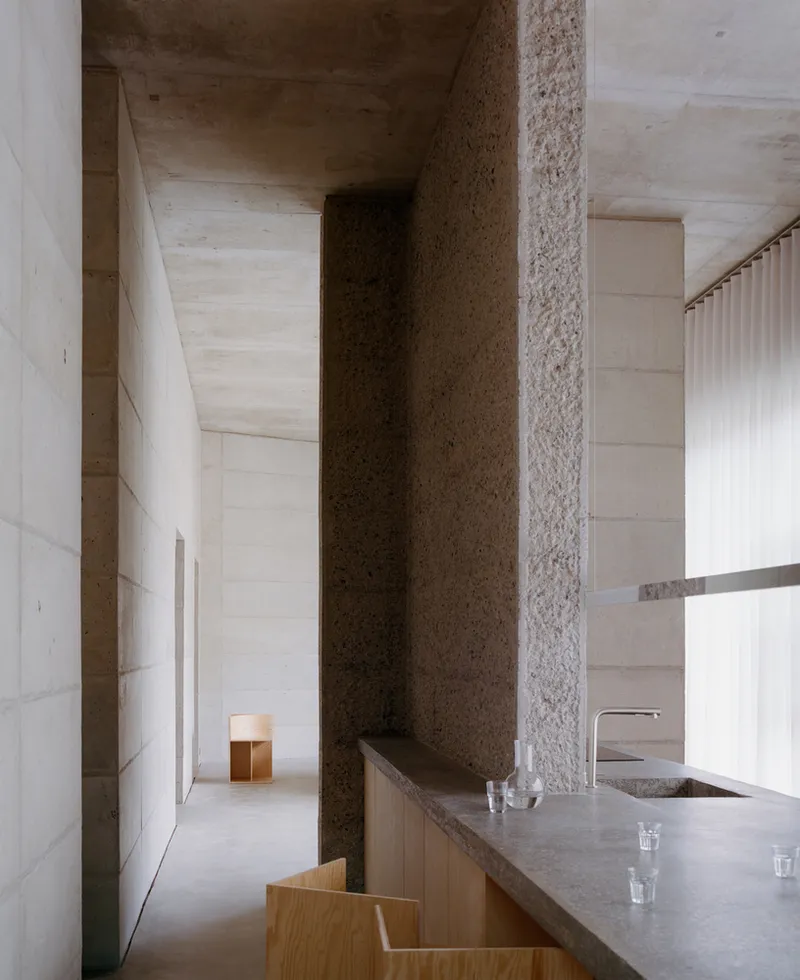
A Climate-Responsive Urban Sanctuary
Passive design strategies shape both comfort and sustainability:
- South-facing living spaces maximize sunlight, warmth, and hillside views
- North-facing bedrooms enhance rest, reduce heat gain, and minimize cooling loads
- Concrete structure provides thermal mass, moderating interior temperatures and humidity
Material choices reinforce durability and long life. While plywood is used, it is employed selectively alongside more robust materials to ensure practical longevity and reduce maintenance needs.
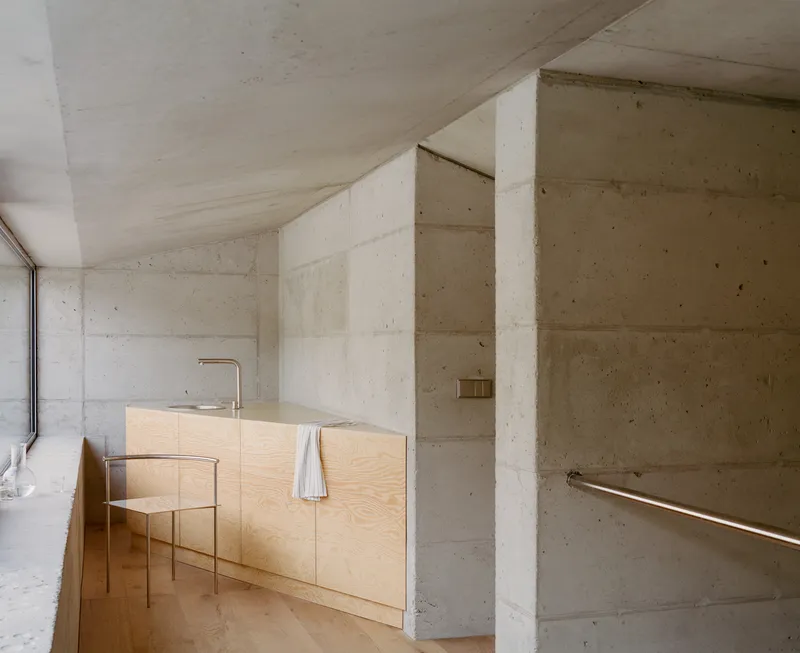
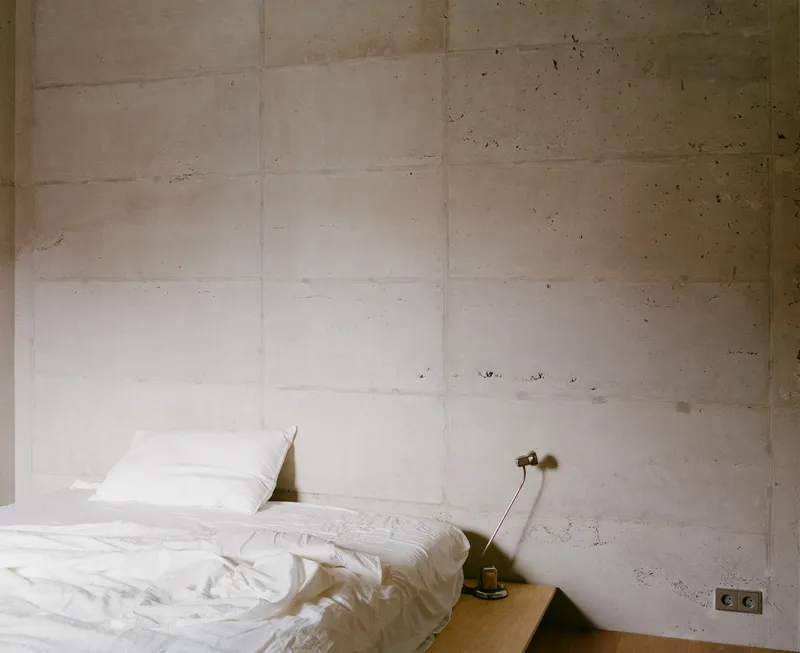
Sufficiency Over Excess
Raw House does not attempt to impress through ornament or technology. Instead, it demonstrates how careful decisions—aligned with material integrity, light quality, and human-centered spatial proportions—can create meaningful and sustainable urban living environments. Built-in elements are reduced, encouraging long-term adaptability and minimizing waste. The design offers a model for future urban housing that prioritizes wellbeing, simplicity, and environmental responsiveness without relying on complex systems or decorative embellishments.

All photographs are works of Simone Bossi


Popular Articles
Popular articles from the community


ETEH Reworks the Shared Spaces of São Domingos School in Brazil Around Timber, Color and Hanging Plants
At São Domingos School in Brazil, 436 m² of hall, refectory and library are recast with timber joinery, a yellow and blue code and trailing greenery.

FCC Arquitectura Expands a Portuguese Granite House with a Board-Marked Concrete Wing
In Portugal, JV House pairs a cleaned-up whitewashed and granite dwelling with a timber-shuttered concrete extension, courtyards and a garden pool.

Cube Design Draws an Ecological Corridor Between Two Shenzhen Hills with the Nankai Building
Beside Shenzhen's container docks, the Nankai Building pairs stacked balconies with a climbing green screen to connect two hillsides across its height.


Singing Woman: An Opera House That Performs Before the Curtain Rises
Ovidiu Cristian Pavel's conceptual opera house translates Estonia's choral identity into a sculpted waterfront landmark facing the Baltic Sea.

Similar Reads
You might also enjoy these articles


Hodi-Mandai Geram
Project Function: Preservation and revitalization of the Intangible heritage and socio-spatial identity of the Hodi by Housing, Cultural Memory Center, Sacred Grove, landscape, local tourism economy


Olio Towers: A Mid-Rise for Performers That Fuses Housing, Rehearsal, and Stage
Located blocks from Houston's Theater District, this modular tower stacks living units around a central performance atrium.

Oasis: Modular Green Housing Carved into Dhaka's Urban Fabric
A shortlisted Plugin Housing entry reclaims unauthorized settlements in Dhaka with stepped concrete volumes, green roofs, and ventilation-driven design.

Black Hole: A Floating Megastructure for the Post-Physical Era
Emiliano Mazzarotto envisions a spherical, self-scaling arena where e-sports, digital hotels, and holographic stadiums replace traditional public space.

Explore Brutalist Architecture Competitions
Discover active competitions in this discipline

Challenge to reimagine the Iron Throne

Photograph architecture without architects

Illustrate the lost glory of Angkor Wat - Render Challenge

Design challenge to reuse E-waste
Comments (0)
Please login or sign up to add comments
No comments yet. Be the first to comment!