Reciprocal House: A Modern Sustainable House Design in Hampstead, London
Reciprocal House combines sustainable design and modern architecture, redefining urban living through passive strategies and innovative materials.
Reimagining Sustainability in Modern Urban Architecture
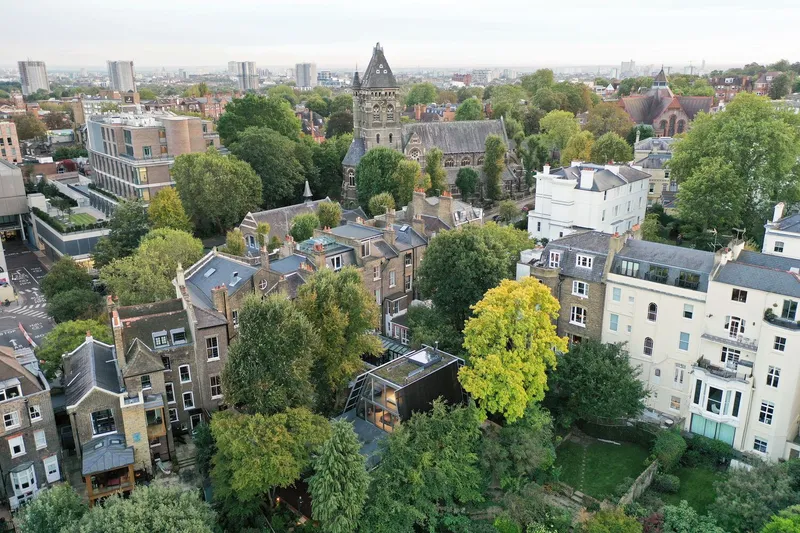
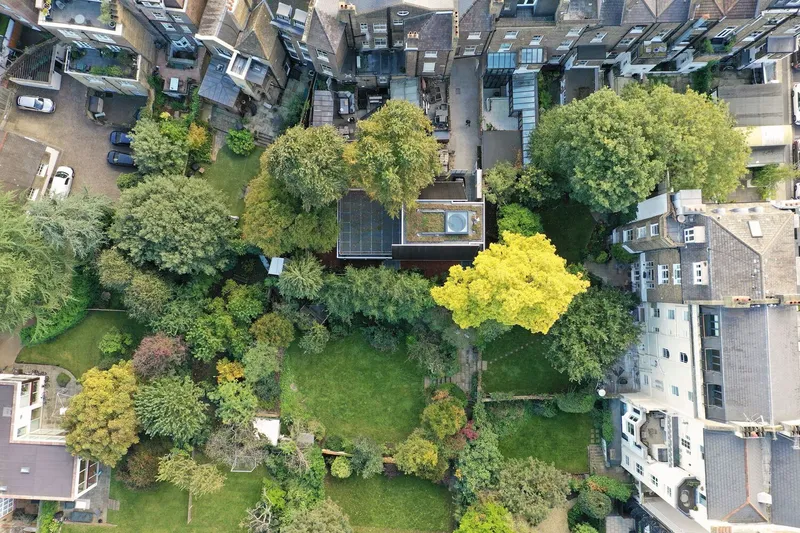
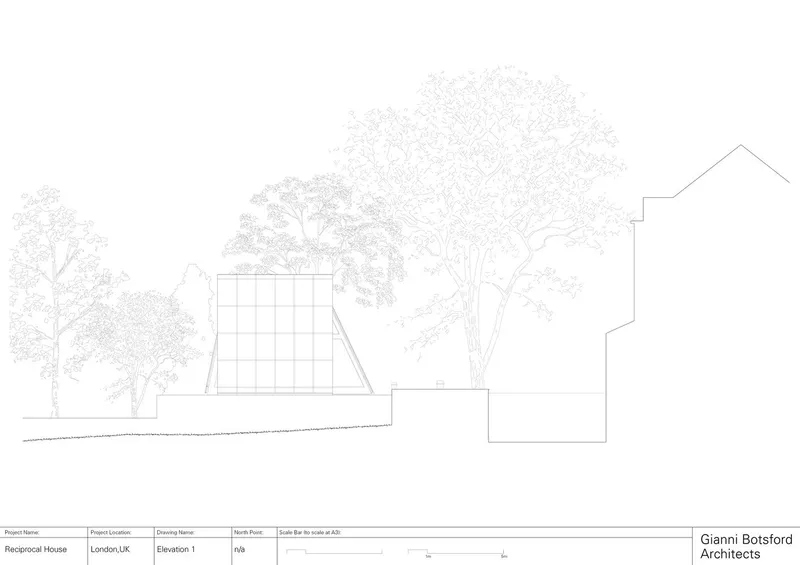
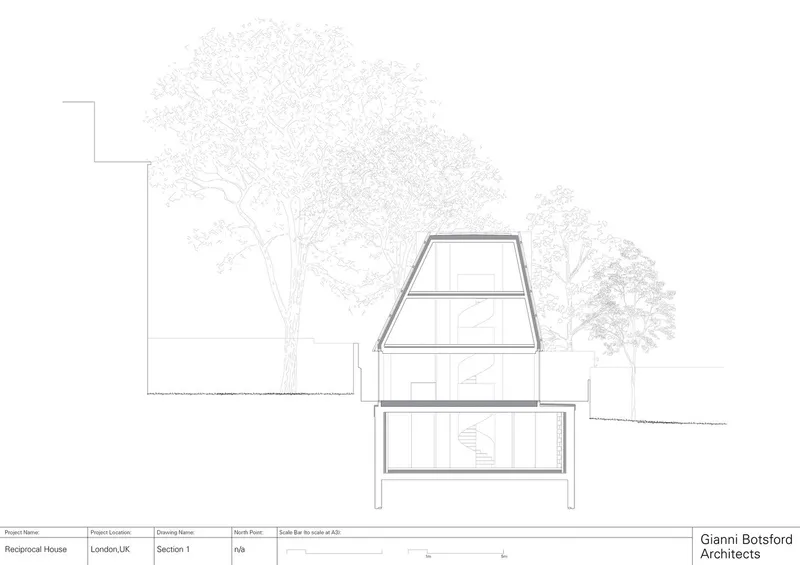
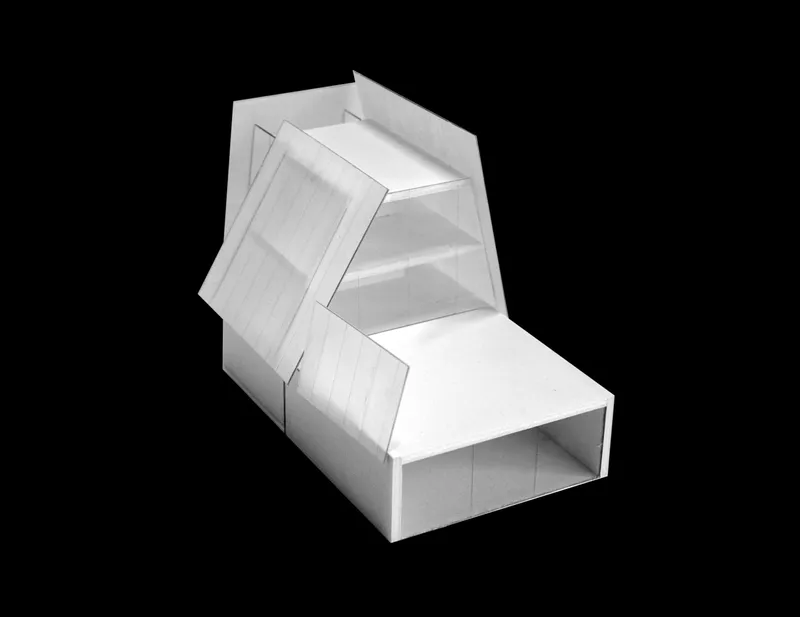
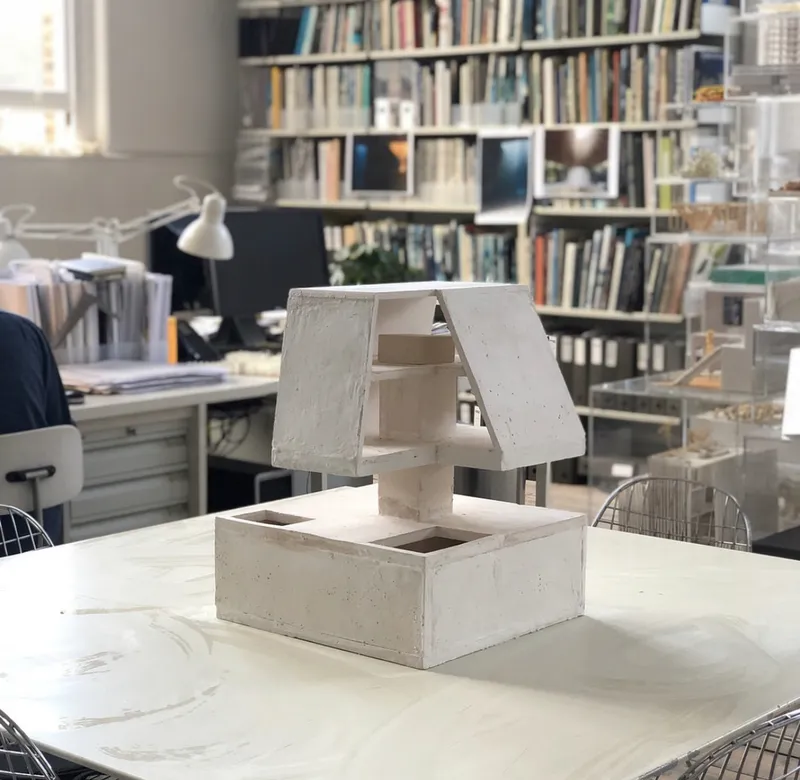
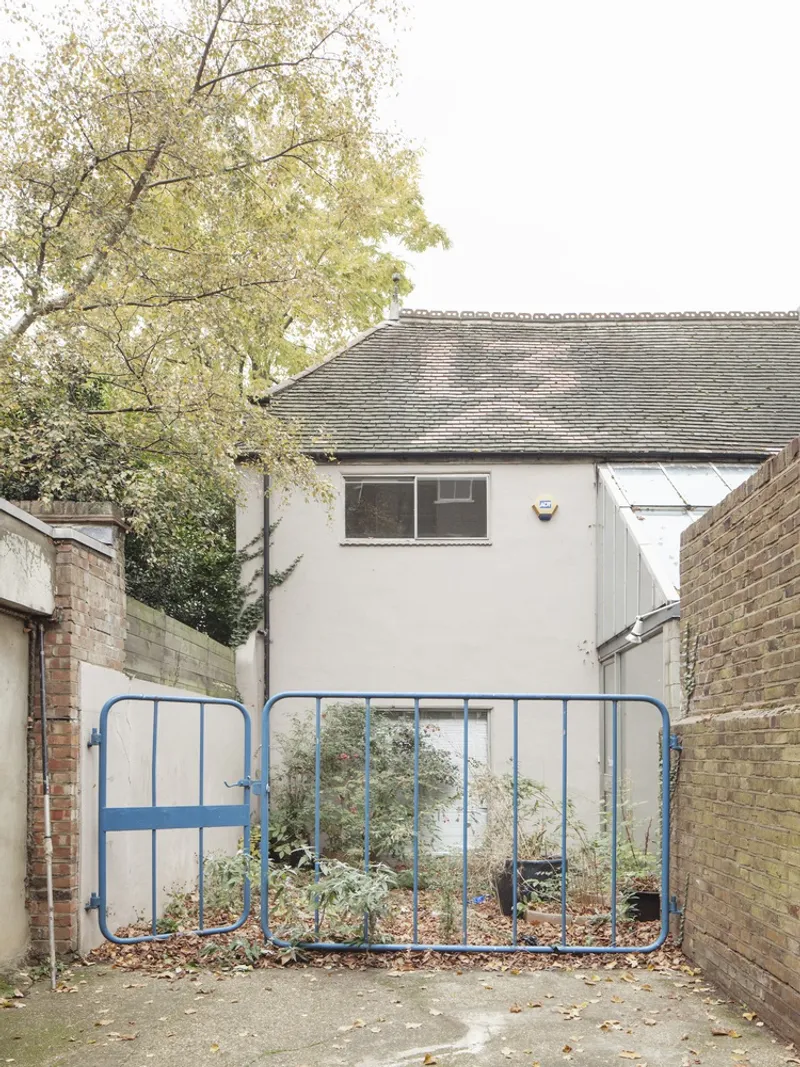
Reciprocal House, designed by Gianni Botsford Architects and completed in 2023, is a remarkable modern sustainable house in the heart of Hampstead, London. Built on the site of a dilapidated 1860s cottage, this four-story home seamlessly integrates with a celebrated 1969 extension by Foster Associates. It stands as an exemplary architectural response to sustainability, contextual sensitivity, and modern urban living, offering a balance between innovative design and environmental responsibility.


Architectural Evolution: Respecting the Past, Redefining the Present
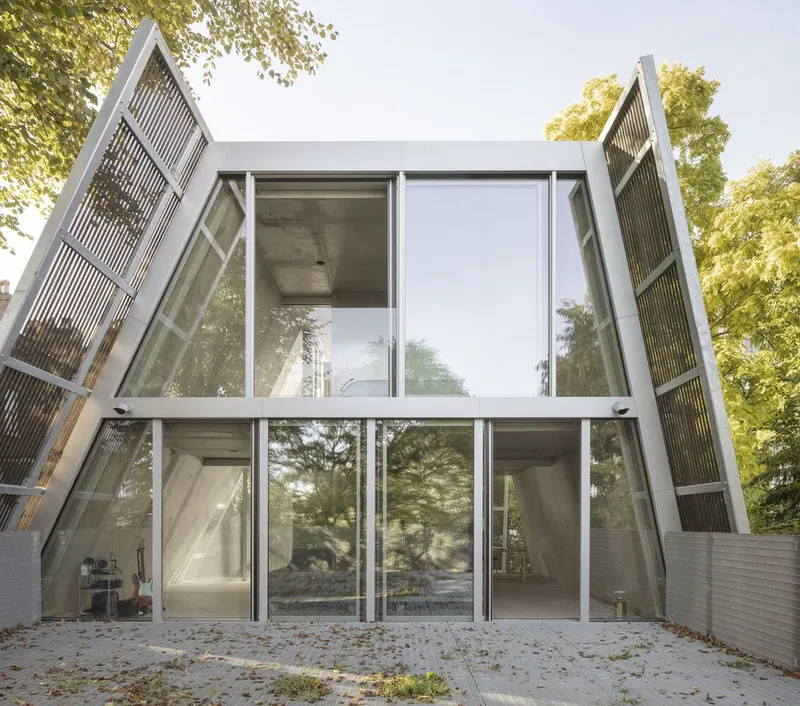
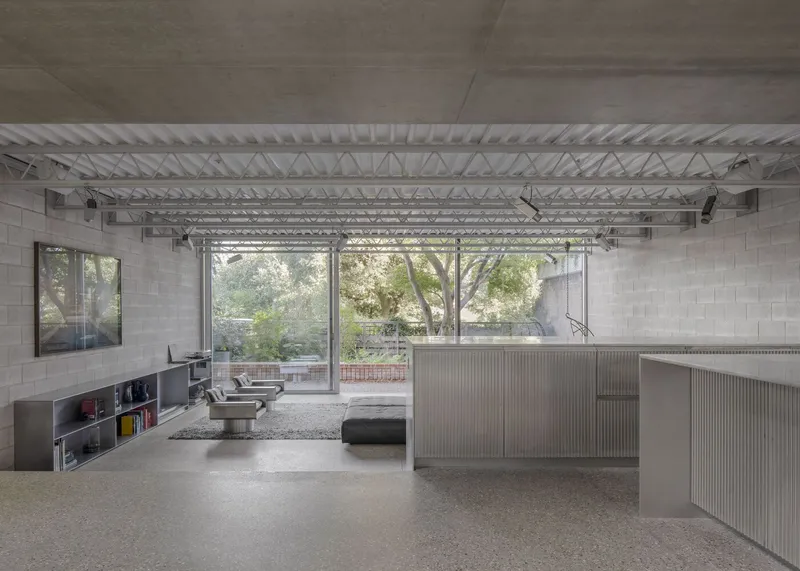
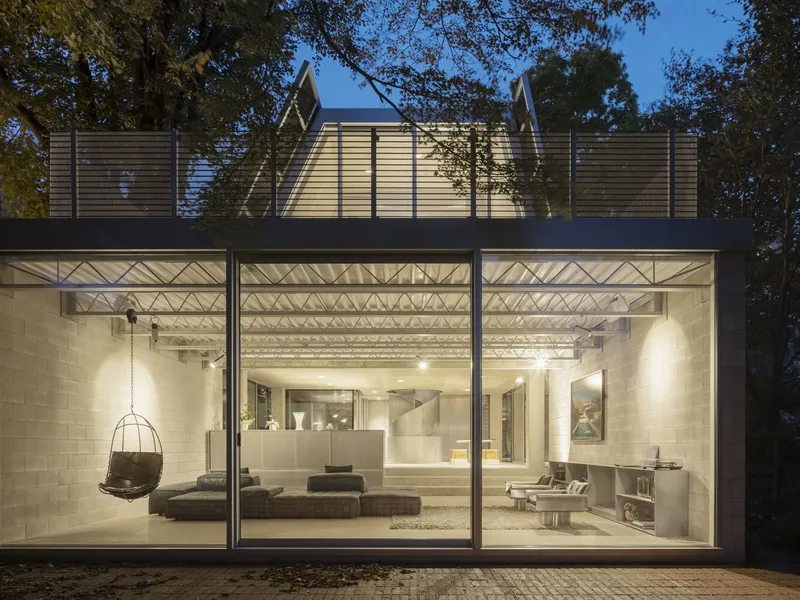
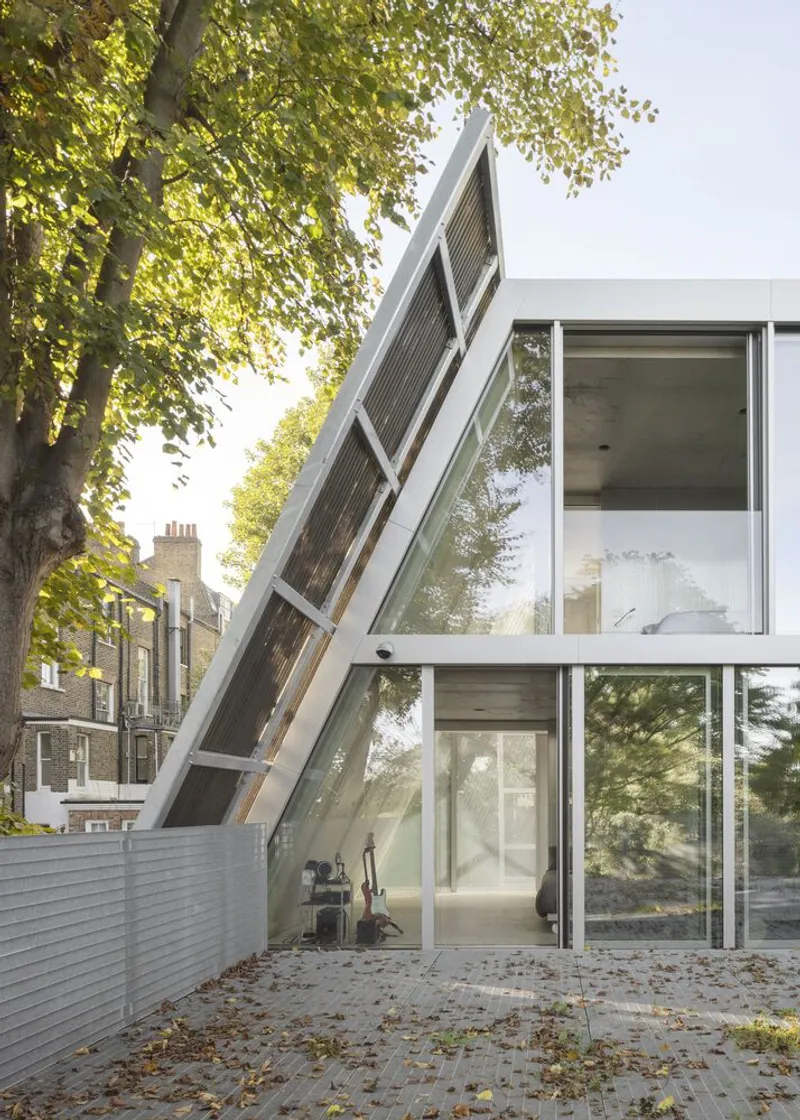
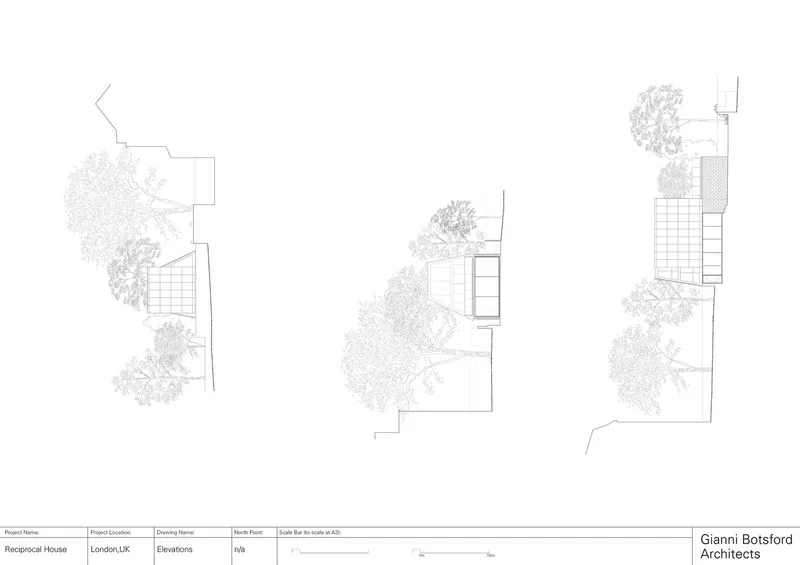
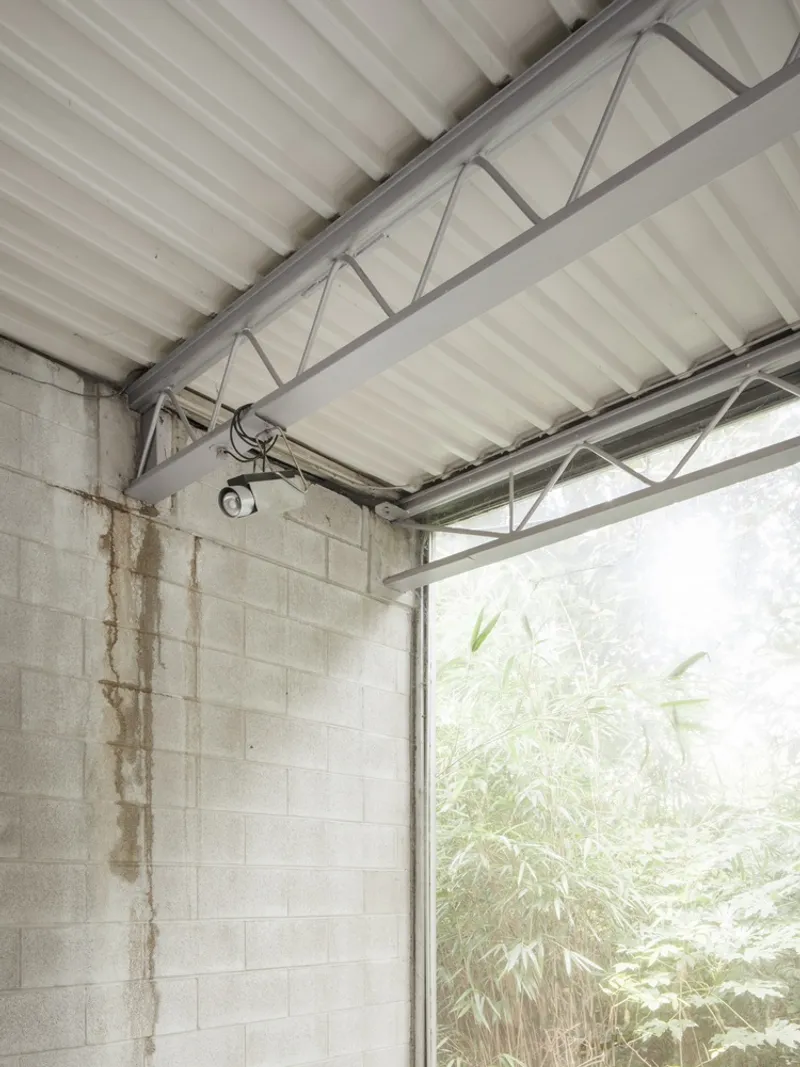
The Reciprocal House replaces an unremarkable cottage while preserving and restoring the industrial character of the 1969 Foster Associates extension. This lightweight, single-story structure, originally designed with steel trusses and aluminum-framed glazing, informs the overall design ethos of the new house. The result is a harmonious relationship between the retained elements and the contemporary architecture introduced by Gianni Botsford Architects.


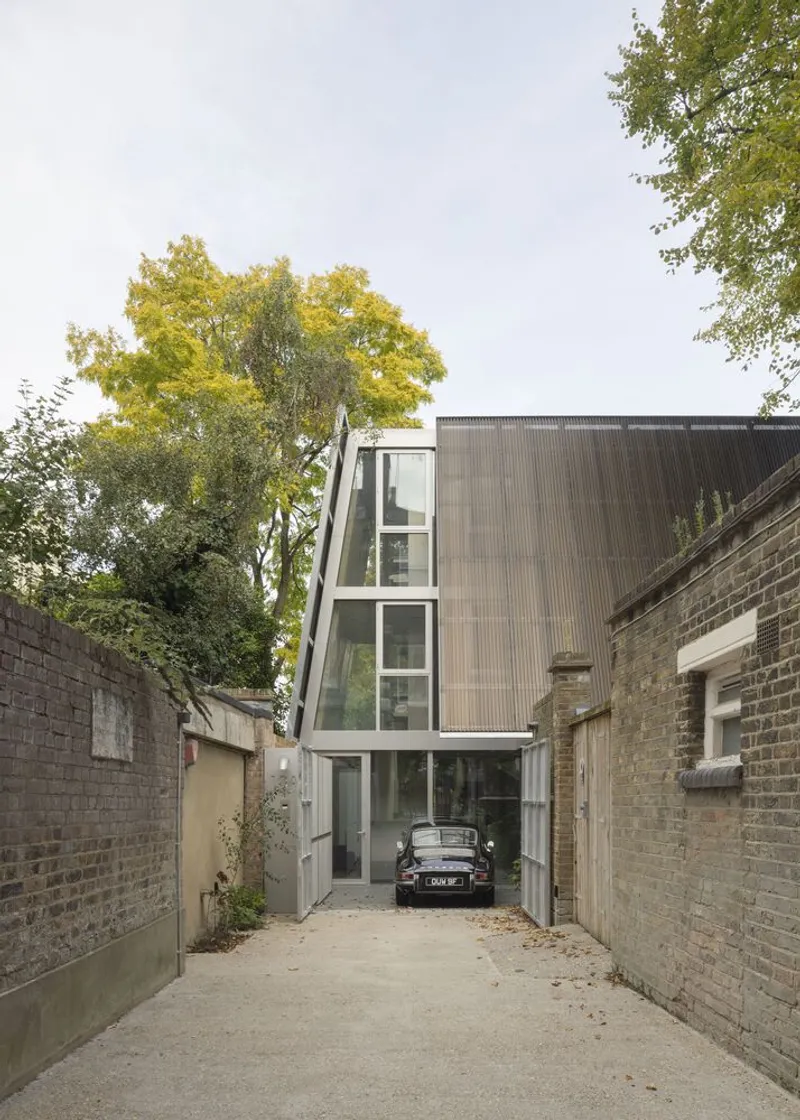
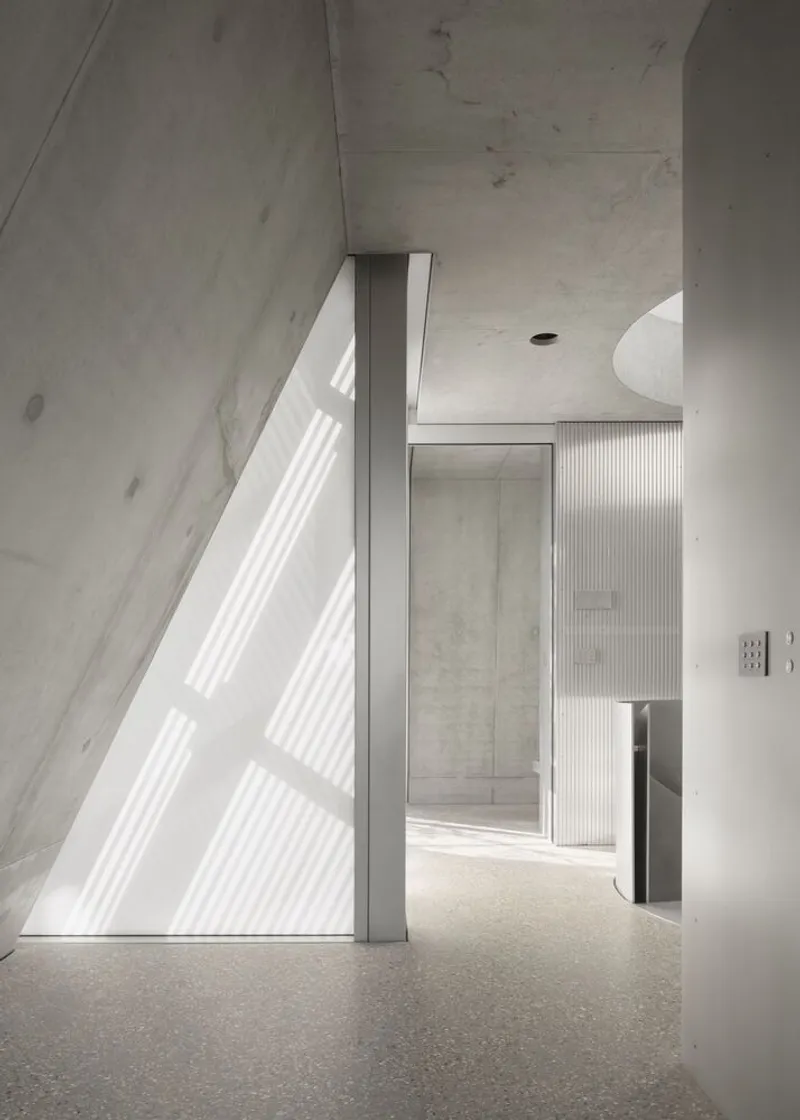
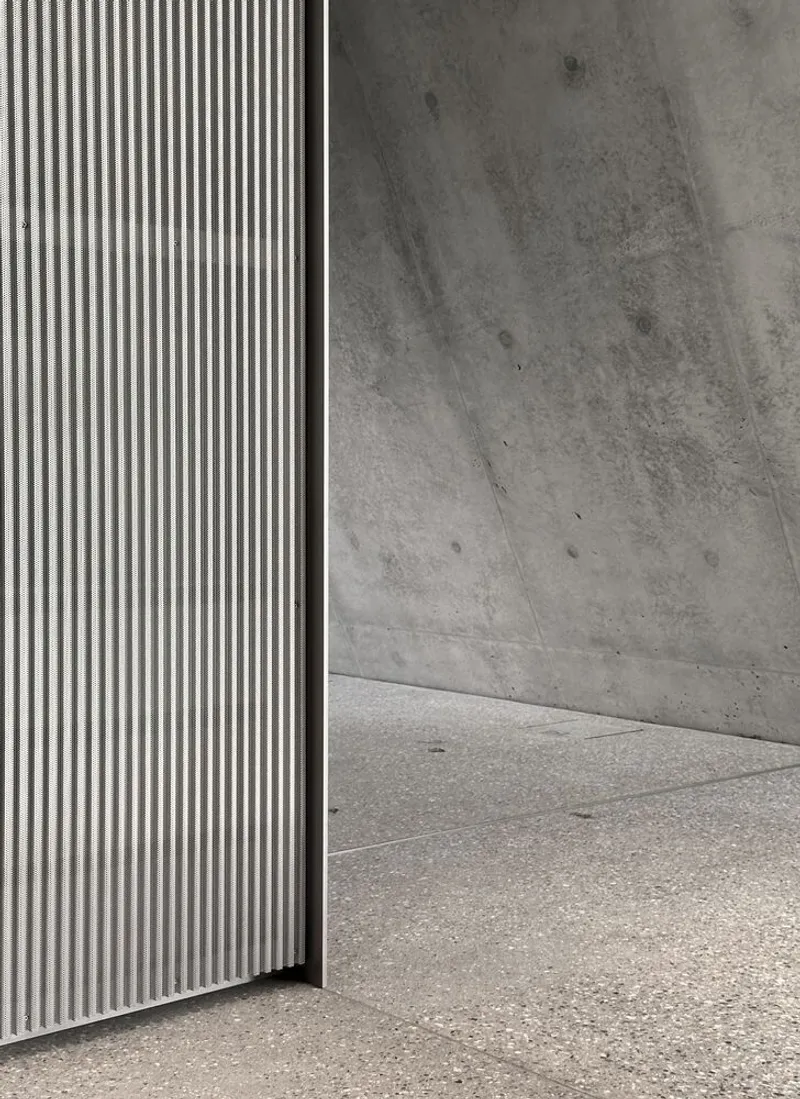
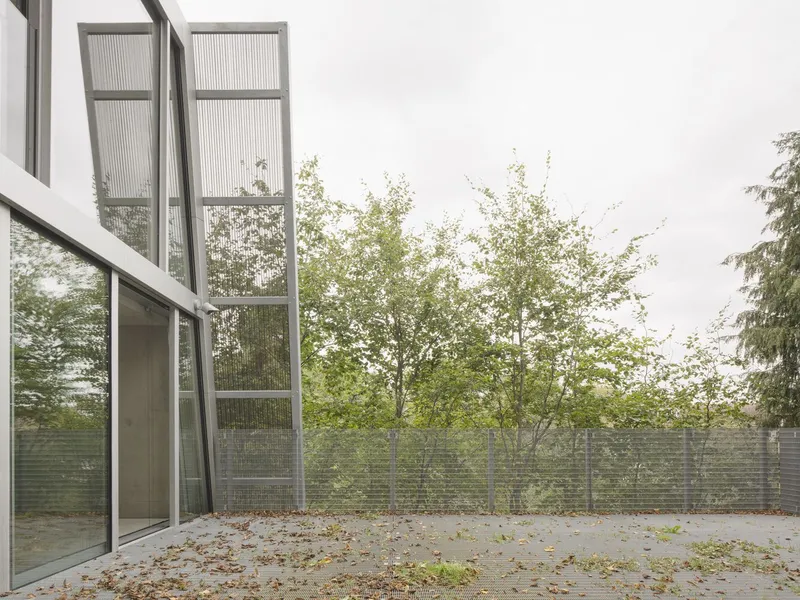
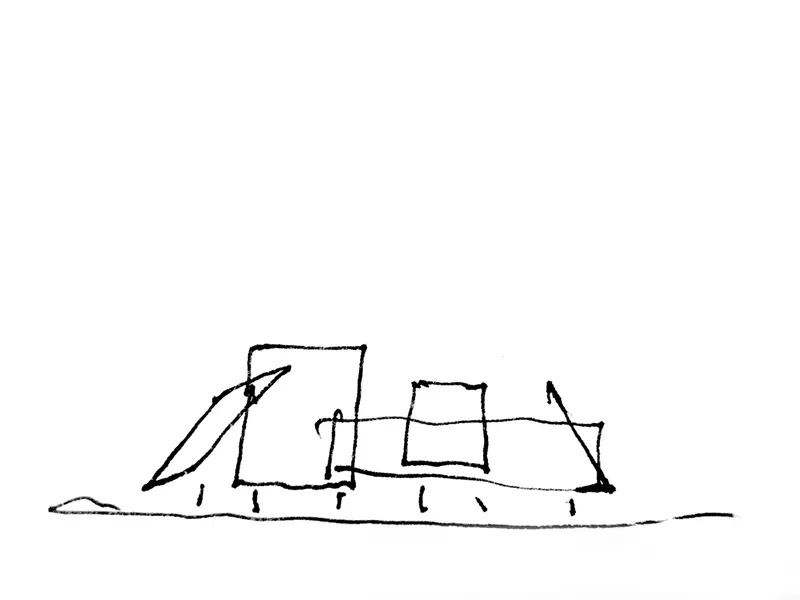
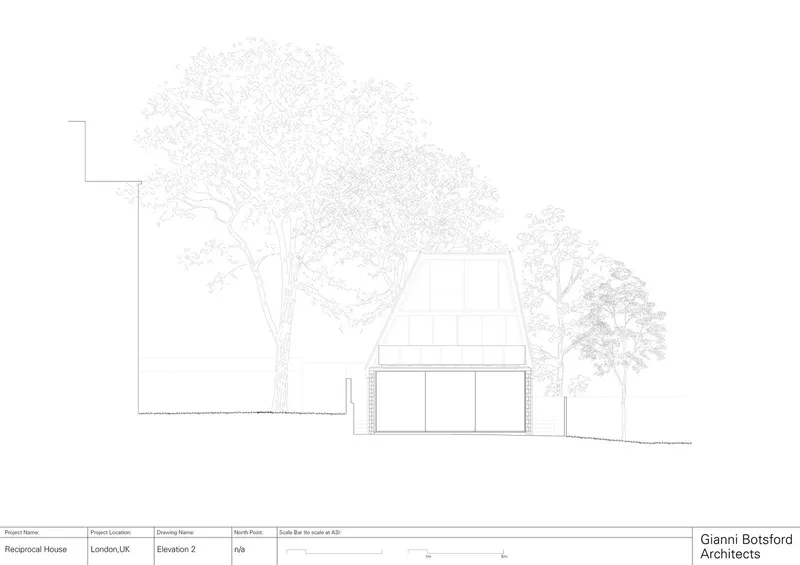
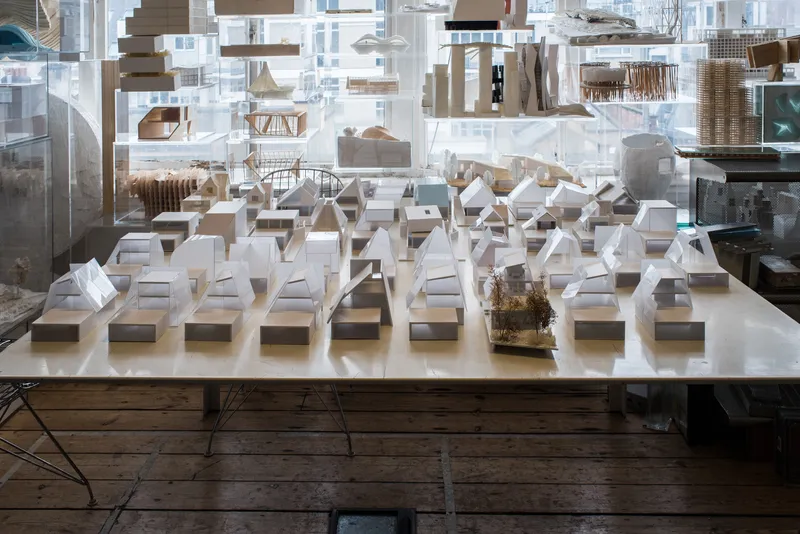
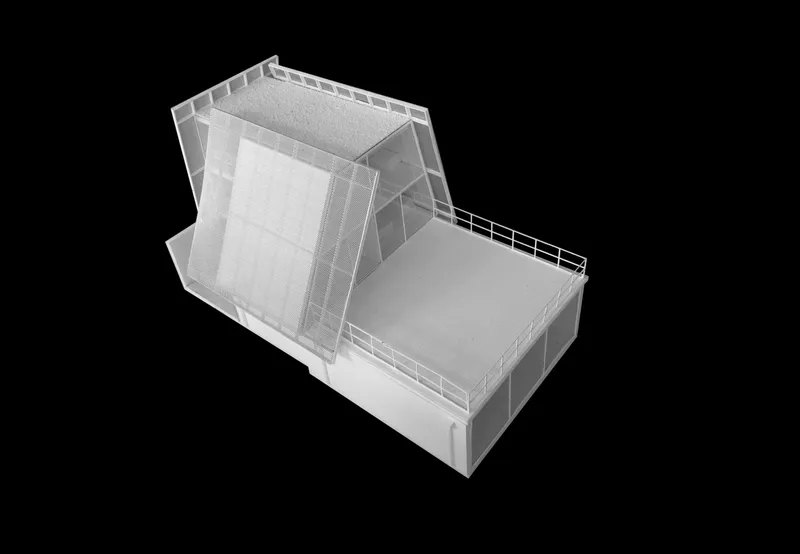
The new home’s design maintains the architectural integrity of the past while offering a fresh and geometric reinterpretation. The angular elevations and perforated aluminum facades evoke the profile of the original structure while creating a modern aesthetic that prioritizes privacy and solar control.


Interior Design: A Marriage of Functionality and Craftsmanship
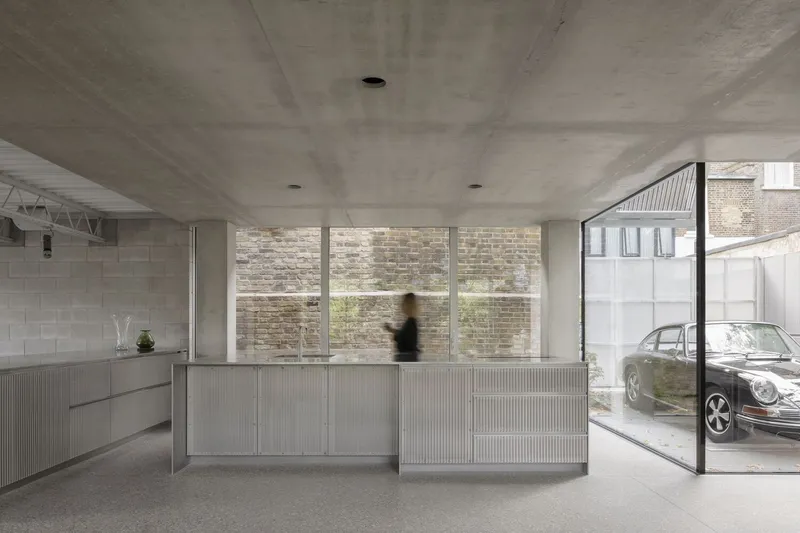
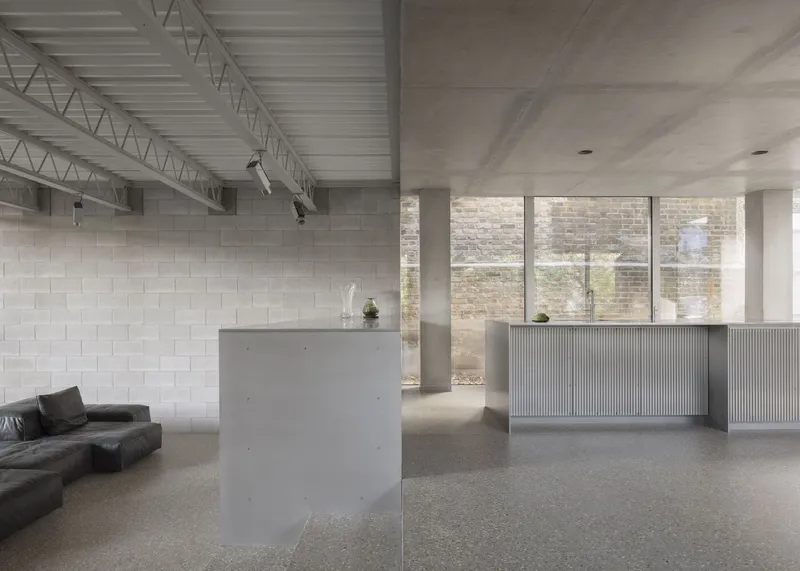
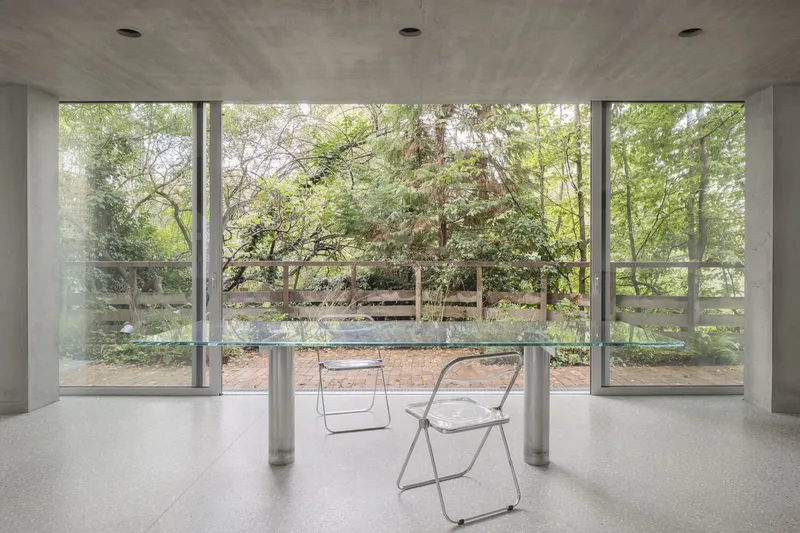
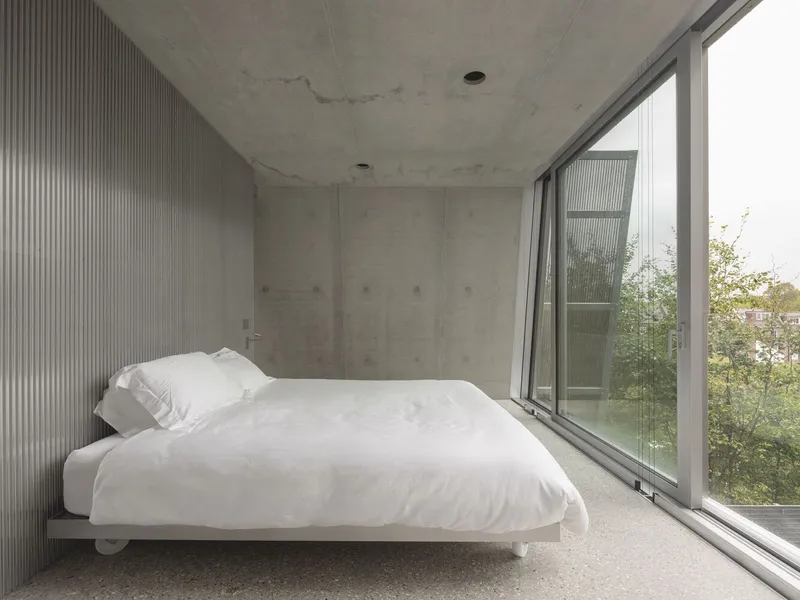
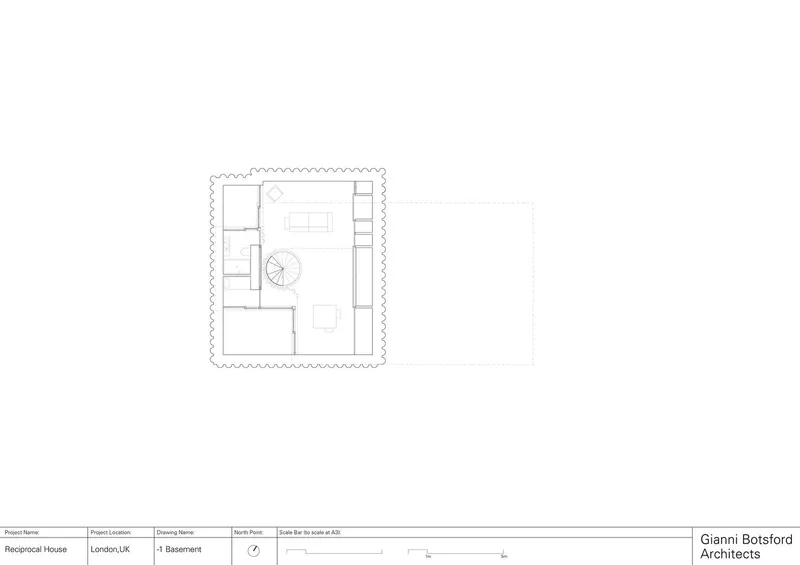
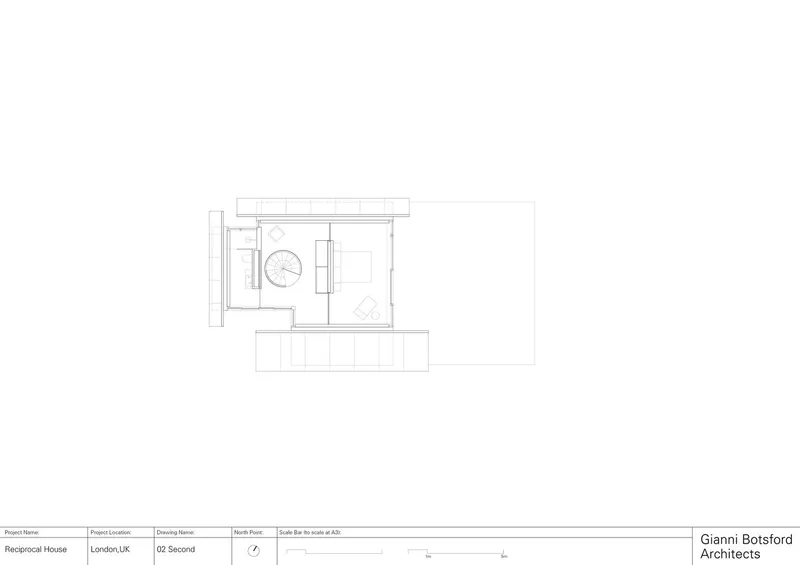
The interiors are meticulously designed with a focus on both functionality and craftsmanship. The ground floor features open-plan spaces for the kitchen, dining, and living areas, while the upper levels house three bedrooms and a rooftop terrace. A basement studio with tall lightwells provides additional living space, ensuring natural light penetrates even the lowest level.


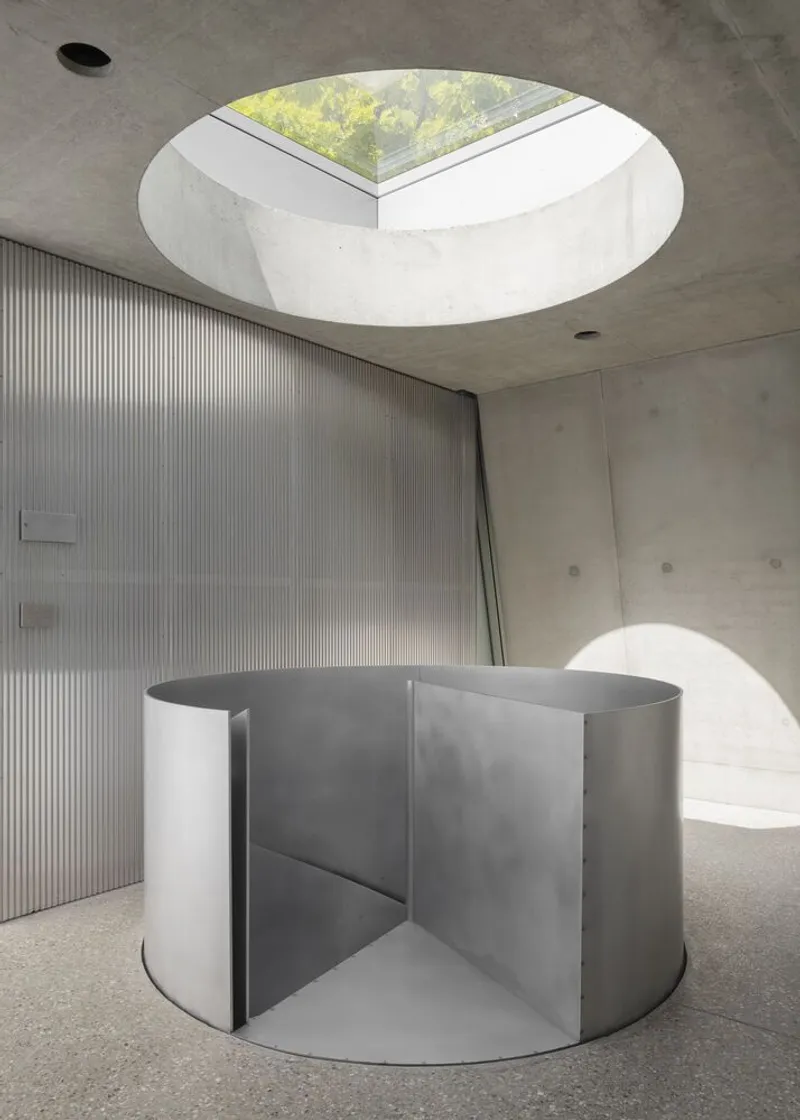
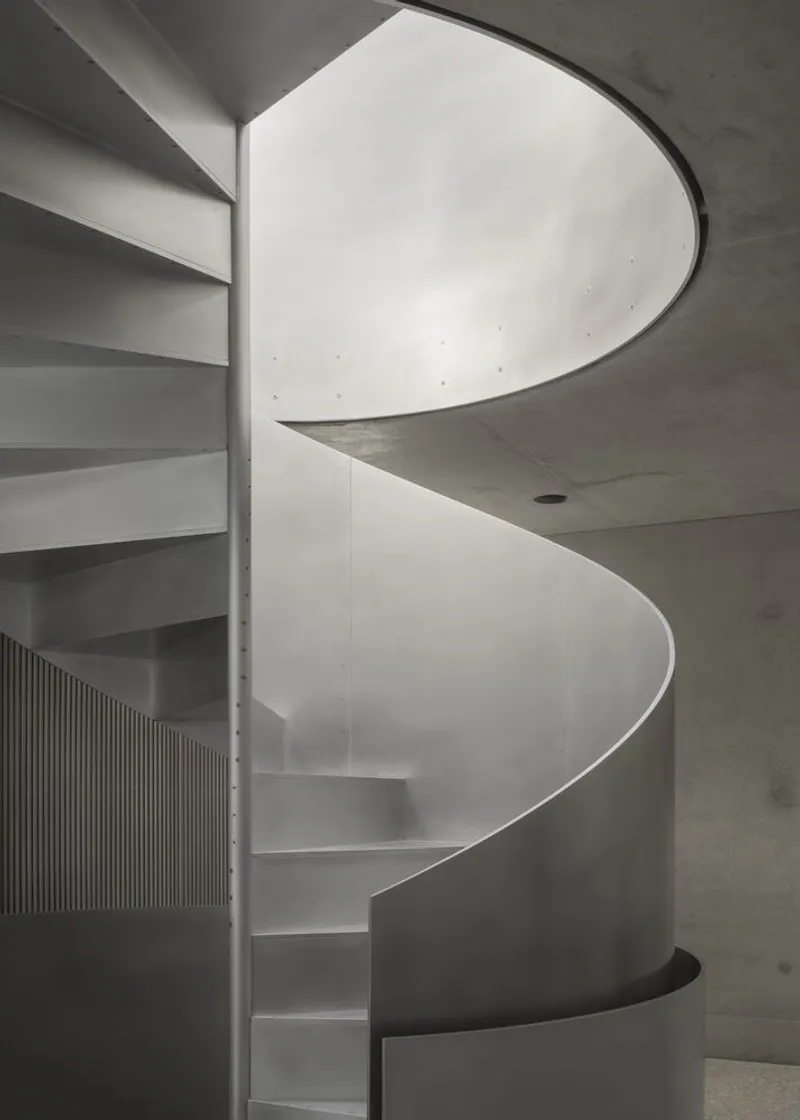
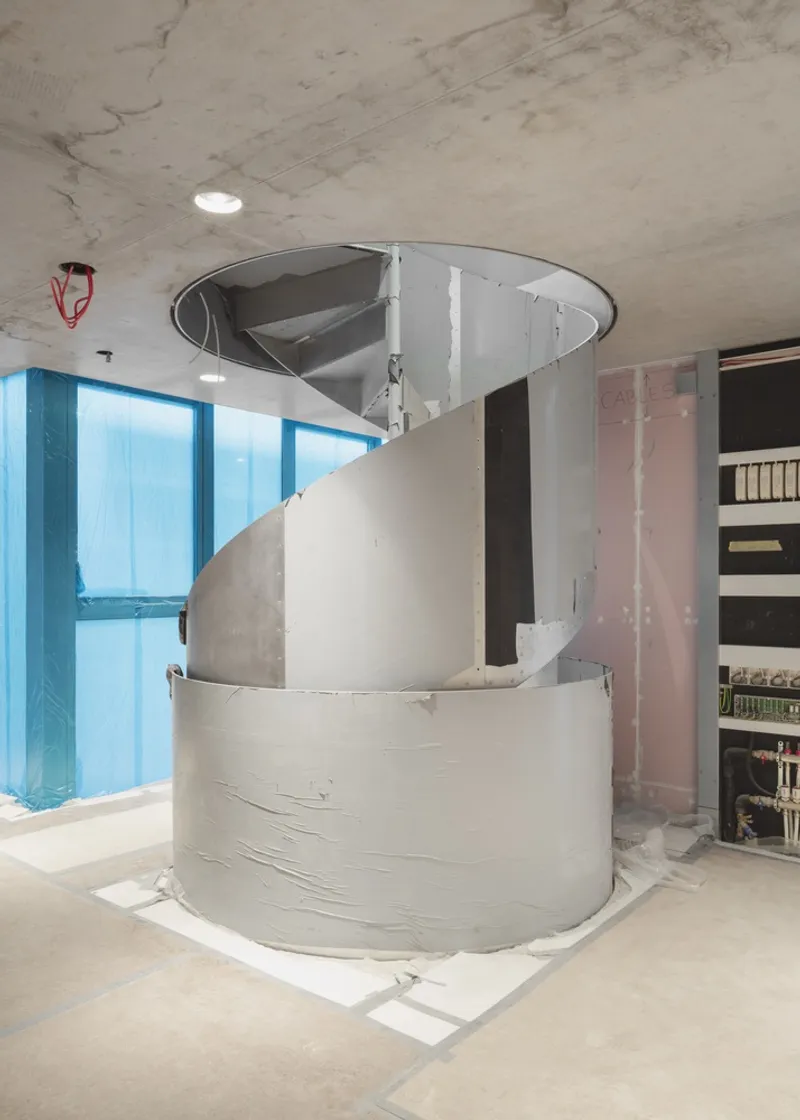
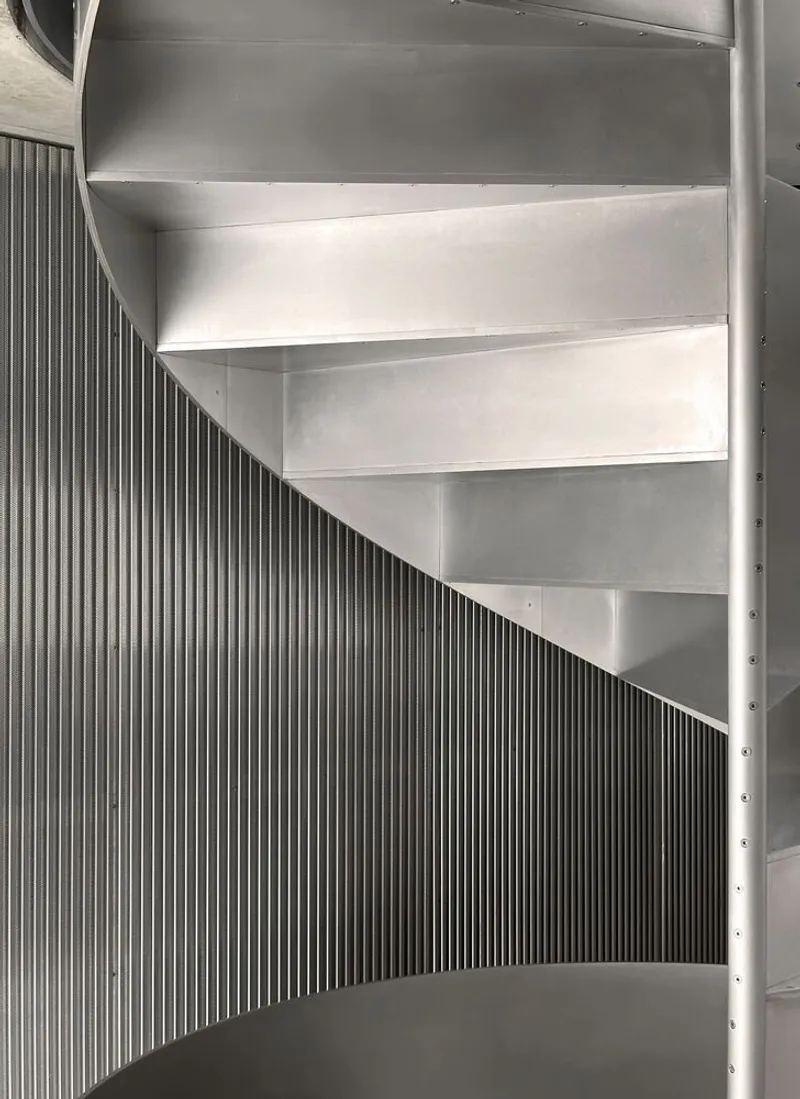
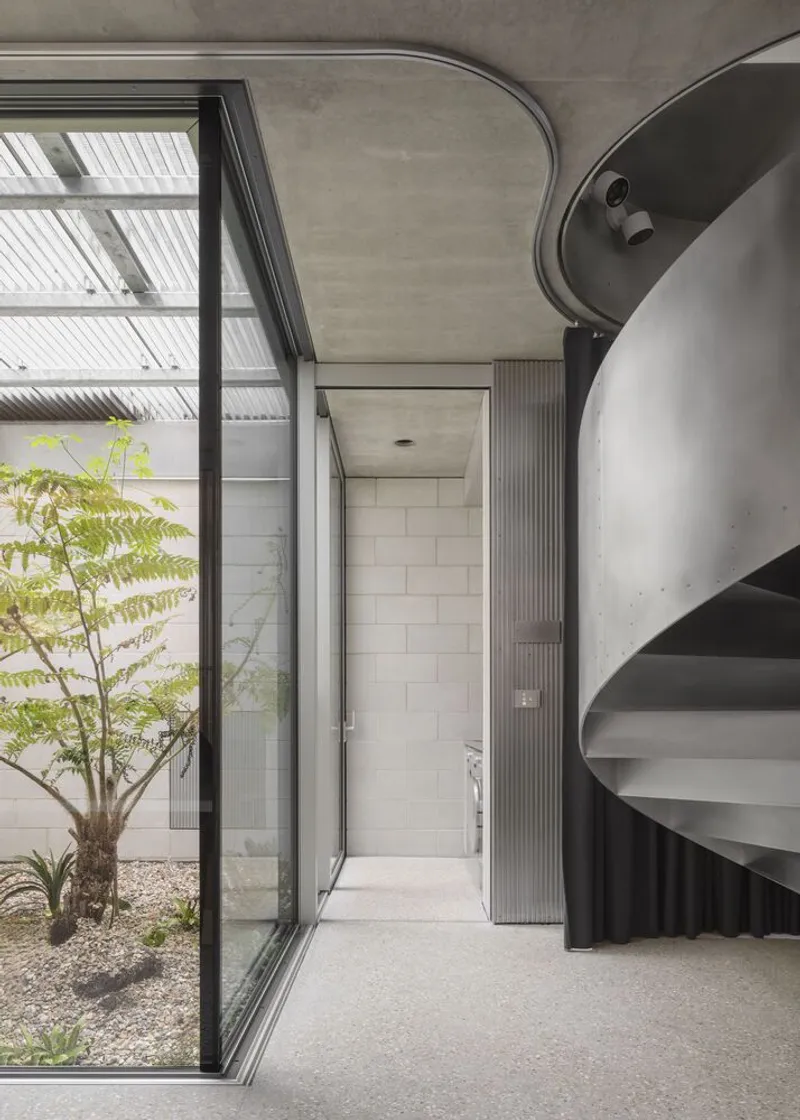
Crafted aluminum elements, including a spiral staircase, kitchen units, doors, and screens, are key features of the design. These elements, fabricated in East London, enhance the industrial character of the home while contributing to its unique visual identity. The centerpiece, a circular rooflight above the spiral staircase, establishes a vertical connection between the floors, allowing natural ventilation and daylight to flood the interiors.


Sustainability and Passive Design Features
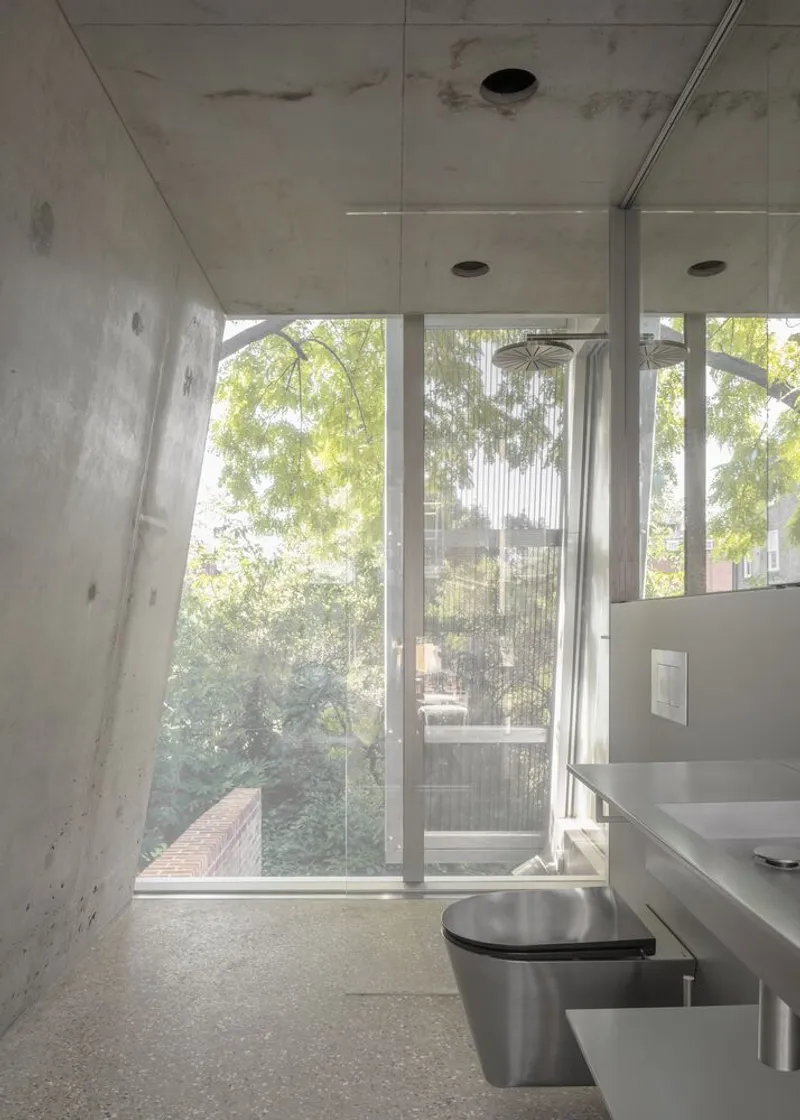
Reciprocal House exemplifies sustainable living through its passive design strategies and modern technology. The building is nestled among mature trees that provide natural shading, while window orientation and sizes are optimized for natural ventilation and daylight. The spiral staircase acts as a ventilation shaft, and the rooflight can be fully opened, creating a stack effect for cooling during warmer months.


Exposed concrete is used throughout the house for its thermal mass properties, reducing the need for active cooling and maintaining a stable indoor temperature. Enhanced insulation and airtight construction minimize heating requirements, which are met using an air source heat pump and underfloor heating.


The house is entirely electric, with no reliance on gas, and features an EV charging point in the front lightwell. Water conservation is achieved through greywater recycling for WC flushing, rainwater harvesting, and low-flow fittings. The inclusion of green roofs further supports sustainable water management and biodiversity.


Landscaping and Embodied Memory
The landscaping around the Reciprocal House incorporates materials from the demolished 1860s structure, playing on the idea of embodied memory. The retained Foster Associates extension, the new structure, and the surrounding environment form a cohesive narrative of sustainability and adaptation. The 56-square-meter rooftop terrace, framed by tall trees, provides a tranquil outdoor space while maintaining a connection to nature.


A Benchmark for Modern Sustainable Living
Reciprocal House is a testament to the potential of modern sustainable house design in urban contexts. By blending innovative architecture, environmentally conscious materials, and passive design strategies, Gianni Botsford Architects have created a home that respects its historical context while setting a benchmark for sustainable urban living.


All Photographs are work of Schnepp Renou, James Eagle, Jonny Wilson, Gianni Botsford Architects
Popular Articles
Popular articles from the community
Solar Steam: A Climate-Responsive Architecture That Redefines the Monument
A climate-responsive memorial architecture that transforms heat, decay, and time into a living system reflecting humanity’s ecological impact.
Free Architecture Competitions You Can Enter Right Now
No entry fees, real prizes. Here are the best free architecture competitions open for submissions in 2026.
Inverted Architecture Installation by Studio Link-Arc: Exploring the Intersection of Architecture and Living Organisms
Inverted Architecture Installation by Studio Link-Arc blends mycelium, sustainability, inverted design, ecological cycles, and urban adaptive architecture in Shenzhen.
Gads Hill Early Learning Center by JGMA: Adaptive Reuse Shaping Community-Focused Educational Architecture
Adaptive reuse transforms fragmented structure into vibrant early learning center with playful façade, natural light, and community-focused sustainable design.
Similar Reads
You might also enjoy these articles
The Ken Roberts Memorial Delineation Competition (Krob)
As the most senior architectural drawing competition currently in operation anywhere in the world, it draws hundreds of entries each year, awarding the very best submissions in a series of medium-based categories.
Waterfront Redevelopment and Urban Revitalization in Mumbai: Forging a New Dawn for Darukhana
A transformative waterfront redevelopment project reimagining Darukhana’s shipbreaking heritage into an inclusive urban future.
OUT-OF-MAP: A Call for Postcards on Feminist Narratives of Public Space
Rhizoma Design and Research Lab invites artists, designers, architects, researchers, and students to reflect on how feminist perspectives can reshape public space. Selected works will be exhibited in Barcelona, October 2026. Submissions open until 15 April 2026.
Documentation Work on Buddhist Wooden Temple
Architectural syncretism and cultural hybridity: A comparative study of the Buddhist temples in Chattogram Hill tracks
Explore Architecture Competitions
Discover active competitions in this discipline
The International Standard for Design Portfolios
The Global Benchmark for Architecture Dissertation Awards
The Global Benchmark for Graduation Excellence
Challenge to reimagine the Iron Throne
Comments (0)
Please login or sign up to add comments
No comments yet. Be the first to comment!