
Red Fort Center by Design Factory India: Breathing New Life into a Heritage Landmark
Red Fort Center transforms a colonial barrack into an immersive visitor hub, blending heritage restoration with interactive, contemporary cultural storytelling.


A Gateway to Rediscovery: Reinterpreting the Red Fort Legacy
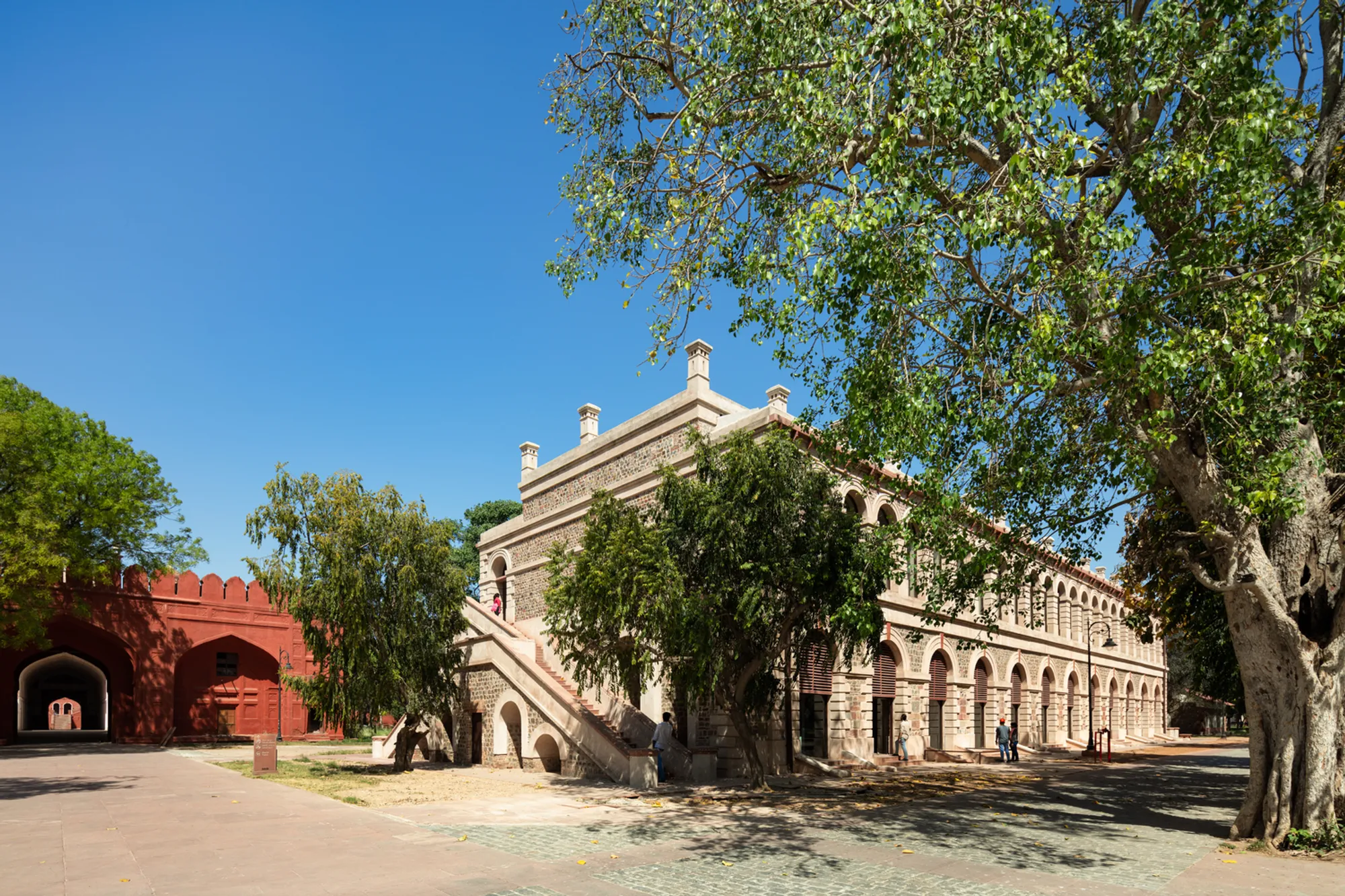
Nestled within the UNESCO World Heritage Site of the Red Fort in New Delhi, the Red Fort Center by Design Factory India stands as a monumental effort to bridge the past with the present. Commissioned by Dalmia Bharat under the government's Adopt a Heritage initiative, this project reimagines a colonial-era military barrack into a contemporary visitor center, carefully interwoven with layers of Mughal and British architectural history.
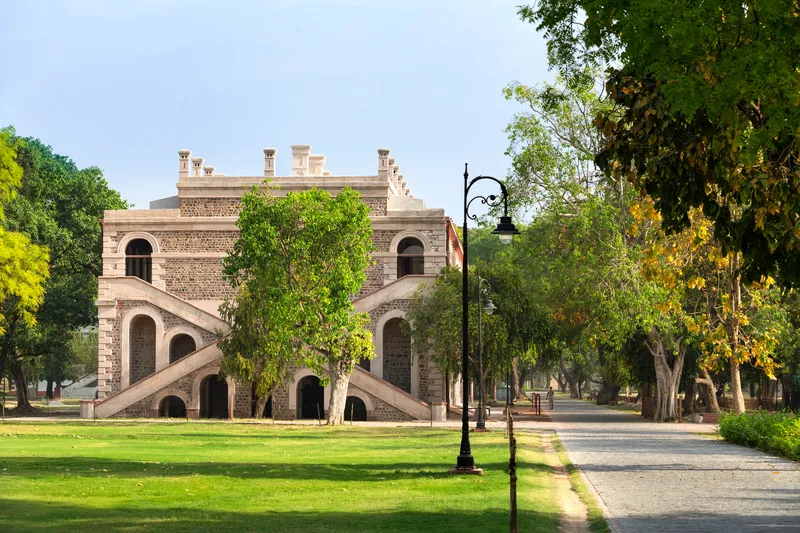
Built by the British after the 1857 First War of Independence—an act that involved demolishing Mughal-era structures—the barracks had remained underutilized since India's independence. Design Factory India embraced the challenge of adaptive reuse and architectural restoration, unveiling intricately carved stones hidden beneath decaying plaster. These rediscovered Mughal fragments now serve as the historical bedrock upon which the new design narrative is constructed.
Contextual Conservation: Where Design Meets Storytelling
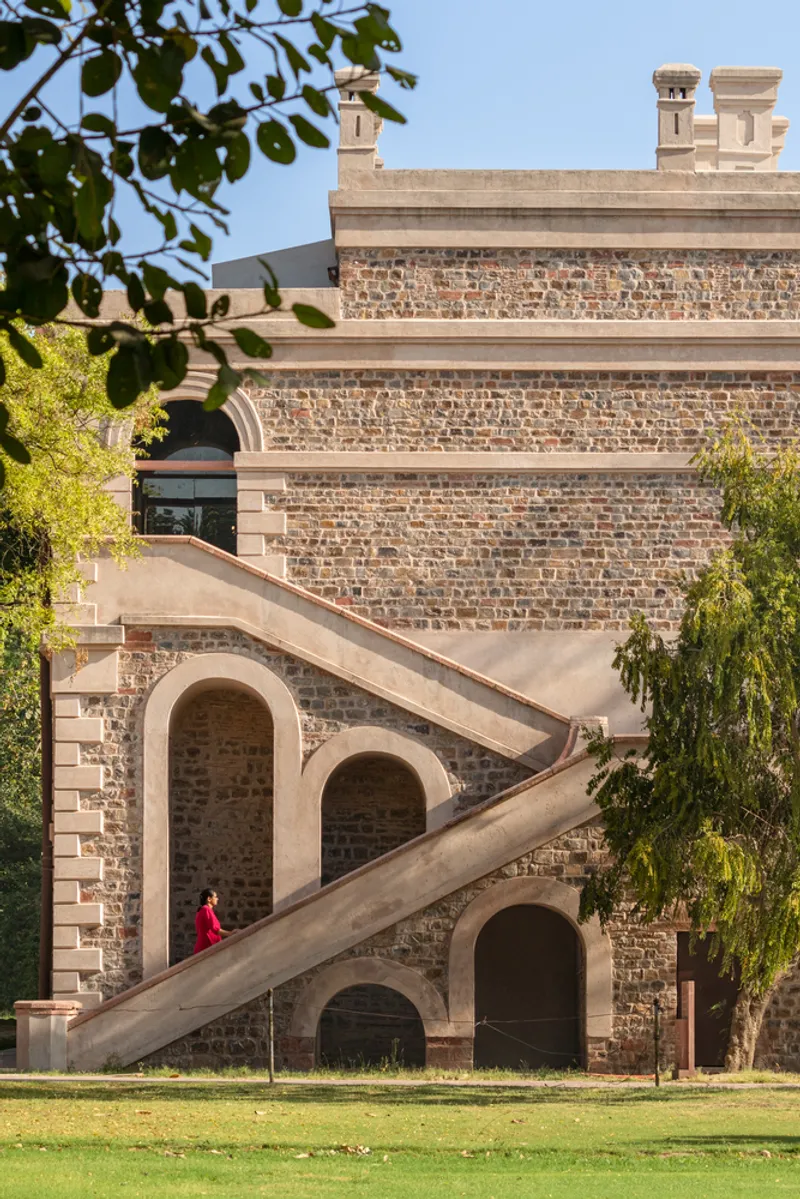
The design strategy honors the multi-layered heritage of the Red Fort without resorting to pastiche or superficial grandeur. Instead, it embraces material authenticity, understated intervention, and experiential storytelling. The use of custom-designed bricks, Red Agra sandstone, and lime-surkhi plaster evokes the textures of the fort’s original construction, seamlessly blending new with old.
Every architectural decision—from scenography to lighting and furniture design—is meticulously crafted to preserve spatial memory while creating an engaging environment for today’s visitors. The palette is warm yet muted, with grey-toned furnishings and red oxide accents that highlight the natural beauty of historic brick and stone. Glazed corridors filter daylight like crystalline shafts, enhancing the immersive spatial experience.

Crafting with Local Wisdom: Materials and Techniques Rooted in Tradition
At the heart of this restoration project lies a strong emphasis on local craftsmanship and sustainable practices. The customized bricks, 1.5 times the size of standard ones, were handmade in electric kilns using materials sourced from Meerut and Moradabad. Red Agra sandstone from Dholpur—the same source used in the original fort—forms the flooring, adding continuity in texture and color.
A conscious mix of Badarpur sand, surkhi, and seasoned hardwoods like teak and sagwan contribute to both visual harmony and longevity. The reinterpretation of pendant lighting in the corridors juxtaposes modern forms with heritage context, symbolizing the dialogue between past and present.
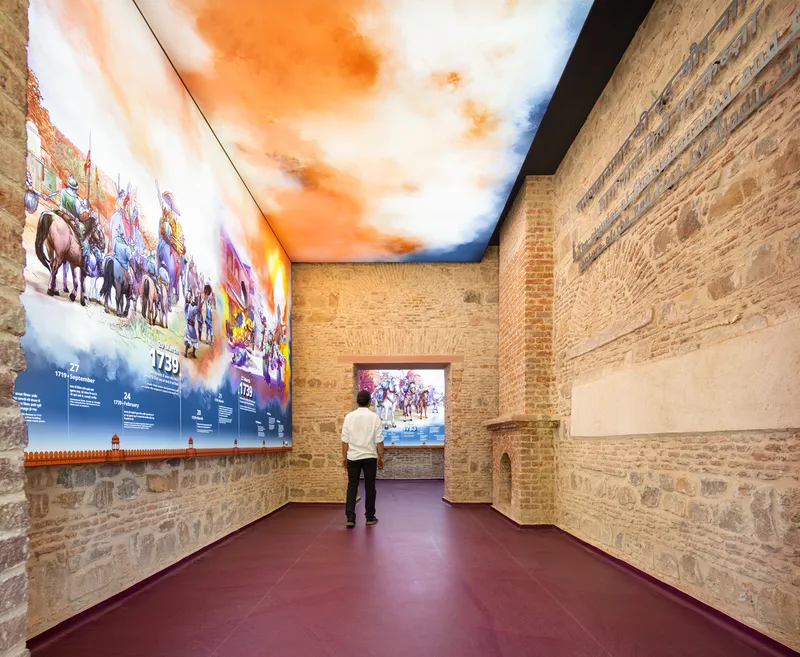
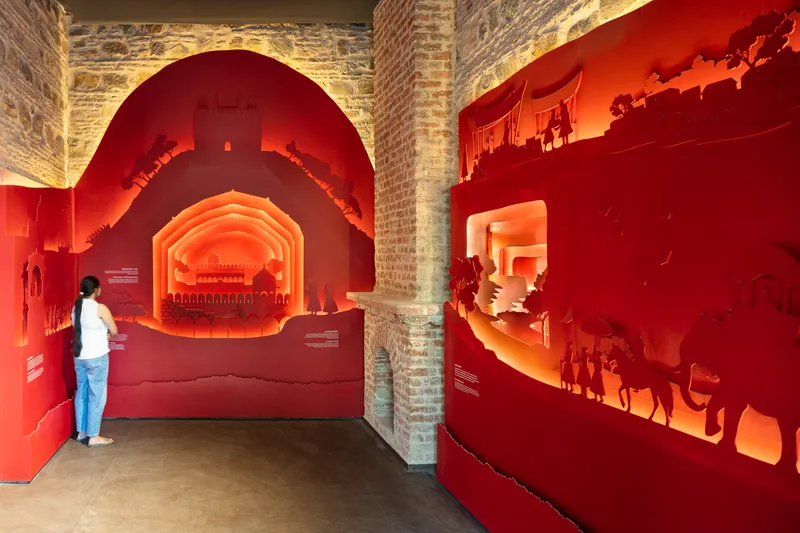
Designed for Discovery: A Multifunctional Cultural Experience
Divided into two main levels—the Red Fort Center on the ground floor and Afsana: The Red Fort Story on the first floor—the space offers a blend of recreational, educational, and immersive experiences. The ground level features Delhi’s only cafeteria within the Red Fort, retail outlets, and a 360-degree projection theater that introduces visitors to the site's cultural depth.
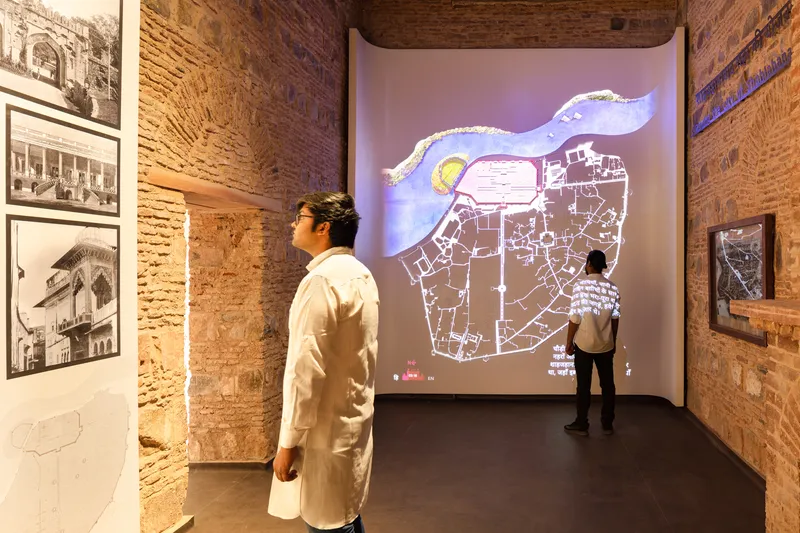
"Afsana" on the first floor invites guests on a digital journey through time, from the planning of Shahjahanabad to the independence movement. Using augmented reality, holography, projection mapping, and scale models, this level vividly narrates the evolution of the fort and its enduring significance as a symbol of India's resilience and sovereignty.
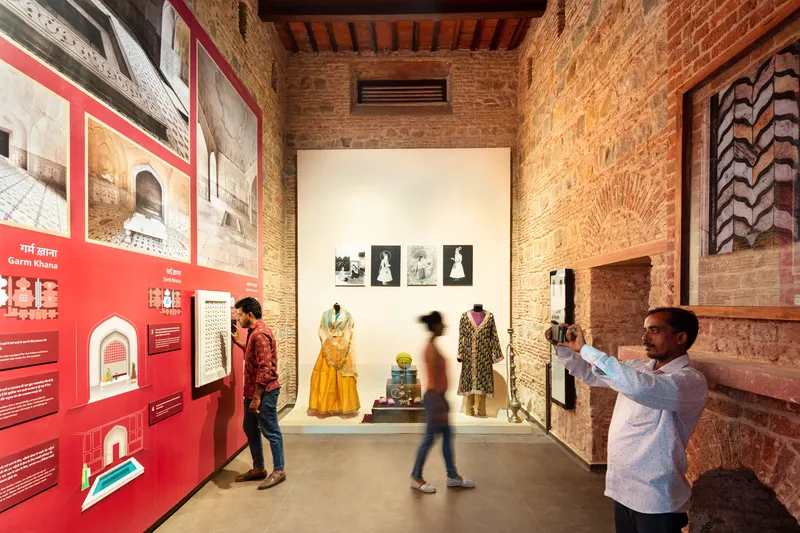

Celebrating Indian Identity Through Immersive Installations
One of the most striking features is the Infinity Room, designed with mirrored walls and etched Ashok Chakras that create a kaleidoscopic space of reflection and identity. Diorama installations, interactive glass exhibits, and large-scale magnetic boards allow for tactile and visual engagement, especially for younger audiences.
Socially conscious design is also embedded in the project. Visitors are guided in small groups to maintain a respectful distance from historical artifacts, while floor markings and guided pathways promote social distancing and a collective sense of awareness. A live-band installation with the pledge "I pledge to clean India and build a New India" reinforces the center’s role as a space for civic reflection.
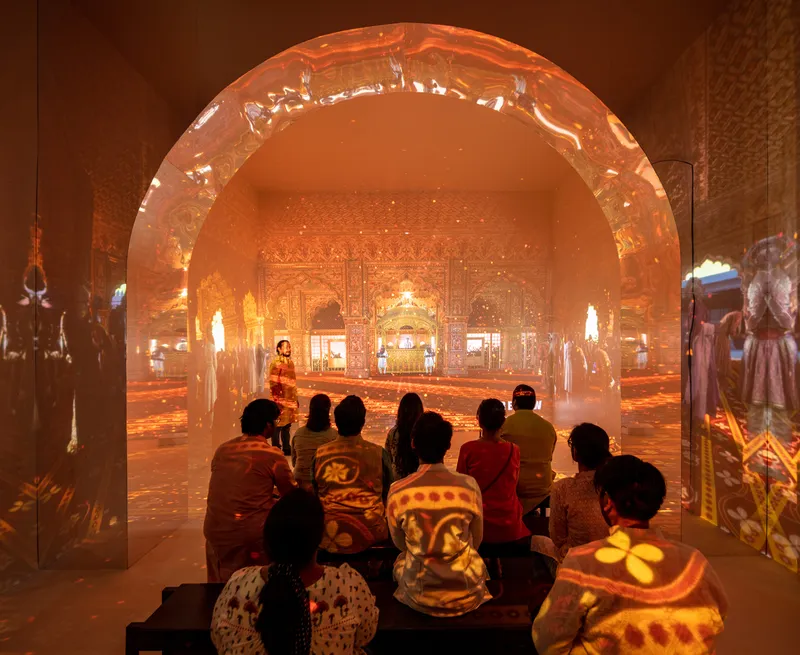

A Model for Heritage-Led Urban Renewal
More than just a visitor facility, the Red Fort Center is an architectural exemplar of how conservation, design, and technology can intersect to revitalize cultural heritage. It accommodates up to 12,000 visitors per day, offering an inclusive, educational, and sensorial journey through one of India's most iconic monuments.
By transforming a derelict colonial relic into a vibrant cultural anchor, Design Factory India has not only preserved the tangible layers of history but also infused the site with new life, making it relevant for contemporary audiences while staying deeply rooted in its original spirit.
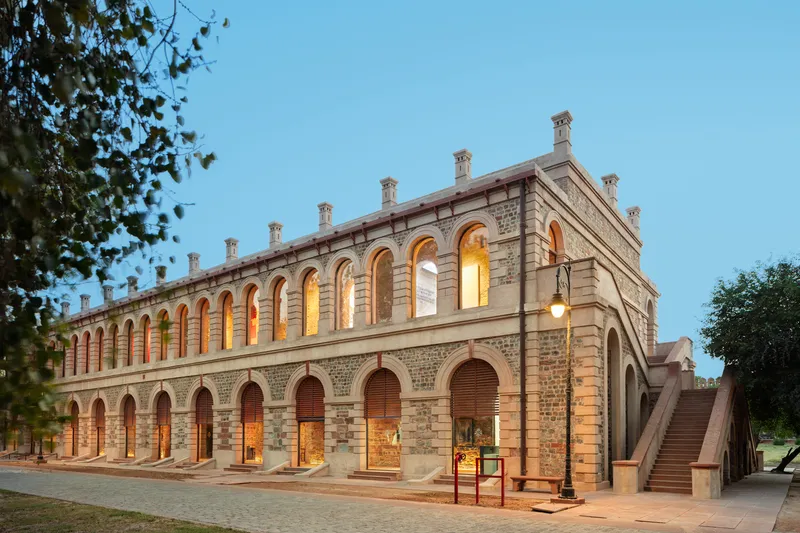
All Photographs are works of Andre J. Fanthome



Popular Articles
Popular articles from the community


Co-life: Sustainable Architecture for Age-Friendly Community Living
Co-life reimagines sustainable architecture for seniors through courtyards, rammed earth, shared gardens, and spaces designed for belonging.

The Ocean Hive: Sustainable Architecture for a Self-Sufficient Civilization at Sea
The Ocean Hive imagines sustainable architecture at sea, where modular habitats, algae, wave power and ocean waste sustain a growing colony.

The Musturak Paradise: Senior Living Architecture for a Connected Future in Temara, Morocco
The Musturak Paradise reimagines senior living architecture in Temara via private homes, social spaces, culture, community, and shared care.

Conexión: Biophilic Design Reimagines High-Rise Living in Hong Kong
Conexión reimagines high-rise living in Hong Kong through biophilic design, green facades, shared spaces, daylight, water and nature within.


Similar Reads
You might also enjoy these articles


Hodi-Mandai Geram
Project Function: Preservation and revitalization of the Intangible heritage and socio-spatial identity of the Hodi by Housing, Cultural Memory Center, Sacred Grove, landscape, local tourism economy


Olio Towers: A Mid-Rise for Performers That Fuses Housing, Rehearsal, and Stage
Located blocks from Houston's Theater District, this modular tower stacks living units around a central performance atrium.

Oasis: Modular Green Housing Carved into Dhaka's Urban Fabric
A shortlisted Plugin Housing entry reclaims unauthorized settlements in Dhaka with stepped concrete volumes, green roofs, and ventilation-driven design.

Black Hole: A Floating Megastructure for the Post-Physical Era
Emiliano Mazzarotto envisions a spherical, self-scaling arena where e-sports, digital hotels, and holographic stadiums replace traditional public space.


Explore Mughal Architecture Competitions
Discover active competitions in this discipline



Challenge to reimagine the Iron Throne


Photograph architecture without architects


Illustrate the lost glory of Angkor Wat - Render Challenge


Bring back Drive In's
Comments (0)
Please login or sign up to add comments
No comments yet. Be the first to comment!