
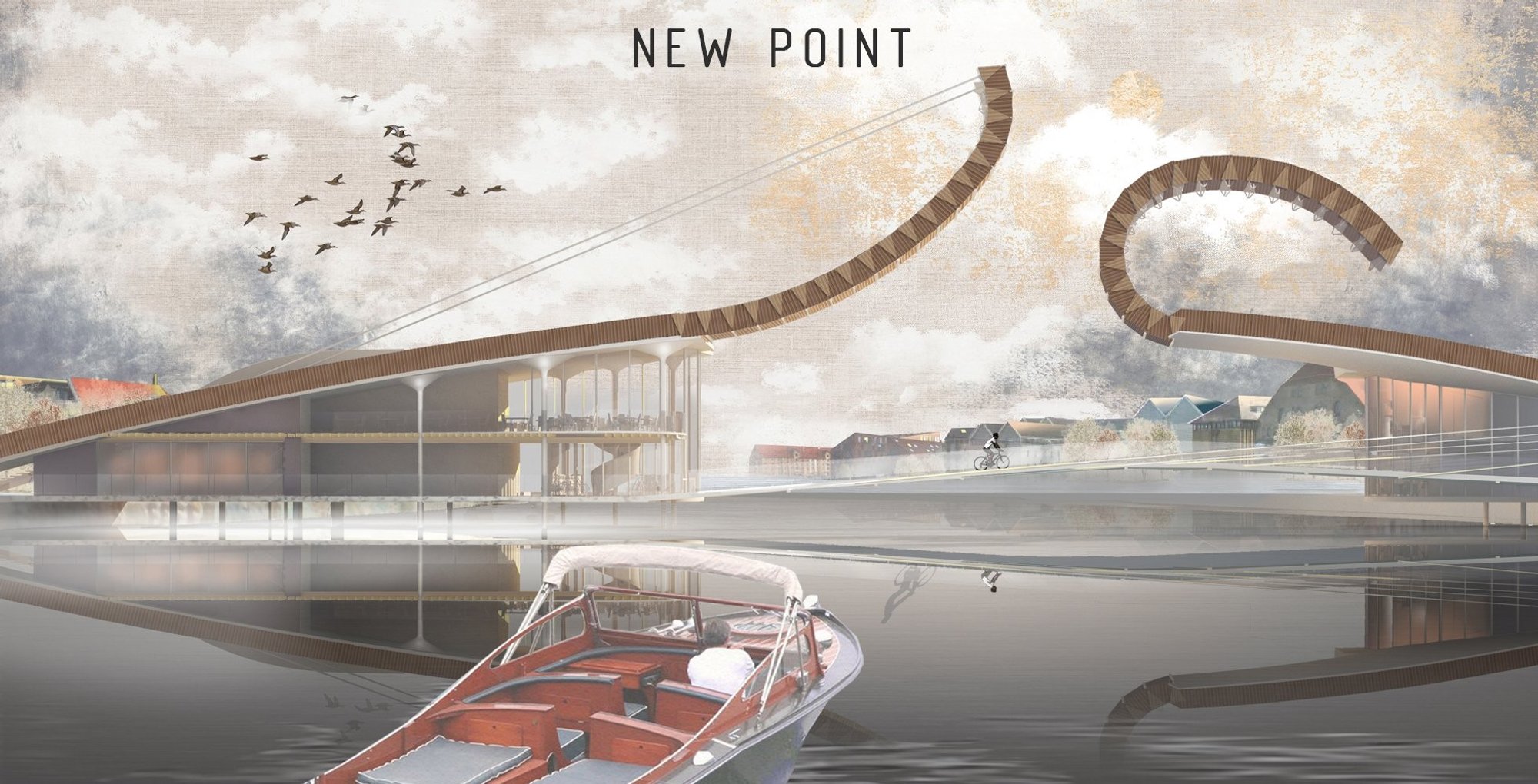
Reimagining Bridge Architecture as Urban Public Space
A sustainable bridge architecture redefining Copenhagen’s cycling culture through public space, kinetic design, and waterfront activation.

In the evolving discourse of sustainable bridge architecture, infrastructure is no longer a static connector between two points. It is an urban catalyst: a social condenser, a cultural platform, and a dynamic public landscape. The proposal New Point by Kate & Daria Architects in Copenhagen redefines what a bridge can represent within a progressive cycling city.
Situated along one of Copenhagen’s vital waterfront junctions, the project transforms a conventional crossing into a layered public realm that integrates mobility, culture, ecology, and community programming. More than an infrastructural object, the bridge becomes a destination, a new point on the city’s map of cycling culture.
Cycling Infrastructure as the Core of Sustainable Urban Design
Over a century after the invention of the bicycle, cycling remains one of the most efficient and sustainable modes of transportation. In cities like Copenhagen, cycling is not merely a transport alternative, it is embedded within urban identity.
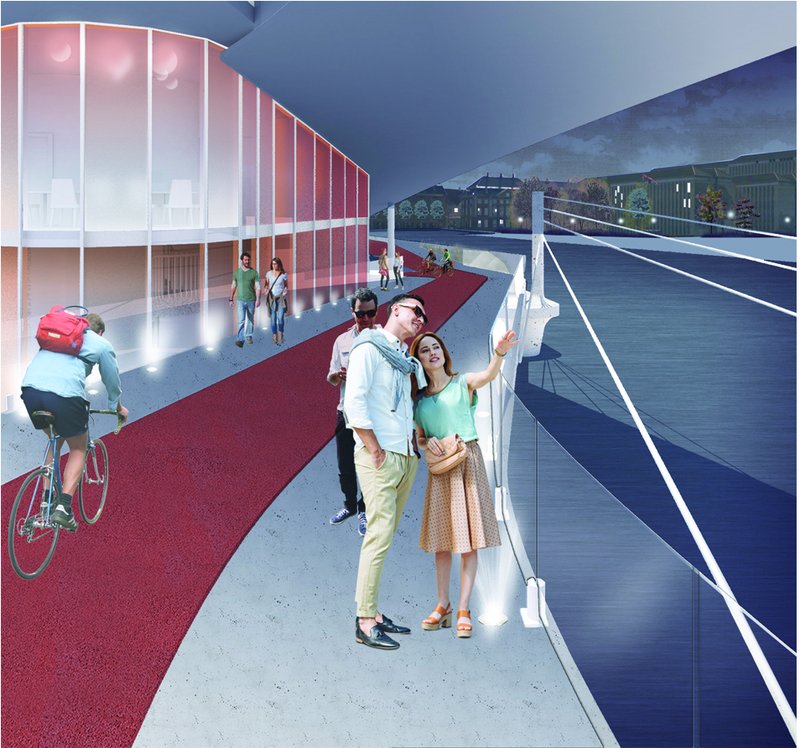
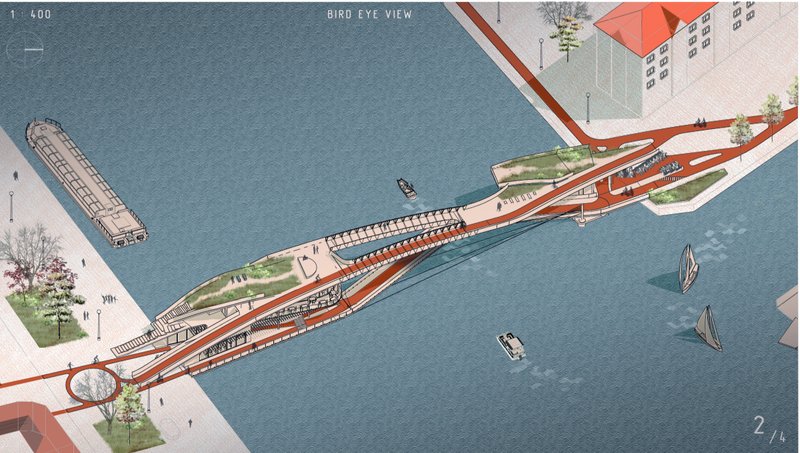
This project embraces that legacy by positioning cycling infrastructure at its conceptual core. The bridge introduces a two-level bike way system:
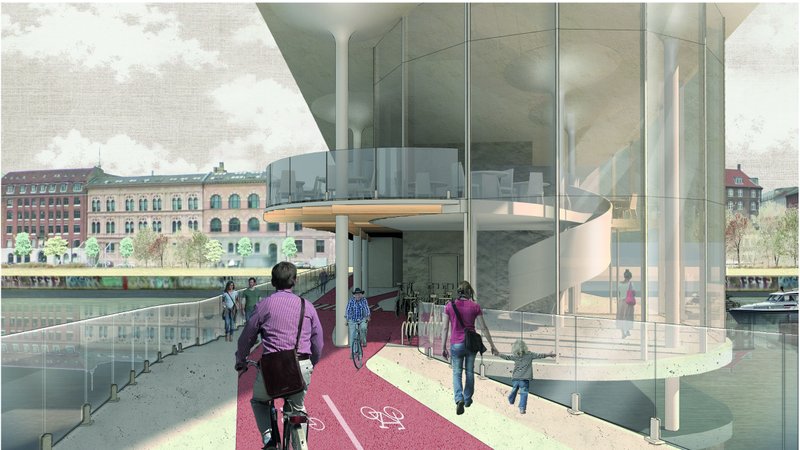
- Lower Level: Integrated with placement functions including café, workshop, retail, storage, and service spaces.
- Upper Level: An expansive public space encouraging gathering, leisure, and slow pedestrian movement.
These two levels create distinct rhythms of circulation, one dynamic and fast-moving, the other contemplative and social. This duality enables the structure to function efficiently despite being openable and located at a busy urban junction.
Through this approach, sustainable bridge architecture becomes a framework for urban well-being. Cycling allows the city to breathe, reducing congestion and supporting healthier lifestyles.
Kinetic Construction and Transformative Form
A defining feature of the design is its kinetic and transformative construction. The openable mechanism ensures free passage for ships and small boats, preserving Copenhagen’s maritime activity.
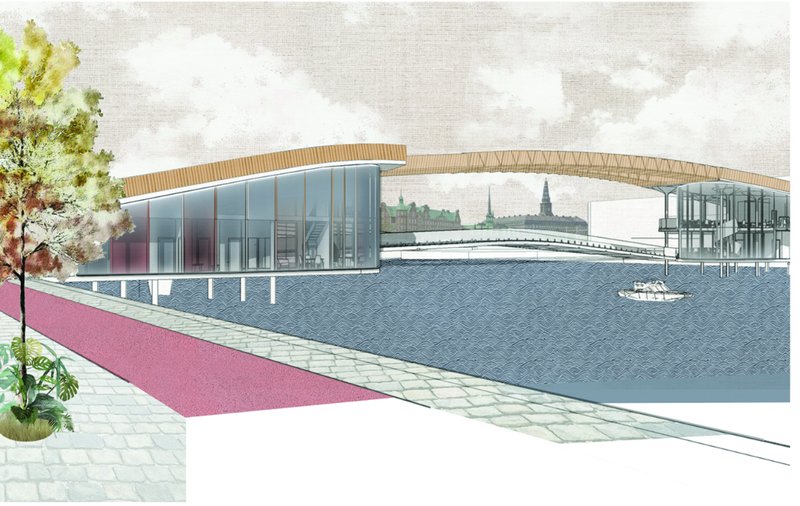
Water transportation is integrated as an essential design component. The project includes a specially designed harbor with moorings for pleasure craft and small vessels. Visitors can dock directly at the pier, reinforcing the bridge as an active waterfront hub.
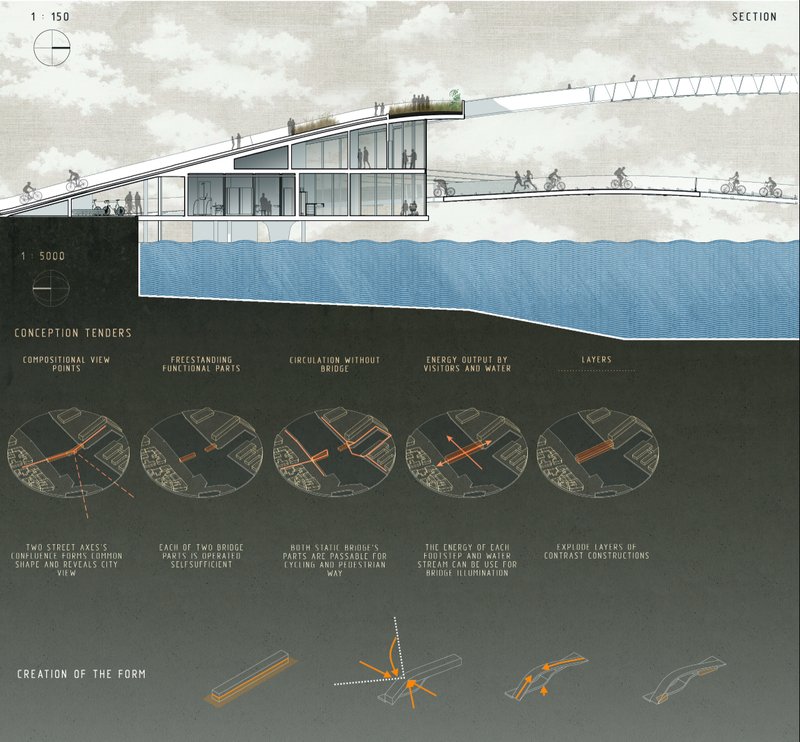
The architectural language reflects this movement. The structure unfolds in layers:
- Two intersecting axes shaping urban perspectives
- Freestanding functional parts operating semi-independently
- Circulation systems flowing without interruption
- Energy output harnessed from visitor movement and water flow
This dynamic composition strengthens the identity of the bridge while ensuring operational flexibility.
Interweaving Culture, Materiality, and Timeless Form
What elevates this project from infrastructure to landmark is its deliberate cultural layering.
The design interweaves elements from different eras and subcultures into timeless architectural forms:
- Wood construction in the openable segment references traditional Scandinavian craftsmanship.
- Raw stone textures in the café interior introduce tactile contrast.
- Truss systems supporting the bike way reflect modern industrial expression.
- Graffiti on pontoon surfaces celebrates urban subcultures and contemporary art.
Open public spaces incorporate flora inspired by Denmark’s valleys, softening the structural composition and reinforcing ecological awareness.
The unsubstantial appearance of the elevated bike way, held by trusses yet visually light, contrasts with solid, cave-like pillars carved with expressive capitals. These spatial contrasts create the tension necessary for the structure to become a memorable city landmark.
Bridge as Separate Public Center
Rather than acting solely as connective infrastructure, the project reconceptualizes the bridge as a distinct public center. It functions as:
- A social gathering platform
- A cultural interface between riverfronts
- A cycling destination
- A waterfront promenade
By separating circulation layers and integrating public amenities, the bridge supports both everyday commuting and leisurely occupation.
The spatial distribution reflects this balance:
- 52% Cycling pathways
- 31% Community space
- 17% Service functions
This proportional strategy ensures that movement remains efficient while community engagement is prioritized.
A New Landmark in Copenhagen’s Urban Fabric
Landmarks are not defined solely by height or monumentality. They emerge from meaningful contrasts, functional clarity, and cultural resonance.
Wide open public space invites both citizens and visitors. Cycling infrastructure embedded within social programming transforms the bridge into a recognizable urban node. The interplay of wood, steel trusses, raw stone, and layered circulation creates a sculptural identity visible from multiple vantage points.
By merging sustainable mobility, kinetic engineering, waterfront activation, and cultural layering, Kate & Daria Architects propose a model of sustainable bridge architecture that aligns with Copenhagen’s progressive urban vision.
The bridge does not simply connect two riverfronts: it connects communities, subcultures, and modes of movement. It demonstrates how infrastructure can become architecture, and how architecture can become a living urban landscape.
In redefining the bridge typology, this project establishes a new benchmark for cycling-centered urban infrastructure in contemporary cities.




Popular Articles
Popular articles from the community

Art 1 Office Strips Athens Back to Its Bones
Neiheiser Argyros transforms a 40-year-old Athens office building into a vivid, materially rich workplace anchored by red steel, exposed concrete, and roof
Residence BB 214: Quiet Precision in Ludhiana
Minimalist Architecture & Design Studio composes a residence of white volumes, filtered light, and deliberate restraint in Punjab's urban fabric.

20 Most Popular Commercial Architecture Projects of 2025
From sustainable market concepts to heritage factories, the commercial buildings and proposals that drew the most attention on uni.xyz this year.
A Park Building That Wants to Be a Landscape
Omrania's Operations & Maintenance Building at King Salman Park dissolves industrial program into Riyadh's largest green infrastructure.


Similar Reads
You might also enjoy these articles
Twilight Crossing: A Pedestrian Bridge That Performs with Light and Water
Angel Gamboa's tensile cable bridge transforms a lakeside crossing into a choreographed sequence of color, reflection, and framed views at dusk.
Digital Façade Design for our cities’ urban fronts
Prima Facie - Result Story
Protecting avian biodiversity: Bird observatories to help spread awareness & save rare bird species.
Results for ‘Fly’ - Landscape design competition out now






Comments (0)
Please login or sign up to add comments
No comments yet. Be the first to comment!