
Reinventing Reading Spaces: A new outlook for reading spaces has arrived.
Result for 'Solace' - Reading Pods competition out now.


Reading is almost an involuntary action that any literate person performs, even if it may be as basic as reading the news on your mobile device to read books obsessively. Reading has transformed from analog form to digital to now, even podcasts, with audios that read to you.
While content can be consumed in, either way, the state of mind in which a reader is, is what determines the effectiveness of the activity. A preoccupied mind refuses to take in new information and similarly, outward distractions can hinder the effectiveness of reading where one can read the same line multiple times with nothing registering in their minds.
For avid readers, hindrances caused by internal or external reasons have the capability to upset their routine and alter their mental health as well. Sources suggest that it might be adaptive or pathological anxiety that pushes people to feel like, once they’ve lost the habits that used to comfort them, they cannot get back to it.
How can the stress from not being able to read in a cozy ambiance be alleviated?
Out of the many structures we build for work, most are designed to foster social interaction and team building, and so on, but when it comes to creating private spaces, there is a lack of forethought. Such spaces are necessary to help clear their mind or have a quiet introspective time, be it for reading, meditating, or even taking a nap.
The design of such spaces in work environments or institutions must be given priority. A general lack of such spaces discourages people from taking time out to relax, from their busy schedules. Providing a space for such people, that can be used when needed and compact enough to be transported or carried with, would be a lifesaver.
While there have been a few products in the market that are able to facilitate visual privacy as a temporary means of isolation, they are solutions that fail to cover the audio factor. The idea of taking required private time in our busy schedules each day will be able to gain traction with the availability of products that can help us take this time most conveniently.
Human pods are a trend that came up as a move as a living space in highly dense cities. Turning this concept into a modular pod for people to have their private time needs a little tuning in design.
The challenge of the competition was to design a pod that can be used to create a silent and isolated environment for individuals to spend time in it by reading, working, or sleeping.
The product must be easy to operate and occupy minimal space. While designing such a product, one often concentrates on the space restraint, when the real focus must be on optimizing this space, keeping in mind the functions it caters to.
The concept of this pod must be inventive and unique that would make it relevant to every background, with little room given to the user for customization. Amenities that might be needed by the user inside must be designed.
Privacy is the topmost priority. Any digital intervention or automation to the product might also be made as long as it serves the purpose of disconnecting the user from the outside world.
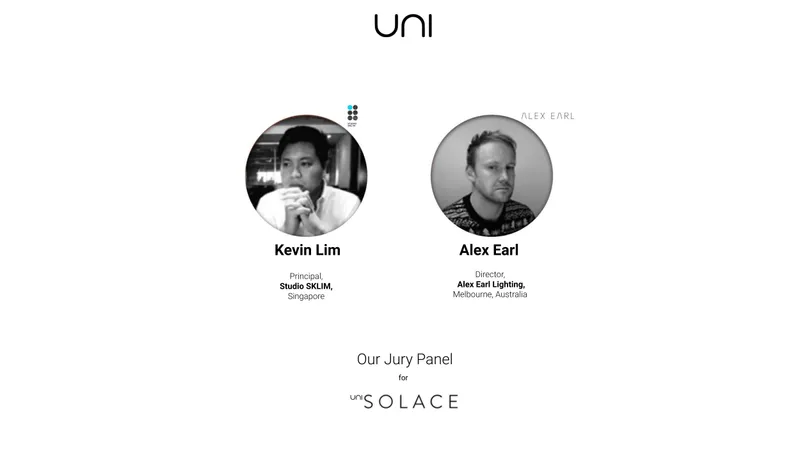
The jury for the competition consisted of esteemed designers, professionals, and academicians from around the world. The Lead Jurors for the competitions were as follows:
Kevin Lim, Principal, Studio SKLIM, Singapore
Alex Earl, Director, Alex Earl Lighting, Melbourne, Australia
Some of the Best of competition projects are as follows:
Winning Project: TaleBox -- Competition Entry for Solace
By: Valerie Victoria & Yangchuan Deng
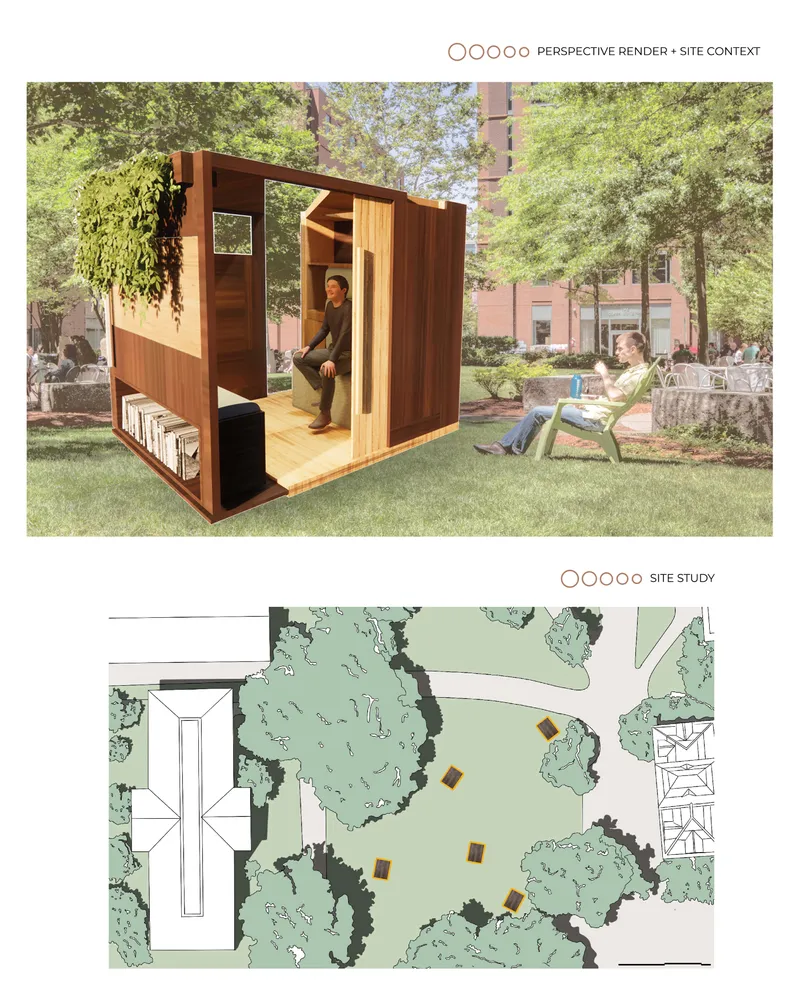
Fig: 1 Site Plan, Perspective Render, and Site Content
Description: TaleBox is a reading pod aimed to provide comfort while eliminating distractions for its users.
Jury Comments: An interesting approach, with some questions around practicality in an outdoor setting.
--------------------
People’s Choice: ETHEREAL (Solace)
By: Anam Shaikh, Samyuktaa Singaravel & Shubham Choudhary
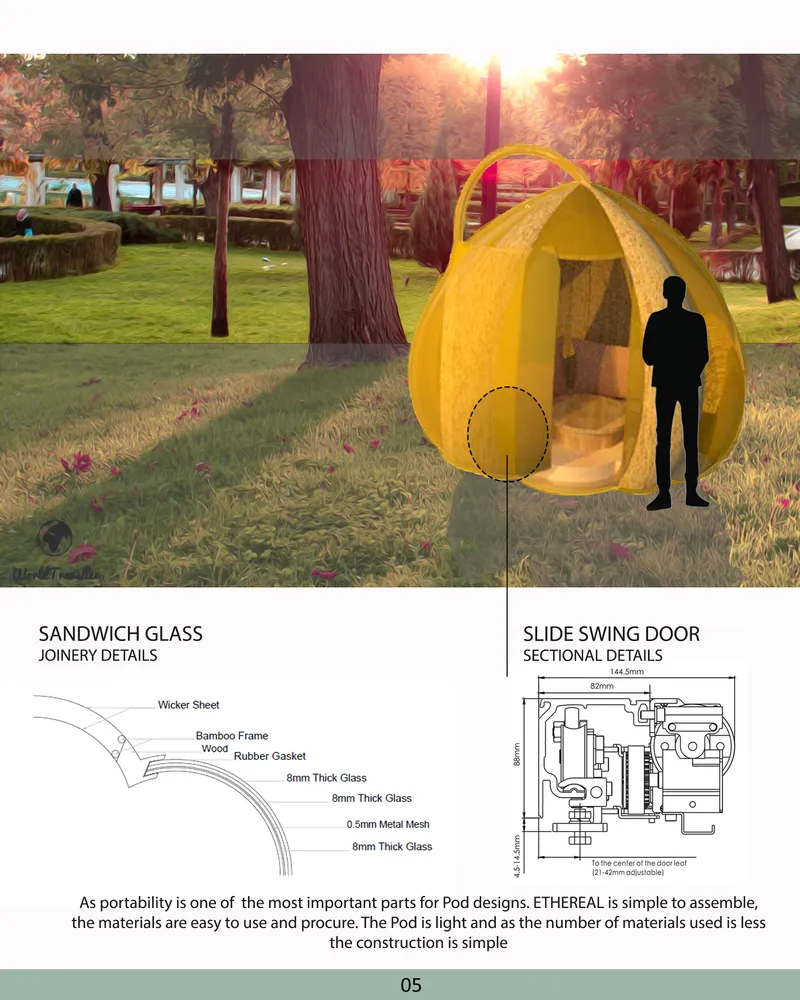
Fig: 2 Sectional detail
Description: The idea of ETHEREAL is to create that space where people will sit, relax, read and enjoy. The homely cocoon formed by the petals of ETHEREAL will be a magical retreat - away from the bustling city life. The design of the ETHEREAL pod is inspired by the story of Flowers and Bees. The idea is simple - ETHEREAL pods allow you to enjoy your personal space.
Jury Comments: Interesting approach, but likely very difficult to manufacture with practicality issues as above.
----------------------
Editor’s Choice: Mellow
By: Samhita Shyam, Sanya Kakkar, Sanjana SachinSapre & Adviti Damodar
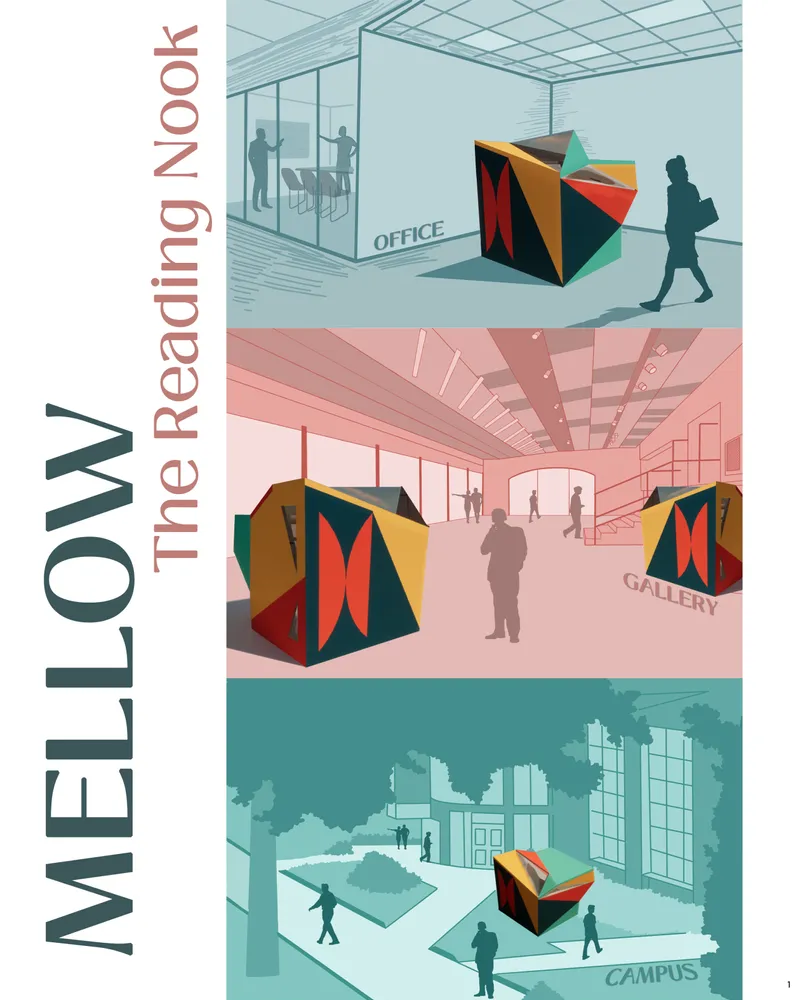
Fig: 3 Interior View
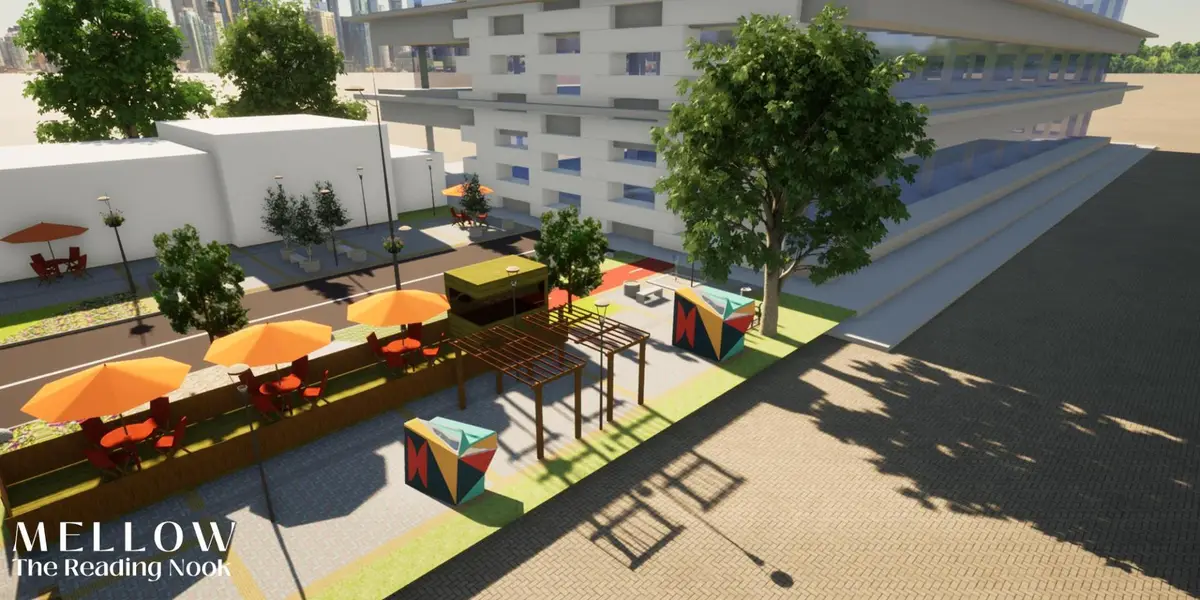
Description: 'Mellow' is a reading pod that can also be used for other activities like sleeping, working, meditation, etc. The pod represents the transition of a user stepping into a place of solitude and calm, away from the busyness of one’s daily routine.
Jury Comment: Again, very difficult to manufacture with some obvious issues not resolved.
-----------------------
Editor’s Choice: H.O.M.E
By: Dana Ibrahim
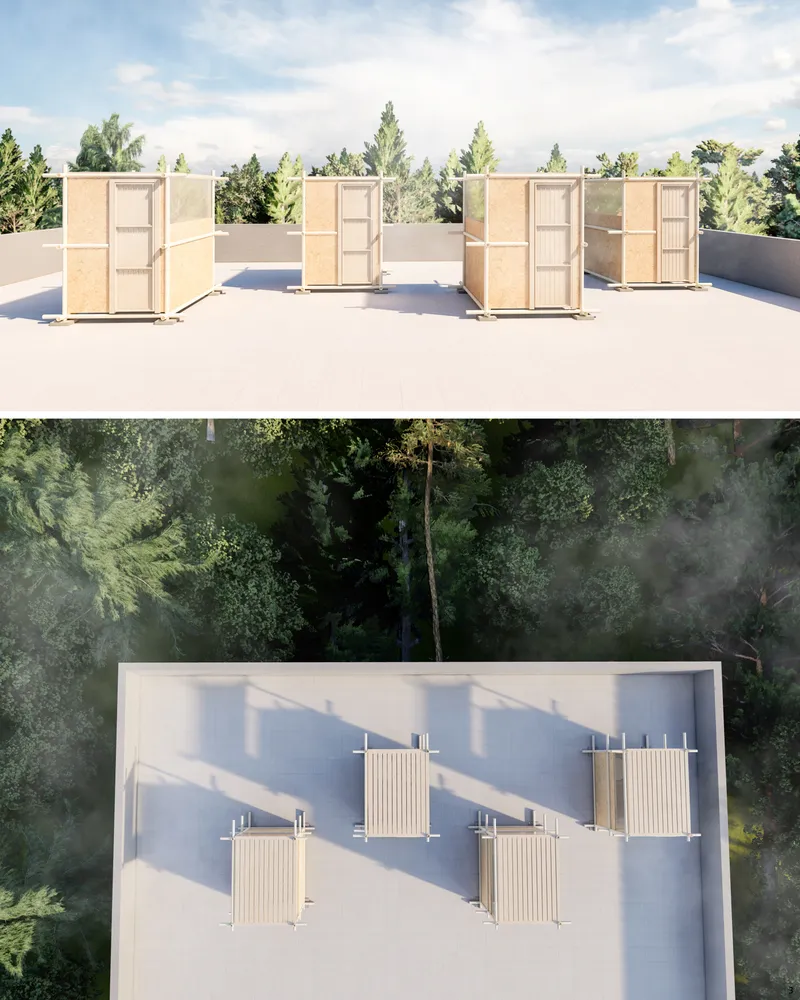
Fig: 4 Home Pod images
Description: Our homes are with us now wherever we are. It is time to give our psychological needs a priority and to leave the stress away, one book might change our life!
Jury Comment: Not a particularly innovative approach, but well presented.
---------------------
Editor’s Choice: E.G.G
By: Morris Tse

Fig: 5 Cover image
Description: E.G.G is a reading pod that provides a barrier against outward distraction, allowing users to isolate themselves in any office setup. Users can feel a sense of refuge inside the pod with the aid of the cover and the carefully designed seating, so that they can take a nap, reading or work without disruption.
Jury Comment: A well-presented and original concept with a variety of applications.
Follow us on social media: Facebook | Instagram | LinkedIn | Twitter | Youtube
References (3)


Popular Articles
Popular articles from the community

Tsunami Convergenics: Turning Catastrophic Ocean Forces into Underwater Housing Infrastructure
A speculative underwater settlement off the coast of Onagawa, Japan, treats tsunamis and typhoons as energy sources rather than threats.
The Amber Palace Opera: A Geological Fiction Surfaces on Tallinn's Baltic Waterfront
Pierre Brillard reimagines a Baltic legend as a public landscape, opera house, and waterfront promenade rooted in Tallinn's coastal identity.
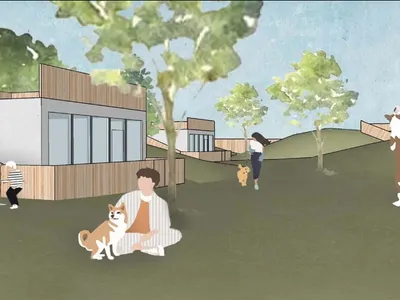
Temporary Home for Dogs: A Reversed Zoo Rethinks Animal Shelter Architecture
In Bucharest, a sinuous corridor and freed landscape flip the logic of containment, designing a shelter that works to make itself unnecessary.

Singing Woman: An Opera House That Performs Before the Curtain Rises
Ovidiu Cristian Pavel's conceptual opera house translates Estonia's choral identity into a sculpted waterfront landmark facing the Baltic Sea.

Similar Reads
You might also enjoy these articles

Play: Fragments of Their World: Remembered Architecture Rebuilt as a Modular Playground for Refugee Camps
Tom Gardner abstracts domes, arches and towers from the homelands of displaced families into a kit of child-scaled play parts for camp settlements.
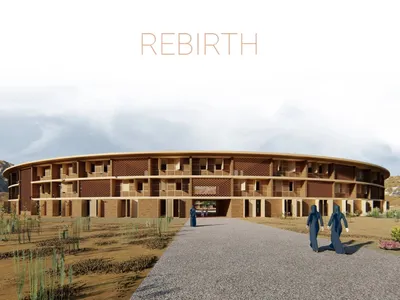
REBIRTH: A Circular Settlement Where Afghan Widows and Their Children Rebuild Life Together
A shortlisted Resile entry turns the circle into a protective ring of timber and brick, gathering homes, classrooms and gardens around a shared landscape.
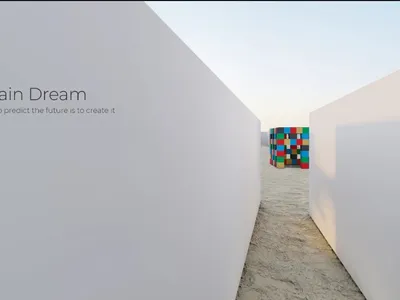
The Main Dream: A Recycled Plastic Kit That Lets Refugee Children Build Their Own Playground
Thirty-centimetre interlocking cubes that connect on three axes turn play into construction, letting children author the spaces they occupy.
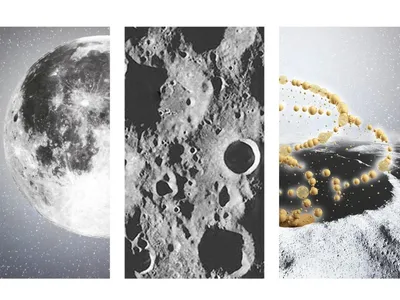
Lunar Spiral: A Fibonacci-Driven Moon Settlement Rising from Shackleton Crater
Golden-spiral geometry organises buried infrastructure and orbiting habitable spheres into a lunar base designed to grow as life on the Moon expands.


Comments (0)
Please login or sign up to add comments
No comments yet. Be the first to comment!