

Revitalizing Iceland’s Stöng Ruins: Heritage Meets Contemporary Architecture
Stöng Ruins restoration blends heritage preservation with contemporary design, integrating landscape, sustainable materials, and accessible architecture to highlight Viking-era Icelandic history.


Set within the stark volcanic expanse of Þjórsárdalur in southern Iceland, the Stöng Ruins stand as one of the country’s most important archaeological treasures. Excavated in 1939 and safeguarded since 1957 under a modest protective shelter, this Viking-era longhouse represents a rare and remarkably complete example of early Icelandic domestic architecture. In 2024, SP(R)INT STUDIO undertook a sensitive reinterpretation and restoration of Stöng, balancing heritage preservation with contemporary architectural intervention.
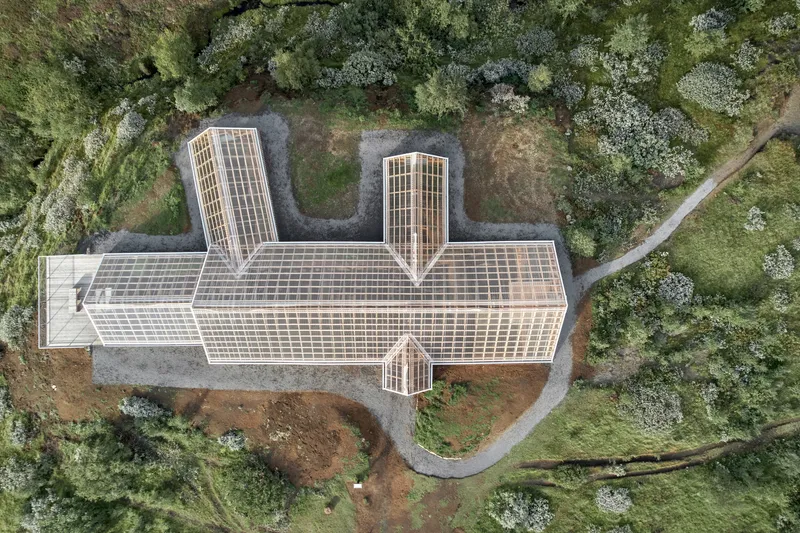
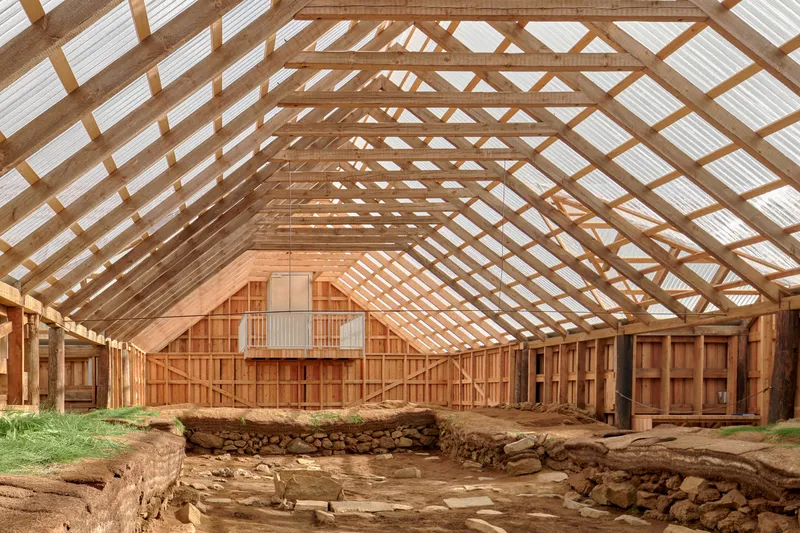
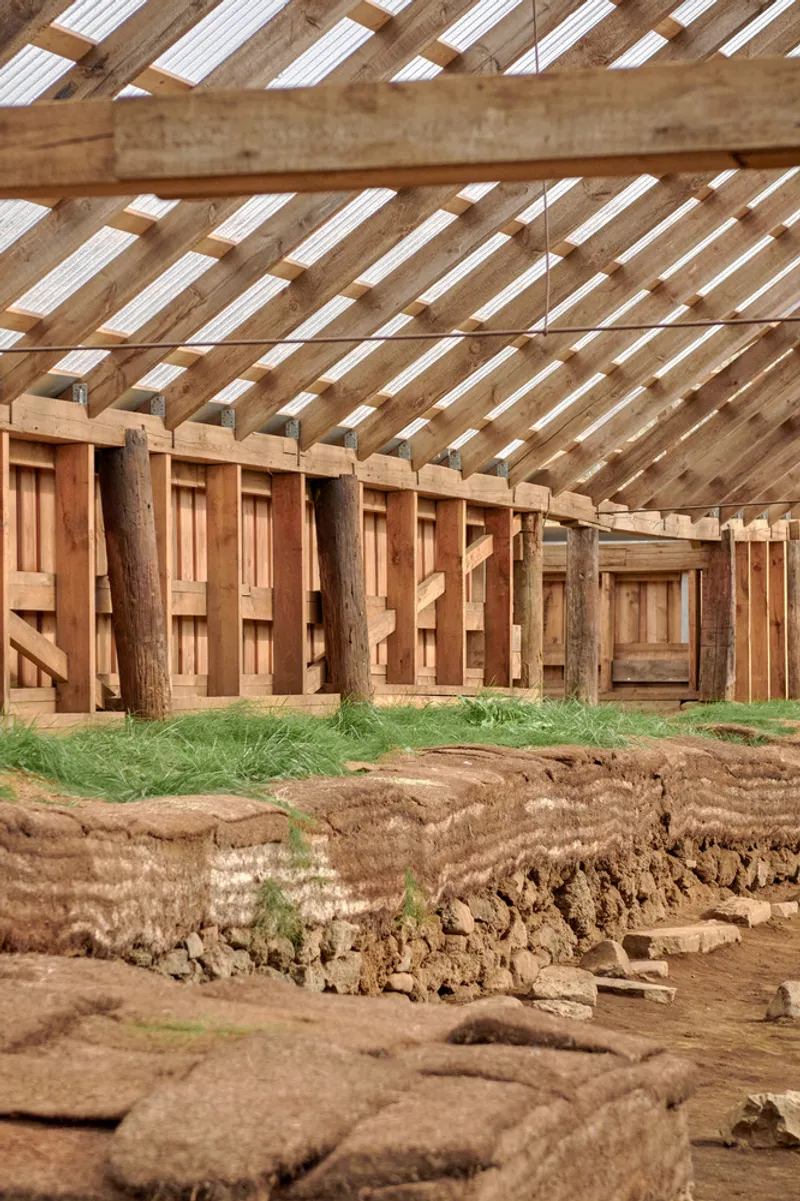
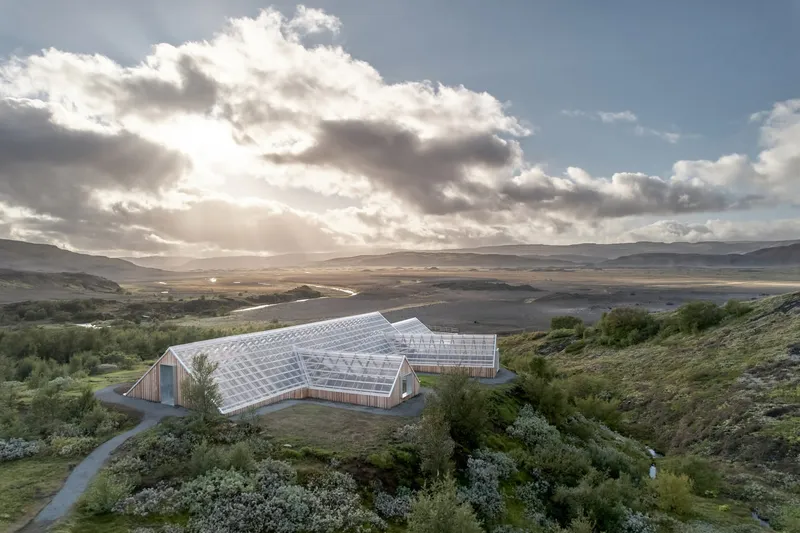
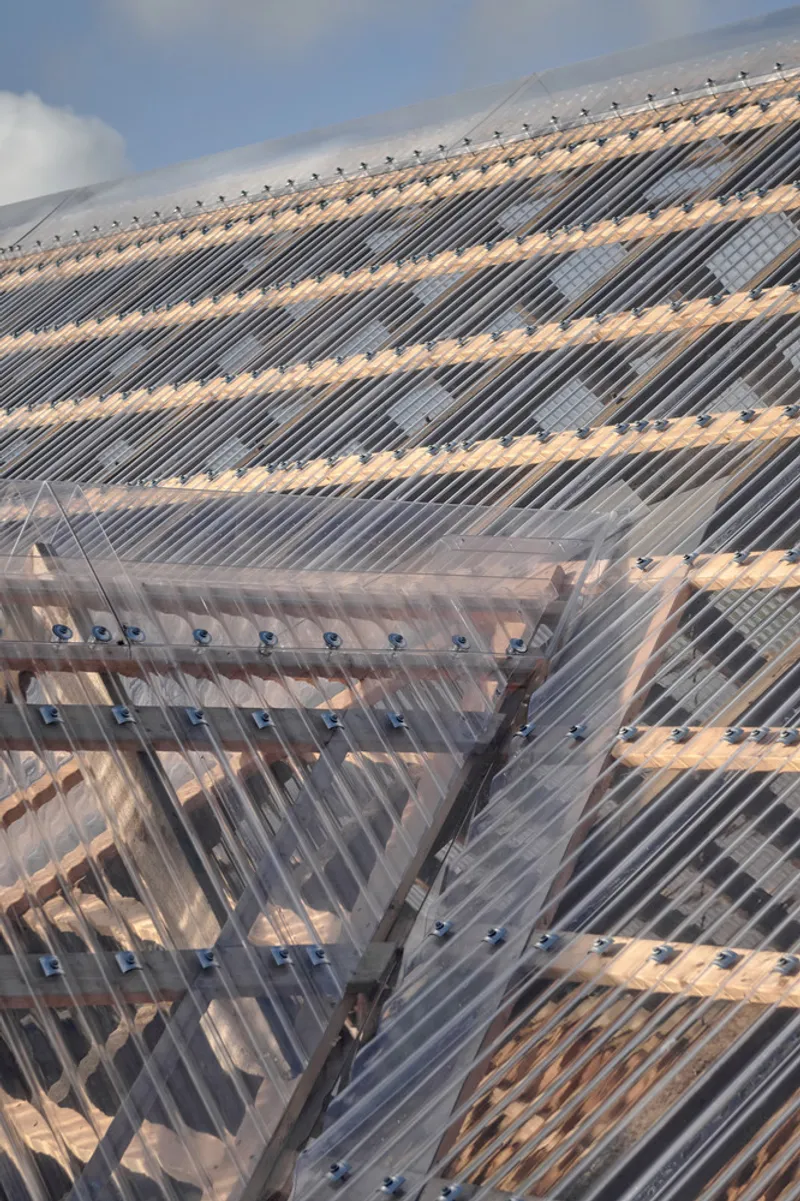
Rather than replacing the historic structure, the project extends and transforms it, maintaining the original longhouse as the focal point while enhancing its interaction with the surrounding landscape. The 1957 shelter is retained and thoughtfully re-clad in sustainably sourced larch, complementing a lightweight translucent polycarbonate roof that hovers above the excavations. This careful material strategy, combined with restrained detailing and a muted color palette, establishes a design language that emphasizes atmosphere, spatial clarity, and temporality.

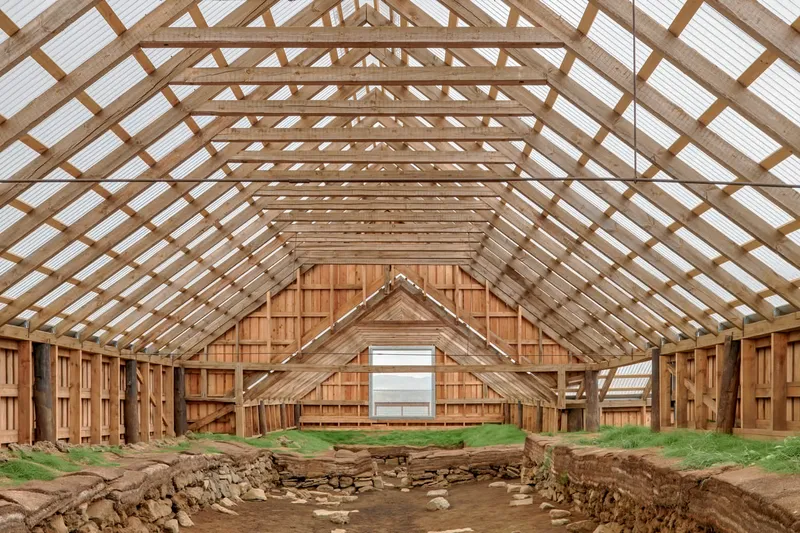
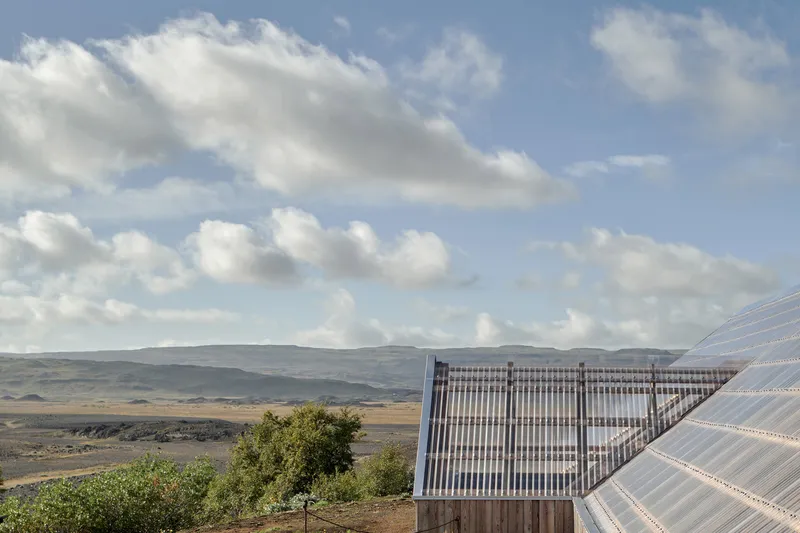
Architecture here functions as a bridge—mediating between ruin and shelter, past and present, nature and culture. The intervention is deliberately understated, allowing the original longhouse to assert its historical presence while the new structures guide visitors through the site without overwhelming it. The building aligns with the natural topography of the valley, revealing its contours and integrating seamlessly with the landscape rather than dominating it.
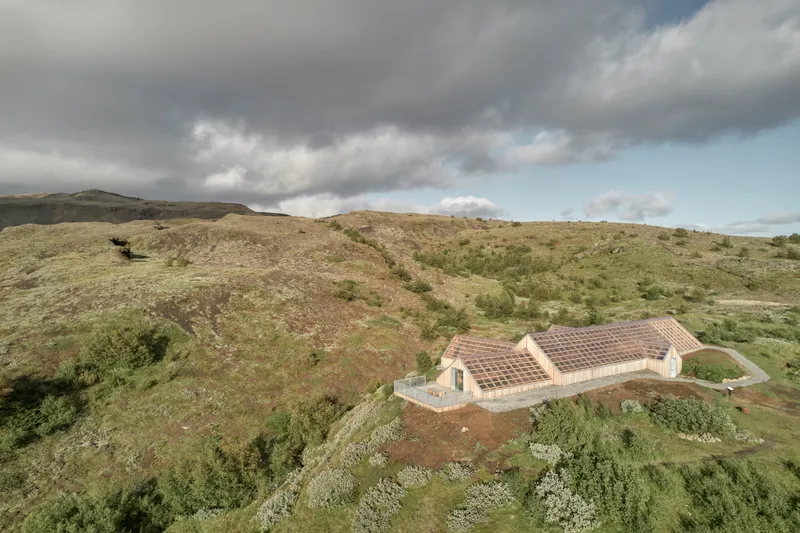
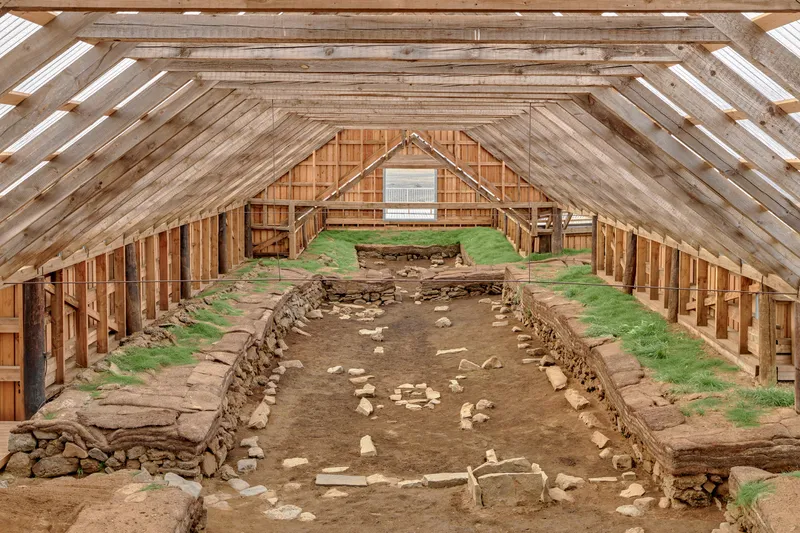
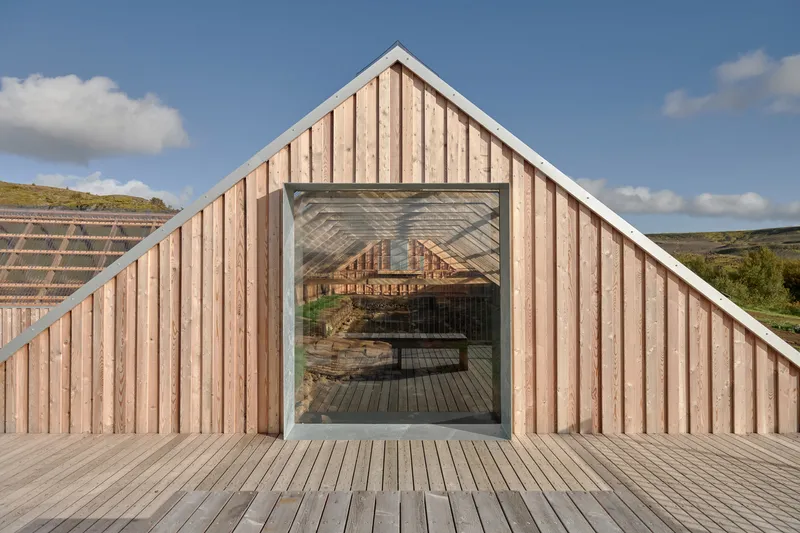
New public infrastructure, including pedestrian pathways, bridges, and seating areas, choreographs visitor movement and frames key views of the ruins. The design ensures minimal impact on the fragile terrain, presenting a continuous spatial sequence that encourages engagement with both the archaeological site and the surrounding natural environment. The new entrance, elevated slightly above ground level, acts as a transitional threshold, leading visitors onto an interior platform suspended above the excavations for an unobstructed historical overview. Interior volumes remain open and airy, protecting the ruins from erosion, rainfall, and volcanic ash while framing interpretive sightlines through precisely positioned windows and roof apertures.
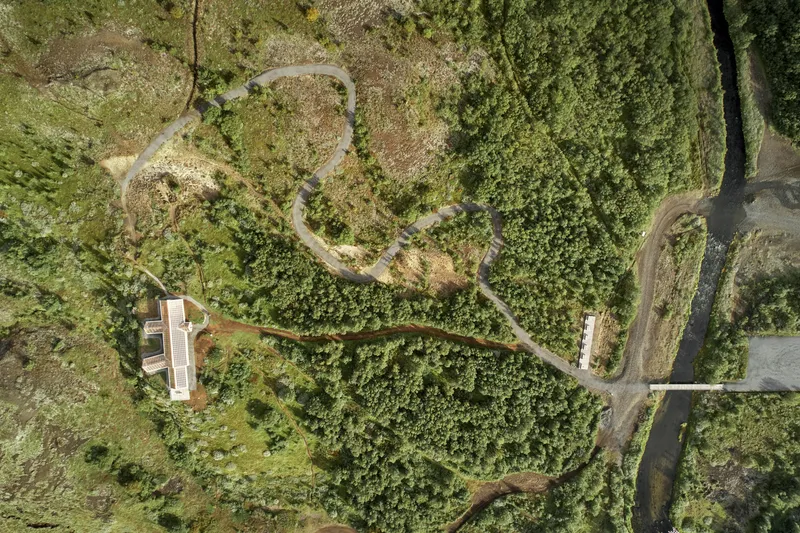
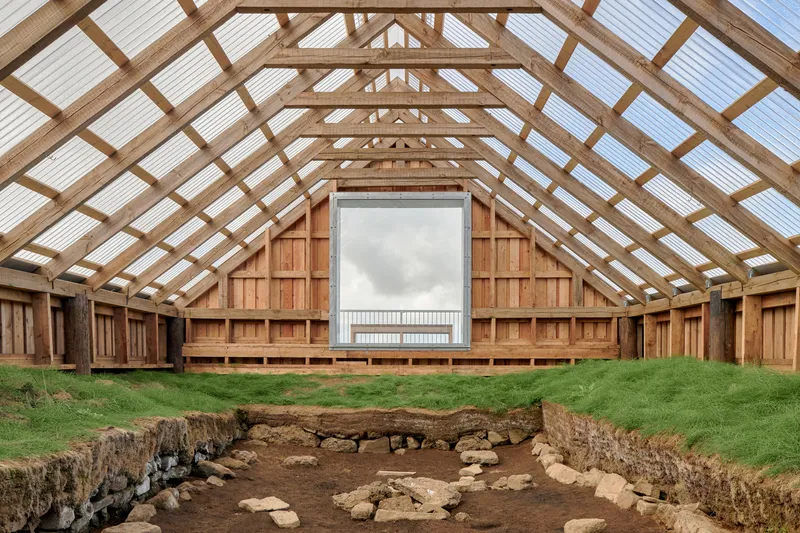
This restoration treats heritage preservation as an act of architectural calibration rather than reconstruction. The original shelter is respected as a cultural artifact, its lifespan extended through adaptation instead of replacement. By doing so, the project positions restoration as a process of continuity, reengagement, and evolving understanding rather than closure.

All photographs are works of Claudio Parada Nunes


Popular Articles
Popular articles from the community


Opera by the Sea Estonia: Three Shells Dissolving Architecture into Tallinn's Coastline
A winning opera house proposal replaces monumental form with interconnected shells that blur the boundary between building, park and Baltic Sea.
Cloaked Colonization: A Mobile Underwater Habitat That Moves Like a Fish
Micah Abaya's shortlisted EHC Pacific entry reimagines ocean settlement as a dispersed network of self-sustaining architectural organisms.

Opera on the Sea: Driftwood Logic Shapes a Timber Opera House on Estonia's Coast
Trevor Orgill's opera house translates the entangled drift of floating timber into a civic building where wood, water, and music converge.
Faces of the Soviet Avant-Garde: Turning Moscow's Street Names into an Open-Air Museum
A network of sculptural installations across a Moscow residential district transforms forgotten architect names into spatial encounters with cultural memor

Similar Reads
You might also enjoy these articles


Hodi-Mandai Geram
Project Function: Preservation and revitalization of the Intangible heritage and socio-spatial identity of the Hodi by Housing, Cultural Memory Center, Sacred Grove, landscape, local tourism economy


Olio Towers: A Mid-Rise for Performers That Fuses Housing, Rehearsal, and Stage
Located blocks from Houston's Theater District, this modular tower stacks living units around a central performance atrium.

Oasis: Modular Green Housing Carved into Dhaka's Urban Fabric
A shortlisted Plugin Housing entry reclaims unauthorized settlements in Dhaka with stepped concrete volumes, green roofs, and ventilation-driven design.

Black Hole: A Floating Megastructure for the Post-Physical Era
Emiliano Mazzarotto envisions a spherical, self-scaling arena where e-sports, digital hotels, and holographic stadiums replace traditional public space.

Explore Ruins Competitions
Discover active competitions in this discipline

Challenge to reimagine the Iron Throne

Photograph architecture without architects

Illustrate the lost glory of Angkor Wat - Render Challenge

Bring back Drive In's
Comments (0)
Please login or sign up to add comments
No comments yet. Be the first to comment!