
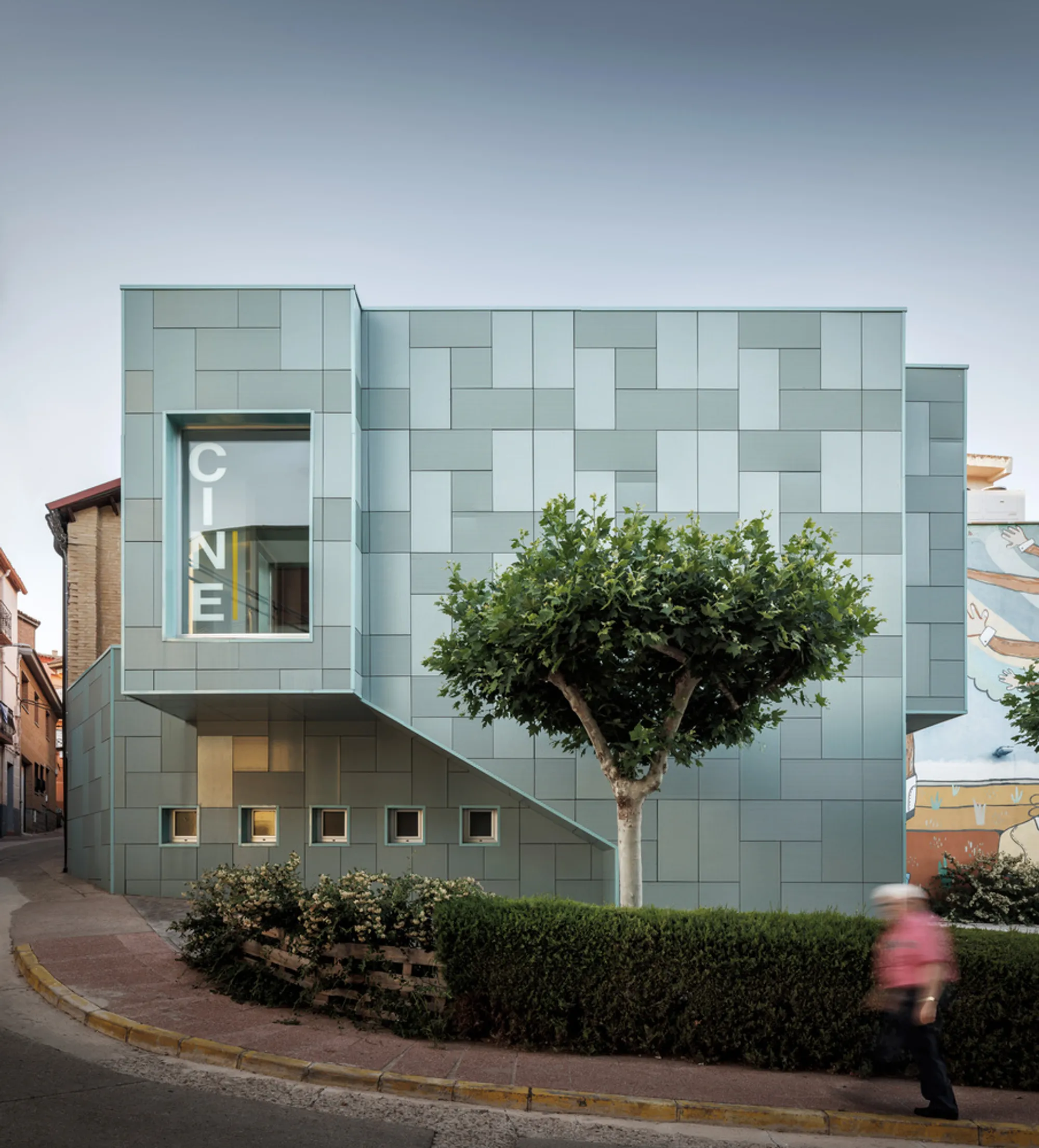
Reviving Cultural Heritage: Theater and Cinema in Brea de Aragón by Radiz Arquitectura
Historic shoe factory transformed into a cultural venue, blending traditional brickwork with modern ceramic forms for theater and cinema in Spain.


Location: Zaragoza, Spain Architects: Radiz Arquitectura Lead Architect: José Morales Photography: Alejandro Gómez Vives Year of Completion: 2021 Total Area: 490 m²
In the heart of the Aranda region—once famed for its artisanal shoemaking—Radiz Arquitectura has masterfully transformed a disused warehouse into a vibrant theater and cinema. The project, located in Brea de Aragón, a town symbolic of "España vacía" (Empty Spain), aims to revive community life through architecture that honors the past while fostering new cultural expression.
A Context of Decline and Opportunity
Like many rural areas in Spain, Brea de Aragón has seen its economic vitality wane due to urban migration and the collapse of local manufacturing. The town’s shoe industry—once a proud symbol of identity—has struggled to compete with global production. Amid this landscape of loss, a vision emerged: to reclaim a former shoe factory and convert it into a cultural venue that would nourish local traditions and provide meaningful infrastructure for the community.
Adaptive Reuse: From Industrial Warehouse to Cultural Landmark
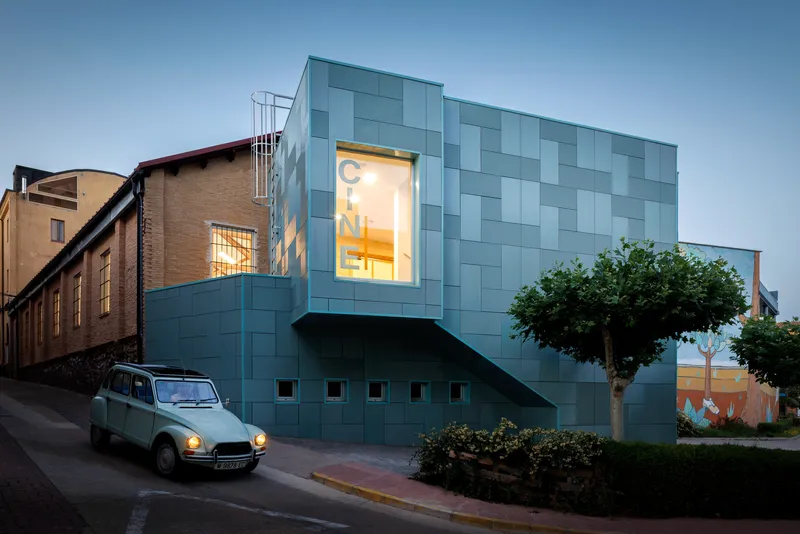
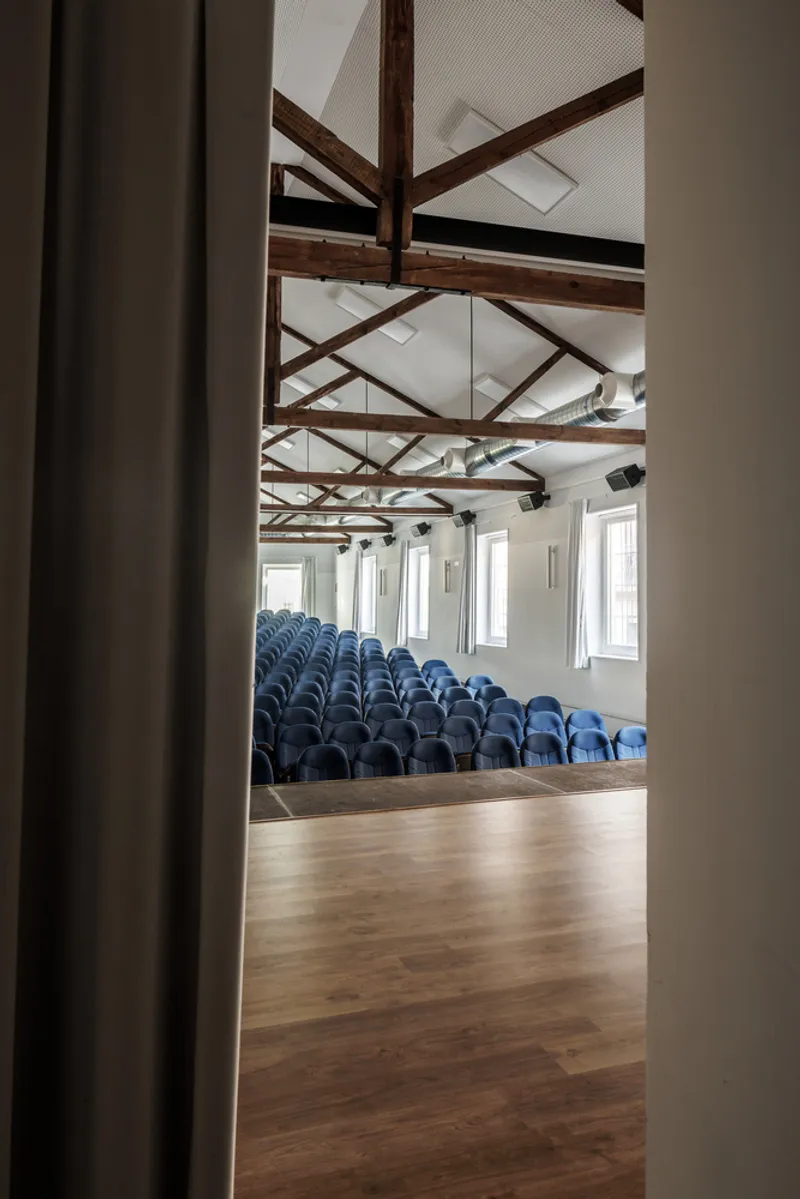
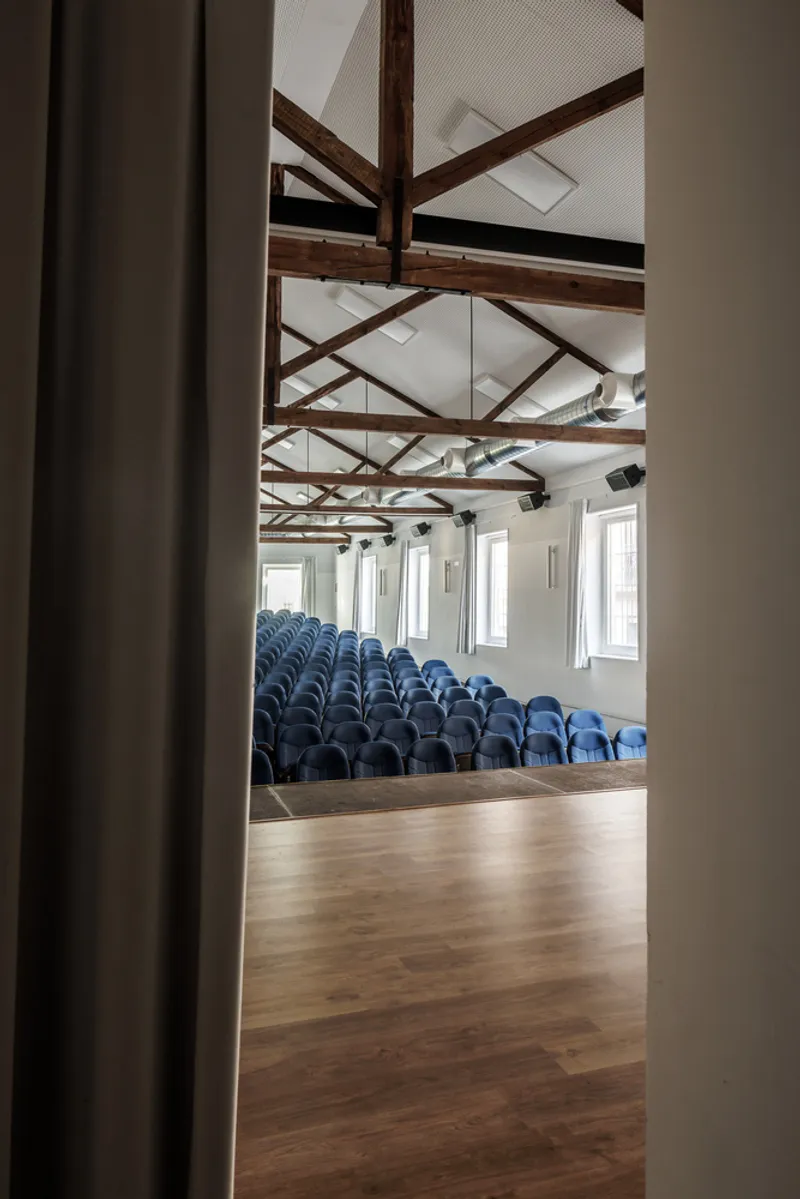
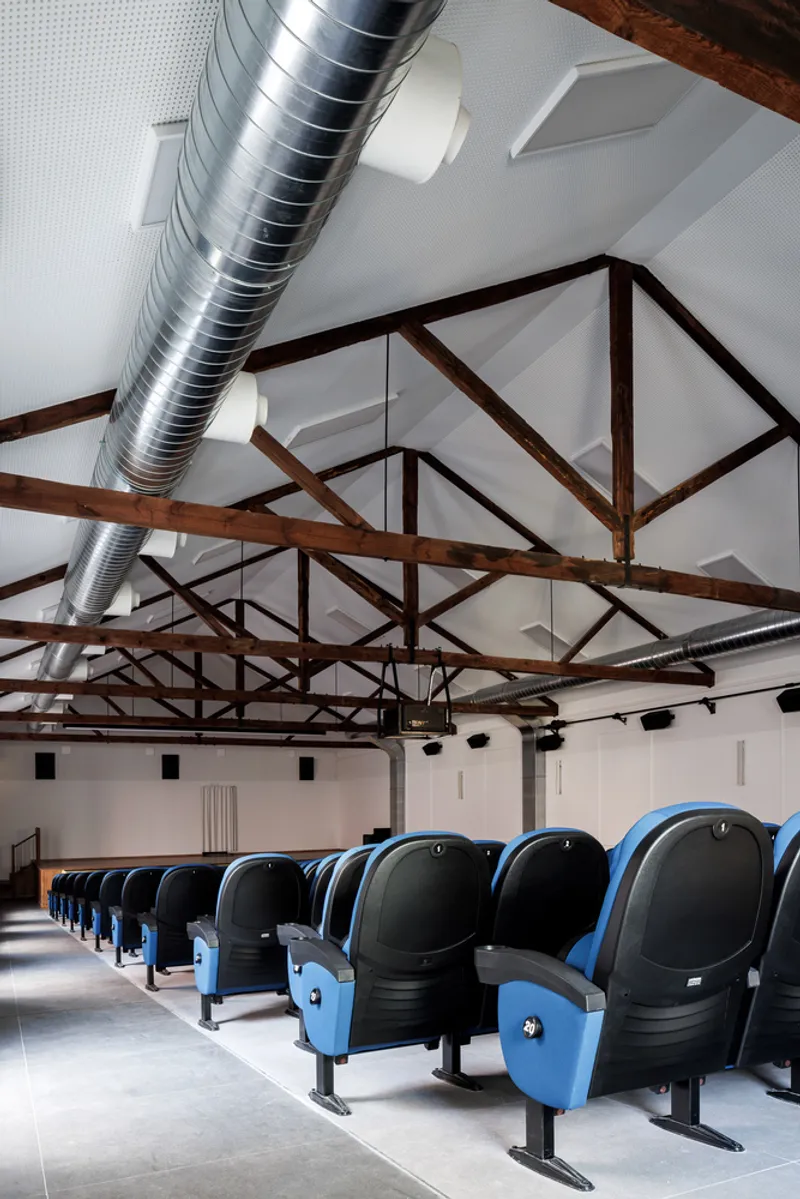
The architectural intervention is rooted in adaptive reuse. The pre-existing warehouse, once part of the town's shoemaking legacy, was municipally owned but in disrepair. Despite years of neglect, the building retained significant architectural character, including traditional brickwork, wooden trusses, round ashlars, and metal lattice windows. Rather than overwrite these features, the design by Radiz Arquitectura sought to preserve and enhance them.
The renovated warehouse now houses the main functions of the project—a theater and cinema hall. Key structural and visual elements have been retained, maintaining a material continuity with the past. Large existing openings have been adapted: some windows transformed into doors to facilitate circulation, others framed views or light passageways. The result is a spatial continuity that respects the honesty of construction while creating a vibrant interior experience.
Interior Strategy: Sincere Materiality and Passive Design
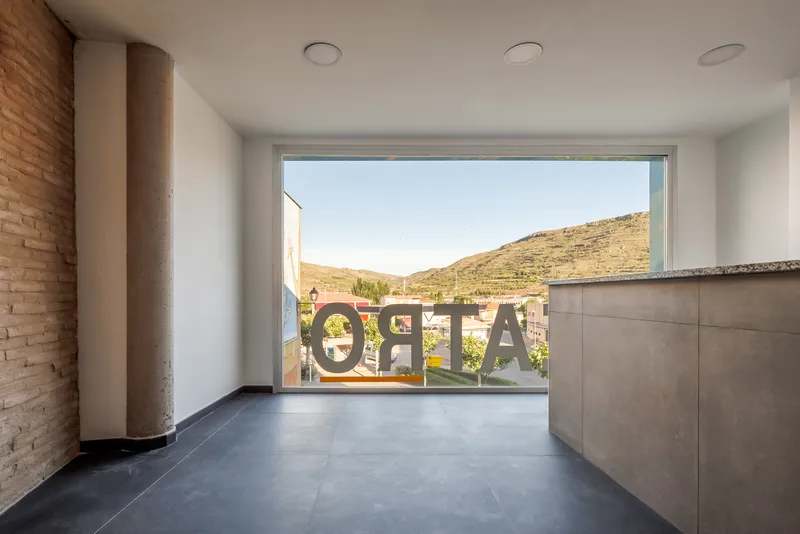
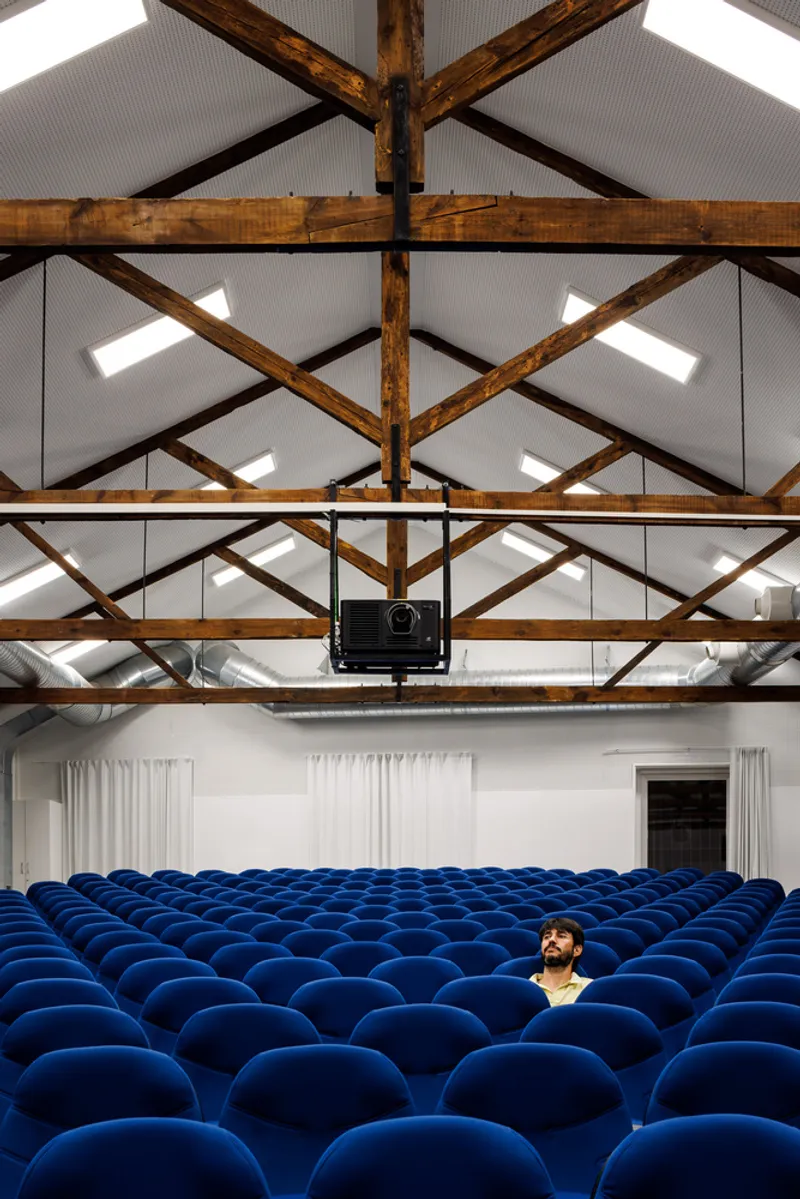
The interior design emphasizes constructive sincerity, establishing a respectful dialogue between old and new. Original timber trusses are exposed and celebrated, while new flooring and acoustic features are integrated without concealing the building’s origins. Even the window treatments—featuring opaque curtains that manage ventilation and light—are visibly designed as part of the building’s rhythm and logic.
The theater seating follows the building’s slope, creating a natural amphitheater effect and optimizing visibility from every vantage point. This staggered configuration enables accessibility and provides a dynamic spatial quality.
A Contemporary Addition: Organic Contrast and Ceramic Skin
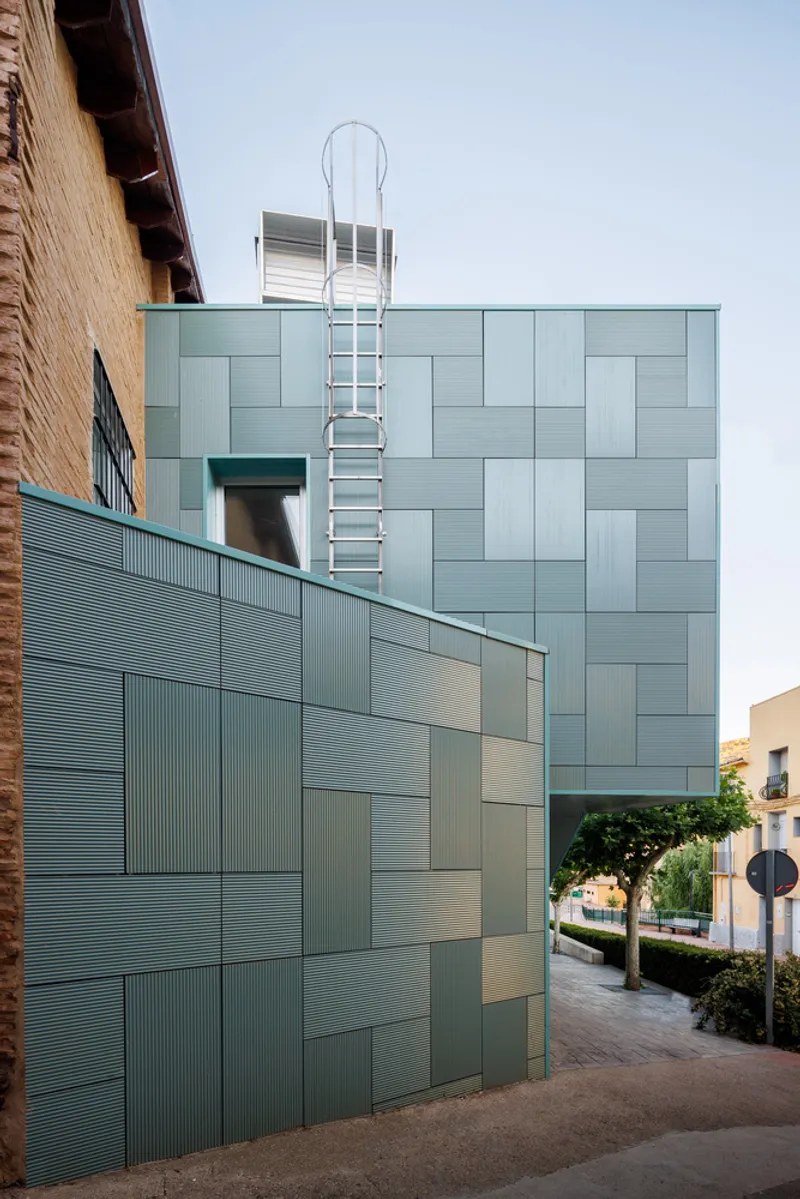
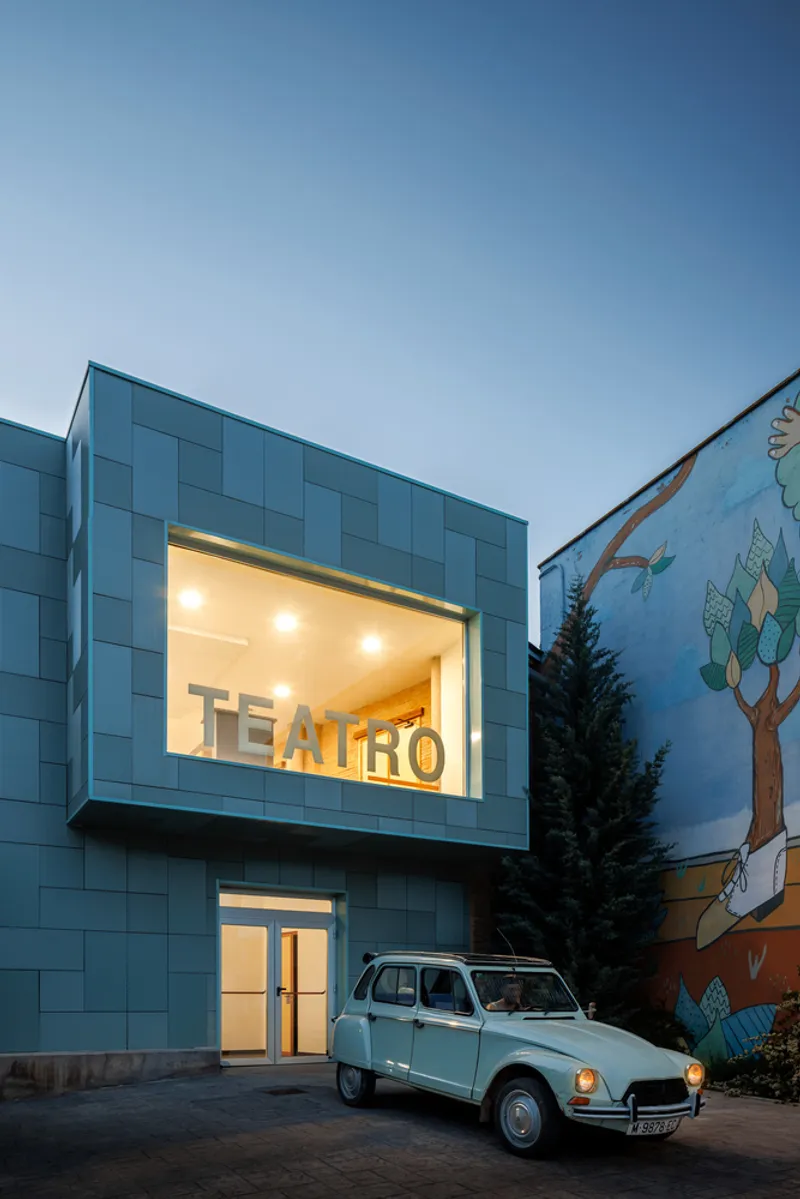
Contrasting with the preserved industrial shell, a newly constructed volume accompanies the old structure. This modern intervention is characterized by an organic geometry that wraps, approaches, recedes from, and ultimately embraces the historic warehouse. Designed as a formal and functional counterpoint, the new volume contains auxiliary programs: the entrance hall, ticket booths, restrooms, and a small bar and lobby.
Clad in a distinctive ceramic skin, the new structure introduces a tactile texture and visual lightness. The ceramics are patterned in two directions, capturing light and shadow, enhancing the building’s identity and material expressiveness.
Architecture as Cultural Infrastructure
At its core, this project is more than a renovation—it’s an act of cultural regeneration. It celebrates the productive memory of Brea de Aragón’s industrial past while providing a space for performance, community gatherings, and creative expression. The architectural language blends conservation with innovation, yielding a deeply contextual and future-facing cultural facility.




Popular Articles
Popular articles from the community


Co-Life: Senior Housing Design That Reconnects Older Adults With the City
Co-Life reimagines senior housing design through healing gardens, shared streets, workshops, and a sustainable community across generations.
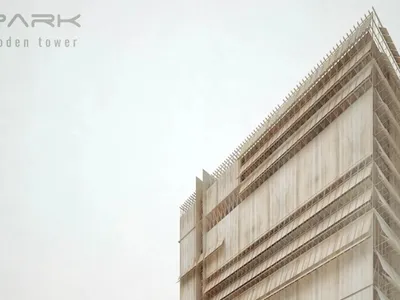
EW PARK: Sustainable Architecture Reimagines the Future of Urban Parking
EW PARK reimagines city parking as a modular wooden tower combining automation, solar energy, electric mobility, and adaptable urban design.

Conexión: Biophilic Design Reimagines High-Rise Living in Hong Kong
Conexión reimagines high-rise living in Hong Kong through biophilic design, green facades, shared spaces, daylight, water and nature within.

AL-JANNAH: Sustainable Architecture and Permaculture for Afghan Widows
AL-JANNAH uses sustainable architecture and permaculture to create resilient oasis of housing, learning, work and renewal for Afghan widows.
Similar Reads
You might also enjoy these articles


Hodi-Mandai Geram
Project Function: Preservation and revitalization of the Intangible heritage and socio-spatial identity of the Hodi by Housing, Cultural Memory Center, Sacred Grove, landscape, local tourism economy


Olio Towers: A Mid-Rise for Performers That Fuses Housing, Rehearsal, and Stage
Located blocks from Houston's Theater District, this modular tower stacks living units around a central performance atrium.

Oasis: Modular Green Housing Carved into Dhaka's Urban Fabric
A shortlisted Plugin Housing entry reclaims unauthorized settlements in Dhaka with stepped concrete volumes, green roofs, and ventilation-driven design.

Black Hole: A Floating Megastructure for the Post-Physical Era
Emiliano Mazzarotto envisions a spherical, self-scaling arena where e-sports, digital hotels, and holographic stadiums replace traditional public space.

Explore Cultural Architecture Competitions
Discover active competitions in this discipline



Challenge to reimagine the Iron Throne


Photograph architecture without architects


Illustrate the lost glory of Angkor Wat - Render Challenge

Bring back Drive In's
Comments (0)
Please login or sign up to add comments
No comments yet. Be the first to comment!