
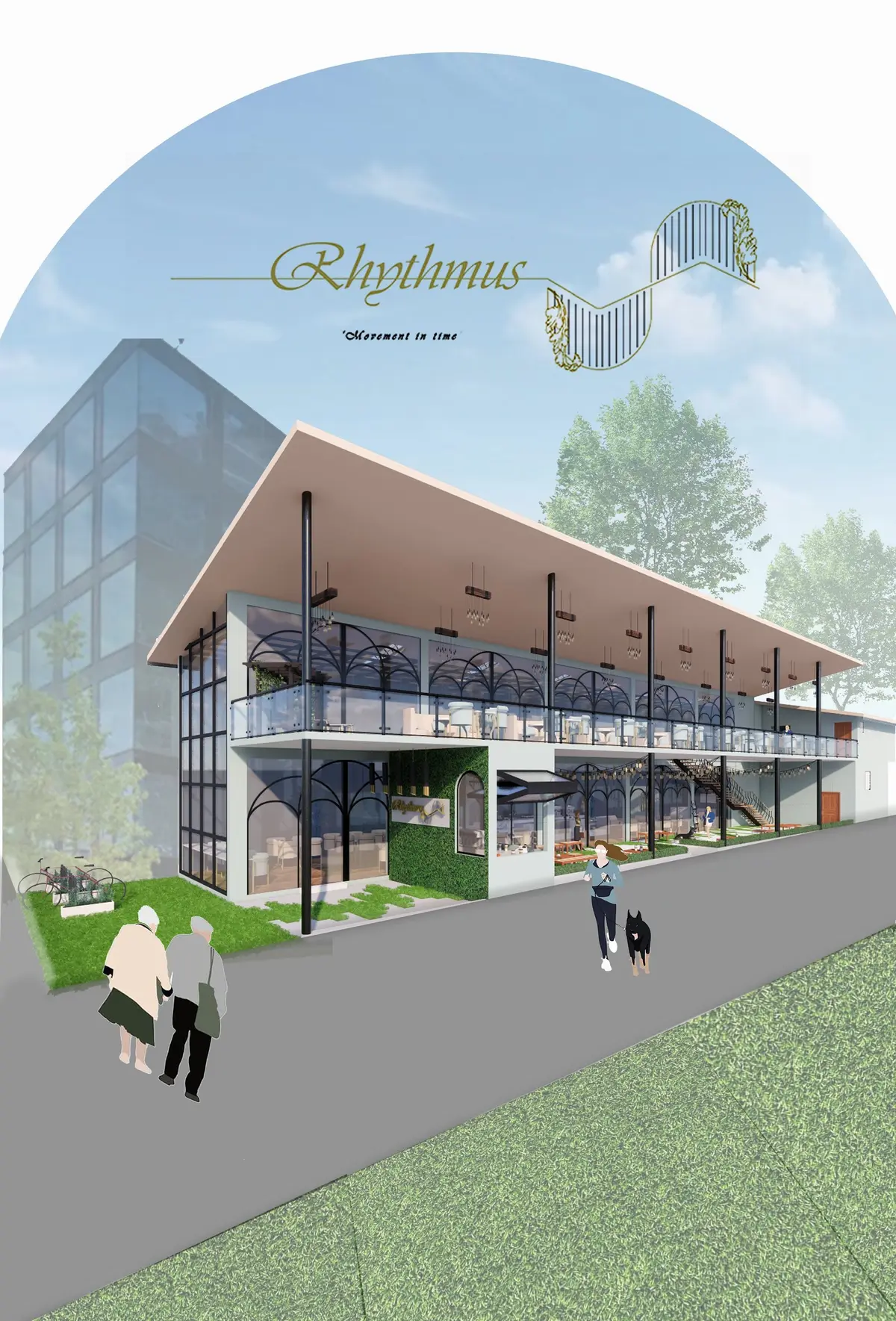
Rhythmus: A Cafe Architecture Concept Inspired by Vienna's Movement Through Time
Rhythmus reimagines cafe architecture in Vienna through Baroque and Modernist influences, reflecting the city's evolving coffee culture.


Coffee houses have long been an essential part of Vienna's social and cultural identity. More than places to enjoy a beverage, they serve as extensions of living rooms, gathering spaces where conversations, ideas, and communities flourish. Rhythmus : Movement in Time a People's Choice Award entry in Brewed 2020 by Tanishka Khandelwal and Nayanika Chaudhary, transforms this cultural tradition into a contemporary architectural experience.
The project explores how cafe architecture can represent the changing rhythm of daily life. Inspired by Vienna's rich architectural legacy and celebrated coffee culture, Rhythmus creates a space where time, movement, and social interaction are translated into architectural form. Through the fusion of Baroque and Modernist design principles, the project offers a unique interpretation of how architecture can accommodate diverse lifestyles and varying patterns of urban living.
Understanding the Site and Urban Context
Located in Vienna, Austria, the project occupies a compact urban site strategically positioned within a highly connected neighborhood. The site benefits from proximity to museums, hotels, universities, residential districts, public parks, railway stations, and major transportation routes.
The site analysis revealed a remarkably diverse user demographic. Students, professionals, elderly residents, commuters, tourists, families, and individuals from various social groups regularly interact within the surrounding urban environment. This diversity became one of the central drivers of the design concept.
The accessibility of the location further reinforces its role as a social connector. Within walking distance, users can access numerous cultural and public facilities, making the cafe an integral part of everyday urban life rather than an isolated destination.
The Concept of Rhythmus: Movement in Time
The name Rhythmus derives from the Latin word for movement in time. This concept forms the foundation of the entire architectural proposal.
The designers recognized that Vienna's coffee culture serves different groups of people in different ways. Some visitors seek a quick coffee before work, while others spend extended periods socializing, reading, or working. Rather than forcing all users into a single environment, the project divides the cafe into two distinct experiential zones.
These zones correspond to two architectural movements that have shaped Vienna's urban identity:
The Baroque Experience: Full of Moment
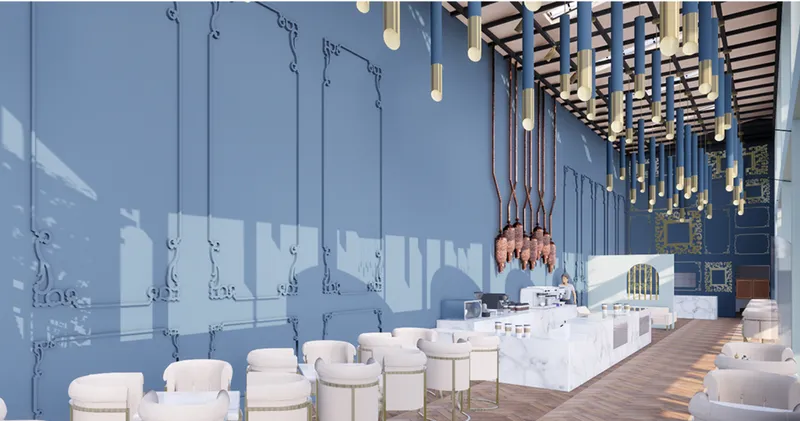
The first zone celebrates the richness and ornamentation associated with Baroque architecture. This area caters to users who value slower experiences, extended conversations, and leisurely engagement with the environment.
Characteristics include:
- Decorative architectural elements
- Rich textures and materiality
- Comfortable lounge seating
- Warm color palettes
- Enhanced sensory experiences
- Spaces designed for prolonged occupation
This environment supports users who treat coffee as an experience rather than merely a beverage.
The Modernist Experience: Morning Rush
The second zone reflects Modernist principles of efficiency, clarity, and functionality.
Designed for commuters, students, and professionals, this area prioritizes:
- Direct circulation paths
- Functional spatial planning
- Quick service access
- Open visual connections
- Minimalist design language
- Flexible seating arrangements
This portion of the building supports users whose daily routines require speed and convenience while maintaining a strong connection to the social atmosphere of the cafe.
Architectural Form and Spatial Organization
The building's elongated site geometry heavily influenced the architectural solution.
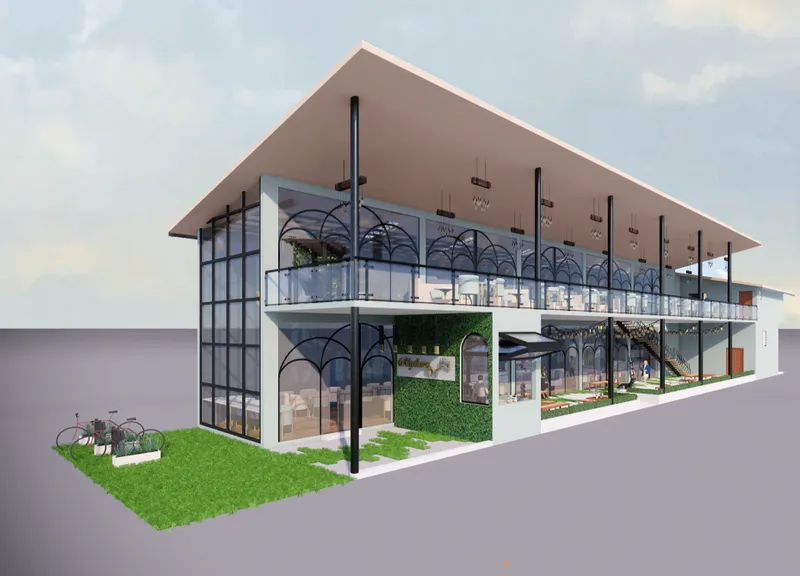
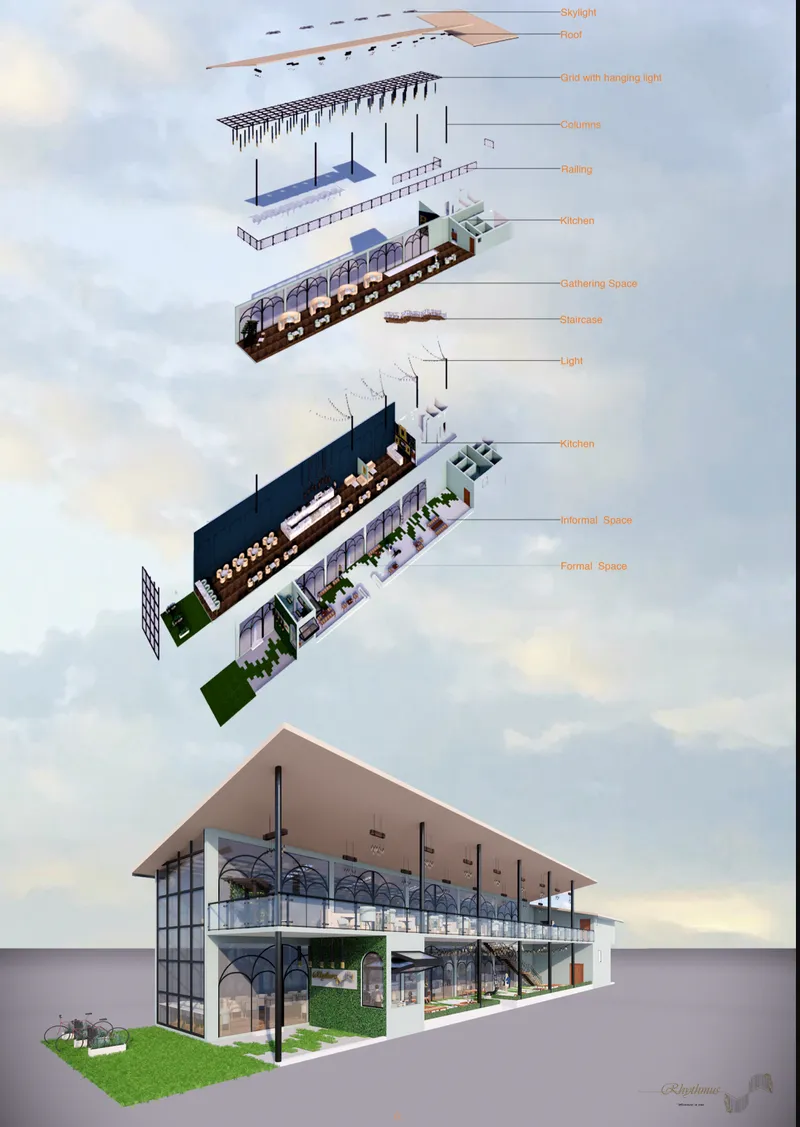
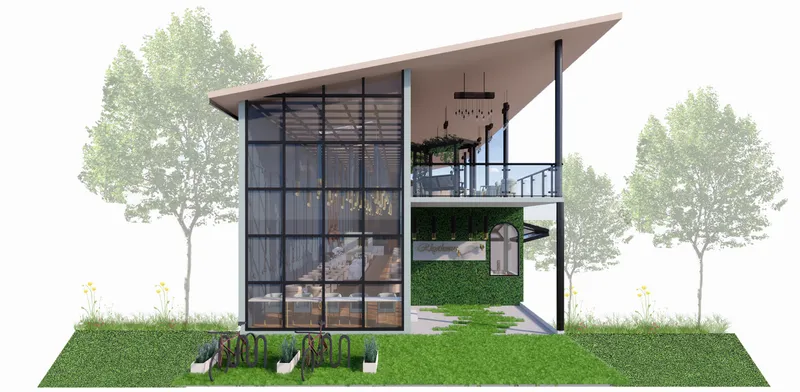
The overall mass is divided into two interconnected volumes, creating distinct yet visually linked experiences. A vertical separation allows the building to accommodate multiple functions while maintaining openness and transparency.
The architectural composition balances solid and void, enclosed and open spaces, and intimate and communal environments. The design creates a gradual transition between the two conceptual identities while preserving their individual characteristics.
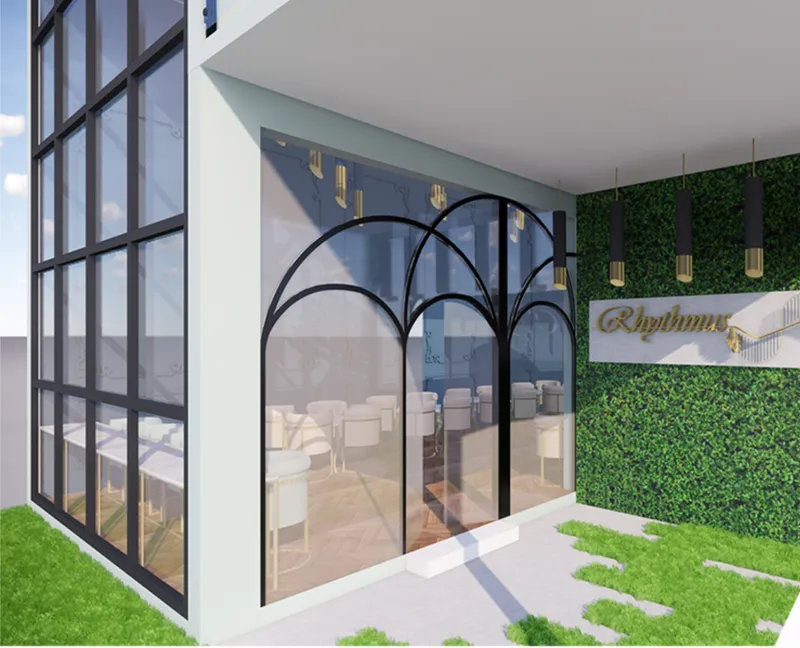
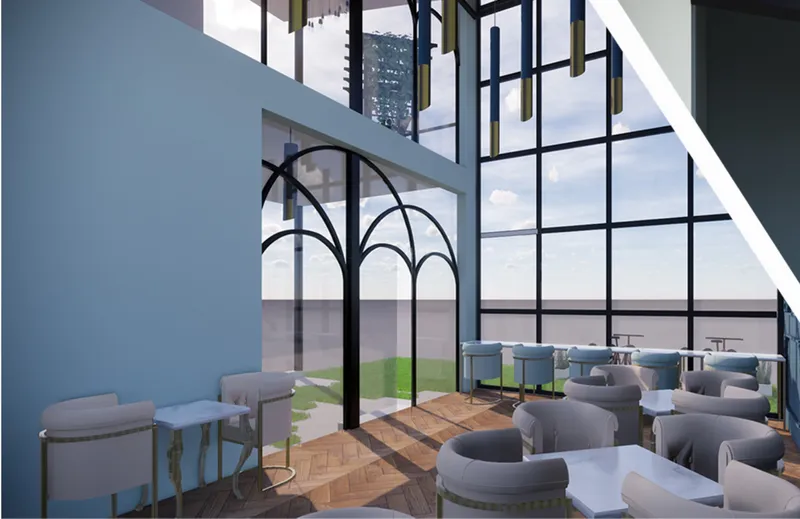
Large glazed facades establish visual continuity between interior spaces and the surrounding city. This transparency invites passersby into the building and reinforces the role of the cafe as a public urban destination.
A Contemporary Interpretation of Vienna Architecture
One of the project's most compelling achievements is its reinterpretation of Vienna architecture through contemporary design methods.
Rather than replicating historical styles, Rhythmus extracts their underlying principles and reinterprets them for present-day users.
Baroque influences appear through:
- Arched openings
- Decorative wall treatments
- Rich spatial sequences
- Layered visual experiences
- Luxurious interior atmospheres
Modernist influences emerge through:
- Transparent facades
- Functional planning
- Open circulation
- Structural clarity
- Minimal architectural expression
The combination creates an architectural language that feels both familiar and contemporary.
Interior Design and User Experience
The interior environment carefully supports the project's conceptual narrative.
The formal seating areas feature sophisticated furnishings, elegant finishes, and spatial compositions designed to encourage extended stays. Decorative elements and carefully curated lighting contribute to a sense of comfort and warmth.
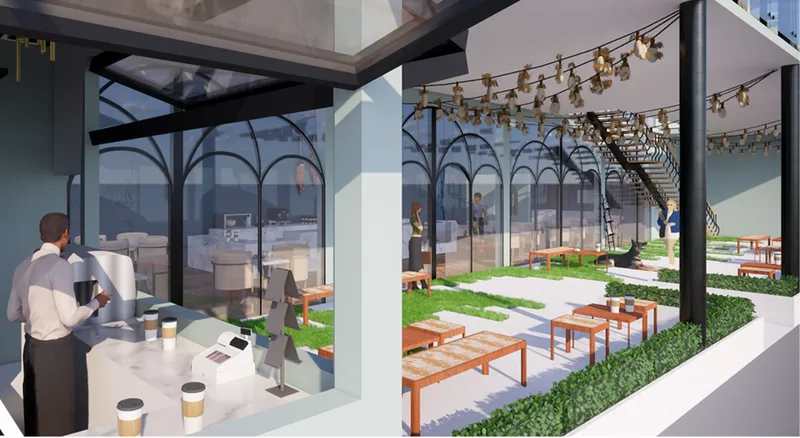
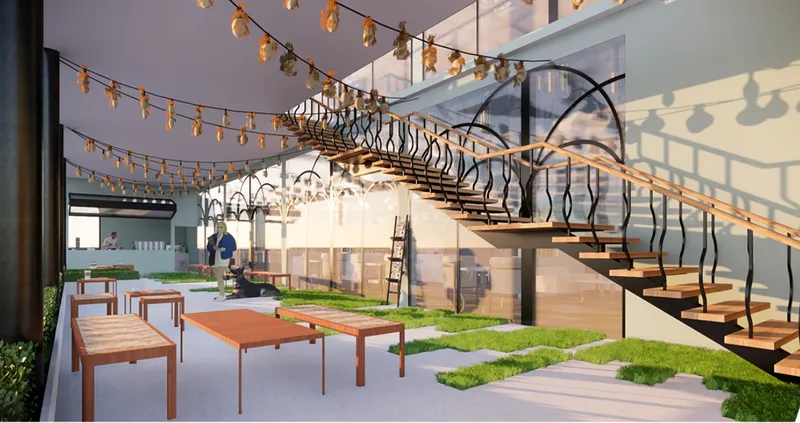
The informal zones adopt a more flexible approach. Open seating arrangements, quick-service counters, and integrated outdoor connections create an environment suited to dynamic daily activities.
The project demonstrates how interior design can become an active participant in storytelling, reinforcing broader architectural concepts through materiality, lighting, and spatial organization.
Material Palette and Architectural Expression
Material selection plays a critical role in communicating the project's dual identity.
The Baroque-inspired areas utilize:
- Marble surfaces
- Decorative wall finishes
- Rich upholstery
- Warm metallic accents
- Textured materials
The Modernist sections emphasize:
- Glass facades
- Exposed structural systems
- Clean surfaces
- Functional detailing
- Minimal material transitions
The contrast between these palettes creates visual interest while helping users intuitively understand the character of each space.
Natural Light and Environmental Quality
Climate studies and shadow analyses informed the building's orientation and environmental strategy.
Large skylights introduce daylight deep into the interior, reducing dependence on artificial lighting while creating dynamic spatial experiences throughout the day.
The dramatic roof form allows varying levels of sunlight penetration, producing changing atmospheres that reinforce the concept of movement through time. As light conditions evolve, the architecture itself becomes a visual representation of temporal change.
Extensive glazing further enhances daylight access while strengthening the relationship between interior activities and the surrounding urban landscape.
Programmatic Innovation in Hospitality Design
Beyond aesthetics, Rhythmus introduces several innovative hospitality design strategies.
The circulation system allows efficient service operations without disrupting customer experiences. Service spaces are strategically positioned to support smooth workflows while maintaining visual clarity throughout the building.
The project accommodates multiple user types simultaneously through carefully differentiated environments:
- Formal seating lounges
- Informal social zones
- Takeaway counters
- Outdoor gathering spaces
- Flexible event areas
- Upper-level social platforms
This programmatic diversity increases the building's adaptability and long-term relevance.
Creating Community Through Cafe Architecture
At its core, Rhythmus is a project about people.
The architecture recognizes that coffee culture serves different social functions depending on the individual. Some seek efficiency, others seek connection, and many seek both.
By translating these behavioral patterns into architectural experiences, the project creates an inclusive environment capable of supporting Vienna's diverse urban population.
The building becomes more than a cafe. It becomes a social framework where history, culture, architecture, and everyday life intersect.
A New Vision for Contemporary Cafe Architecture
Rhythmus demonstrates how cafe architecture can extend beyond commercial functionality to become a meaningful cultural expression.
Through its thoughtful integration of Vienna's architectural heritage, coffee traditions, and contemporary lifestyles, the project presents a compelling model for future hospitality design.
The fusion of Baroque richness and Modernist efficiency creates a spatial experience that celebrates both the past and the present. As visitors move through the building, they experience not only a coffee house but also an architectural journey through time itself.
Project: Rhythmus: Movement in Time
Designers: Tanishka Khandelwal, Nayanika Chaudhary
Award: People's Choice Award, Brewed 2020


Popular Articles
Popular articles from the community


Opera on the Sea: Driftwood Logic Shapes a Timber Opera House on Estonia's Coast
Trevor Orgill's opera house translates the entangled drift of floating timber into a civic building where wood, water, and music converge.

Manzana Morphosis: Stretching Barcelona's Grid into a Living Landscape for 2050
A radical reworking of the Eixample manzana turns density into a tool for generous public space, vertical ecology, and environmental performance.

The Amber Palace Opera: A Geological Fiction Surfaces on Tallinn's Baltic Waterfront
Pierre Brillard reimagines a Baltic legend as a public landscape, opera house, and waterfront promenade rooted in Tallinn's coastal identity.

Cloaked Colonization: A Mobile Underwater Habitat That Moves Like a Fish
Micah Abaya's shortlisted EHC Pacific entry reimagines ocean settlement as a dispersed network of self-sustaining architectural organisms.

Similar Reads
You might also enjoy these articles

Eco Chapel: A Green Architecture Pavilion Designed in Symbiosis with the Forest
Eco Chapel uses green architecture to weave prayer, learning and reuse into a forest pavilion shaped by modular hexagonal canopies for life.
Kaffeebühnen: Coffee Shop Architecture Designed as a Civic Stage Between Vienna’s City and Park
Kaffeebühnen turns coffee shop architecture into a civic stage, linking Vienna’s park edge, urban life, warm timber yards, and coffee craft.
Healing Façade: Sustainable Architecture for Reforestation, Community, and Sacred Ecology in Ethiopia
Healing Façade reimagines sustainable architecture as a living wall that restores soil, catches water and renews Ethiopia's forest churches.


Urban Forest: A Vertical Ecosystem for 5,000 Workers in Singapore's Changi Business Park
Radially stacked pods and layered green decks turn a 7-acre plot into 47 acres of ecological workspace projected for 2040.

Explore Interior Design Competitions
Discover active competitions in this discipline

Challenge to design luxury tourism on rails

VR headsets Storefront design competition

Competition to design a workstation for architects

Designing a staircase for a client
Comments (0)
Please login or sign up to add comments
No comments yet. Be the first to comment!