

Ria House by Mário Martins Atelier: A Minimalist Coastal Retreat Framing the Alvor Estuary
A minimalist coastal home in Lagos offering panoramic estuary views, horizontal volumes, light-filled spaces, and seamless indoor–outdoor Mediterranean living.


Located in Lagos, Portugal, Ria House (Casa da Ria) by Mário Martins Atelier is a contemporary coastal residence designed to immerse its inhabitants in the serene landscape of the Alvor Estuary. Completed in 2022, the project blends modern minimalism with the softness of Mediterranean light, creating a home that celebrates panoramic views, horizontality, and seamless indoor–outdoor living.


A Site Defined by Light, Tides, and Topography
Nestled on an extensive plot that slopes dramatically toward the northwest, the house benefits from wide open views to the east and south, where the sunlight intensifies and shifts throughout the day. The proximity to the estuary grants the residence ever-changing scenery, shaped by the tidal rhythms and the pristine natural environment.
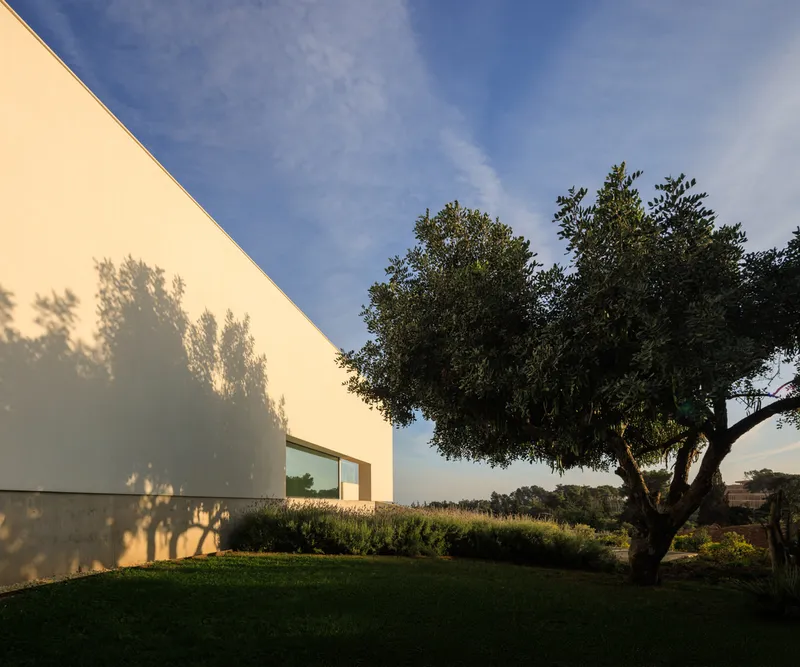
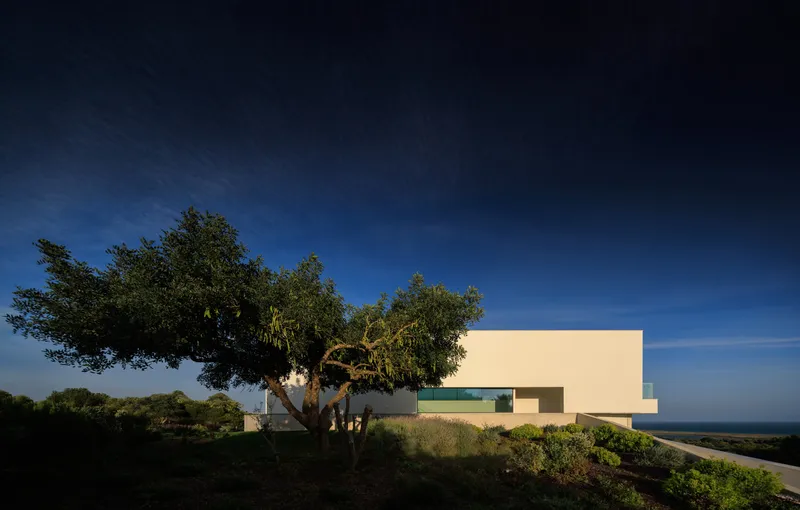
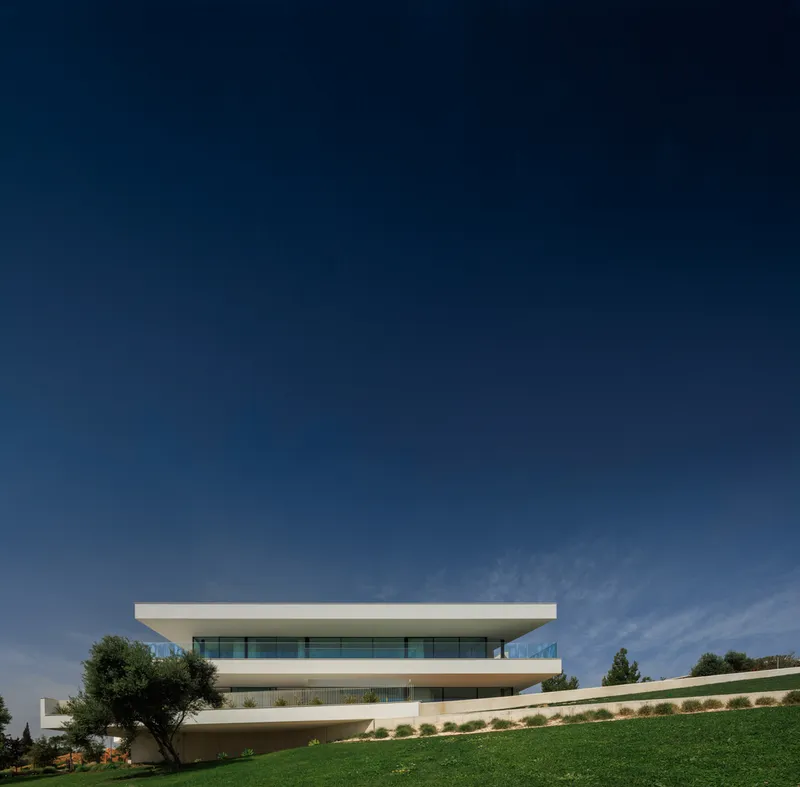
To honor this landscape, the architects chose to build only two floors—despite local regulations permitting three—from ground level. This deliberate restraint achieves greater horizontality, visually anchoring the home into the terrain while reducing its impact on the surroundings. Approaching from the northwest, the house appears as a discreet architectural gesture, almost dissolving into the topography. A walkway crossing the landscaped garden leads visitors toward the understated entrance.


A Spatial Sequence Centered Around Transparency and Height
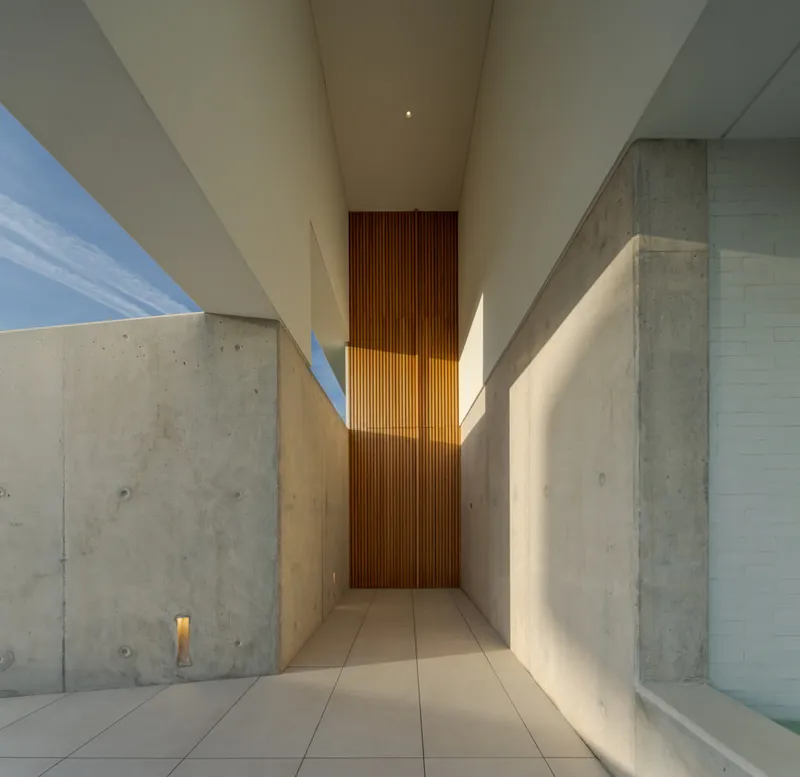
Entry into the home is marked by a tall, narrow passage that opens dramatically into a double-height living room, the visual and social heart of the residence. This transparent central space creates an immediate connection with the outdoors while offering glimpses of the upper level and the loose elevated walkway that leads to the bedrooms.
From the living room, residents move fluidly toward the open kitchen, a secluded bedroom with its own private patio, and a large south-facing terrace that extends toward the garden and swimming pool. These elements establish a continuous indoor–outdoor dialogue, emphasizing comfort, light, and openness.

Upper Level and Additional Spaces
The open-plan upper floor accommodates a blend of bedrooms, workspace, and leisure areas. Designed to be flexible and filled with natural light, this level reinforces the horizontal architectural language while maintaining strong visual connections with the landscape.
Below the main floor, an almost subterranean level provides parking, storage, and technical facilities, efficiently tucked away without compromising the home's clean geometry.


Architectural Expression: Light, Elegance, and Mediterranean Sensibility
Ria House is characterized by a horizontal white volume, sculpted with precision and accented by layered planes of varying lengths. These floating planes rest on a grounded base clad in exposed concrete, adding texture, weight, and contrast. The interplay of white surfaces, shadows, and raw materiality enhances the home's sculptural presence.
Softening this modern structure, lush organic plantings weave into the architecture, appearing in patios, terraces, and transitional spaces. These green pockets heighten both the intimacy of sheltered zones and the vastness of outward-facing views that merge into the horizon.


A Dialogue Between Nature and Architecture
Casa da Ria is a study in dualities: inside and outside, natural and built, shadow and light, openness and enclosure. Yet the composition remains light, refined, and deeply connected to its Mediterranean context. The house embraces the essence of coastal living, offering a tranquil retreat shaped by the rhythms of nature and the purity of contemporary design.




Popular Articles
Popular articles from the community


The Earth Pod: 3D Printed Homes for Resilient Refugee Communities
The Earth Pod reimagines refugee housing through 3D printed homes made from clay, combining resilience, self-sufficiency, and rapid shelter.

Co-life: Sustainable Architecture for Age-Friendly Community Living
Co-life reimagines sustainable architecture for seniors through courtyards, rammed earth, shared gardens, and spaces designed for belonging.

AL-JANNAH: Sustainable Architecture and Permaculture for Afghan Widows
AL-JANNAH uses sustainable architecture and permaculture to create resilient oasis of housing, learning, work and renewal for Afghan widows.

The Musturak Paradise: Senior Living Architecture for a Connected Future in Temara, Morocco
The Musturak Paradise reimagines senior living architecture in Temara via private homes, social spaces, culture, community, and shared care.


Similar Reads
You might also enjoy these articles


Hodi-Mandai Geram
Project Function: Preservation and revitalization of the Intangible heritage and socio-spatial identity of the Hodi by Housing, Cultural Memory Center, Sacred Grove, landscape, local tourism economy


Olio Towers: A Mid-Rise for Performers That Fuses Housing, Rehearsal, and Stage
Located blocks from Houston's Theater District, this modular tower stacks living units around a central performance atrium.

Oasis: Modular Green Housing Carved into Dhaka's Urban Fabric
A shortlisted Plugin Housing entry reclaims unauthorized settlements in Dhaka with stepped concrete volumes, green roofs, and ventilation-driven design.

Black Hole: A Floating Megastructure for the Post-Physical Era
Emiliano Mazzarotto envisions a spherical, self-scaling arena where e-sports, digital hotels, and holographic stadiums replace traditional public space.


Explore Diana Martins Interiores Competitions
Discover active competitions in this discipline



Challenge to reimagine the Iron Throne


Photograph architecture without architects


Illustrate the lost glory of Angkor Wat - Render Challenge


Design challenge to reuse E-waste
Comments (0)
Please login or sign up to add comments
No comments yet. Be the first to comment!