
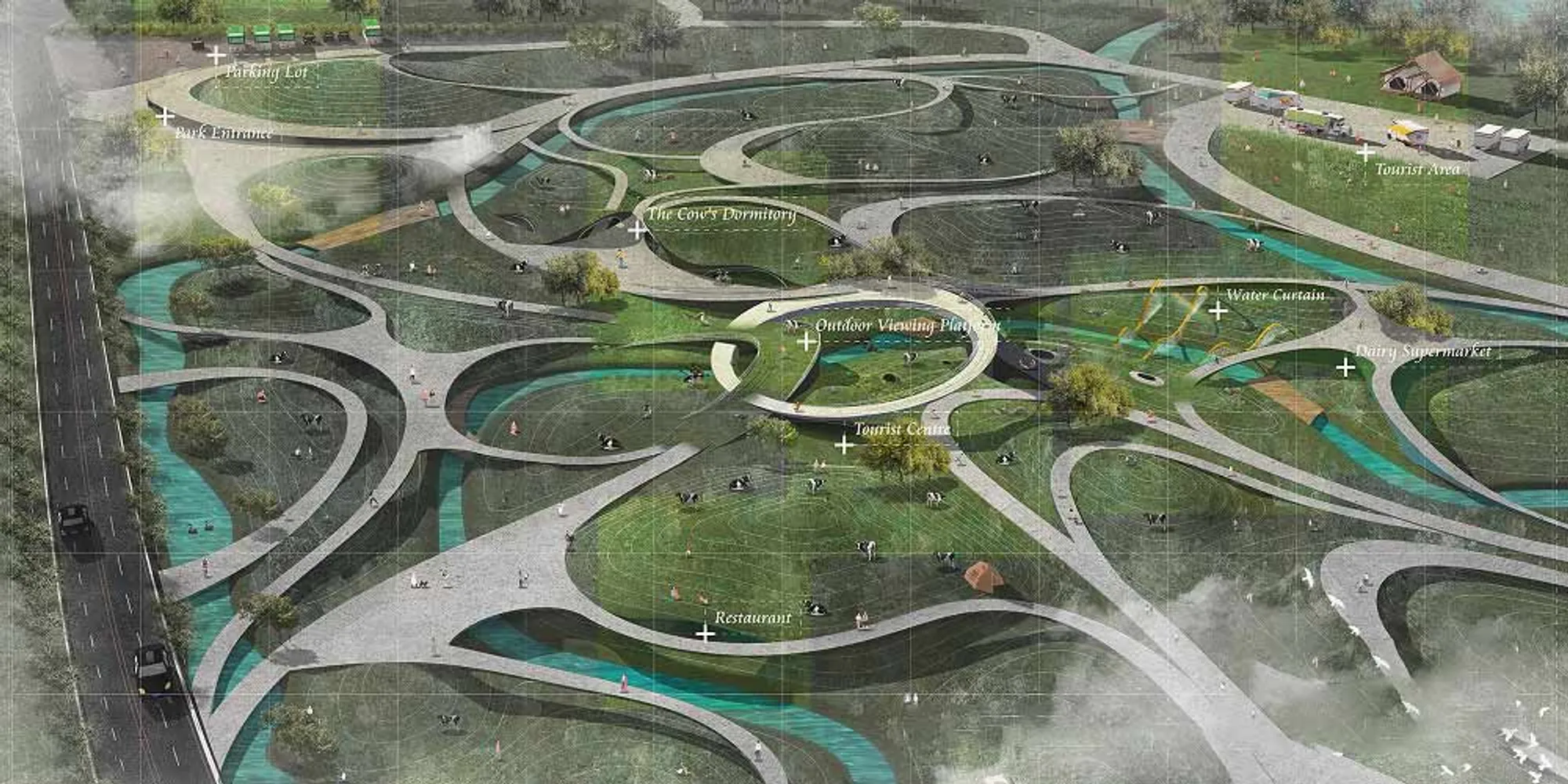
Restoring Dignity: Designers come together to create sustainable Live Stock farms.
Right Live Stock - Architecture Competition - Result Story


Overview
With a growing population, the consumption and popularity of meat and dairy products have been skyrocketing. A lot of ethnic origins advocated for a balanced plant origin and animal origin diet – or at least constraints to balancing both. But as we urbanize more, meat and dairy consumption globally has grown 400% in the last decades and is continuing to grow more.
With a growing city population and sectoral depletion of natural resources not only animal habitats close to cities have shrunk to almost limits. At the same time, an entire industry is now set up to raise livestock in closed atmospheres and feed them with genetically modified food and medicines for raising yields.
This leads to not only poor living conditions for animals – at the same time humans consuming dairy, meat products are prone to ingesting such chemicals and agents with them.
Where is the balance?
While the world is pushing towards plant-based diet and vegetarianism, deteriorating conditions of animal farms are still a persistent issue for most places globally. The lack of design thinking and empathy in developing the right kind of livestock farms is a major cause of diseases and even the pandemic we are living through. Everything is somehow related to such mismanagement at the ground level.
‘It is what we eat‘– It has always been saying and understood by all since childhood. If that’s the case then why do humans eat from places that are cruel and unhealthy for animals themselves?
Design Challenge
The design subject has been always paradoxical and never addressed in general.
How can we bring design ingenuity and instill more empathy in building the right kind of dairy, poultry, livestock farms?
This challenge looked at a dairy farm for cattle in a peri-urban condition. Consumption of dairy is global yet the farms they come from are always an afterthought.
The design of the farm as an exercise is often ignored and eventually ends up being an efficiency problem of fitting more and more in less space which shouldn’t be the case.
The problem was to understand economic restraints and deliver a balanced living environment for dairy farms.
How many levels should be placed? How can hygiene be efficiently practiced? If there are limited grazing areas how can we ensure there are enough physical activities for animals? How much lighting and air should be enough? How can resting areas or outdoor areas make a balanced life possible in restrained spaces? How can we excise weather control in such tight budgets – especially in extreme climates? And similar questions require to be answered in this design challenge.
The jury for the competition consisted of esteemed designers, professionals, and academicians from around the world. The Lead Jurors for the competitions were as follows:
Ariel Alvarado, General Manager, AE Arquitectos, Nicaragua
Caroline Hickey, Director, Bosske Architecture, Australia

Some of the Best of competition projects are:
Winning Project: STACKED-STOCK
By: Ananya Biswas
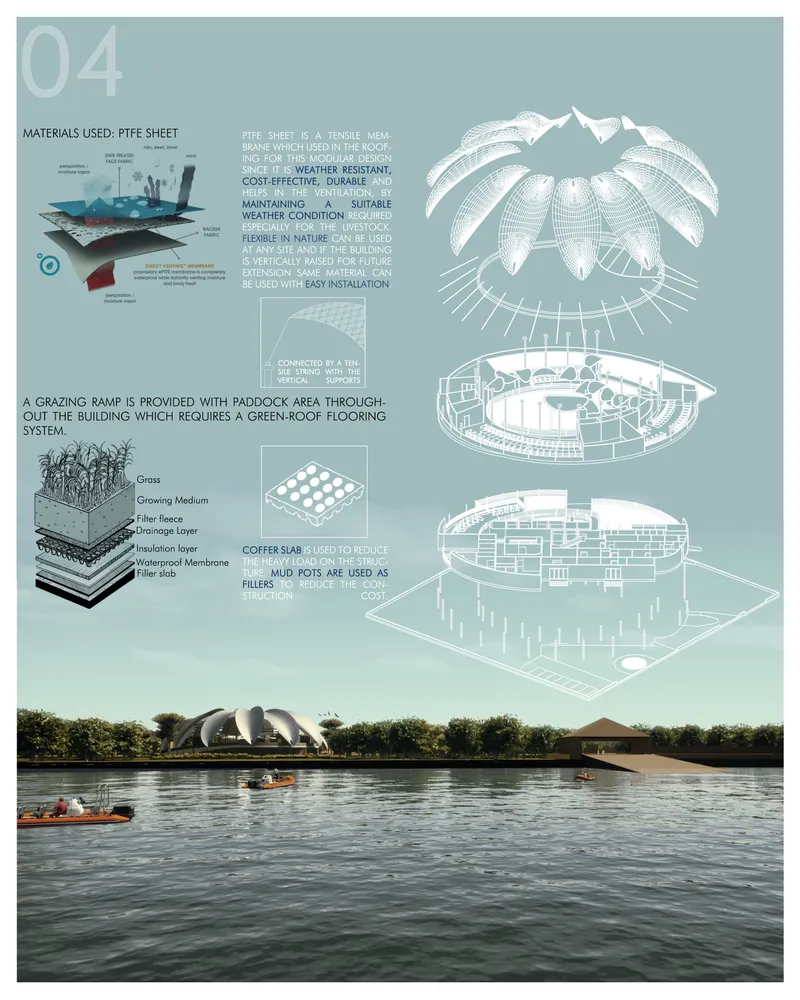
Fig: 1 PTFE Sheet
Description: This project aims to design a stacked system farm by keeping in mind the psychological and physical aspects of the livestock.
-----------------
People’s Choice: COW SHED
By: Weronika Smentek
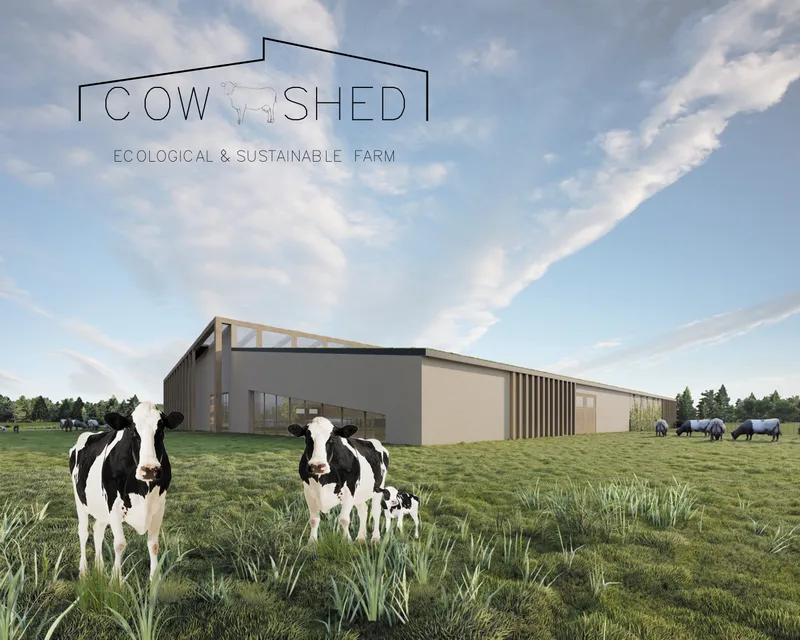
Fig: 2 Farm image
Description: We are students in the 3rd year of architecture at the Poznan University of Technology. The assumption of our project was to design a farm for cows with dimensions 60x60 m. We wanted it to be fairly classic in style but with modern technologies and environmentally friendly. We made sure that the animals had adequate space, lighting, and enclosure.
-----------------
Institutional Excellence: Ecological grazing of Friesian sheep
By: Wiktoria Michalowska & Martyna Staszkiewicz
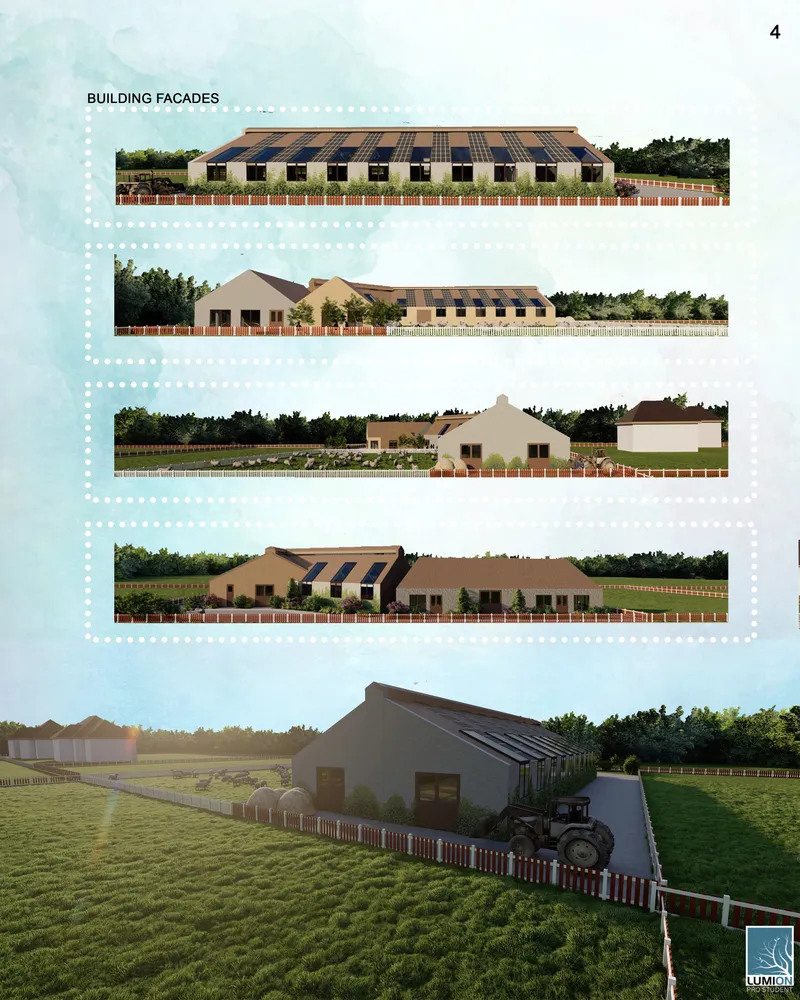
Fig: 3 Building Facades
Description: It is a project showing that sheep farming can be animal and environment-friendly. The solutions we use are easy and common to use. We believe that the happiness of animals inbreeding is the most important.
--------------------
Editor’s Choice: Cowtopia
By: Ziyao Wang
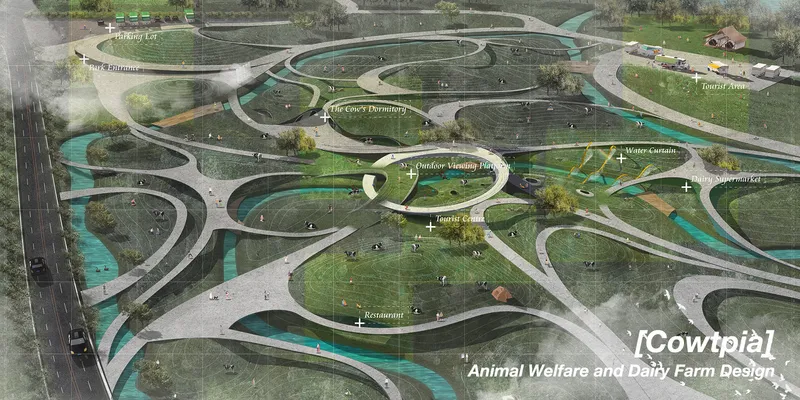
Fig: 4 Cover image
Description: This plan started with the protection of animal welfare and proposed the idea of creating a harmonious pasture environment in order to solve the safety problem of dairy products from the source and bring well-being to human life ultimately.
-----------------------
Editor’s Choice: Cyclovis - A sustainable Sheep Farm
By: Dominik Szczeszynski & Zuzanna Cywinska
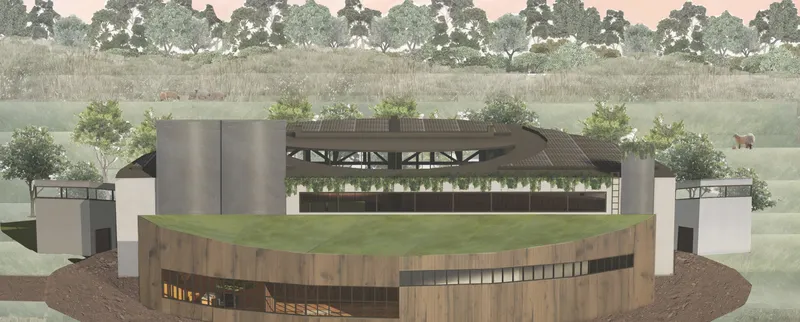
Fig: 5 Cover image
Description: Cyclovia is the original in form, and reasonable in function. It is the project that aims to be truly modern - not only in technical solutions but also in trying to be more conscious about the wellbeing of the animals.
Follow us on social media: Facebook | Instagram | LinkedIn | Twitter | Youtube
References (3)




Popular Articles
Popular articles from the community

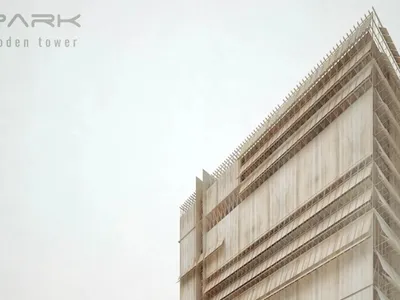
EW PARK: Sustainable Architecture Reimagines the Future of Urban Parking
EW PARK reimagines city parking as a modular wooden tower combining automation, solar energy, electric mobility, and adaptable urban design.

Conexión: Biophilic Design Reimagines High-Rise Living in Hong Kong
Conexión reimagines high-rise living in Hong Kong through biophilic design, green facades, shared spaces, daylight, water and nature within.

Riyadh For All: Intergenerational Urban Design for Active Aging in Rabat
Riyadh For All reimagines urban design in Rabat with intergenerational co-living, adaptive courtyards, and Moroccan cultural exchange today.

The Musturak Paradise: Senior Living Architecture for a Connected Future in Temara, Morocco
The Musturak Paradise reimagines senior living architecture in Temara via private homes, social spaces, culture, community, and shared care.

Similar Reads
You might also enjoy these articles
The Musturak Paradise: Senior Living Architecture for a Connected Future in Temara, Morocco
The Musturak Paradise reimagines senior living architecture in Temara via private homes, social spaces, culture, community, and shared care.

The Leaf Center: Cultural Center Architecture for Social Integration in Amsterdam
Cultural center architecture becomes a bridge at The Leaf Center, connecting international students with Amsterdam through art and exchange.
Conexión: Biophilic Design Reimagines High-Rise Living in Hong Kong
Conexión reimagines high-rise living in Hong Kong through biophilic design, green facades, shared spaces, daylight, water and nature within.

Wander to Wonder: Modular Playground Design for Children in Kutupalong Refugee Camp
Wander to Wonder uses modular playground design to create flexible, imaginative play spaces for children in Kutupalong refugee camp.


Comments (0)
Please login or sign up to add comments
No comments yet. Be the first to comment!