

Ronix Office Building by Pargar Architecture and Design Studio: A Fusion of Industrial and Office Aesthetics
Ronix Office Building blends transparency, sustainability, and industrial aesthetics, featuring glass cubes, green spaces, and innovative workspace design in Tehran.


The Ronix Office Building, designed by Pargar Architecture and Design StudioDeed Studio, is a striking example of modern office architecture that seamlessly integrates industrial aesthetics with contemporary design principles. Located in Tehran, Iran, this 4,281 m² project was completed in 2019, offering a dynamic workspace for Ronix, a rapidly growing industrial tools manufacturer.
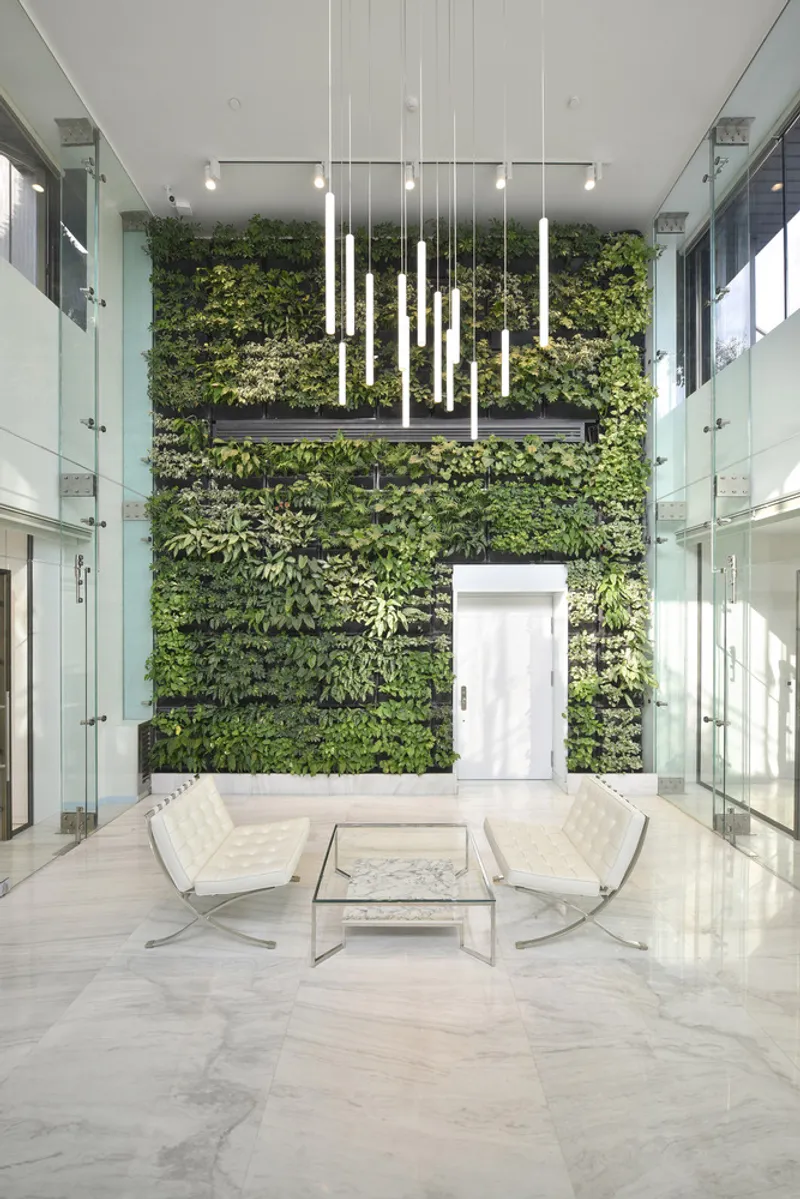
Architectural Concept and Design Approach
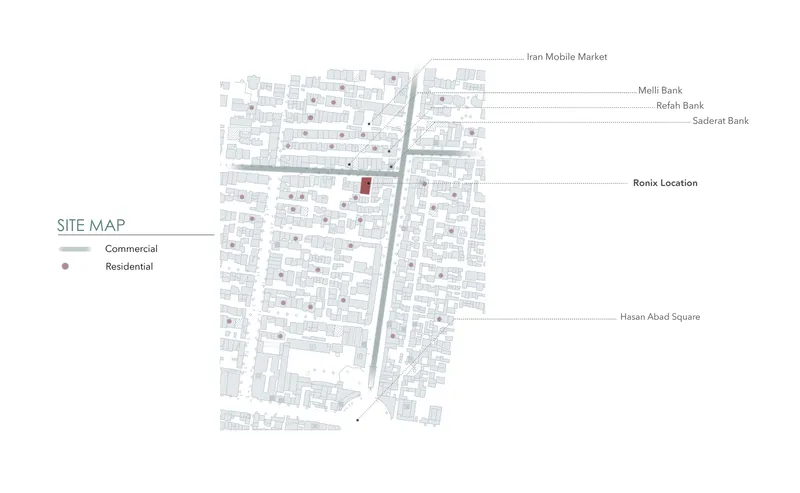
Situated on a 543 m² plot near Hafez Street, the building was strategically positioned to provide optimal accessibility for Ronix’s business operations. The design concept revolves around three core elements: industrial office functionality, transparency, and spatial fluidity. To reflect these ideas, the architects incorporated transparent cubic forms into the structural framework, fostering a sense of openness while allowing for future expansion and flexibility in workspace configurations.
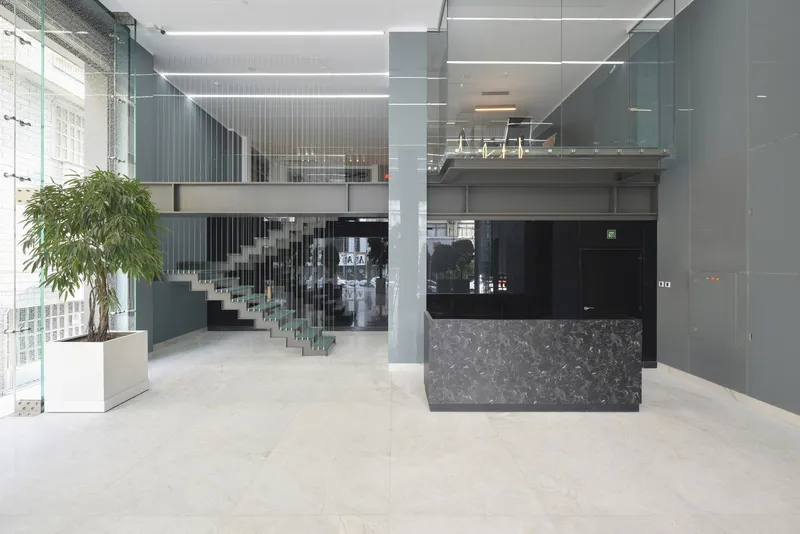
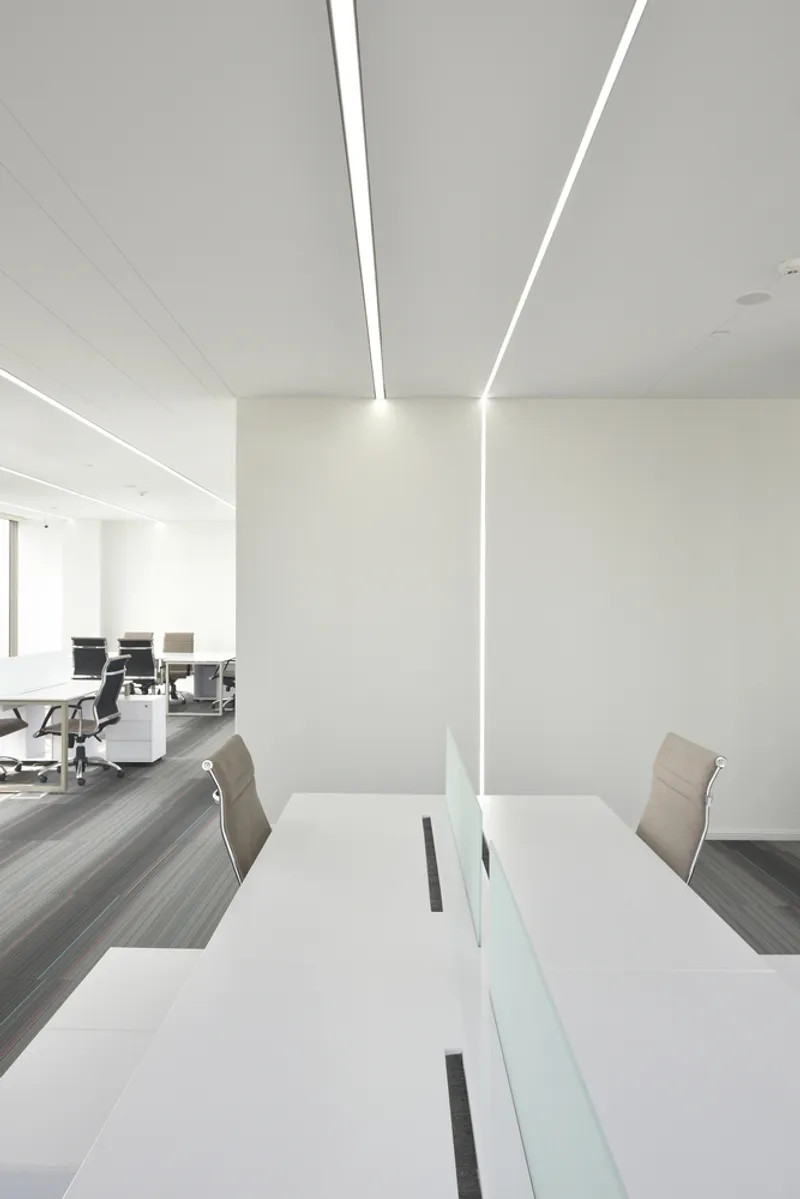
One of the defining features of the project is the interplay between solid and transparent elements, where glass facades and dynamic spatial compositions create an environment that promotes natural light flow, employee well-being, and enhanced productivity. By introducing green spaces within the structure, the design mitigates the rigidity of conventional office layouts, providing areas for relaxation and interaction among employees.
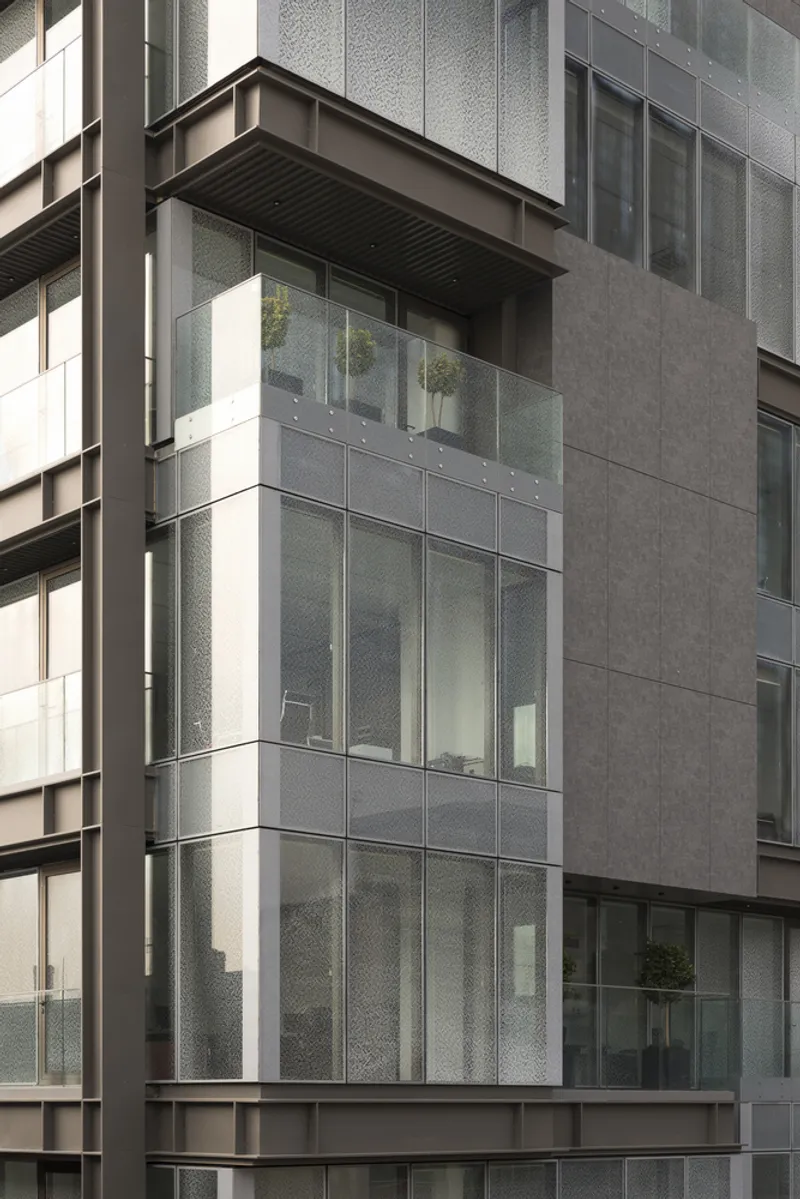
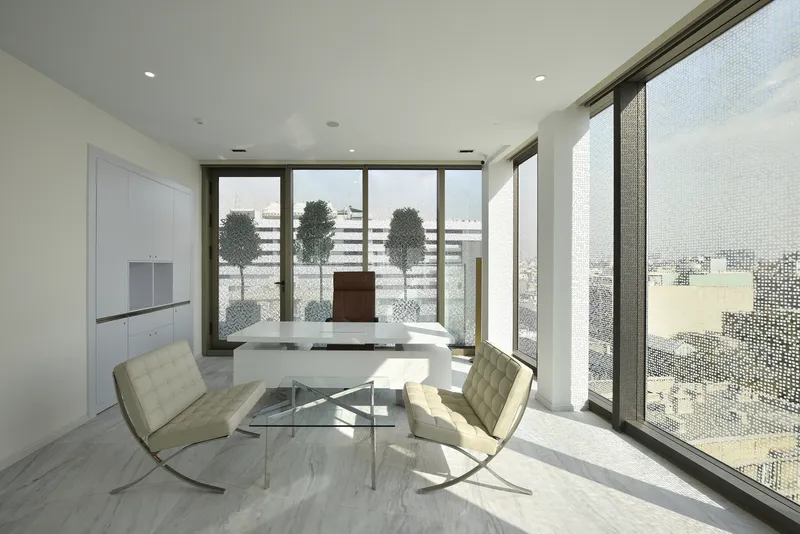
Structural and Engineering Details
The project was led by Behzad Heidari and Shirin Samadian, with Jalal-al-din Sajadian as the engineering consultant and Ali Rahiman (Ravesh Group) managing construction. Utilizing advanced software tools such as AutoDesk, Rhino (Robert McNeel & Associates), Trimble Navigation, and Grasshopper, the team optimized structural efficiency and environmental responsiveness. The integration of Schüco systems, Venus Glass, and Vitor materials ensured high-quality building performance, durability, and energy efficiency.
Addressing Key Challenges
Despite its innovative design, the Ronix Office Building faced several challenges, particularly concerning solar exposure, surrounding urban fabric, and privacy concerns:
- Excessive glass coverage: The need for ample natural light led to an increased glass surface area, which raised concerns about solar radiation and greenhouse effects.
- Urban context limitations: The building is surrounded by aging structures, which do not provide an aesthetically pleasing external view.
- Privacy conflicts: Adjacent residential buildings are in close proximity, creating potential issues of overlooking and lack of privacy for office spaces.
Innovative Solutions for Sustainability and Privacy
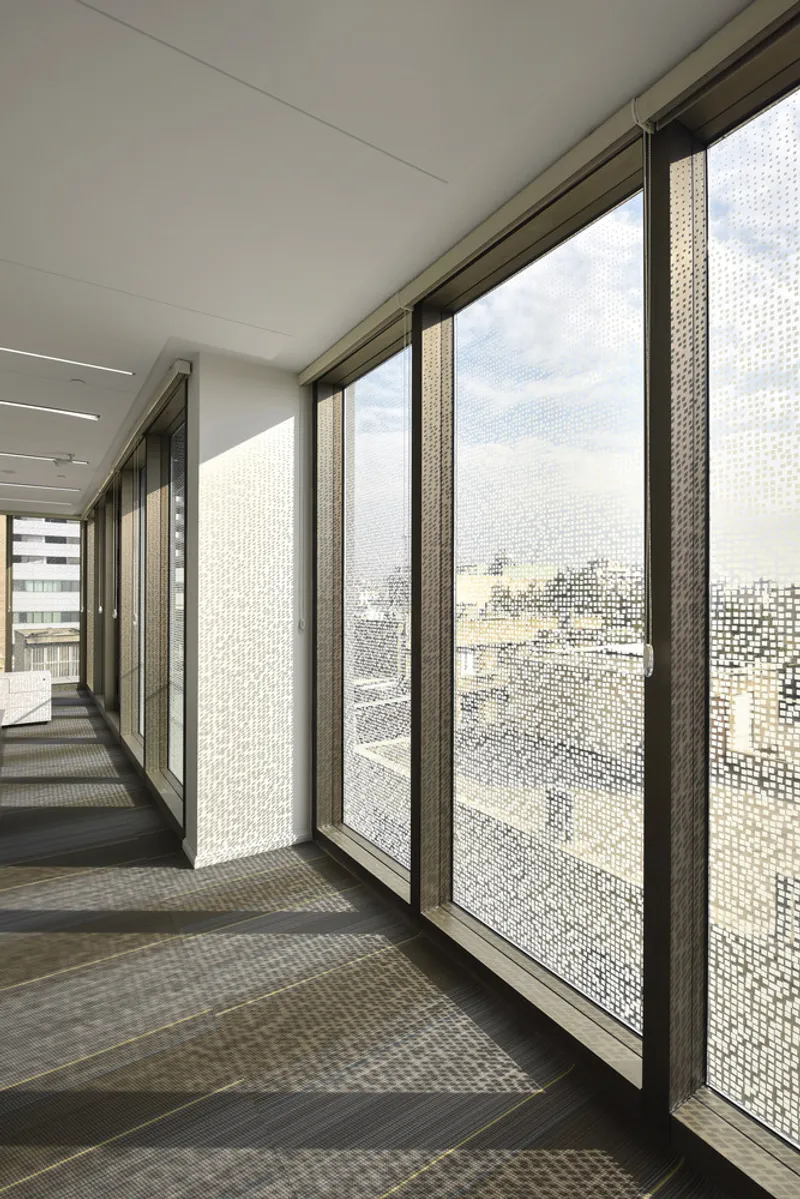
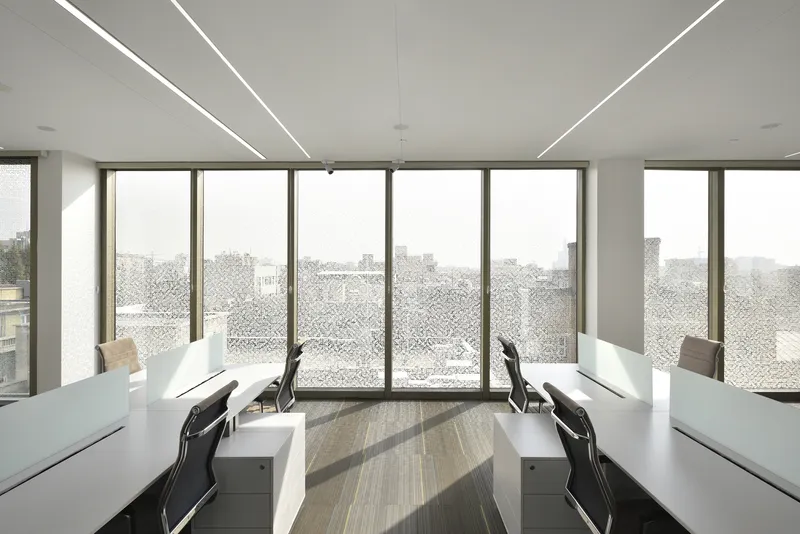
To counteract these drawbacks, the architects employed semi-transparent printed glass panels that balance light transmission and privacy. The matrix network of printed points was meticulously designed using Grasshopper software, allowing for the precise scaling of transparency levels to filter sunlight effectively while reducing glare and heat gain.
For visual comfort, the rigid matrix form was transformed into an organic pattern, ensuring that the aesthetic effect remained subtle and did not distract employees or passersby. This innovative glass printing technique significantly enhances the building’s energy efficiency while maintaining optimal daylight conditions within office interiors.
The Ronix Office Building stands as a testament to contemporary office design, blending industrial aesthetics with sustainable architecture. Through the strategic use of transparent volumes, dynamic spatial organization, and innovative material applications, Pargar Architecture and Design Studio has created a workspace that not only fulfills functional requirements but also contributes to the well-being of its occupants and urban revitalization.
All Photographs are works of Deed Studio




Popular Articles
Popular articles from the community


Co-Life: Senior Housing Design That Reconnects Older Adults With the City
Co-Life reimagines senior housing design through healing gardens, shared streets, workshops, and a sustainable community across generations.

The Earth Pod: 3D Printed Homes for Resilient Refugee Communities
The Earth Pod reimagines refugee housing through 3D printed homes made from clay, combining resilience, self-sufficiency, and rapid shelter.
EW PARK: Sustainable Architecture Reimagines the Future of Urban Parking
EW PARK reimagines city parking as a modular wooden tower combining automation, solar energy, electric mobility, and adaptable urban design.

The Ocean Hive: Sustainable Architecture for a Self-Sufficient Civilization at Sea
The Ocean Hive imagines sustainable architecture at sea, where modular habitats, algae, wave power and ocean waste sustain a growing colony.


Similar Reads
You might also enjoy these articles


Hodi-Mandai Geram
Project Function: Preservation and revitalization of the Intangible heritage and socio-spatial identity of the Hodi by Housing, Cultural Memory Center, Sacred Grove, landscape, local tourism economy


Olio Towers: A Mid-Rise for Performers That Fuses Housing, Rehearsal, and Stage
Located blocks from Houston's Theater District, this modular tower stacks living units around a central performance atrium.

Oasis: Modular Green Housing Carved into Dhaka's Urban Fabric
A shortlisted Plugin Housing entry reclaims unauthorized settlements in Dhaka with stepped concrete volumes, green roofs, and ventilation-driven design.

Black Hole: A Floating Megastructure for the Post-Physical Era
Emiliano Mazzarotto envisions a spherical, self-scaling arena where e-sports, digital hotels, and holographic stadiums replace traditional public space.


Explore Office Building Competitions
Discover active competitions in this discipline



Challenge to reimagine the Iron Throne


Photograph architecture without architects


Illustrate the lost glory of Angkor Wat - Render Challenge


Design challenge to reuse E-waste
Comments (0)
Please login or sign up to add comments
No comments yet. Be the first to comment!