
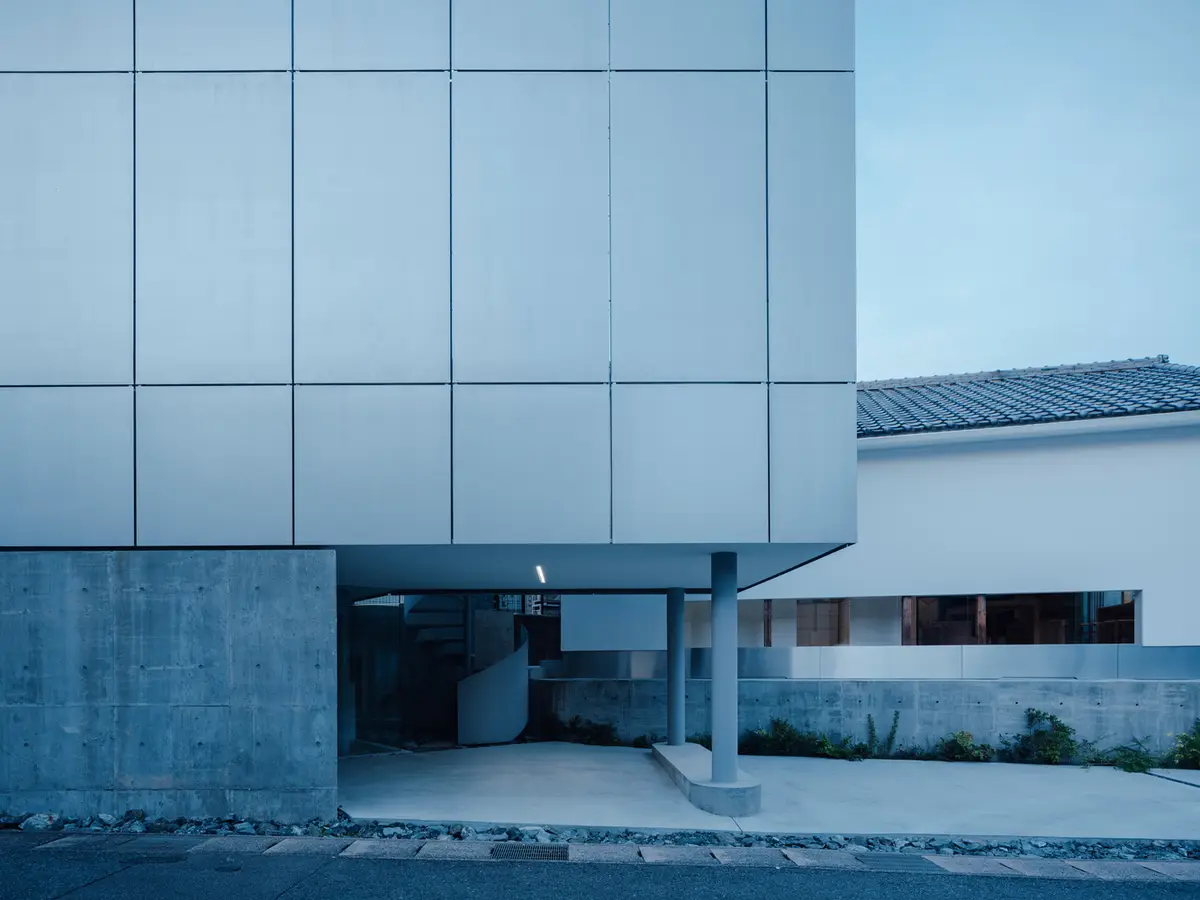
Sa_Yu House by FATHOM: Redefining Modern Living Through Renovation and Extension
Sa_Yu House by FATHOM blends renovation and extension, connecting past and present, creating adaptable, light-filled, serene spaces for modern living.


A Harmonious Blend of Past and Present
Sa_Yu House, designed by FATHOM Architects, is a masterclass in residential architecture that harmoniously intertwines history, innovation, and daily life. Situated on a hilly site in Kure City, Hiroshima, this project transforms a 70-year-old wooden house into a modern home that honors its past while embracing the future. By merging renovation and extension, Sa_Yu House evolves from a private residence into a space of relationships—connecting people, spaces, and time.
Segmentation and Connection: Crafting a New Lifestyle
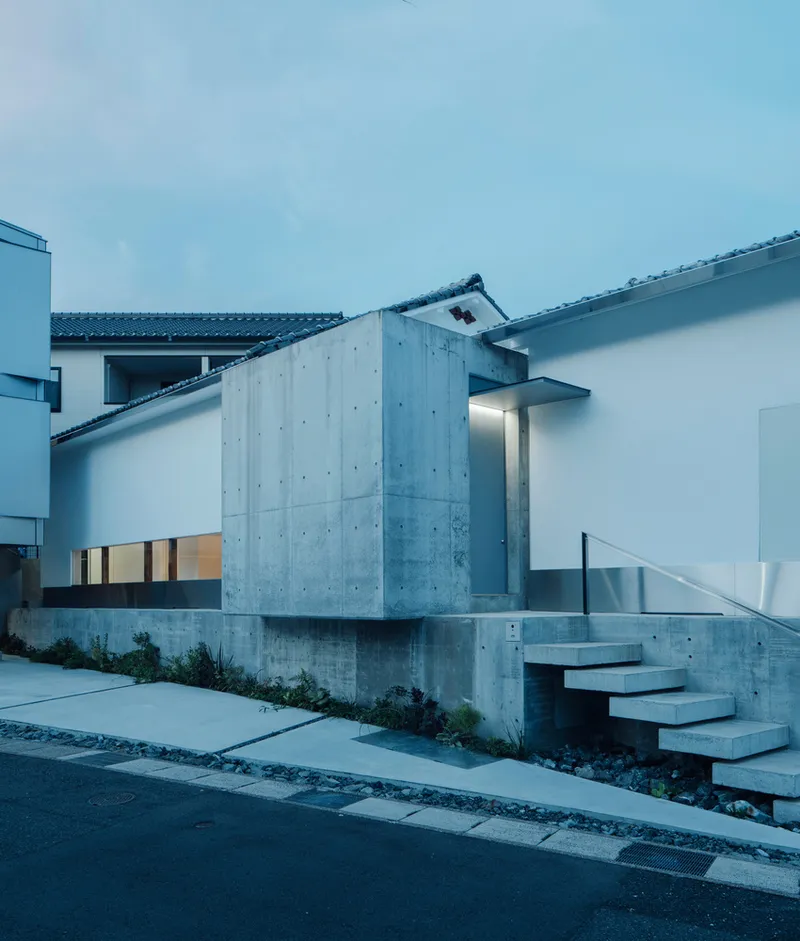
The renovation process began with a careful study of the house’s layered history, selectively dismantling previous extensions to reveal the original structure. A striking reinforced concrete (RC) void was inserted to link the courtyard and entrance vertically. This thoughtful segmentation separates private rooms, the LDK wing, and the community extension while maintaining a natural connection through light, airflow, and circulation.
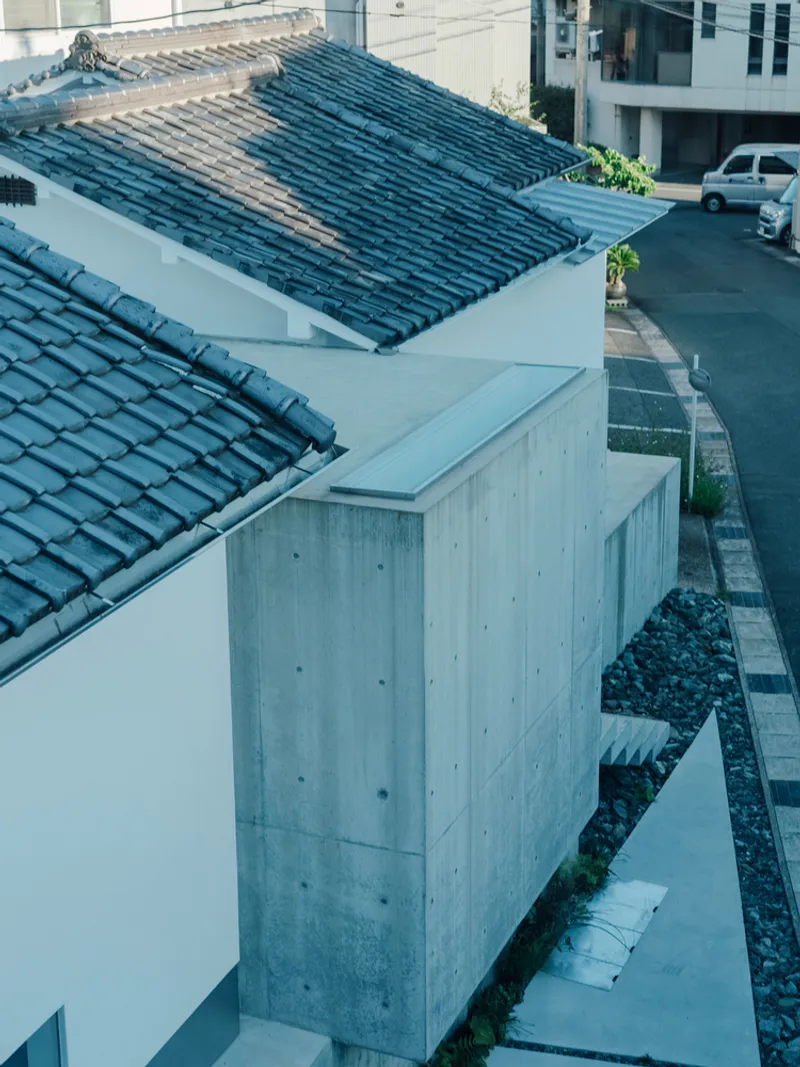
The design fosters psychological and physical balance, providing spaces for both solitude and shared moments. Each section of the home is individually distinct yet organically integrated, creating a flexible layout that adapts to daily life.
LDK Wing: The Heart of the Home
At the center of Sa_Yu House lies the LDK (Living, Dining, Kitchen) wing, designed to rethink daily life. Household appliances like the refrigerator, television, and range hood are seamlessly integrated into custom wood and steel cabinetry, minimizing visual clutter. Exposed original beams meet a newly crafted ceiling, connected by a single black string light—a symbolic line tracing the passage of time between old and new.
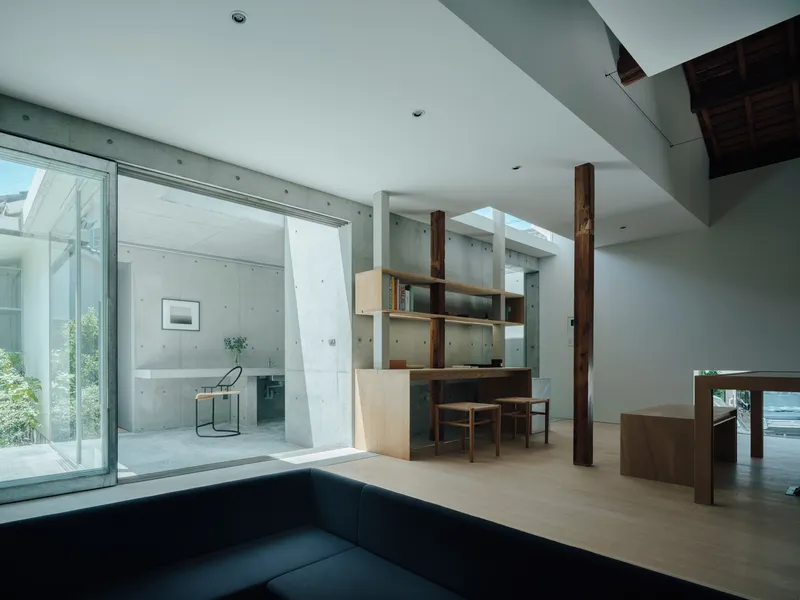
The slightly sunken living floor encourages natural seating along the floor edge, enhancing intimacy and comfort. A west-facing fixed window softly captures street sounds, while the inward-facing courtyard brings greenery close, creating a tranquil interplay between interior shadow and exterior light.
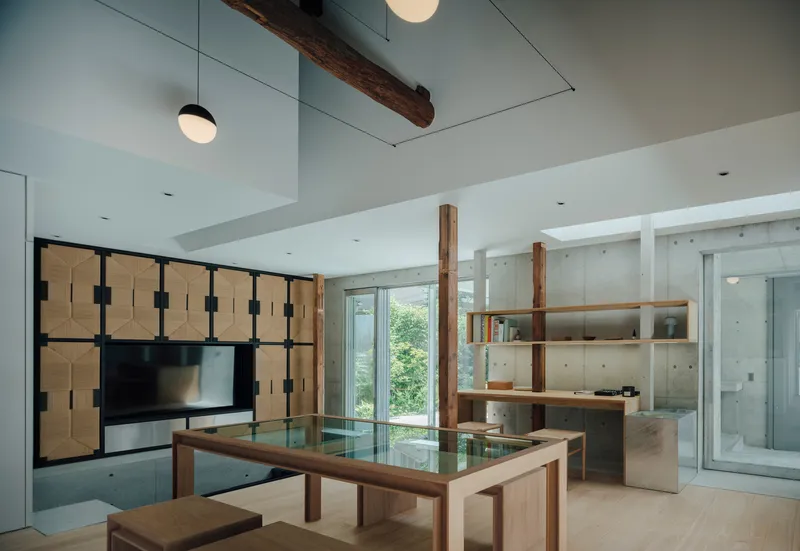
RC Void: Light, Time, and Connection
The RC void serves as the central hub of the home, linking the LDK and private wings. Frameless skylights and large courtyard openings bathe the space in diffused natural light, reflecting softly off exposed concrete. A 65mm-thick acrylic bench positioned under the skylight becomes a contemplative focal point, reminding occupants of time’s gentle passage. This transitional space blurs dualities—inside and outside, solitude and togetherness, stillness and movement.
Movable partitions within each segmented zone allow the home to adapt fluidly to seasonal changes or social gatherings, transforming the interior layout while maintaining harmony.

Community Wing: Extending Life Outward
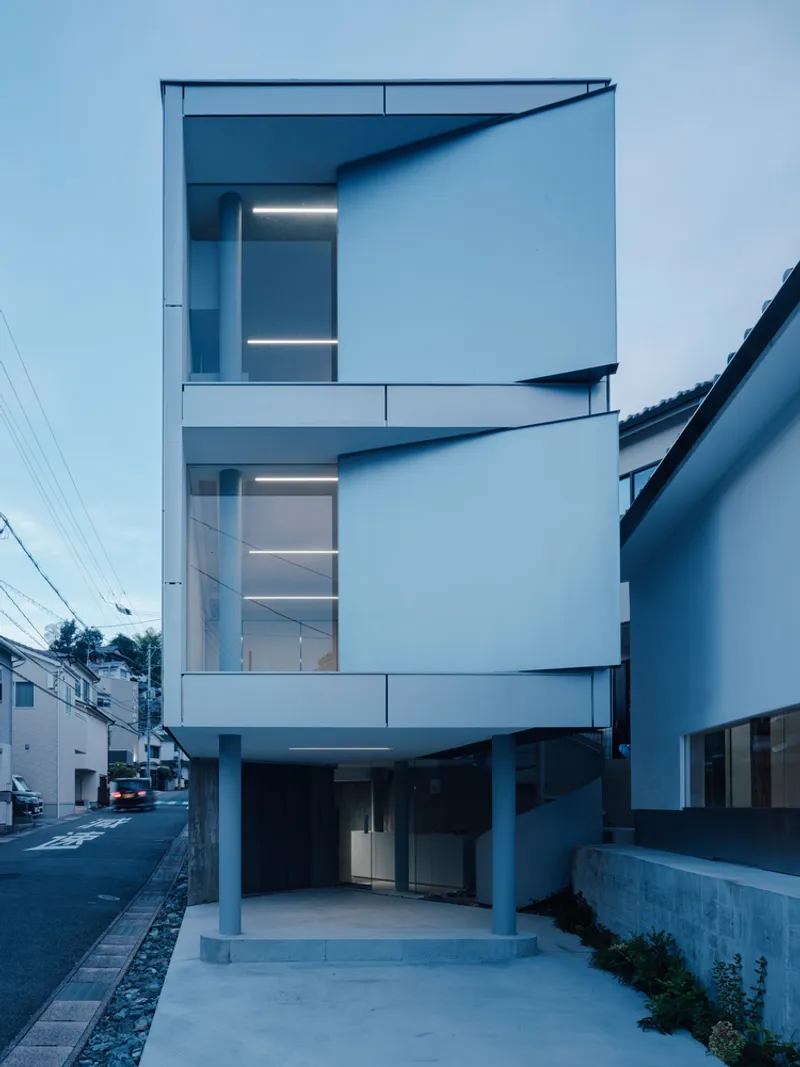
The newly added community wing extends the home beyond its original footprint, replacing a former barn with a semi-underground structure that follows the hill’s contours. Reinforced concrete and steel framing create a durable foundation, while silver-painted fiber-cement boards with exposed joints enhance the exterior’s dynamic aesthetic.

Inside, a large reception table and carved benches encourage interaction, while a spiral staircase opens to a two-story community space. The design invites human activity to flow vertically, blending topography, structure, and light into a vibrant living environment.

Private Wing: Crafting Stillness Through Design
The private wing focuses on privacy, calm, and sensory experience. Louvered shutters allow occupants to adjust light, sightlines, and ventilation, producing soft shadows on plaster walls. Diagonal walls echo those in the community wing, visually uniting the old and new structures. The home fosters a sense of stillness and reflection, offering intimate connection with both nature and architecture.
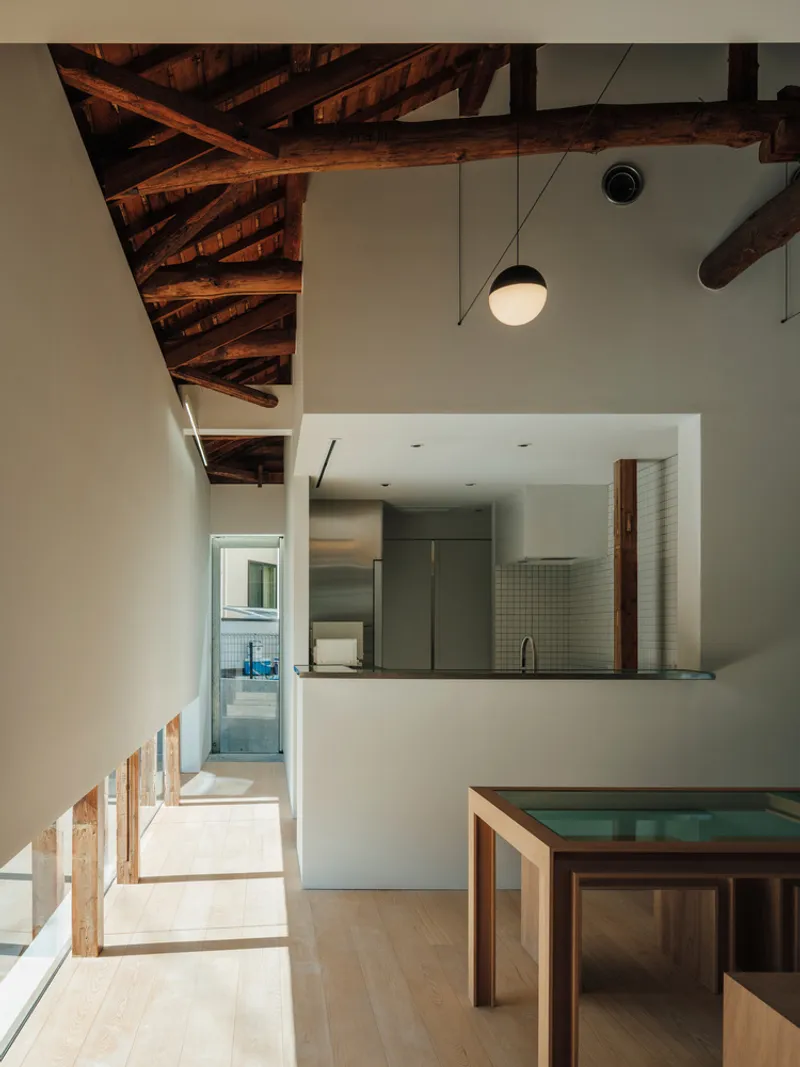
Editing Life Through Architecture
Sa_Yu House goes beyond traditional renovation—it reinterprets daily life as an evolving experience. Interior and exterior, private and communal spaces are connected through gradients rather than rigid boundaries. The design encourages inhabitants to edit their way of life, balancing coexistence between past and future, solitude and community.
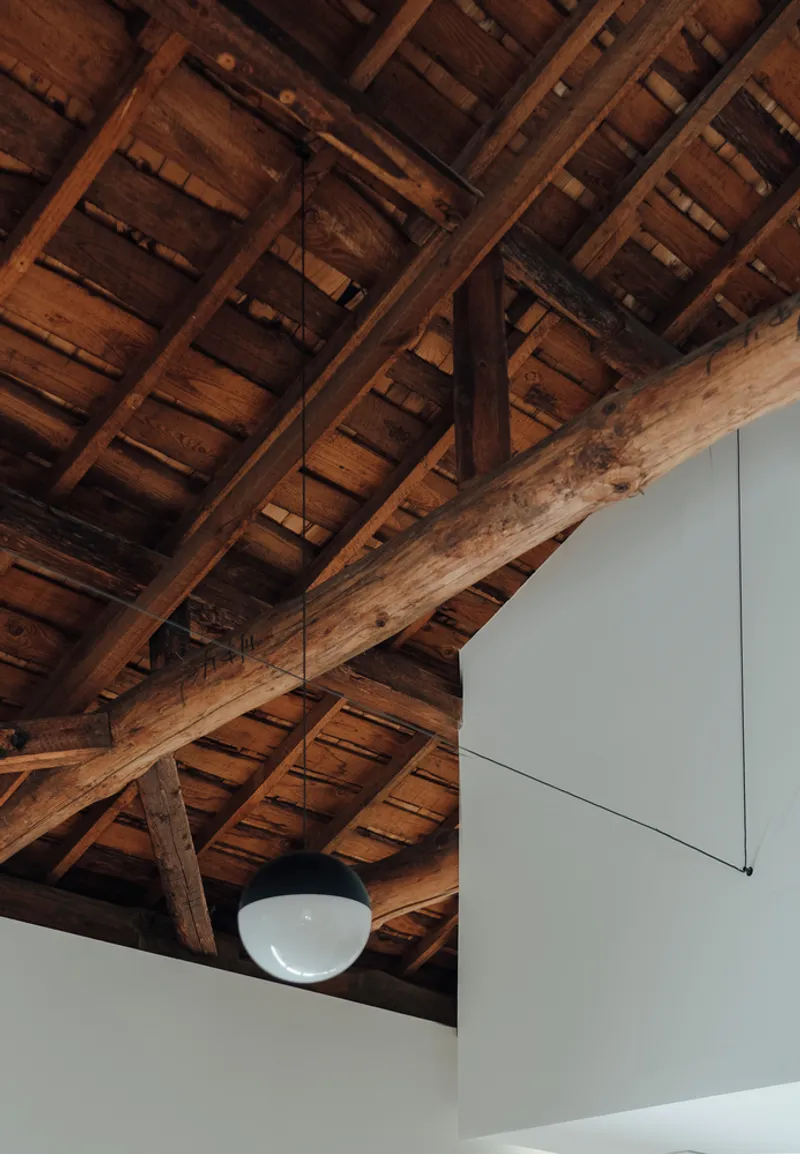
Through its thoughtful segmentation, adaptable layout, and interwoven extension, Sa_Yu House is more than a home—it is a medium for living fully, mindfully, and in harmony with time.

All photographs are works of Tatsuya Tabii


Popular Articles
Popular articles from the community


Architekt Andreas Gruber Scatters 23 Dark Timber Chalets Across a South Tyrolean Forest Edge
In Molini di Tures, Amonti Chalets breaks a resort into a hamlet of gabled timber houses, with parking, storage and services pushed into the slope.

LT2A and OPEN Architectes Thread a Brick and Glass High School Through a Wooded Belgian Campus
In Braine-l'Alleud, a 3,000 m² wing for Collège Cardinal Mercier pairs pale brick with a glazed colonnade, deferring to a small chapel and a dense wood.

David Macias Steps a Doorless Stone and Plaster House Down a Tropical Colombian Hillside
In the humid hills of Colombia, Threshold House replaces the front door with an open void and terraces its 850 m² down the slope instead of fighting it.

U.GA Architects Wraps an Oval Rooftop Pool in Curved Board-Formed Concrete on Busan's Jeollidan-gil
In Busan's Jeonpo-dong, a 454 m² mixed-use block stacks a neighborhood facility, guest rooms and an oval rooftop pool inside spiraling concrete walls.

Similar Reads
You might also enjoy these articles


Hodi-Mandai Geram
Project Function: Preservation and revitalization of the Intangible heritage and socio-spatial identity of the Hodi by Housing, Cultural Memory Center, Sacred Grove, landscape, local tourism economy


Olio Towers: A Mid-Rise for Performers That Fuses Housing, Rehearsal, and Stage
Located blocks from Houston's Theater District, this modular tower stacks living units around a central performance atrium.

Oasis: Modular Green Housing Carved into Dhaka's Urban Fabric
A shortlisted Plugin Housing entry reclaims unauthorized settlements in Dhaka with stepped concrete volumes, green roofs, and ventilation-driven design.

Black Hole: A Floating Megastructure for the Post-Physical Era
Emiliano Mazzarotto envisions a spherical, self-scaling arena where e-sports, digital hotels, and holographic stadiums replace traditional public space.

Explore Residential Building Competitions
Discover active competitions in this discipline

Challenge to design mud housing for contemporary communities

Challenge to reimagine the Iron Throne

Photograph architecture without architects

Illustrate the lost glory of Angkor Wat - Render Challenge
Comments (0)
Please login or sign up to add comments
No comments yet. Be the first to comment!