
Sabiaguaba Gastronomic Complex: A Model of Sustainable Coastal Architecture
The Sabiaguaba Gastronomic Complex is a landmark of sustainable coastal architecture, blending ecotourism, cultural heritage, and eco-friendly design in Fortaleza.


Blending Tradition, Nature, and Contemporary Design
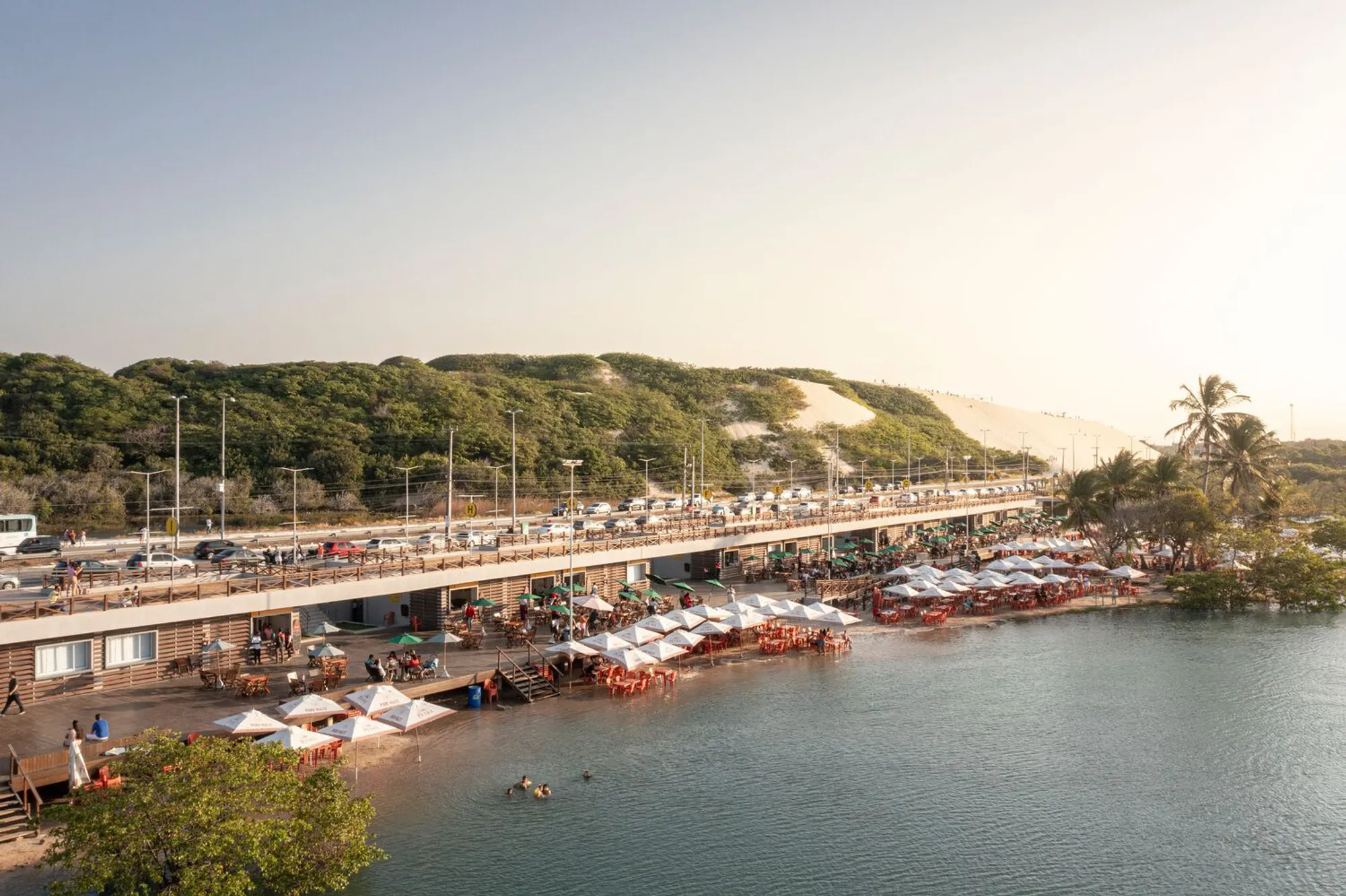
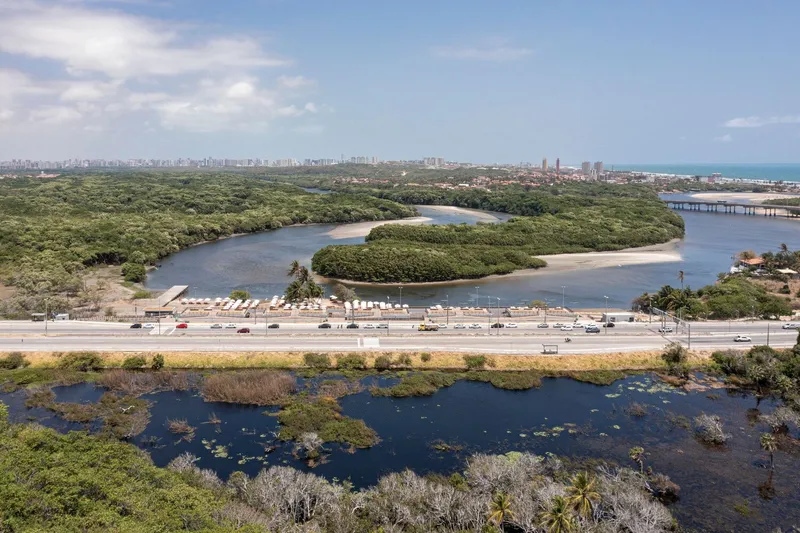
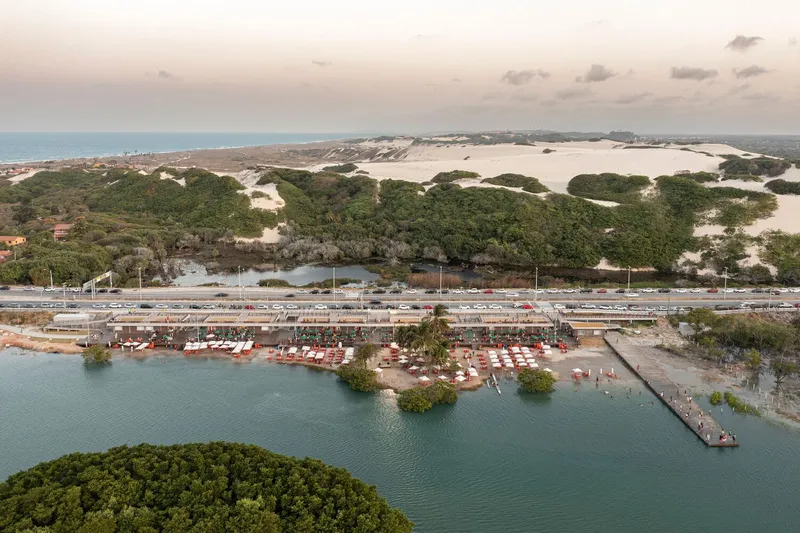
The Sabiaguaba Gastronomic Complex, designed by Architectus S/S, is an architectural landmark in Fortaleza, Brazil, that harmonizes nature, culture, and sustainability. Positioned at the meeting point of the Cocó River and the Atlantic Ocean, the project embraces the region’s ecological and cultural significance. This unique development arose from the local community’s aspirations to create a space that supports ecotourism, preserves biodiversity, and promotes traditional cuisine while maintaining a minimal environmental footprint.
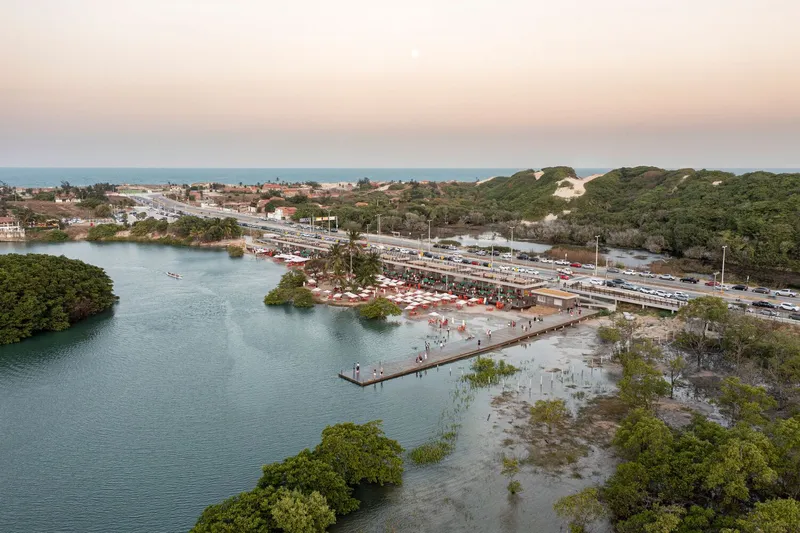
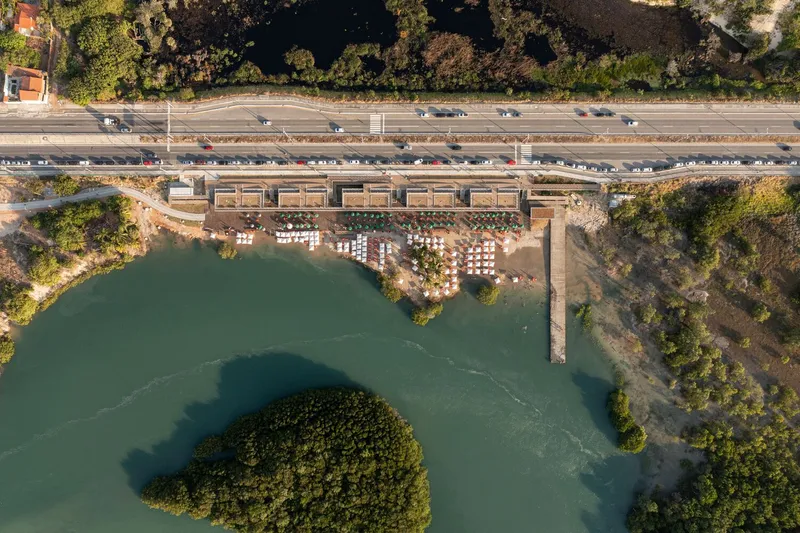
Located on a steep site, the building adopts a semi-buried design, allowing it to integrate seamlessly into the natural terrain. The project’s approach ensures unobstructed views of the breathtaking coastal landscape while minimizing its impact on the environment.

A Community-Driven Architectural Vision
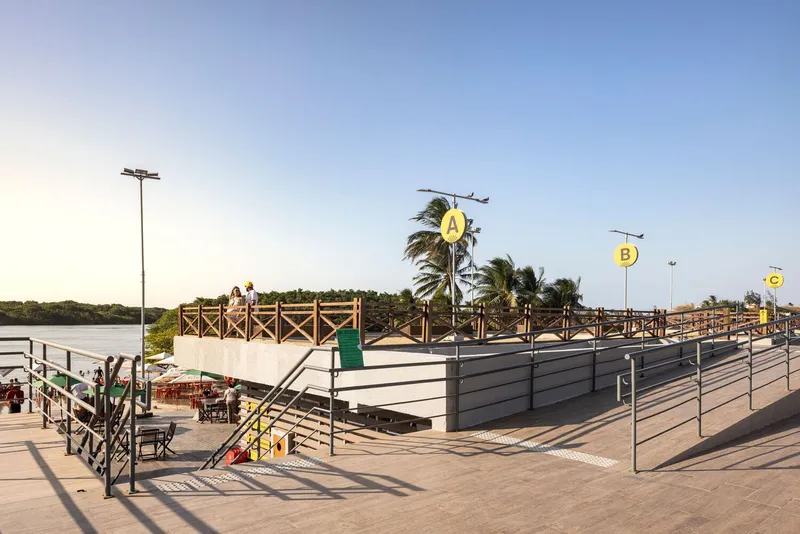
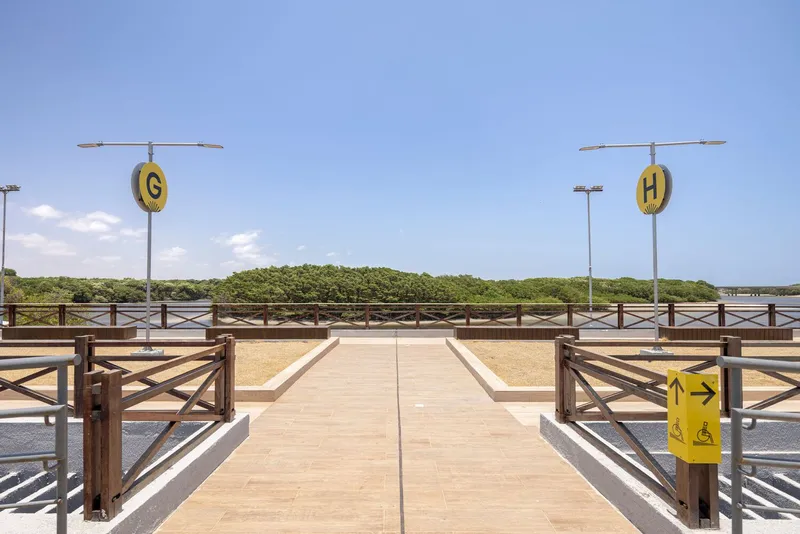
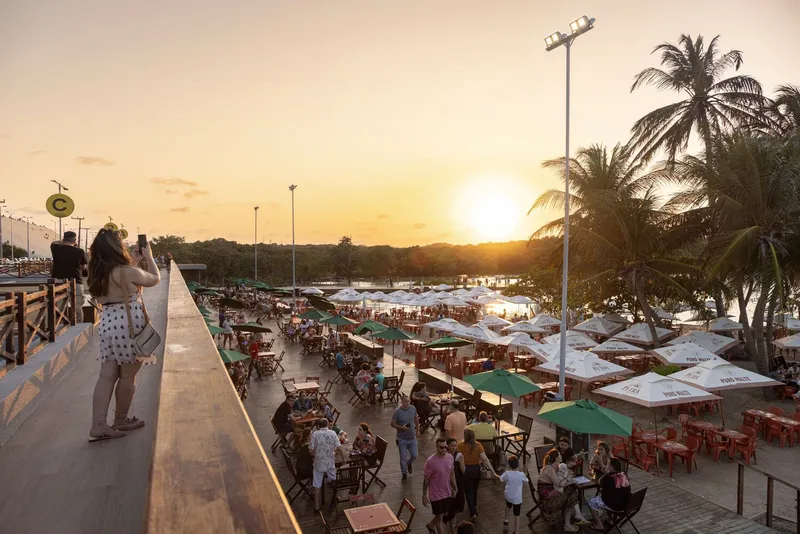
The architectural design reflects the desires of the Sabiaguaba community, who have long advocated for a space to celebrate their culinary and cultural heritage. The project’s layout enhances accessibility and interaction with the surroundings. Upon arrival, visitors are welcomed by a public plaza that doubles as a scenic lookout, offering one of the most coveted sunset views in Fortaleza.
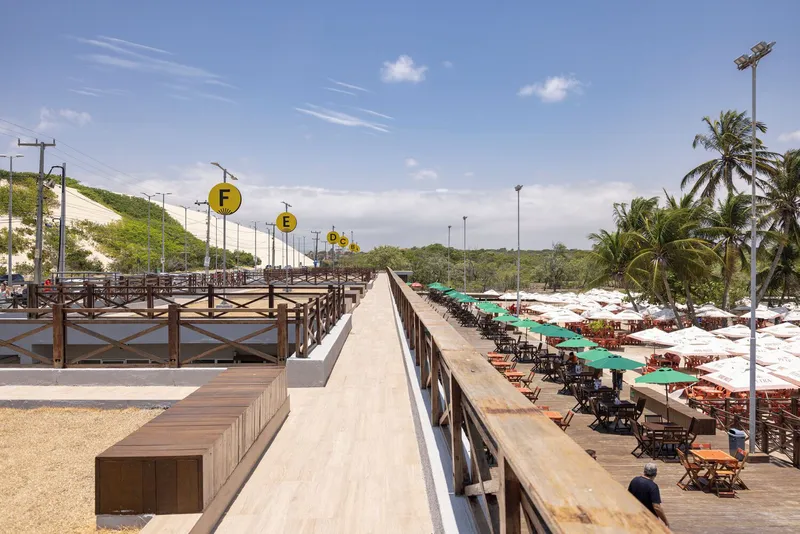
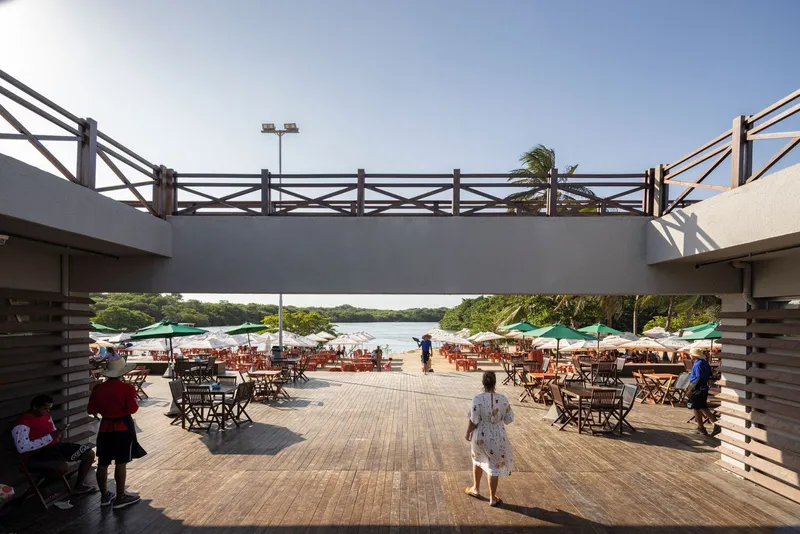
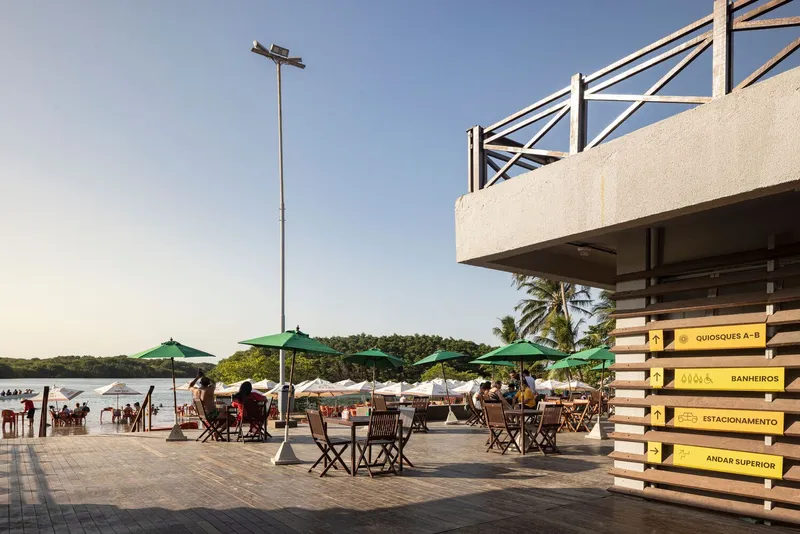
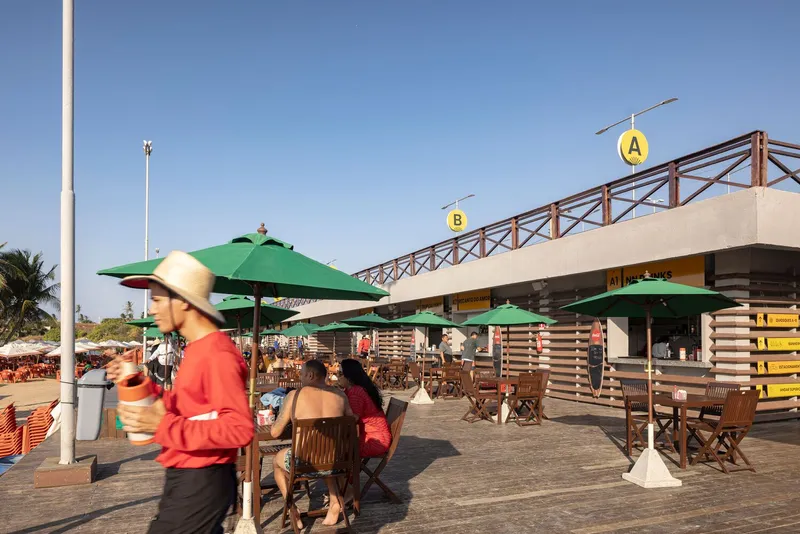
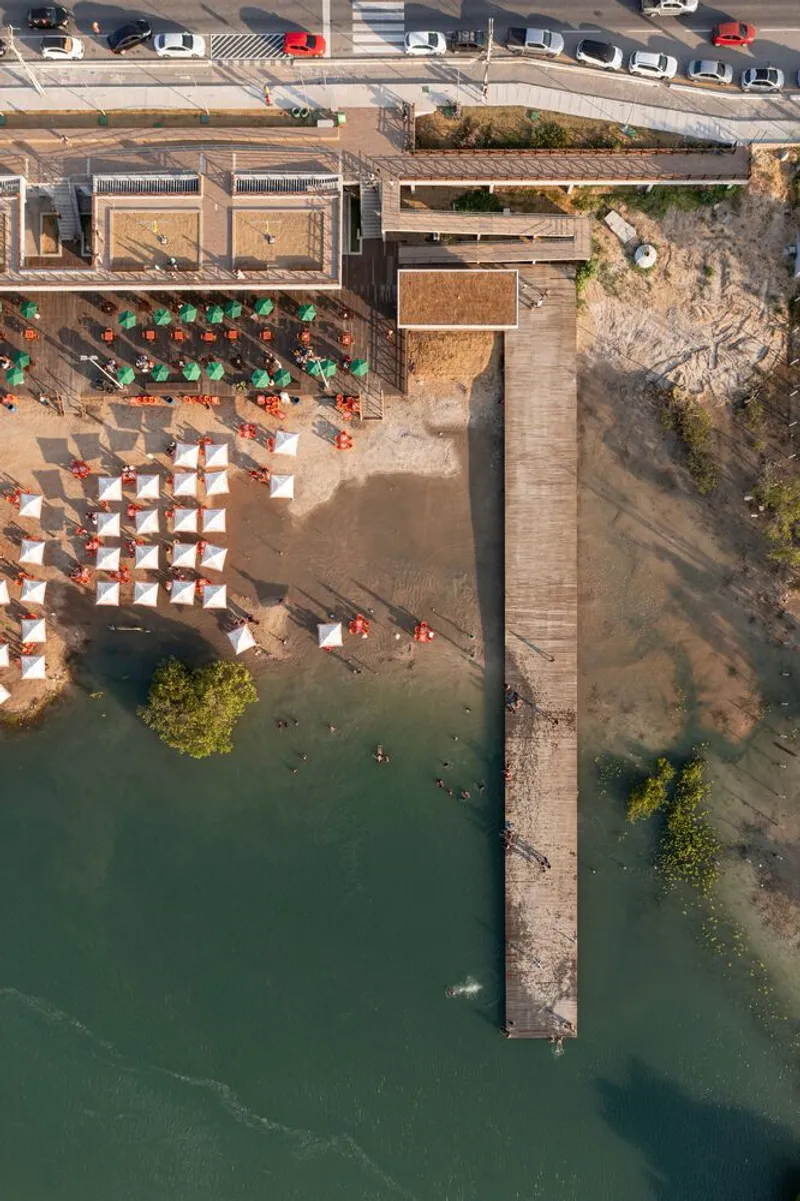
Ramps and staircases lead down to the lower platform, where the heart of the complex—the open-air marketplace—comes to life. This elevated wooden deck floats above the natural terrain, accommodating tidal fluctuations while providing a stable, adaptable space for local vendors. Here, community members prepare and serve authentic Sabiaguaba cuisine, including fresh seafood delicacies like steamed oysters, fish stew, and coconut baião.
Sustainability at the Core
The Sabiaguaba Gastronomic Complex exemplifies sustainable coastal architecture through its material selection and energy-efficient design. The structure incorporates ecological wood in its flooring and façade louvers, reinforcing a strong connection to nature. These louvers regulate airflow and provide shading, reducing the need for artificial cooling while enhancing user comfort. Retractable canvas covers offer additional shade, ensuring that dining areas remain comfortable throughout the day.
To further support environmental conservation, the design prioritizes the restoration of native vegetation. By elevating the platform rather than disrupting the landscape, the project enables the natural ecosystem to thrive. Additionally, a green roof mitigates heat absorption and enhances biodiversity.
Preserving Cultural Identity Through Architecture
Beyond its function as a gastronomic hub, the complex plays a vital role in preserving Sabiaguaba’s rich history. Nestled among the kiosks, the Sabiaguaba Roots Memory Center serves as a cultural museum, displaying artifacts and narratives that celebrate the indigenous heritage of the region. This initiative ensures that future generations can engage with and learn from the traditions of the native community.
Enhancing Ecotourism and Public Engagement
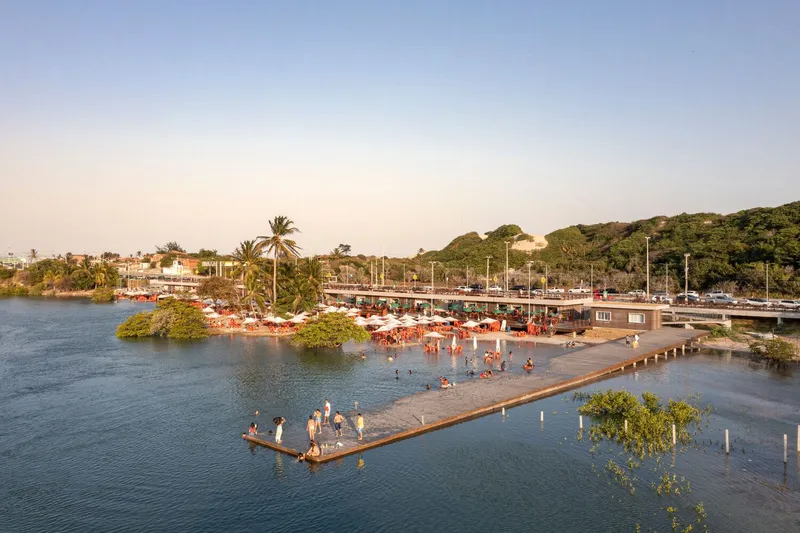
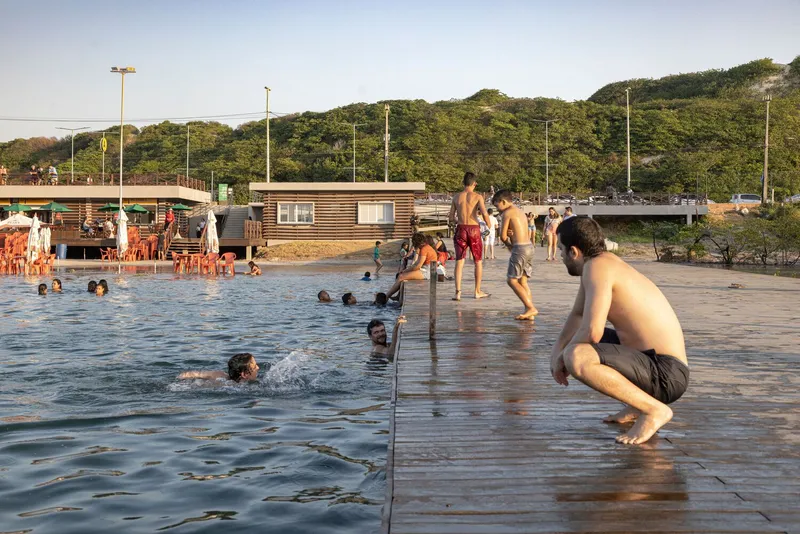
The development extends beyond food and culture by fostering sustainable tourism. A newly constructed pier facilitates boat tours along the Cocó River, offering visitors an immersive experience of the region’s natural beauty. The pier also functions as a recreational space, attracting bathers and nature enthusiasts, particularly on weekends.
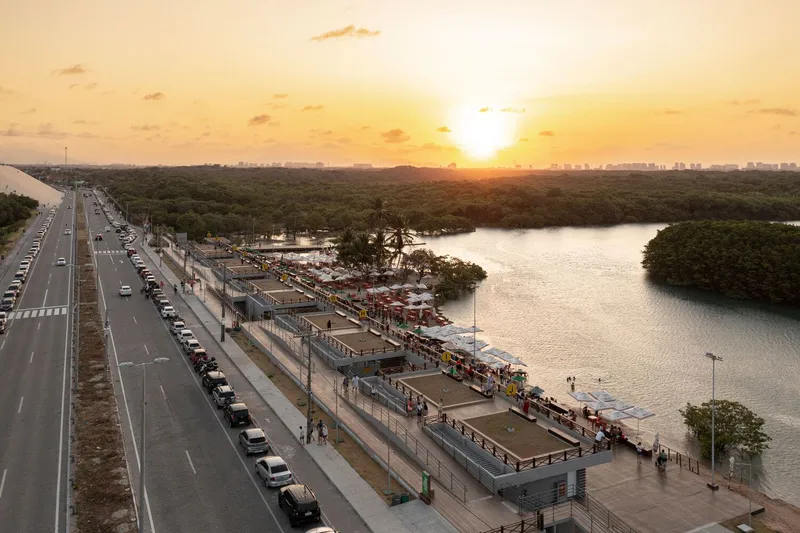
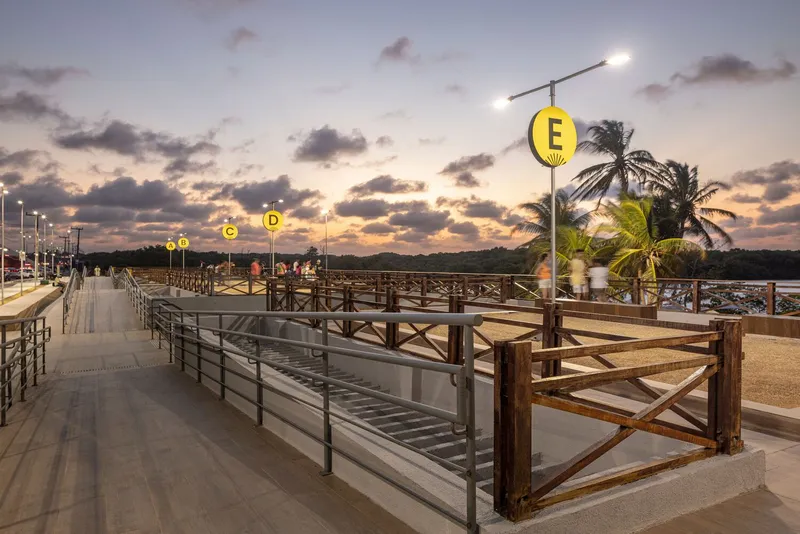
Through its thoughtful integration of local traditions, sustainable construction, and ecological preservation, the Sabiaguaba Gastronomic Complex establishes a benchmark for coastal development. It is a place where architecture enhances, rather than disrupts, the delicate balance between human activity and nature.

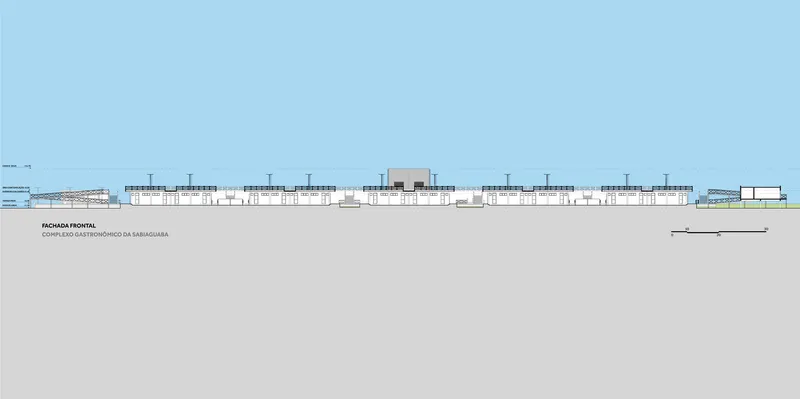
All Photographs are works of Joana França




Popular Articles
Popular articles from the community


Co-Life: Senior Housing Design That Reconnects Older Adults With the City
Co-Life reimagines senior housing design through healing gardens, shared streets, workshops, and a sustainable community across generations.
EW PARK: Sustainable Architecture Reimagines the Future of Urban Parking
EW PARK reimagines city parking as a modular wooden tower combining automation, solar energy, electric mobility, and adaptable urban design.

AL-JANNAH: Sustainable Architecture and Permaculture for Afghan Widows
AL-JANNAH uses sustainable architecture and permaculture to create resilient oasis of housing, learning, work and renewal for Afghan widows.

Conexión: Biophilic Design Reimagines High-Rise Living in Hong Kong
Conexión reimagines high-rise living in Hong Kong through biophilic design, green facades, shared spaces, daylight, water and nature within.

Similar Reads
You might also enjoy these articles


Hodi-Mandai Geram
Project Function: Preservation and revitalization of the Intangible heritage and socio-spatial identity of the Hodi by Housing, Cultural Memory Center, Sacred Grove, landscape, local tourism economy


Olio Towers: A Mid-Rise for Performers That Fuses Housing, Rehearsal, and Stage
Located blocks from Houston's Theater District, this modular tower stacks living units around a central performance atrium.

Oasis: Modular Green Housing Carved into Dhaka's Urban Fabric
A shortlisted Plugin Housing entry reclaims unauthorized settlements in Dhaka with stepped concrete volumes, green roofs, and ventilation-driven design.

Black Hole: A Floating Megastructure for the Post-Physical Era
Emiliano Mazzarotto envisions a spherical, self-scaling arena where e-sports, digital hotels, and holographic stadiums replace traditional public space.


Explore Architecture Competitions
Discover active competitions in this discipline



Challenge to reimagine the Iron Throne


Photograph architecture without architects


Illustrate the lost glory of Angkor Wat - Render Challenge


Design challenge to reuse E-waste
Comments (0)
Please login or sign up to add comments
No comments yet. Be the first to comment!