
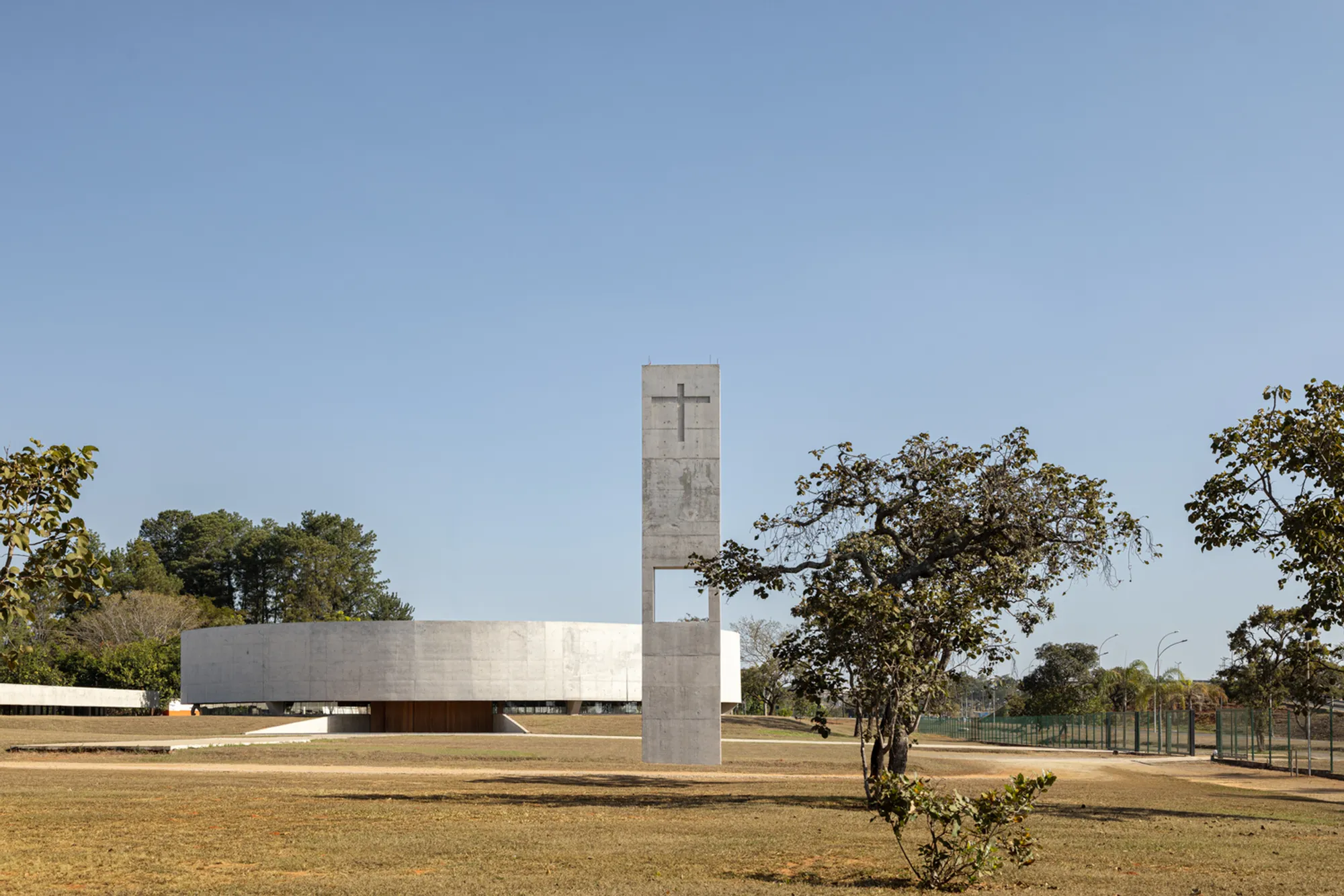
Sagrada Familia Parish by ARQBR Arquitetura e Urbanismo
Sagrada Familia Parish by ARQBR blends spirituality, nature, and community through a circular nave, natural light, and harmonious landscape integration.


Designed by ARQBR Arquitetura e Urbanismo, the Sagrada Familia Parish in Brasília is a contemporary interpretation of sacred architecture. More than a religious space, it serves as a place of spiritual reflection, community gathering, and harmonious integration with nature.
Concept: Spirituality, Nature, and Community
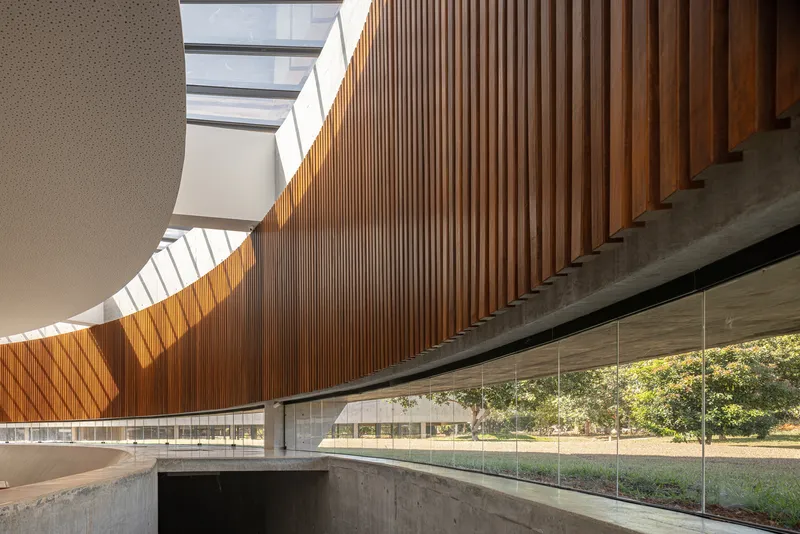
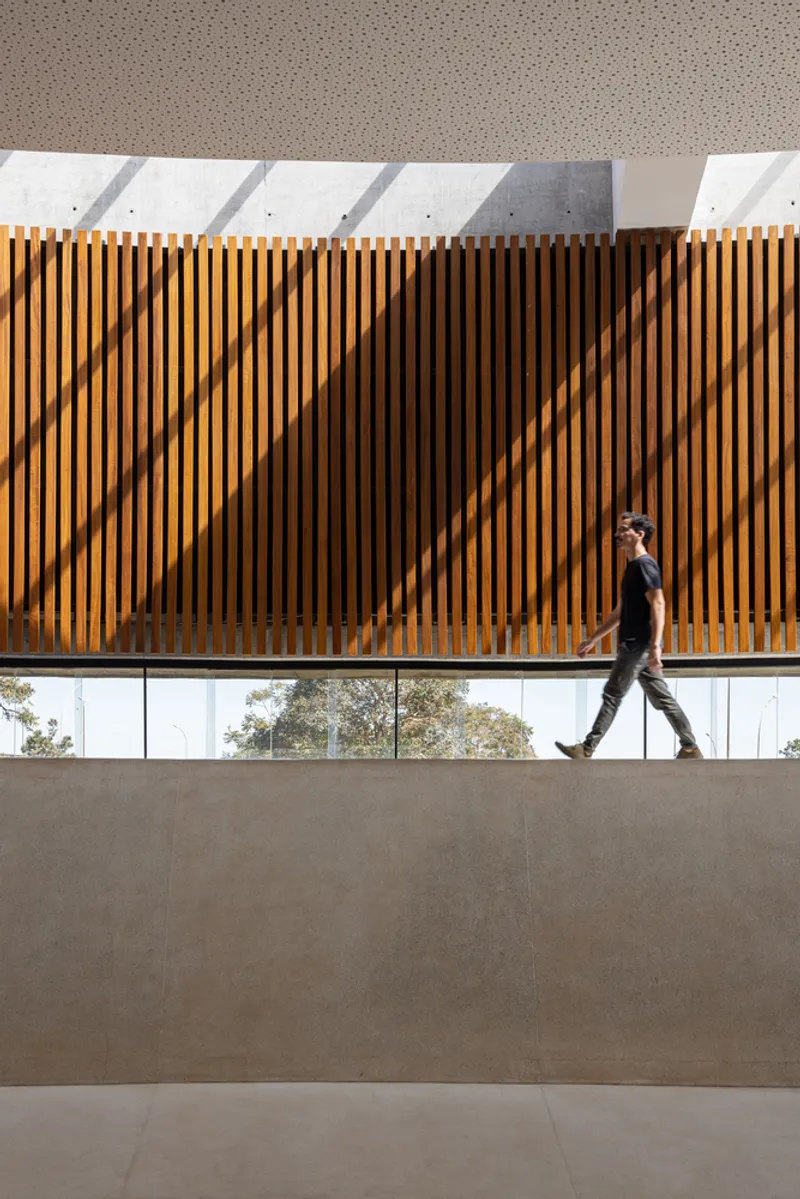
The architectural concept unfolds from the relationship between spirituality, nature, and community. Within the Catholic tradition, rituals, symbols, and celebrations embody the sacred. This design reinforces those values by placing human experience in dialogue with nature—light, stone, and silence—all evoking the divine presence.
The circular nave is central to this vision. Its form symbolizes unity and inclusivity, bringing the altar closer to the congregation. The spatial gesture creates a sense of collective belonging while maintaining a meditative atmosphere.
Light as a Sacred Element
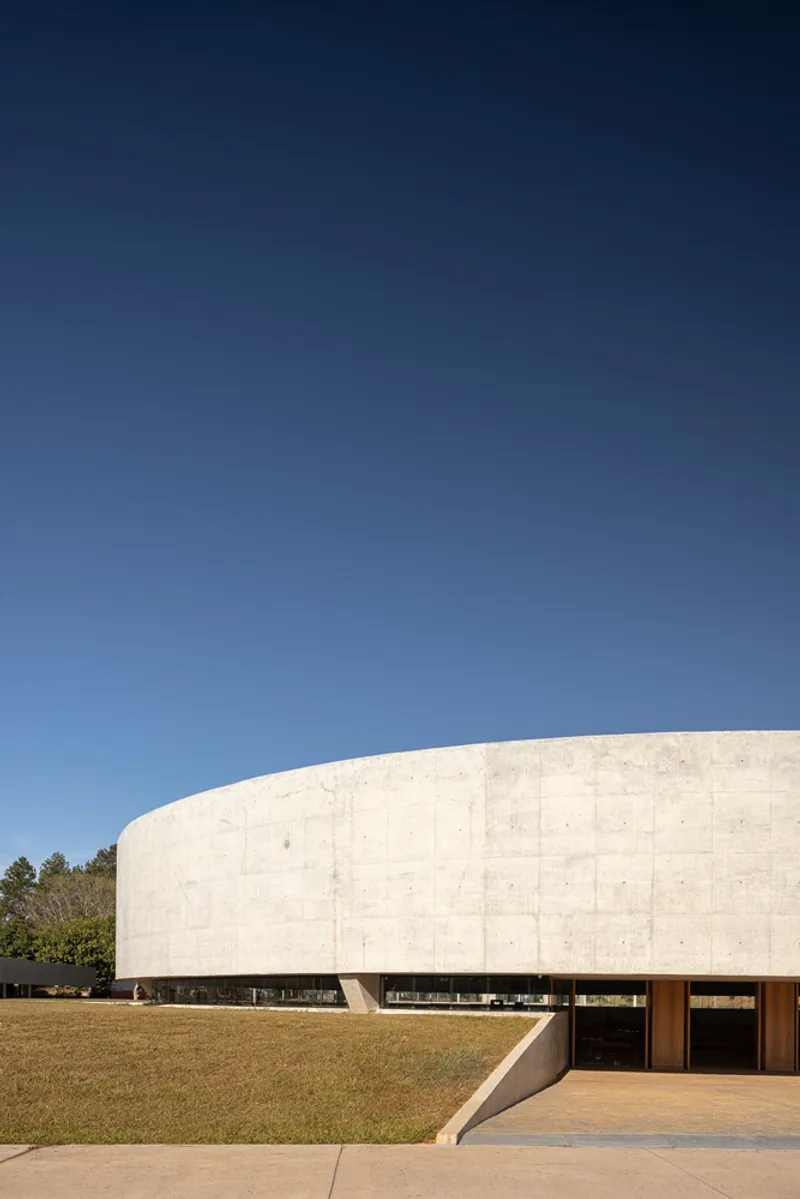
Natural light plays a pivotal role in shaping the interior. A circular skylight at the roof filters daylight into the nave, creating a shifting play of illumination that transforms the spiritual experience. The nave is designed half a level below the natural ground, allowing a subtle opening to the surrounding landscape.
This arrangement frames the horizon while preserving intimacy within the sacred space. By elevating the circular concrete volume on six structural pillars, the architecture reveals a floating presence—both grounded in the land and open to the cosmos.
Integration with Landscape and Topography
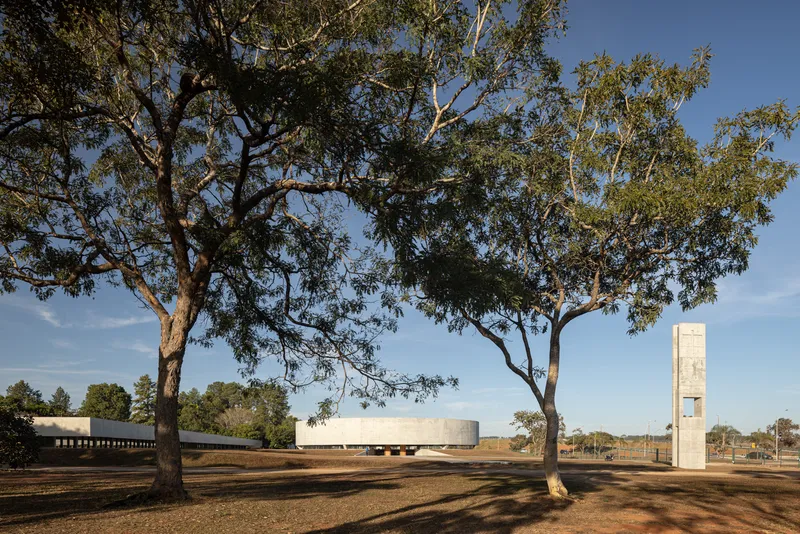
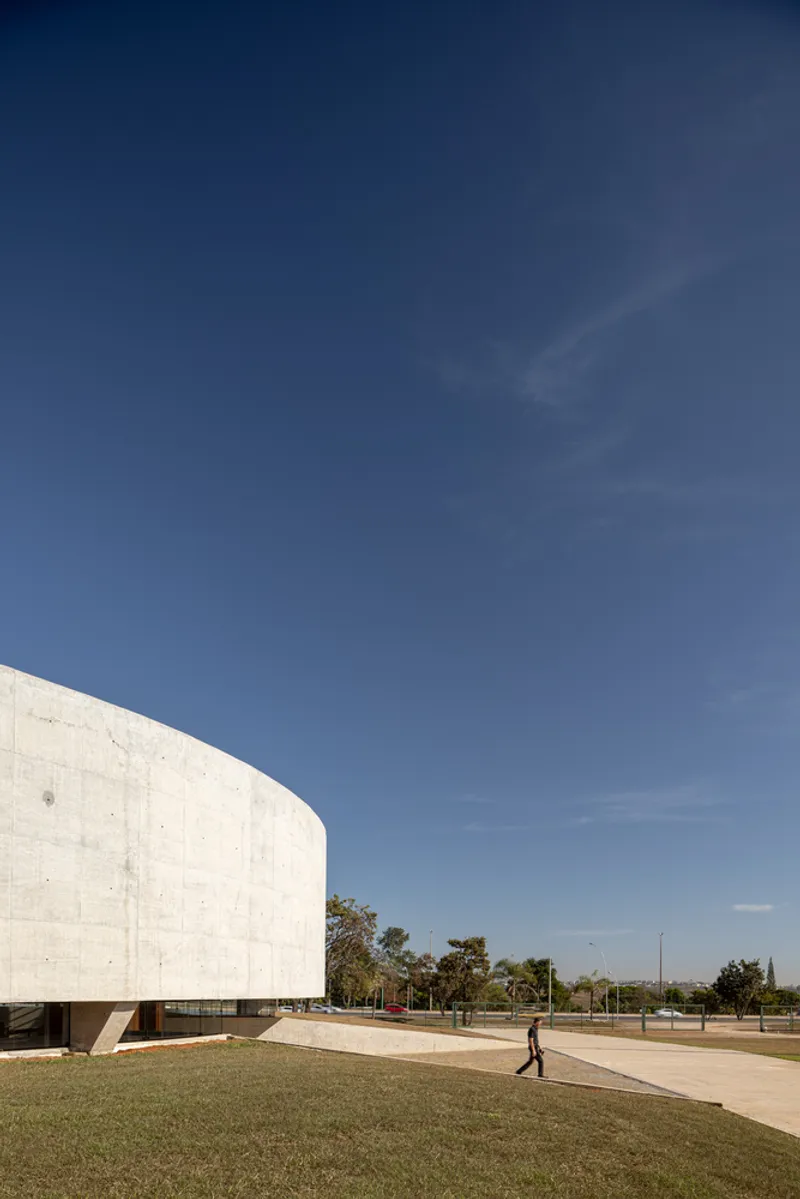
The parish is delicately embedded into Brasília’s unique topography and cultural landscape, reflecting the city’s modernist urban principles. Its careful siting highlights three essential design premises:
- Topographic integration – the building’s volume rests lightly on the terrain, harmonizing with its natural contours.
- Urban-community connection – the parish acts as a bridge between public and private, sacred and communal spaces, reinforcing the social role of architecture.
- Landscape as structure – the surrounding environment is not a backdrop but a constitutive element of the architecture, reinforcing Brasília’s UNESCO World Heritage identity.
A Contemporary Sacred Experience
The Sagrada Familia Parish is more than a chapel—it is a poetic interpretation of sacred space. Its architecture connects material reality with spiritual transcendence, offering worshippers a place where silence, light, and nature converge.




Popular Articles
Popular articles from the community


Lunar Spiral: Space Architecture Shaped by the Mathematics of the Universe
Lunar Spiral reimagines space architecture through Fibonacci geometry, lunar regolith, levitating habitats, and self-sustaining Moon living.

Co-life: Sustainable Architecture for Age-Friendly Community Living
Co-life reimagines sustainable architecture for seniors through courtyards, rammed earth, shared gardens, and spaces designed for belonging.

Co-Life: Senior Housing Design That Reconnects Older Adults With the City
Co-Life reimagines senior housing design through healing gardens, shared streets, workshops, and a sustainable community across generations.

The Musturak Paradise: Senior Living Architecture for a Connected Future in Temara, Morocco
The Musturak Paradise reimagines senior living architecture in Temara via private homes, social spaces, culture, community, and shared care.

Similar Reads
You might also enjoy these articles


Hodi-Mandai Geram
Project Function: Preservation and revitalization of the Intangible heritage and socio-spatial identity of the Hodi by Housing, Cultural Memory Center, Sacred Grove, landscape, local tourism economy


Olio Towers: A Mid-Rise for Performers That Fuses Housing, Rehearsal, and Stage
Located blocks from Houston's Theater District, this modular tower stacks living units around a central performance atrium.

Oasis: Modular Green Housing Carved into Dhaka's Urban Fabric
A shortlisted Plugin Housing entry reclaims unauthorized settlements in Dhaka with stepped concrete volumes, green roofs, and ventilation-driven design.

Black Hole: A Floating Megastructure for the Post-Physical Era
Emiliano Mazzarotto envisions a spherical, self-scaling arena where e-sports, digital hotels, and holographic stadiums replace traditional public space.


Explore Sacralized Architecture Competitions
Discover active competitions in this discipline



Challenge to reimagine the Iron Throne


Photograph architecture without architects


Illustrate the lost glory of Angkor Wat - Render Challenge


Bring back Drive In's
Comments (0)
Please login or sign up to add comments
No comments yet. Be the first to comment!