
Salt Storage Sheds by SAPIENS ARCHITECTES: Functional Infrastructure Elevated through Poetic Simplicity
Minimalist salt storage sheds by SAPIENS ARCHITECTES blend functionality and elegance, elevating rural infrastructure with sustainable, repeatable, and poetic design.


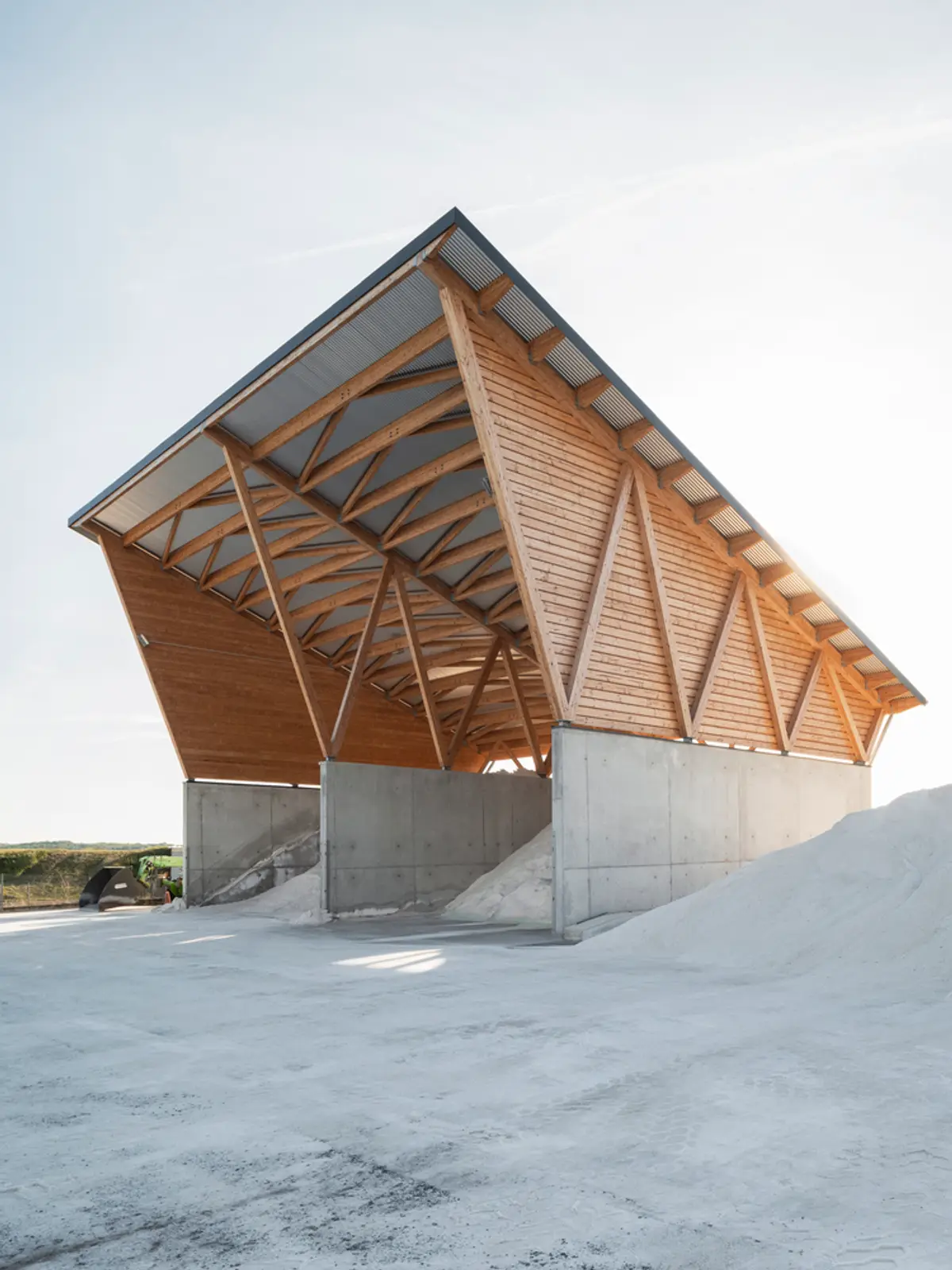
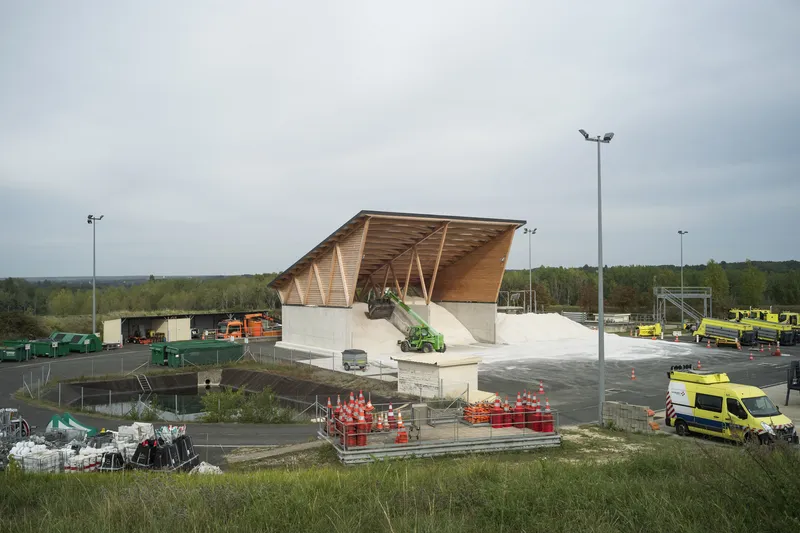
In Châtellerault, France, a series of six salt storage sheds designed by SAPIENS ARCHITECTES redefines the expectations of industrial architecture. Conceived with restraint and clarity, these utilitarian structures demonstrate that even the most functional buildings can embody architectural finesse, material intelligence, and contextual sensitivity.
Designed without site supervision and developed under a purchase order contract, the project challenged the architects to create a reproducible model that would meet both logistical and aesthetic criteria. The result is a repeating prototype—built six times—where the simplicity of form is enhanced by precise detailing and structural coherence.
A Minimalist Design Anchored in Material Honesty
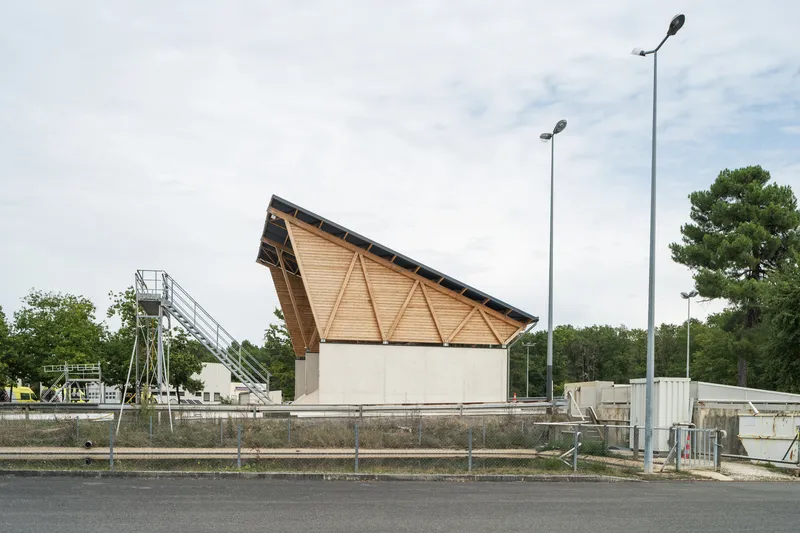
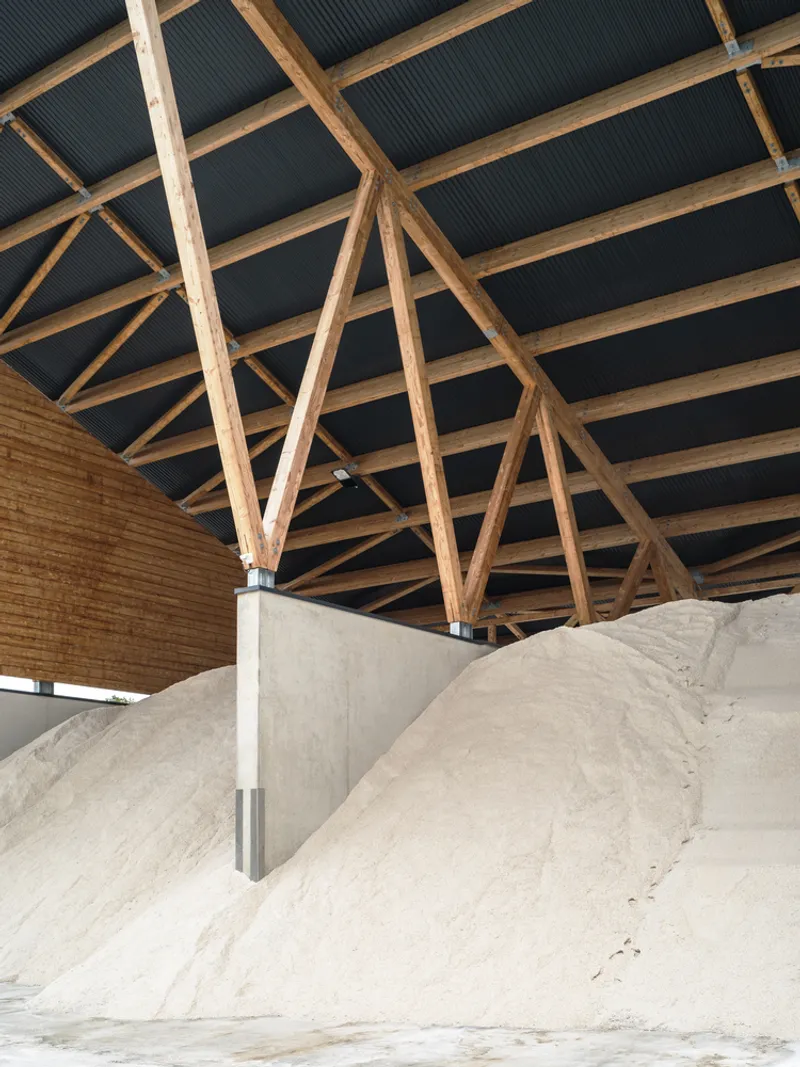
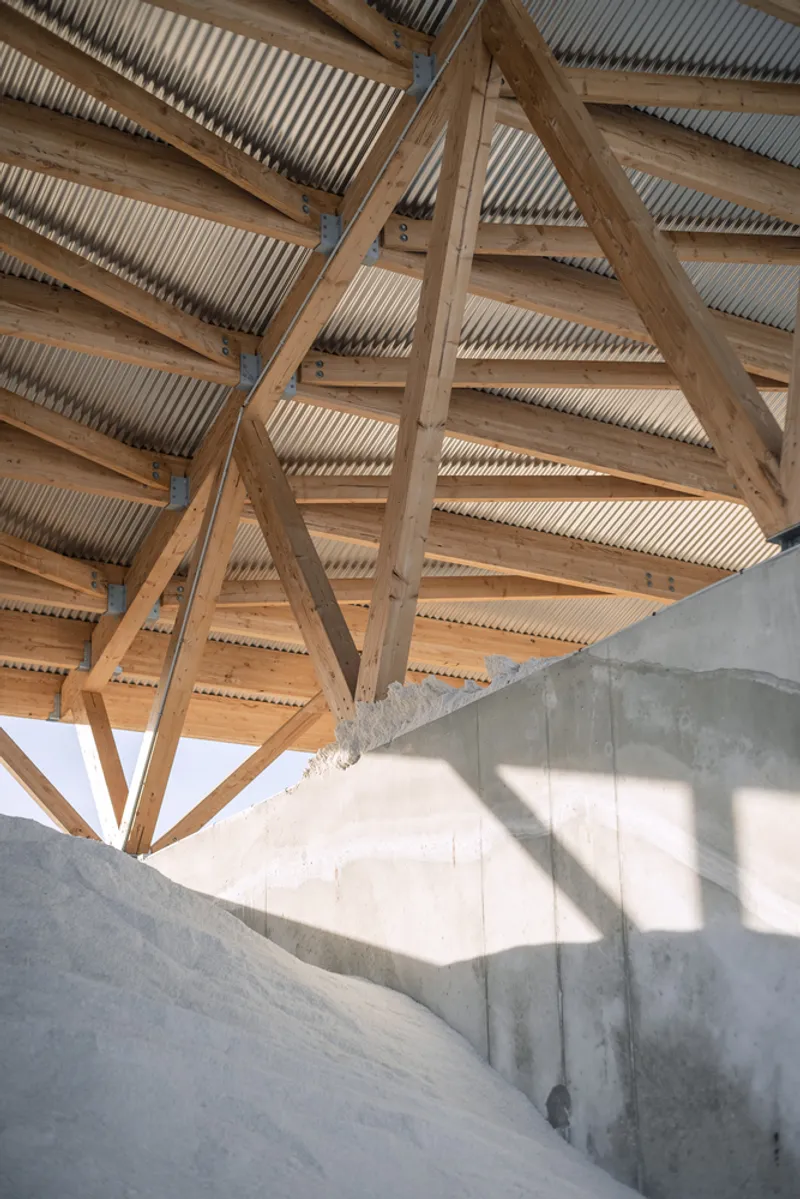
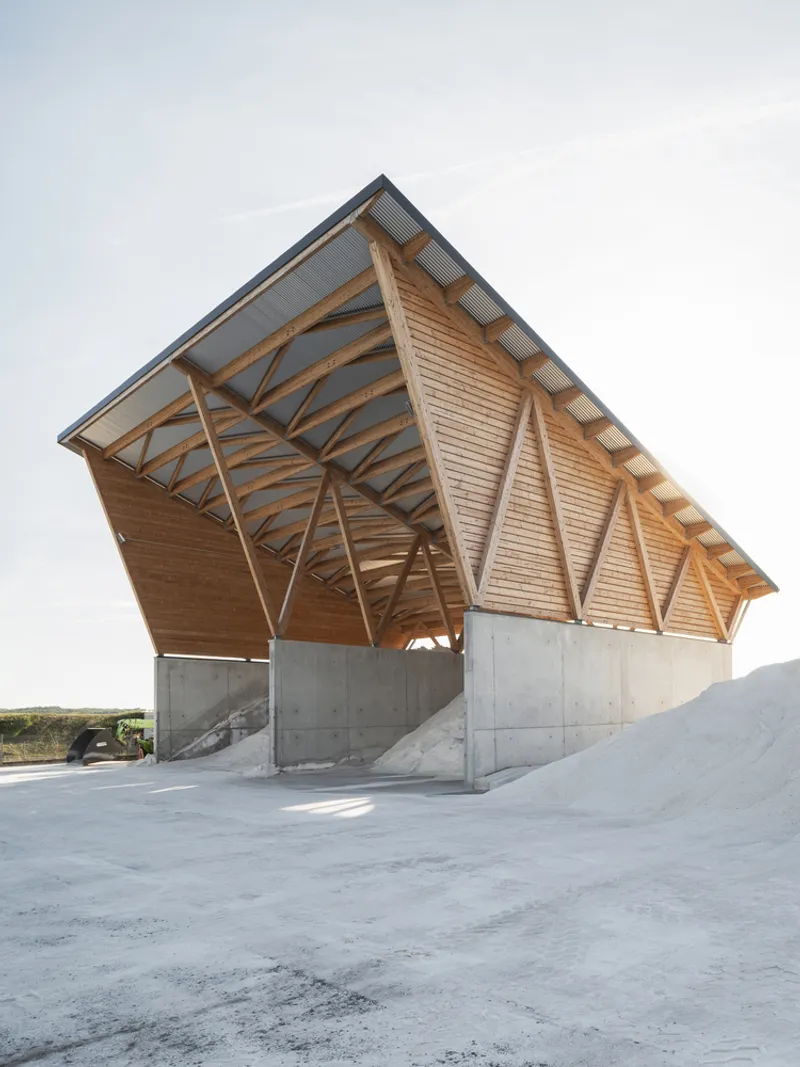
The sheds are composed of a concrete-wood structure, covered by a pitched roof that speaks to the building’s industrial purpose. The architecture avoids ornamentation, instead focusing on the syntax of construction—celebrating the straightforward expression of joints, beams, and proportions. The architects describe the architecture as “elementary”—not simplistic—but rather governed by clear, intelligible rules that dictate the form and material assembly.
Despite the utilitarian program—essentially a roofed volume to house road salt—SAPIENS ARCHITECTES invested in the precision of details, reworking finishes and proportions through several iterations. Their goal was to create an object of contemplation out of what could have otherwise been a banal and overlooked infrastructure.
Architecture for Marginalized Territories
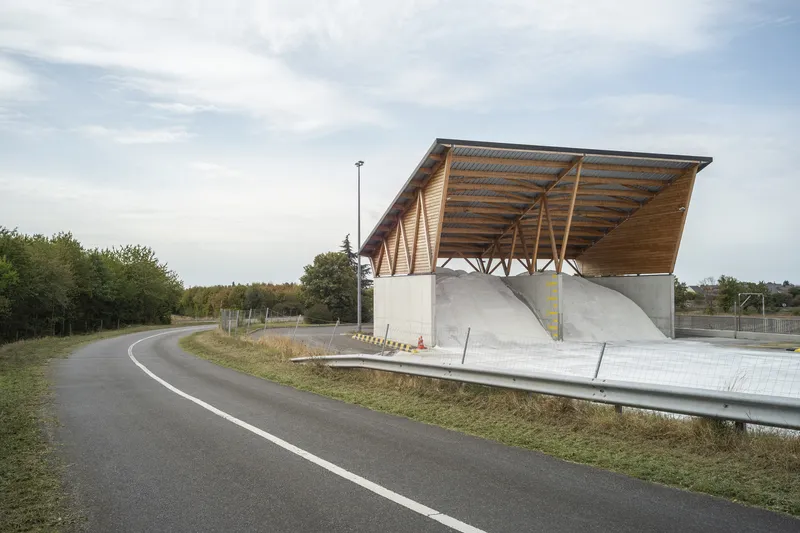
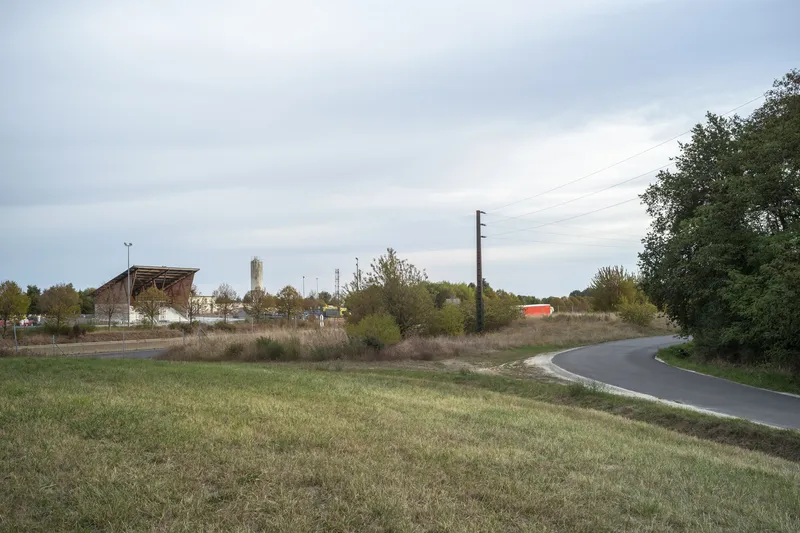
Set within peri-urban and rural zones, the sheds respond to a type of territory often subjected to purely functional and uninspiring architectural solutions. Here, however, architecture becomes an act of civic engagement, treating everyday landscapes with the respect and intentionality often reserved for more public or prestigious typologies.
For the people who work in and pass through these transitional zones—municipal workers, truck drivers, and rural residents—the sheds offer a subtle dignity, enriching the visual experience of their daily routines.
A Repeatable Prototype with Lasting Impact
Because of its modular nature, the project embodies the potential of reproducible architecture that balances cost-effectiveness with aesthetic care. It demonstrates that even public infrastructure—often executed under budgetary constraints—can be designed with integrity, using objective materials in ways that elevate their inherent qualities.
By limiting the material palette and emphasizing durability and clarity, the design stands as a replicable model for sustainable and thoughtful infrastructure in underserved areas.
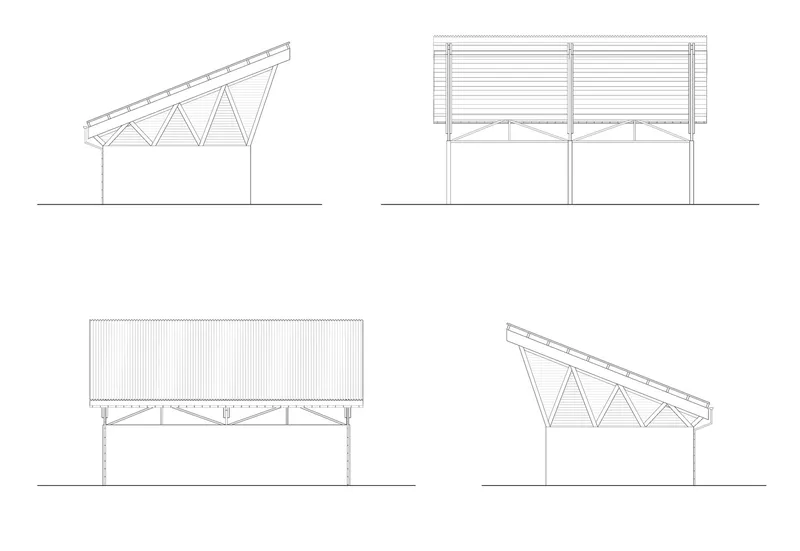
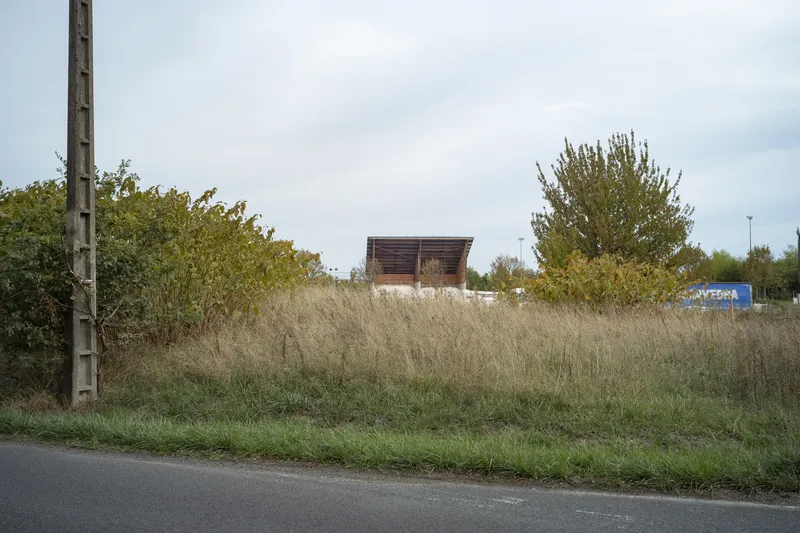
All the photographs are works of Cyrille Weiner


Popular Articles
Popular articles from the community

Manzana Morphosis: Stretching Barcelona's Grid into a Living Landscape for 2050
A radical reworking of the Eixample manzana turns density into a tool for generous public space, vertical ecology, and environmental performance.

Singing Woman: An Opera House That Performs Before the Curtain Rises
Ovidiu Cristian Pavel's conceptual opera house translates Estonia's choral identity into a sculpted waterfront landmark facing the Baltic Sea.

The Amber Palace Opera: A Geological Fiction Surfaces on Tallinn's Baltic Waterfront
Pierre Brillard reimagines a Baltic legend as a public landscape, opera house, and waterfront promenade rooted in Tallinn's coastal identity.


David Ortega Stacks a Two-Story Mexico City Penthouse Around a Steel Stair and a Pergola-Shaded Roof Terrace
In Colonia Roma, a 300 m² penthouse uses oak joinery, a planted steel stair and a slatted roof pergola to make a new-build apartment feel like a house.

Similar Reads
You might also enjoy these articles


Hodi-Mandai Geram
Project Function: Preservation and revitalization of the Intangible heritage and socio-spatial identity of the Hodi by Housing, Cultural Memory Center, Sacred Grove, landscape, local tourism economy


Olio Towers: A Mid-Rise for Performers That Fuses Housing, Rehearsal, and Stage
Located blocks from Houston's Theater District, this modular tower stacks living units around a central performance atrium.

Oasis: Modular Green Housing Carved into Dhaka's Urban Fabric
A shortlisted Plugin Housing entry reclaims unauthorized settlements in Dhaka with stepped concrete volumes, green roofs, and ventilation-driven design.

Black Hole: A Floating Megastructure for the Post-Physical Era
Emiliano Mazzarotto envisions a spherical, self-scaling arena where e-sports, digital hotels, and holographic stadiums replace traditional public space.

Explore Simple Architecture Competitions
Discover active competitions in this discipline

Challenge to reimagine the Iron Throne

Photograph architecture without architects

Illustrate the lost glory of Angkor Wat - Render Challenge

Design challenge to reuse E-waste
Comments (0)
Please login or sign up to add comments
No comments yet. Be the first to comment!