

Saltholme Pools Bird Hide by Child Graddon Lewis
Refurbished bird hide transforms industrial wetland into inclusive, sustainable lookout, blending timber architecture, panoramic views, community education, and wildlife conservation.


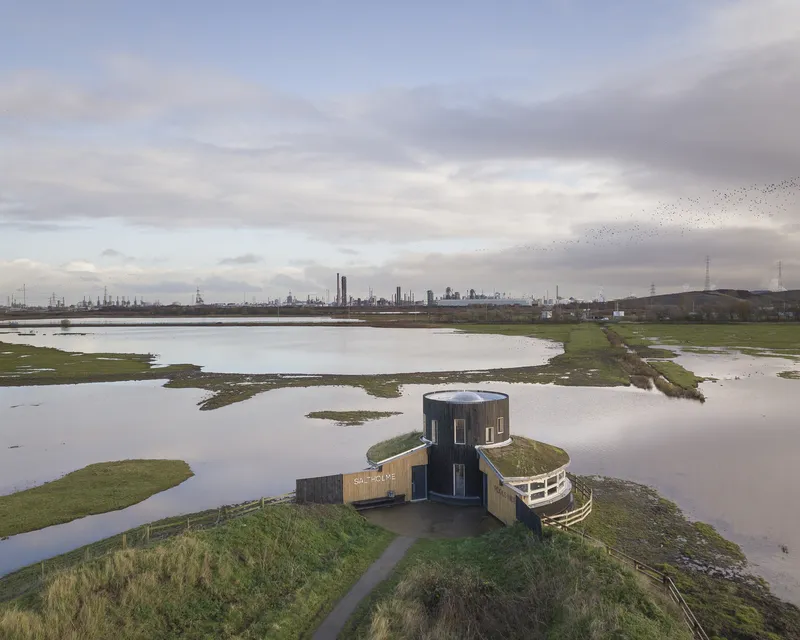
The Saltholme Pools Bird Hide by Child Graddon Lewis is a refined example of sustainable retrofit architecture set within the dramatic wetlands of Stockton-on-Tees, United Kingdom. Designed in 2020 for the Royal Society for the Protection of Birds (RSPB) and Teesside Environmental Trust, the 35-square-metre project transforms a neglected structure into an immersive wildlife observation point and vibrant community asset.
Located within the internationally protected Teesmouth and Cleveland Coast Special Protection Area (SPA), the hide sits among reed beds, fenland, wet grasslands, and tidal pools, framed by the striking industrial skyline of Teesside. The project demonstrates how small-scale architecture can elevate ecological tourism, environmental education, and community engagement through thoughtful design intervention.
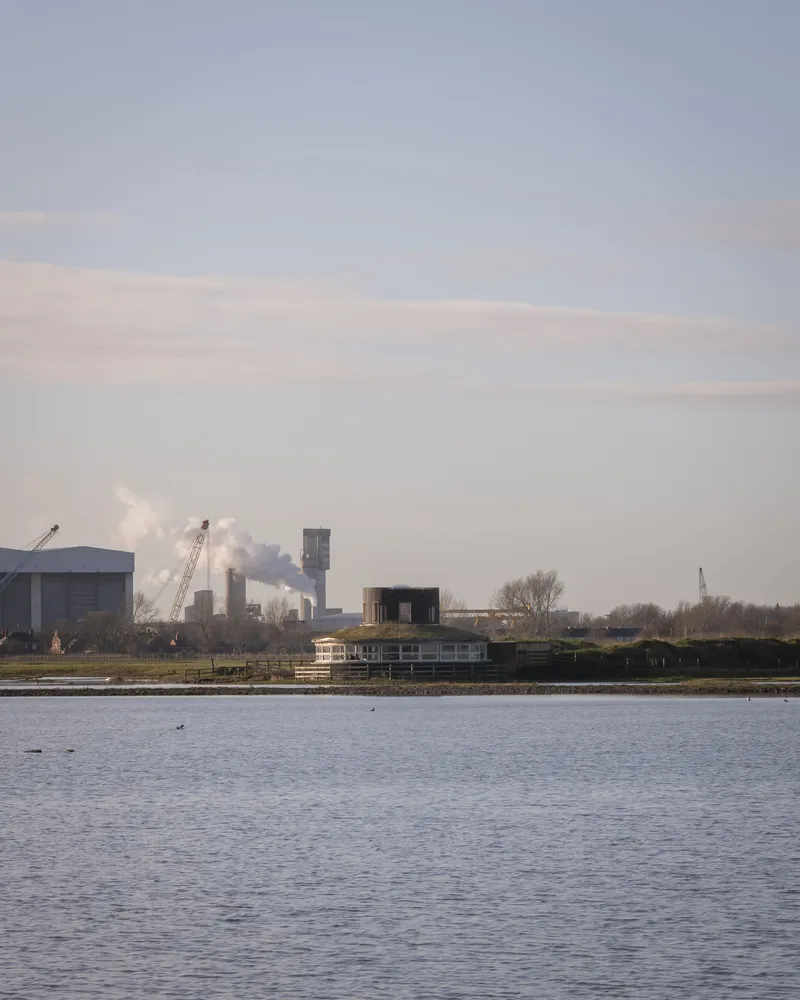
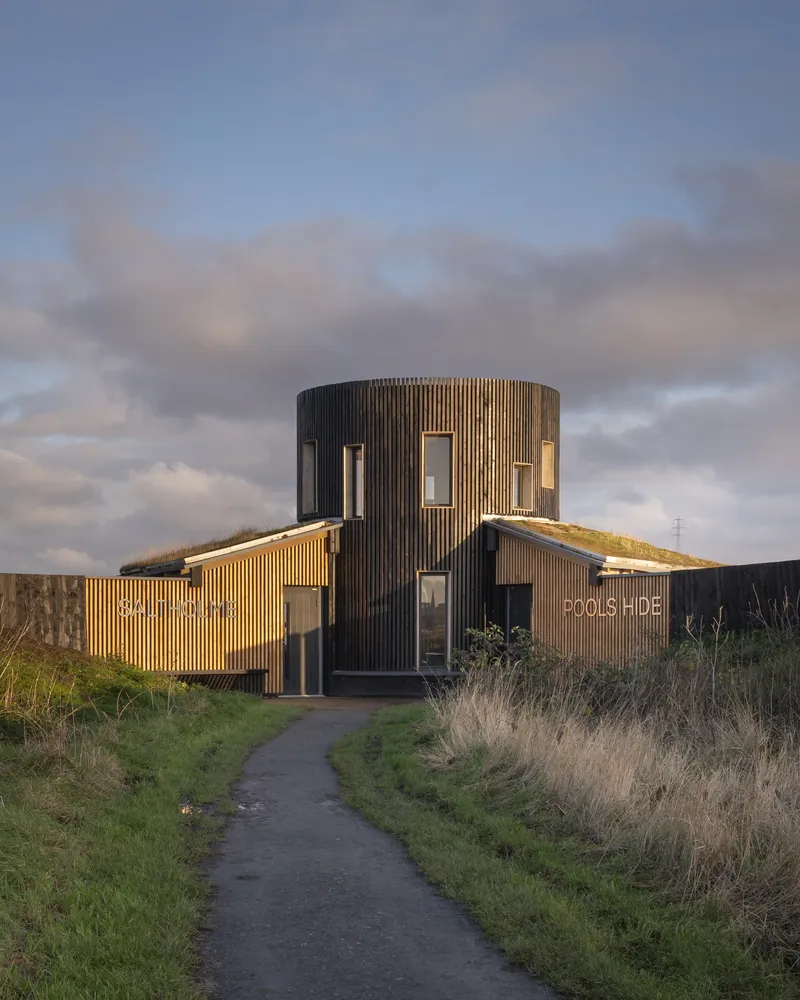
Adaptive Reuse and Architectural Transformation
Originally an uninspiring circular breeze-block structure with a steel frame and concrete base, the former hide lacked identity and accessibility. Instead of demolition, the architects pursued a sustainable retrofit strategy, maximizing the embodied carbon of the existing structure while introducing a contemporary spatial experience.
Key architectural interventions include:
- Retention and reuse of the original concrete base and structural frame
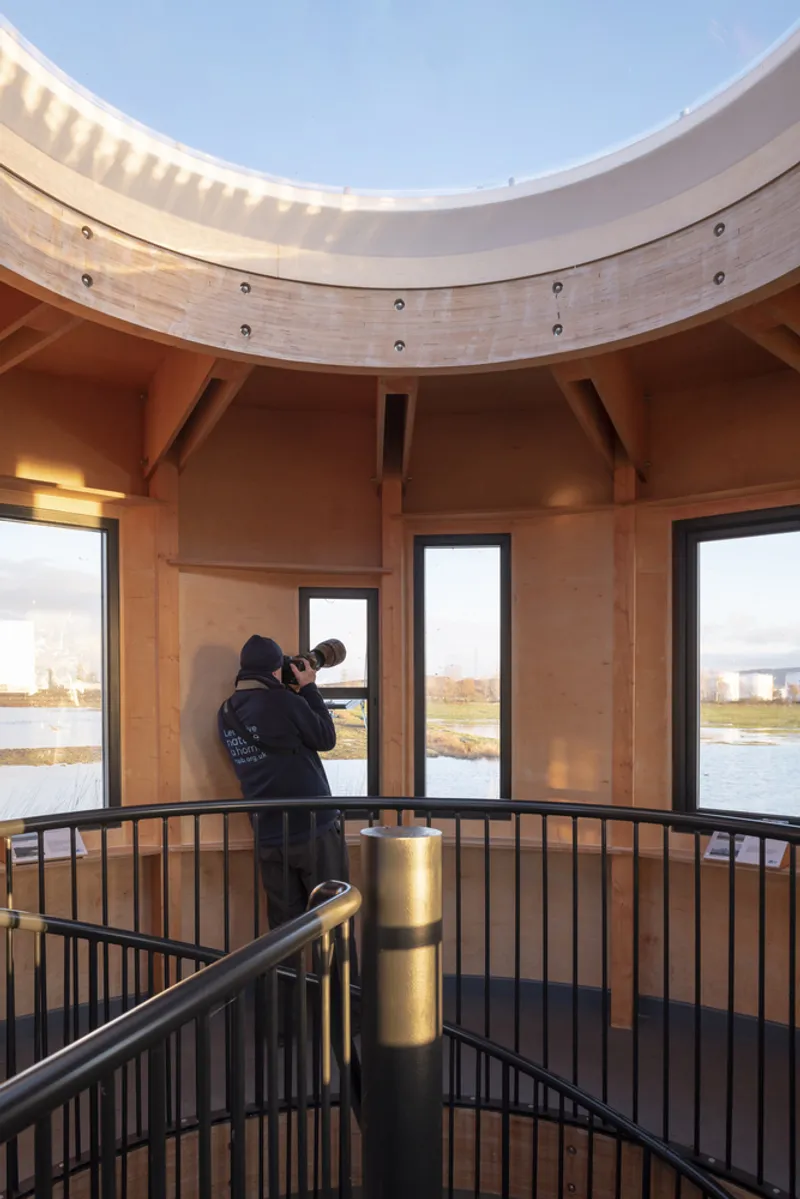
- Introduction of a new internal second-storey viewing platform
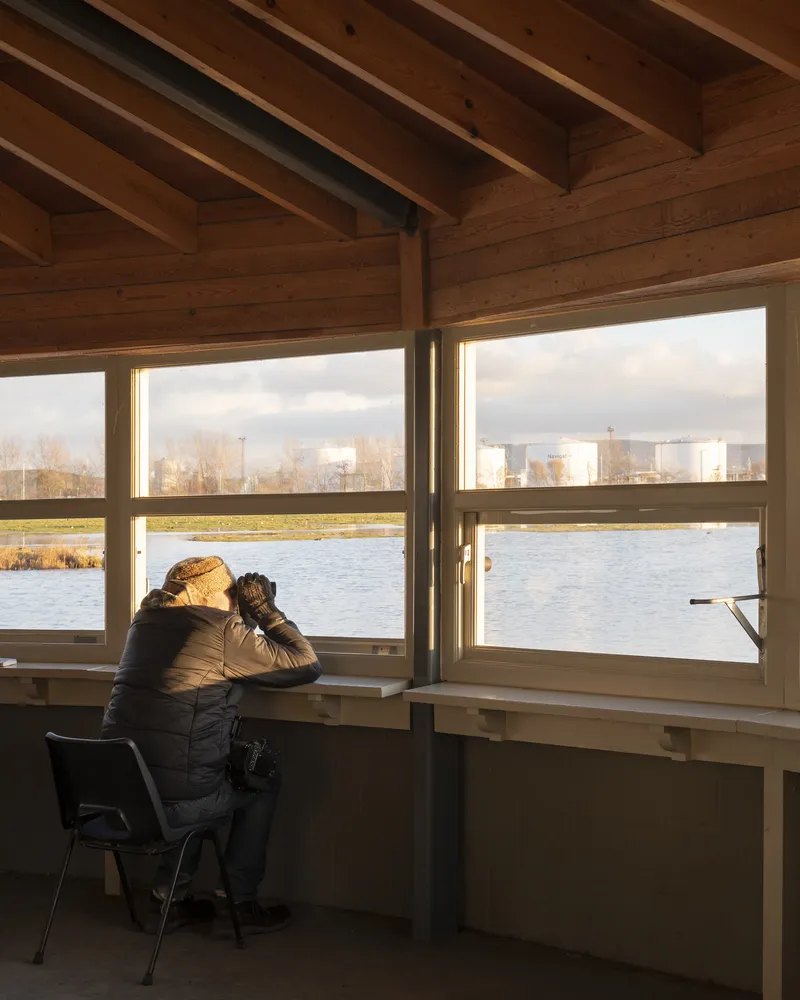
- Strategic wall openings for panoramic wetland views
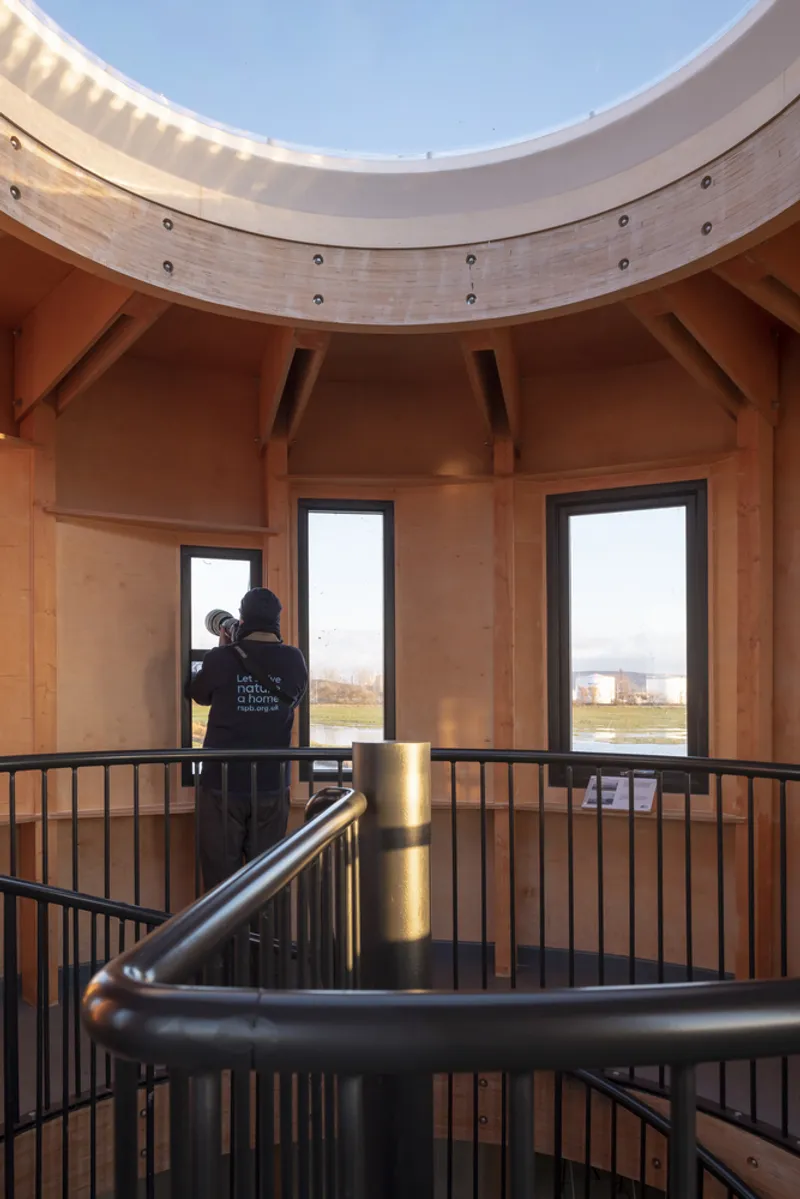
- Birchwood interior finishes for warmth and tactility
- A rooflight that floods the space with natural daylight
The addition of a central elevated viewing tower fundamentally redefines the spatial quality of the building. Visitors now enjoy uninterrupted 360-degree views across the Tees estuary, surrounding wetlands, and distant Eston Hills, enhancing birdwatching experiences while strengthening the building’s connection to landscape.
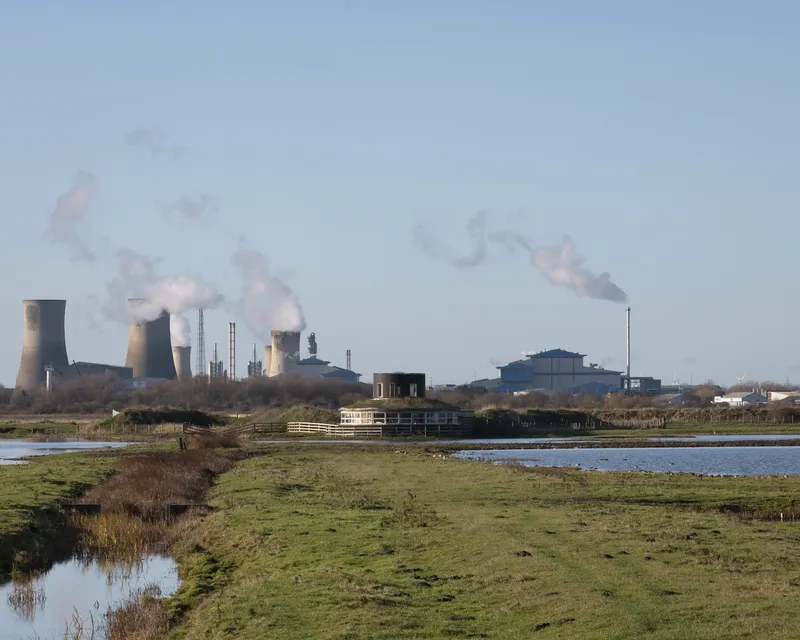
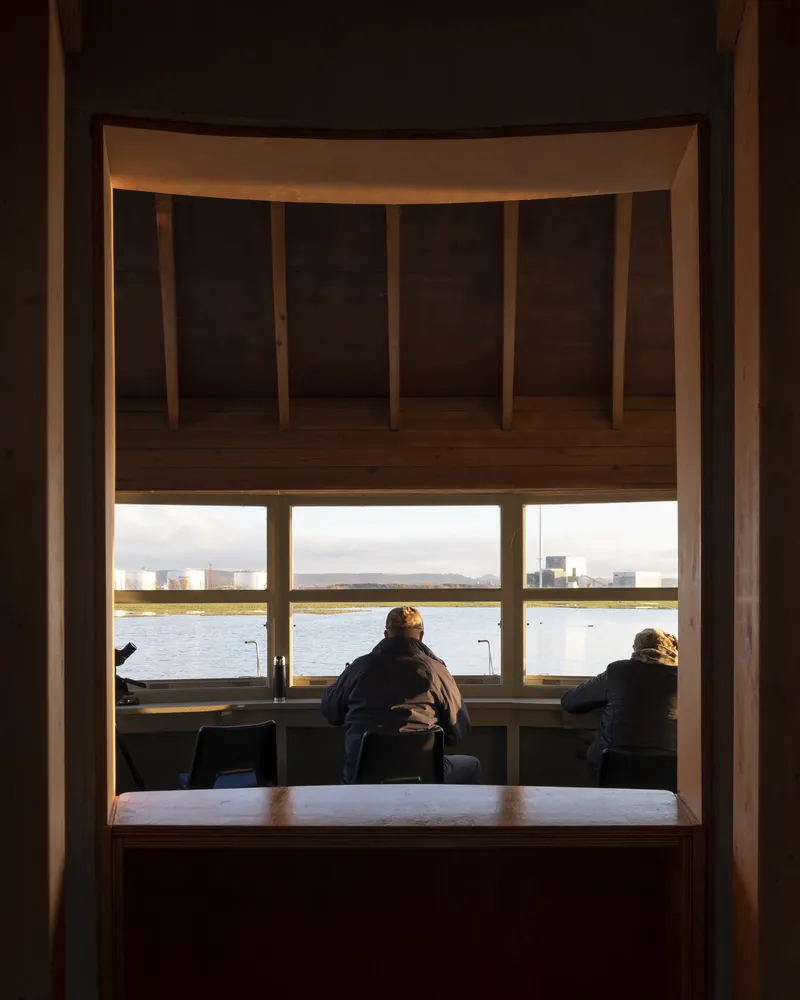
Sustainable Design and Environmental Sensitivity
Sustainability was central to the design concept. Given the ecological sensitivity of the site, home to internationally significant wintering wildfowl and waders, the construction strategy prioritized zero environmental impact.
Low-Impact Construction
- All materials were prefabricated offsite to reduce vehicle movement
- Construction was carefully scheduled between bird breeding seasons
- No mechanical or electrical systems were installed
- The building operates as an unheated, zero-energy space
- Openable windows provide natural cross-ventilation
This passive environmental design approach ensures minimal operational carbon footprint while maintaining comfort through shelter and airflow.
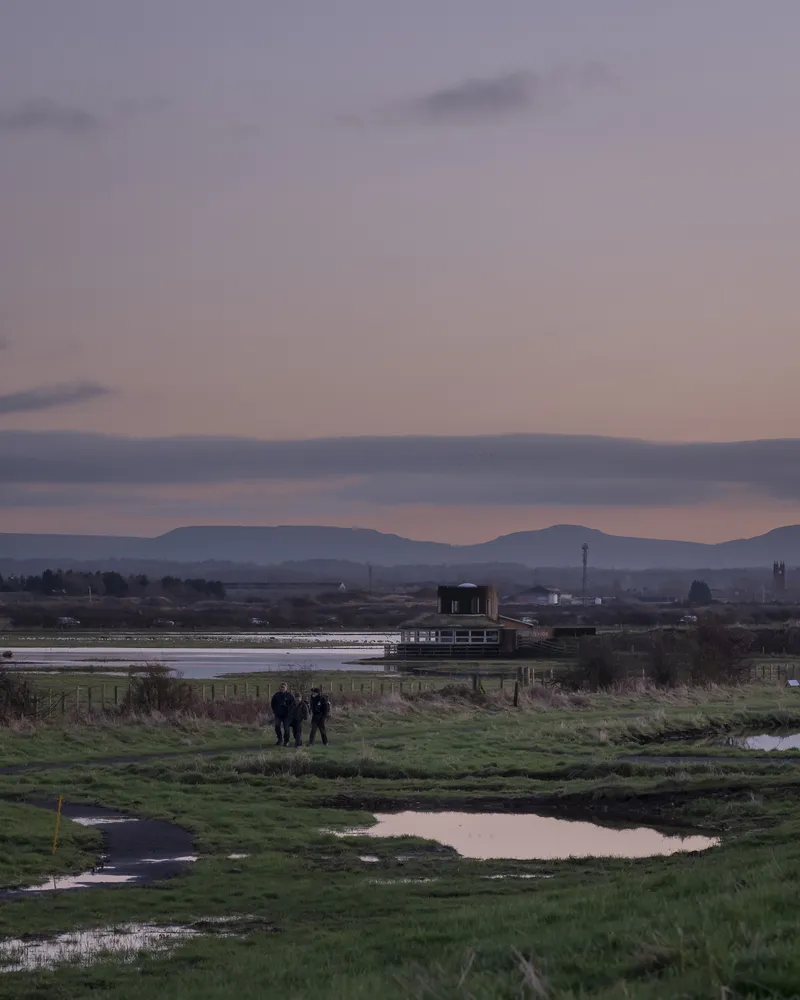
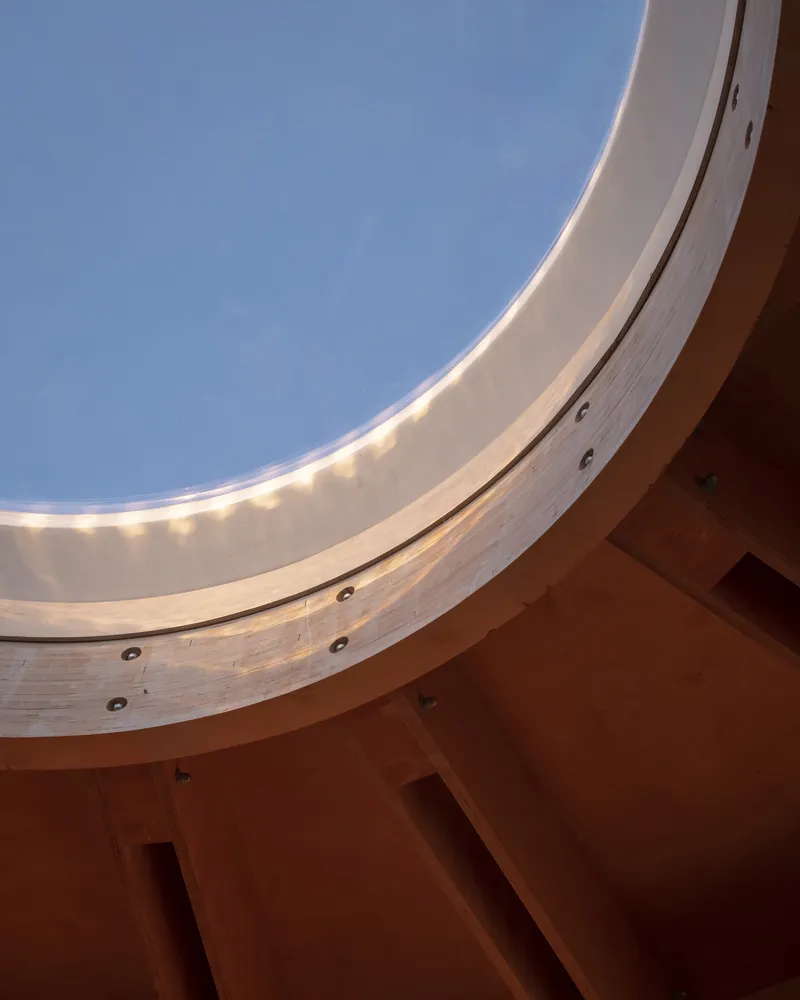
Natural Material Palette
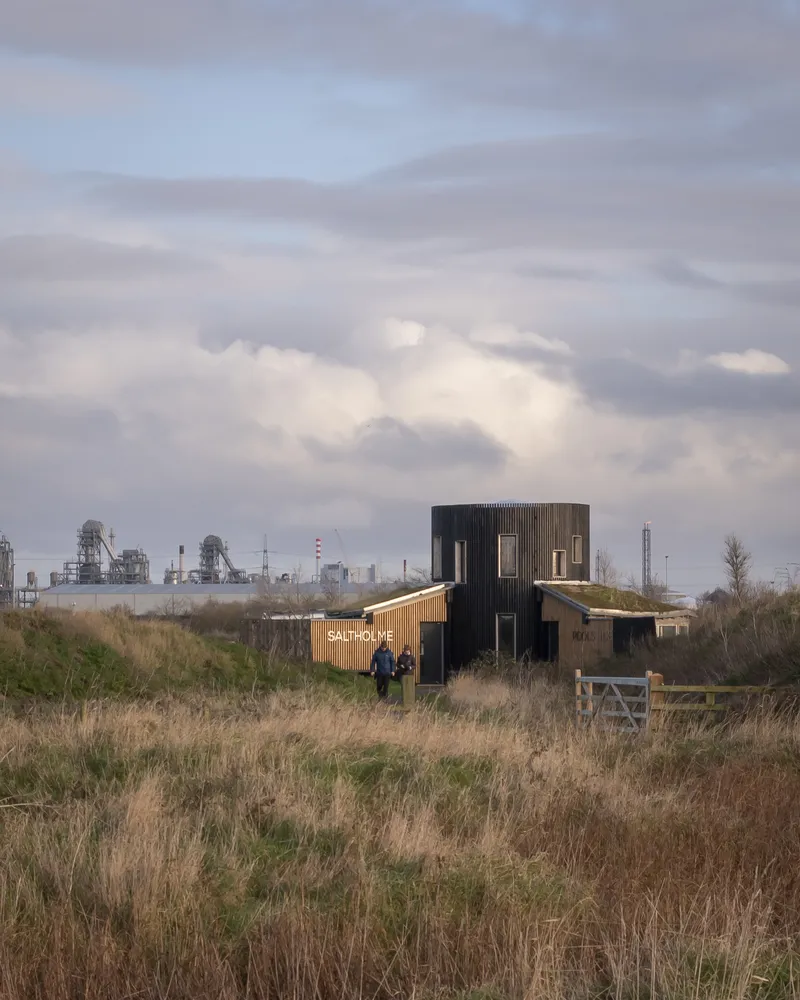
The exterior is clad in stained timber, designed to flicker with shifting light, echoing the textures of the surrounding reeds and grasses. A pitched green roof further integrates the structure into the landscape, enhancing biodiversity while softening the building’s presence.
Landscaping improvements around the pools also created enhanced feeding habitats for wading birds and breeding zones, reinforcing the project's broader ecological mission.
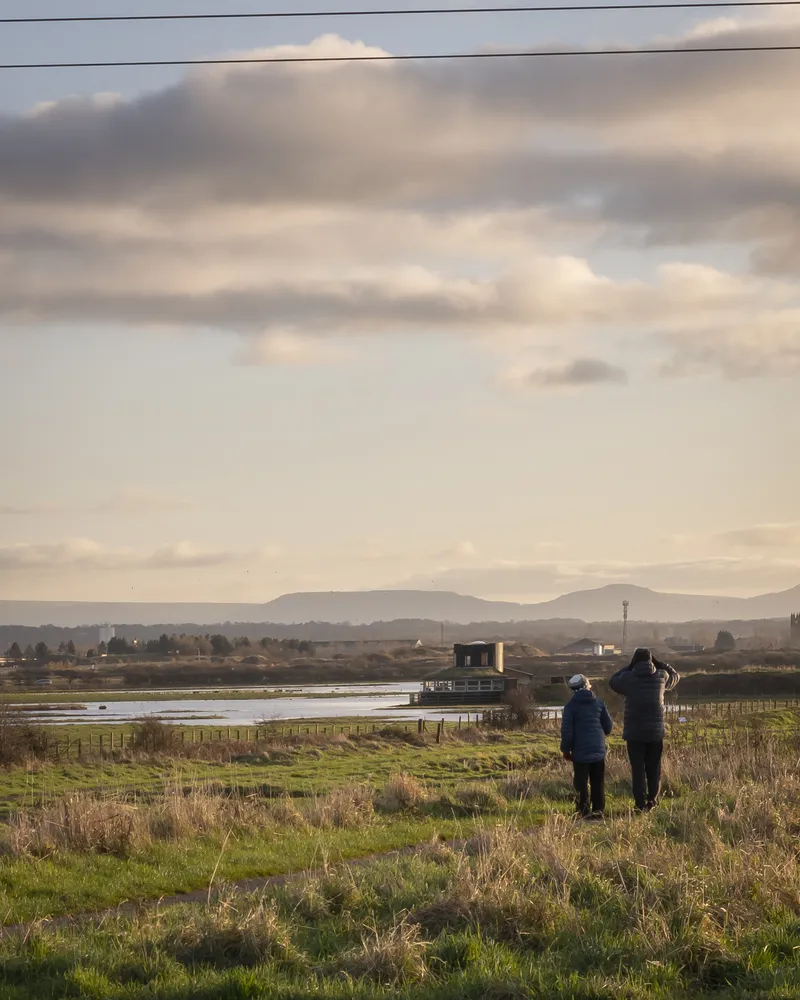
Universal Design and Accessibility
The project adopts a universal design approach, significantly improving accessibility. A sensitively landscaped pathway known as the “Dragonfly Path” guides visitors toward the hide, accompanied by visible signage that establishes a strong sense of place.
The building accommodates diverse users: families, school groups, elderly visitors, and individuals with varying mobility needs, ensuring that wildlife observation and environmental education are inclusive experiences.
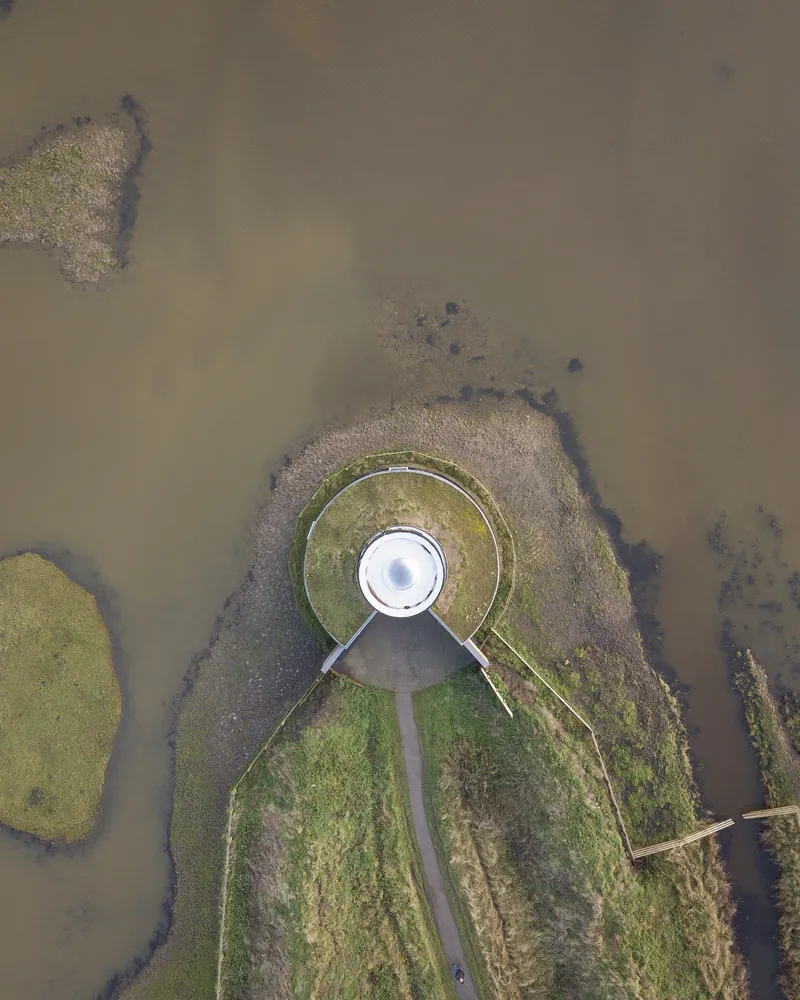
Community Impact and Educational Outreach
Delivered under a modest £150,000 budget, the hide has become a celebrated community landmark. What was once a neglected building now attracts:
- Local families and tourists
- Schools and educational institutions
- Young adults and conservation groups
- Organizations supporting underprivileged communities
The increased visitor numbers have enabled expanded educational programming aligned with the RSPB’s “Saving Nature” strategy. The site now hosts accredited Continuing Professional Development (CPD) events and outdoor learning sessions, promoting resilience, environmental awareness, and wellbeing through experiential education.
Following the hide’s transformation, Saltholme Nature Reserve was recognized by The Guardian as one of the UK’s ten best nature reserves in 2020, highlighting the broader impact of thoughtful architectural intervention.
A Model for Small-Scale Sustainable Architecture
Selected through an international design competition, Child Graddon Lewis collaborated closely with engineers Price & Myers and contractor Hobson Smith to deliver a highly resourceful and carefully coordinated project.
The Saltholme Pools Bird Hide stands as a case study in:
- Adaptive reuse architecture
- Small-scale public architecture
- Sustainable visitor center design
- Wildlife observation structures
- Low-carbon construction methods
- Community-centered environmental design
Its success has encouraged the RSPB to explore replicating the design approach across other UK nature reserves, demonstrating how modest interventions can produce lasting ecological and social impact.
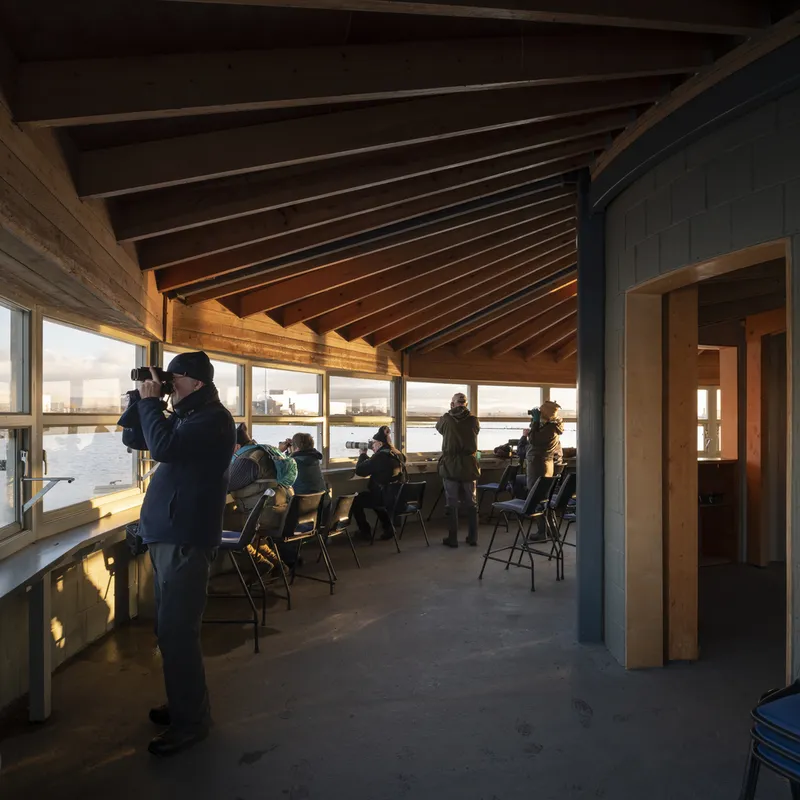
The Saltholme Pools Bird Hide exemplifies how architecture can harmonize with nature while amplifying public engagement. Through adaptive reuse, sustainable materials, passive design strategies, and inclusive access, Child Graddon Lewis has redefined what a bird hide can be, transforming a simple structure into a powerful catalyst for conservation awareness and community connection.
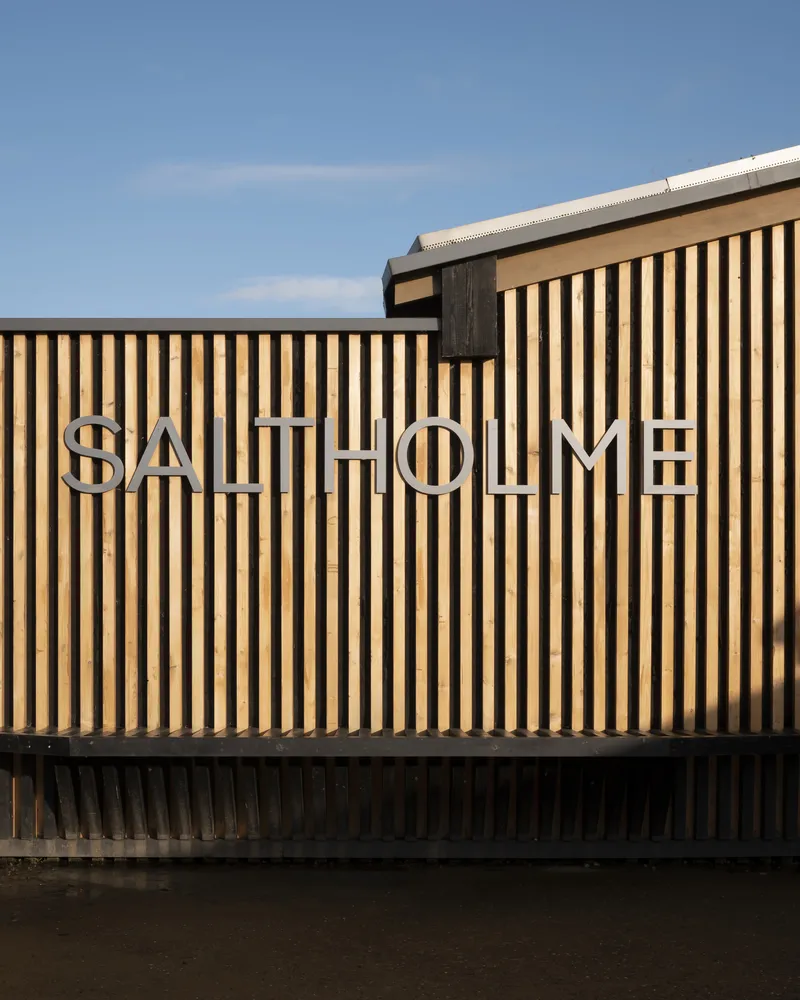
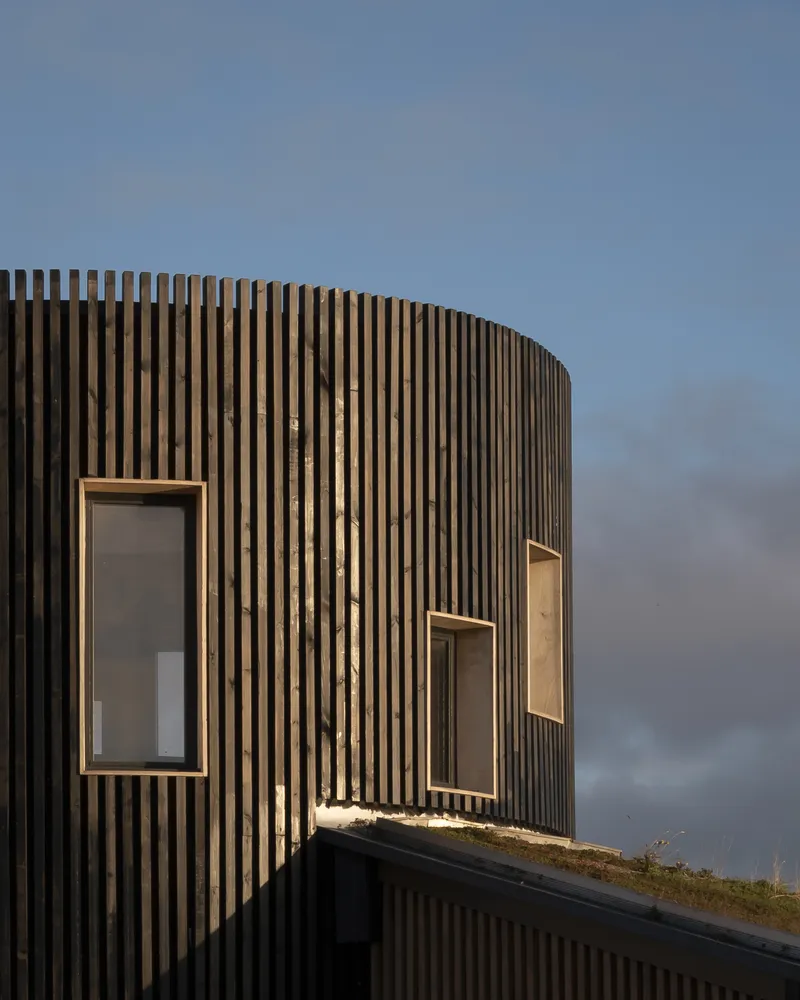
In a landscape defined by the juxtaposition of heavy industry and delicate wetlands, this small yet profound architectural gesture proves that design excellence does not depend on scale, but on intention.
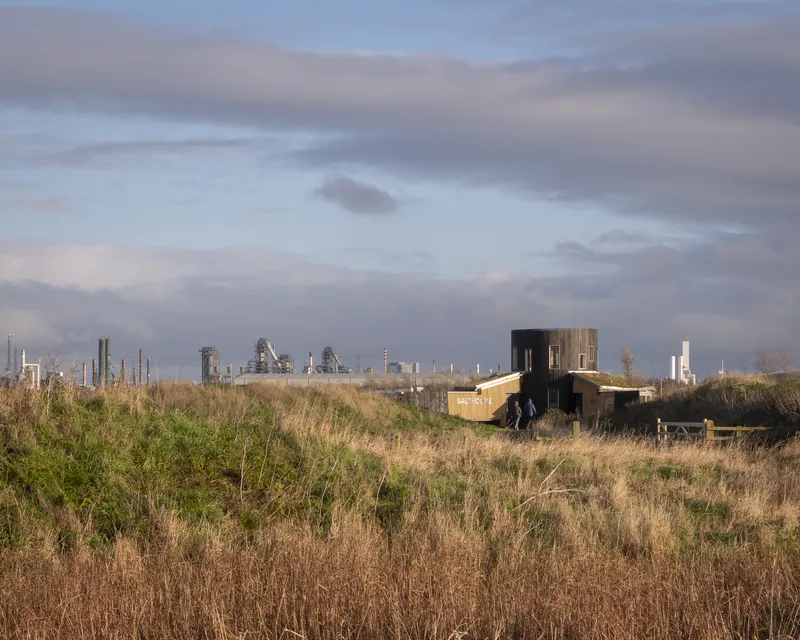
All photographs are works of
Jim Stephenson


Popular Articles
Popular articles from the community


FCC Arquitectura Expands a Portuguese Granite House with a Board-Marked Concrete Wing
In Portugal, JV House pairs a cleaned-up whitewashed and granite dwelling with a timber-shuttered concrete extension, courtyards and a garden pool.


Opera on the Sea: Driftwood Logic Shapes a Timber Opera House on Estonia's Coast
Trevor Orgill's opera house translates the entangled drift of floating timber into a civic building where wood, water, and music converge.

ETEH Reworks the Shared Spaces of São Domingos School in Brazil Around Timber, Color and Hanging Plants
At São Domingos School in Brazil, 436 m² of hall, refectory and library are recast with timber joinery, a yellow and blue code and trailing greenery.

The Amber Palace Opera: A Geological Fiction Surfaces on Tallinn's Baltic Waterfront
Pierre Brillard reimagines a Baltic legend as a public landscape, opera house, and waterfront promenade rooted in Tallinn's coastal identity.

Similar Reads
You might also enjoy these articles

Bamboo Housing Challenge 2026: Design Affordable, Sustainable Homes Using Bamboo
An international design competition by Bamboo U and IBUKU inviting architects and designers to reimagine affordable housing using bamboo — with the winning design built full-scale in Bali.

Computational Design & Education: Beegraphy Design Awards Introduces 7th Category (Featuring Jiyun's Innovative Approach)
Dive into Beegraphy’s 7th Design Awards category, where computational design meets education to create immersive, interactive learning tools, inspired by Jiyun’s work.
From Parametric Lighting to Urban Furniture: Join the 2nd Workshop in Beegraphy’s Computational Design Series
Dive into Cutting-Edge Design Techniques and Practical Applications with Industry Experts

Last Call: Unleash Your Architectural Genius in SHAK's Kindergarten Design Competition
Urgent call for architects to join SHAK's kindergarten design competition before the looming deadline

Explore Architecture Competitions
Discover active competitions in this discipline

Challenge to design a portable theatre

Challenge to design a portable music platform

Challenge to design an open learning module for the elderly

Challenge to reimagine the Iron Throne
Comments (0)
Please login or sign up to add comments
No comments yet. Be the first to comment!