

Samagra: A Wave-Formed Cultural Centre on Kozhikode's Coast
Rooted in maritime metaphor and expressionist form, this Bharat Bhavan proposal weaves cuisine, literature, and performance under one fluid roof.


A building shaped like the ocean it faces: Samagra takes the rolling waves of the Arabian Sea and turns them into architecture. Sited in Kozhikode, Kerala, the project proposes a contemporary cultural centre whose undulating white roof canopy acts as both civic landmark and spatial metaphor, sheltering galleries, performance halls, kitchens, and libraries beneath a single continuous gesture. The word Samagra, meaning "the whole," drives the ambition here. Rather than compartmentalizing Indian culture into discrete museum wings, the design insists on fluidity, linking cuisine, literature, visual arts, and performance through layered volumes and unbroken spatial transitions.
Designed by Hiba Cv for the Bharat Bhavan 2020 competition, the project is located at Vellayil on Kozhikode's northern edge, close to the coastline, cultural districts, and public transport networks. Kozhikode, historically known as Calicut, earned its identity as the City of Spices through centuries of maritime trade, migration, and cross-cultural exchange. That cosmopolitan legacy becomes the conceptual engine for everything from the building's expressionist massing to its programmatic mix, proposing a new model for cultural architecture in India that resists both nostalgia and homogenization.
From Ocean Swells to Architectural Form


The physical model reveals the project's core formal move: a curving white roof structure that rises and dips over a terraced landscape, generating sheltered zones, courtyards, and elevated platforms beneath its sweep. Miniature trees populate the stepped terrain, suggesting a design where landscape and building are inseparable. At the waterfront edge, an expansive paved plaza extends toward the coast. Seen from beneath the covered structure at dusk, the space reads as generous public ground, activated by lamp posts and visitors rather than enclosed by walls.
Kozhikode's relationship with the sea is not ornamental decoration here; it is structural logic. The wave metaphor translates into fluid massing that resists the rigid geometries typical of institutional buildings. Just as waves continuously reshape the coastline, the building's form suggests that cultural identity is never fixed but always in motion, shaped by the exchange of ideas, people, and traditions across time.
Diagramming the Wave: Concept to Section

The conceptual diagram traces the evolution of the undulating form from initial wave sketches through elevation and section studies. What emerges is a clear design methodology: the sinusoidal curve is not arbitrary but calibrated to create varied ceiling heights, skylights at crests, and intimate gathering spaces at troughs. Each inflection point in the roof corresponds to a programmatic shift below, whether from exhibition gallery to reading room or from performance hall to food court. The sections show how the continuous roof generates spatial diversity without partition walls, reinforcing the project's commitment to cultural wholeness.
Terraces, Pools, and the Aerial Reading
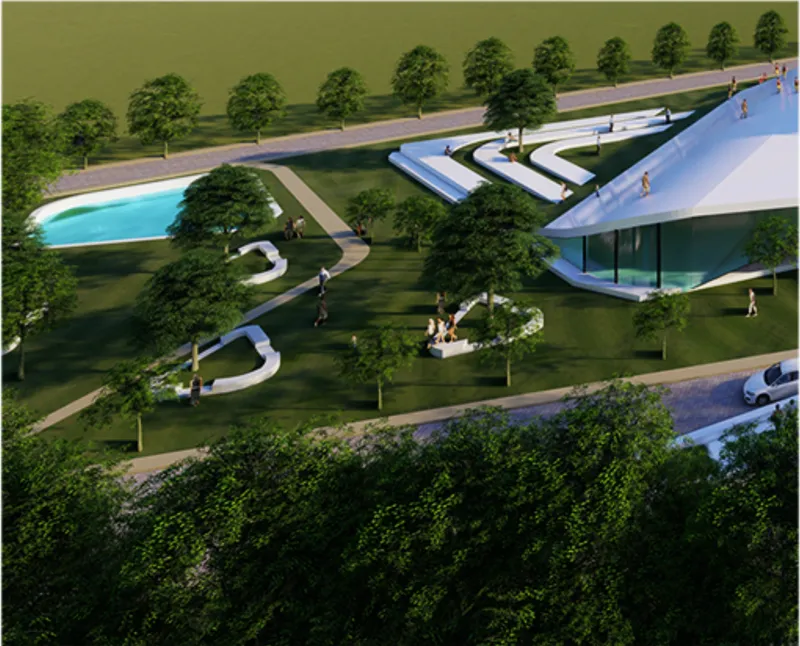
From above, the building's strategy becomes fully legible. The flowing white roof structure unfurls across the site, bracketing terraces at multiple levels, a reflective pool that mirrors the sky, and landscaped grounds that dissolve the boundary between civic park and cultural institution. The aerial rendering confirms that Samagra is not a singular object dropped onto flat ground but a topographic intervention. Programmatic zones, from indoor galleries to open-air amphitheatres, are distributed along the roof's trajectory, each accessible from the terraced landscape without the bottleneck of a single entrance lobby.
The integration of water is deliberate. In a city defined by monsoon rains and coastal proximity, the pool and surrounding landscape channels function as both aesthetic element and climatic response, cooling adjacent spaces through evaporation while echoing the maritime narrative that drives the entire design.
Intersecting Ramps and Pedestrian Bridges
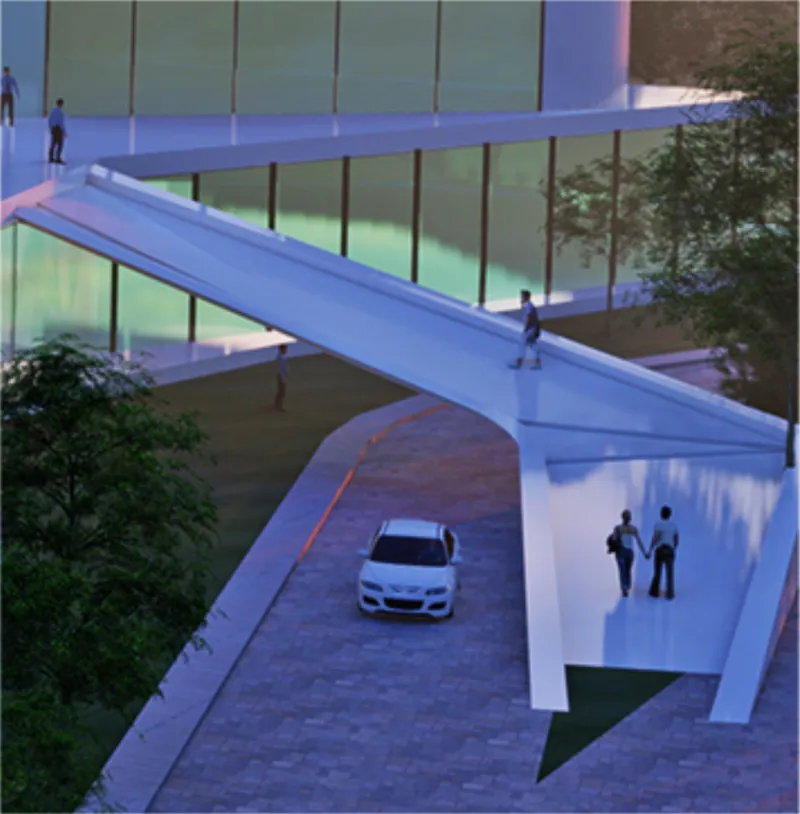
The dusk view of intersecting white ramps and pedestrian bridges reveals how circulation itself becomes spectacle. Glass-walled volumes glow beneath the connecting bridges, turning movement between floors and programmatic zones into an event. Visitors crossing from a literature wing to a performance hall are not funneled through corridors but placed on elevated paths that frame views of the landscape, the sea, and other visitors below. This approach borrows from expressionist architecture's insistence that buildings should evoke emotion and movement rather than merely contain function.
The bridges also solve a practical problem. With a program that spans cuisine, exhibitions, and live performance, the cultural centre risks becoming a labyrinth of disconnected rooms. The elevated walkways stitch these diverse programs together, making legible connections visible from nearly every point in the complex. You always know where you are relative to the whole.
Approaching Samagra: Canopy, Glass, and Parkland
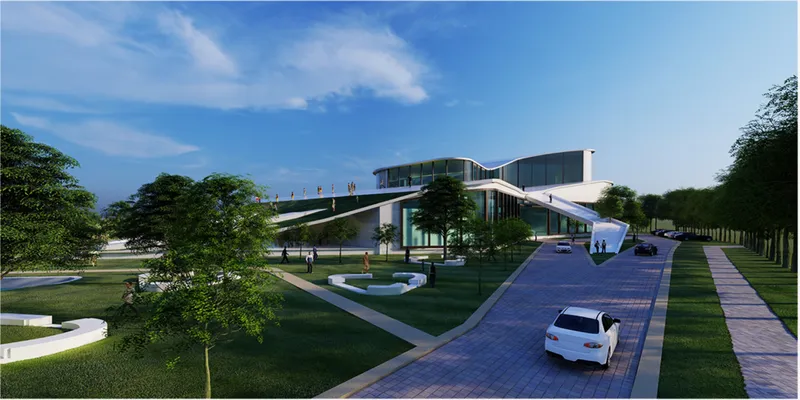
The approach view frames the arrival experience: a sweeping roof canopy extends outward over the entry drive, signaling welcome before any door is reached. Behind the canopy, a glass facade reveals interior activity, collapsing the distinction between public park and cultural interior. Manicured parkland lines the drive, situating the building within a green precinct that serves as informal gathering space even for those who never enter the galleries. The decision to foreground landscape over monumentality is significant. Rather than imposing a heroic façade, the design invites approach, exploration, and gradual discovery.
Why This Project Matters
Samagra confronts a real tension in contemporary Indian architecture: how to celebrate cultural plurality without flattening it into spectacle. By grounding its formal language in Kozhikode's specific maritime identity rather than generic national symbolism, the project avoids the trap of producing a theme park of Indianness. The wave form is earned through site, climate, and history, not imposed for visual novelty. The program, integrating cuisine, literature, visual arts, and performance as continuous spatial experiences, reflects a definition of culture closer to Gandhi's lived, everyday understanding than to the sanitized display logic of a conventional museum.
Hiba Cv's proposal reminds us that cultural architecture works best when it generates public life rather than merely housing artifacts. The terraced landscapes, waterfront plaza, elevated walkways, and open parkland all extend the building's reach beyond its walls, creating a civic ground where cultural engagement is active, participatory, and woven into the rhythms of a coastal city still shaped by the exchange the ocean has always enabled.
View the Full Project
About the Designers
Designer: Hiba Cv
Enter a Design Competition on uni.xyz
uni.xyz runs architecture and design competitions year-round that reward proposals with spatial conviction and real site intelligence.
Project credits: Samagra – Bharat Bhavan 2020 by Hiba Cv Bharat Bhavan 2020 (uni.xyz).


Popular Articles
Popular articles from the community


Cloaked Colonization: A Mobile Underwater Habitat That Moves Like a Fish
Micah Abaya's shortlisted EHC Pacific entry reimagines ocean settlement as a dispersed network of self-sustaining architectural organisms.

Opera on the Sea: Driftwood Logic Shapes a Timber Opera House on Estonia's Coast
Trevor Orgill's opera house translates the entangled drift of floating timber into a civic building where wood, water, and music converge.

Manzana Morphosis: Stretching Barcelona's Grid into a Living Landscape for 2050
A radical reworking of the Eixample manzana turns density into a tool for generous public space, vertical ecology, and environmental performance.
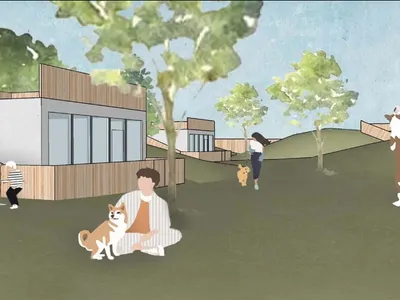
Temporary Home for Dogs: A Reversed Zoo Rethinks Animal Shelter Architecture
In Bucharest, a sinuous corridor and freed landscape flip the logic of containment, designing a shelter that works to make itself unnecessary.

Similar Reads
You might also enjoy these articles

Play: Fragments of Their World: Remembered Architecture Rebuilt as a Modular Playground for Refugee Camps
Tom Gardner abstracts domes, arches and towers from the homelands of displaced families into a kit of child-scaled play parts for camp settlements.
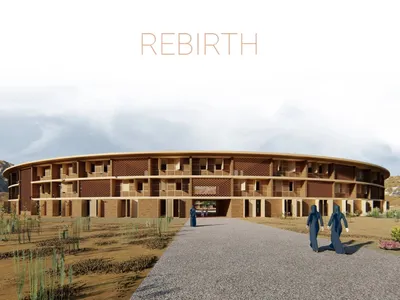
REBIRTH: A Circular Settlement Where Afghan Widows and Their Children Rebuild Life Together
A shortlisted Resile entry turns the circle into a protective ring of timber and brick, gathering homes, classrooms and gardens around a shared landscape.
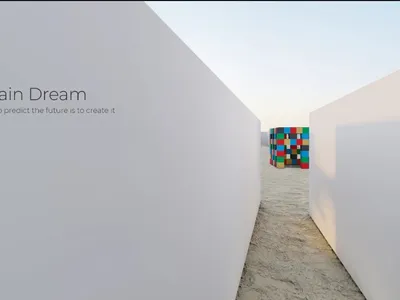
The Main Dream: A Recycled Plastic Kit That Lets Refugee Children Build Their Own Playground
Thirty-centimetre interlocking cubes that connect on three axes turn play into construction, letting children author the spaces they occupy.

Lunar Spiral: A Fibonacci-Driven Moon Settlement Rising from Shackleton Crater
Golden-spiral geometry organises buried infrastructure and orbiting habitable spheres into a lunar base designed to grow as life on the Moon expands.

Explore Cultural Hub Competitions
Discover active competitions in this discipline

Challenge to reimagine the Iron Throne

Photograph architecture without architects

Illustrate the lost glory of Angkor Wat - Render Challenge

Design challenge to reuse E-waste
Comments (0)
Please login or sign up to add comments
No comments yet. Be the first to comment!