

Saman Satellite Office Building by Hooba Design: A Harmonious Architectural Integration
Saman Satellite Office by Hooba Design integrates existing structures with modern interventions, creating a cohesive, interactive, and sustainable workspace within an urban park.


A Collaborative Approach to Architectural Continuity
The Saman Satellite Office Building presented a unique challenge—taking over a half-completed structure and refining its design without compromising the original architectural intent. Situated within a technology campus park, this office building reflects a new approach to workspace functionality.
Originally designed by another architectural firm, the project underwent significant structural changes before Hooba Design was brought in. The client’s decision to modify the existing framework and expand the structure required a delicate balance between architectural continuity and innovation. The objective was not just to complete the building but to enhance its spatial harmony, adaptability, and urban integration.
Blending Architecture with the Urban Landscape
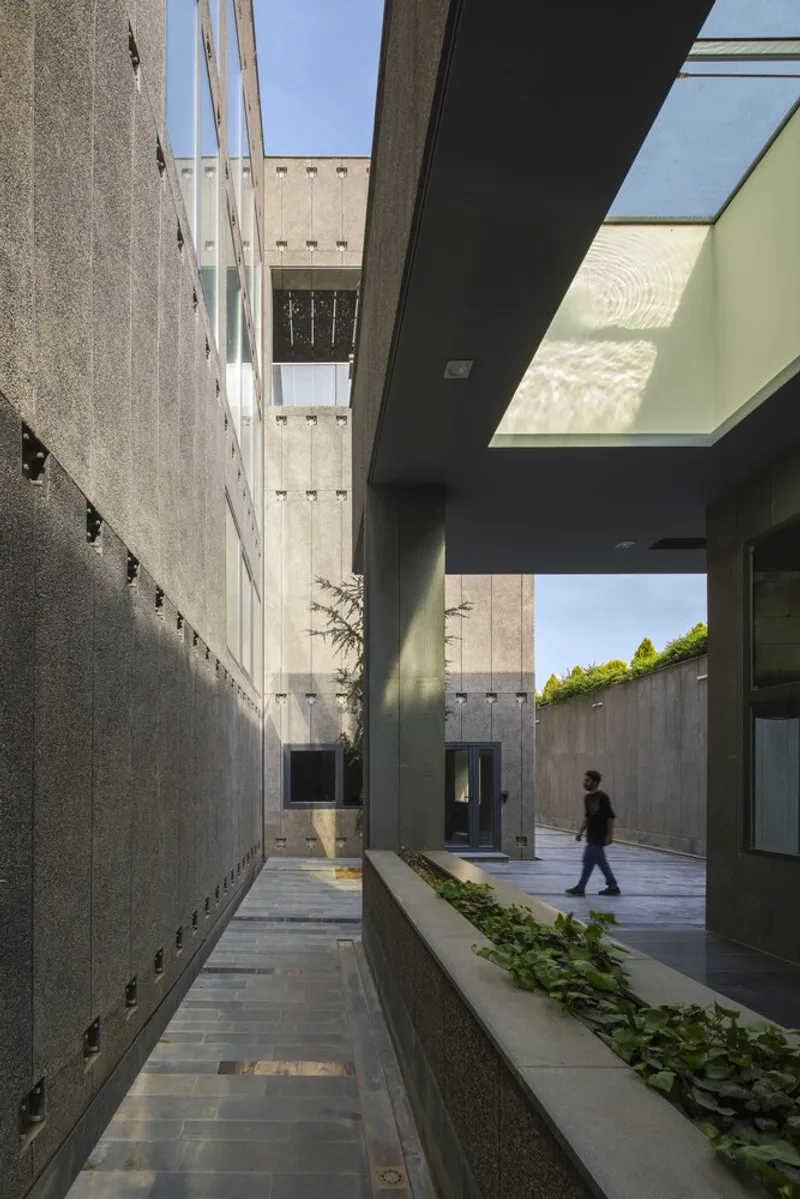
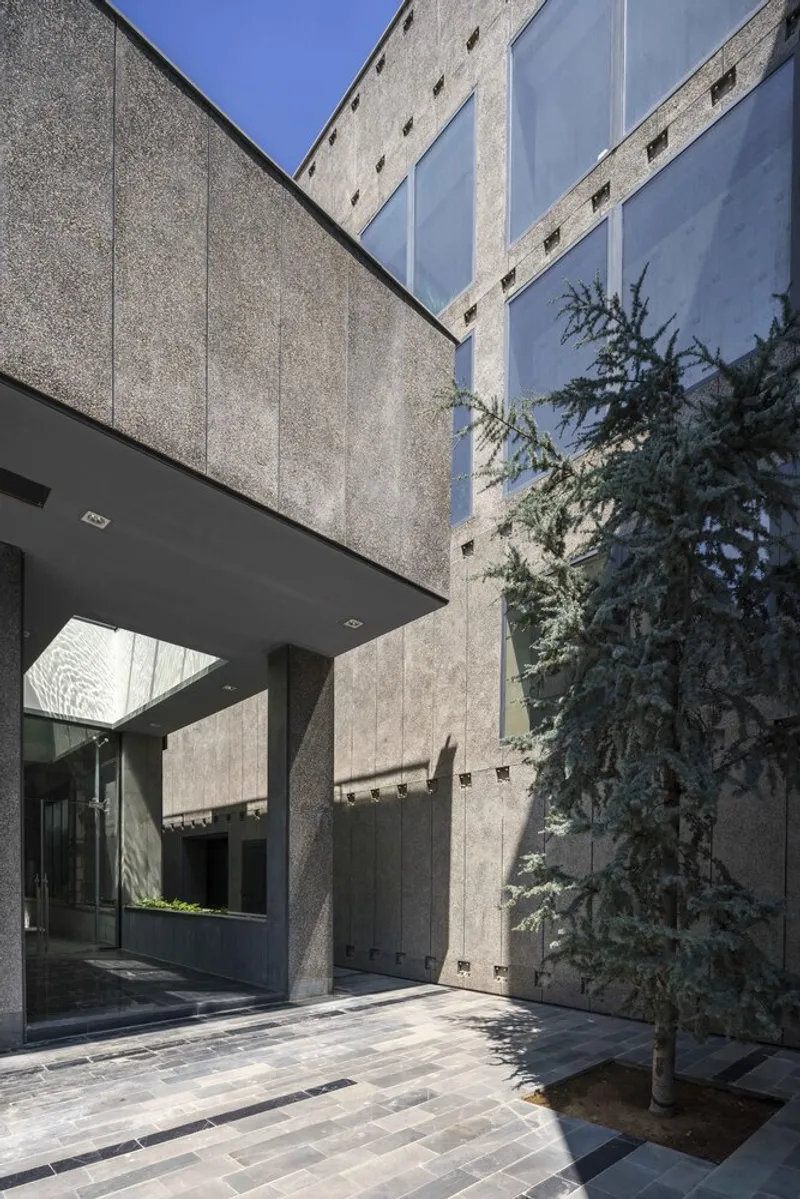
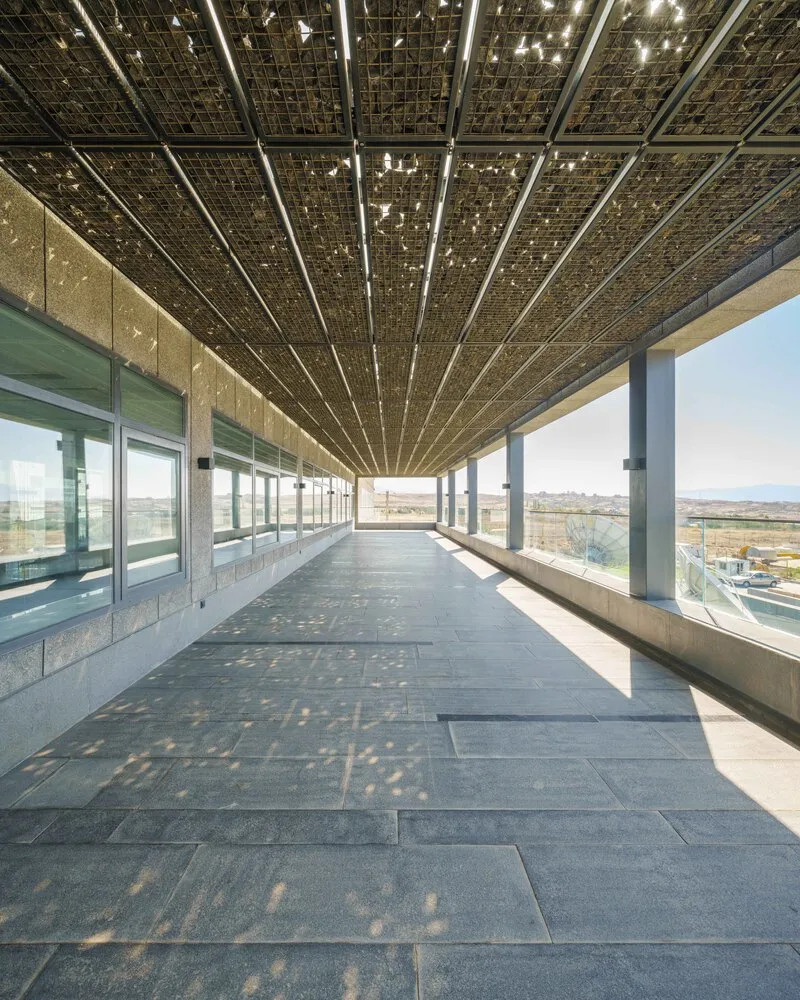
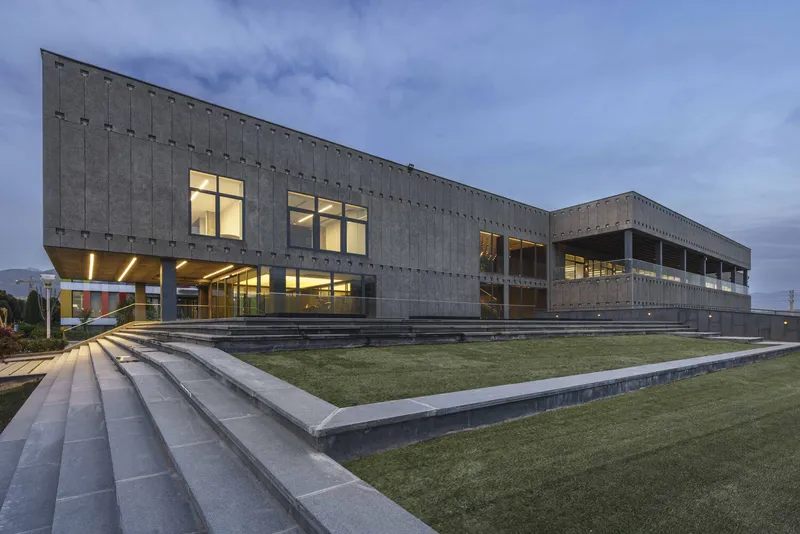
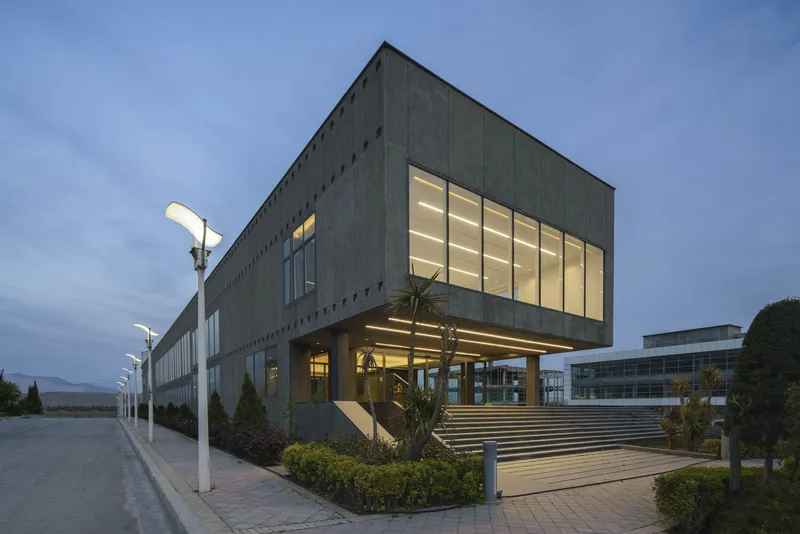
To ensure cohesion between the old and new design, Hooba Design focused on integrating the structure into its surroundings. A publicly accessible porch was introduced to connect the building with the park, reinforcing its role as a communal space. Instead of expanding the structure vertically, additional office spaces were carefully embedded within the landscape’s basement, preserving the original volumetric integrity while enhancing public usability.
By minimizing new formal elements, the intervention serves as both an architectural enhancement and an interactive urban plaza—an approach that strengthens the building’s relationship with its environment.
A Thoughtful Spatial Intervention
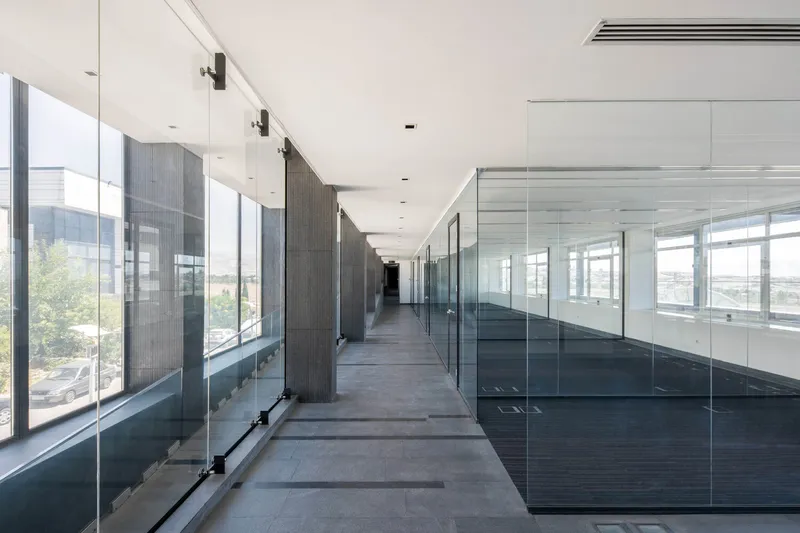
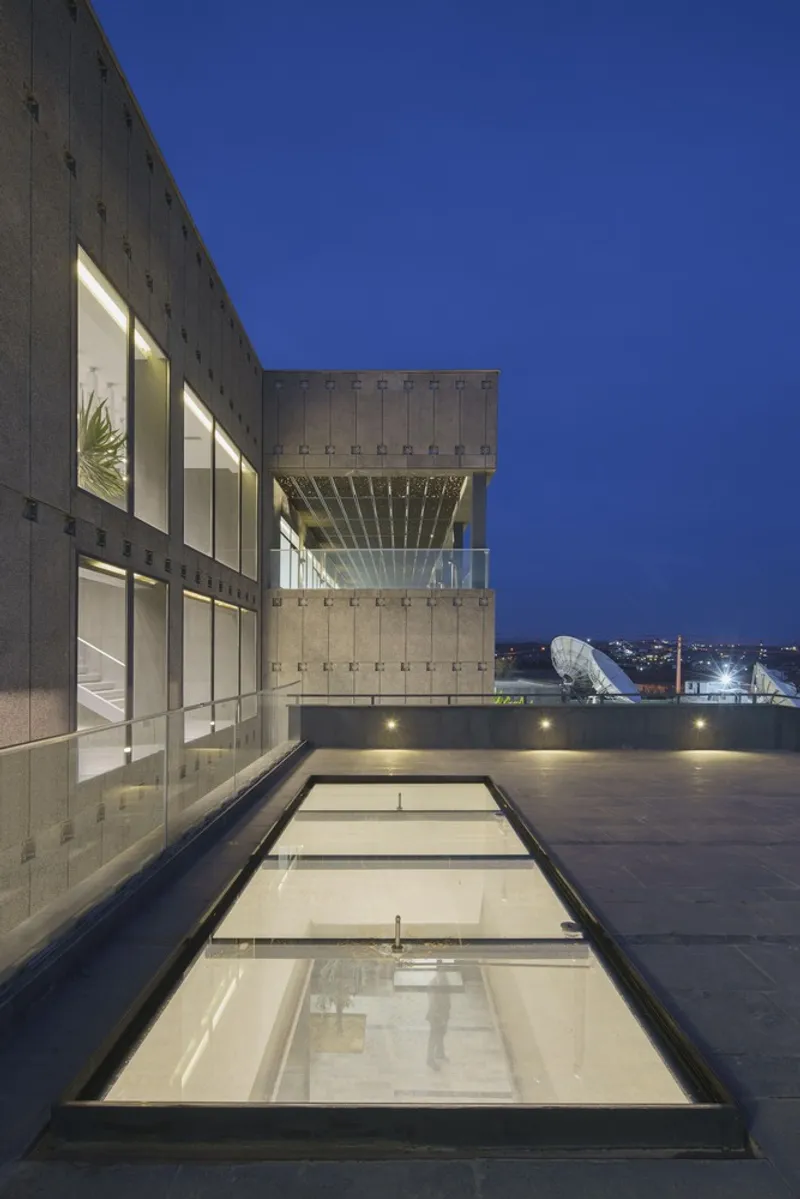
A key design element is the in-between space, strategically positioned to separate the original structure from the newly added sections. This gap not only respects the initial design intent but also improves natural lighting, ventilation, and spatial connectivity.
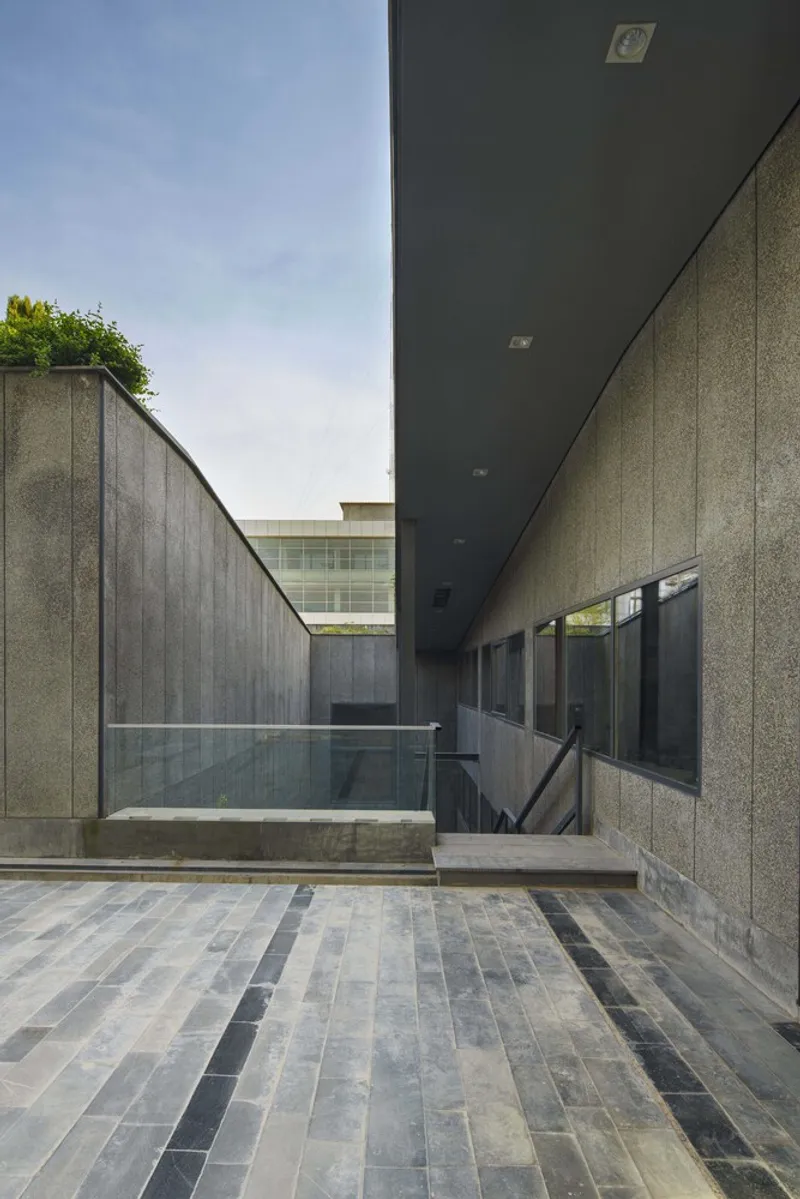
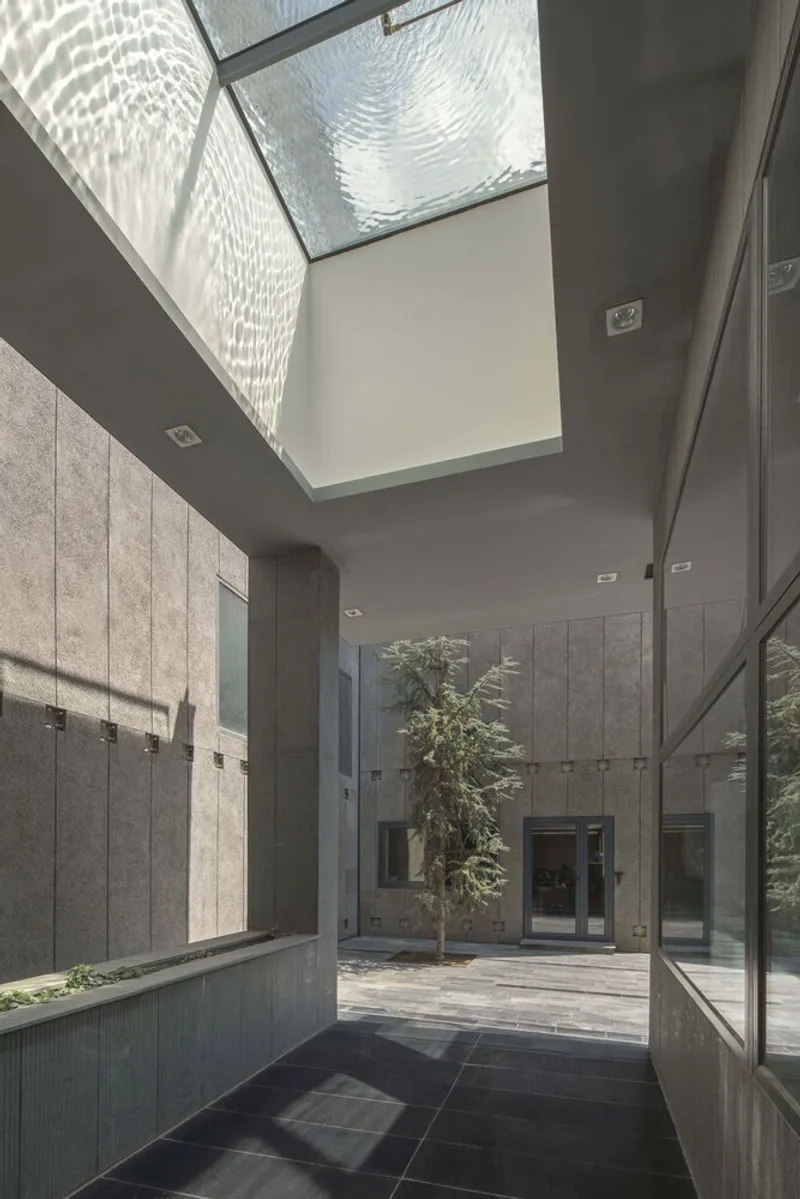
The central void transforms into a green courtyard, fostering a connection between indoor and outdoor areas while ensuring seamless circulation. Additionally, the sloped roof of the added section serves as both a functional and aesthetic element, inviting pedestrians to engage with the site and creating a more interactive architectural experience.
Materiality and Transparency
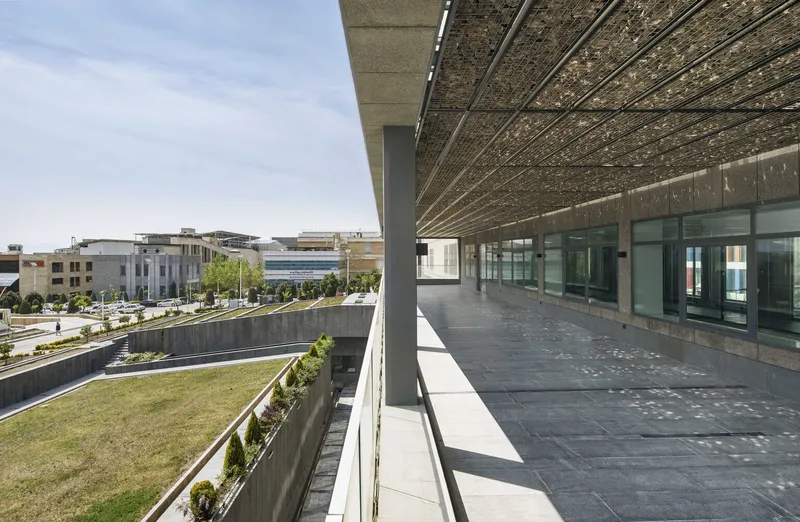
The material palette was chosen to emphasize minimalism and spatial purity. A washed cement finish ensures that the building’s form remains the focal point, while transparent elements strengthen the visual continuity between interior and exterior spaces.
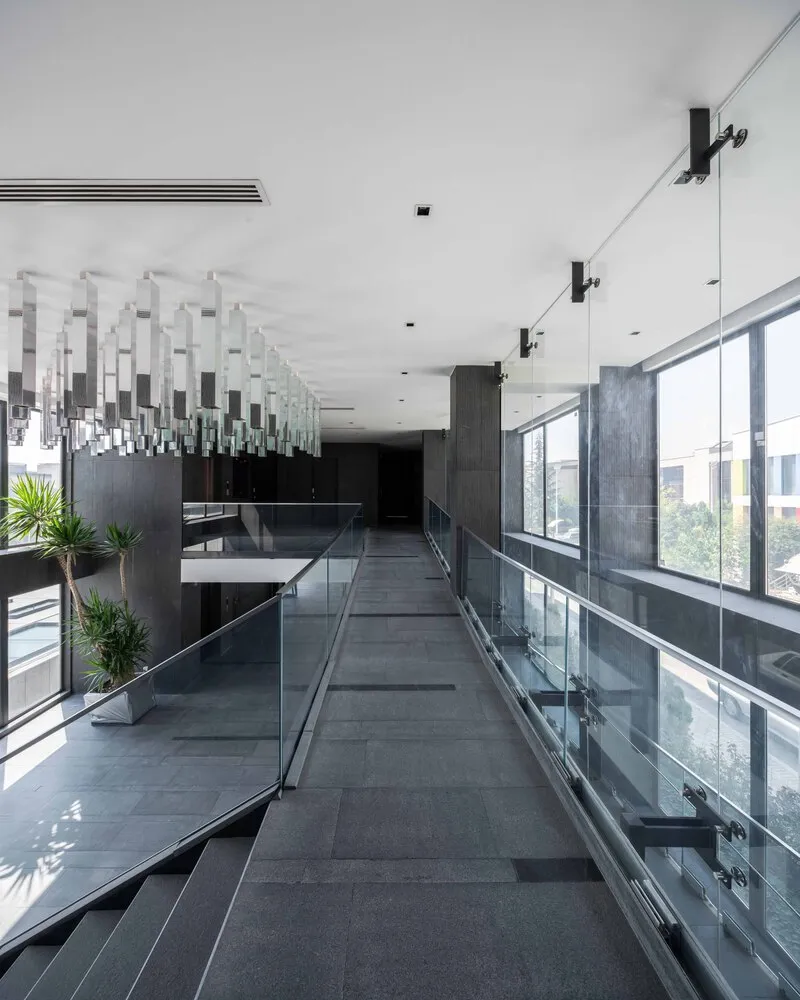
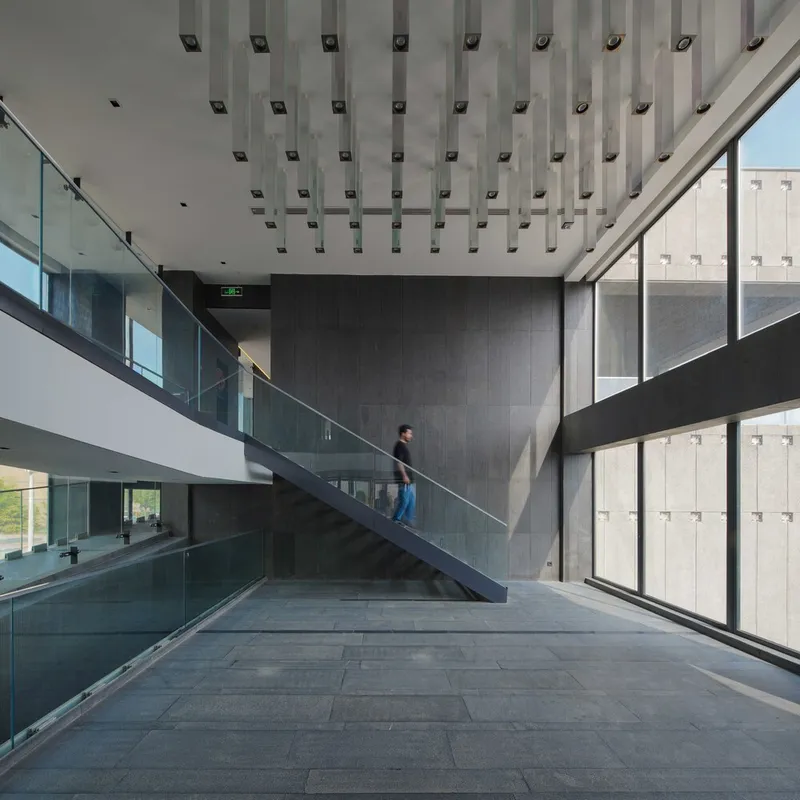
This layering of glass and neutral materials establishes a seamless flow, allowing natural light to penetrate deep into the structure. The design also enhances workspace interaction by visually connecting corridors, communal areas, and work zones, reinforcing a sense of openness.
Fostering Architectural Collaboration
This project highlights a broader architectural challenge—how to preserve design integrity when multiple architects contribute to a project at different stages. Often, when a project shifts hands, the original vision is lost, leading to design fragmentation and inefficiency. However, through careful collaboration and thoughtful adaptation, Hooba Design successfully bridged past and present, creating a dynamic and cohesive office space.
The Saman Satellite Office Building exemplifies how architecture can evolve through cooperation, adaptability, and urban sensitivity, setting a precedent for future projects requiring hybrid design methodologies.
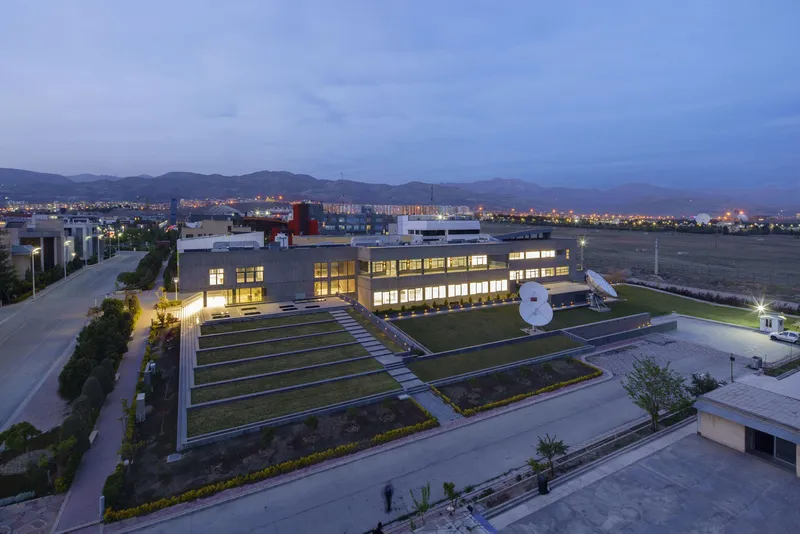
All Photographs are works of Deed Studio


Popular Articles
Popular articles from the community


Juan García Correa, John González and Claudia Rueda Sink a Circular Amphitheater into a Manizales Engineering Building
On the La Nubia campus in Manizales, Colombia, the S1 Building folds labs and offices into a hillside of ramped lawns that double as a campus route.

GROUP A Strips a 1969 Rotterdam Harbor Headquarters to Its Frame and Wraps It in Timber Louvers
In Rotterdam's M4H harbor district, Ferro Offices reuses a 1969 frame, adds one timber storey and reaches BREEAM-NL Outstanding.

U.GA Architects Wraps an Oval Rooftop Pool in Curved Board-Formed Concrete on Busan's Jeollidan-gil
In Busan's Jeonpo-dong, a 454 m² mixed-use block stacks a neighborhood facility, guest rooms and an oval rooftop pool inside spiraling concrete walls.

LT2A and OPEN Architectes Thread a Brick and Glass High School Through a Wooded Belgian Campus
In Braine-l'Alleud, a 3,000 m² wing for Collège Cardinal Mercier pairs pale brick with a glazed colonnade, deferring to a small chapel and a dense wood.

Similar Reads
You might also enjoy these articles


Hodi-Mandai Geram
Project Function: Preservation and revitalization of the Intangible heritage and socio-spatial identity of the Hodi by Housing, Cultural Memory Center, Sacred Grove, landscape, local tourism economy


Olio Towers: A Mid-Rise for Performers That Fuses Housing, Rehearsal, and Stage
Located blocks from Houston's Theater District, this modular tower stacks living units around a central performance atrium.

Oasis: Modular Green Housing Carved into Dhaka's Urban Fabric
A shortlisted Plugin Housing entry reclaims unauthorized settlements in Dhaka with stepped concrete volumes, green roofs, and ventilation-driven design.

Black Hole: A Floating Megastructure for the Post-Physical Era
Emiliano Mazzarotto envisions a spherical, self-scaling arena where e-sports, digital hotels, and holographic stadiums replace traditional public space.

Explore Aotu Architecture Office Competitions
Discover active competitions in this discipline

Challenge to reimagine the Iron Throne

Photograph architecture without architects

Illustrate the lost glory of Angkor Wat - Render Challenge

Design challenge to reuse E-waste
Comments (0)
Please login or sign up to add comments
No comments yet. Be the first to comment!