

San Saba House Extension by adamo-faiden + Supervoid | Rome, Italy
San Saba House Extension reconfigures a historic Rome building, blending steel, terracotta, and terraces for seamless indoor-outdoor contemporary living.


The San Saba House Extension is a masterful collaboration between Buenos Aires–based Adamo-Faiden and Rome–based Supervoid, transforming a five-story early 20th-century building into a contemporary residential landmark. Completed in 2023, this project balances historical preservation with modern design innovation, redefining urban living in the historic San Saba neighborhood of Rome.
Reimagining Historic Architecture
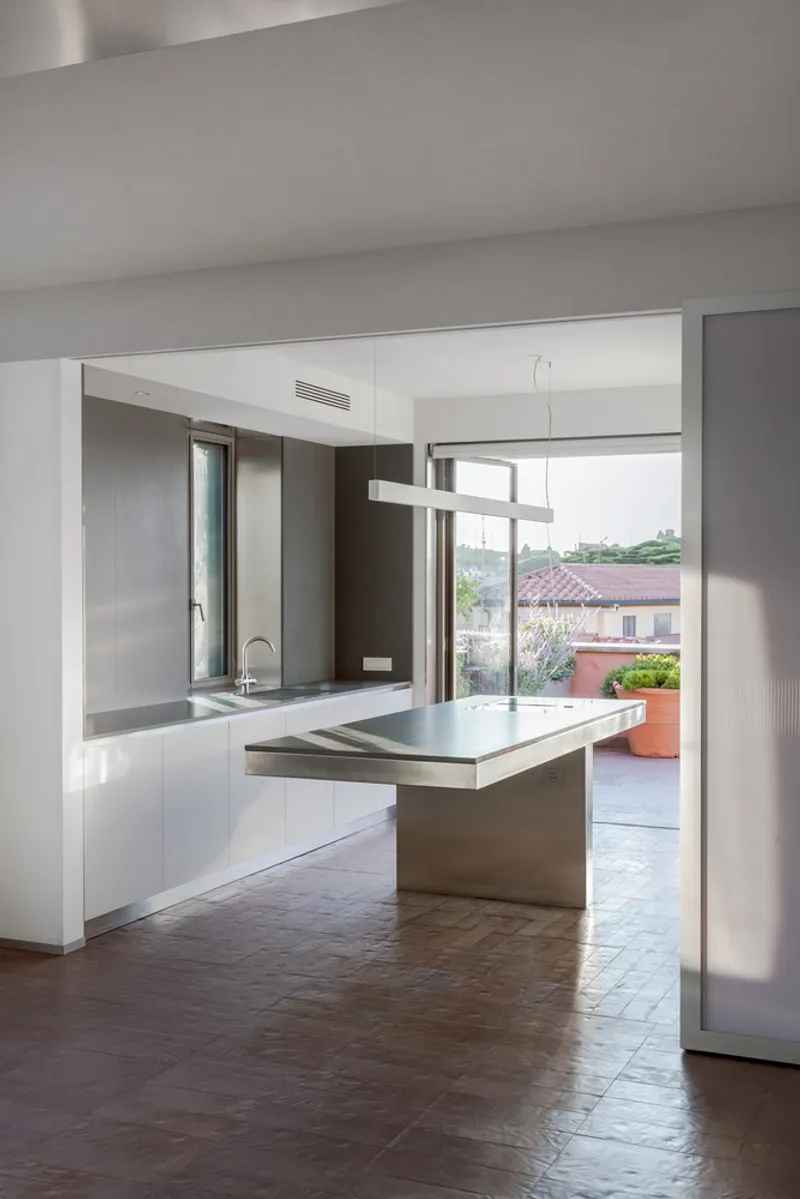
This project reinterprets the original early 20th-century structure while adapting it to modern lifestyles. By completely reconfiguring the apartment layout, the designers relocated the main living areas from the Via Flaminio Ponzio façade to a central internal terrace, creating a private, sunlit heart for the home. This intervention not only enhances the spatial flow but also maximizes connection with the surrounding landscape.
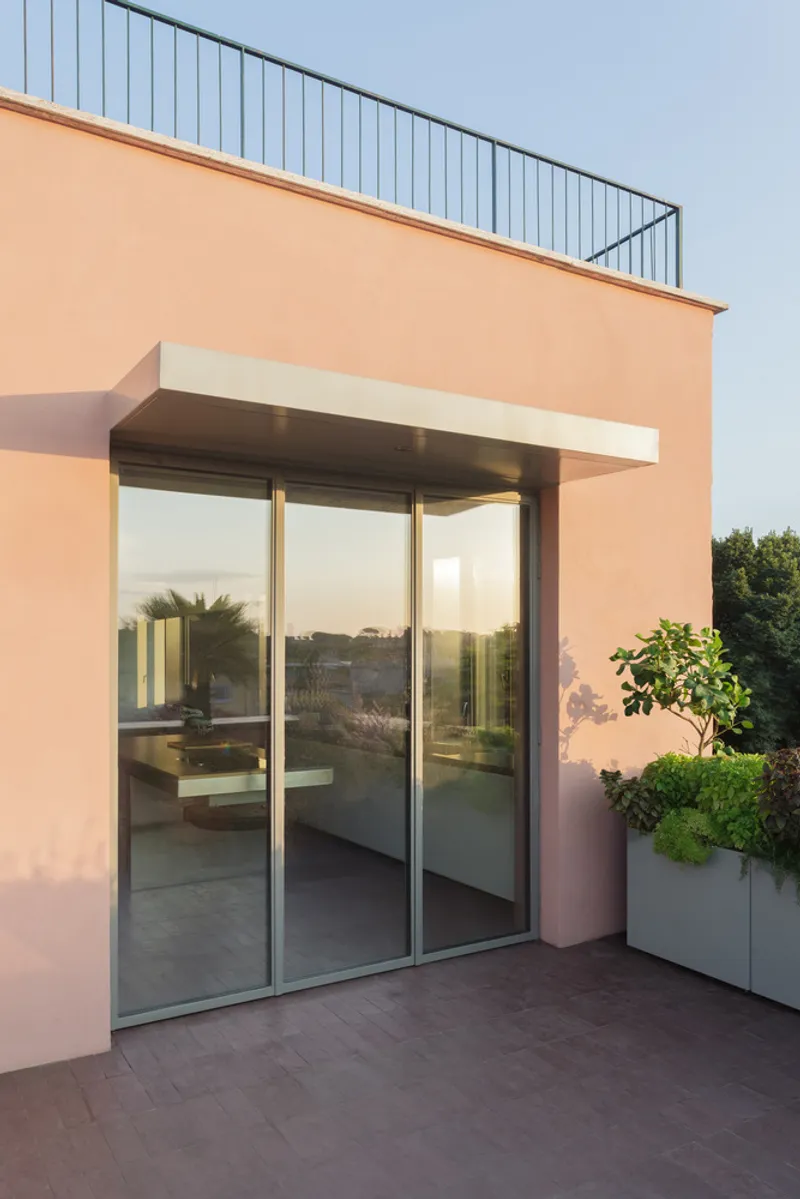
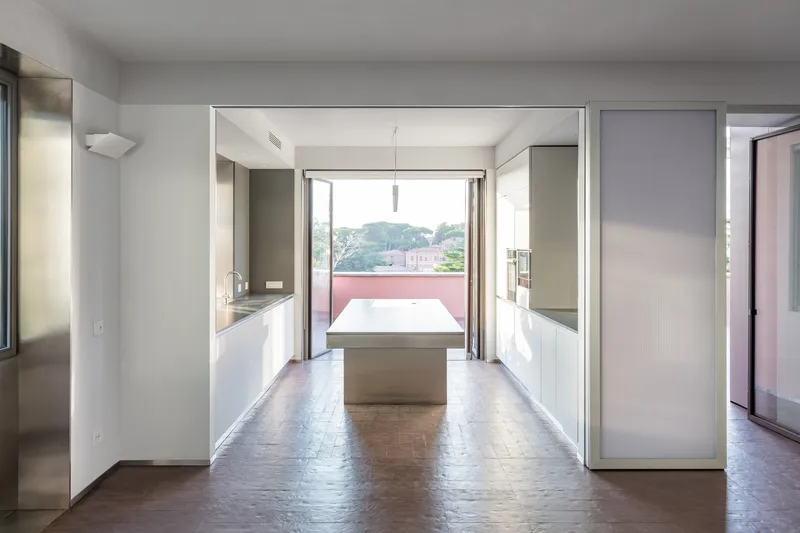
A large folding glass door links the kitchen to the terrace, creating a seamless indoor-outdoor experience and allowing natural light to permeate the living areas. The design emphasizes fluidity, openness, and the visual expansion of space, transforming everyday living into an immersive experience with nature.
Fluid Indoor-Outdoor Connection
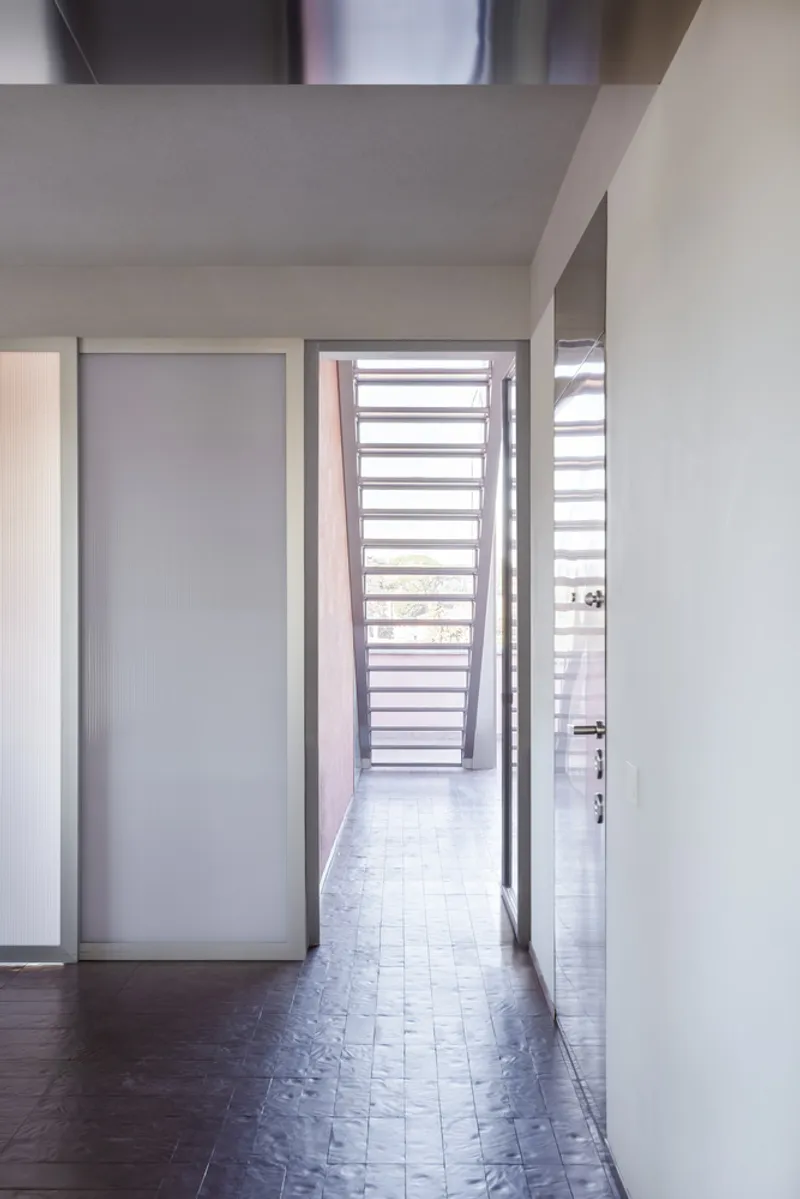
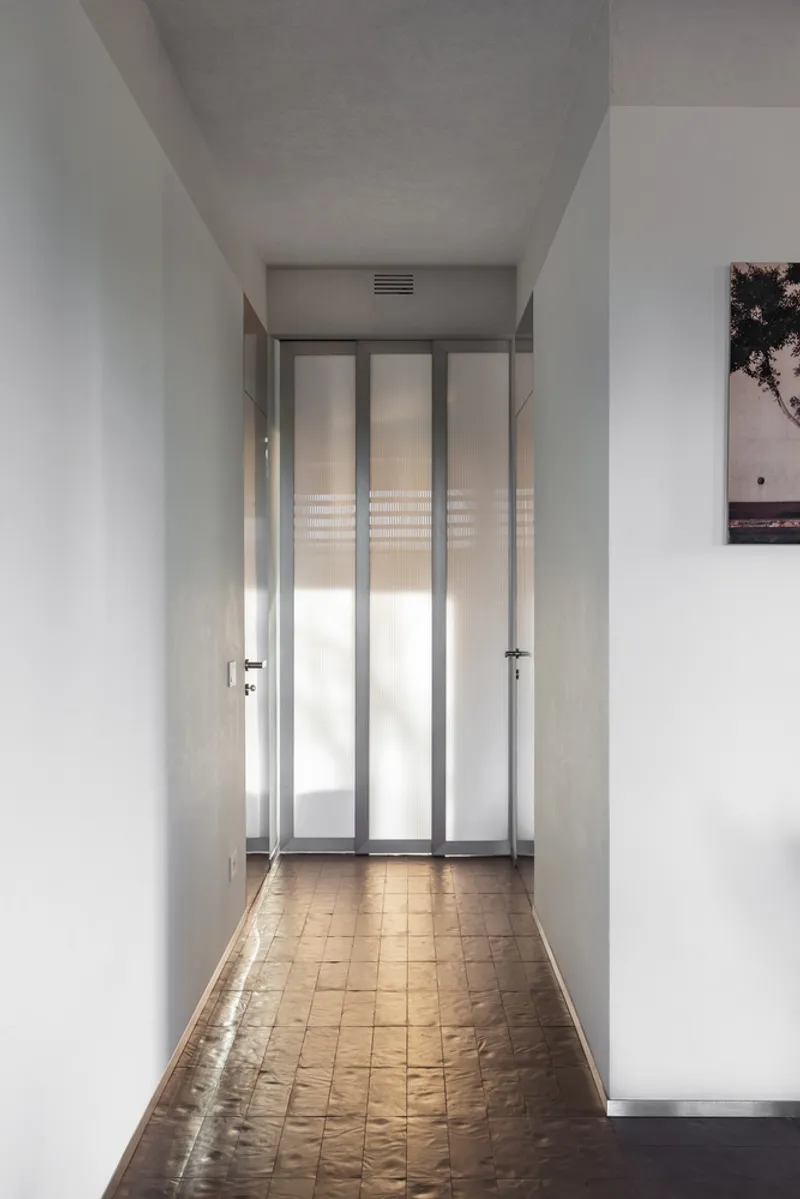
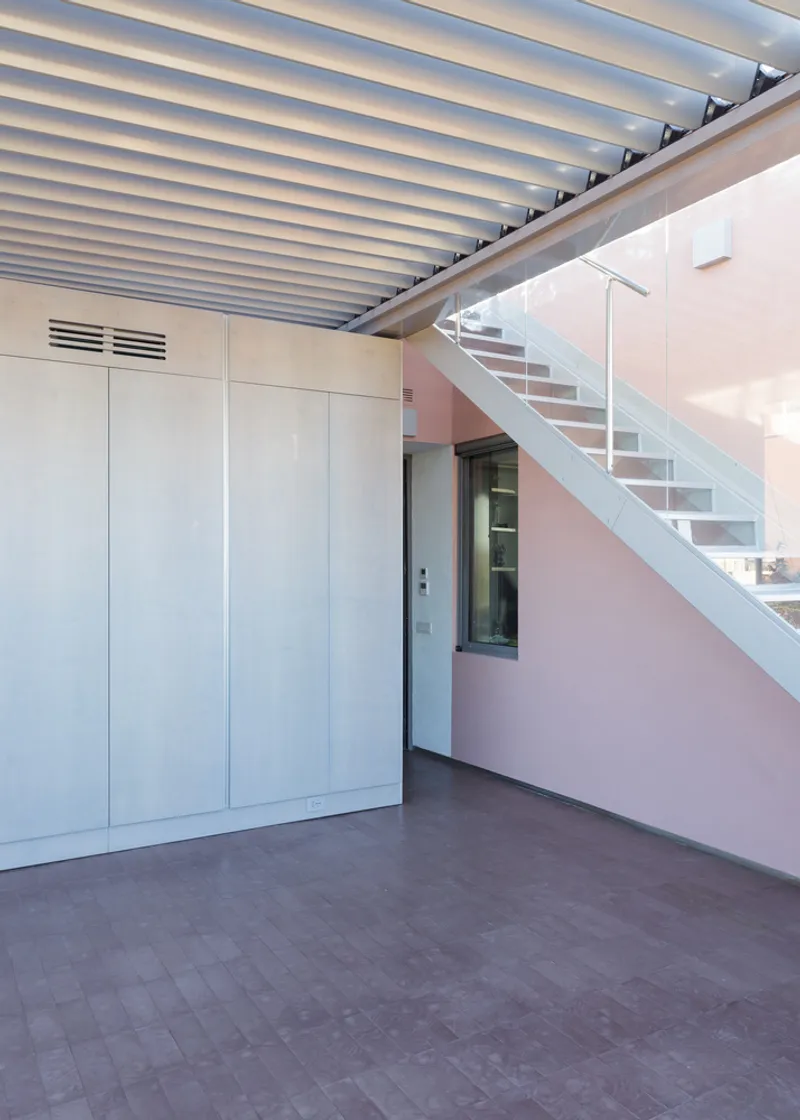
A newly designed external staircase, perfectly aligned with the building’s central axis, establishes a continuous dialogue between the interior and exterior. This connection unfolds through intermediate spaces framed by sleek metal structures and polycarbonate sliding doors, guiding movement while preserving transparency and light.
The terraces are conceived as a series of open-air rooms, framed with lush perimeter vegetation, which extends the living spaces into the landscape. These outdoor extensions create a dynamic interplay between private and communal areas, enhancing the sense of spatial continuity throughout the residence.
Materiality and Interior Design
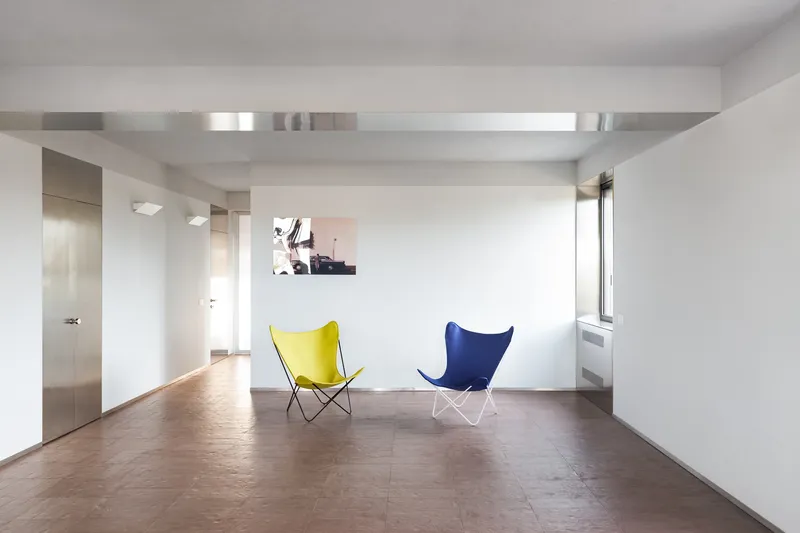
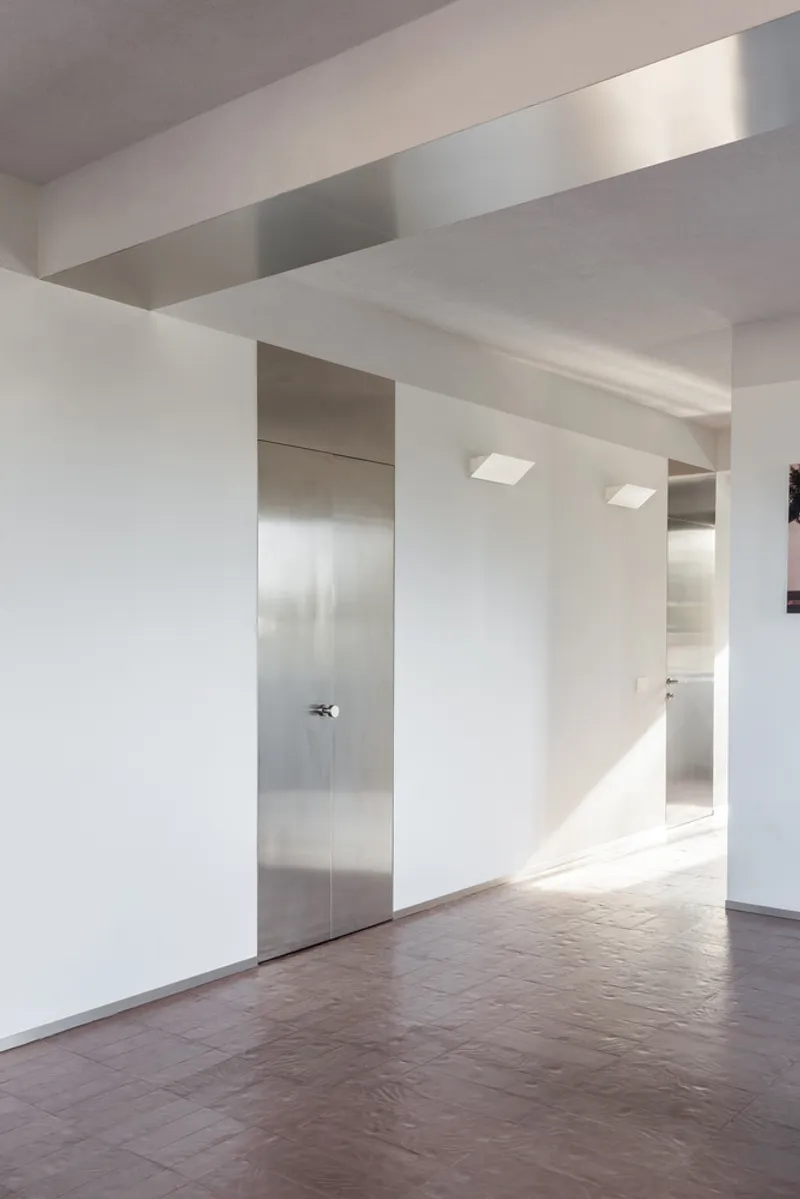
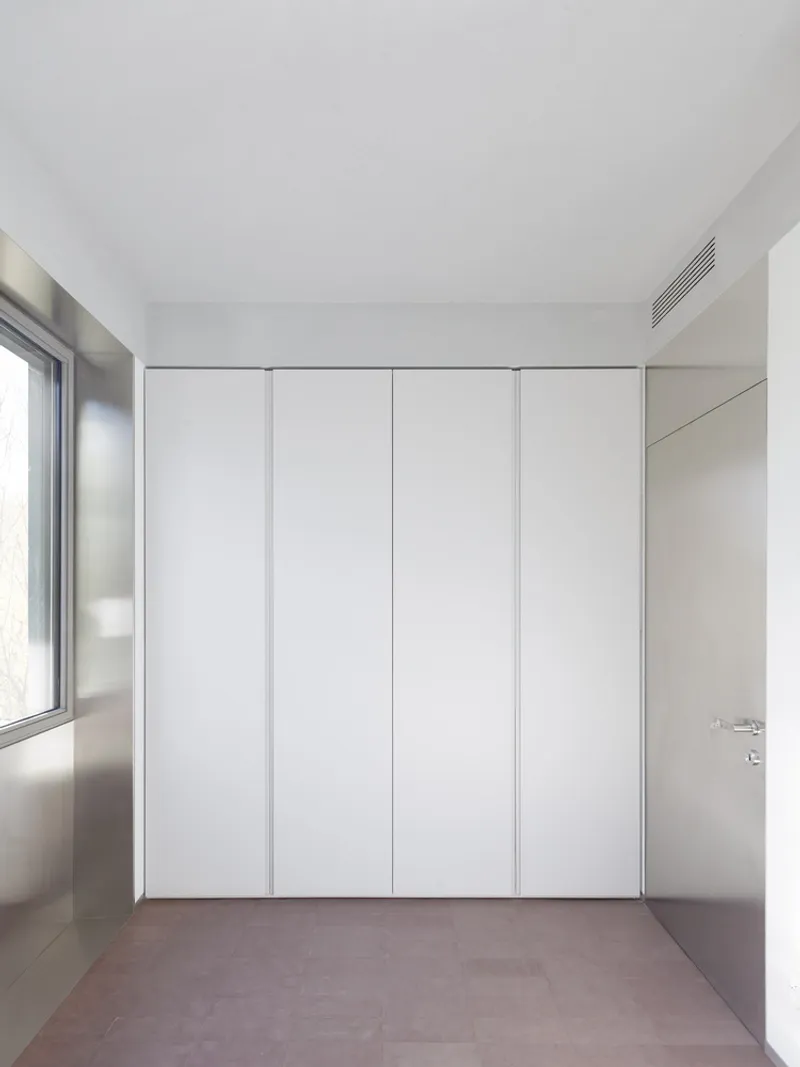
In stark contrast to the building’s thick brick walls, key interior elements—including doors, window frames, fan coil casings, the kitchen, and select furniture—are clad in steel sheet, creating a reflective, almost dematerialized effect that interacts subtly with natural light.
A handcrafted terracotta floor from Fornace De Martino in Salerno runs continuously across the main level, providing warmth, texture, and a tactile connection to the Mediterranean tradition of craftsmanship. Lighting by O/M Light - Osvaldo Matos further accentuates the spatial qualities, emphasizing textures, reflections, and architectural rhythm throughout the interior.
Contemporary Adaptation of Historic Urban Living
The San Saba House Extension exemplifies thoughtful adaptive reuse and contemporary refurbishment. By balancing historical architecture with modern interventions, the project demonstrates how urban residences can evolve to meet modern demands while respecting their heritage.
This extension not only enhances functional living but also enriches the architectural dialogue of Rome’s urban fabric. It highlights how innovative design strategies—careful spatial reconfiguration, material experimentation, and seamless indoor-outdoor integration—can transform historical residences into vibrant modern homes.


Popular Articles
Popular articles from the community


The Amber Palace Opera: A Geological Fiction Surfaces on Tallinn's Baltic Waterfront
Pierre Brillard reimagines a Baltic legend as a public landscape, opera house, and waterfront promenade rooted in Tallinn's coastal identity.
Tsunami Convergenics: Turning Catastrophic Ocean Forces into Underwater Housing Infrastructure
A speculative underwater settlement off the coast of Onagawa, Japan, treats tsunamis and typhoons as energy sources rather than threats.
Faces of the Soviet Avant-Garde: Turning Moscow's Street Names into an Open-Air Museum
A network of sculptural installations across a Moscow residential district transforms forgotten architect names into spatial encounters with cultural memor

Manzana Morphosis: Stretching Barcelona's Grid into a Living Landscape for 2050
A radical reworking of the Eixample manzana turns density into a tool for generous public space, vertical ecology, and environmental performance.

Similar Reads
You might also enjoy these articles


Hodi-Mandai Geram
Project Function: Preservation and revitalization of the Intangible heritage and socio-spatial identity of the Hodi by Housing, Cultural Memory Center, Sacred Grove, landscape, local tourism economy


Olio Towers: A Mid-Rise for Performers That Fuses Housing, Rehearsal, and Stage
Located blocks from Houston's Theater District, this modular tower stacks living units around a central performance atrium.

Oasis: Modular Green Housing Carved into Dhaka's Urban Fabric
A shortlisted Plugin Housing entry reclaims unauthorized settlements in Dhaka with stepped concrete volumes, green roofs, and ventilation-driven design.

Black Hole: A Floating Megastructure for the Post-Physical Era
Emiliano Mazzarotto envisions a spherical, self-scaling arena where e-sports, digital hotels, and holographic stadiums replace traditional public space.

Explore Romanian Architecture Competitions
Discover active competitions in this discipline

Challenge to reimagine the Iron Throne

Photograph architecture without architects

Illustrate the lost glory of Angkor Wat - Render Challenge

Design challenge to reuse E-waste
Comments (0)
Please login or sign up to add comments
No comments yet. Be the first to comment!