

Sand Beach Club by Taste Space: A Coastal Hospitality Architecture Rooted in Fisherman Heritage
Sand Beach Club blends fisherman heritage with modern hospitality architecture, featuring boat-inspired design, central bar, coastal materials, and immersive seaside spatial experiences.


Located in Tambon Pho Rai Wan, Thailand, Sand Beach Club by Taste Space is a striking example of contemporary hospitality architecture that seamlessly blends cultural memory with modern design. Completed in 2022 across an area of 408 square meters, this beach club design reinterprets the legacy of traditional fisherman settlements once found along Chaosamran Beach in Petchaburi.

The project stands as a narrative-driven architectural intervention, where coastal architecture, craftsmanship, and experiential design merge to create a unique restaurant and bar environment inspired by wooden fishing boats.


Design Concept Inspired by Traditional Boat Craftsmanship
The core inspiration behind Sand Beach Club originates from the remnants of an old fishing boat discovered on-site. The architects at Taste Space translated this discovery into a spatial language rooted in vernacular boat-building techniques.
The entire structure reflects the intricate assembly of wooden boats, combining horizontal and vertical elements to evoke a sense of motion and structure. This approach not only preserves the memory of local craftsmanship but also elevates it into a contemporary architectural storytelling experience.


Central Bar as a Visual and Social Anchor
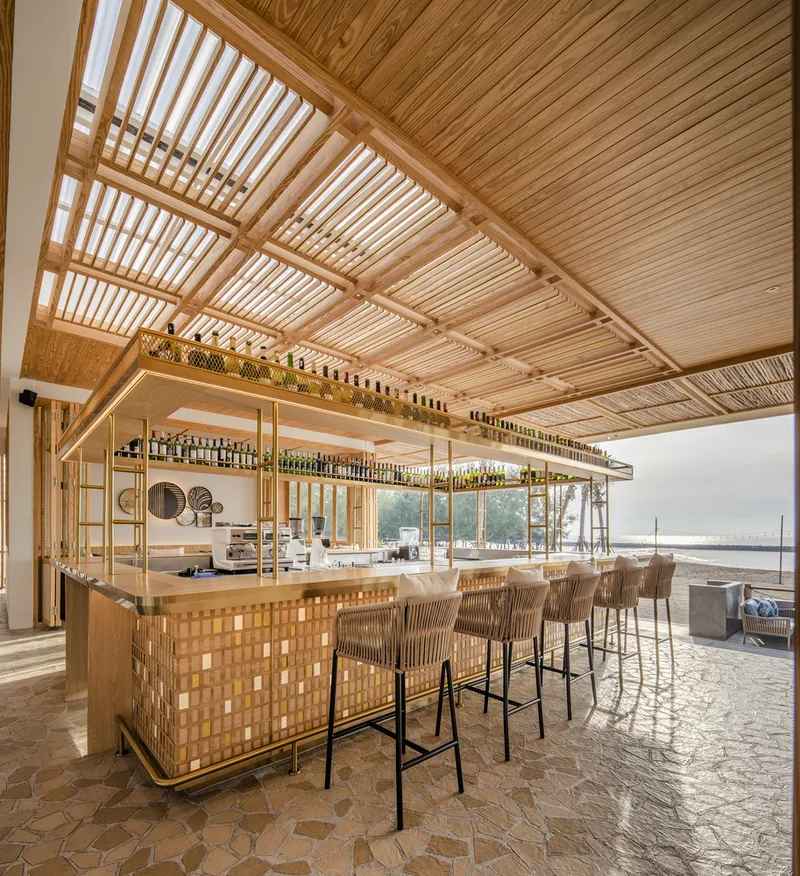
At the heart of the building lies a centrally positioned bar, designed as the focal point of the project. Drawing from architectural composition principles, the bar functions as both a visual anchor and a social hub.
Crafted with meticulous wood detailing, the bar embodies the identity of the space while inviting visitors into an immersive narrative. Its glowing surface at night subtly references the hidden presence of fishing boats, reinforcing the project’s storytelling ethos.

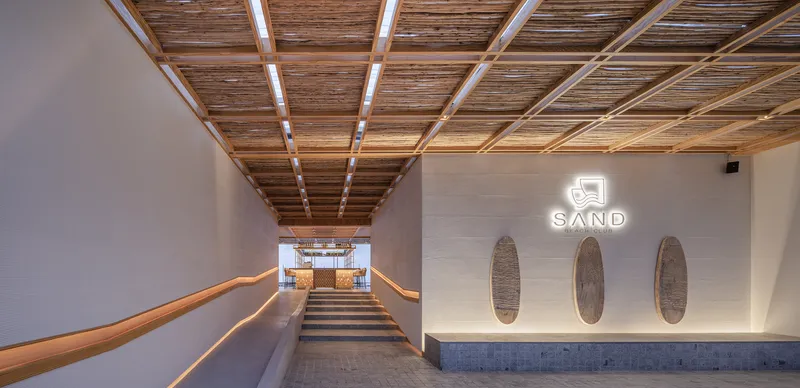
Spatial Experience and Seamless Indoor-Outdoor Integration
The spatial planning of Sand Beach Club emphasizes fluidity and openness. The integration of glass and wooden ceilings allows natural light to filter through, enhancing the connection between interior and exterior spaces.
Visitors experience a seamless transition between zones, where open-plan design strategies and folding doors eliminate visual barriers. Structural columns are cleverly concealed within door frames, creating a clean and uninterrupted spatial flow that aligns with contemporary minimalist architecture trends.

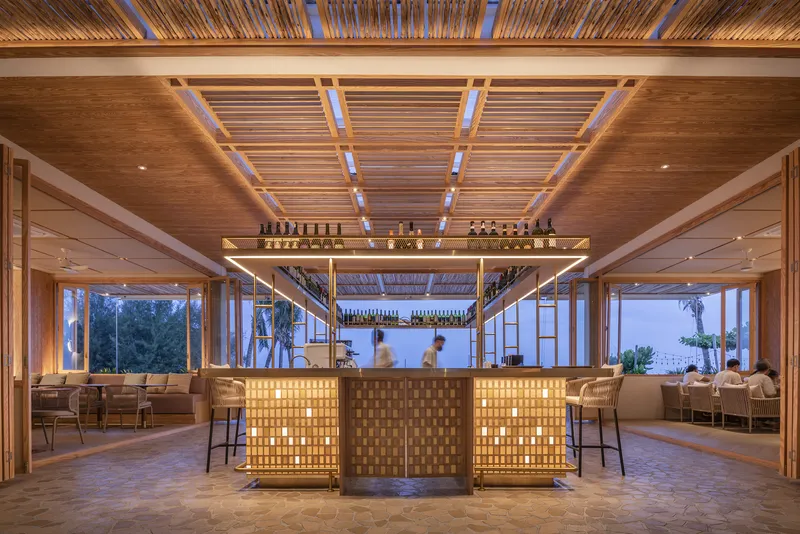
Elevated Floor Levels and Framed Ocean Views
A dynamic floor-level strategy further enhances the spatial experience. Starting from a lower entrance level, the floor gradually rises toward the central bar before descending again toward the beachfront.
This intentional elevation creates a vantage point where visitors seated at the bar can enjoy panoramic views of the sea, evoking the sensation of being elevated above the landscape. The result is a scenic hospitality experience that blurs the boundary between architecture and nature.

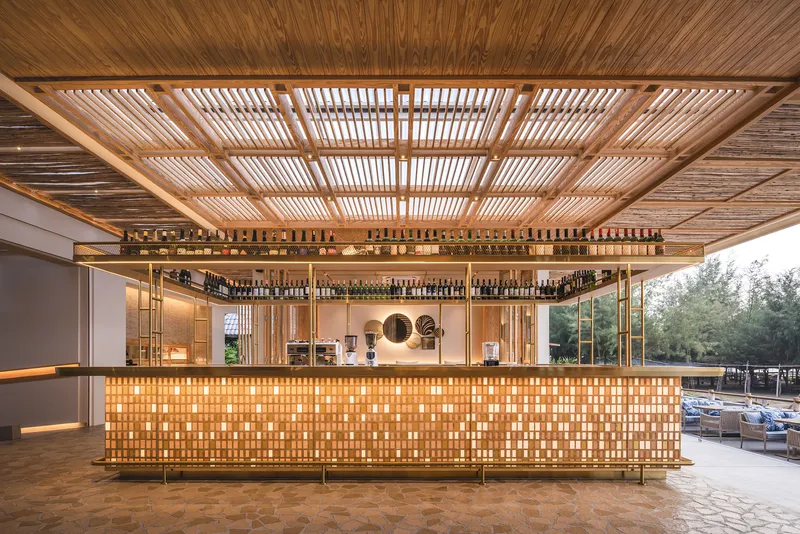
Material Palette and Coastal Color Strategy
The project employs a neutral color palette that harmonizes with its surroundings. Shades of white, grey, brown, and subtle blues reflect the natural tones of sand, sea, and sky.
Textured plaster walls, crafted with delicate linear patterns, introduce a tactile quality that enhances the sensory experience. The use of porcelain white surfaces ensures a timeless aesthetic, adapting beautifully to changing light conditions from day to night.


Craftsmanship, Comfort, and Informal Luxury
Sand Beach Club achieves a delicate balance between refined craftsmanship and relaxed atmosphere. While the detailing reflects high-quality construction and design precision, the space remains welcoming and informal.
The design encourages a casual lifestyle, where visitors can enjoy the space in comfort without the constraints of formality, making it a standout example of contemporary beach club architecture that prioritizes user experience.
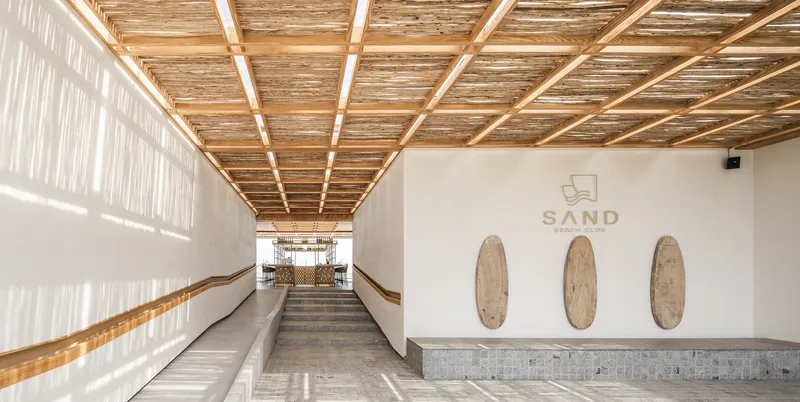

A Storytelling Architecture by the Sea
Sand Beach Club by Taste Space is more than a hospitality venue; it is a spatial narrative that captures the essence of local history, craftsmanship, and coastal living. Through thoughtful design strategies, material sensitivity, and experiential planning, the project successfully transforms a forgotten past into a vibrant architectural destination.

All photographs are works of
Jinnawat Borihankijanan




Popular Articles
Popular articles from the community


AL-JANNAH: Sustainable Architecture and Permaculture for Afghan Widows
AL-JANNAH uses sustainable architecture and permaculture to create resilient oasis of housing, learning, work and renewal for Afghan widows.

The Ocean Hive: Sustainable Architecture for a Self-Sufficient Civilization at Sea
The Ocean Hive imagines sustainable architecture at sea, where modular habitats, algae, wave power and ocean waste sustain a growing colony.

Co-Life: Senior Housing Design That Reconnects Older Adults With the City
Co-Life reimagines senior housing design through healing gardens, shared streets, workshops, and a sustainable community across generations.

Hill & Cross Opera: Sculptural Opera House Architecture Shaped by Tallinn’s Landscape and Identity
Hill & Cross Opera reimagines opera house architecture in Tallinn through its sculptural hill, civic plaza, glass wave and a luminous cross.


Similar Reads
You might also enjoy these articles


Bamboo Housing Challenge 2026: Design Affordable, Sustainable Homes Using Bamboo
An international design competition by Bamboo U and IBUKU inviting architects and designers to reimagine affordable housing using bamboo — with the winning design built full-scale in Bali.

Computational Design & Education: Beegraphy Design Awards Introduces 7th Category (Featuring Jiyun's Innovative Approach)
Dive into Beegraphy’s 7th Design Awards category, where computational design meets education to create immersive, interactive learning tools, inspired by Jiyun’s work.

From Parametric Lighting to Urban Furniture: Join the 2nd Workshop in Beegraphy’s Computational Design Series
Dive into Cutting-Edge Design Techniques and Practical Applications with Industry Experts

Last Call: Unleash Your Architectural Genius in SHAK's Kindergarten Design Competition
Urgent call for architects to join SHAK's kindergarten design competition before the looming deadline


Explore Architecture Competitions
Discover active competitions in this discipline



Challenge to reimagine the Iron Throne


Photograph architecture without architects


Illustrate the lost glory of Angkor Wat - Render Challenge


Design challenge to reuse E-waste
Comments (0)
Please login or sign up to add comments
No comments yet. Be the first to comment!