
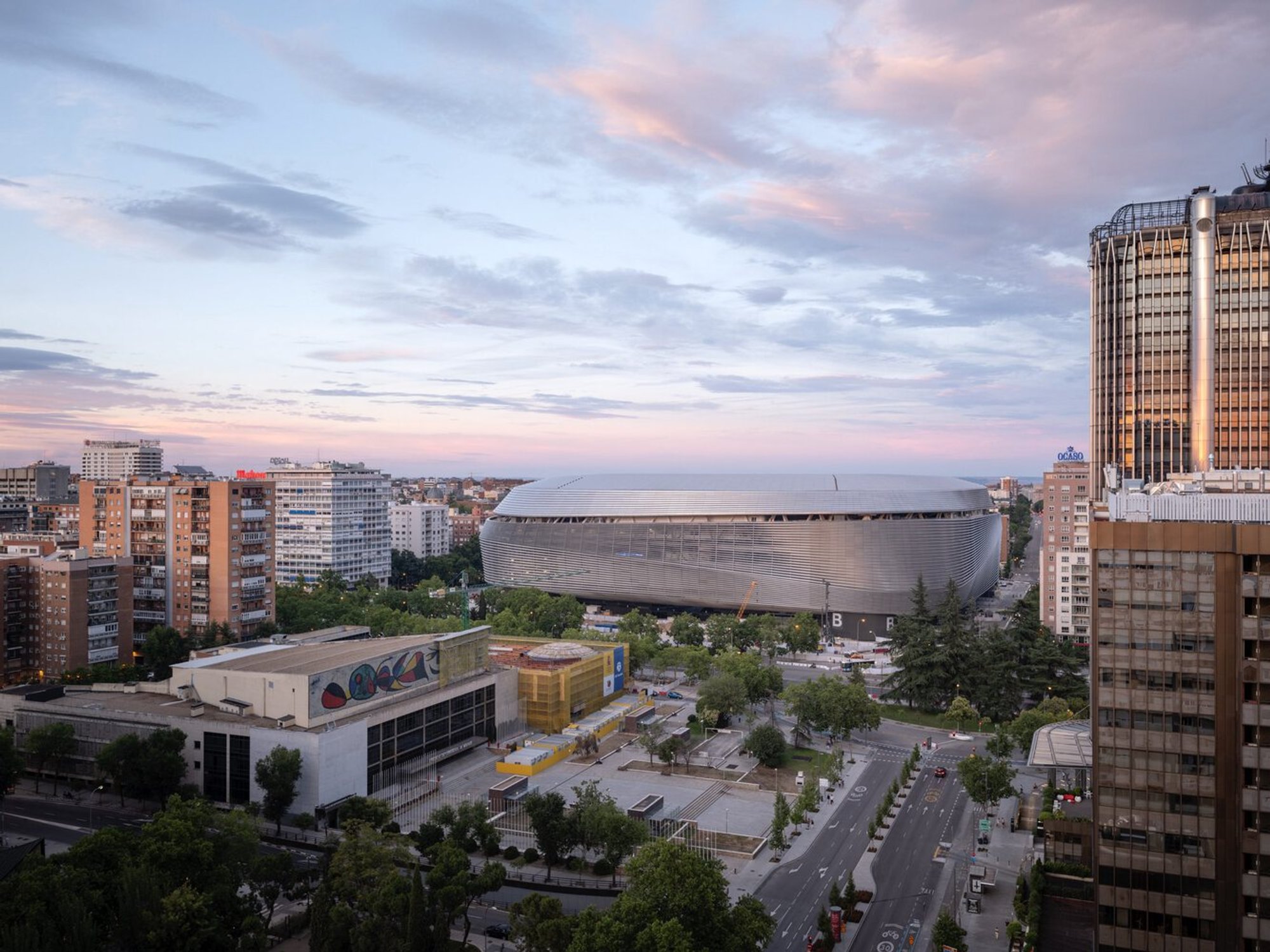
Santiago Bernabéu Stadium Transformation by gmp Architects, L35 & Ribas&Ribas Architects
Santiago Bernabéu Stadium in Madrid transformed by gmp, L35, and Ribas&Ribas Architects into multifunctional, modern, ventilated, and iconic sports landmark.

The iconic Santiago Bernabéu Stadium in Madrid, home to the legendary Real Madrid CF, has undergone a remarkable transformation, blending adaptive reuse, modern architecture, and multifunctional design. Spearheaded by gmp Architects, in collaboration with L35 Arquitectos and Ribas&Ribas Arquitectos, the stadium has been revitalized into a world-class arena that seamlessly combines sports, entertainment, and cultural experiences.
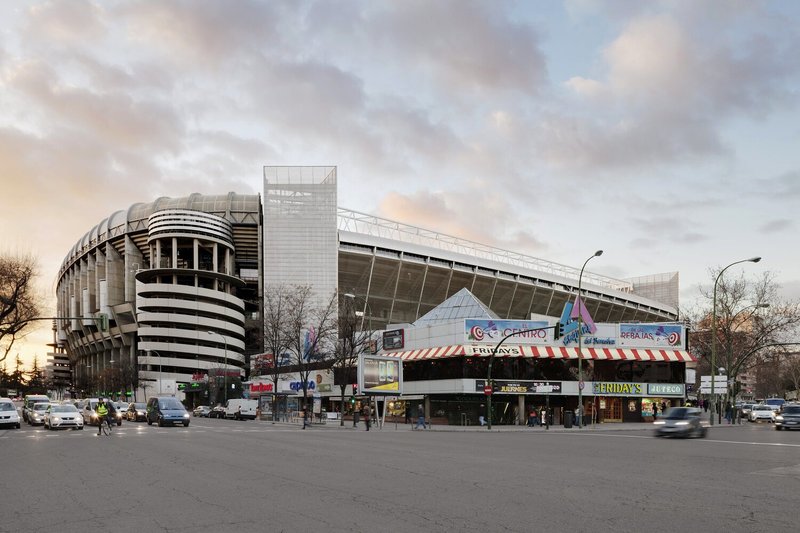
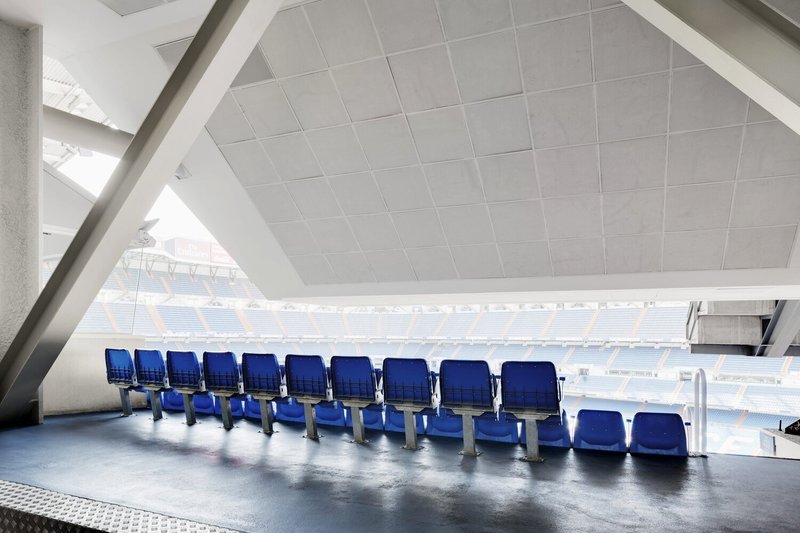
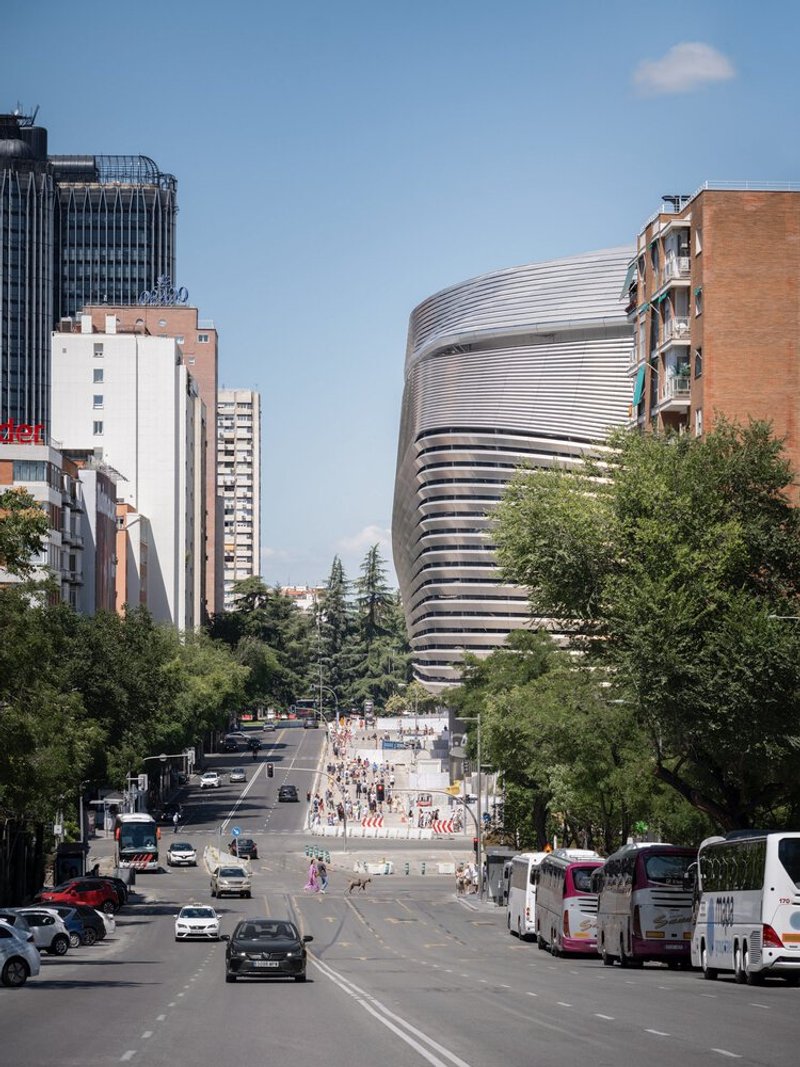
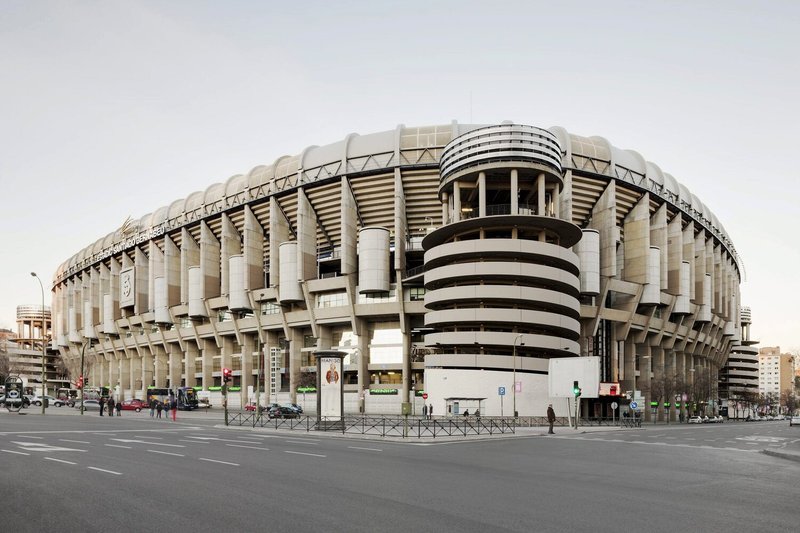
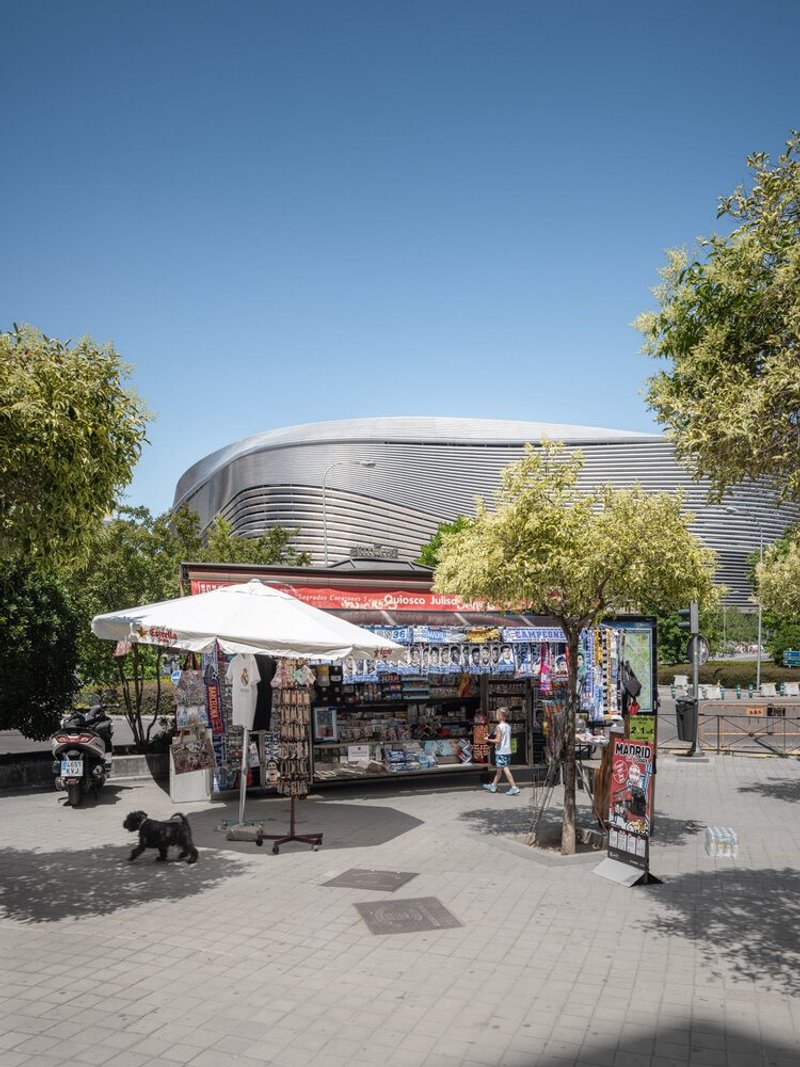
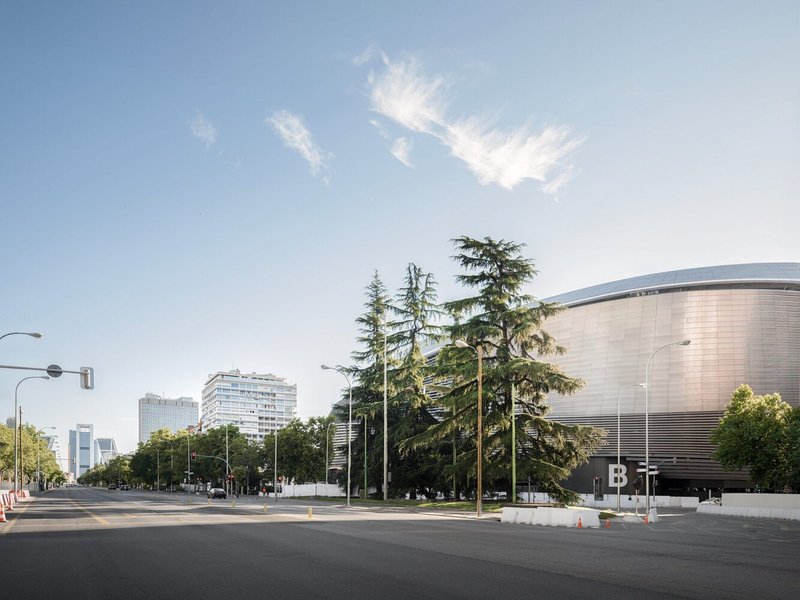
Originally opened in 1947, the Bernabéu Stadium had seen numerous renovations over decades. However, the recent redevelopment establishes a cohesive architectural vision, unifying the stadium’s disparate elements under a continuous, sculptural facade. The renovation not only increases capacity but also introduces state-of-the-art hospitality facilities, public attractions, and a landmark design that redefines Madrid’s skyline.
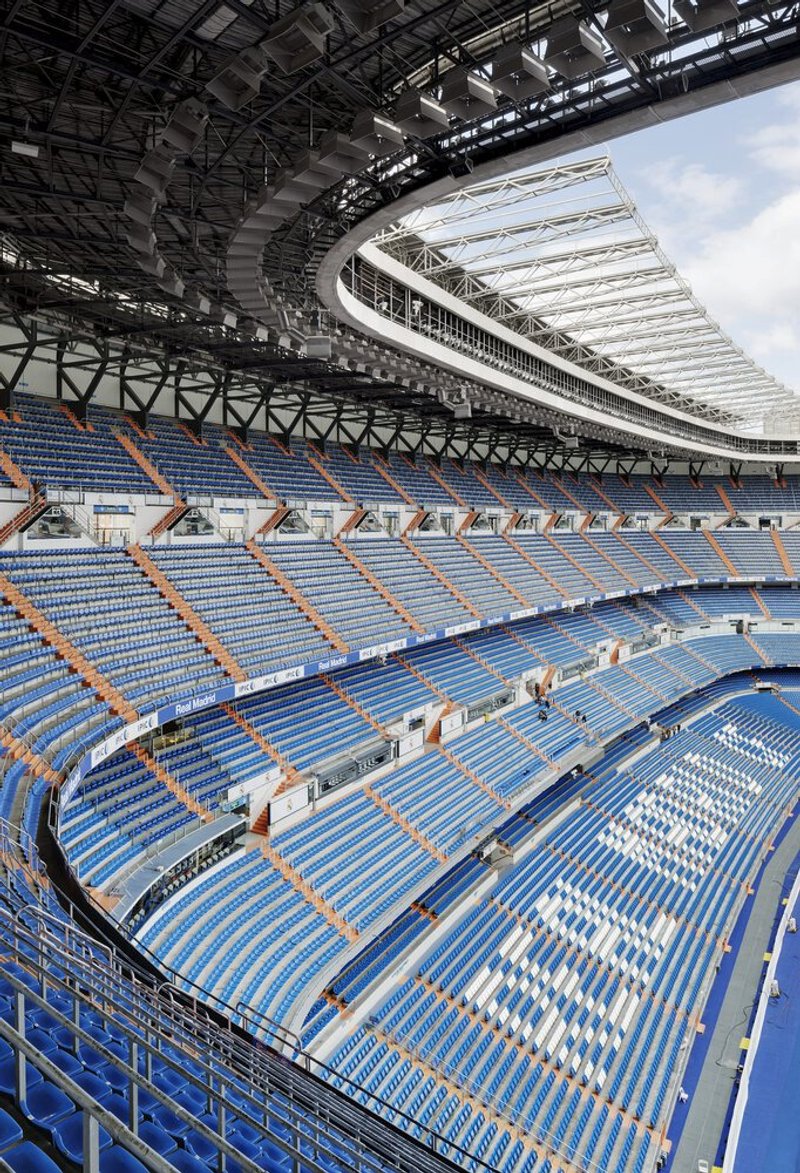
Expanding Capacity and Modern Amenities
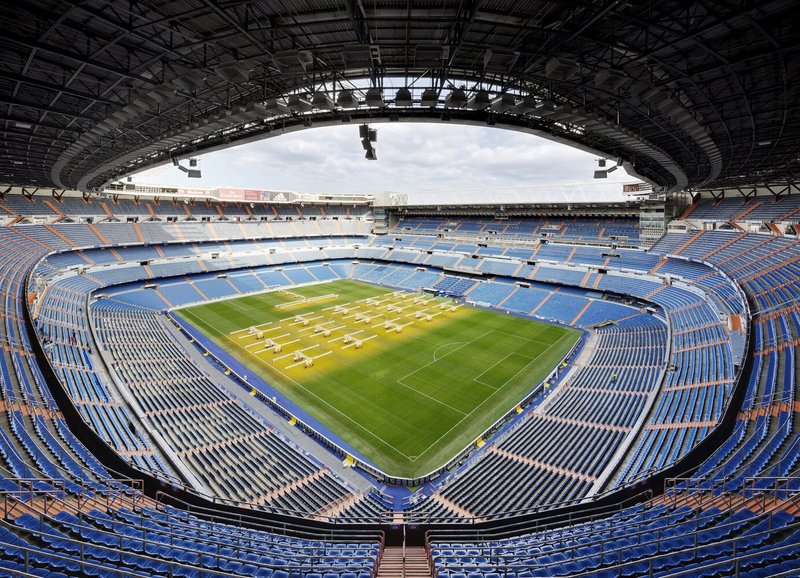
The renovation expands the stadium’s capacity from approximately 80,000 to nearly 83,000 spectators. A new upper level accommodates 240 VIP and hospitality lounges, offering an additional 1,600 premium seats. This innovative upgrade enhances the spectator experience, blending luxury with accessibility. The stadium debuted its multifunctional capabilities with international superstar Taylor Swift, who performed two concerts in May, showcasing the arena’s versatility beyond traditional sporting events.
Integrating Public Spaces and Cultural Experiences
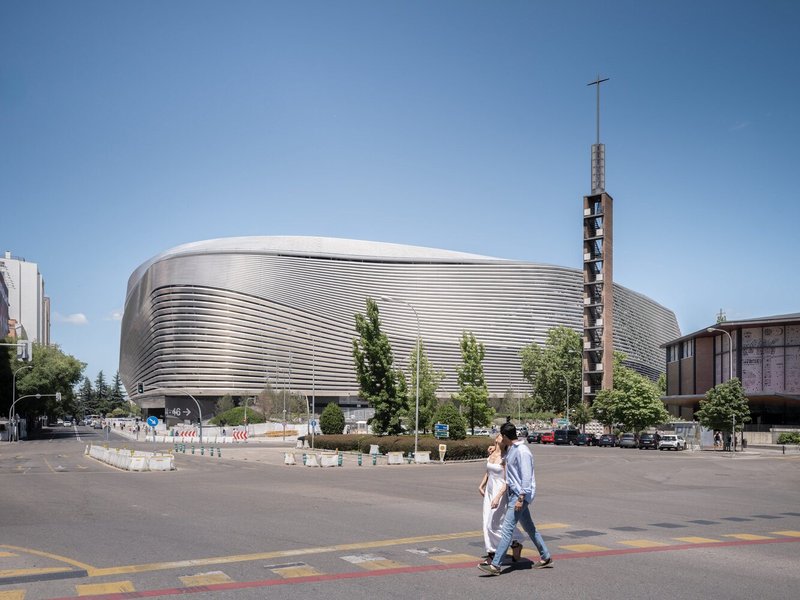
Beyond hosting football matches, the Bernabéu now functions as a public cultural destination. A dedicated skywalk allows visitors to explore the stadium from unique vantage points, while the Real Madrid Museum, retail outlets, and restaurants are fully integrated within the new continuous facade. This strategic design ensures that the stadium remains an active and vibrant part of Madrid’s urban life, even when matches are not scheduled.
Architectural Approach and Structural Innovation
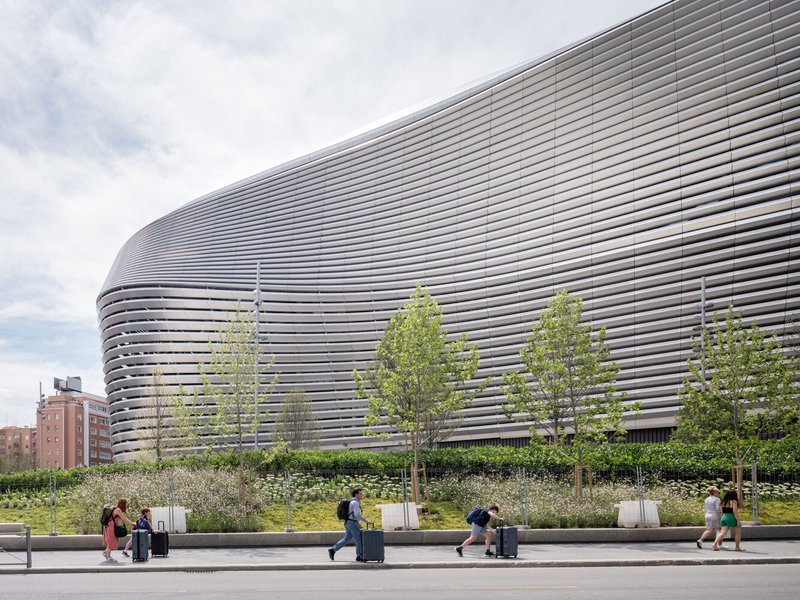
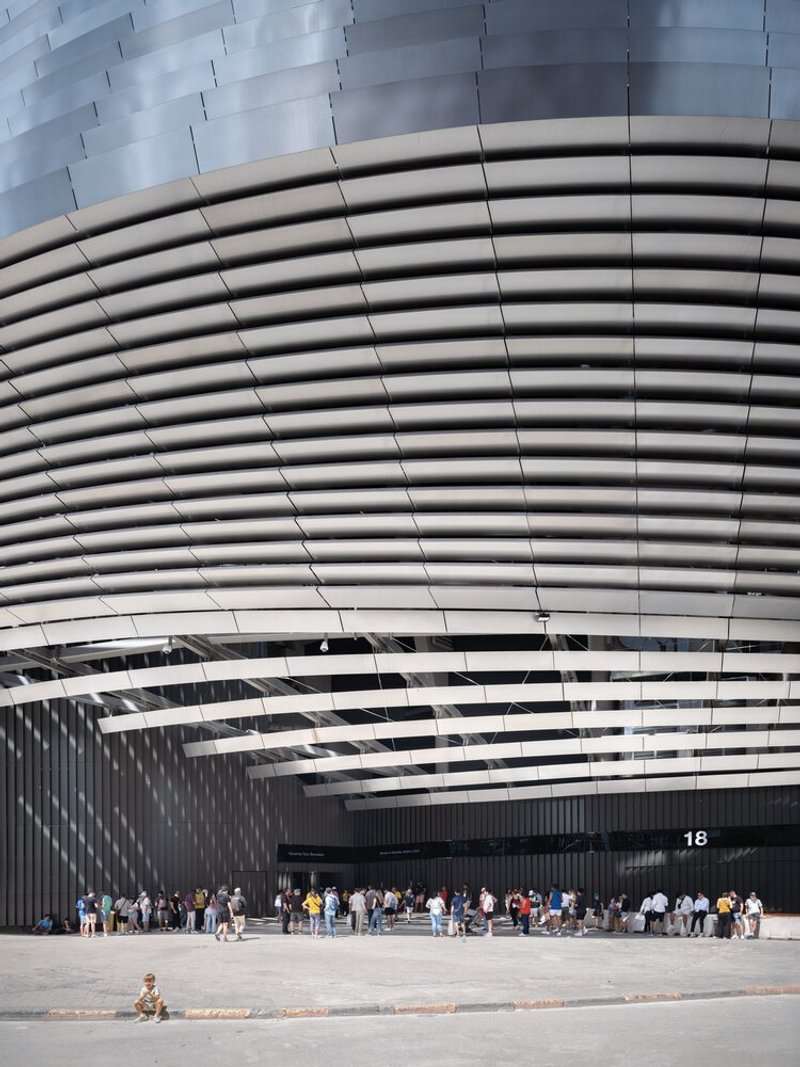
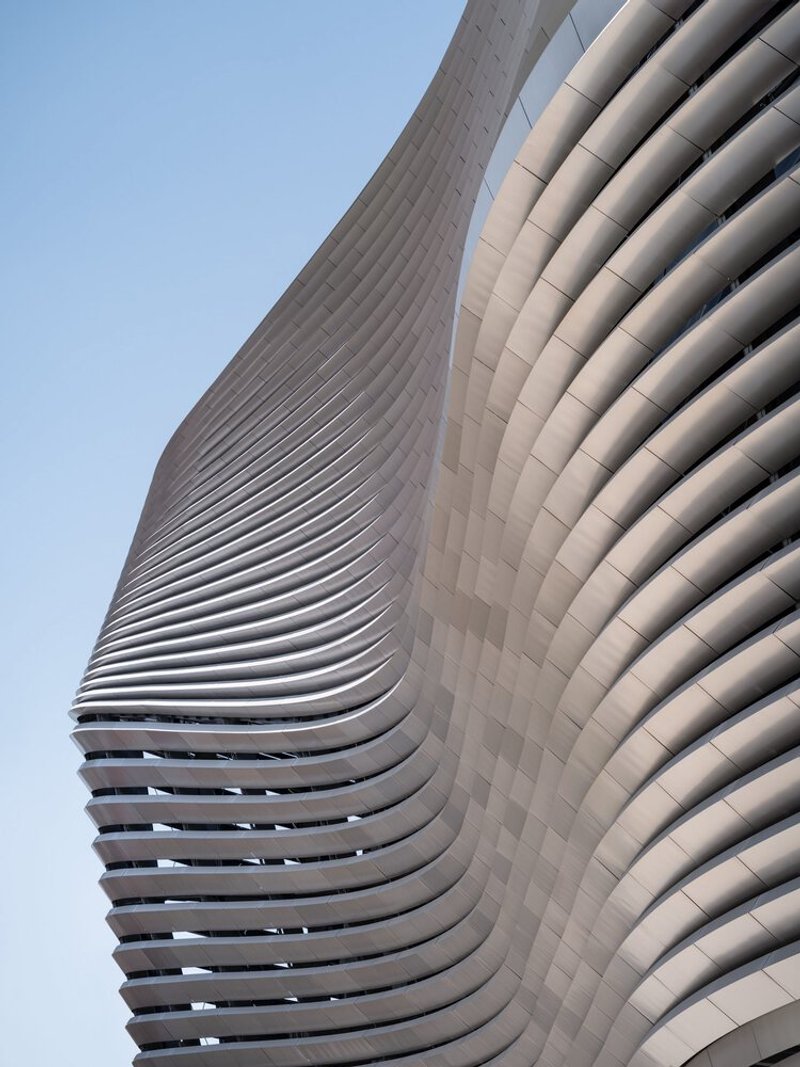
The stadium’s exterior geometry combines form-finding and functional design, resulting in a fluid, sculptural presence. Curved stainless steel louvers wrap the stadium, creating a shimmering facade that adapts to natural light, emphasizing its status as a Madrid landmark. Horizontal gaps between metal slats facilitate natural ventilation, ensuring comfort for spectators while maintaining energy efficiency.
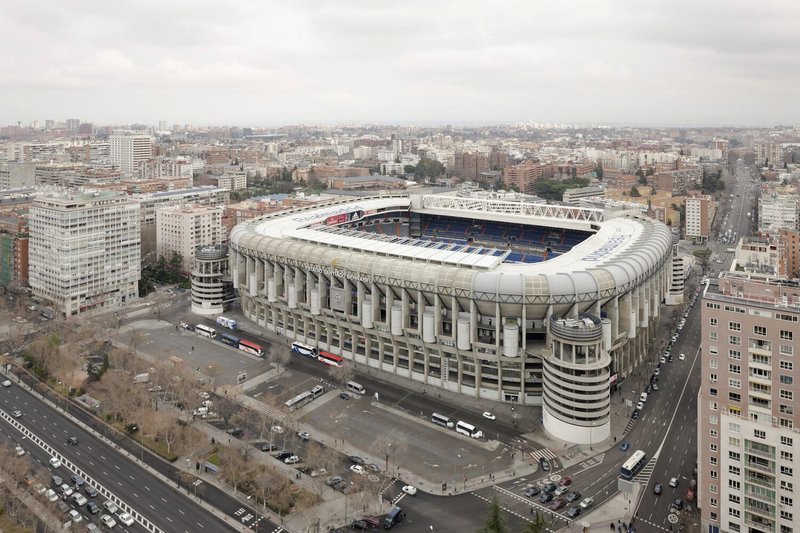
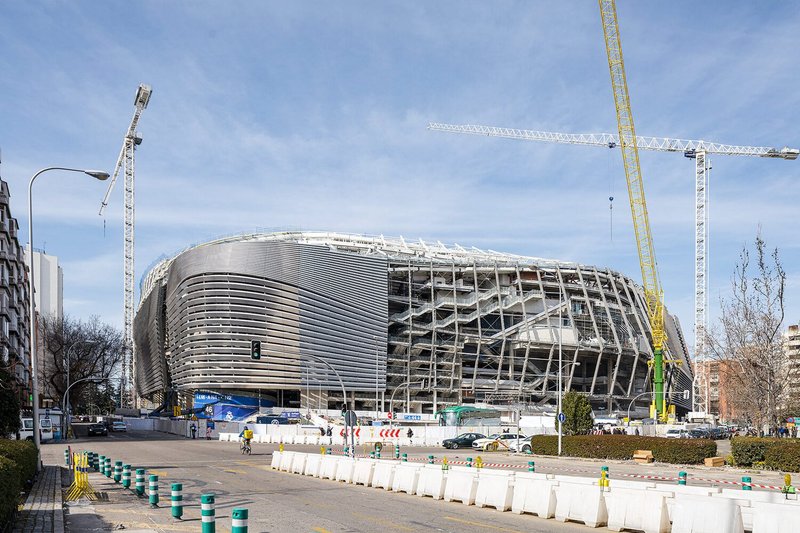
The construction process was carefully staged to avoid interrupting the soccer schedule. After the commission was awarded in 2014, the Spanish construction firm FCC began work in June 2019. During the COVID-19 pandemic, with games played in empty training facilities, construction accelerated, allowing uninterrupted progress. The roof structure, completed in May 2023, marked a milestone in the stadium’s modernization, with home games resuming while final construction works continued.
Sustainable and Adaptive Design
The renovation emphasizes adaptive reuse and sustainability, retaining the stadium’s historic legacy while integrating modern materials and technologies. Key products, including Kalzip roofing systems, were employed to enhance structural performance, durability, and aesthetics. The transformation demonstrates how historical stadiums can be adapted to contemporary needs without losing their cultural significance.
The Santiago Bernabéu Stadium conversion stands as a model for modern stadium design, balancing heritage, innovation, and multifunctionality. It is not only a home for football but also a landmark attraction, cultural hub, and architectural icon in the heart of Madrid.
Location: Madrid, Spain Architects: gmp Architects, L35 Arquitectos, Ribas&Ribas Arquitectos Completion Year: 2024 Photographers: Marcus Bredt, Imagen Subliminal Key Manufacturers: Daplast, Kalzip
All photographs are works of
Marcus Bredt, Imagen Subliminal




Popular Articles
Popular articles from the community

Indiesalon Carves a Plywood Cave into a Seoul Bistro's Second Floor
Munhwa Bistro's second Seongsu branch wraps diners in a laminated timber vault laced with colored light and mirror illusions.
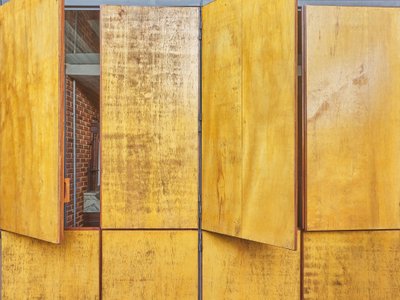
gru.a Builds a 70 m² Timber Shelter That Opens Like a Farm Door in Brazil's Valley of the Vines
In the mountainous region near Rio de Janeiro, a compact retreat uses plywood panels and deep eaves to blur the line between inside and out.
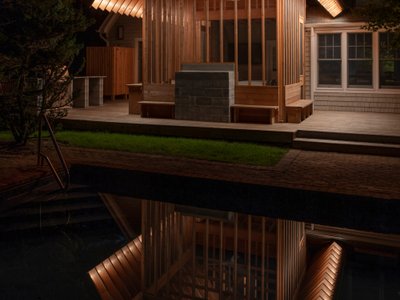
BLDUS Turns a 250-Square-Foot Screened Porch into a Pine Forest Temple in East Hampton
A gabled cedar pavilion mimics the rhythm of surrounding pines, anchoring a 1990s wooded home to its hollow in Long Island.
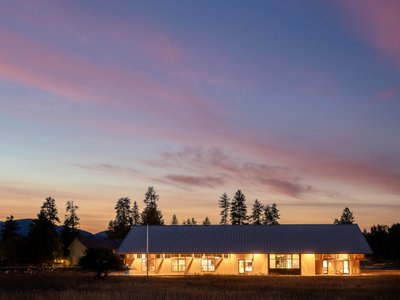
Johnston Architects Reimagines the Methow Valley Hay Barn as a Small-Town Library in Winthrop
A 7,300-square-foot timber library channels the region's agrarian vernacular to serve a rural Washington community of 400 year-round residents.


Similar Reads
You might also enjoy these articles

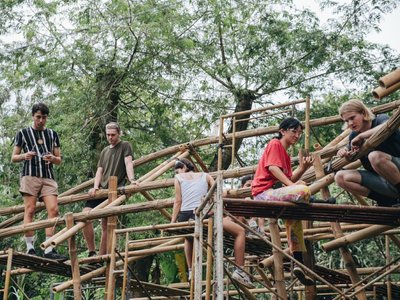
Bamboo Housing Challenge 2026: Design Affordable, Sustainable Homes Using Bamboo
An international design competition by Bamboo U and IBUKU inviting architects and designers to reimagine affordable housing using bamboo — with the winning design built full-scale in Bali.

Computational Design & Education: Beegraphy Design Awards Introduces 7th Category (Featuring Jiyun's Innovative Approach)
Dive into Beegraphy’s 7th Design Awards category, where computational design meets education to create immersive, interactive learning tools, inspired by Jiyun’s work.

From Parametric Lighting to Urban Furniture: Join the 2nd Workshop in Beegraphy’s Computational Design Series
Dive into Cutting-Edge Design Techniques and Practical Applications with Industry Experts

Introducing Sphere by UNI: Pioneering a New Era in AEC Industry
Unlocking Global Potential with BIM and Agile Management

Explore Architecture Competitions
Discover active competitions in this discipline




The International Standard for Design Portfolios


The Global Benchmark for Architecture Dissertation Awards


The Global Benchmark for Graduation Excellence


Challenge to design a barrier free sports center
Comments (0)
Please login or sign up to add comments
No comments yet. Be the first to comment!