

School 36 Lisbon: Montessori-Inspired Educational Architecture by José Adrião Arquitetos
Montessori-inspired School 36 in Lisbon features open, flexible classrooms, heritage preservation, and strategic extensions improving acoustics and student experiences.


School 36, located in Lisboa, Portugal, stands as a remarkable example of educational architecture integrating modern pedagogy with heritage preservation. Originally designed in 1972 by Raul Ceregeiro and executed by Fernando Gomes da Silva, the school’s construction was interrupted in 1975, resumed in 1982, and officially inaugurated in 1984. In 2019, José Adrião Arquitetos undertook a comprehensive renovation and extension, enhancing its functionality while maintaining its architectural and educational integrity.


The school spans 9,730 m², serving both elementary and middle school students. Its design closely follows the Montessori Method, emphasizing child independence, self-directed learning, and respect for natural cognitive, social, and physical development. Drawing inspiration from educational architecture in the United Kingdom and Sweden, the building features open, interconnected spaces that encourage interaction and flexibility, while classrooms maintain direct visual and physical connections to the exterior, reinforcing a sense of openness and connection to nature.


The architecture of School 36 holds heritage significance for its coherent translation of Montessori principles into spatial design. Corridors and classroom walls do not reach the ceiling, allowing for natural ventilation and visual continuity, though this openness initially presented acoustic challenges. To address these, José Adrião Arquitetos strategically added three new programmatic areas: a Gym, a Cafeteria/Kitchen, and an Exterior Covered Recreation Area. These additions solved functional and acoustic issues while preserving the original spatial intent.


The renovation honors the school’s original educational vision, maintaining its light-filled, permeable environments, while improving comfort and usability for students and staff. The project demonstrates how architectural interventions can respect historical context, enhance learning environments, and integrate modern educational needs without compromising the building’s identity.


All photographs are works of
Nuno Almendra


Popular Articles
Popular articles from the community


Manzana Morphosis: Stretching Barcelona's Grid into a Living Landscape for 2050
A radical reworking of the Eixample manzana turns density into a tool for generous public space, vertical ecology, and environmental performance.

Temporary Home for Dogs: A Reversed Zoo Rethinks Animal Shelter Architecture
In Bucharest, a sinuous corridor and freed landscape flip the logic of containment, designing a shelter that works to make itself unnecessary.

Singing Woman: Contemporary Architecture Inspired by Estonia’s Voice and the Sea
Singing Woman turns Estonia’s song culture into flowing opera house architecture, blending public life, landscape, sea, and national memory.

Opera by the Sea Estonia: Three Shells Dissolving Architecture into Tallinn's Coastline
A winning opera house proposal replaces monumental form with interconnected shells that blur the boundary between building, park and Baltic Sea.

Similar Reads
You might also enjoy these articles

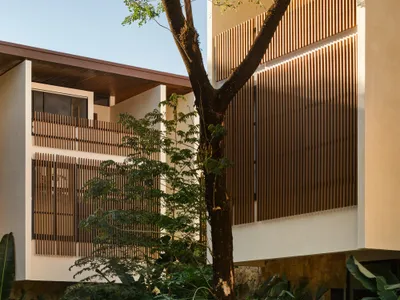
FAMM Arquitectura Organizes Ten Villas Around Courtyards and Jungle in Nosara, Costa Rica
El Molino pairs two elongated volumes with deep overhangs and timber louvers to build a compact coastal community five minutes from the beach.
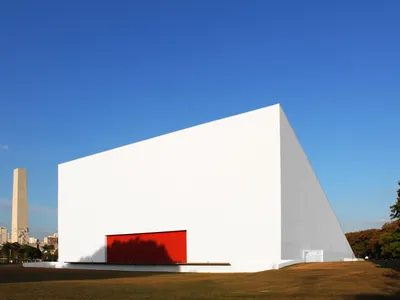
Oscar Niemeyer's Ibirapuera Park Pavilions Define São Paulo's Cultural Identity in Concrete and Curve
A constellation of modernist volumes set within São Paulo's most important urban park, conceived for the city's 400th anniversary in 1954.
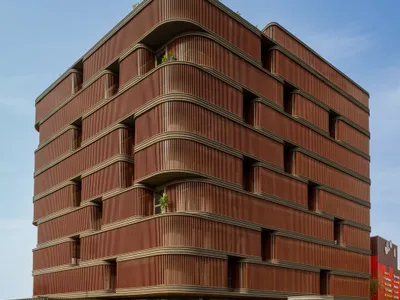
Sanjay Puri Architects Wraps a Jaipur Office Tower in Capsule-Shaped Green Buffers
A nine-level climate-responsive workplace near Jaipur Airport uses stacked planter terraces and aluminium screens to fight 40°C heat.
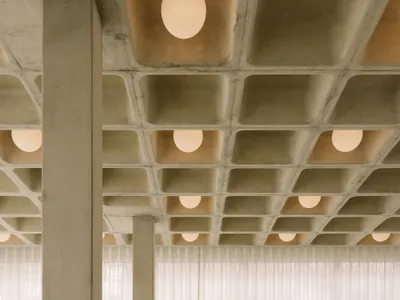
RHO Converts a Berlin Spree-Side Industrial Courtyard into Enkime's 1,000 m² Agency Headquarters
A social media agency's new home in Charlottenburg trades glossy branding for concrete waffle ceilings, glazed tile, and sheer curtains.

Explore Blocs Competitions
Discover active competitions in this discipline

Challenge to design public laboratory

Challenge to reimagine the Iron Throne

Photograph architecture without architects

Illustrate the lost glory of Angkor Wat - Render Challenge
Comments (0)
Please login or sign up to add comments
No comments yet. Be the first to comment!