
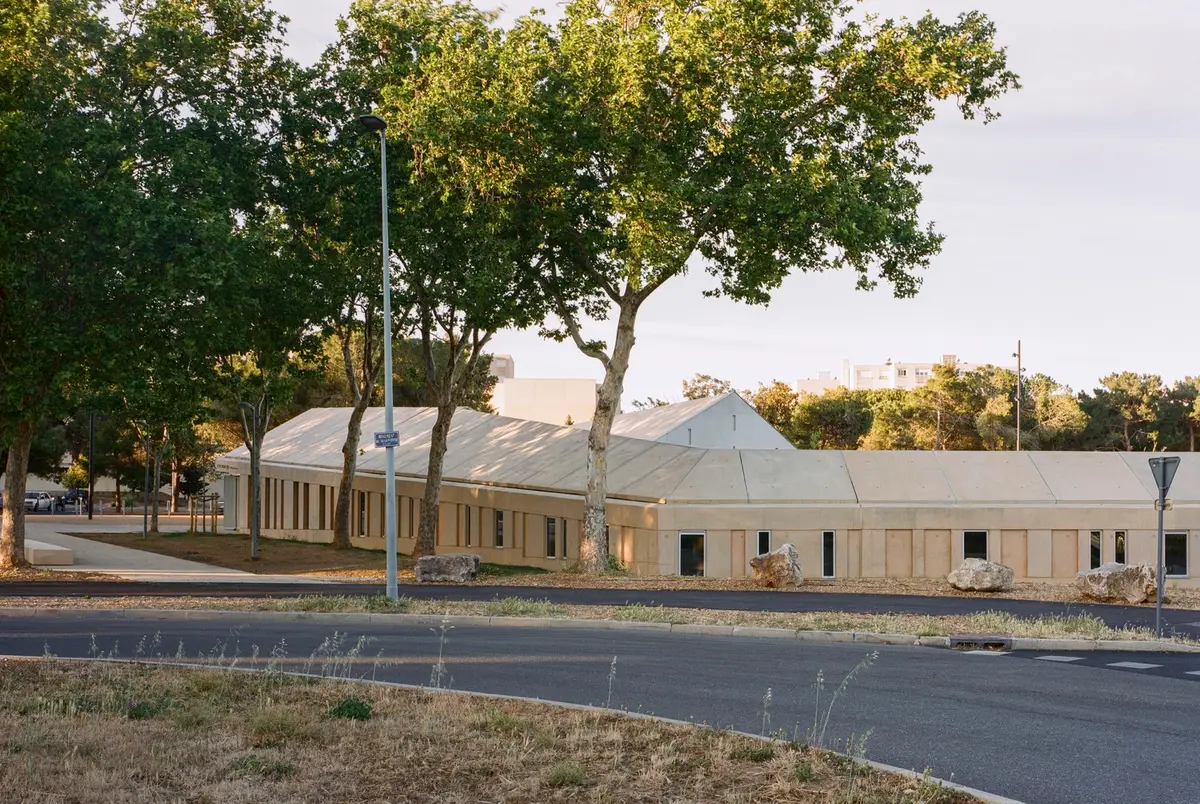
School Group Samuel Paty in Béziers: A Contemporary Educational Campus by Ateliers O-S Architectes and NAS Architecture
Samuel Paty School in Béziers features concrete massing, porous courtyards, metal structures, and landscaped playgrounds, creating a child-scaled, light-filled learning environment.


The School Group Samuel Paty in Béziers, France, designed by Ateliers O-S architectes and NAS architecture, represents a contemporary approach to educational architecture that merges urban presence, spatial openness, and child-centered design. Completed in 2023, the 3,800-square-meter school complex demonstrates how architecture can balance solid urban mass with interior permeability, creating a learning environment that feels both protected and connected to nature.
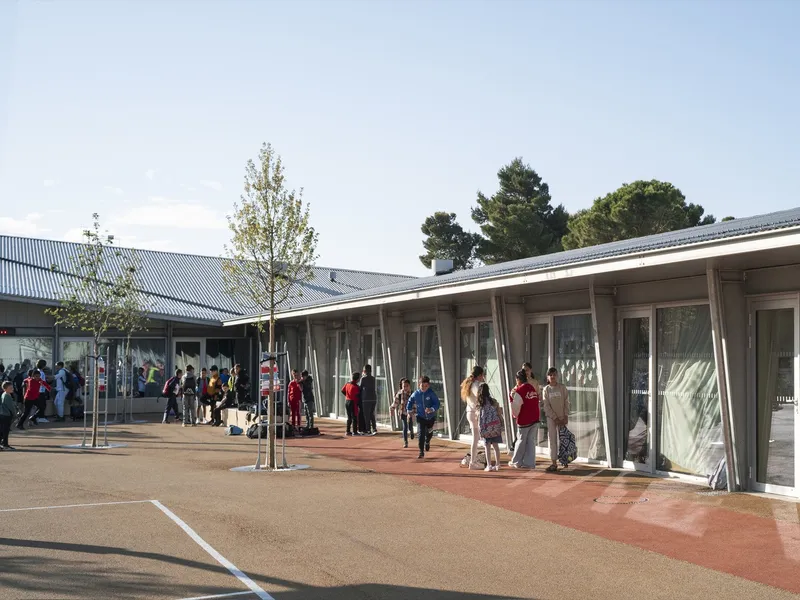
Located in the Devèze district, the project was carefully conceived to respond to the site's topography, urban context, and environmental qualities. Through its thoughtful design, the school becomes more than an educational facility: it becomes an urban landmark and community space where architecture supports learning, interaction, and well-being.
Architectural Concept: Massiveness and Porosity
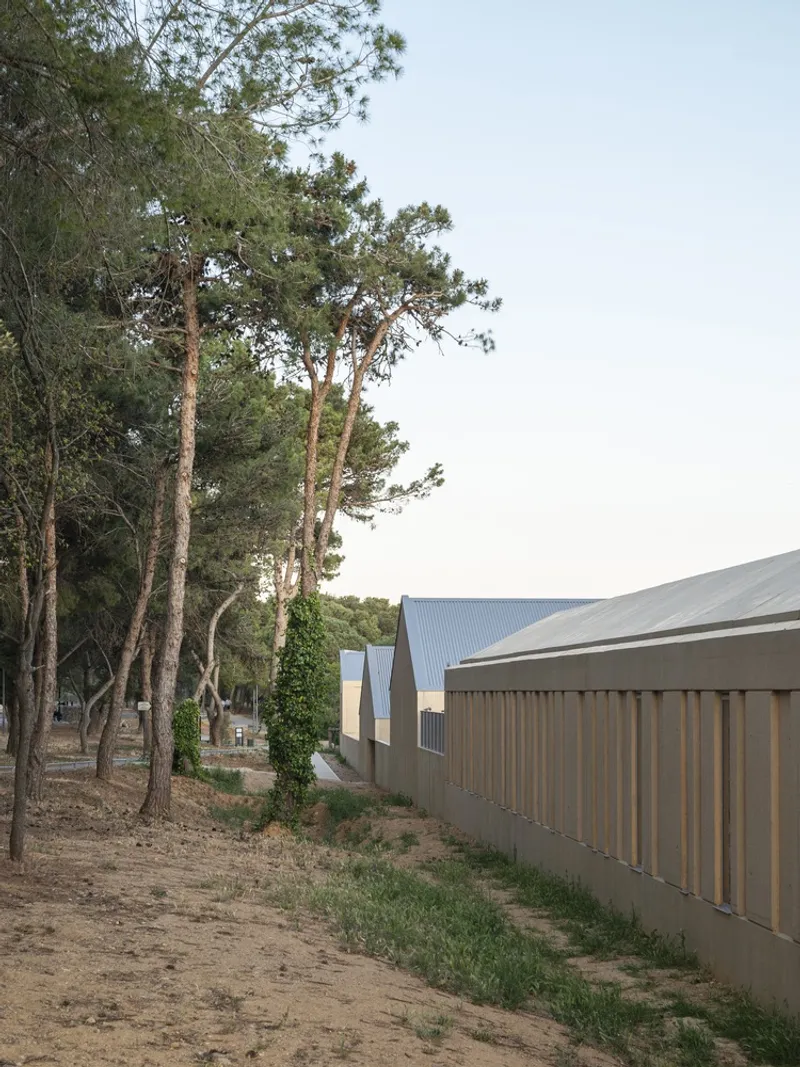
The design of the Samuel Paty School Group is guided by a central architectural principle that combines massiveness and porosity. The building presents a strong, elongated volume that adapts to the natural slope of the site while maintaining a clear urban identity.
Rather than rising vertically, the architects chose to develop the primary school entirely on a single ground floor, ensuring that the scale remains accessible and comfortable for children. This approach reinforces a human-scale environment where circulation and classrooms remain easy to navigate.
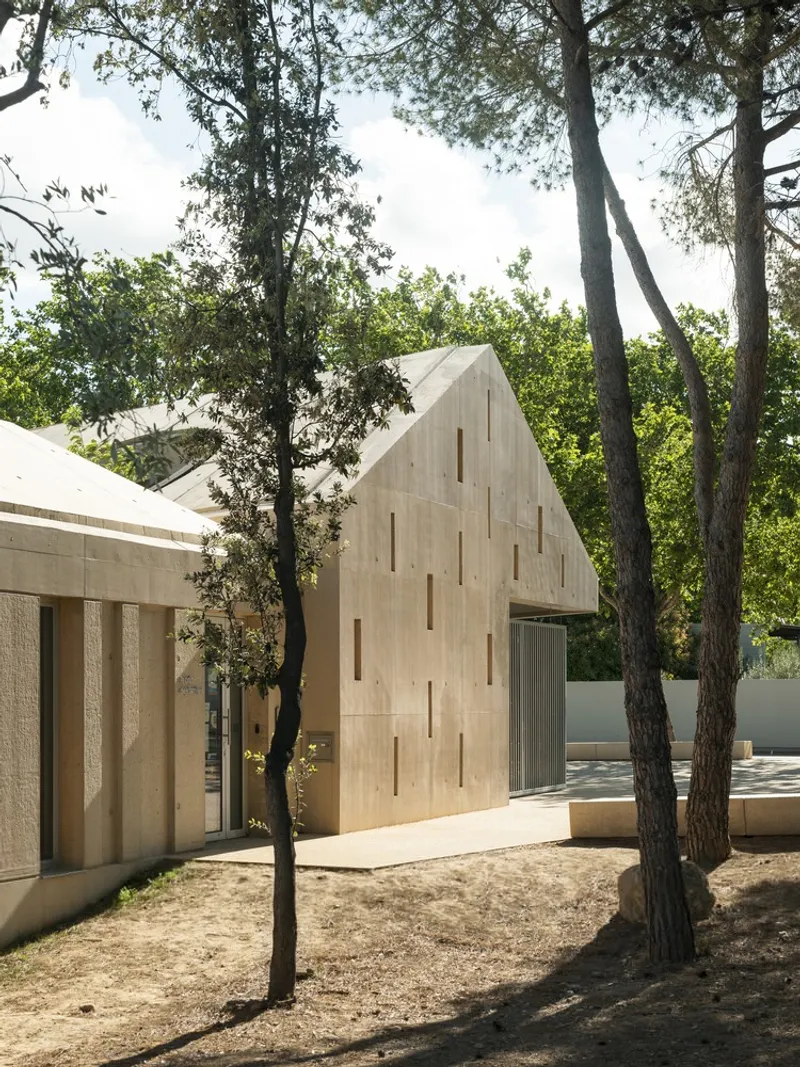
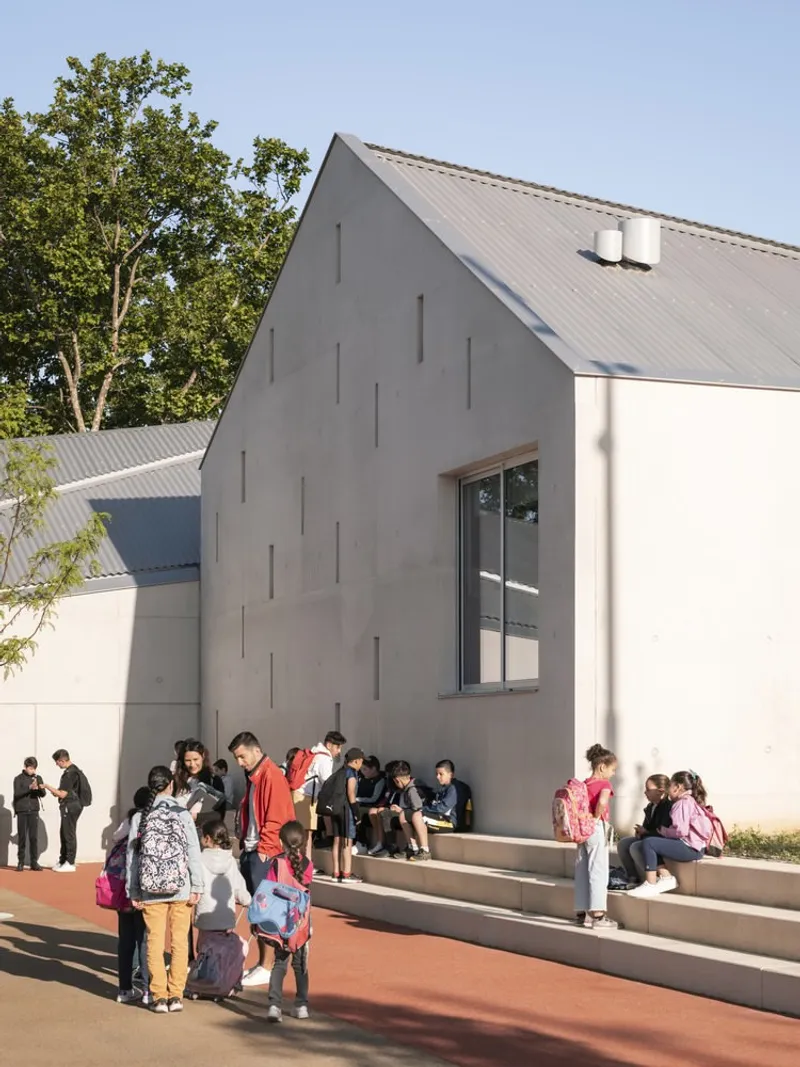
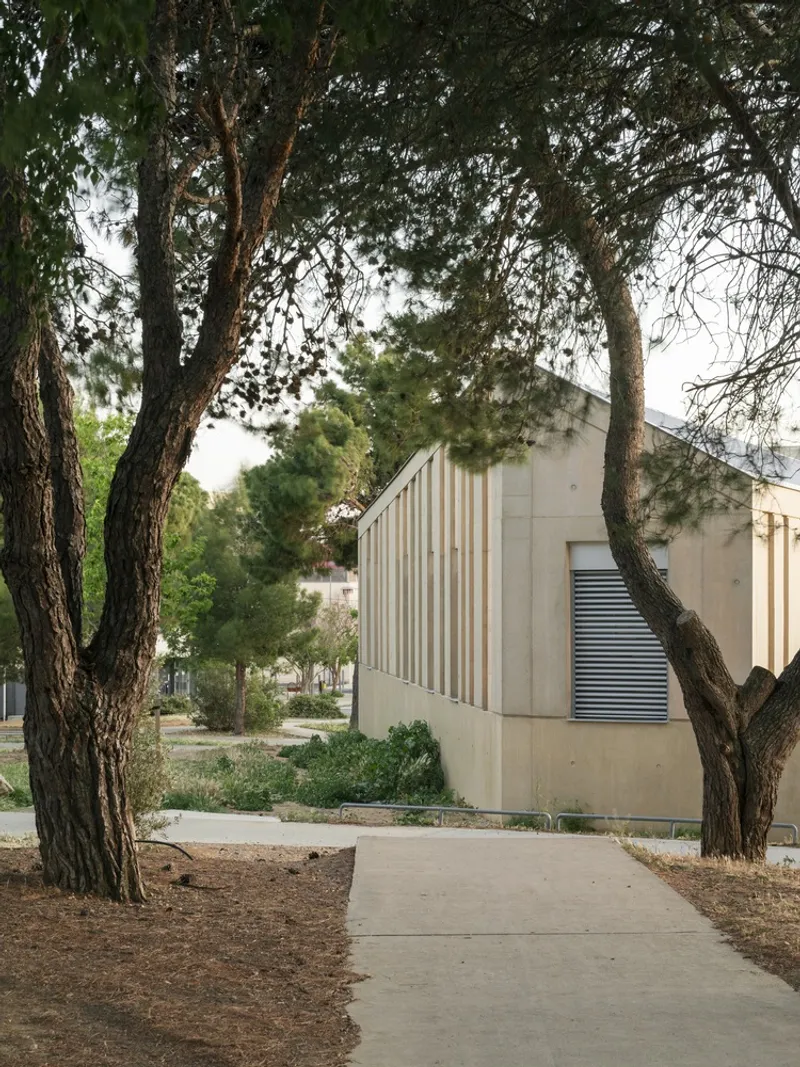
An important architectural feature of the project is the roof, which acts as a fifth façade. Because the building sits within a visible urban landscape, the roof becomes as visually significant as the building's vertical elevations. The use of sanded concrete unifies the various architectural surfaces, creating a cohesive material language that merges walls, volumes, and roof planes into a single sculptural form.
Interior Spatial Organization and Material Expression
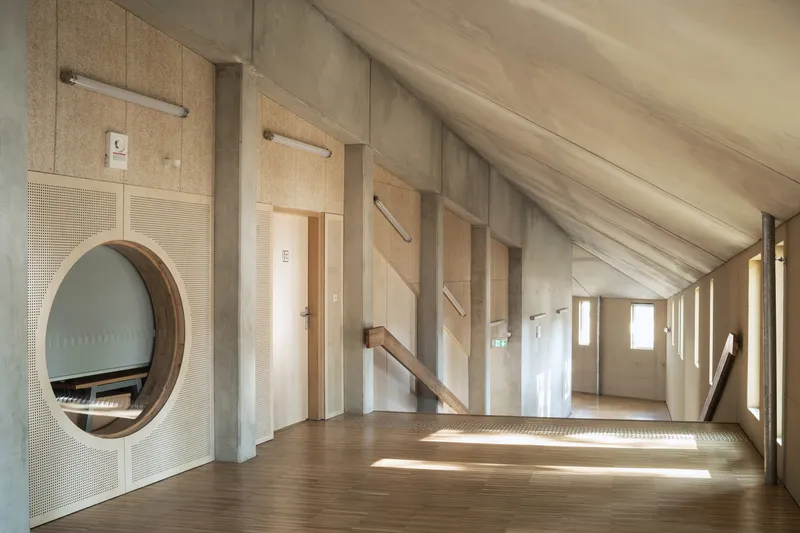
Inside the school, the architectural language shifts toward lightness and spatial fluidity. The linear composition of the building organizes the interior program while maintaining a sense of openness and clarity.
Corridors follow the gentle curve of the roof structure, guiding circulation through the building while maintaining constant contact with the building's mineral materiality. The robustness of concrete surfaces is softened by wooden structural elements, which introduce warmth and tactile contrast within the educational environment.
As students move through the corridors, the classrooms open generously toward the playgrounds and outdoor spaces. The interior spaces benefit from high ceilings and natural light, creating bright and stimulating environments that encourage learning and social interaction.
Structural Strategy: A Hybrid Architectural System
A defining characteristic of the project is its dual structural system, which creates a strong architectural contrast between the building’s exterior and interior.
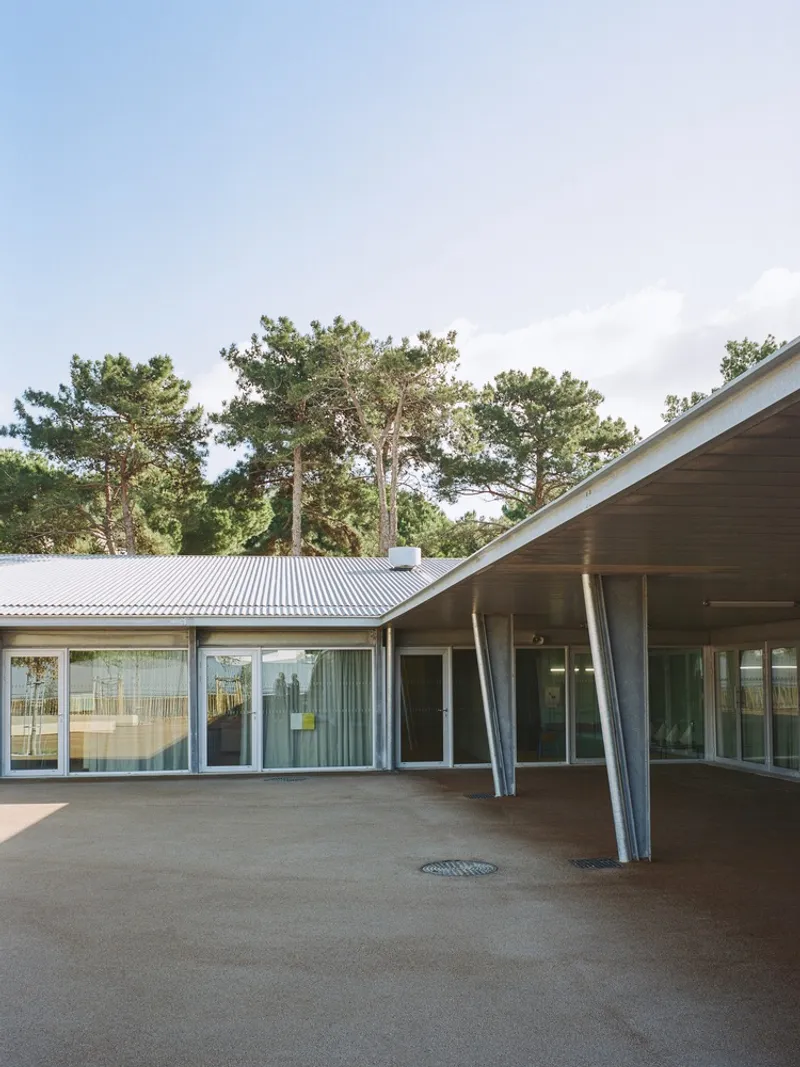
On the city-facing side, the architecture appears solid, thick, and mineral, reinforcing the building's protective presence within the urban context. In contrast, the courtyard-facing side adopts a lighter metal structure, allowing greater flexibility, openness, and adaptability for the educational spaces.
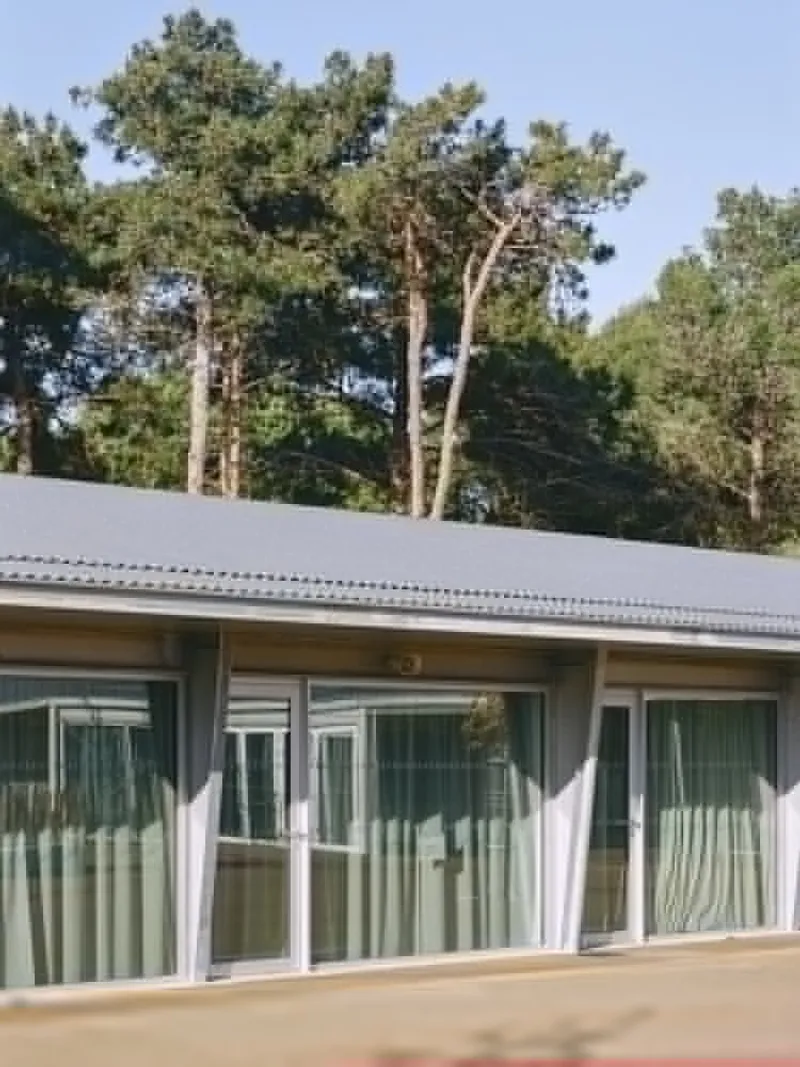
Large metal gantries structure the building, supporting glazed frames that fill the structural grid and allow daylight to penetrate deep into the learning areas. Above these spaces, a sheet metal roof shelters classrooms and circulation areas while maintaining the building’s distinctive architectural identity.
This combination of heavy and light construction systems results in a hybrid architecture that is both robust and adaptable, an ideal solution for contemporary educational facilities.
Outdoor Learning Landscape and Play Spaces
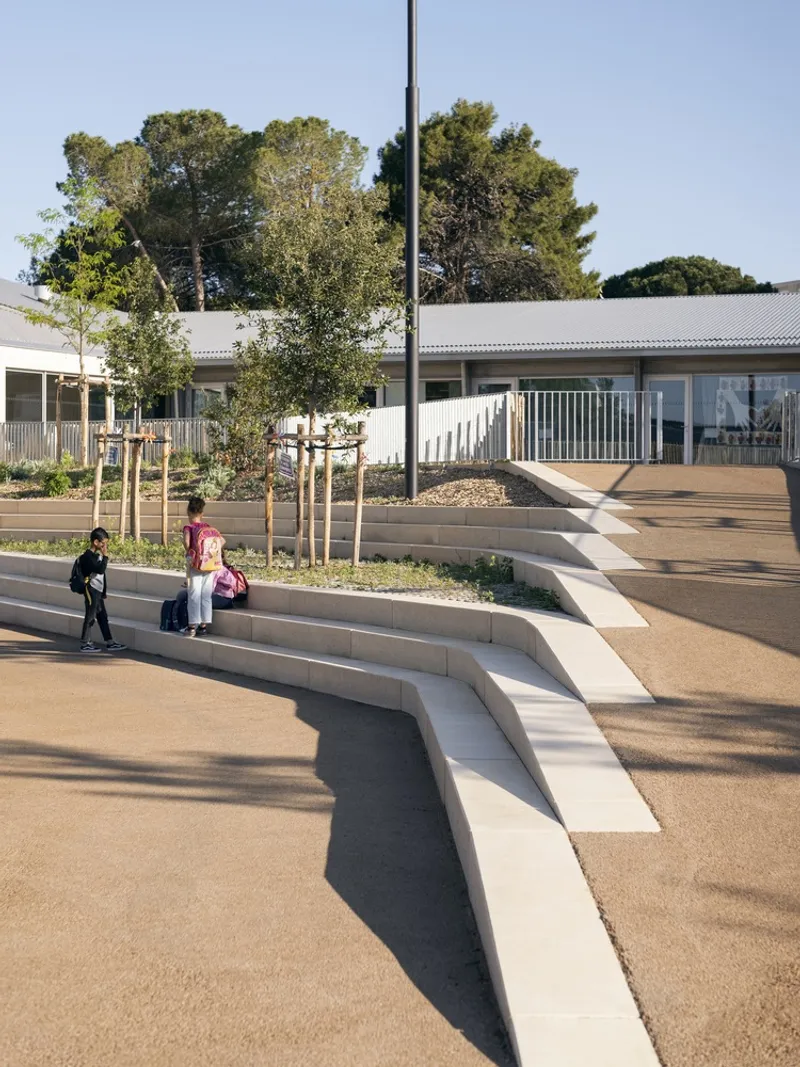
The interior courtyards and landscape design are essential components of the school’s spatial experience. Designed in collaboration with Atelier Gama, the outdoor environment integrates playgrounds, learning gardens, and relaxation zones into a cohesive landscape.
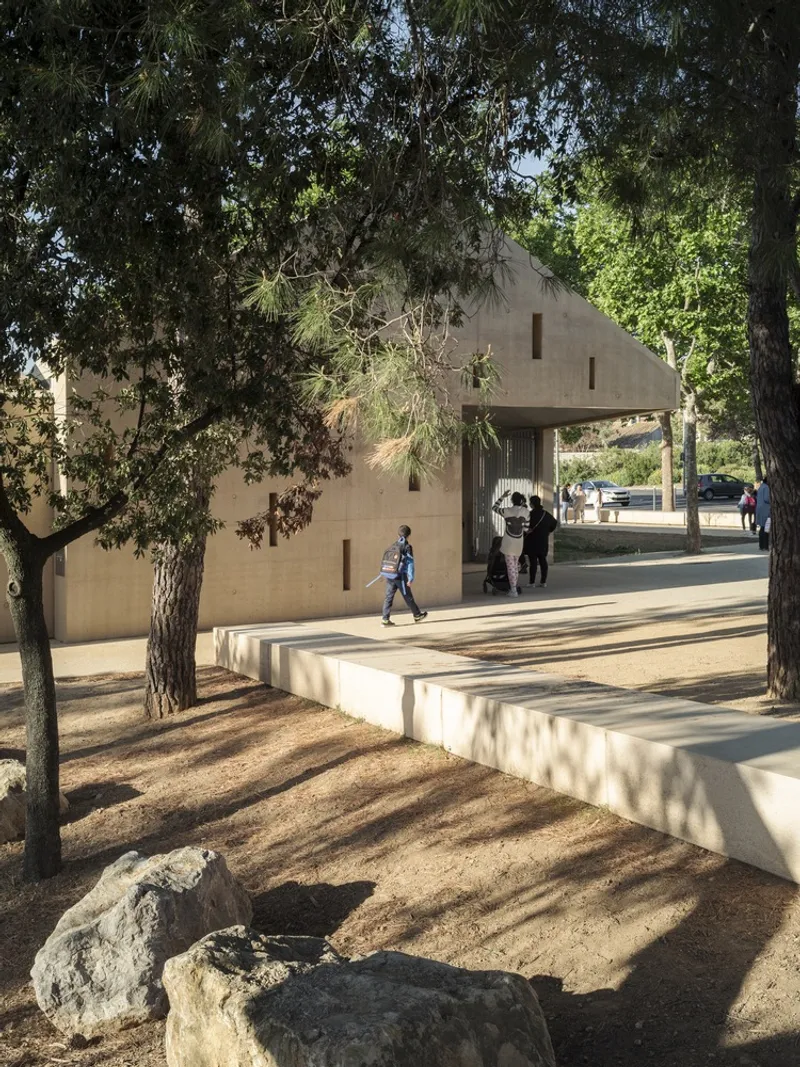
Rather than treating outdoor spaces as secondary elements, the architects conceived them as a topographical extension of the building itself. Terraces, slopes, and play surfaces interact with the architecture to create a dynamic educational landscape where children can explore, learn, and interact.
This connection between architecture and landscape reinforces the school’s open and porous character, transforming the interior courtyard into a vibrant micro-environment that supports both formal and informal learning.
Preserving Nature: Integrating Existing Trees
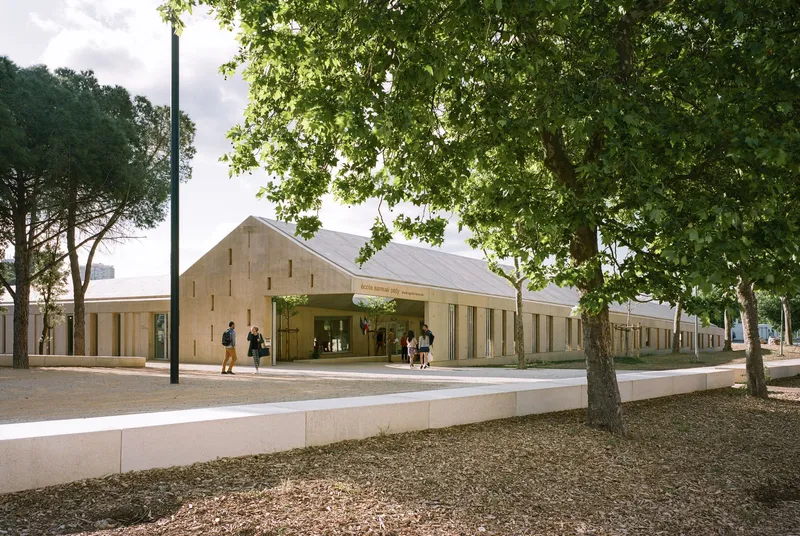
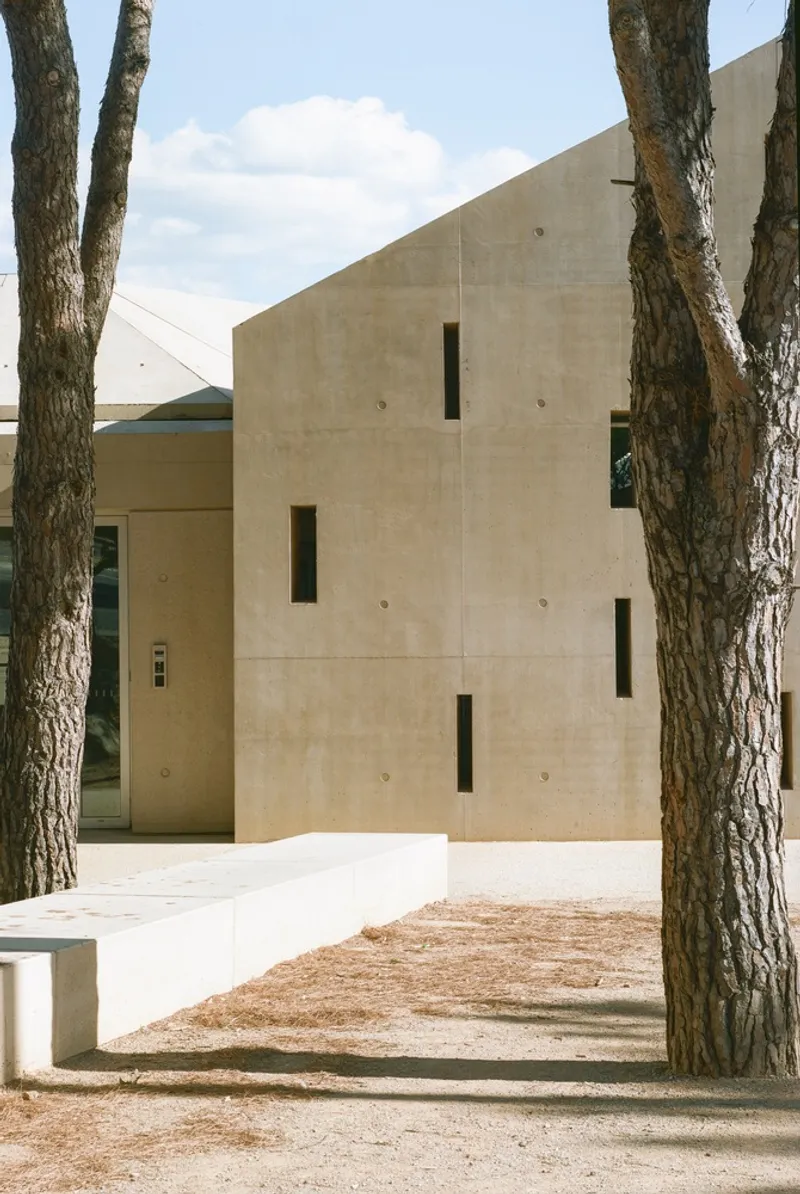
From the earliest design stages, the project prioritized the preservation of existing mature trees that shape the character of the site. These trees play a crucial role in defining the school's outdoor environment and ecological identity.
The main entrance forecourt is located at the intersection of two tree-lined paths, one defined by sycamore trees to the west and the other by pine trees to the north. This natural framework creates a welcoming arrival sequence for students and families.
A large concrete canopy with three circular skylight openings shelters the entrance area, providing protection from sun and rain while allowing natural light to filter through. Beneath this canopy, a landscaped garden guides visitors from the forecourt toward the interior halls of the school.
Welcoming and Collaborative Learning Spaces
Inside the building, the reception areas for preschool and primary school students are carefully designed to facilitate interaction between families, teachers, and students.
The preschool reception area is filled with natural light and provides direct visual connections to the playground, helping young children feel comfortable and oriented within the school environment.
Meanwhile, the primary school reception space incorporates a mezzanine overlooking the corridor, creating a double-height gathering area where circulation, play, and social interaction intersect.
These vertical and spatial variations introduce energy into the building and encourage spontaneous encounters among students and staff.
Administrative Organization and Safety
The administrative center of the school is strategically located to ensure visibility, accessibility, and safety. The principal’s office, positioned directly between the two reception halls, offers a wide view across the internal square and circulation spaces.
This central location allows staff to maintain close contact with families while also monitoring activities within the school grounds. Surrounding this office are the administrative facilities and the RASED support network, which provides specialized assistance for students facing learning challenges.
Circulation as Social Space
One of the most distinctive architectural features of the school is its generous circulation corridor, which wraps around the classrooms and functions as both a transitional and social space.
Rather than serving purely as a hallway, the corridor acts as a buffer zone between classrooms and the external environment. It provides views toward both the city and the internal courtyards, encouraging visual connections between different parts of the campus.
Architecturally, this corridor is designed as a sheltered yet open space, featuring a non-insulated external concrete façade that reveals the building’s distinctive tinted concrete surfaces. Meanwhile, thermal and acoustic insulation is integrated within a second internal façade located between the corridor and the classrooms.
This layered approach ensures comfort, durability, and acoustic performance, all essential qualities in contemporary educational architecture.
A Contemporary Model for Educational Architecture
The Samuel Paty School Group in Béziers stands as a thoughtful example of how architecture can support learning, safety, and community engagement. By combining robust materials, flexible structural systems, natural landscapes, and human-scale design, the project creates an environment where education extends beyond the classroom.
Through its balance of massive urban presence and porous interior spaces, the school demonstrates how architectural design can shape meaningful educational experiences while strengthening the relationship between architecture, landscape, and community.
All photographs are works of
Cyrille Weiner


Popular Articles
Popular articles from the community


Temporary Home for Dogs: A Reversed Zoo Rethinks Animal Shelter Architecture
In Bucharest, a sinuous corridor and freed landscape flip the logic of containment, designing a shelter that works to make itself unnecessary.

Opera by the Sea Estonia: Three Shells Dissolving Architecture into Tallinn's Coastline
A winning opera house proposal replaces monumental form with interconnected shells that blur the boundary between building, park and Baltic Sea.

Tsunami Convergenics: Turning Catastrophic Ocean Forces into Underwater Housing Infrastructure
A speculative underwater settlement off the coast of Onagawa, Japan, treats tsunamis and typhoons as energy sources rather than threats.

Cloaked Colonization: A Mobile Underwater Habitat That Moves Like a Fish
Micah Abaya's shortlisted EHC Pacific entry reimagines ocean settlement as a dispersed network of self-sustaining architectural organisms.

Similar Reads
You might also enjoy these articles

FAMM Arquitectura Organizes Ten Villas Around Courtyards and Jungle in Nosara, Costa Rica
El Molino pairs two elongated volumes with deep overhangs and timber louvers to build a compact coastal community five minutes from the beach.
Oscar Niemeyer's Ibirapuera Park Pavilions Define São Paulo's Cultural Identity in Concrete and Curve
A constellation of modernist volumes set within São Paulo's most important urban park, conceived for the city's 400th anniversary in 1954.
Sanjay Puri Architects Wraps a Jaipur Office Tower in Capsule-Shaped Green Buffers
A nine-level climate-responsive workplace near Jaipur Airport uses stacked planter terraces and aluminium screens to fight 40°C heat.
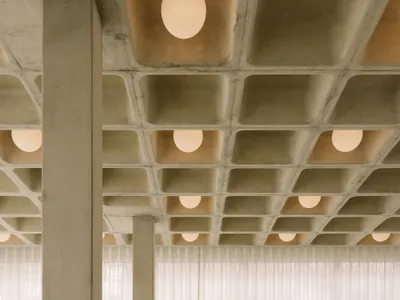
RHO Converts a Berlin Spree-Side Industrial Courtyard into Enkime's 1,000 m² Agency Headquarters
A social media agency's new home in Charlottenburg trades glossy branding for concrete waffle ceilings, glazed tile, and sheer curtains.

Explore Pont-Aven School Competitions
Discover active competitions in this discipline

Challenge to design public laboratory

Challenge to reimagine the Iron Throne

Photograph architecture without architects

Illustrate the lost glory of Angkor Wat - Render Challenge
Comments (0)
Please login or sign up to add comments
No comments yet. Be the first to comment!