
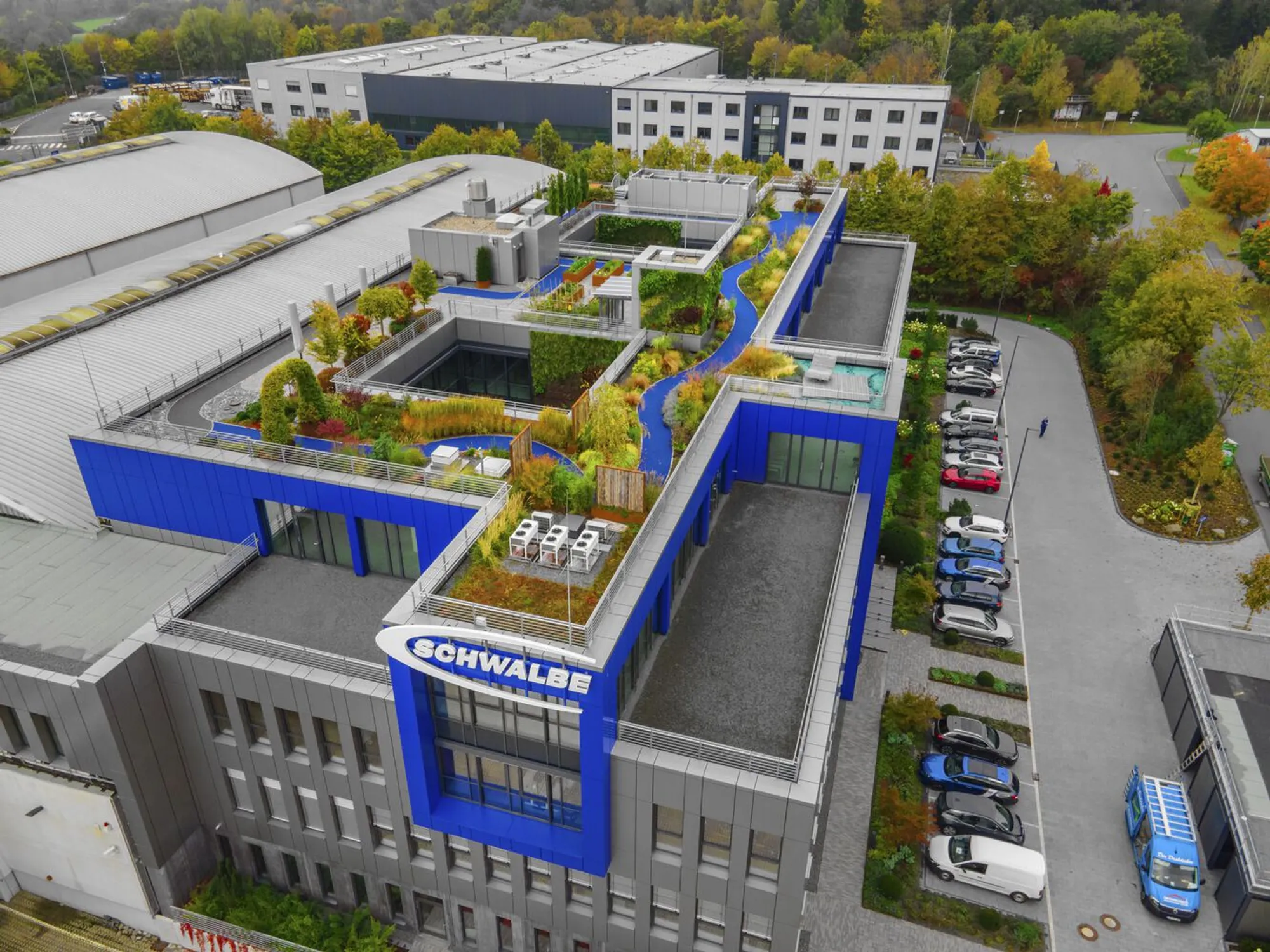
Schwalbe Hybrid Building by Archiproba: A Pioneering Cradle-to-Cradle Workplace for the Future of Sustainable Industry
Sustainable office blending cradle-to-cradle principles, recycled materials, rooftop gardens, and hybrid workspaces for Schwalbe’s innovative bicycle headquarters.


Set against the lush, rain-soaked backdrop of Reichshof, Germany, the Schwalbe Hybrid Building by Archiproba redefines what a corporate headquarters can be. Designed during the height of the pandemic and completed in 2023, this 2,200-square-meter project goes beyond conventional office typologies—embodying sustainability, functionality, and innovation with bold architectural intent.
Commissioned by Schwalbe, a leading manufacturer of bicycle tires known for its relentless innovation and environmental ethos, the project marks a shift in industrial architecture toward cradle-to-cradle design principles. Under the leadership of Tamara Muradova, Archiproba translated Schwalbe’s core values into a spatial experience that fuses work, lifestyle, and ecological responsibility.
Sustainable by Design
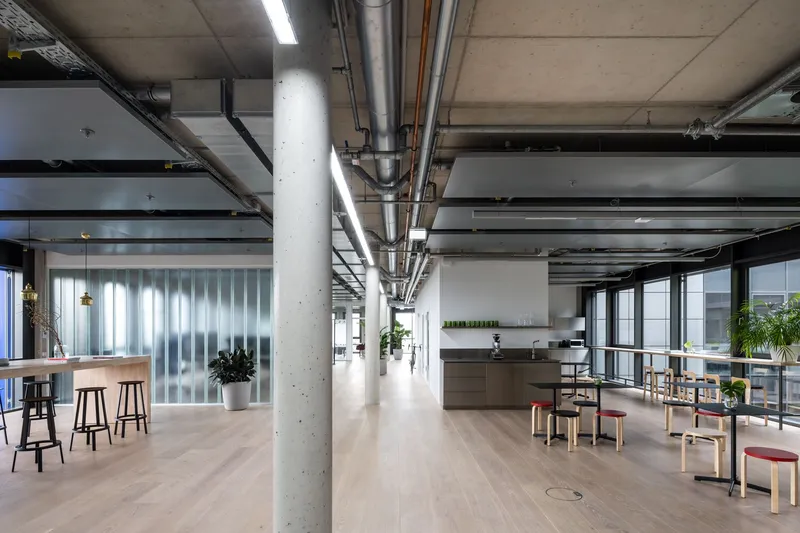
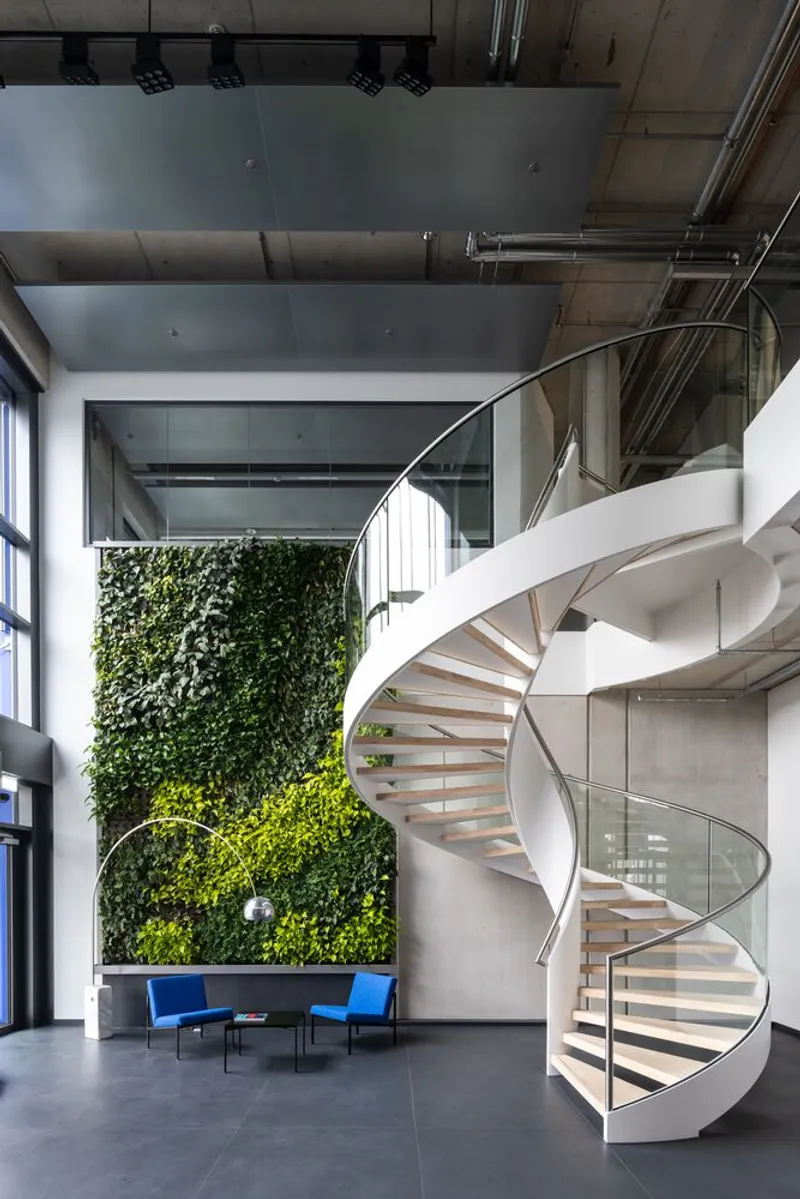
At the heart of the design philosophy is an ambitious sustainability agenda: 98% of the building materials are recyclable, with 100% of the concrete and steel designed for reuse. A highly efficient air heat pump system distributes heating and cooling through radiant ceiling sails, minimizing energy usage. The building autonomously generates over 60,000 kWh of electricity annually, and a rainwater harvesting system irrigates rooftop gardens and green walls, while also servicing the building’s restrooms—reducing freshwater consumption and improving resilience.
A Hybrid Approach to Space
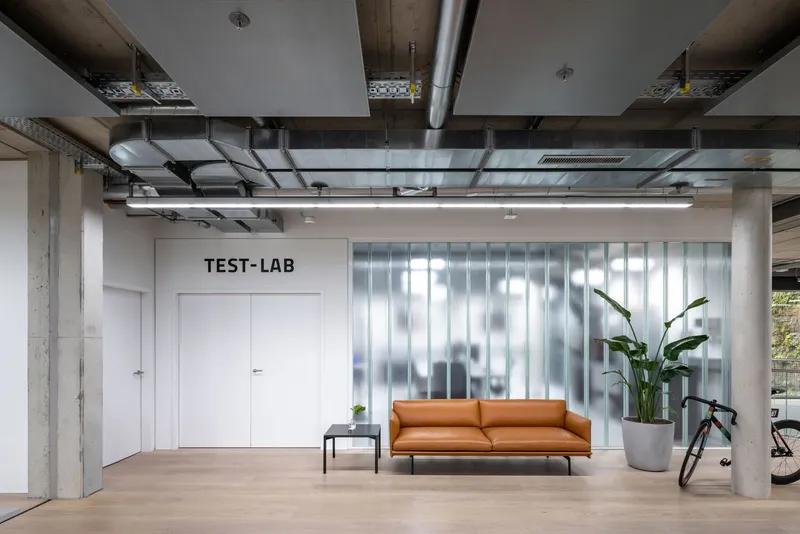
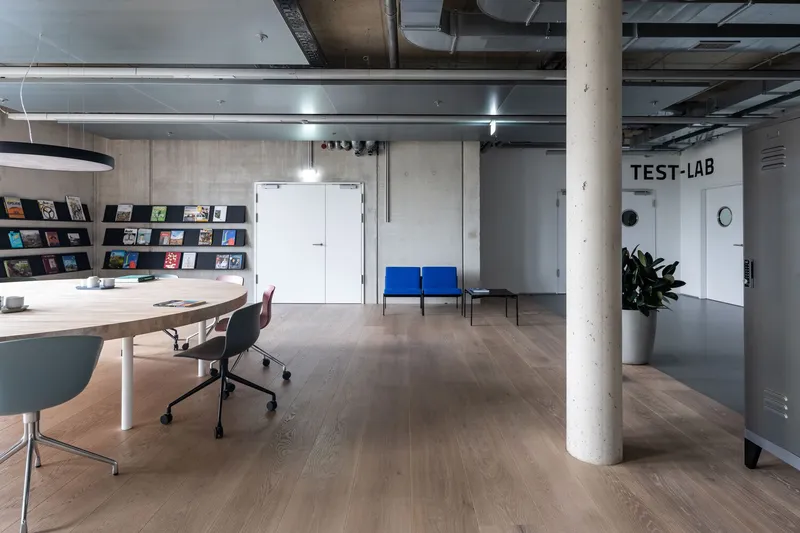
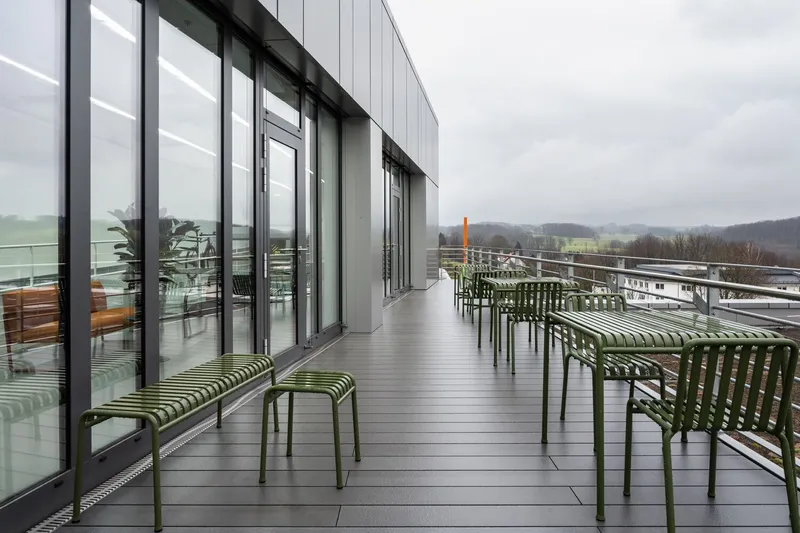
The Schwalbe HQ spans three levels, thoughtfully programmed with a reception area, Brand World exhibition, technical departments, bicycle workshop, testing lab, and multi-functional spaces for workshops, lectures, and team gatherings. An expansive rooftop garden grows fruits and vegetables used in the canteen, fostering a deeper connection between the workplace and wellness.
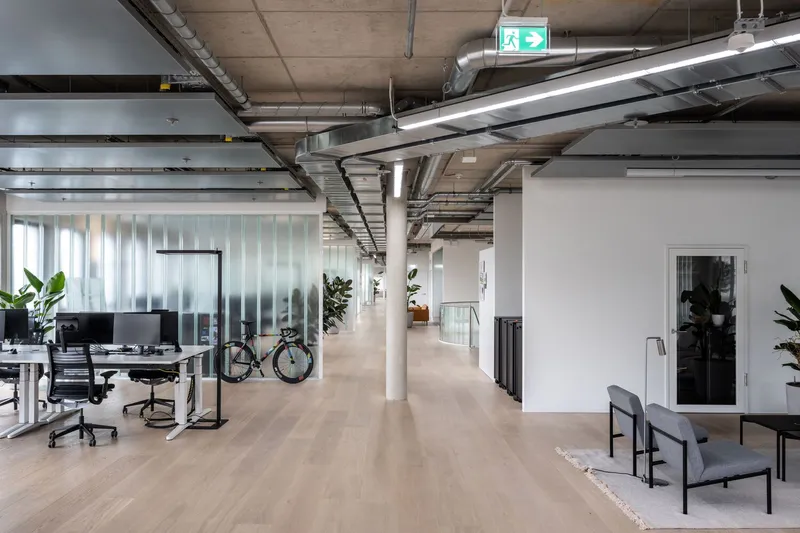
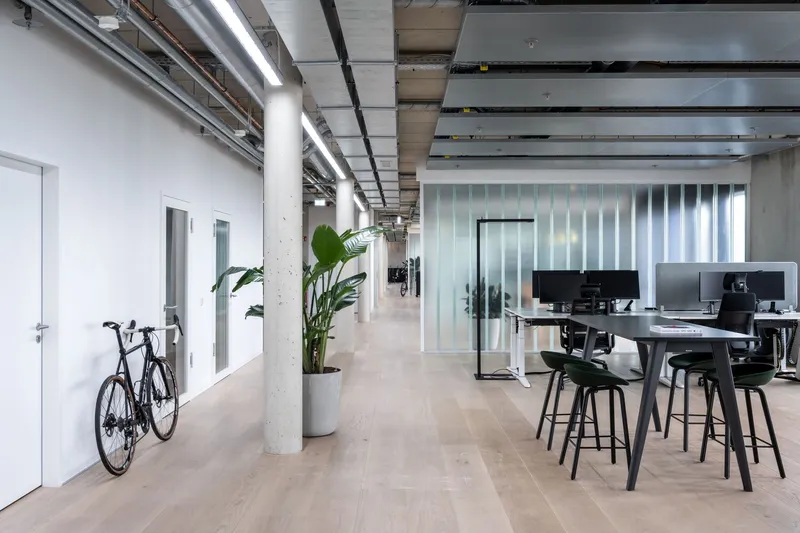
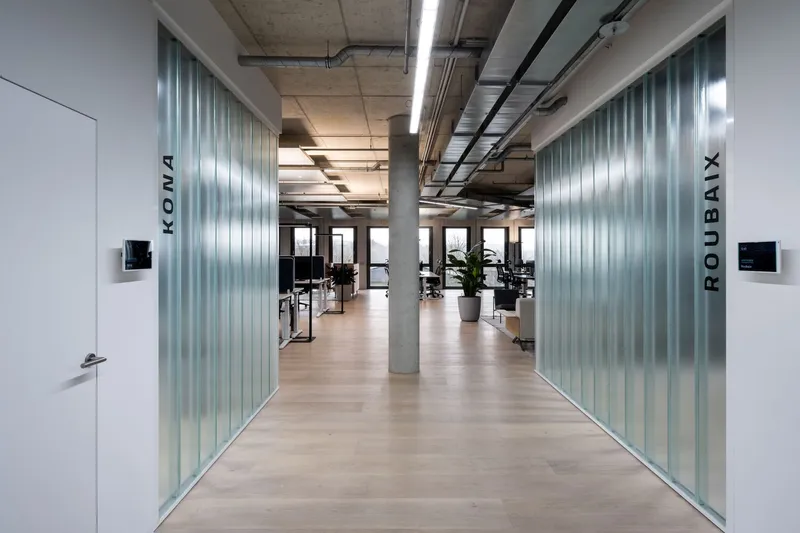
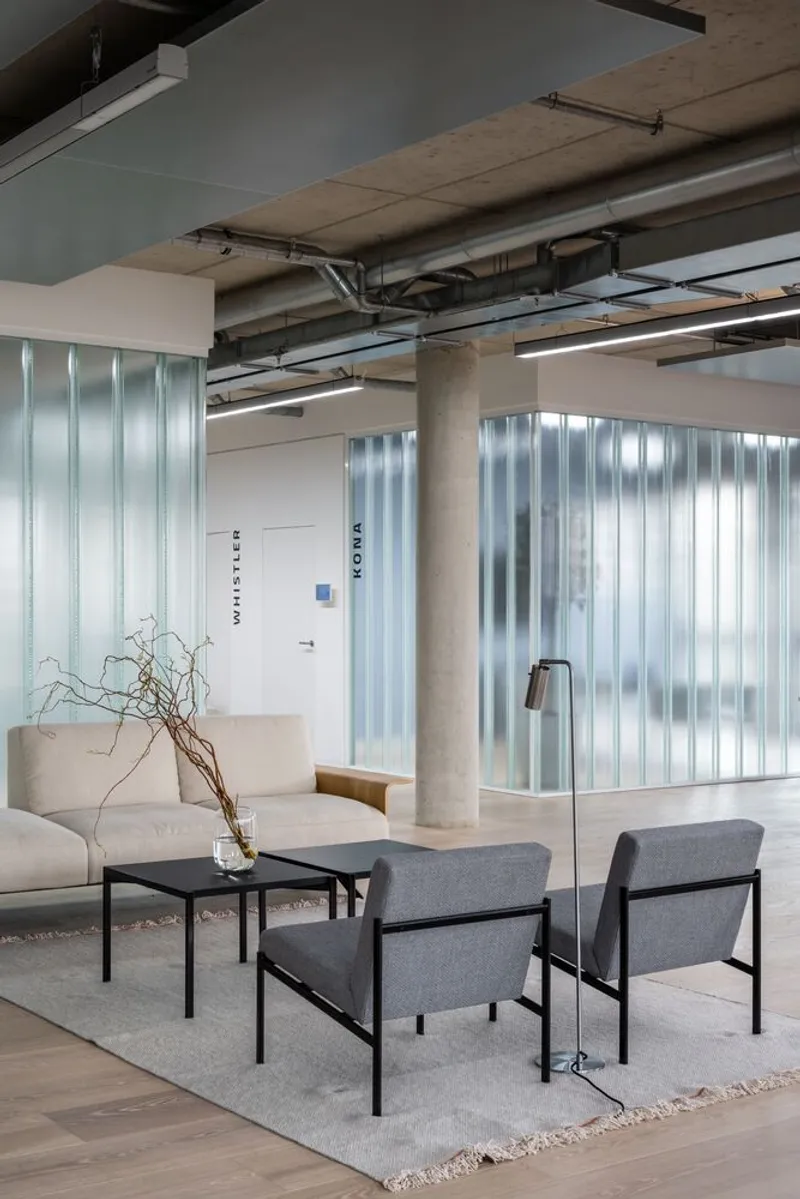
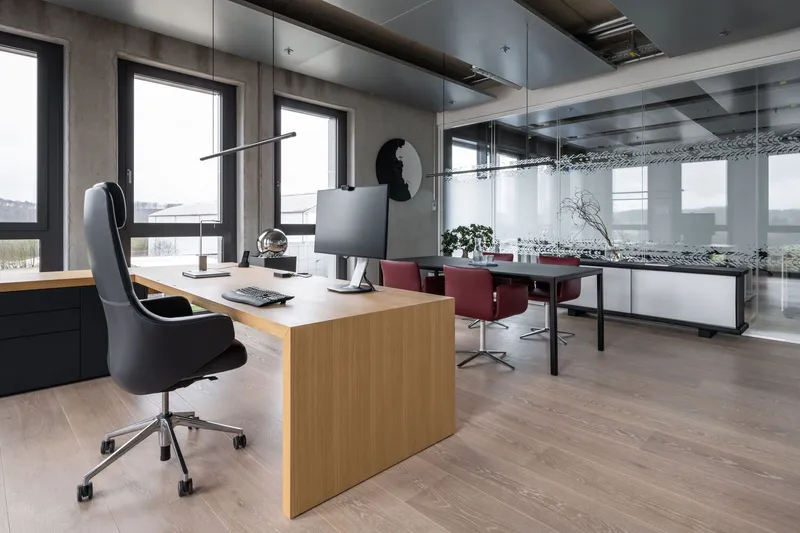
Responding to the brief’s call for a hybrid work environment, Archiproba created flexible layouts where every space is multi-purpose—accommodating collaboration, solitude, and even social events. Glass partitions replace drywall wherever possible, enhancing natural light and visual connectivity while maintaining acoustic privacy.
Material Honesty and Craft
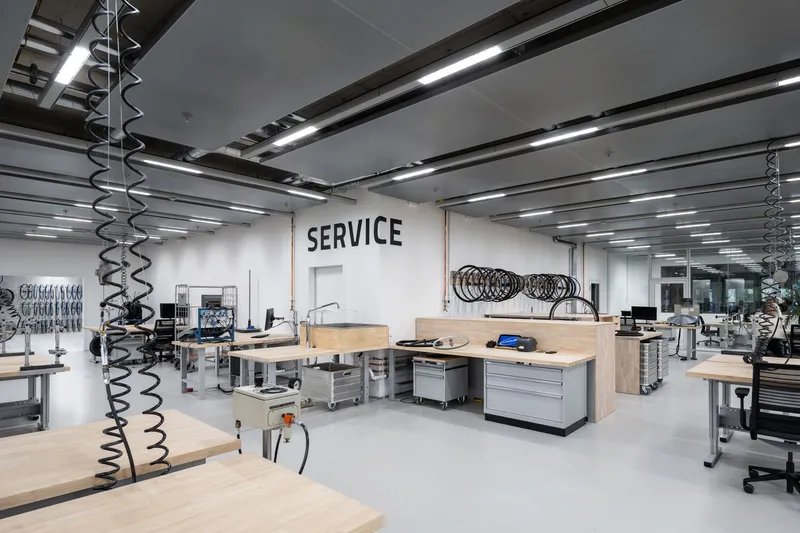
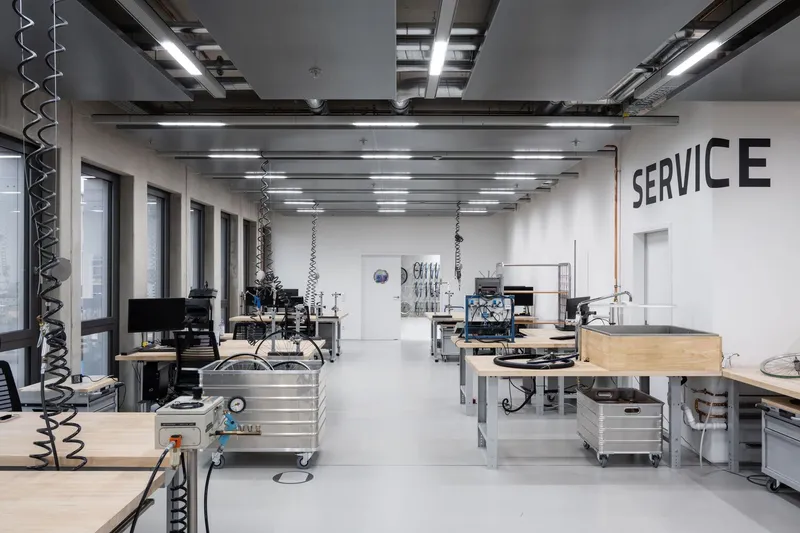
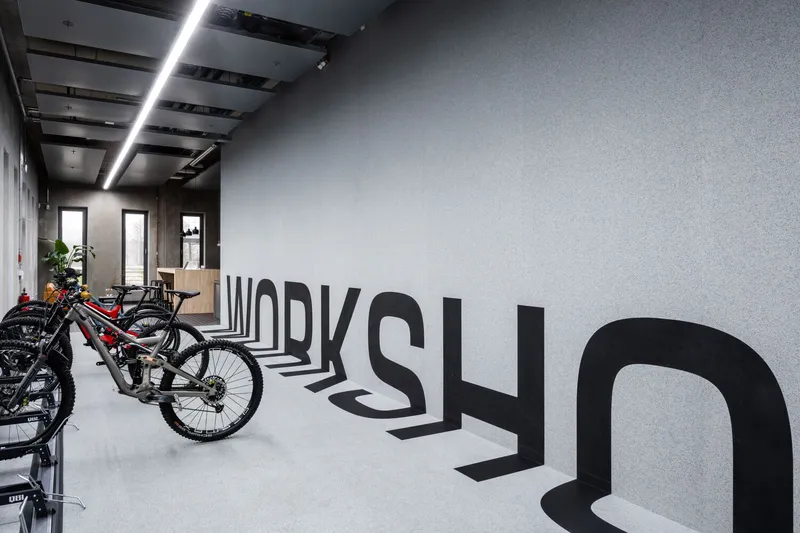
The interior expresses a strong material narrative rooted in Schwalbe’s identity. Recycled rubber, rubberwood, U-profiled translucent eco-glass, and certified cradle-to-cradle furniture blend durability with design sensibility. The bicycle workshop, open to passersby, is a civic gesture—fitted with stainless steel, recycled rubber cladding, and urban street pavers, inviting enthusiasts into the brand’s cultural core.
The Bridge: More Than a Connection
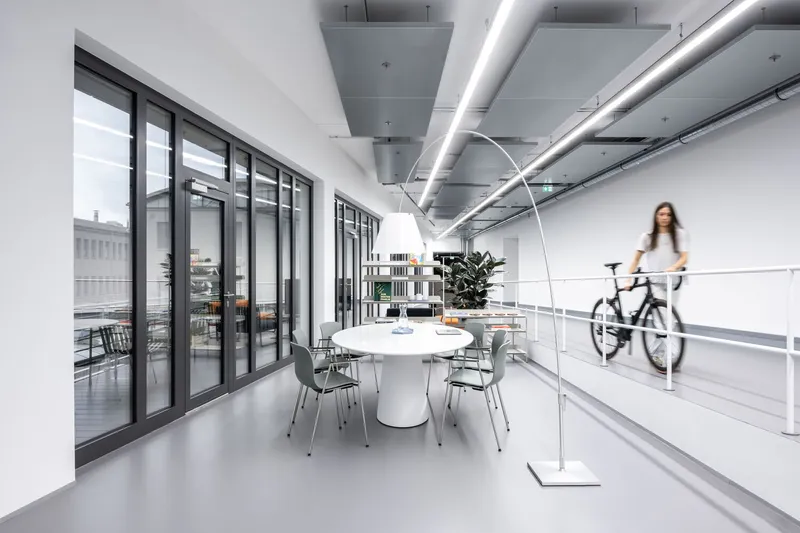
A unique feature of the project is the connecting bridge between the old and new buildings. Rather than serving as a mere passage, it is designed as a shared social zone. Outfitted with ping-pong tables, casual seating, and glazed walls opening to daylight and fresh air, the bridge encourages spontaneous interactions—symbolizing connection, not just circulation.
Lighting, Atmosphere, and Everyday Rituals
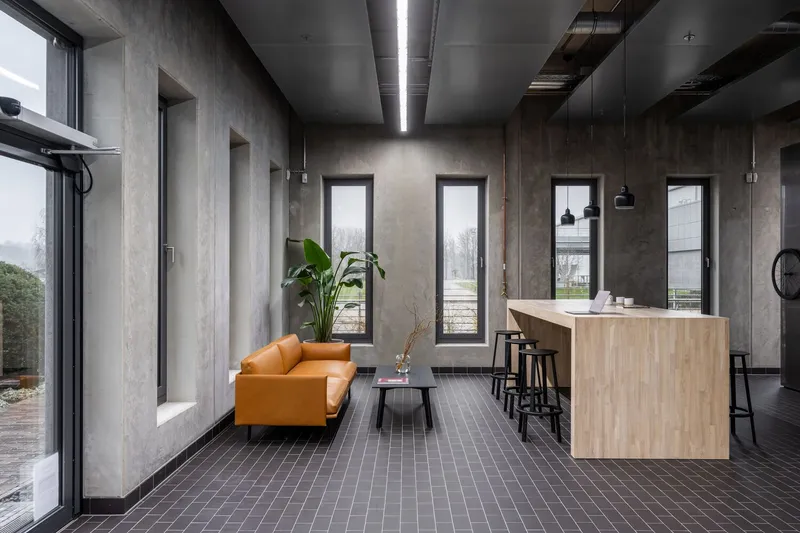
In contrast to sterile office norms, spaces like the reception lobby are given a warm, contemplative tone. A custom rubberwood wall referencing tire treads anchors the entry, while Candela Di Vals lighting by Peter Zumthor imbues a sense of quiet hospitality. The customer service zone adopts a minimalist language, with industrial elements left exposed to celebrate the labor behind the brand.
The Schwalbe Hybrid Building is a flagship of future-forward architecture, merging corporate responsibility with material intelligence, ecological performance, and employee well-being. It embodies a radical shift—from office buildings as static containers to living, breathing ecosystems that reflect the ethos of a sustainable, human-centered world.
All Photographs are works of Ilya Ivanov



Popular Articles
Popular articles from the community


The Earth Pod: 3D Printed Homes for Resilient Refugee Communities
The Earth Pod reimagines refugee housing through 3D printed homes made from clay, combining resilience, self-sufficiency, and rapid shelter.

Co-Life: Senior Housing Design That Reconnects Older Adults With the City
Co-Life reimagines senior housing design through healing gardens, shared streets, workshops, and a sustainable community across generations.

Play: Fragments of Their World
Familiar architecture becomes modular playground design, creating safe spaces where displaced children can learn, connect, imagine and play.

Riyadh For All: Intergenerational Urban Design for Active Aging in Rabat
Riyadh For All reimagines urban design in Rabat with intergenerational co-living, adaptive courtyards, and Moroccan cultural exchange today.


Similar Reads
You might also enjoy these articles


Hodi-Mandai Geram
Project Function: Preservation and revitalization of the Intangible heritage and socio-spatial identity of the Hodi by Housing, Cultural Memory Center, Sacred Grove, landscape, local tourism economy


Olio Towers: A Mid-Rise for Performers That Fuses Housing, Rehearsal, and Stage
Located blocks from Houston's Theater District, this modular tower stacks living units around a central performance atrium.

Oasis: Modular Green Housing Carved into Dhaka's Urban Fabric
A shortlisted Plugin Housing entry reclaims unauthorized settlements in Dhaka with stepped concrete volumes, green roofs, and ventilation-driven design.

Black Hole: A Floating Megastructure for the Post-Physical Era
Emiliano Mazzarotto envisions a spherical, self-scaling arena where e-sports, digital hotels, and holographic stadiums replace traditional public space.

Explore Office Building Competitions
Discover active competitions in this discipline



Challenge to reimagine the Iron Throne


Photograph architecture without architects


Illustrate the lost glory of Angkor Wat - Render Challenge


Design challenge to reuse E-waste
Comments (0)
Please login or sign up to add comments
No comments yet. Be the first to comment!