
Service Station in Suzhou Creek by Atelier Z+: A Harmonious Blend of Urban Renewal and Public Service Architecture
Service Station in Suzhou Creek blends urban renewal with modular design, enhancing community space while preserving ecological balance and architectural harmony.


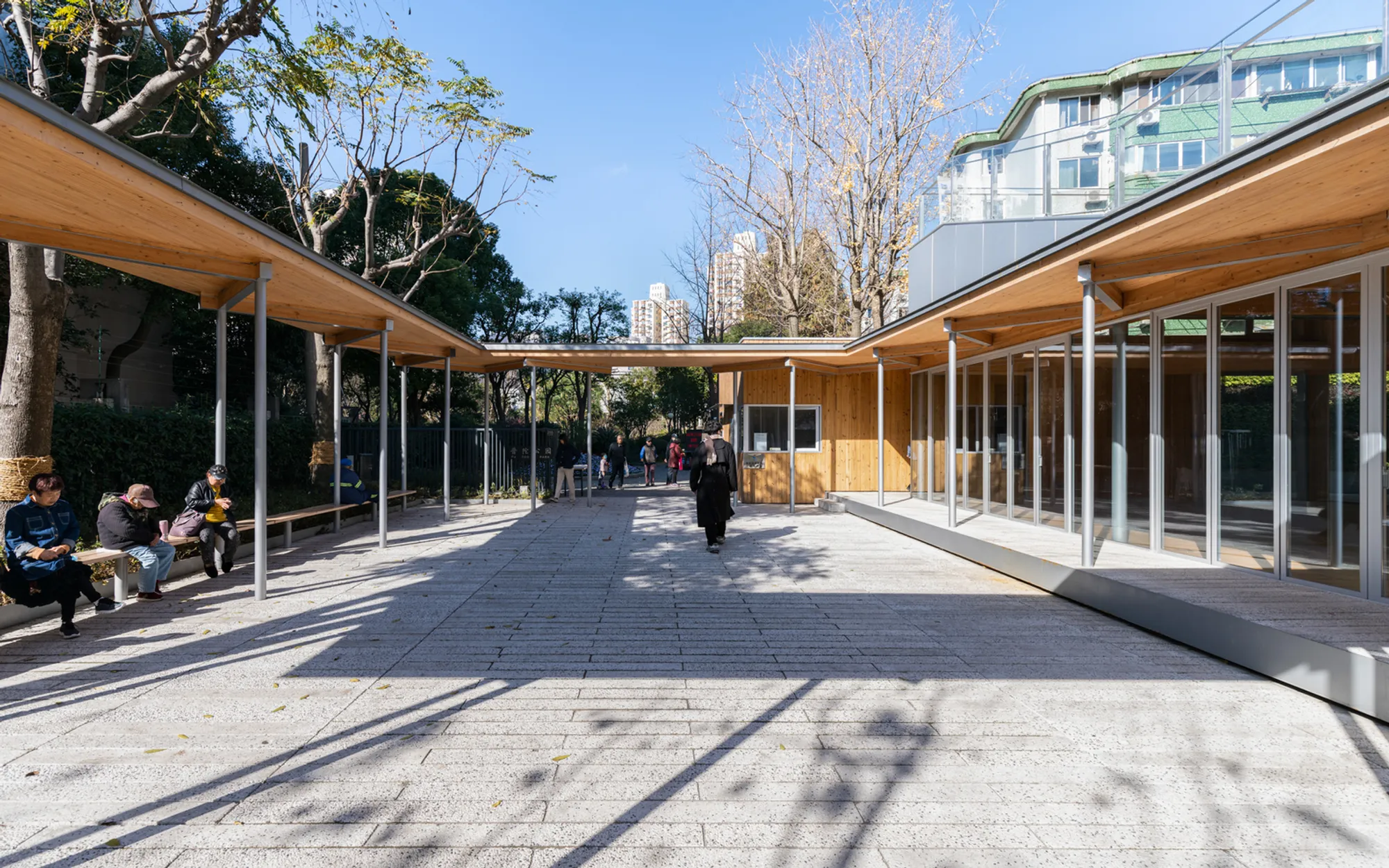
The Service Station in Front of Putuo Park, designed by Atelier Z+, is one of three citizen service stations developed as part of the Public Space Connection Project along Suzhou Creek, Putuo Section, in Shanghai. Located on the southeast side of Putuo Park’s main gate, this station serves as a key link between the riverside greenbelt and the park, enhancing the quality of public space and fostering community interaction. The Putuo Section of Suzhou Creek, rich in industrial heritage, includes landmarks such as the Yaoshuilong Peninsula, once home to Shanghai’s industrial workers. Putuo Park, established in 1954, was the first urban park in Putuo District after the founding of the People’s Republic of China.
Historical Context and Location Significance
The Putuo Section of Suzhou Creek holds a significant place in China’s industrial heritage. Across the creek lies the Yaoshuilong Peninsula, once a densely populated shanty town housing industrial workers. Putuo Park, completed in 1954, was the first urban park built in Putuo District after the founding of the People’s Republic of China. Its proximity to the former Shanghai-Hangzhou Railway, now transformed into an elevated light rail, adds to its historical relevance.
Site Integration and Spatial Strategy
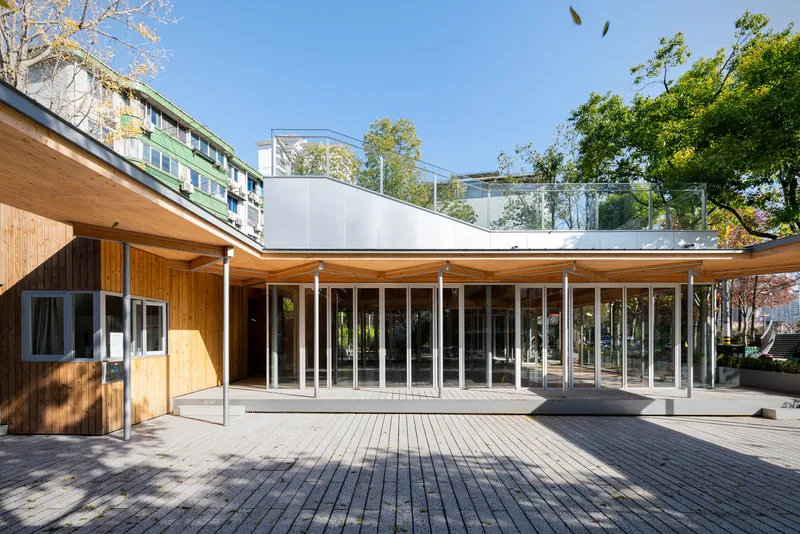
The site, divided into two halves, balances functionality and aesthetics. The western half serves as a pass-through entrance with hard pavement often used for parking, while the eastern half is an event space with raised flooring, flower beds, and shaded areas. The service station, designed to revitalize this underutilized space, integrates modular spatial components such as toilets, lounges, showrooms, gardens, and eaves galleries. These modules are assembled and customized based on the site’s unique constraints, reflecting the station’s adaptability.
Architectural Design and Space Configuration
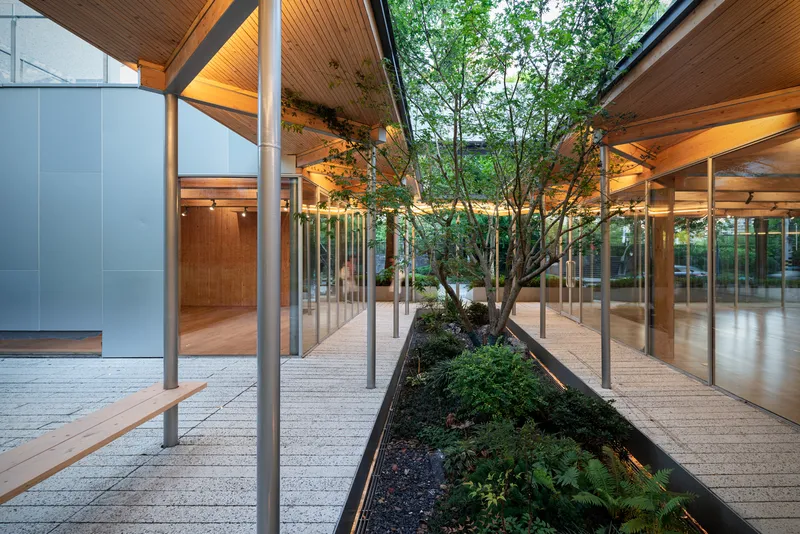
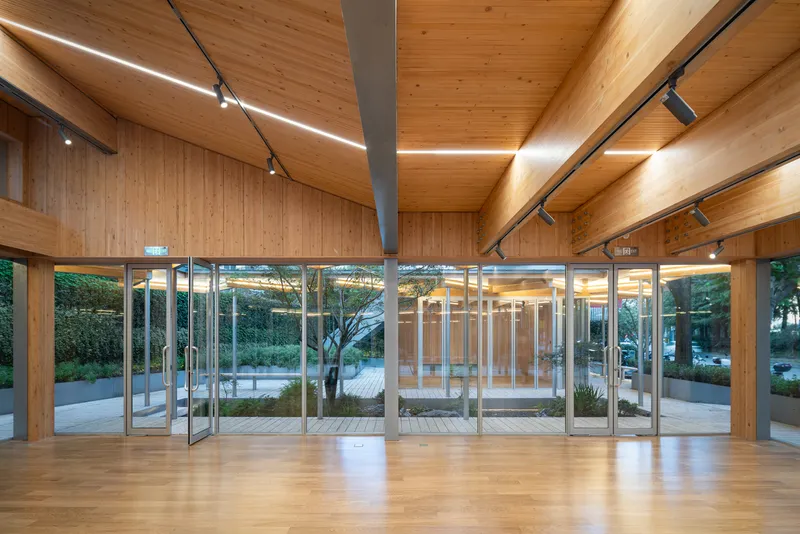
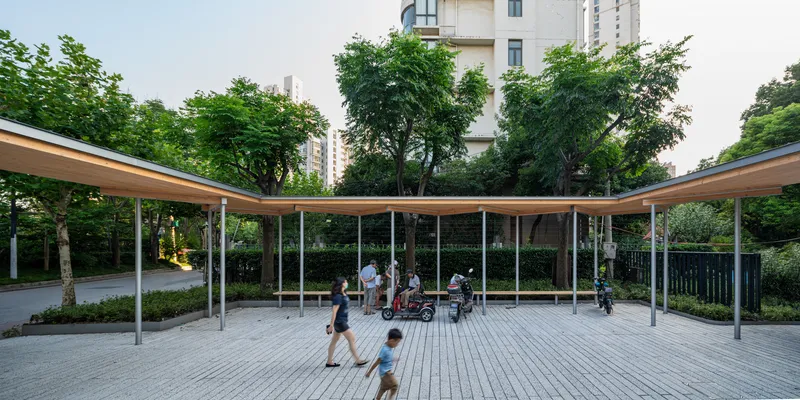
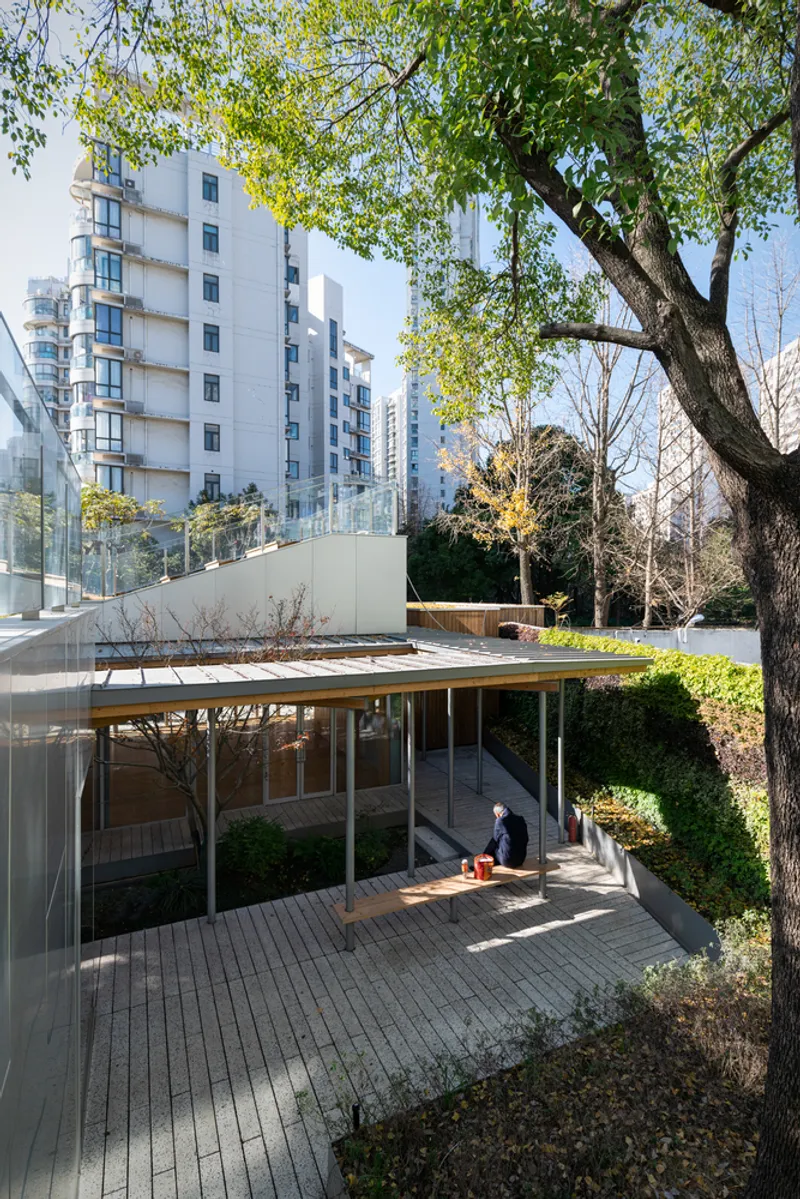
The architectural approach of the service station focuses on creating a fluid connection between urban spaces. A welcoming cloister at the park’s entrance serves as a transitional space between the street and the park. This cloister extends westward, providing shaded resting spots near the flower beds, while the east side houses the lounge and showroom. These structures are connected by a long, narrow courtyard garden named “Puyuan Garden,” which is shaded by trees and rocks, offering a serene escape for visitors.
A citizen-friendly, 24-hour service facility is integrated into the southeast corner under the eaves, while non-motor vehicle parking spaces line the road outside. The station also includes a continuous, open eaves gallery along the street, with rooms rising behind it. The original park lodge to the north has been renovated and connected to the service station, maintaining a seamless architectural language.
Roof Garden and Elevated Perspectives
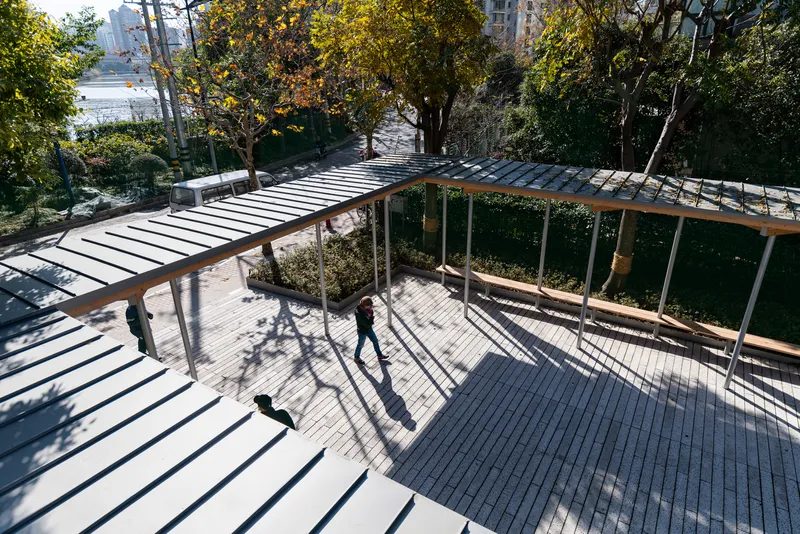
Due to the high flood control wall along the river, ground-level views are obstructed. To address this, a roof garden was added above the lounge and showroom, accessible via an outdoor steel ladder from the backyard. Two roofs are connected by a small sky bridge over Puyuan Garden. The roof terrace features staggered wooden steps and transforms into a “roof star theater” on the northern half, offering panoramic views of the Suzhou Creek bends. This thoughtful design ensures a harmonious relationship between built and natural environments.
Sustainable Construction and Structural Innovation
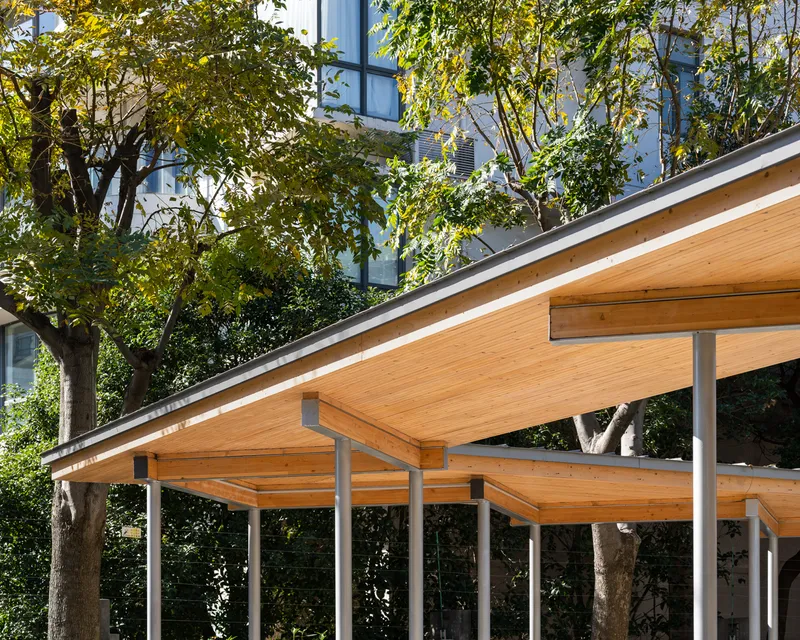
To reduce construction challenges on the narrow site and avoid disrupting park access during construction, the project adopted a glued laminated timber (GLT) hybrid wood-steel structure. The slender round steel columns of the cloister and eaves galleries are misaligned, forming rhythmic cross-skew beams on the corridor roof. The lounge and showroom feature asymmetrical column arrangements to transfer internal forces efficiently. On one side, thicker square columns are hidden behind bookshelves or walls to resist horizontal forces, while the other side uses slender round columns to handle vertical loads.
Material Palette and Texture Harmony
The station’s material palette balances modernity with natural elements. The lounge and showroom feature anodized aluminum slab exteriors, while the park lodge and toilet areas are clad in deep carbonized anti-corrosion SYP timber panels. The roofs use aluminum-magnesium-manganese alloy sheeting with upright seams. The interior ceiling incorporates exposed ribbed beams that blend structural expression with functional lighting.
Maintaining Site Character and Ecological Sensitivity
The design prioritizes ecological sensitivity by retaining all eight large trees with a diameter exceeding 30 cm at breast height. Continuous flower beds on the west and south sides further preserve the site’s original character. This thoughtful integration ensures that the natural charm and shade of the space remain intact, enhancing the visitor experience.
Blending Public Utility with Aesthetic Delight
The Service Station in Suzhou Creek exemplifies how urban renewal can be seamlessly combined with public service and architectural innovation. By preserving natural elements, integrating modular components, and ensuring ecological sensitivity, the project successfully revitalizes the space, transforming it into a vibrant and community-friendly urban landmark.




Popular Articles
Popular articles from the community


Co-life: Sustainable Architecture for Age-Friendly Community Living
Co-life reimagines sustainable architecture for seniors through courtyards, rammed earth, shared gardens, and spaces designed for belonging.

Hill & Cross Opera: Sculptural Opera House Architecture Shaped by Tallinn’s Landscape and Identity
Hill & Cross Opera reimagines opera house architecture in Tallinn through its sculptural hill, civic plaza, glass wave and a luminous cross.

Play: Fragments of Their World
Familiar architecture becomes modular playground design, creating safe spaces where displaced children can learn, connect, imagine and play.

The Ocean Hive: Sustainable Architecture for a Self-Sufficient Civilization at Sea
The Ocean Hive imagines sustainable architecture at sea, where modular habitats, algae, wave power and ocean waste sustain a growing colony.


Similar Reads
You might also enjoy these articles


Hodi-Mandai Geram
Project Function: Preservation and revitalization of the Intangible heritage and socio-spatial identity of the Hodi by Housing, Cultural Memory Center, Sacred Grove, landscape, local tourism economy


Olio Towers: A Mid-Rise for Performers That Fuses Housing, Rehearsal, and Stage
Located blocks from Houston's Theater District, this modular tower stacks living units around a central performance atrium.

Oasis: Modular Green Housing Carved into Dhaka's Urban Fabric
A shortlisted Plugin Housing entry reclaims unauthorized settlements in Dhaka with stepped concrete volumes, green roofs, and ventilation-driven design.

Black Hole: A Floating Megastructure for the Post-Physical Era
Emiliano Mazzarotto envisions a spherical, self-scaling arena where e-sports, digital hotels, and holographic stadiums replace traditional public space.

Explore Public Plaza Competitions
Discover active competitions in this discipline



Challenge to design locus for the upliftment of human rights


Challenge to reimagine the Iron Throne


Photograph architecture without architects


Illustrate the lost glory of Angkor Wat - Render Challenge
Comments (0)
Please login or sign up to add comments
No comments yet. Be the first to comment!