

Shabtab Residential by STUDIO SAHEB
Shabtab Residential reimagines balconies as vibrant living spaces, blending greenery, metal, and light to connect private homes with Tehran’s urban fabric.


Architecture That Breathes Between Home and City
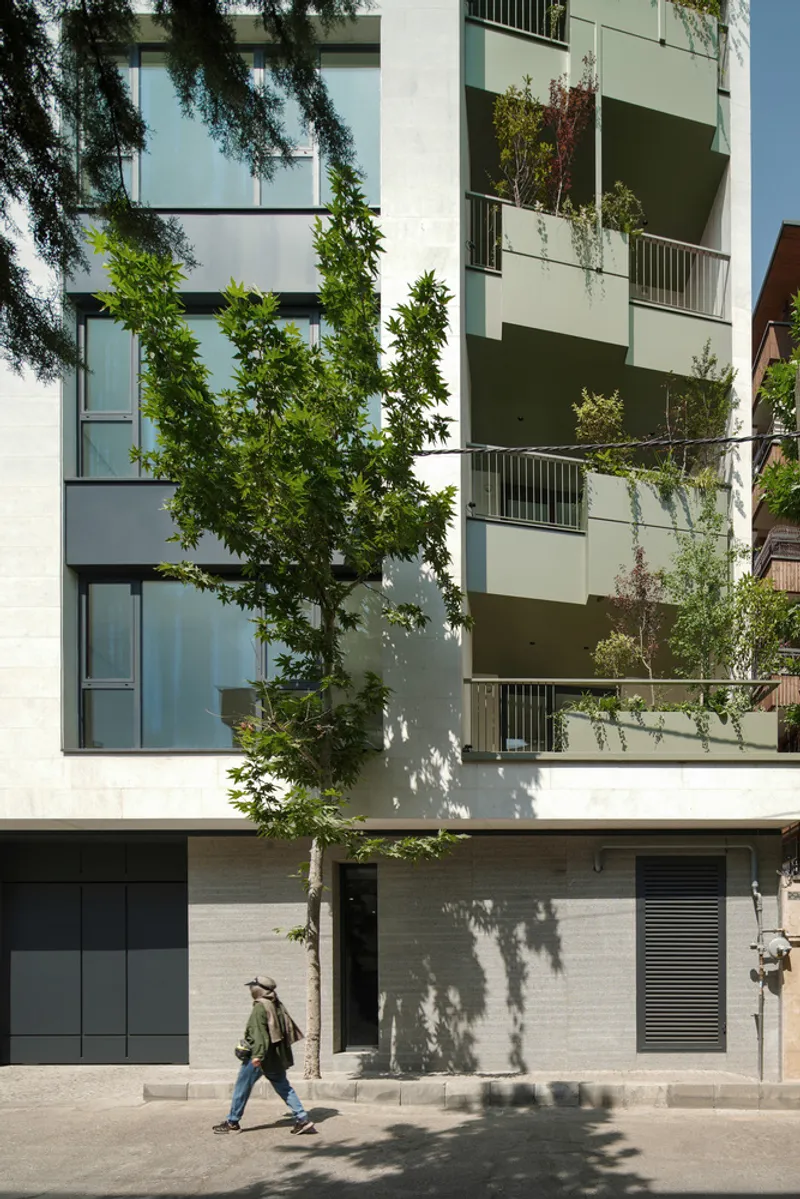
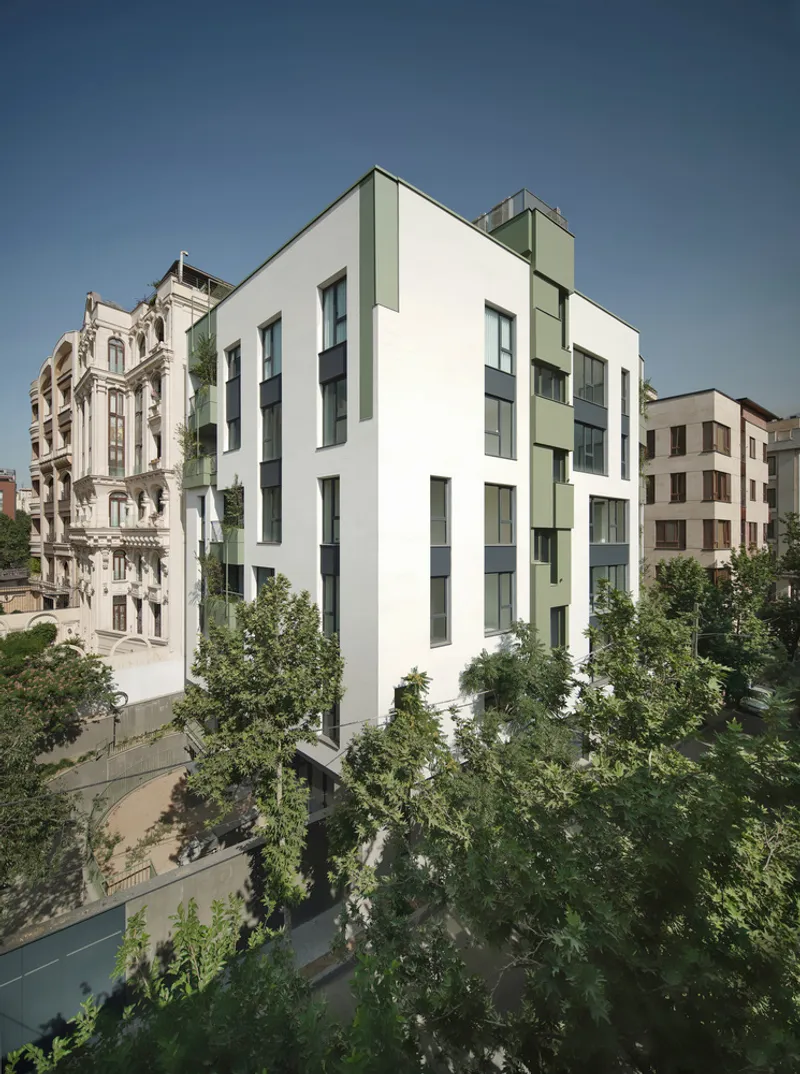
In the dense urban fabric of Qeytarieh, Tehran, Shabtab Residential by STUDIO SAHEB redefines the relationship between private domestic life and the vibrant city beyond. Conceived during a time when the importance of in-between spaces became increasingly evident, this residential building transforms the balcony—traditionally treated as a mere façade opening—into the central architectural element shaping the building’s identity and urban dialogue.
A Vertical Community Rooted in Openness
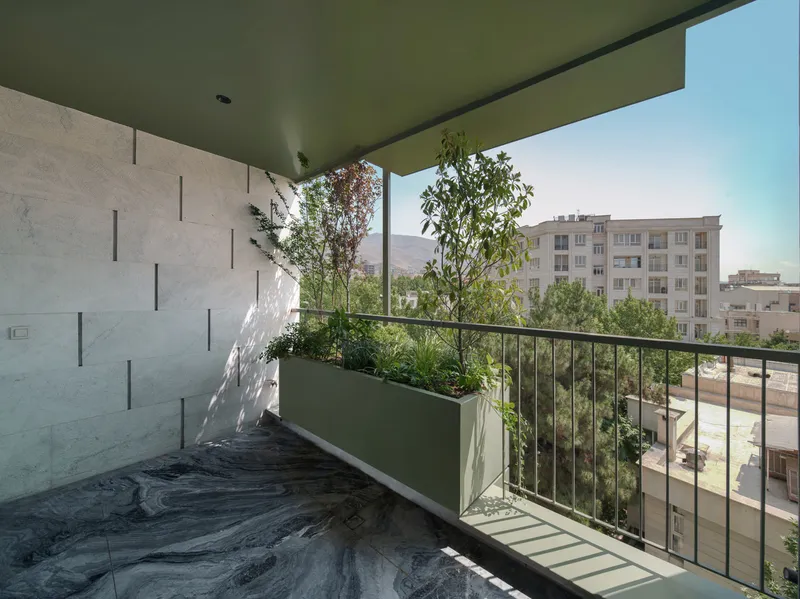
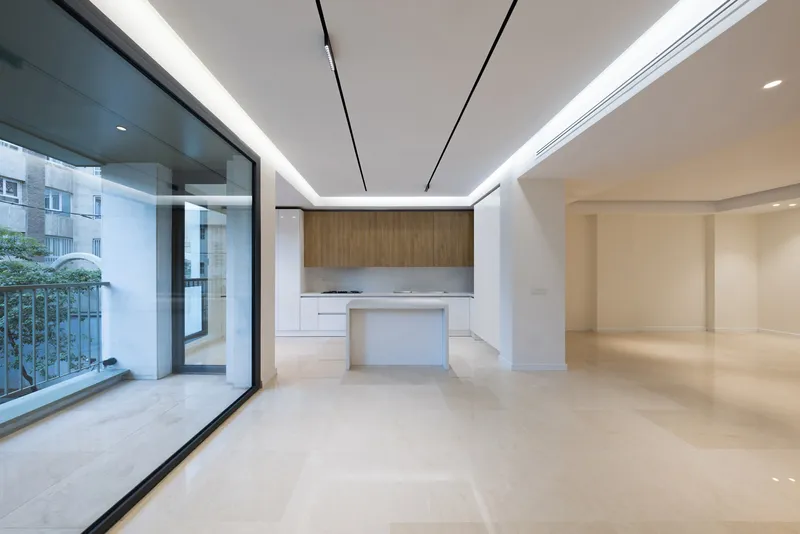
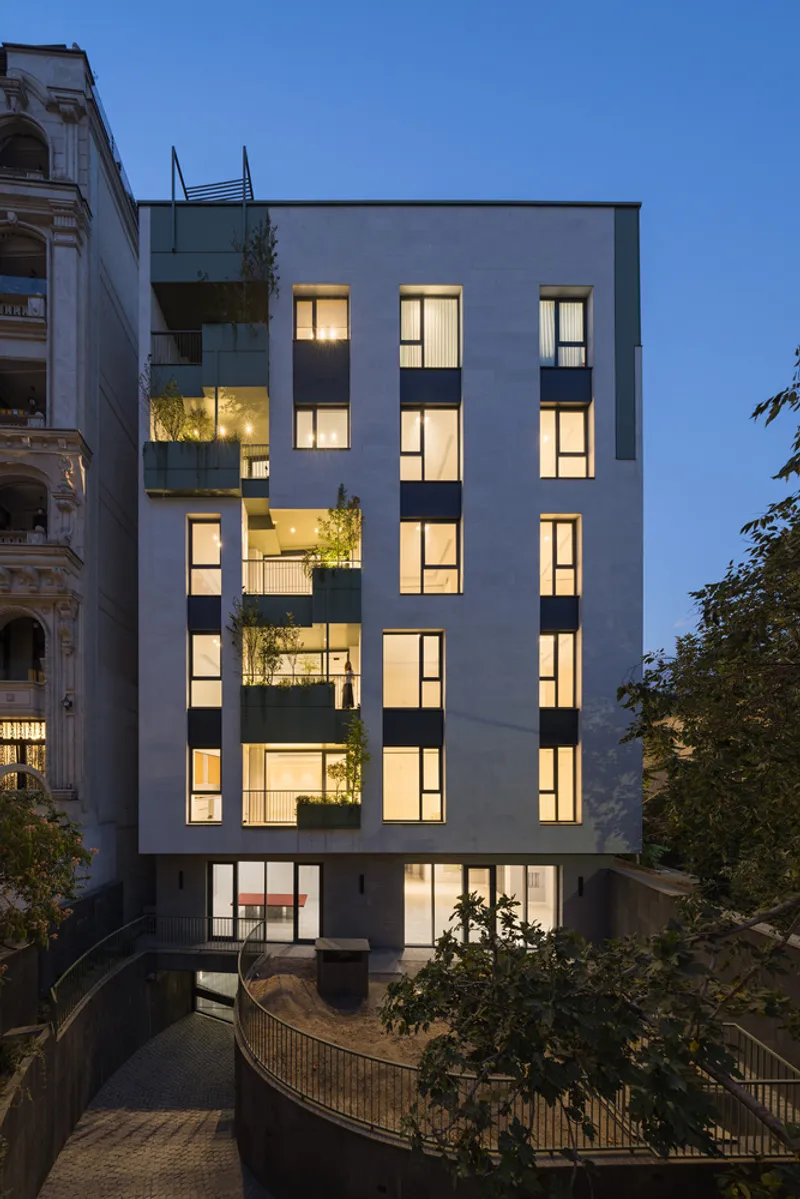
Comprising ten residential units arranged as two apartments per floor, the building is designed to accommodate contemporary urban lifestyles while maintaining a strong connection to nature. Each apartment is equipped with a generous private balcony, conceived not as a decorative appendage but as a functional outdoor room—an extension of the living space where residents can dine, relax, or simply immerse themselves in the shifting daylight and seasons.
In a city known for its density, these balconies create a sense of openness and retreat, offering a private sanctuary that simultaneously engages with the surrounding neighborhood.
Balconies as Living Prostheses
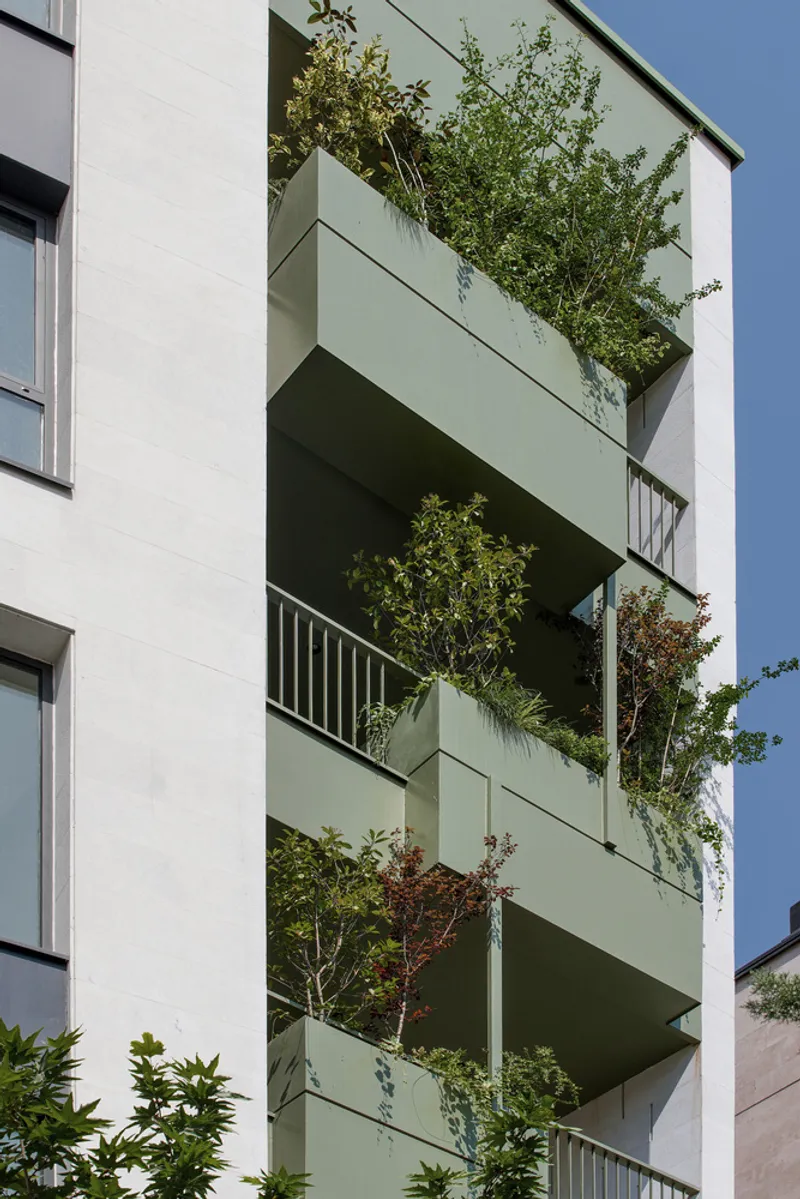
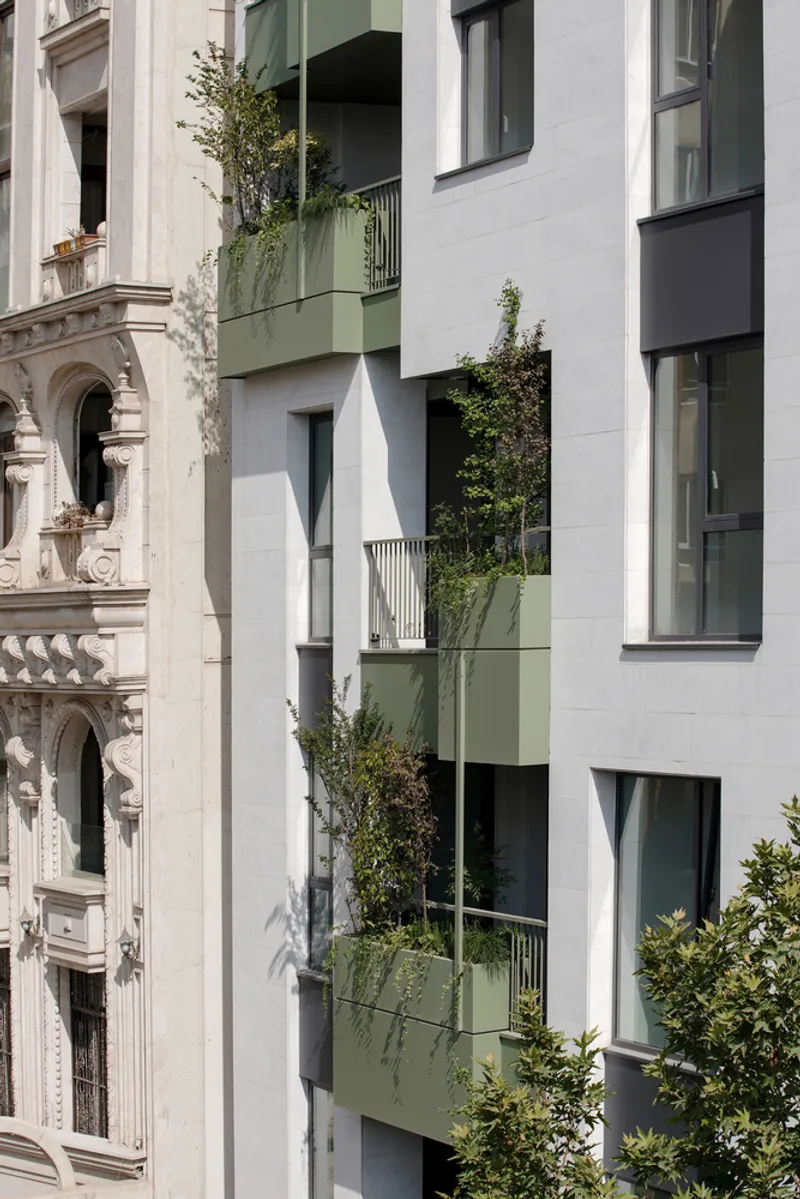
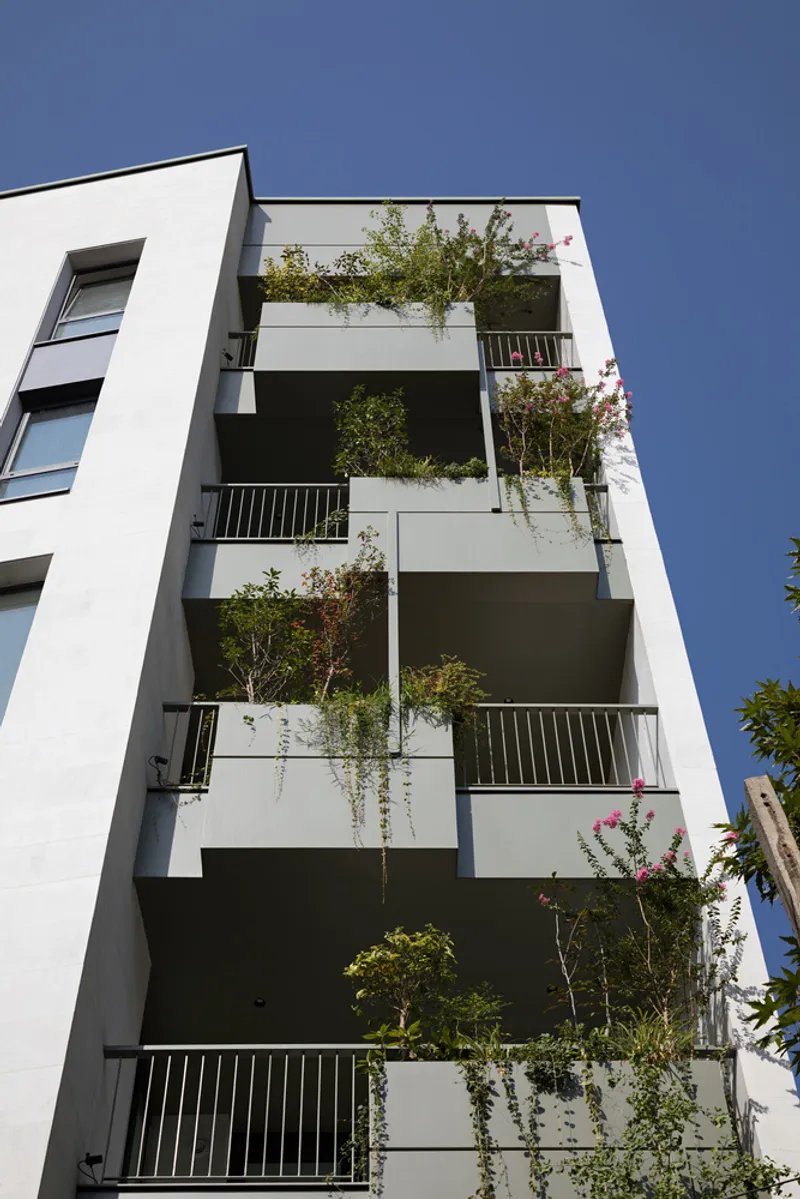
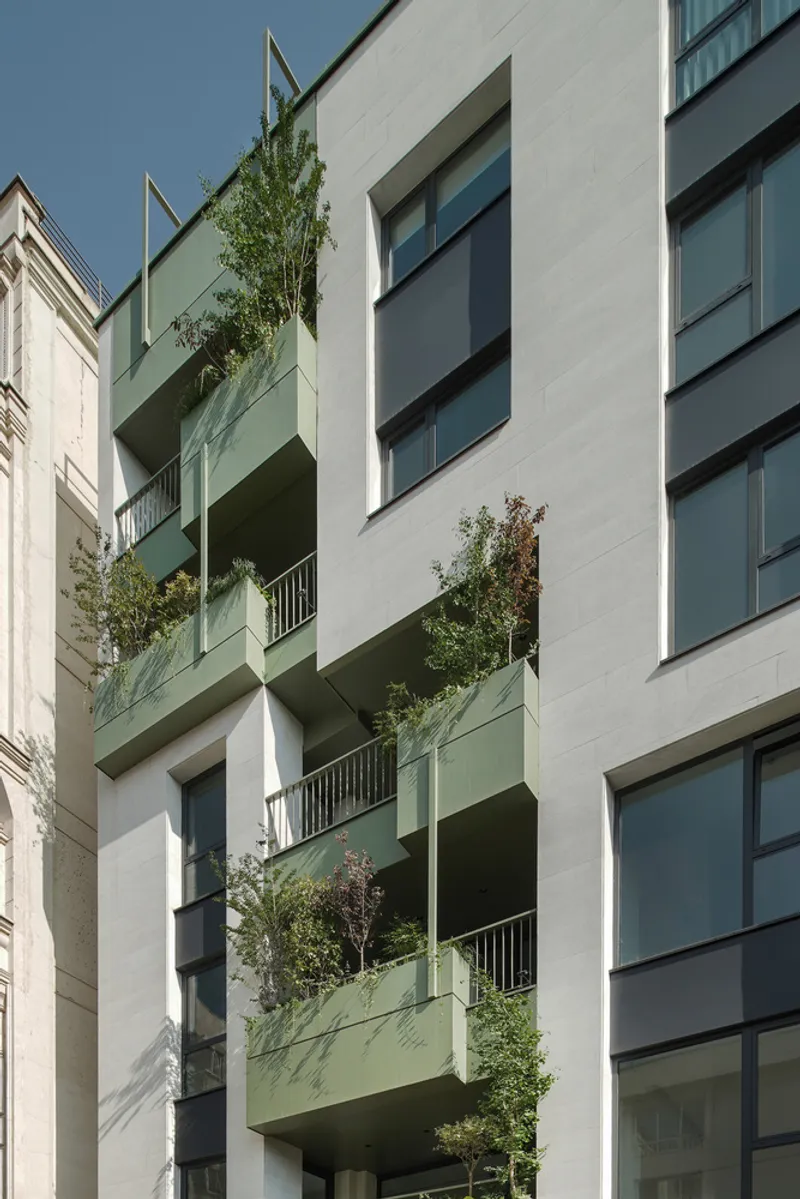
The project’s defining feature lies in the integration of deep planters and delicate metal frameworks, which together form an expressive, layered façade. Each balcony is designed as a “prosthesis” to the building’s volume—a green extension that blurs the line between architecture and landscape.
Within these planters, mature trees and diverse vegetation thrive, each unit hosting a distinct species to cultivate a rhythm of variation across the elevation. This design gesture transcends ornamentation—it is a conceptual act of identity, granting every apartment its own botanical signature and fostering a subtle sense of belonging for each resident.
Materiality and Urban Presence
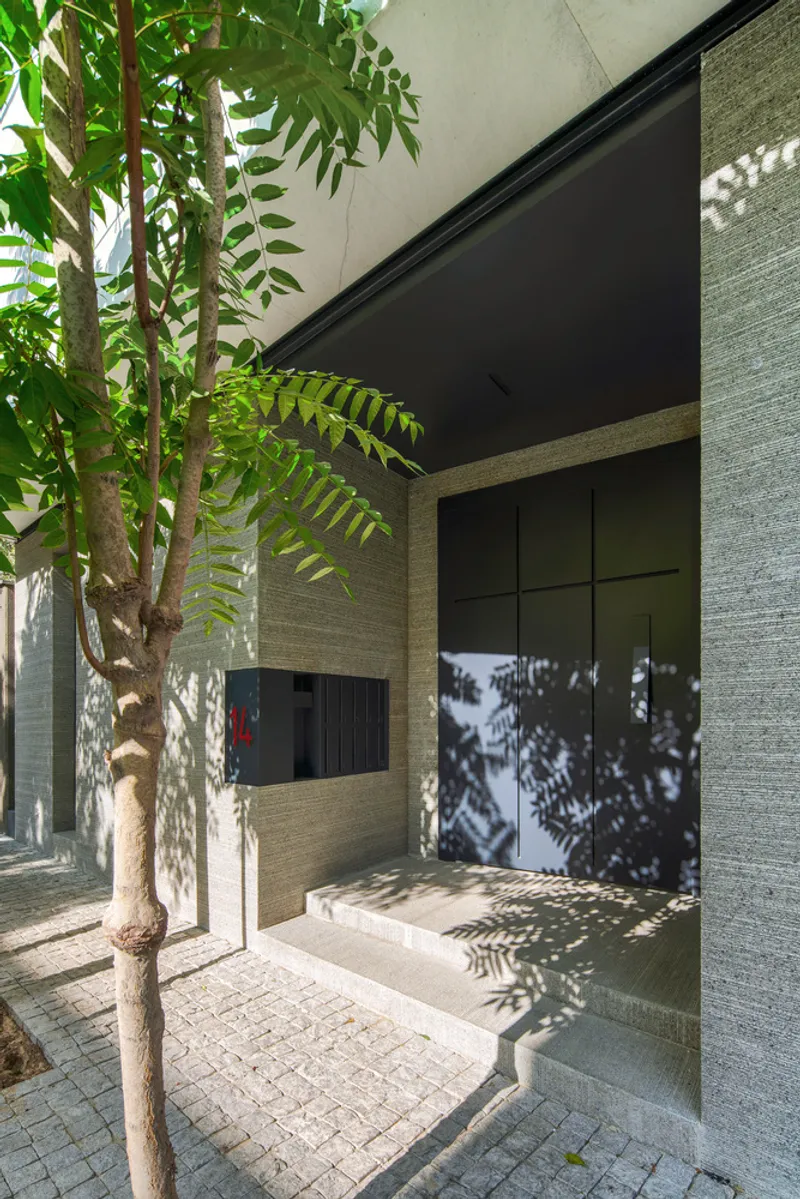
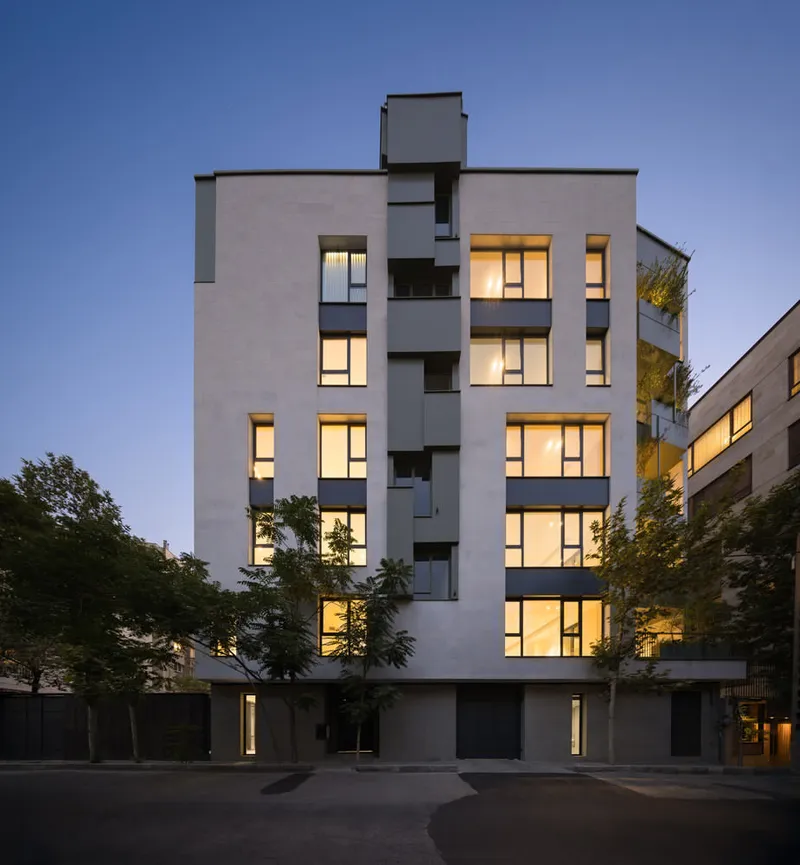
A deliberate contrast of materials and colors reinforces the dialogue between solidity and permeability. The interplay between concrete surfaces, metal railings, and organic greenery gives the façade a dynamic, breathing quality—a living skin that evolves with the seasons.
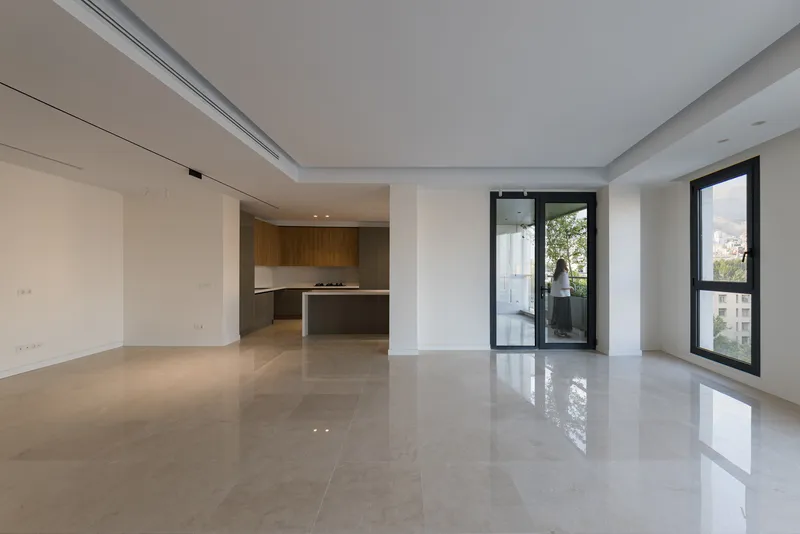
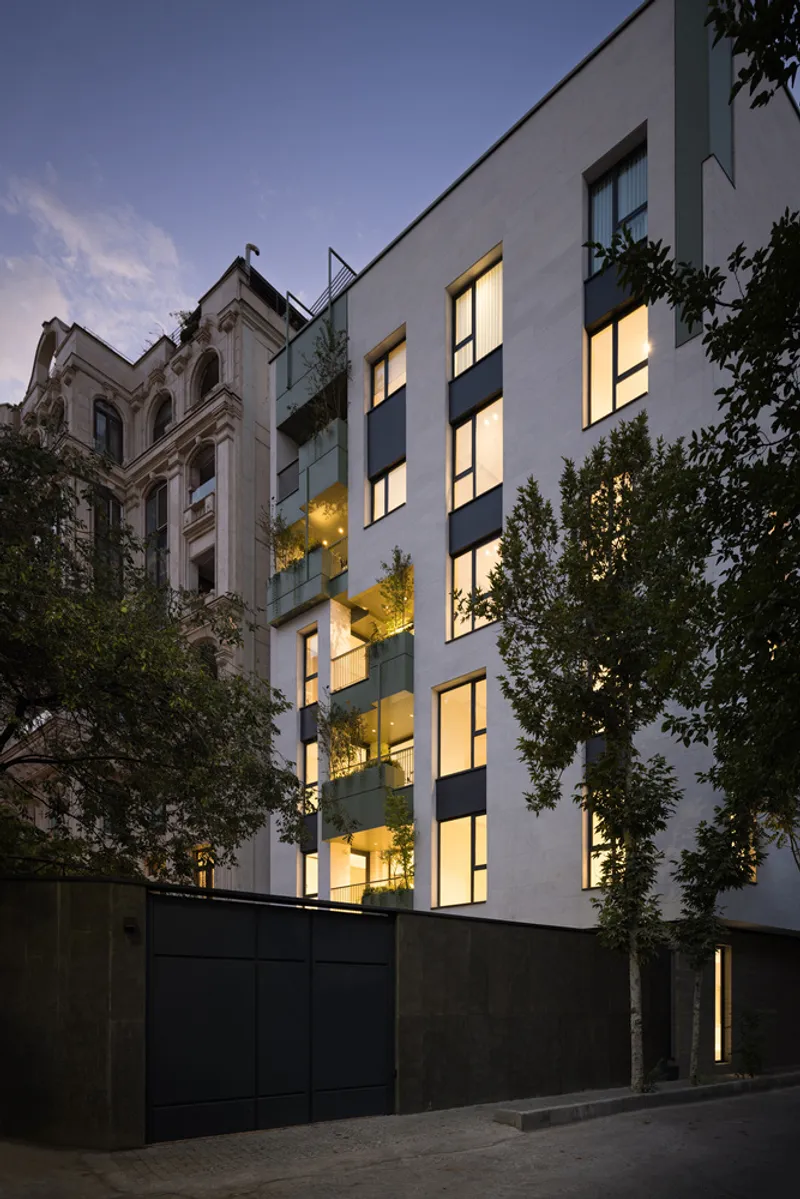
From the street, the building reads as a vertical garden, contributing to Tehran’s urban ecosystem while softening the boundary between private and public realms. From within, residents experience an intimate atmosphere of light, shade, and natural texture—qualities often lost in the city’s fast-paced architectural landscape.
Design Philosophy: Human, Green, and Contextual
STUDIO SAHEB’s design philosophy centers on architecture as a mediator—a tool for creating spaces that connect rather than divide. The Shabtab project embodies this principle by using the balcony as a threshold of exchange, where architecture becomes both a shelter and a stage for urban life.
All photographs are works of Mohammad Hassan Ettefagh, Ali Zanjani


Popular Articles
Popular articles from the community


FCC Arquitectura Expands a Portuguese Granite House with a Board-Marked Concrete Wing
In Portugal, JV House pairs a cleaned-up whitewashed and granite dwelling with a timber-shuttered concrete extension, courtyards and a garden pool.

ETEH Reworks the Shared Spaces of São Domingos School in Brazil Around Timber, Color and Hanging Plants
At São Domingos School in Brazil, 436 m² of hall, refectory and library are recast with timber joinery, a yellow and blue code and trailing greenery.

David Ortega Stacks a Two-Story Mexico City Penthouse Around a Steel Stair and a Pergola-Shaded Roof Terrace
In Colonia Roma, a 300 m² penthouse uses oak joinery, a planted steel stair and a slatted roof pergola to make a new-build apartment feel like a house.


Opera on the Sea: Driftwood Logic Shapes a Timber Opera House on Estonia's Coast
Trevor Orgill's opera house translates the entangled drift of floating timber into a civic building where wood, water, and music converge.

Similar Reads
You might also enjoy these articles


Hodi-Mandai Geram
Project Function: Preservation and revitalization of the Intangible heritage and socio-spatial identity of the Hodi by Housing, Cultural Memory Center, Sacred Grove, landscape, local tourism economy


Olio Towers: A Mid-Rise for Performers That Fuses Housing, Rehearsal, and Stage
Located blocks from Houston's Theater District, this modular tower stacks living units around a central performance atrium.

Oasis: Modular Green Housing Carved into Dhaka's Urban Fabric
A shortlisted Plugin Housing entry reclaims unauthorized settlements in Dhaka with stepped concrete volumes, green roofs, and ventilation-driven design.

Black Hole: A Floating Megastructure for the Post-Physical Era
Emiliano Mazzarotto envisions a spherical, self-scaling arena where e-sports, digital hotels, and holographic stadiums replace traditional public space.

Explore İshak Şimşek Arhitecture Competitions
Discover active competitions in this discipline

Challenge to reimagine the Iron Throne

Photograph architecture without architects

Illustrate the lost glory of Angkor Wat - Render Challenge

Design challenge to reuse E-waste
Comments (0)
Please login or sign up to add comments
No comments yet. Be the first to comment!