

Shandong Provincial Cultural and Art Center by architecturestudio: A Cultural Confluence in the Heart of Jinan
Shandong Cultural Center unites library, museums, and public space through flowing forms, cultural symbolism, and poetic facade design.


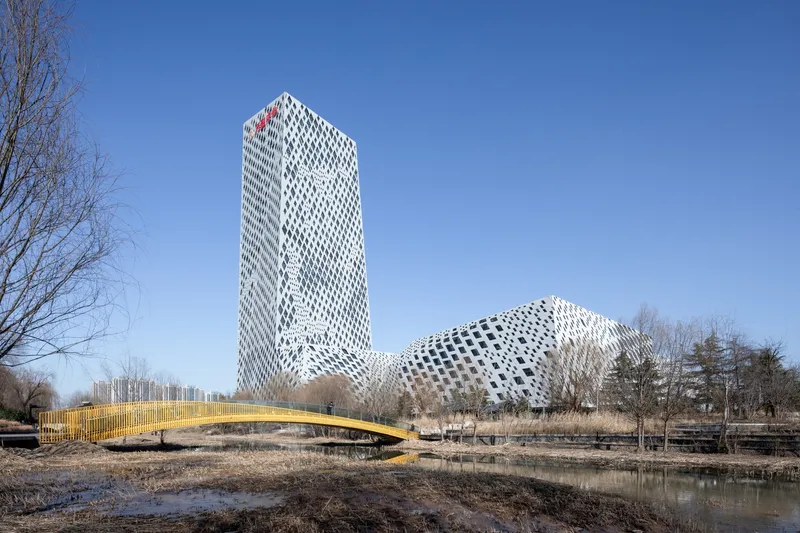
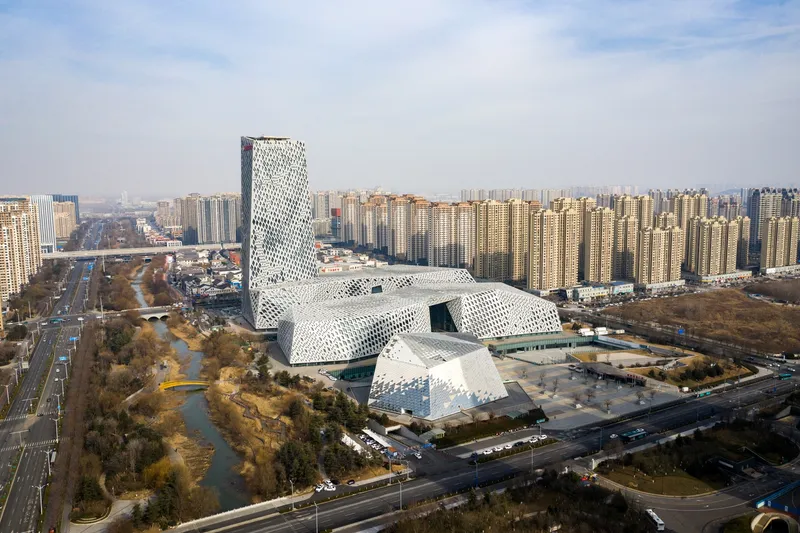
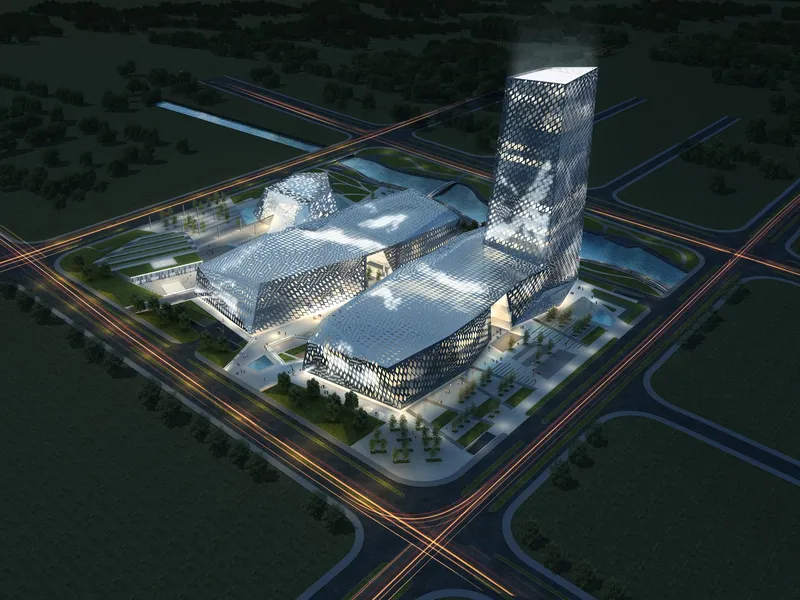
In the vibrant heart of Jinan, capital of Shandong Province, the Shandong Provincial Cultural and Art Center by architecturestudio rises as a monumental symbol of civic identity, cultural legacy, and urban renewal. With a built area of 380,000 m² spread across a 16.02-hectare site, this cultural landmark reflects the ancient soul of the “City of Springs” while embracing a contemporary architectural language.
Urban Scale, Cultural Vision
Located in the West New Town of Jinan, this vast urban intervention was designed to harmonize with the city’s natural topography—famed for its springs, lakes, rivers, and mountains—while also responding to its role as a growing center for education, tourism, and public culture. Planned and constructed in two phases over 12 years, the project integrates cultural institutions, commercial venues, and urban public space into a cohesive civic campus.
Design Concept: Spring Water, City Spirit
The project’s concept draws from the poetic Chinese idiom “Luoyunquanyong”, referring to spring waters flowing from Luo—Jinan’s ancient name—symbolizing the merging of historical, natural, and cultural flows. The architecture mirrors the movement of spring water, with building forms rising and falling like fluid topography.
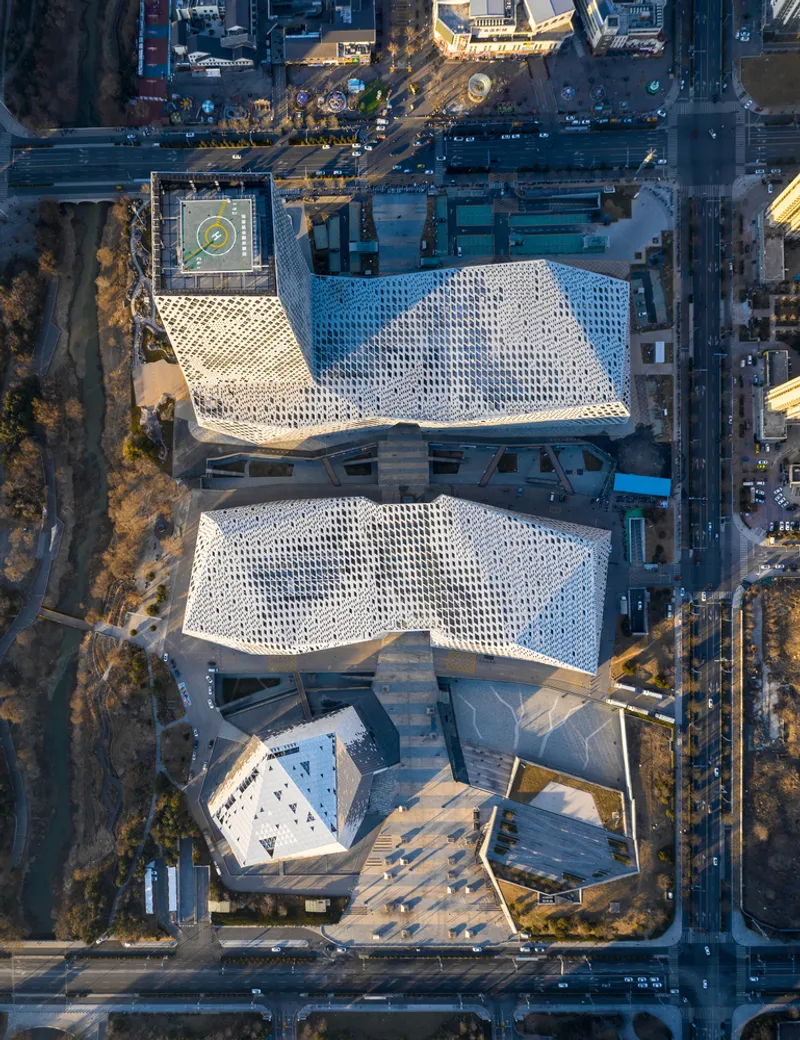
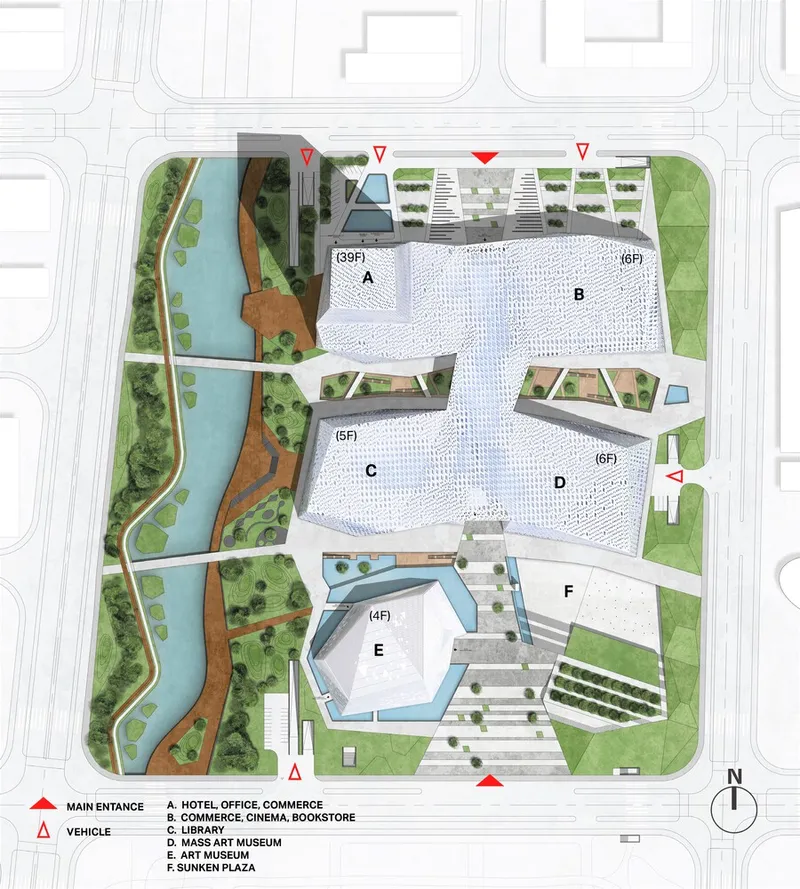
A central north-south axis organizes the entire site, connecting public plazas, river landscapes, and functional buildings through carefully designed circulation pathways. The Lashan River, a vital ecological feature, is skillfully woven into the masterplan, dividing the site into three main zones and encouraging urban permeability.
Cultural Anchors: Library, Museums, and Heritage
Phase I
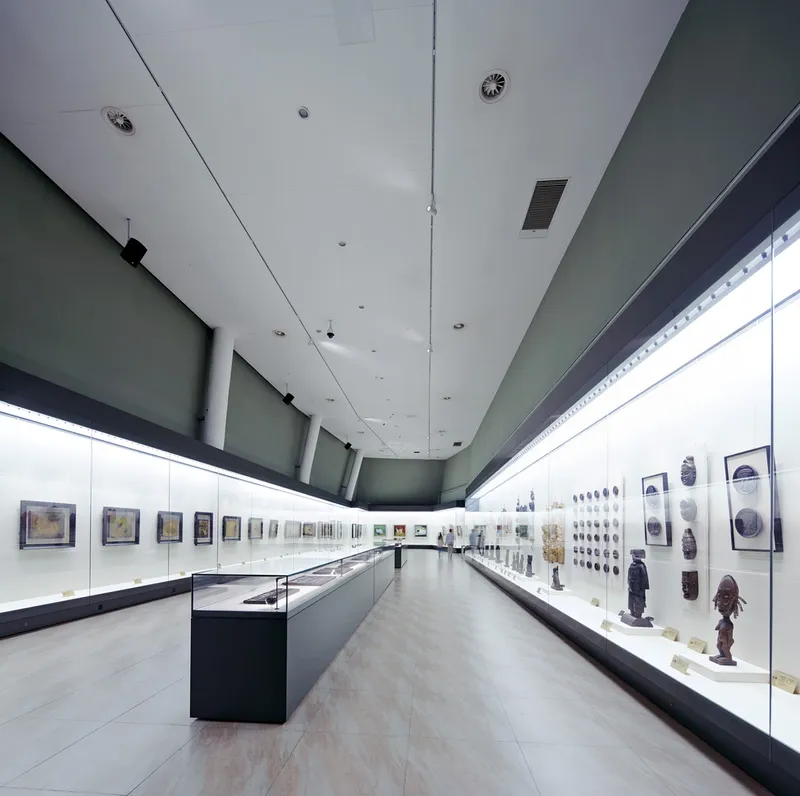
- City Art Museum: A four-level standalone structure facing the southeast plaza, housing a variety of exhibition spaces—large, medium, and small—to accommodate diverse art formats.
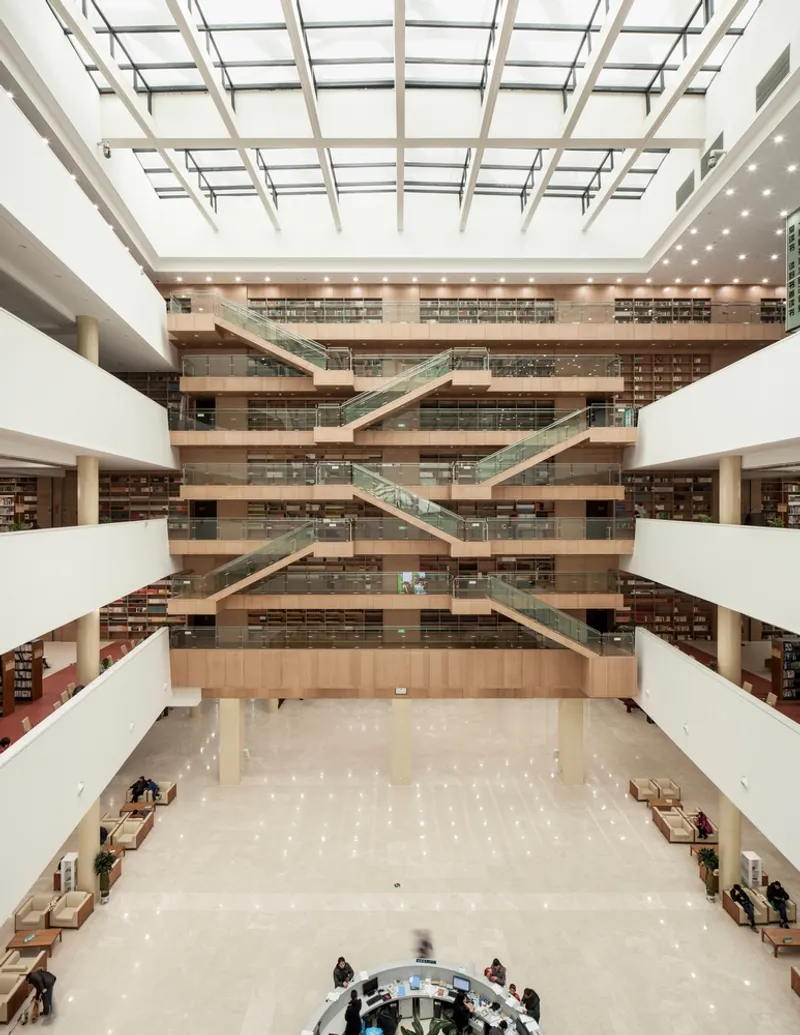
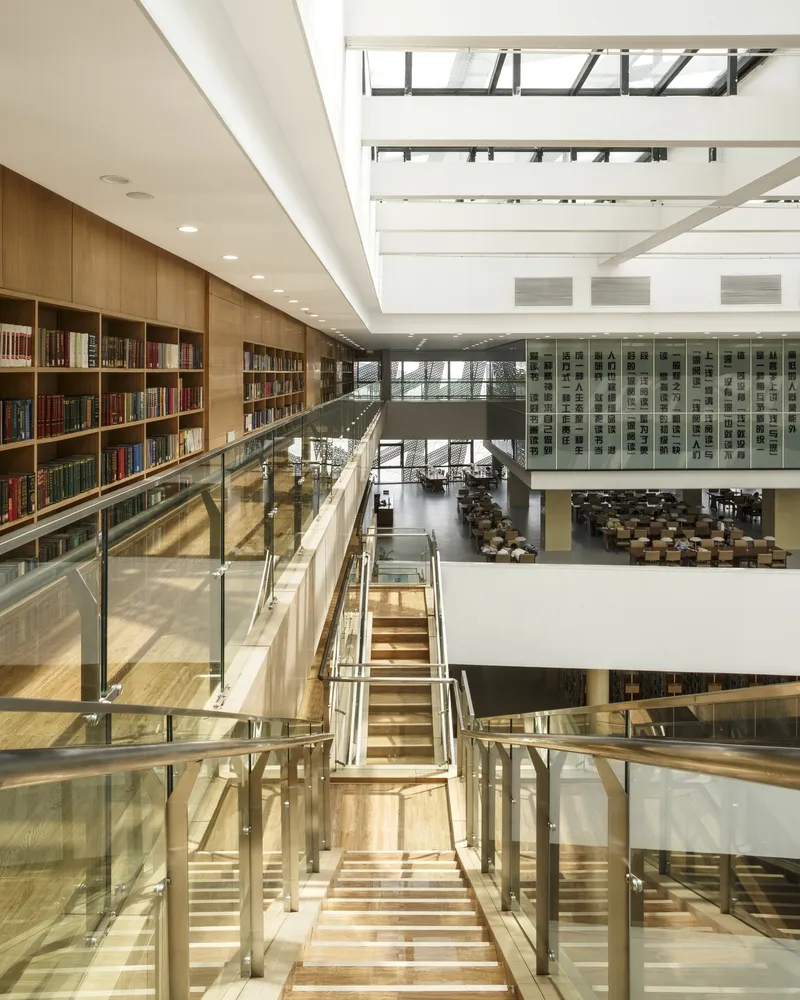
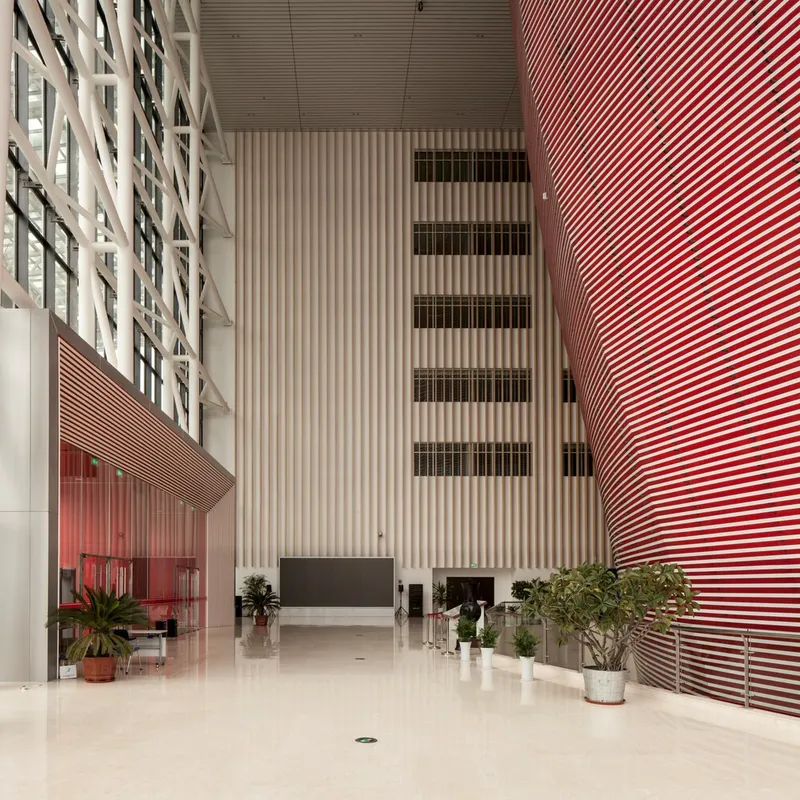
- City Library: A five-story structure with a striking steel-framed atrium, home to 1.2 million volumes, public reading rooms, a 540-seat lecture hall, and 1,600 m² of academic exhibition space.
- Mass Art Museum: A six-level hub for performing arts, featuring a 775-seat theater, rehearsal spaces, and offices for five regional art troupes. The museum also houses the Center for Intangible Cultural Heritage.
Phase II
This phase adds conference facilities, commercial spaces, a hotel, and offices to further activate the site. The high-rise tower and podium serve as dynamic urban elements offering flexible public and private usage.
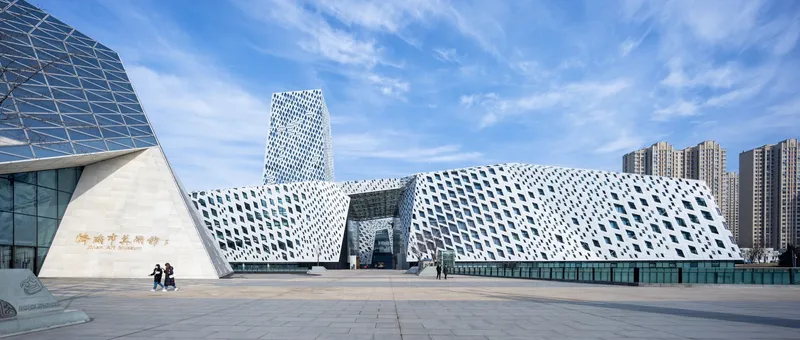
Architectural Skin: Texture, Light, and Identity
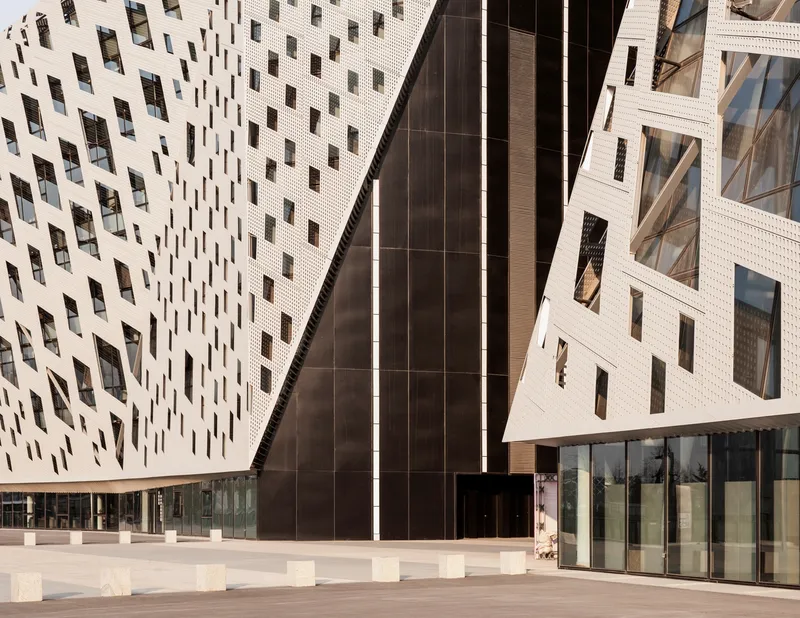
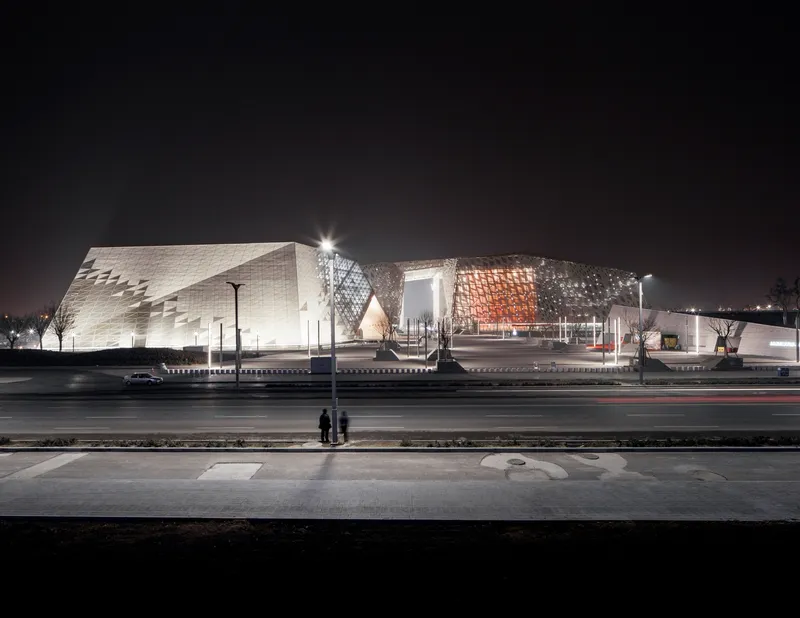
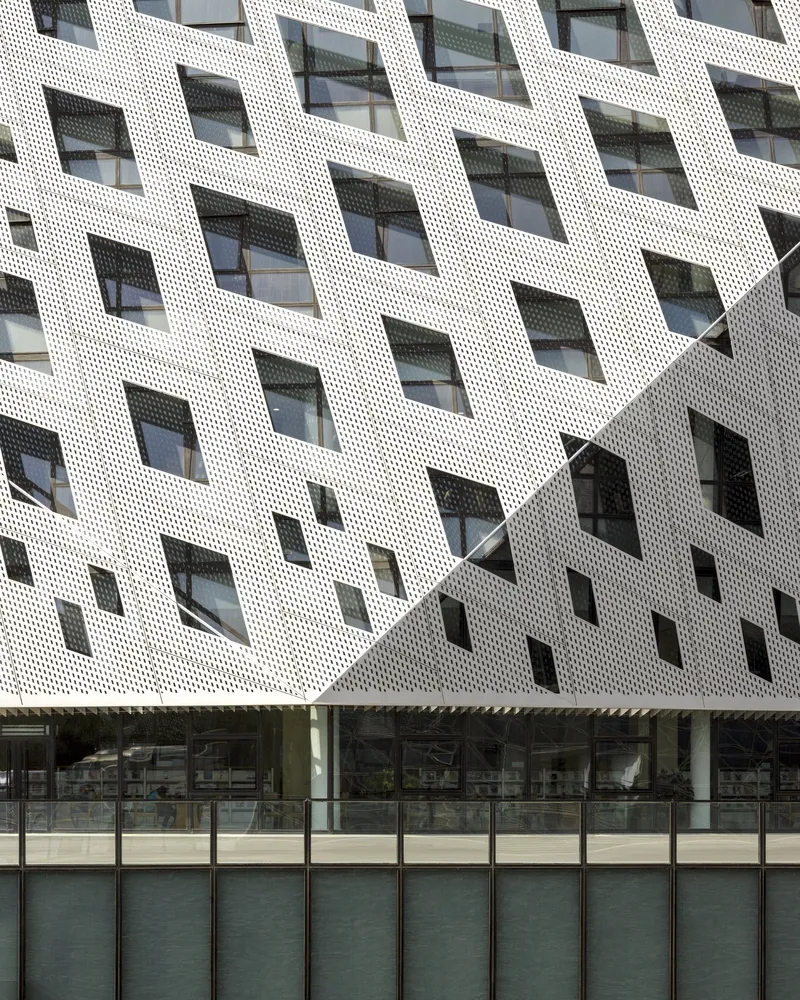
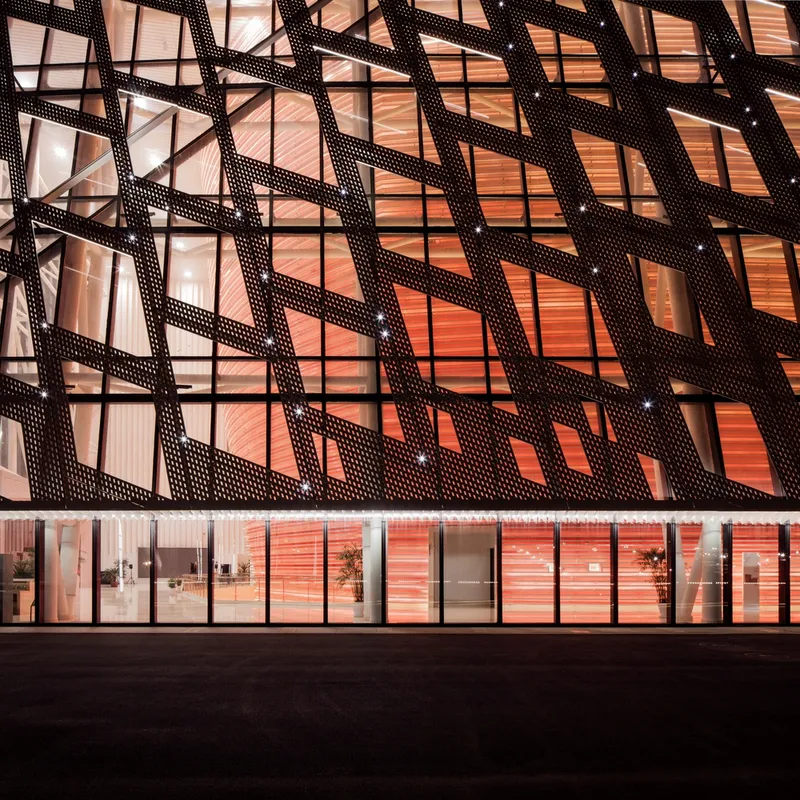
The library and Mass Art Museum are clad in a double-skin curtain wall system. The outer layer, composed of pierced aluminum panels, is digitally pixelated with diamond motifs inspired by Jinan’s mountains and springs. This semi-porous façade not only filters daylight and reduces solar gain, but also projects animated lighting effects.
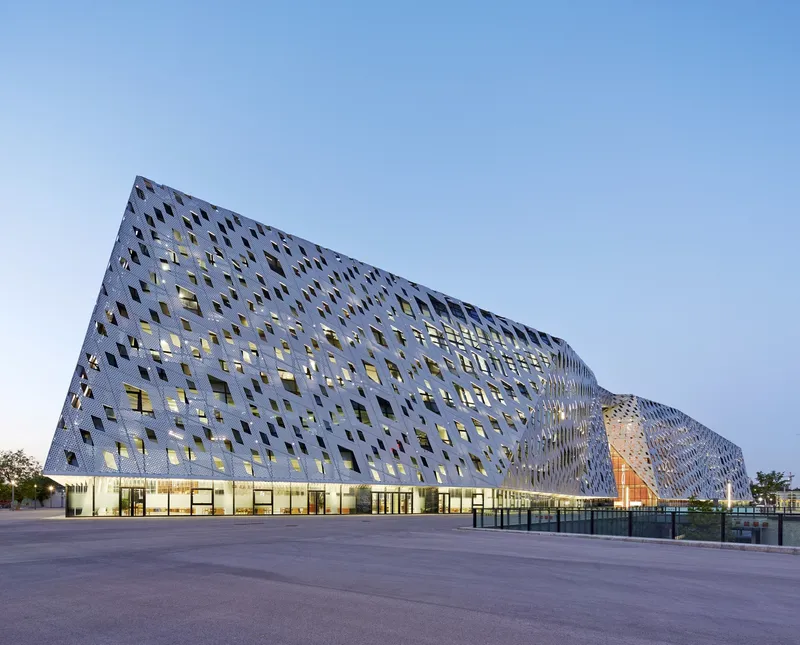
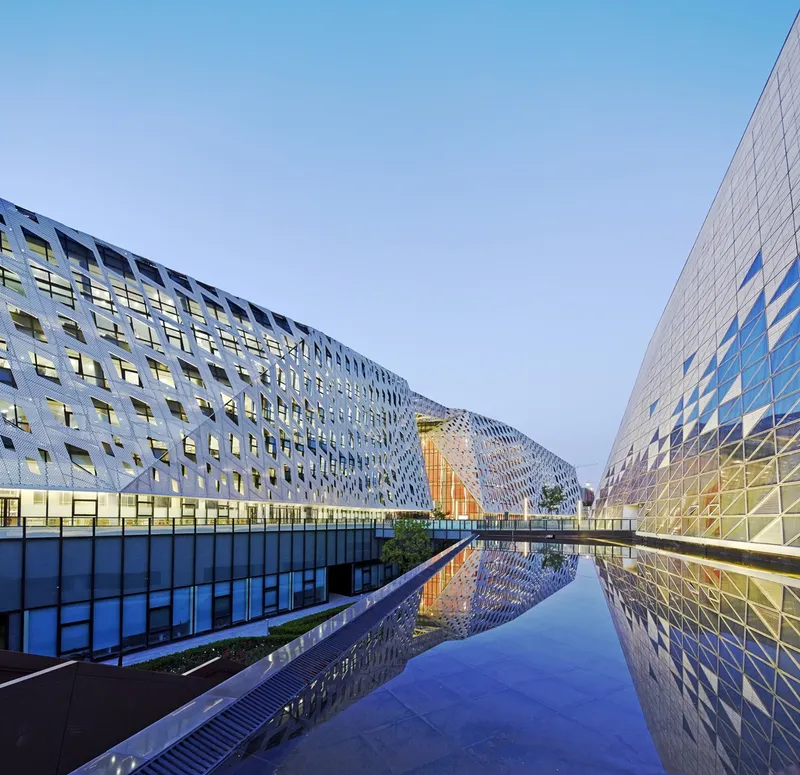
The lighting design, integrated into the curtain wall, incorporates spring water symbolism, ink painting aesthetics, and poetic rhythm, transforming the buildings into luminous cultural canvases at night. These effects contribute to Jinan’s broader urban lighting master plan, blending architecture with landscape and infrastructure.
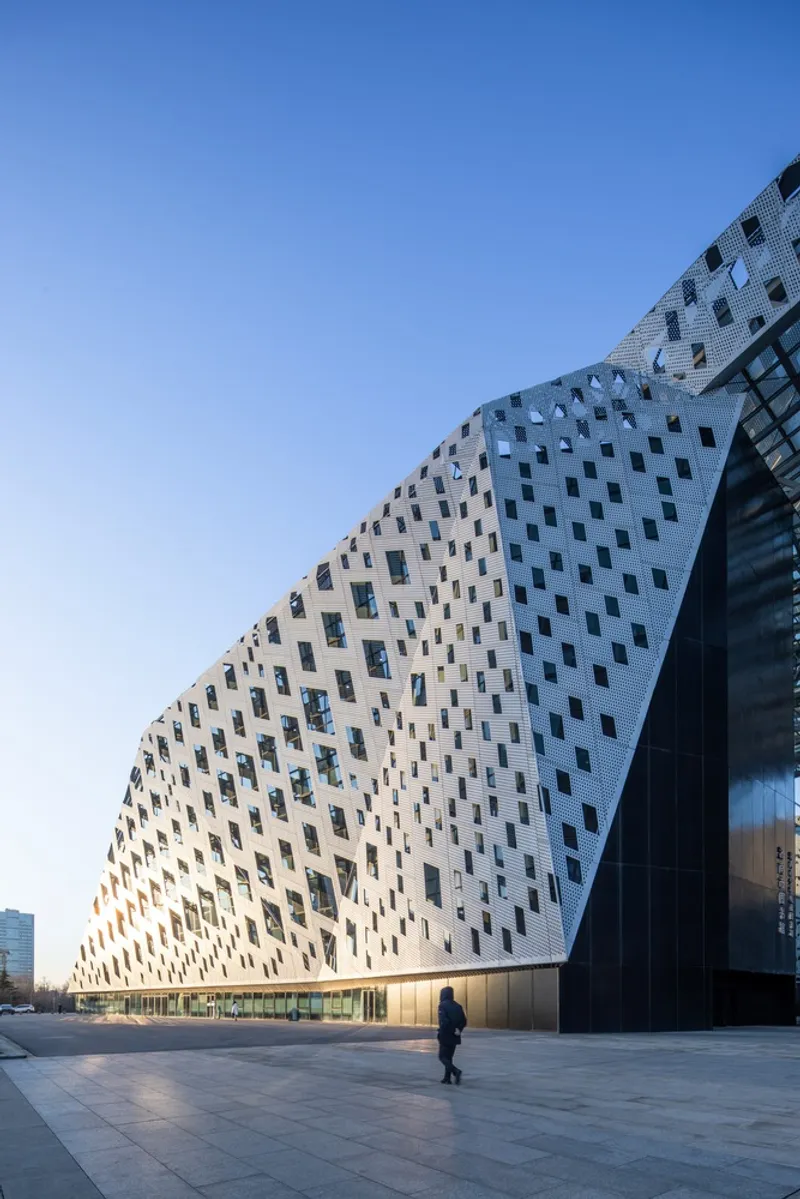
Cultural Poetics in Architecture
Rather than dominate the cityscape, the Cultural Center frames it from within. Randomly hollowed sections in the panels allow glimpses of the surrounding skyline, creating a dialogue between interior and city. These subtle visual connections reinforce the building’s role as a vessel for both heritage and innovation.
The project becomes more than a built environment—it is a symbol of collective memory, a space of education, creation, and public life, and a testament to the enduring relevance of culture in 21st-century Chinese cities.
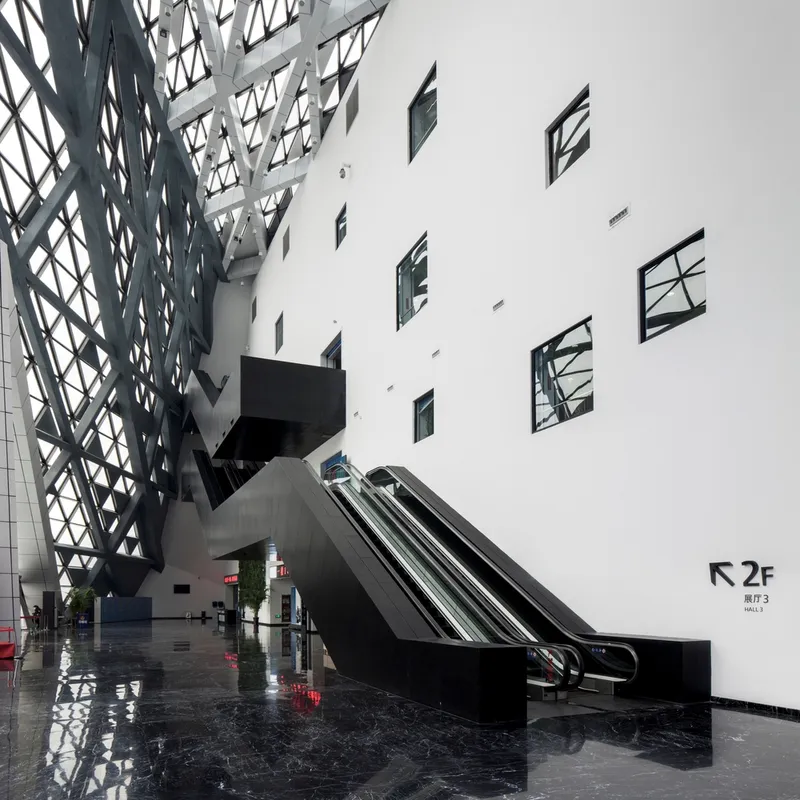
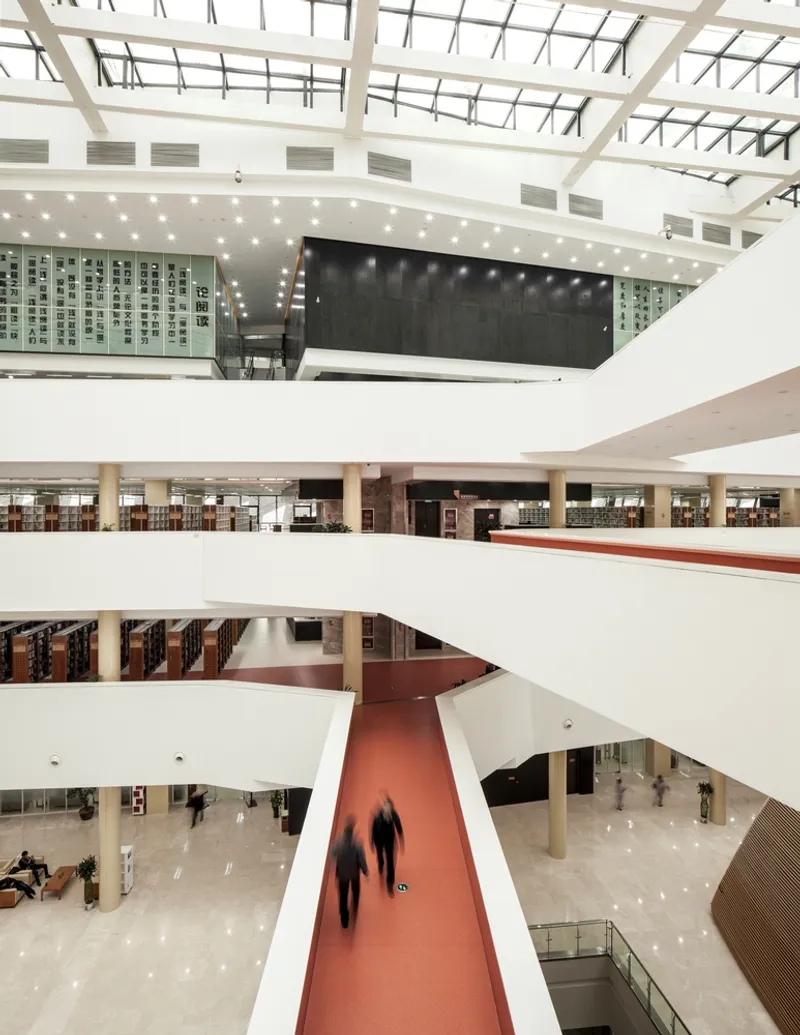
All the photographs are works of RAWVISION studio, Olivier Marceny


Popular Articles
Popular articles from the community


Hill & Cross Opera: Sculptural Opera House Architecture Shaped by Tallinn’s Landscape and Identity
Hill & Cross Opera reimagines opera house architecture in Tallinn through its sculptural hill, civic plaza, glass wave and a luminous cross.

Riyadh For All: Intergenerational Urban Design for Active Aging in Rabat
Riyadh For All reimagines urban design in Rabat with intergenerational co-living, adaptive courtyards, and Moroccan cultural exchange today.

The Ocean Hive: Sustainable Architecture for a Self-Sufficient Civilization at Sea
The Ocean Hive imagines sustainable architecture at sea, where modular habitats, algae, wave power and ocean waste sustain a growing colony.

The Earth Pod: 3D Printed Homes for Resilient Refugee Communities
The Earth Pod reimagines refugee housing through 3D printed homes made from clay, combining resilience, self-sufficiency, and rapid shelter.


Similar Reads
You might also enjoy these articles


Hodi-Mandai Geram
Project Function: Preservation and revitalization of the Intangible heritage and socio-spatial identity of the Hodi by Housing, Cultural Memory Center, Sacred Grove, landscape, local tourism economy


Olio Towers: A Mid-Rise for Performers That Fuses Housing, Rehearsal, and Stage
Located blocks from Houston's Theater District, this modular tower stacks living units around a central performance atrium.

Oasis: Modular Green Housing Carved into Dhaka's Urban Fabric
A shortlisted Plugin Housing entry reclaims unauthorized settlements in Dhaka with stepped concrete volumes, green roofs, and ventilation-driven design.

Black Hole: A Floating Megastructure for the Post-Physical Era
Emiliano Mazzarotto envisions a spherical, self-scaling arena where e-sports, digital hotels, and holographic stadiums replace traditional public space.

Explore Cultural Center Competitions
Discover active competitions in this discipline



Challenge to reimagine the Iron Throne


Photograph architecture without architects


Illustrate the lost glory of Angkor Wat - Render Challenge

Bring back Drive In's
Comments (0)
Please login or sign up to add comments
No comments yet. Be the first to comment!