
Shininess Explored: Andrés Jaque’s Xholobeni Yards Installation at the 2023 Venice Architecture Biennale
Research-based installation exposing titanium extraction’s environmental impact, contrasting glossy architectural facades with dusty mining landscapes and community resistance.


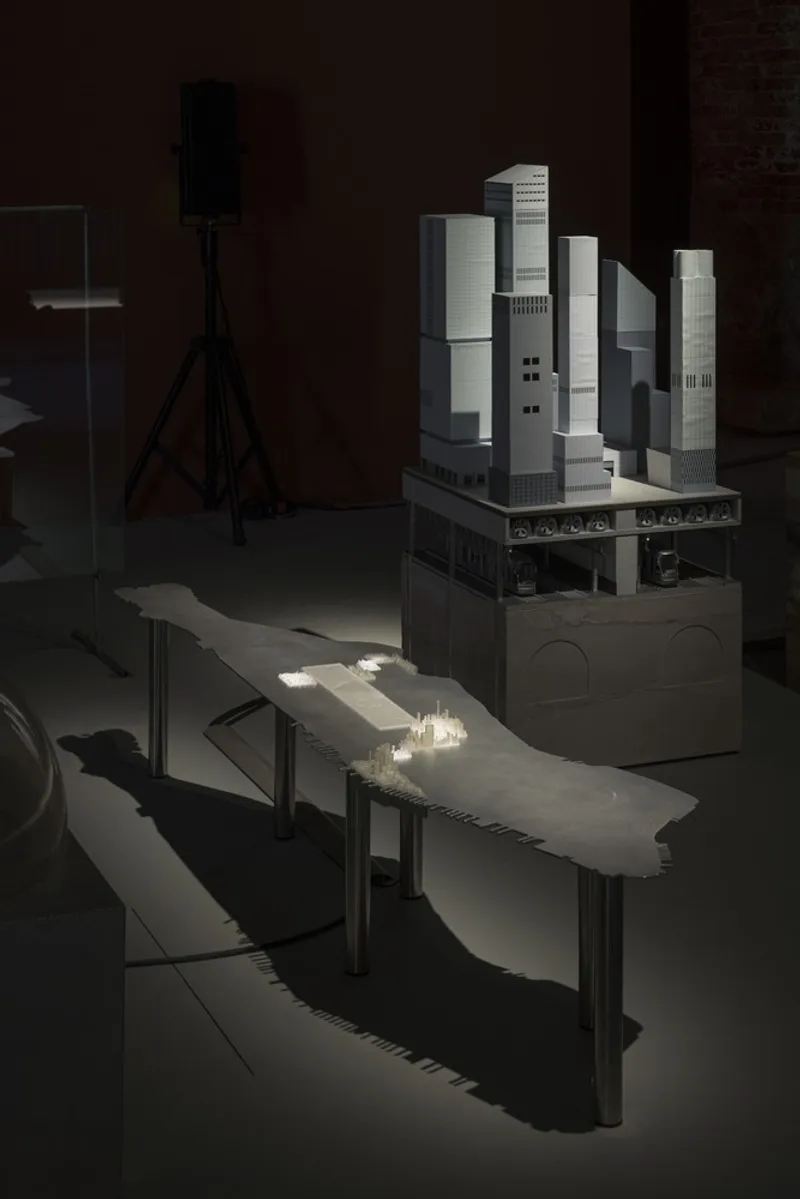
The installation “Xholobeni Yards: Titanium and the Planetary Making of Shininess / Dustiness” by Andrés Jaque and the Office for Political Innovation challenges the architectural world’s fascination with glossy surfaces and reflective materials. Presented at the 18th International Architecture Exhibition of La Biennale di Venezia, the installation explores the environmental, social, and political realities hidden behind architectural aesthetics.
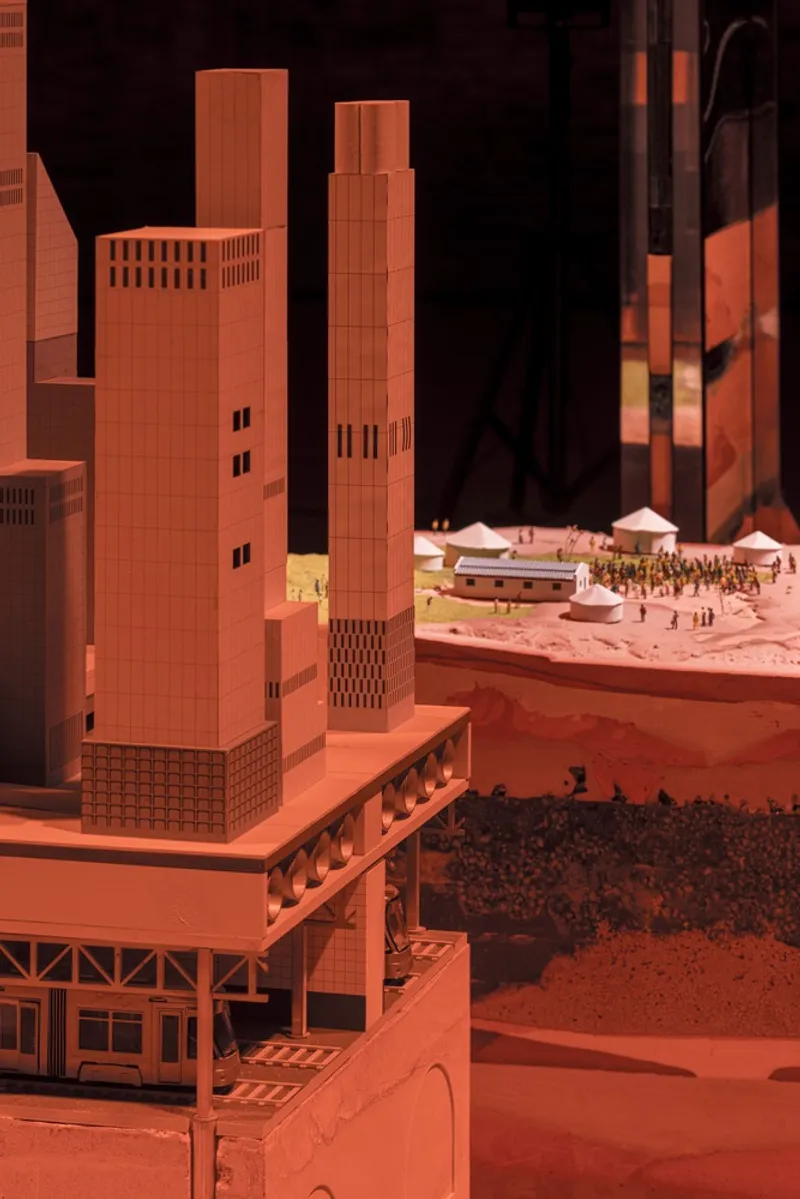
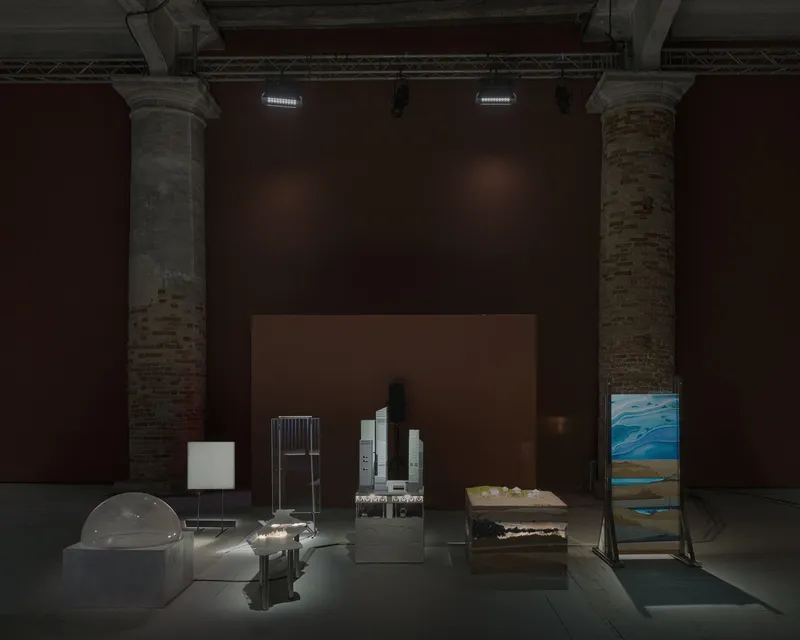
Installed at the historic Arsenale in Venice, the project reveals how architectural beauty, particularly the allure of shininess, often relies on extractive practices that impact distant landscapes and communities. Through sound, material installations, and collaborative research, the project invites audiences to reconsider the global systems behind modern architectural materials.
Architecture, Material Culture, and the Politics of Shininess
Contemporary architecture frequently celebrates reflective glass, polished metals, and shimmering facades as symbols of technological progress and urban prestige. However, the Xholobeni Yards installation highlights that these surfaces are not neutral aesthetic choices. Instead, they are products of global extraction networks that connect metropolitan architecture with remote landscapes.
Titanium plays a crucial role in producing the shiny coatings used in glass and facade systems worldwide. These coatings create self-cleaning surfaces and mirror-like reflections that are widely used in iconic commercial developments. Yet, the extraction of titanium from mineral-rich sands leaves profound environmental scars.
By presenting this material story, the installation examines how architectural aesthetics are entangled with ecological and economic systems, exposing the environmental costs embedded in the built environment.

Xholobeni, South Africa: The Hidden Landscape Behind Global Architecture
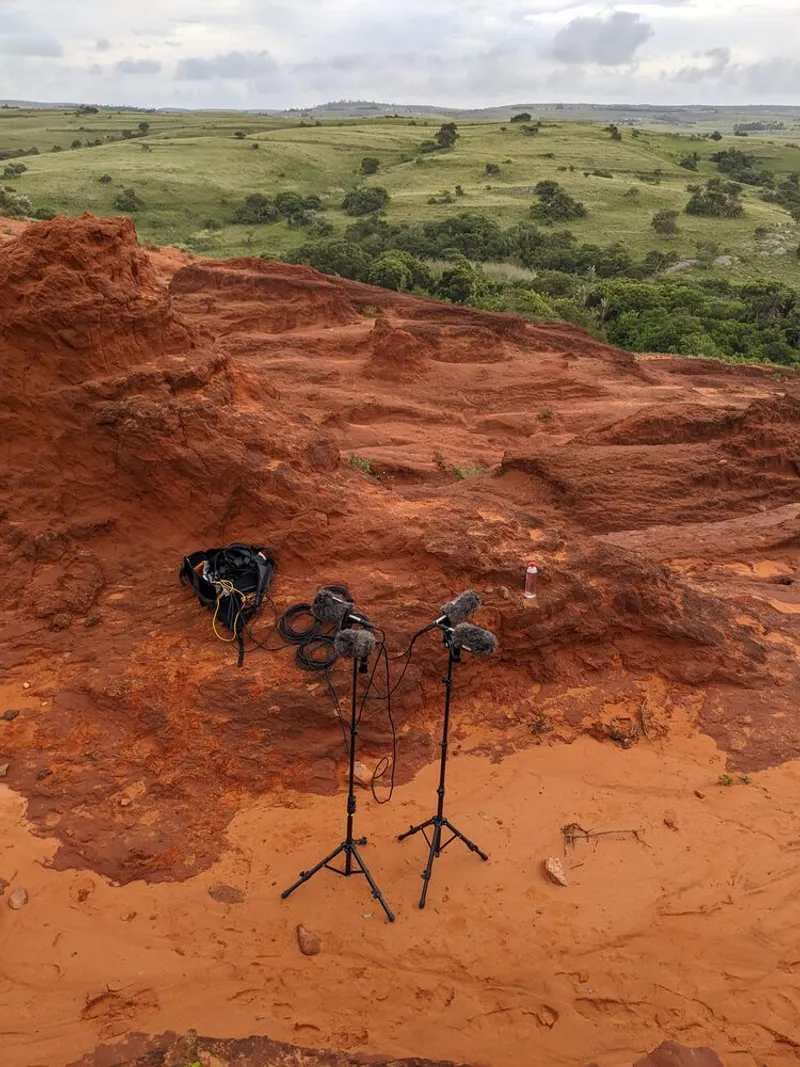
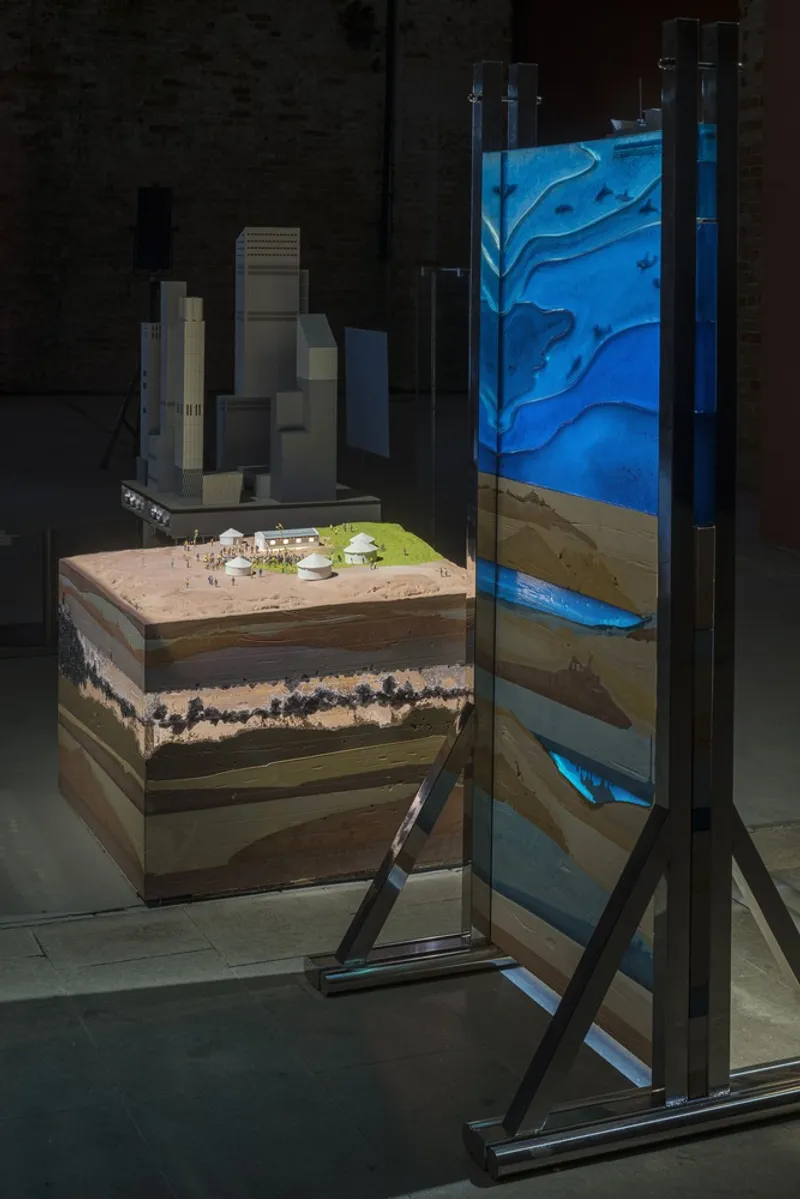
The installation focuses on Xholobeni, a coastal region in South Africa where titanium-rich mineral sands are located. For global industries, these sands represent a valuable resource. For local communities, however, the mining proposals threaten land, agriculture, and ecosystems.
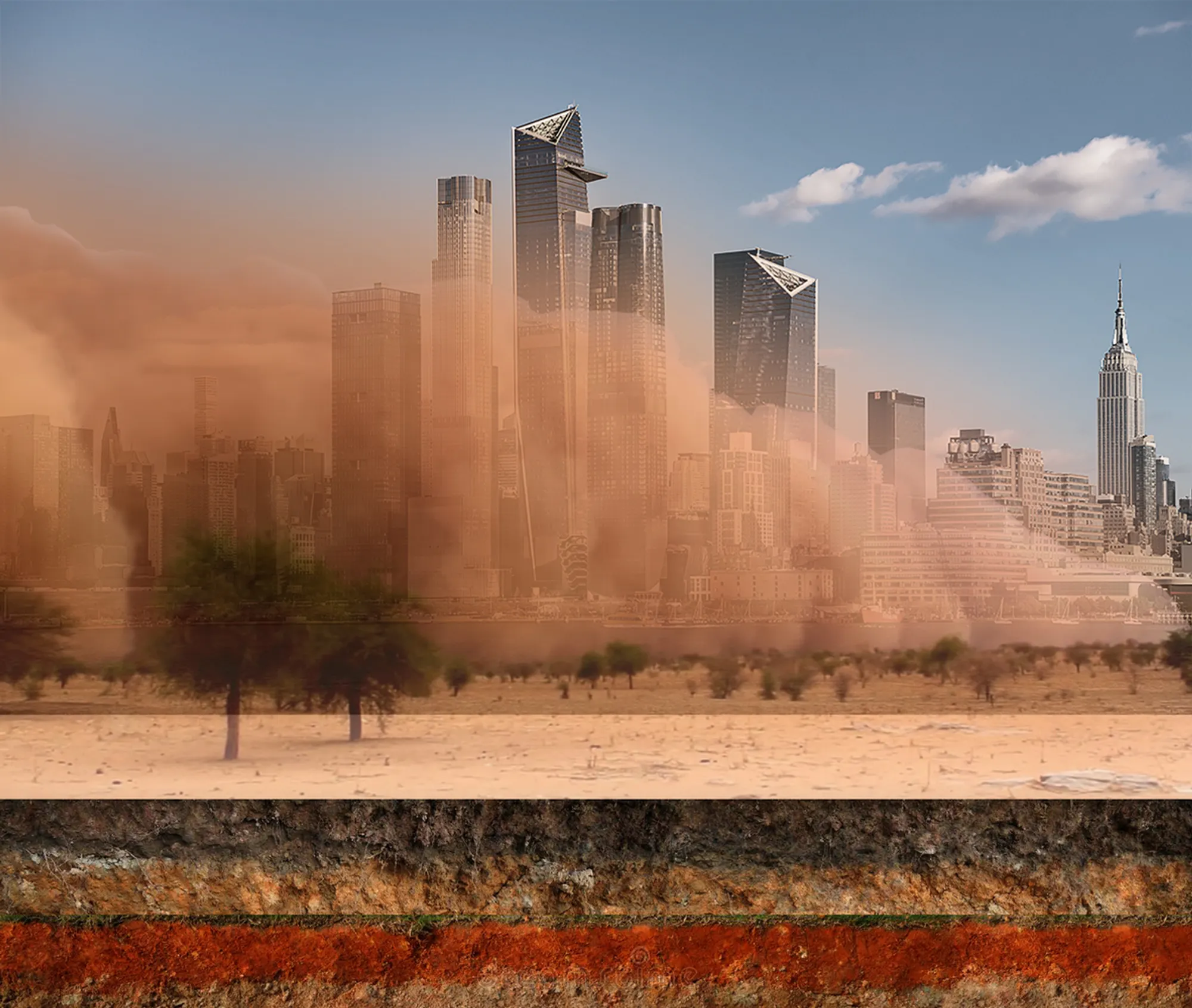
Removing titanium from coastal sands destabilizes the landscape. Once extracted, the remaining sand becomes loose and volatile, generating dust storms that blanket surrounding territories. This transformation shifts the environment from fertile farmland to unstable terrain.
Local communities, who depend on agriculture and natural ecosystems, experience profound disruptions. Farming becomes increasingly difficult, ecosystems are degraded, and residents are sometimes forced to relocate. Through this narrative, the installation reveals how architectural materials in wealthy urban centers are often linked to environmental degradation elsewhere.
From Shine to Dust: A Material Contrast
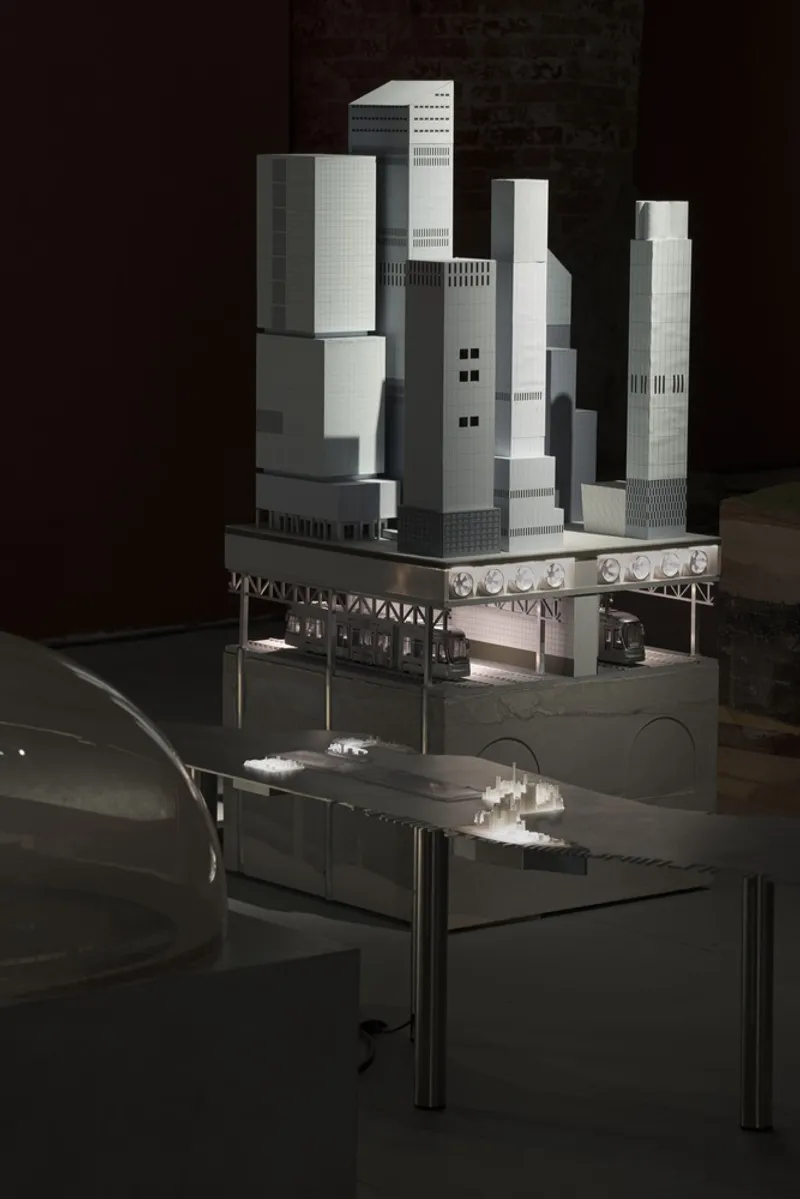
The concept of “shininess versus dustiness” forms the conceptual core of the installation. In cities such as New York City, developments like Hudson Yards showcase titanium-coated glass facades that symbolize corporate success and technological advancement.
These gleaming surfaces communicate wealth, innovation, and status. However, the installation exposes how these aesthetic values are connected to landscapes far away, where the extraction of titanium creates dusty, unstable environments.
The contrast between the polished facades of global cities and the dust-filled landscapes of mining regions emphasizes the unequal distribution of architectural benefits and environmental consequences.
Collaboration Across Disciplines
The project is the result of an extensive collaborative effort. Andrés Jaque and the Office for Political Innovation worked with:
- Activists and community representatives from Xholobeni
- Experts in seismographs and transduction from Poland
- Researchers and sound editors
- Prop makers and installation specialists
Together, they developed a research-based spatial experience that translates environmental and social tensions into architectural form. The installation integrates soundscapes, physical structures, and storytelling to make invisible ecological processes perceptible to visitors.
This multidisciplinary collaboration reflects the idea that architecture is not only about buildings but also about relationships between materials, territories, and communities.

Resistance Through Culture and Community
Despite the pressures of mining interests, the people of Xholobeni continue to resist titanium extraction projects. Their resistance is deeply rooted in cultural practices, including traditional songs that celebrate their connection to land, ancestry, and nature.
The installation incorporates these songs as a central narrative device. Rather than presenting resistance only through political discourse, the project emphasizes the emotional and cultural dimensions of environmental protection.
By translating these voices into a spatial installation, the architects attempt to create an empathetic environment where visitors can feel the environmental violence experienced by distant communities.
Architecture as a Platform for Environmental Awareness
The Xholobeni Yards installation suggests that architecture can serve as more than physical construction. It can function as a platform for activism, storytelling, and ecological awareness.
Through immersive spatial design, the installation enables visitors to experience the sensory consequences of extractivism. Sound, materials, and narrative combine to reveal how architectural materials circulate through global networks.
The project ultimately challenges architects and designers to reconsider how material choices affect ecosystems and communities across the planet.
The Venice Architecture Biennale and the Laboratory of the Future
The installation was presented during the 2023 Venice Architecture Biennale, curated by Lesley Lokko. The exhibition explored the theme “The Laboratory of the Future,” focusing particularly on perspectives from the African continent.
More than sixty national pavilions participated in the event, each examining global architectural challenges from new cultural and environmental viewpoints. Several collateral exhibitions also expanded the discussion by addressing climate change, decolonization, and alternative futures for the built environment.
Within this context, the Xholobeni Yards installation contributed a critical perspective on resource extraction, highlighting the complex relationships between architecture, material economies, and planetary ecosystems.
Toward a More Responsible Architectural Future
By confronting the environmental and social costs hidden behind polished architectural surfaces, the installation encourages architects, designers, and urban planners to rethink material choices.
The project calls for a future where architecture prioritizes ecological responsibility, community care, and transparency in material sourcing. Rather than celebrating shine as a symbol of progress, it asks designers to consider the landscapes and communities that make those surfaces possible.
Ultimately, the installation proposes that architecture must evolve beyond aesthetics to address the political and environmental systems shaping the built world.




Popular Articles
Popular articles from the community


Co-life: Sustainable Architecture for Age-Friendly Community Living
Co-life reimagines sustainable architecture for seniors through courtyards, rammed earth, shared gardens, and spaces designed for belonging.

The Earth Pod: 3D Printed Homes for Resilient Refugee Communities
The Earth Pod reimagines refugee housing through 3D printed homes made from clay, combining resilience, self-sufficiency, and rapid shelter.

The Musturak Paradise: Senior Living Architecture for a Connected Future in Temara, Morocco
The Musturak Paradise reimagines senior living architecture in Temara via private homes, social spaces, culture, community, and shared care.

Co-Life: Senior Housing Design That Reconnects Older Adults With the City
Co-Life reimagines senior housing design through healing gardens, shared streets, workshops, and a sustainable community across generations.

Similar Reads
You might also enjoy these articles

Bamboo Housing Challenge 2026: Design Affordable, Sustainable Homes Using Bamboo
An international design competition by Bamboo U and IBUKU inviting architects and designers to reimagine affordable housing using bamboo — with the winning design built full-scale in Bali.

Computational Design & Education: Beegraphy Design Awards Introduces 7th Category (Featuring Jiyun's Innovative Approach)
Dive into Beegraphy’s 7th Design Awards category, where computational design meets education to create immersive, interactive learning tools, inspired by Jiyun’s work.

From Parametric Lighting to Urban Furniture: Join the 2nd Workshop in Beegraphy’s Computational Design Series
Dive into Cutting-Edge Design Techniques and Practical Applications with Industry Experts

Last Call: Unleash Your Architectural Genius in SHAK's Kindergarten Design Competition
Urgent call for architects to join SHAK's kindergarten design competition before the looming deadline


Explore Sustainable Design Competitions
Discover active competitions in this discipline



Challenge to reimagine the Iron Throne


Photograph architecture without architects


Illustrate the lost glory of Angkor Wat - Render Challenge


Design challenge to reuse E-waste
Comments (0)
Please login or sign up to add comments
No comments yet. Be the first to comment!