

Sinsa-dong Mixed-Use Building by a round architects: Innovative Urban Design in Gangnam, Seoul
The Sinsa-dong Mixed-Use Building by a round architects features glass façades, segmented masses, natural light, and textured elevations in Seoul’s Gangnam district.


Architects: a round architects
Located adjacent to the iconic Dosan Park in Seoul’s bustling Gangnam District, the Sinsa-dong Mixed-Use Building by a round architects represents a thoughtful response to dense urban living and commercial activity. Completed in 2021, this 469 m² project seamlessly combines community, commercial, and aesthetic considerations to enhance the urban fabric while respecting its narrow site constraints.

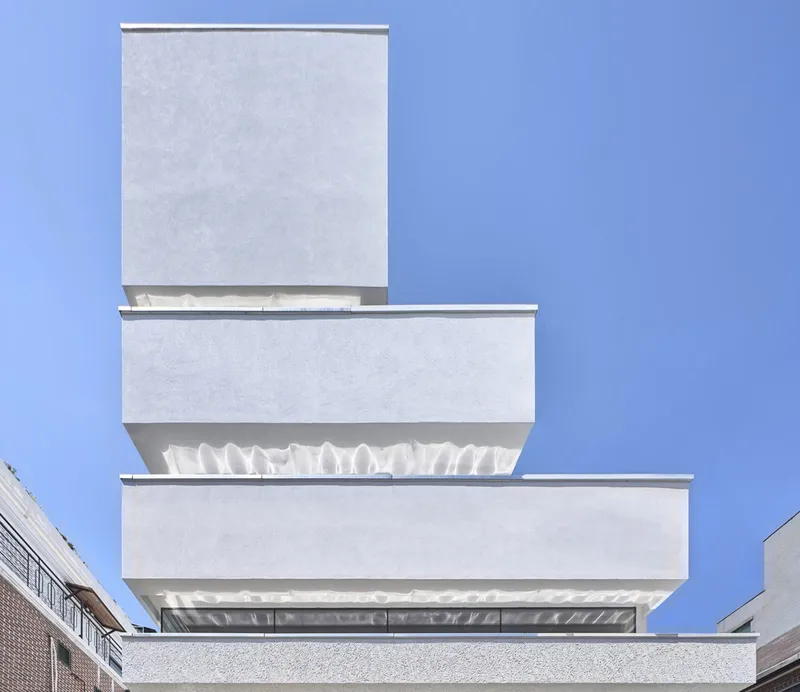

Context and Urban Integration
Gangnam, one of Seoul’s most dynamic districts, expanded rapidly during the 1960s, with wide streets and a grid-like urban layout. Over the decades, this area has seen increasing density, particularly along smaller, secondary streets. The Sinsa-dong site faces a narrow road, heavily trafficked by pedestrians and vehicles alike. Recognizing the challenges posed by this context, a round architects strategically designed the building to minimize its visual and spatial pressure on the street, creating a welcoming environment for both residents and visitors.

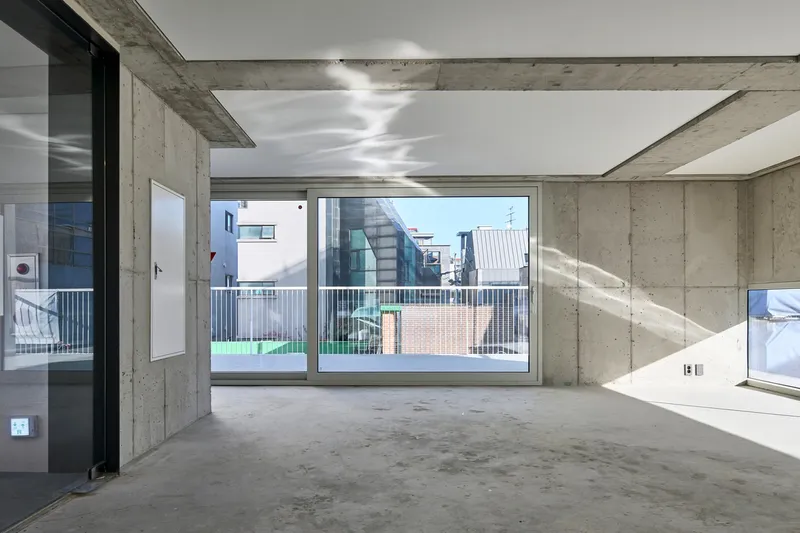
Architectural Concept and Design Approach
The architectural strategy centers on creating openness and flexibility despite the narrow street frontage. The building’s first-floor façade extensively uses glass, maximizing transparency and inviting natural light to permeate the interior. This design choice fosters a sense of openness and visual connection to the surrounding streetscape, encouraging pedestrian engagement.
To address the massing challenges, the building is horizontally segmented, with each volume floating above reflective glass surfaces. This approach not only reduces the perceived bulk along the narrow road but also allows daylight to penetrate deep into the interior spaces. Each floor’s segmented mass is uniquely proportioned, producing an intentionally ambiguous sense of scale that engages viewers from street level.

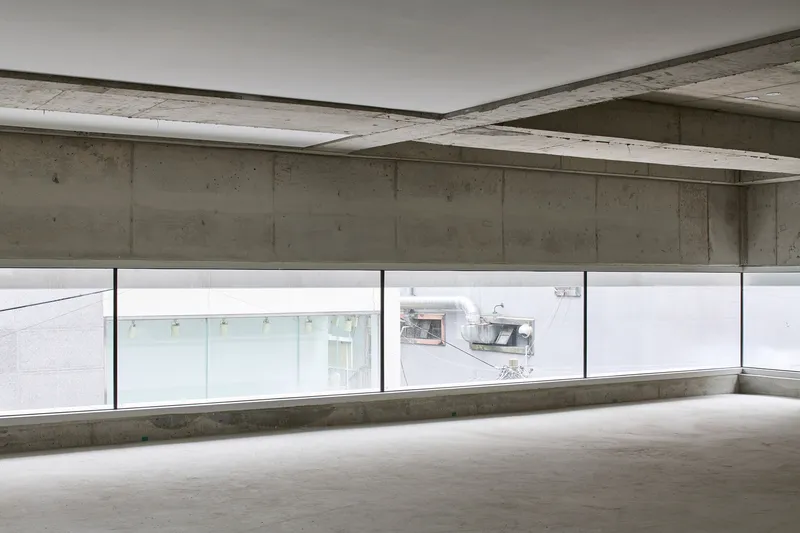
Materiality, Texture, and Façade Expression
The Sinsa-dong Mixed-Use Building employs subtle variations in color and texture across its different mass segments. This nuanced differentiation enriches the building’s overall elevation, providing depth and visual interest while reinforcing the horizontal segmentation strategy. Glass, reflectors, and carefully chosen materials work together to create dynamic light reflections, animating the façade throughout the day and contributing to the building’s urban presence.
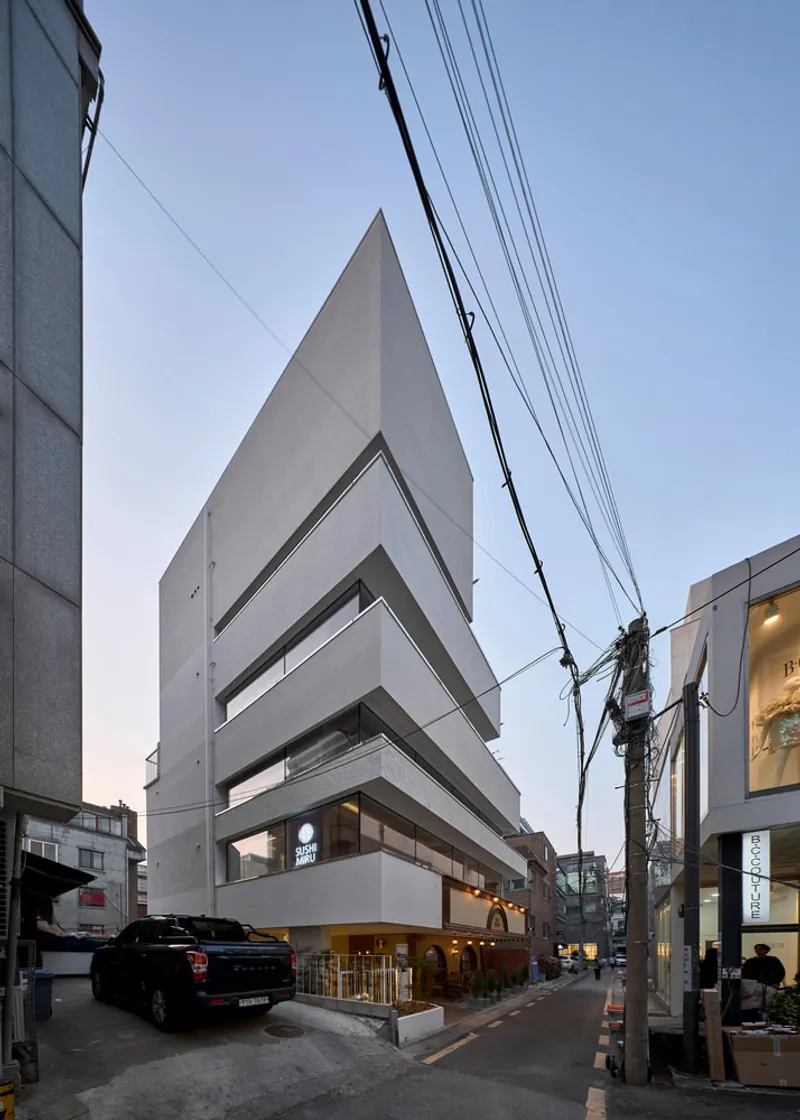

Spatial Experience and Community Interaction
Inside, the thoughtful massing strategy ensures that natural light reaches every corner of the building. The combination of glass façades, floating volumes, and reflective elements generates a dynamic interior environment that balances openness and privacy. The design encourages community interaction on the ground level while providing functional commercial and residential spaces above. This integration of program and form positions the Sinsa-dong Mixed-Use Building as a model of contemporary mixed-use architecture in dense urban contexts.
The Sinsa-dong Mixed-Use Building by a round architects exemplifies sensitive, context-driven urban design. By blending transparency, thoughtful massing, and subtle material variation, the project enhances both the street-level experience and the quality of interior spaces. Its innovative approach demonstrates how mixed-use architecture can harmonize with dense urban settings while creating visually engaging, functional, and community-focused spaces.


All photographs are works of
Choi Jinbo



Popular Articles
Popular articles from the community


Riyadh For All: Intergenerational Urban Design for Active Aging in Rabat
Riyadh For All reimagines urban design in Rabat with intergenerational co-living, adaptive courtyards, and Moroccan cultural exchange today.
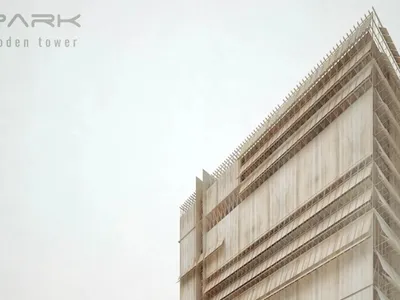
EW PARK: Sustainable Architecture Reimagines the Future of Urban Parking
EW PARK reimagines city parking as a modular wooden tower combining automation, solar energy, electric mobility, and adaptable urban design.
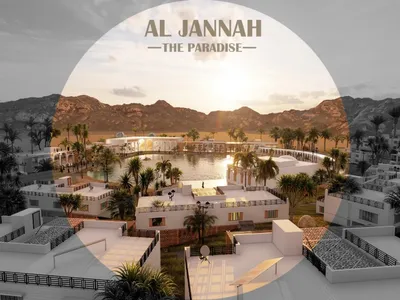
AL-JANNAH: Sustainable Architecture and Permaculture for Afghan Widows
AL-JANNAH uses sustainable architecture and permaculture to create resilient oasis of housing, learning, work and renewal for Afghan widows.

The Musturak Paradise: Senior Living Architecture for a Connected Future in Temara, Morocco
The Musturak Paradise reimagines senior living architecture in Temara via private homes, social spaces, culture, community, and shared care.


Similar Reads
You might also enjoy these articles

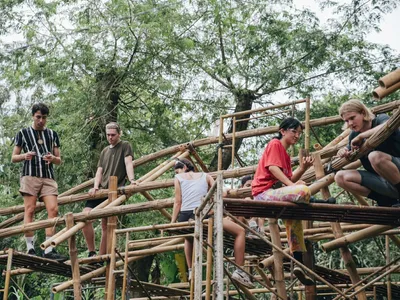
Bamboo Housing Challenge 2026: Design Affordable, Sustainable Homes Using Bamboo
An international design competition by Bamboo U and IBUKU inviting architects and designers to reimagine affordable housing using bamboo — with the winning design built full-scale in Bali.
Computational Design & Education: Beegraphy Design Awards Introduces 7th Category (Featuring Jiyun's Innovative Approach)
Dive into Beegraphy’s 7th Design Awards category, where computational design meets education to create immersive, interactive learning tools, inspired by Jiyun’s work.
From Parametric Lighting to Urban Furniture: Join the 2nd Workshop in Beegraphy’s Computational Design Series
Dive into Cutting-Edge Design Techniques and Practical Applications with Industry Experts

Last Call: Unleash Your Architectural Genius in SHAK's Kindergarten Design Competition
Urgent call for architects to join SHAK's kindergarten design competition before the looming deadline


Explore Commercial Buildings Competitions
Discover active competitions in this discipline



Challenge to reimagine the Iron Throne


Photograph architecture without architects


Illustrate the lost glory of Angkor Wat - Render Challenge


Design challenge to reuse E-waste
Comments (0)
Please login or sign up to add comments
No comments yet. Be the first to comment!