
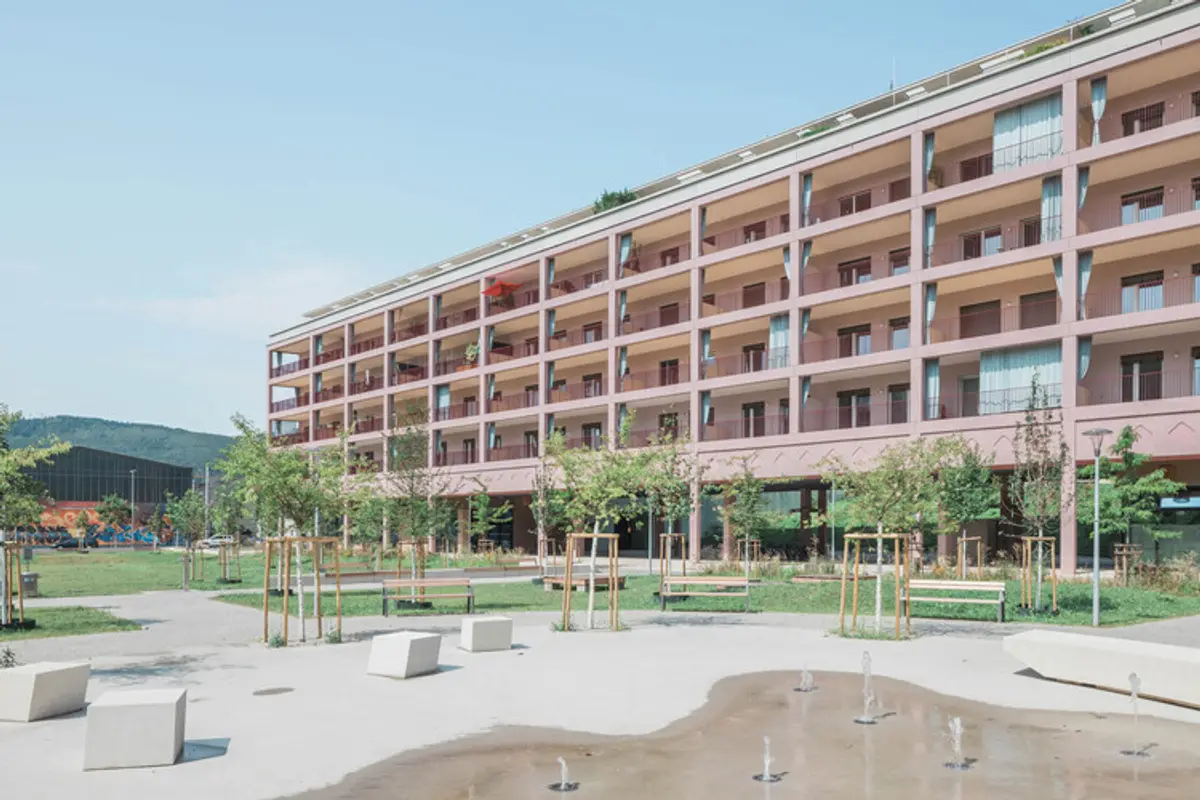
Smart City Graz Square: A Human-Centered Urban Vision by Gangoly & Kristiner Architekten
Smart City Graz Square blends human-centered design with sustainable architecture, creating inclusive urban living through shared spaces, green connectivity, and modern community-focused planning.


Smart City Graz Square, designed by Gangoly & Kristiner Architekten, is a landmark project redefining the future of modern urban living in Austria. Completed in 2023 and spanning 28,000 m², the development challenges the conventional idea of smart cities by shifting the conversation from technology alone to a more inclusive, socially conscious model of urban design.
Located in Graz, the project reinterprets the traditional urban block structure of the “Gründerzeit” era, creating a sustainable, community-oriented district that prioritizes livability, accessibility, and human interaction.
A New Vision of Smart Urban Development
In recent years, the idea of a “smart city” has often been reduced to technological solutions—automation, data systems, and digital infrastructure. However, the architects behind Smart City Graz Square argue that true smartness must go beyond technology.
They emphasize that modern cities must address:
- Social needs and inclusivity
- Affordable and needs-based housing
- Shared spaces that nurture community life
- Sustainable, human-centered design
- Everyday usability for residents from all backgrounds
Gangoly & Kristiner Architekten propose a fresh direction: smart urbanism rooted in people, not just systems.
Reinterpreting the Gründerzeit Block
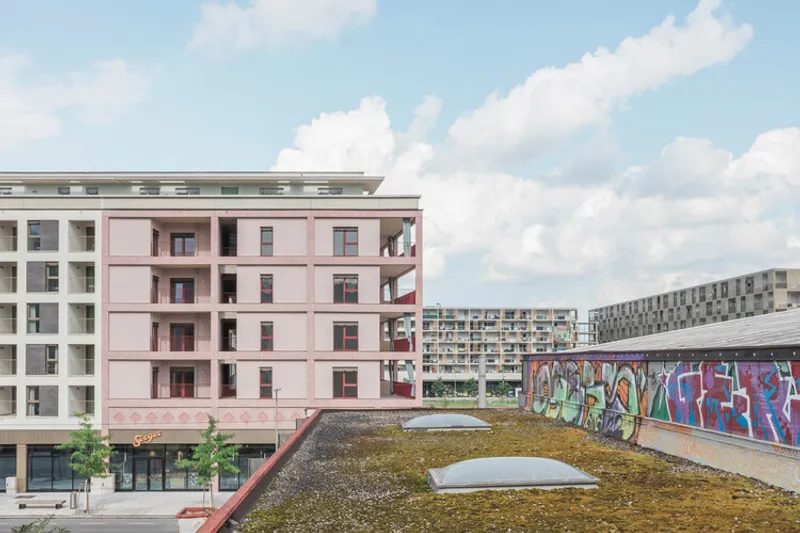
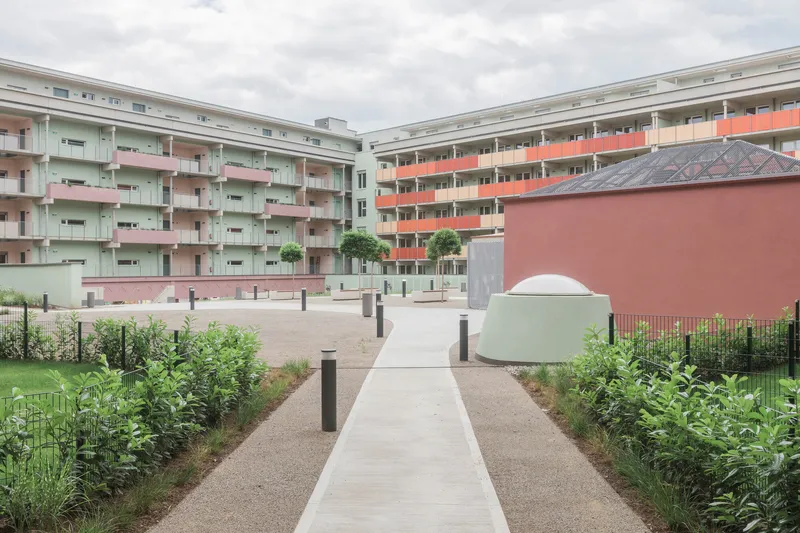
Inspired by the familiar scale and layout of Graz’s historic Gründerzeit blocks, the Smart City Square adopts their proportions but transforms them into a contemporary, flexible, multi-functional urban structure.
Key design principles include:
1. Clear Spatial Organization
A distinction is maintained between:
- Public street fronts
- Private and semi-private interior courtyard spaces
This structure mirrors traditional urban forms yet introduces modern adaptation.
2. Integration with Nature
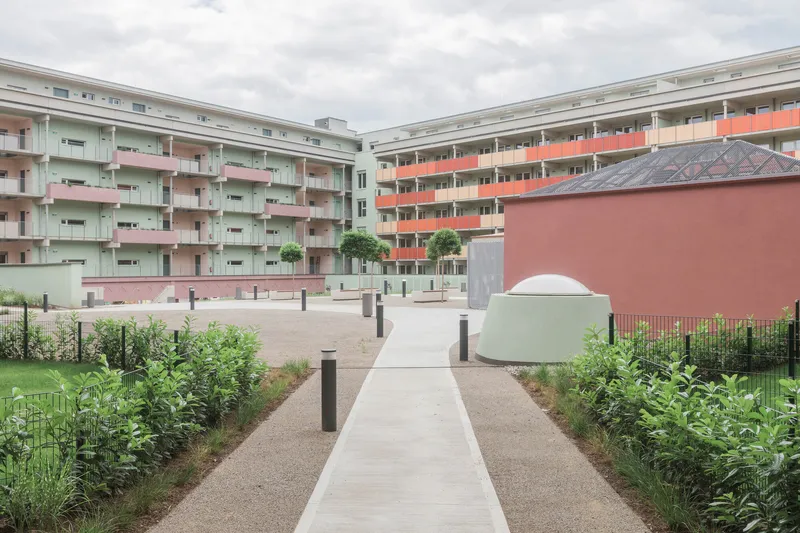
A significant innovation is the seamless connection between the internal courtyard and the adjacent public park, enhancing accessibility and providing continuous green spaces across multiple levels.
3. Fluid Boundaries
Communal zones—spaces for playing, cooking, working, and social gatherings—are strategically positioned at the thresholds between indoor and outdoor settings, fostering a continuous flow of activity.


Architecture Defined by Diversity and Cohesion
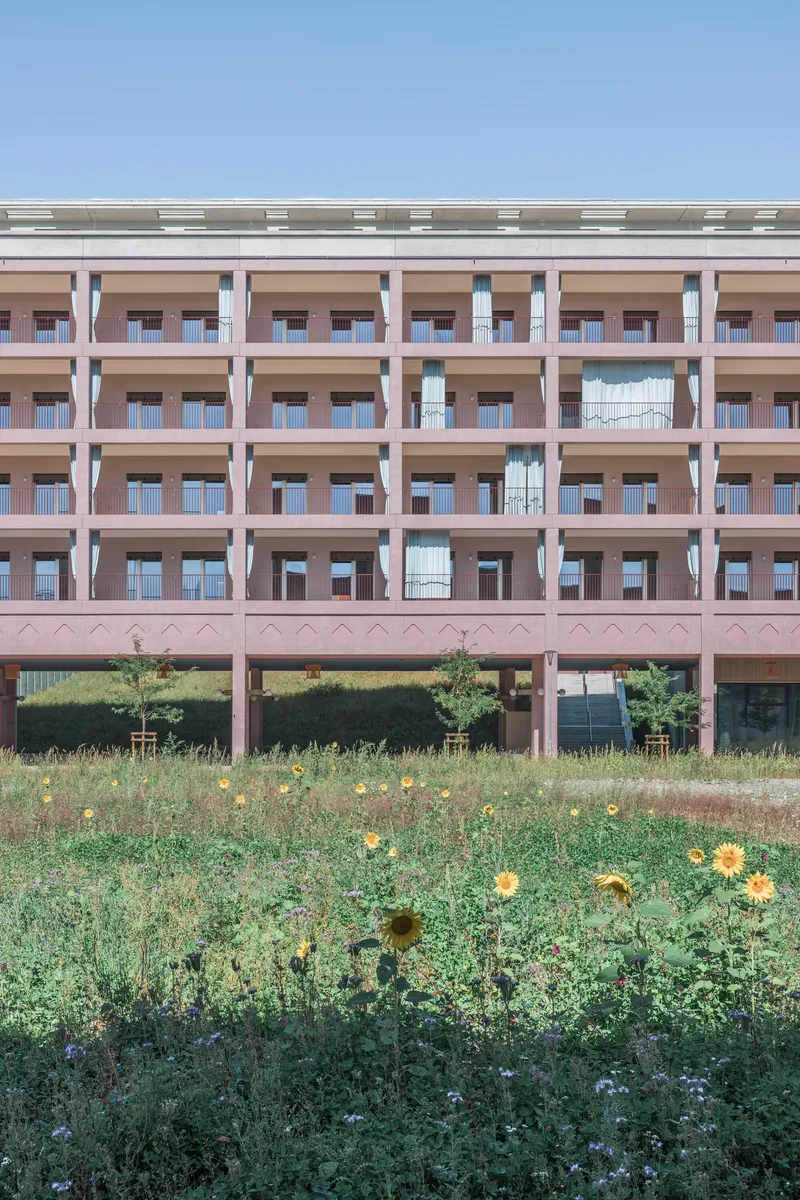
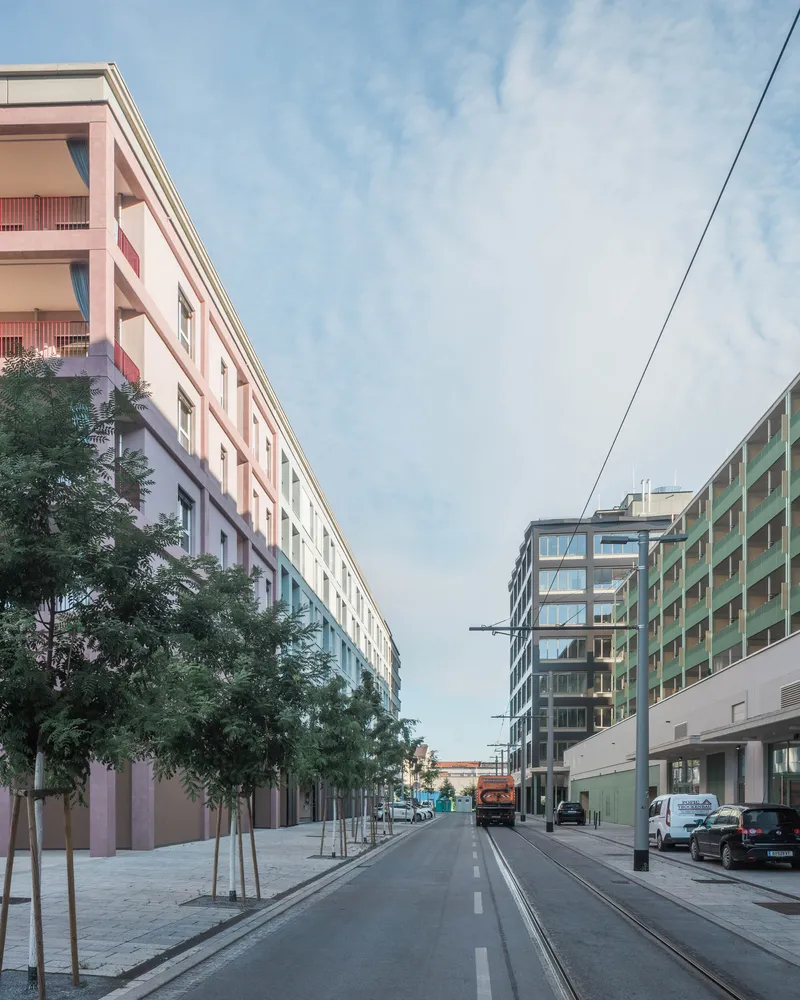
The facades of Smart City Graz Square celebrate variation within unity. Instead of a single rigid language, the architecture explores:
- Multiple façade themes
- Subtle material contrasts
- Rhythmic structural changes
- Organic evolution through the planning process
This curated diversity reflects the character of historic blocks while projecting a forward-looking identity. According to the architects, this adaptive, evolving design approach is the essence of true smartness.

Spaces Designed for Modern Community Living
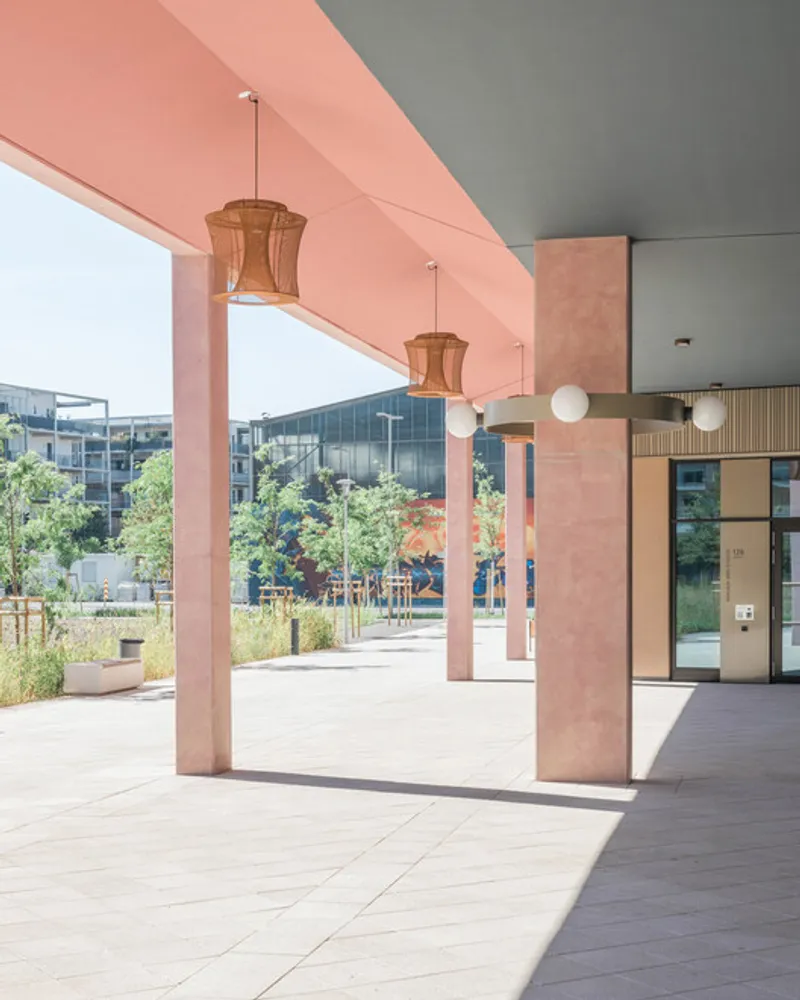
Inside the development, a series of communal, multi-functional spaces support contemporary lifestyles. These include:
- Shared working hubs
- Social cooking and dining areas
- Children’s play zones
- Landscaped gathering spaces
Large concrete arches, open passageways, and thoughtfully crafted interior-exterior transitions create a sense of openness and community throughout.


A Model for Future Urban Districts
Smart City Graz Square stands as a pioneering example of how cities can evolve intelligently—through inclusive planning, architectural diversity, and connected green spaces, rather than purely technological innovation.
The project sets new standards for:
- Sustainable architecture
- Community-driven design
- Human-scaled urban environments
- Socially inclusive smart development
It shows that the future of cities lies in balanced urban ecosystems where people, architecture, and nature coexist harmoniously.

All the photographs are works of Emilian Hinteregger


Popular Articles
Popular articles from the community


Lunar Spiral: Space Architecture Shaped by the Mathematics of the Universe
Lunar Spiral reimagines space architecture through Fibonacci geometry, lunar regolith, levitating habitats, and self-sustaining Moon living.

The Musturak Paradise: Senior Living Architecture for a Connected Future in Temara, Morocco
The Musturak Paradise reimagines senior living architecture in Temara via private homes, social spaces, culture, community, and shared care.

Hill & Cross Opera: Sculptural Opera House Architecture Shaped by Tallinn’s Landscape and Identity
Hill & Cross Opera reimagines opera house architecture in Tallinn through its sculptural hill, civic plaza, glass wave and a luminous cross.

Co-life: Sustainable Architecture for Age-Friendly Community Living
Co-life reimagines sustainable architecture for seniors through courtyards, rammed earth, shared gardens, and spaces designed for belonging.

Similar Reads
You might also enjoy these articles


Hodi-Mandai Geram
Project Function: Preservation and revitalization of the Intangible heritage and socio-spatial identity of the Hodi by Housing, Cultural Memory Center, Sacred Grove, landscape, local tourism economy


Olio Towers: A Mid-Rise for Performers That Fuses Housing, Rehearsal, and Stage
Located blocks from Houston's Theater District, this modular tower stacks living units around a central performance atrium.

Oasis: Modular Green Housing Carved into Dhaka's Urban Fabric
A shortlisted Plugin Housing entry reclaims unauthorized settlements in Dhaka with stepped concrete volumes, green roofs, and ventilation-driven design.

Black Hole: A Floating Megastructure for the Post-Physical Era
Emiliano Mazzarotto envisions a spherical, self-scaling arena where e-sports, digital hotels, and holographic stadiums replace traditional public space.

Explore Smart City Competitions
Discover active competitions in this discipline

Challenge to design mud housing for contemporary communities

Challenge to reimagine the Iron Throne

Photograph architecture without architects

Illustrate the lost glory of Angkor Wat - Render Challenge
Comments (0)
Please login or sign up to add comments
No comments yet. Be the first to comment!